| |
| |
|
| |
|
| |
|
| |
| SONA 2026: PRESIDENT TO OUTLINE GOVERNMENT’S PROGRAMME OF ACTION |
|
| |
 |
|
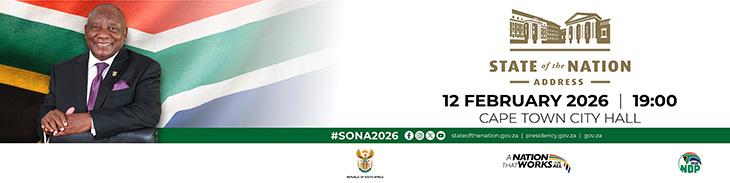
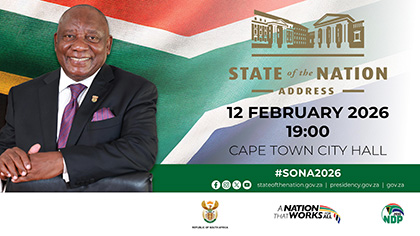
| When President Cyril Ramaphosa delivers the State of the Nation Address (SONA) on the evening of 12 February 2026, the setting will once again carry deep constitutional and historical symbolism. |
|
|
| |
Parliament is set to convene a joint sitting of the two Houses at the Cape Town City Hall—the same venue where former President Tata Nelson Mandela first addressed South Africans on 11 February 1990, hours after his release from prison.
Scheduled for 19:00, the address is designed to reach millions of South Africans at home, underscoring its role as one of the most significant moments on the national political calendar.
More than ceremonial, SONA remains a constitutional event called in terms of Section 42(5) of the Constitution. It is one of the rare occasions that brings together the executive, legislature and judiciary under one roof, affirming Parliament’s central role in holding government to account.
A moment of accountability and direction
SONA provides the President with an opportunity to reflect on the state of the nation across political, economic and social fronts—both domestically and within a shifting global context. It is also a moment of accountability, where the Head of State reports to citizens on government’s performance and sets out the programme of action for the year ahead.
Crucially, the address has direct budgetary implications. Following the SONA, Finance Minister Enoch Godongwana will deliver his Budget Speech in Parliament, on the heels of which, departments will follow suit.
Parliament, which is constitutionally mandated to exercise oversight over public finances, may accept, amend or reject departmental budgets to ensure alignment with the priorities announced by the President.
In the days following the address, Members of Parliament will debate SONA over two days before President Ramaphosa replies and closes the debate.
Against this backdrop, SONA 2026 arrives at a pivotal juncture for the seventh Administration—nearly a year after Cabinet adopted the Medium-Term Development Plan (MTDP) 2024–2029 as the blueprint guiding government’s work.
Measuring progress under the 7th Administration
Government’s own assessment of MTDP implementation paints a picture of cautious progress mixed with persistent structural challenges.
Minister in The Presidency for Planning, Monitoring and Evaluation, Maropene Ramokgopa, said during a recent briefing on the Assessment of Progress in the Implementation of the MTDP 2024–2029 on 23 January 2026, that the MTDP provides a whole-of-government framework which aligns planning, budgeting, implementation, monitoring and evaluation across all spheres of government.
The plan is anchored by three interrelated and interlinked strategic priorities, as informed by the Government of National Unity’s Statement of Intent, the National Development Plan Vision 2030, the United Nations Sustainable Development Goals, and the African Union’s Agenda 2063.
These priorities are driving inclusive economic growth and job creation, reducing poverty and tackling the high cost of living, and building a capable, ethical, and developmental state.
In line with its mandate, the Department of Planning, Monitoring and Evaluation produces periodic assessment reviews on the performance of government against the set targets and indicators in the MTDP 2024–2029.
On the economic front, South Africa recorded a 0.8% gross domestic product (GDP) growth in the second quarter of 2025—the strongest quarterly performance since 2022. Employment also showed signs of recovery, with 248 000 jobs added in the third quarter, lowering the official unemployment rate to 31.9%.
Perhaps the most tangible gain has been in energy stability. More than 175 consecutive days without load shedding were recorded during the review period, while the Energy Availability Factor rose above 63%, reaching 70% on several days. These improvements have helped restore operational certainty for businesses and households alike, forming a key pillar of the administration’s reform narrative.
The country’s exit from the Financial Action Task Force grey list further bolstered investor confidence, while the achievement of a primary budget surplus strengthened fiscal credibility.
Yet youth unemployment stands at 58.5%, business confidence remains subdued, and logistics constraints continue to weigh on growth. These realities may feature prominently in President Ramaphosa’s address, particularly as government seeks to accelerate structural reforms under Operation Vulindlela.
Operation Vulindlela is a joint initiative of The Presidency and National Treasury which aims to achieve more rapid and inclusive economic growth through a programme of far-reaching economic reform.
Phase I of Operation Vulindlela focused on unlocking progress in five priority areas: electricity, freight logistics, water, telecommunications, and the visa system. These reforms were selected for their high potential to catalyse investment, enhance economic competitiveness, and create jobs. Phase II represents a second wave of structural reform aimed at unlocking more rapid, inclusive, and sustained economic growth. While continuing to drive implementation of reforms initiated during Phase I, the second phase introduces new focus areas that respond to evolving challenges in the economy.
Infrastructure, industry and tourism
Infrastructure investment continues to anchor government’s growth strategy. Over R1 trillion has been set aside for public infrastructure over the medium term, supported by blended finance models designed to crowd in private capital. Major projects have been approved through the Infrastructure Fund and the Budget Facility for Infrastructure, signalling renewed momentum.
Industrial policy interventions have also yielded results. New investments worth more than R44 billion have been secured across sector masterplans, including a R4.2 billion investment linked to the launch of BMW’s X3 plug-in hybrid vehicle. South Africa’s battery minerals pipeline, valued at about R40 billion, positions the country within emerging global clean-energy value chains.
Tourism has continued its post-pandemic recovery, with international arrivals reaching 7.6 million between January and September 2025, supported by ongoing visa reforms.
However, delays in project preparation, procurement inefficiencies and municipal capacity constraints continue to slow infrastructure delivery.
Poverty, social protection and human development
While economic recovery has been gradual, social protection remains the state’s most immediate line of defence against poverty and inequality.
More than 19 million South Africans continue to receive social grants, cushioning vulnerable households from rising food prices and administered costs. Government has also expanded food and nutrition programmes and strengthened support services for survivors of gender-based violence and femicide.
In education, early childhood development (ECD) has seen notable gains, with over 1.3 million children enrolled in ECD programmes and thousands of centres registered. The near completion of school sanitation projects marks a visible improvement in learning environments, though concerns persist about declining mathematics enrolment.
Health outcomes reflect a similar mix of progress and pressure. HIV viral suppression has reached 96%, TB treatment success rates have improved, and groundwork has been laid for the National Health Insurance.
Despite these interventions, inequality remains entrenched, with South Africa’s Gini coefficient still hovering around 0.63. High unemployment continues to undermine poverty reduction, reinforcing the centrality of job creation, which South Africans will wait to hear about in SONA 2026.
Building a capable and ethical state
Strengthening state capability has emerged as a defining priority of the 7th administration. Lifestyle audits have been conducted for the vast majority of senior managers, and the passage of the Public Service Commission Bill marks a milestone in efforts to professionalise the public service.
Financial distress, service delivery failures and unfunded mandates persist across many municipalities, prompting the establishment of inter-ministerial support structures and the development of a White Paper on Local Government reform.
Crime and corruption remain high on the public agenda. While contact crimes have declined modestly and more than half of the State Capture Commission recommendations have been implemented or substantially completed, violent crime and gender-based violence continue to weigh on government.
The meaning of SONA 2026
As President Ramaphosa prepares to address Parliament at the City Hall, the symbolism of the venue will not be lost on South Africans. The setting evokes a moment of national renewal offset by the 1990 tone—a reminder of the promise of democratic governance and constitutional accountability.
– Source: SAnews.gov.za |
|
| |
|
| |
| PRESIDENT RAMAPHOSA DISCUSSES PEACE AND SOUTH AFRICA-RUSSIA COOPERATION WITH PRESIDENT PUTIN |
|
| |
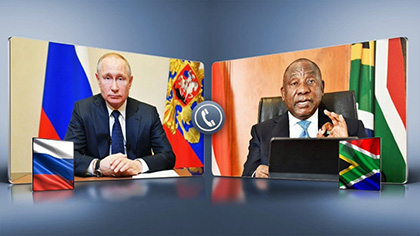
| President Cyril Ramaphosa has expressed South Africa’s ongoing support for diplomatic and peaceful efforts aimed at ending the Russia-Ukraine conflict. This is in line with South Africa’s long-stated position during talks with both sides that all wars end through negotiations. |
|
|
 |
|
| |
In a telephone call held on Tuesday, 10 February 2026, President Ramaphosa received a briefing from President Vladimir Putin on the situation in Ukraine and on Russia’s commitment to a diplomatic solution.
On the bilateral relationship, President Ramaphosa welcomed the engagements with Russia aimed at advancing the development of a mutually beneficial trade and investment framework within the Russia-South Africa comprehensive strategic partnership.
The two leaders also discussed cooperation in key international fora, such as BRICS and the G20.
President Ramaphosa and President Putin pledged their support to the process of returning South Africans fighting alongside Russian forces in Ukraine. In this regard, teams from both sides will continue their engagements towards the finalisation of this process.
– Source: www.thepresidency.gov.za |
|
| |
|
| |
| MEDIA STATEMENT ON SOUTH AFRICA’S ELECTION TO THE PEACE AND SECURITY COUNCIL OF THE AFRICAN UNION |
|
| |
 |
|
| On 11 February 2026, during the 38th Ordinary Session of the Executive Council, South Africa was elected by Member States to serve a two-year term on the Peace and Security Council of the African Union (AUPSC), starting from 1 April 2026 to 31 March 2028. These pivotal elections took place in Addis Ababa, Ethiopia. South Africa was elected alongside the Kingdom of Lesotho to represent the Southern region for the two available seats. |
|
|
| |
The Minister of International Relations and Cooperation, Ronald Lamola, who is currently leading the South African delegation, formally welcomed the election on behalf of the government. This election reaffirms South Africa’s role in fostering a more resilient continent. Minister Lamola stated that, "to achieve the goals of Agenda 2063: The Africa We Want, we have to exert more efforts on peacemaking and peacebuilding in our continent."
The Republic of South Africa thanks the AU Member States for their confidence and reaffirms its commitment to work constructively with the entire membership of the AUPSC in addressing the many peace and security challenges that bedevil our continent.
The continent continues to grapple with issues such as unconstitutional changes of government, a recurring trend since 2020, which persists until today, and terrorism and violent extremism that have resulted in killings and maiming of thousands of innocent civilians.
It is in this context that South Africa’s term on the PSC will be guided by its foreign policy, which prioritises the African continent’s peace, stability and development. Furthermore, South Africa is committed to contributing to a continent that is peaceful, prosperous and embodies Pan-African ideals. This commitment is evident in the numerous peace and security initiatives in which South Africa has participated and continues to engage, including its role as interim Chair of the Southern African Development Community (SADC).
South Africa will advocate for peaceful conflict resolution, inclusive dialogue and negotiations aimed at supporting conflicting parties in finding durable solutions.
– Source: www.dirco.gov.za |
|
| |
|
| |
| DEPUTY MINISTER MORAKA MEETS ICRC TO STRENGTHEN HUMANITARIAN COOPERATION AHEAD OF SONA 2026 |
|
| |
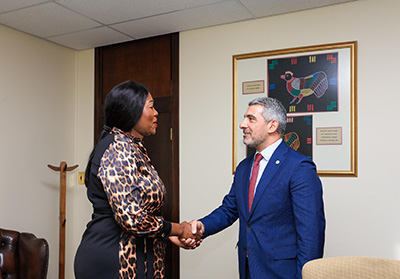
| Ahead of the 2026 State of the Nation Address (SONA), Deputy Minister of International Relations and Cooperation, Thandi Moraka, met with the International Committee of the Red Cross (ICRC) Regional Director for Africa, Patrick Youssef, in Cape Town. |
| |
|
|
|
 |
|
| |
The meeting focused on strengthening South Africa’s strategic cooperation with the ICRC on the promotion and implementation of International Humanitarian Law (IHL). Discussions also aimed to advance high-level dialogue on humanitarian challenges facing the African continent and to galvanise stronger political commitment to upholding IHL.
The engagement reaffirmed South Africa’s continued support for humanitarian principles and its commitment to working with international partners to address pressing humanitarian issues across Africa.
– Source: Public Diplomacy Platforms |
|
| |
|
| |
| AFRICA MUST UNITE AMID GLOBAL UNCERTAINTY |
|
| |
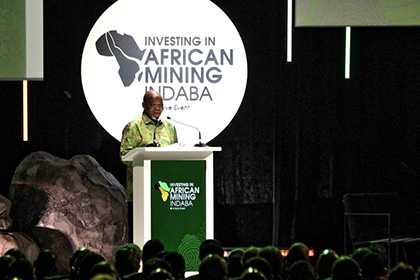 |
|
| Mineral and Petroleum Resources Minister Gwede Mantashe has called on African countries to work together at a “moment of profound global uncertainty”. |
| |
|
|
|
| |
The Minister was speaking at the Investing in Africa Mining Indaba, which opened in Cape Town on Monday, 9 February 2026. The annual Indaba is a gathering of African leaders, industry stakeholders and investors to discuss the development of Africa’s mineral resources.
“This year’s Indaba convenes at a moment of profound global uncertainty. We are witnessing heightened geopolitical tensions, driven largely by the competition of some developed economies seeking greater control over the natural resources of developing nations.
“This dynamic represents a serious threat to the sovereignty of resource-endowed countries, the majority of which are here on the African continent.
“It is, therefore, befitting that the theme of this year’s Indaba is Stronger Together: Progress Through Partnerships. To us, this is not merely a slogan—it is a strategic imperative for Africa to act collectively, speak in one voice, and avoid the destructive race to the bottom in our engagement with global powers and investors,” Mantashe said.
He noted that the African Ministers’ Critical Minerals Roundtable, hosted together with the African Union on the sidelines of the Indaba, is a platform aimed at strengthening “continental leadership on critical minerals”.
“Our objective is to deepen collaboration, accelerate responsible exploration and mining, and ensure that Africa captures greater value from its own mineral endowment.
“As per the consensus reached last year, our partnership must move beyond extraction to industrialisation and value addition closer to the point of production.”
Turning to the South African mining industry, the Minister revealed that work to undertake a comprehensive study on the state of mining alongside the development of the Critical Minerals Strategy has now been completed.
“The strategy is in place, and its implementation is underway.
“As per the G20 declaration, this achievement has not only shaped South Africa’s critical minerals agenda—it has also positioned Africa more broadly to assert greater control over its strategic resources,” the Minister said.
Part of the strategy contains a review of South Africa’s regulatory framework.
“Let me take this opportunity to reaffirm our commitment to creating a regulatory framework that is more certain, more predictable, and more transparent—one that attracts investment while ensuring that the benefits of our mineral wealth are shared equitably with all South Africans,” he emphasised.
On the removal of the requirement for Black Economic Empowerment participation at the prospecting stage, Mantashe assured that this is not a “retreat from transformation” or an endorsement of the view that “black participation is a barrier to economic growth”.
“It is rather a pragmatic recognition that prospecting is a high-risk phase where no economic value has yet been proven.
“This change is designed to stimulate exploration, increase South Africa’s global share of exploration investment, and ultimately expand the pipeline of future mines,” he explained.
The Minister added that while the regulatory review process continues, green shoots are starting to bear fruit including the opening of operations at least five mines.
Furthermore, the department has granted 358 prospecting rights and 32 mining rights between February 2025 and January 2026.
“This demonstrates continued confidence in South Africa as a mining investment destination of choice.
“We are committed to honouring that confidence by driving a fair, efficient, and transparent licensing system that supports growth while protecting our national interests,” Minister Mantashe said.
– Source: SAnews.gov.za |
|
| |
|
| |
| MINISTER PARKS TAU SIGNS FRAMEWORK AGREEMENT ON ECONOMIC PARTNERSHIP FOR SHARED PROSPERITY |
|
| |
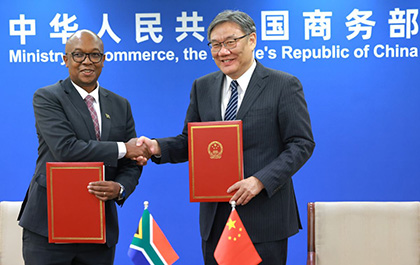
Minister Parks Tau and his counterpart from the People’s Republic of China, Minister Wang Wentao, have signed the Framework Agreement on Economic Partnership for Shared Prosperity (CAEPA). |
|
|
 |
|
| |
This landmark agreement will be followed by the negotiation and conclusion of an Early Harvest Agreement by the end of March 2026, which will see China provide duty-free access to South African exported products and enhance Chinese investment into South Africa. The Comprehensive Agreement on Economic Partnership for Shared Prosperity covers a number of areas, including:
- Trade cooperation
- Investment cooperation
- New energy cooperation
- Multilateral cooperation
As this agreement is a framework, South Africa looks forward to working with China in a friendly, pragmatic and flexible manner, while ensuring consistency with World Trade Organisation principles and the development objectives of both sides, with a view to providing a stable and predictable environment for economic cooperation and win-win outcomes. Both sides intend to further expand bilateral trade, including by promoting the export of South African agricultural products and high-value manufactured goods to China. South Africa already exports a number of agricultural products to China, including citrus and rooibos tea, amongst others.
“As China-South Africa relations continue to deepen, new opportunities emerge for South African businesses seeking to enter the Chinese market, particularly in sectors such as mining, agriculture, renewable energy and technology,” said Minister Tau.
China will send an inward buying mission to visit South Africa and has invited South Africa to participate in the Country Exhibition and Business Exhibition of the 9th China International Import Expo, to be held in Shanghai, China, in November 2026. China also invited South Africa to a steel investment event to promote investment opportunities in South Africa’s steel industry.
South Africa is a major destination for Chinese investment in Africa and the leading African country in terms of actual investments in China. “We have seen a significant and steady increase in Chinese investments in South Africa, while South African companies are showing a growing interest in investing in the Chinese market. Chinese automotive companies are investing in the South African economy and creating much-needed employment opportunities. We look forward to attracting even more Chinese investment into South Africa and also introducing many South African products into the Chinese market,” Minister Tau said.
The agreement is intended to enhance the bilateral trade relationship, with a view to identifying complementarities in the two economies and not to encroach on sensitivities in either country. Negotiations will be undertaken to ensure that the necessary safeguards are built into the agreement to protect South Africa’s industrial capacity.
“We hope that the signing of the Framework Agreement and the outcomes of our Joint Economic Trade Commission meeting will signal the urgency we attach to growing our bilateral trade and investment relations. Together with the Framework Agreement, these outcomes should provide a strong foundation for a mutually beneficial partnership and for our respective private sectors to do more business together,” Minister Tau remarked.
– Source: SAnews.gov.za |
|
| |
|
| |
| BOTSWANA, ZAMBIA HIGHLIGHT IMPORTANCE OF REGIONAL INTEGRATION, BENEFICIATION |
|
| |
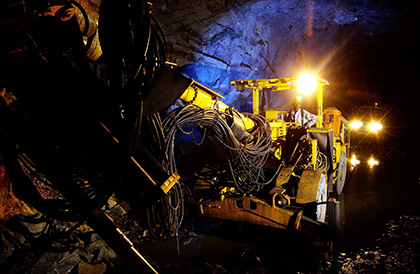
| Botswana and Zambia have positioned themselves as key partners in Africa’s push for mineral beneficiation, energy security, and regional industrialisation, as leaders from both countries called for deeper cooperation and long-term investment. |
|
|
 |
|
| |
The two countries said this at Brand South Africa’s Investing in Africa Mining Indaba Welcome Reception on Sunday night, 8 February 2026.
Botswana’s Minister of Mineral Resources, Green Technology and Energy Security, Bogolo Kenewendo, said her country is deliberately shifting from an extractive mining model towards industrialisation, energy security, and regional value chains.
Kenewendo said Botswana’s long-standing reputation as a stable and transparent mining jurisdiction provides a strong foundation for its next phase of growth, which would be driven by beneficiation, downstream manufacturing, and cross-border integration.
“We are looking for serious partners, and not exploitation and exploration, but beneficiation, processing, and downstream manufacturing. If your minds are thinking beyond the pit into smelting, refining, fabrication, or regional supply, Botswana wants to work with you now,” she said.
Without energy, she said, industrialisation would not be possible, noting that Botswana is aggressively expanding its power base through renewable energy, base-load generation and cross-border power agreements within the Southern African Power Pool, including cooperation with Zambia, Namibia and South Africa.
Head of Investments: Mining and Energy at the Industrial Development Corporation of Zambia, Mulumba Lwatula, echoed the call for regional collaboration, saying Africa must drive its own development agenda by leveraging continental strengths.
Lwatula said Zambia now views itself as “land-linked” rather than landlocked, positioning the country as a logistics and trade hub within the African Continental Free Trade Area (AfCFTA).
He said Zambia was implementing mining sector reforms and creating platforms for partnerships with junior explorers, major mining companies, and regional governments to expand copper production and support the global energy transition.
He added that regional cooperation, particularly with South Africa’s established mining expertise and infrastructure, would be critical to building human capital, scaling production, and strengthening Africa’s role in global value chains.
Sunday’s reception, which was addressed by Deputy Minister in The Presidency, Kenny Morolong, was held ahead of the official opening of the Mining Indaba on Monday, 9 February 2026, in Cape Town.
– Source: SAnews.gov.za |
|
| |
|
| |
| GOVERNMENT CONGRATULATES PROF. MARIVATE |
|
| |
 |
|
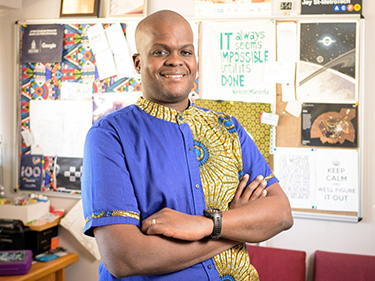
Government has congratulated Professor Vukosi Marivate on the recommendation by the United Nations Secretary-General to appoint him as a member of the Independent International Scientific Panel on Artificial Intelligence (AI). |
|
|
| |
In a statement on Thursday, 5 February 2026, government said Professor Marivate of the University of Pretoria was recommended alongside 40 leading experts from across the world, drawn from diverse disciplines and recognised for their significant expertise in AI and related fields.
“The panel will be the first global, fully independent scientific body dedicated to closing the AI knowledge gap and assessing the real-world impacts of artificial intelligence across economies and societies,” said the Government Communication and Information System.
It added that the panel will play a critical role in helping the global community distinguish fact from fiction and science from misinformation by providing an authoritative, unbiased reference point.
According to the United Nations, the Independent International Scientific Panel on AI serves as the first global scientific body on AI, bringing together leading experts to assess how AI is transforming lives.
“The 40 nominees recommended by the Secretary-General were identified from among applicants to an open call that resulted in over 2 600 applications from more than 140 countries, ensuring world-class expertise,” said the United Nations.
– Source: SAnews.gov.za |
|
| |
|
| |
| BREAST PUMP DESIGNED BY UJ ALL-WOMEN TEAM WINS INTERNATIONAL AWARD |
|
| |
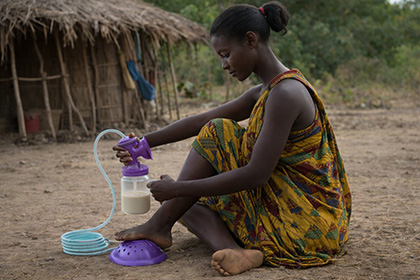
| An all-female team from the University of Johannesburg has won an international innovation award for designing a non-electric breast pump that will make a real difference for new moms in low-resource communities. |
|
| |
A group of honours students from the University of Johannesburg has just taken home the top prize at an international innovation competition.
The team, known as UJ Wom+n in Tech, has become the first all-woman team to win the AAKRUTI Global Design Competition with their design, Latch.
Latch helps mothers in rural and low-resource communities express breast milk without the use of electricity. The pedal-powered design is accessible and user-friendly, and it cuts the high costs usually associated with breastfeeding tools.
Behind the project are four students from different creative disciplines: Rethabile Mosia (Industrial Design), Tyesha Billett (Graphic Design), Lerato Matobako (Multimedia) and Courtney Hodgson (Graphic Design). |
|
|
 |
|
| |
The pump is powered by a simple foot pedal. It works with any standard bottle or reusable container, meaning moms don’t need special proprietary bottles. The design also cuts down on plastic waste, making it both affordable and environmentally conscious.
The idea came from imagining real scenarios that many women in rural communities and townships deal with all the time.
“Imagine being a new mother in a township in South Africa or a rural village in India,” the team explains. “Your baby won’t latch, you only have a glass jar, and the electricity cuts out again. That’s the reality Latch was designed to change.”
Their concept impressed judges at the competition, which is powered by Dassault Systèmes and SOLIDWORKS and challenges students from around the world to develop human-centred, socially useful solutions.
Two members of the team travelled to Texas for the international finals, where they presented Latch on the international stage and ultimately secured first place.
The team is already working towards launching Latch as a product within the next year, with plans to partner with NGOs and NPOs that support mothers in rural and underserved communities.
The focus will be on local manufacturing, accessible pricing, and scalable production, all aimed at getting the pump into the hands of women who need it most.
– Source: www.goodthingsguy.com |
|
| |
|
| |
| GROOTE SCHUUR HOSPITAL ENROLS FIRST HIV TRIAL PARTICIPANT |
|
| |
| South Africa’s efforts to develop an HIV vaccine reached a significant new phase this week, with the first participant officially enrolled in the BRILLIANT 011 first-in-human clinical trial at Groote Schuur Hospital in Cape Town. |
| |
The enrolment took place at the Desmond Tutu HIV Foundation (DTHF) site and marks the start of human testing for a new vaccine approach developed through African-led scientific collaboration, as per the South African Government News Agency.
The trial is being conducted by the South African Medical Research Council (SAMRC), in partnership with DTHF and the Wits Health Consortium. |
|
|
 |
|
| |
The BRILLIANT 011 study is designed to assess the safety and immune response of two advanced vaccine components, BG505 GT1.1 and 426c.Mod.Core-C4b, administered alongside the SMNP adjuvant.
These immunogens are the product of years of global research, drawing on expertise from the International AIDS Vaccine Initiative, the Fred Hutchinson Cancer Center, the Scripps Consortium for HIV/AIDS Vaccine Development and Amsterdam University Medical Centers.
In a statement confirming the milestone, the SAMRC described the launch of the trial as “marking a major milestone in African-led HIV vaccine research”, adding that BRILLIANT 011 offers renewed momentum toward developing an HIV vaccine shaped by African science and tailored for African populations.
Professor Glenda Gray, sponsor representative for the SAMRC, said the study places researchers in a strong position to better understand how the immune system responds to these novel vaccine candidates.
“Advances in HIV vaccine research and development place our team in a pivotal position to map immune responses to these novel vaccines in order to guide further development of this regimen,” she said.
The trial forms part of the broader BRILLIANT Consortium (BRinging Innovation to cLinical and Laboratory research to end HIV in Africa through New vaccine Technology), an initiative launched two years ago to strengthen vaccine research capacity across the continent.
The consortium brings together scientists from South Africa, Nigeria, Uganda, Kenya, Tanzania, Zimbabwe, Zambia and Mozambique.
It is notable for being predominantly led by African women scientists, with the SAMRC steering this first clinical study.
The start of BRILLIANT 011 follows a challenging period for the programme, as United States funding cuts had threatened to stall the research, but consortium partners moved quickly to secure alternative investment. That intervention ensured the study could proceed without compromising scientific integrity.
– Source: www.capetownetc.com |
|
| |
|
| |
| SOUTH AFRICA’S DAN PATLANSKY NOMINATED FOR INTERNATIONAL TOP HONOURS IN UK BLUES AWARDS |
|
| |
 |
|
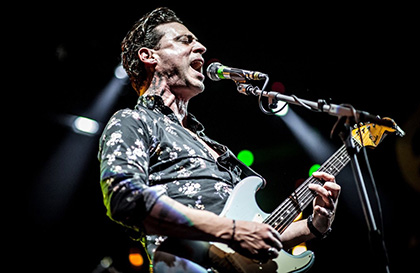
| The United Kingdom (UK) Blues Awards for 2026 has revealed its nominees across 14 categories. South Africa’s blues maestro Dan Patlansky has earned a nomination. |
|
|
| |
Patlansky’s nomination falls under the awards category of International Artist of the Year. Dan’s fellow Top 20 nominees include global blues legends Buddy Guy, Beth Hart, Keb’ Mo’, Imelda May, Shemekia Copeland, Walter Trout, Bobby Rush and more.
The awards have been running for eight years now, allowing the industry and public to nominate and vote for those they believe, through their work in the previous year, deserve the recognition.
Nominees are chosen by a panel comprising members of the UK Blues Federation, the European Blues Union, as well as journalists, broadcasters, promoters, publishers, musicians, festival and club organisers, academics, publicists, agents, fans, blues supporters, and the like. Once the five finalists in each category are announced, the UK public are invited to vote for who they think should take home the award.
Dan Patlansky is one of South Africa’s most internationally recognised modern blues artists, with 11 studio albums and a decade of international acclaim behind him, having toured around the world alongside renowned artists.
He’s the only artist in the world (alongside Joe Bonamassa) to achieve two global #1 and two global #2 Blues Rock Albums via Blues Rock Review USA, winning top honours for Dear Silence Thieves (2014) and Introvertigo (2016), with further top rankings for Perfection Kills (2018), Shelter of Bones (2022), and Movin’ On (2024), the latter voted #3 Blues Rock Album of the Year. He also opened for Bruce Springsteen in Johannesburg almost a decade ago.
The UK Blues Awards will be announcing its top 5 in each category on 15 February 2026. Public voting (in the UK) will follow until 1 March 2026. Winners will be announced on 8 April at the awards ceremony.
– Source: www.goodthingsguy.com |
|
| |
|
| |
| SHIVEN BODASING PROVES SOUTH AFRICA BELONGS ON INTERNATIONAL ICE |
|
| |
 |
|
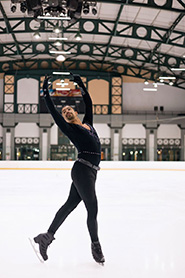
| Balancing a full-time career with elite-level training is no small feat, yet Shiven Bodasing has turned that demanding schedule into a defining international triumph and claimed the top spot at the International Adult Skating Festival, which took place on 31 January 2026 in Amsterdam. |
| |
|
|
|
| |
Competing against 68 skaters from across the globe, Shiven Bodasing ranked highest in the artistic division and secured the overall Jury honour, a remarkable achievement for an athlete who built his career from scratch just a few years ago.
He performed two contrasting programmes at the festival. His artistic classical piece set to Nessun Dorma focused on balletic lines, fluidity and emotional storytelling, captivating judges and earning him a nomination into the draw for the prestigious Grand Jury Prize. His second programme, skated to Barbara Pravi’s dramatic Voila, demanded sharp precision, intricate footwork, powerful jumps and commanding spins. Together, they showcased both elegance and strength.
“Honestly, it’s amazing,” he reflects, “but more than that, it’s affirming that the sacrifices, the injuries and the brutal schedule are all worth it; the proof is in the pudding and what comes to you when you let passion lead.”
That passion is not poetic. It is practical. It looks like a 4am alarm clock. It looks like a heavy training bag packed with changes of clothes. It looks like arriving at the rink at 5am to warm up properly before stepping onto the ice at 5:30, because at a competitive level, you cannot simply start skating cold. Injuries happen that way. Shiven explains that mornings include activating muscles, sometimes adding strength work before either a technical lesson or solo training where he drills elements repeatedly. After one or two hours on the ice, he heads to the showers, changes and begins a full workday. Evenings often include gym sessions, stretching or additional strength training before he finally gets home close to 7pm, unpacks, repacks, eats, showers and sleeps. Then he repeats it all again. On double-session days, he skates again in the afternoon.
“The challenges faced were not only on the ice but off the ice too in the lead-up to this festival,” says Shiven. “Balancing insane schedules and a full-time job with the training and demands of everyday life thrown in makes winning this prestigious adult competition even more meaningful.”
Training alongside South Africa’s top female figure skater, Gian-Quen Isaacs, has also played a defining role in shaping his belief in what is possible. Watching her compete internationally as the only athlete from Africa at the recent Four Continents Championships reinforced something powerful.
“She is phe-no-me-nal!” he says without hesitation. “There is no other way to describe her and her skating; she’s nothing short of breathtaking, and she didn’t have it easy; she’s a fighter.”
For Shiven, her presence on global ice is a reminder that the issue is not talent. It is access. Funding remains the steepest climb. Figure skating is expensive, from ice time and coaching to equipment, choreography, travel and competition entry fees. For adult athletes, especially, sponsorship opportunities are scarce.
“Yes, that really and truly is the only obstacle standing in our way,” he explains. “I basically work so that I can skate. Financially, it’s an expensive sport, but it’s not for nothing; it’s about bringing that proudly South African gees to the world and showing them that we are here too!”
He points to the startling reality that Gian-Quen was the only African competitor at the Four Continents Championships and that it has been around 30 years since South Africa last competed in figure skating at the Winter Olympics.
“Do we not have the talent, or do the athletes not have the support? I promise it’s the latter!”
Bodasing has his eyes firmly set on the ISU International Adult Competition in Germany. For him, this is not simply about another event; it is about flying the South African flag in spaces where it has rarely been seen.
“I firmly believe that the athlete’s job is to put in the work and train hard in order to perfect their craft and the quality of their skating,” he says. “But that can only get you so far when measured against the enormous wall of financial challenges you face trying to live your sporting dream.”
His recent international victory shifts the narrative. It proves that when South African athletes are given an opportunity, they deliver. It shows that adult sports are not a hobby or an afterthought, but a serious, competitive pursuit worthy of support. It opens doors for skaters who may never have considered international competition possible.
– Source: www.goodthingsguy.com |
|
| |
|
| |
| SOUTH AFRICA WIN T20 WORLD CUP THRILLER AGAINST AFGHANISTAN |
|
| |
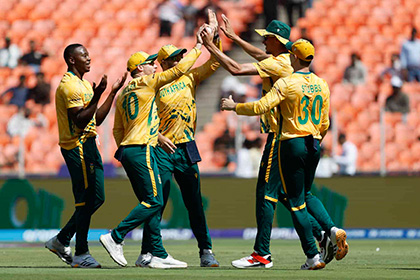
| South Africa beat Afghanistan in one of the most remarkable and thrilling T20 matches ever seen in Ahmedabad, India at the T20 World Cup on Wednesday, 11 February 2026. |
|
| |
The Proteas needed two super overs to get the better of their opponents in a heart-stopping contest where both teams could have, and should have, won during regular play.
As it is, South Africa have now won both of their group matches, having earlier also beaten Canada. They face New Zealand on Saturday and end their pool play with a match against the United Arab Emirates next week.
Aiden Markram and his side are now in a strong position to advance to the Super Eights, while Afghanistan, with two losses, look set to miss out.
Super overs
After the teams had tied on 187 runs each after regular play, the teams tied again on a total of 17 each after the first super over, with Tristan Stubbs of the Proteas smashing a six off the last ball of the over to ensure the match would go to a second super over. |
|
|
 |
|
| |
In the second super over, South Africa posted 23, with David Miller hitting 16 off four, including two sixes.
Afghanistan were in early trouble with no runs, a wicket down and only four balls to go. Then, Rahmanullah Gurbaz struck three sixes to get his side to 18, with one ball to go. He lost his wicket on the last ball, after Keshav Maharaj had also bowled a wide on his fifth ball.
There was relief all-round in the South African camp, as they won the second super over by four runs, but while the watching world was thrilled by the two super overs, the match should have been done in regular play.
Thrilling finish
Asked to chase down 188 to win, Gurbaz led Afghanistan’s charge with a thrilling 84 off 42 with a few other good contributions along the way.
Needing 13 runs to win in the final over, Kagiso Rabada took what should have been the 10th wicket with his first ball, which should have ended the match with a win for the Proteas, but he stepped over the line, and Afghanistan got a lifeline.
Rabada then bowled a wide and another no ball, and with Afghanistan needing two runs to win with two balls remaining, Marco Jansen and Rabada orchestrated the run-out of Fazalhaq Farooqi, leaving them all out for 187, and the scores tied.
The South Africans’ bowling was poor; besides Rabada’s errors in the final over, they bowled too short and too many leg-side balls.
Lungi Ngidi, however, returned excellent figures of 3/26 in four; his slower balls again causing problems for the batters.
Maharaj, with 1/27 in his four, was also excellent, as he was during the second super over.
The South Africans were excellent in the field, which helped keep Afghanistan in check later in their chase. Excellent catches by Marco Jansen, George Linde, Stubbs and Miller were crucial.
The work done by Maharaj, Jansen and Rabada in pulling off three run-outs was also good.
SA batting innings
Earlier, after being sent in to bat, South Africa posted 187/6 in their 20 overs thanks mainly to a high-quality second-wicket stand of 114 between Quinton de Kock (59 off 41) and Ryan Rickelton (61 off 28).
Both men played beautifully after the early loss of Aiden Markram, with each hitting five fours, while Rickelton smashed four sixes and De Kock three sixes.
The innings stalled when both men were out in quick succession, within two balls of each other in the 13th over.
Dewald Brevis (23 off 19) and Miller (20 not out off 15) got things back on track, while Jansen hit a quick-fire 16 off seven balls at the death, but the South Africans will feel they should have got well over 200 considering where they were when De Kock and Rickelton were at the crease.
Azmatullah Omarzai picked up 3/31 and Rashid Khan got 2/28 for Afghanistan.
– Source: www.citizen.co.za |
|
| |
|
| |
| “THAT WAS A SPECIAL PERFORMANCE,” SAYS COACH SNYMAN AFTER BLITZBOKS’ PERTH VICTORY |
|
| |
 |
|
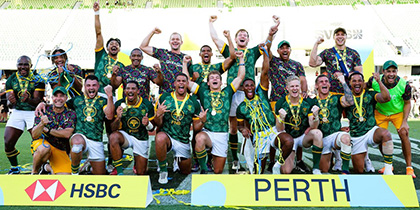
| Philip Snyman was full of praise for his Blitzboks team after they claimed the Perth Sevens title on Sunday, 8 February 2026, after a thrilling win against Fiji in the cup final. |
|
|
| |
Both South Africa and Fiji scored three tries in the final, but the Blitzboks converted all their conversion attempts, while Fiji only managed two, to allow Snyman’s team to win a tight final 21-19.
It was the perfect rebound after the Blitzboks only finished fourth in Singapore the week before.
The triumph in Australia was the Blitzboks’ first in the country since 2017 and is their second title of the season, after they also won in Cape Town in December 2025.
Depth of squad
“It was massive for us to finish the tour like this,” said coach Snyman.
“We brought a couple of youngsters with us on tour, made a semi-final in Singapore and won in Perth, so the results were great, and on top of that, we have given more players the experience and exposure on the circuit. So overall, I am very happy and proud.”
While Luan Giliomee and Renaldo Young earned their first Blitzbok caps in Singapore and Perth respectively, Snyman also mentioned Sebastiaan Jobb, who returned to the squad after more than a year out.
“We talk about competitive excellence, and Jobb is a good example of that,” said Snyman.
“He brought a lot of energy and scored some crucial tries for us, while also making important tackles and turnovers. If we can have three players in each position pushing each other, we will be in a good space.
“We had Impi Visser, Dewald Human, Ronald Brown, Selvyn Davids, Quewin Nortje and Gino Cupido either resting or recovering from injury back home, so we needed the younger players to get this experience and all will be better because of it.”
Improvements
The Blitzbok coach was proud that the issues that hampered their performances in Singapore a week ago and were addressed upon arrival in Perth were eliminated, something he credited the players for.
“We had to keep the ball for longer; we needed to improve our strike rate in the opposition’s 22, and we needed to create pressure points on defence, forcing turnovers and then striking,” he said.
“We did all of those this weekend, so I am happy we could turn it around and play with much more control and precision.”
Snyman said the victory in the final came down to composure, gritty defence and good discipline.
“In the final we kept our composure and kept the pressure up. They did come back after we scored two early tries, but the players stuck to their guns and the bench also made the necessary impact to keep them out for three minutes. That was a special performance, and everyone can be very proud of that effort.
“Our aim for the series is to be consistent and make semi-finals. We won two tournaments and made one semi-final, so we are on track with that objective.”
– Source: www.citizen.co.za |
|
| |
|
| |
| MATTHEW CALDWELL AND CALLAN LOTTER SECURE MAIDEN TITLES AS SOUTH AFRICA DOMINATES MIDMAR MILE |
|
| |
| South Africa’s men swimmers delivered on a bold pre-race promise at Midmar Dam on Sunday, 8 February 2026, ending years of foreign dominance in the men’s elite race, as Matthew Caldwell led an all-South African podium at the iconic aQuellé Midmar Mile. |
| |
In the build-up to the world’s largest open-water swim, Caldwell had confidently predicted that the Top 3 would feature himself, compatriot Henré Louw and French Olympian Damien Joly. While Joly ultimately missed out on the podium, Caldwell’s broader statement of intent—that local swimmers were ready to reclaim control—rang emphatically true.
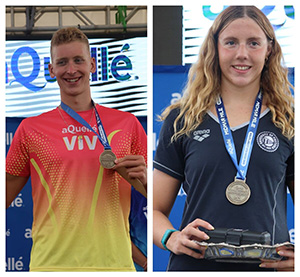
Caldwell executed a daring and unconventional race plan to secure his maiden title in 18:32, finishing ahead of Louw (18:42) and Connor Albertyn (18:44) as South Africa swept the podium. Joly, a three-time Olympian and one of the pre-race favourites, faded to fourth in 18:51. |
|
|
 |
|
| |
Callan Lötter mastered the rough conditions at Midmar Dam perfectly to take a maiden victory in the women's elite race in a time of 19:51 on Sunday, 8 February 2026.
Rather than jostling for position in the lead pack, Caldwell broke away early, opting to swim a wide line to the right of the field. It was a move that raised eyebrows on the banks of Midmar Dam, but it proved decisive.
“I just needed to be as wide as possible, not close to anyone. I just didn’t want to be in sight. I wanted to be like an invisible person swimming there,” Caldwell explained afterwards. “The plan was just to swim my own race in clean water.”
While Caldwell carved his own path, Louw, Albertyn and Joly battled more directly. Joly appeared uncertain at times about the course markers, adjusting his line repeatedly, and the hesitation cost him crucial seconds. Up ahead, Caldwell’s “invisible” strategy allowed him to build rhythm in clean water and surge clear.
For Caldwell, the result was about more than personal glory.
“It’s lovely. I’ve been wanting this for a few years now. Henré, myself and Connor on the podium, that’s perfect; that’s how it should be—South Africa on top,” he said.
In the women’s elite race, Callan Lötter also claimed a maiden Midmar Mile crown, dominating from the front in challenging conditions. The 19-year-old Pretoria swimmer made her move early and was already clear of the field by the 400m mark.
By halfway she led by 12 seconds, extending that advantage to 19 seconds at the final marker before crossing the finish line in 19:51.
Former champion Stephanie Houtman took second in 20:02, with Carli Antonopoulos third in 20:07, as the leading trio finished more than a minute ahead of the rest of the field.
“My plan was to go out comfortable and see where everyone was, and then start building from 400m onwards,” said Lötter, who credited coach Troyden Prinsloo for restoring her confidence and enjoyment in the sport.
– Source: www.iol.co.za |
|
| |
|
| |
| SOUTH AFRICA BATTLES BACK TO WIN THRILLING DAVIS CUP TIE AGAINST MONTENEGRO |
|
| |
 |
|
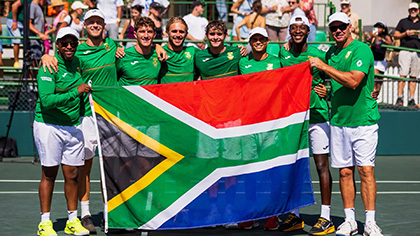
| In front of a sold-out Irene Country Club, the South Africa’s Davis Cup team produced a dramatic comeback on Sunday, 8 February 2026, edging Montenegro 3–2 to secure their place in Davis Cup World Group II. |
|
|
| |
The tie swung back and forth over two tense days. After the opening day ended level, the pressure cranked up when Montenegro claimed the doubles rubber, pushing South Africa into a must-win situation. It was a moment that could easily have gone the other way. But came to the home side instead.
Philip Henning set the tone in the reverse singles to pull South Africa level once more. His straight-set win steadied the ship.
Then came Alec Beckley’s moment. Facing the prospect of defeat and trailing early in his match, Alec dug deep and turned the contest on its head. Fighting back from 5–2 down in the opening set, he produced a fearless display to clinch a 7–6 6–3 win.
Reflecting on his mindset during that decisive match, Beckley admitted it was not an easy match.
“Yesterday was tough for me (losing to Jovanovic), and I knew once I started thinking about the score at 5-2 I would just spiral, so I was trying not to overthink it and just trying to find my rhythm, get loose and go after it more.”
Henning, who played a key role across the weekend, was quick to credit his teammate’s composure under pressure.
“I feel I played pretty well in my singles match, and I was happy to get us back into contention, and I couldn’t be prouder of Alec, coming back the way he did. He played super well.”
This victory showed preparation paying off. Not forgetting the advantage of playing in front of a home crowd, and the power that brings when everything is on the line.
– Source: www.goodthingsguy.com |
|
| |
|
| |
| JUNAID CHAFEKER BECOMES FIRST SOUTH AFRICAN KUNG FU MARTIAL ARTIST IN WORLD HALL OF FAME |
|
| |
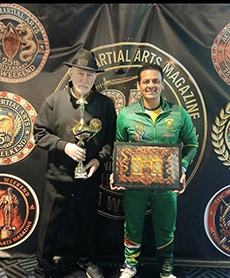
| Fresh from the Big Apple, New York City, Cape Town-born Kung Fu master Muhammad Junaid “M.J Li” Chafeker is still absorbing what many would call a once-in-a-lifetime honour. After 30 years in martial arts, Chafeker has been officially inducted into the prestigious World Action Martial Arts Hall of Fame, becoming the first South African and African Kung Fu martial artist to receive the global accolade. |
|
| |
For Chafeker, the moment is both deeply personal and profoundly symbolic.
“It hasn’t been easy over the years, I must admit.”
He reflected on a journey that began in Cape Town, where Kung Fu was neither widely known nor fully supported. Growing up in the Western Cape, pursuing Kung Fu in South Africa came with its fair share of scepticism.
“Despite the naysayers, despite people writing me off, I never listened. I continued to believe in myself.”
That belief took him across four continents, competing at more than 30 world championships, where he consistently raised the South African flag with pride.
“There’s nothing and no one that can snatch the victory away from you. The victory remains yours.
His induction into the Hall of Fame is not only recognition of medals and titles (including World Chin Woo Kung Fu Champion and IKF World Cup Champion) but also of his role in putting South Africa on the global Kung Fu map.”
“I’ve managed to raise my country’s flag all over the world. And now I’ve done the same through this induction.” |
|
|
 |
|
| |
Beyond competition, his impact is deeply rooted in community upliftment. Ten years ago, he established a non-profit organisation dedicated to mentoring and training young people through martial arts. Today, the programme works with youth from communities including Gugulethu, Langa, Mitchells Plain, Paarl and beyond.
His vision has since expanded continentally through the Africa Youth Kung Fu Championship, hosted annually in Cape Town and drawing participants from up to ten African countries.
As he steps into this new chapter, Chafeker hopes his legacy will inspire belief, especially among young South Africans. Guided by his motto:
“A true master dwells within, whom only you can choose to liberate.”
He remains committed to creating pathways where others once saw limitations.
– Source: www.goodthingsguy.com |
|
| |
|
| |
| ONE OF AFRICA’S BIGGEST INTERNATIONAL CHESS TOURNAMENTS IS HEADING TO THE MOTHER CITY FOR FIVE DAYS |
|
| |
 |
|
| Another huge step for chess in South Africa: from 25 to 30 April 2026, the Moja Chess Extravaganza 2026 is set to take place at the Bellville Velodrome. The event gathers players from across South Africa and around the world for six days of high-level competition. |
| |
For many African players, opportunities to compete in FIDE-rated events often come with the heavy cost of travelling overseas. The Moja Chess Extravaganza offers access to elite international competition here at home.
Last year, close to 700 players took part, and organisers expect that number to grow to around 1000 players in 2026, including Grandmasters, International Masters, and rising talent across multiple categories.
The tournament this year includes sections for elite players, women, juniors, and developing players. It also introduces a new dedicated section for players aged 50 and over, as well as special prizes recognising players with disabilities. |
|
|
| |
Fans won’t need to be in the room to follow along. Games will be broadcast globally using electronic boards, allowing spectators around the world to watch matches unfold in real time.
“Cape Town provides the perfect international stage for African chess. Our goal is not only to host a tournament but to build a movement that creates opportunities, inspires young minds, and places Africa firmly on the global chess map,” shares Dr Jabulani Mokoena, founder of Moja Chess Solutions.
With players, families and officials travelling to Cape Town for the week, the event is also expected to give a welcome boost to local tourism and hospitality, adding another layer of good news to the mix.
– Source: www.goodthingsguy.com |
|
| |
|
| |
|
|
|
|
|
|
|
|