| |
| |
|
| |
|
| |
|
| |
| “AFRICA HAS WHAT IT NEEDS TO SUCCEED” - PRESIDENT RAMAPHOSA |
|
| |
 |
|
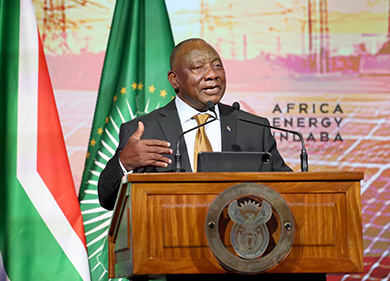
| President Cyril Ramaphosa has called on participants at the Africa Energy Indaba to use the platform to unite to realise an “Africa that meets its needs for reliable and cost-effective energy”. |
|
|
| |
The annual indaba, held at the Cape Town International Convention Centre, brings together the continent’s energy leaders, policymakers, investors and development partners to advance energy security, regional integration and investment across the continent.
“This indaba is an opportunity to harness our collective efforts towards realising an Africa that meets its needs for reliable and cost-effective energy while becoming a competitive exporter of energy in a rapidly changing global market.
“There has never been a better time for Africa to advance its energy security, resilience and sustainability. With its abundant natural resources, our continent holds immense potential for energy generation,” the President said.
Natural endowments
The African continent holds oil and gas reserves, an abundance of minerals and potential for solar, wind, hydroelectric and hydrogen fuel cell energy.
President Ramaphosa highlighted that despite these natural endowments, the continent continues to experience energy poverty.
The International Energy Agency notes that some 600 million Africans do not have access to electricity, translating into what the President described as “lost production, interrupted services, constrained investment and reduced opportunity”.
“This energy gap exists in the context of a growing continental population, rising urbanisation and renewed efforts to industrialise and integrate into the global economy. In this environment, access to reliable electricity is a competitive differentiator.
“Industrialisation cannot take place without secure supply chains, resilient villages, towns and cities, and reliable, affordable and scalable energy,” he said.
To remedy the situation, President Ramaphosa proposed an energy system that “connects Africa to itself and one that allows our economies to grow together rather than apart”.
This vision is articulated in the African Union’s Agenda 2063, which links the continent’s development to modern infrastructure and integrated energy systems.
To operationalise this agenda, the President highlighted the Ten-Year Africa Energy Infrastructure Investment Plan, which was inaugurated under South Africa’s G20 Presidency.
“The plan recognises that Africa’s energy needs are too large to be met by incremental projects.
“There needs to be a coherent pipeline of bankable investments, supported by credible institutions, predictable regulation and partnerships,” President Ramaphosa said.
He noted that while “public finance cannot fund the full scale of Africa’s infrastructure needs alone, it can play a catalytic role in project preparation, credit enhancement and risk reduction”.
“The significance of the Ten-Year Africa Energy Infrastructure Investment Plan lies in its ability to organise the pipeline of projects in a manner that is credible to financiers and valuable to economies,” President Ramaphosa said.
Global markets
On global developments, the President reflected that the indaba is taking place at a time when global energy markets are volatile.
The continent is already facing the impact of escalating conflict in the Middle East, which has led to strains on supply chains and higher energy prices.
“As we have seen with Russia-Ukraine and during the COVID-19 pandemic, shifting geopolitical sands underscore the vulnerabilities of import-dependent economies across Africa.
“These vulnerabilities sharpen the case for regional and continental energy security and diversification. As such, this Indaba is timely and strategic. It is an opportunity to position our continent in a rapidly changing geopolitical context,” he said.
The President expressed confidence in the continent’s ability to deliver for its people.
“Africa has what it needs to succeed. It has resources. It has people. It has growing institutions and expanding cooperation. The remaining task is to match this potential with sustained implementation, to translate plans into projects, and to turn projects into reliable power that supports industry, jobs and dignity.
“The present moment calls for unity of effort. It calls for partnerships that recognise that Africa’s growth is not a risk to be managed, but an opportunity to be realised. It calls for a shift from potential to delivery, from promise to construction.
“I am confident that this Indaba will help strengthen cooperation, accelerate investment and contribute to building energy systems worthy of Africa’s promising future,” President Ramaphosa concluded.
– Source: SAnews.gov.za |
|
| |
|
| |
| ETHEKWINI TO HOST THE 46TH ORDINARY SUMMIT OF HEADS OF STATE AND GOVERNMENT OF SADC |
|
| |
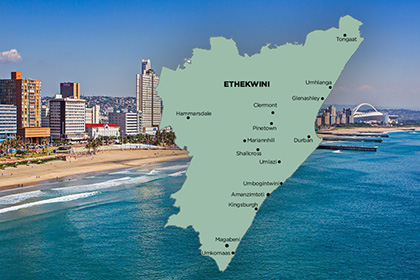
| President Cyril Ramaphosa has announced that eThekwini will be the venue for the 46th Ordinary Summit of Heads of State and Government of the Southern African Development Community (SADC) to be held in August 2026. |
|
|
 |
|
| |
The President announced this when he delivered remarks at the unveiling of the statues of struggle stalwarts former President Nelson Mandela and African National Congress leader Oliver Tambo in eThekwini, KwaZulu-Natal, on Tuesday, 3 March 2026.
The President described the decision as a worthy recognition of the progress that has been made together with all social partners in restoring confidence in the city and encouragement to complete the work.
“We look forward, as the chair of SADC, to inviting leaders from across the region to gather here in eThekwini — where the African Union was launched — to deliberate on issues that are critical to the growth and development of Southern Africa. This would be a fitting tribute to the legacy of Nelson Mandela and Oliver Tambo,” he said.
The announcement comes as South Africa assumes the interim leadership of the regional bloc.
President Ramaphosa was elected interim Chairperson of SADC during a virtual Extraordinary Summit of Heads of State and Government held on 7 November 2025.
The decision followed the Republic of Madagascar’s move to relinquish its role as SADC Chair due to recent political developments that affected its capacity to fulfil the responsibilities of the position.
In line with provisions of the SADC Treaty, South Africa, as the Deputy Chair, has assumed interim leadership of the regional body until August 2026, when the summit is expected to make a formal determination.
SADC leaders had originally appointed South Africa as the incoming 46th Chair during the 45th Ordinary SADC Summit of Heads of State and Government held in Antananarivo, Madagascar, in August 2025. The summit is the highest policy-making structure of the regional bloc.
Due to developments in Madagascar, however, South Africa has taken over earlier than anticipated and, as interim Chair, will host all SADC meetings from November 2025.
According to the summit communiqué, South Africa will steer SADC under the theme adopted in August 2025: Advancing Industrialisation, Agricultural Transformation, and Energy Transition for a Resilient SADC.
The hosting of the 46th SADC Summit in eThekwini is expected to cement South Africa’s leadership role within the bloc while positioning the coastal city as a centre for regional diplomacy and economic cooperation in the year ahead.
– Source: SAnews.gov.za |
|
| |
|
| |
| PRESIDENT RAMAPHOSA CALLS FOR DIALOGUE IN THE MIDDLE EAST |
|
| |
 |
|
| President Cyril Ramaphosa and the Government of the Republic of South Africa have expressed deep concern over the escalating tensions in the Middle East, warning that the developments pose a serious threat to regional and international peace and security. |
|
|
| |
In a statement issued on Saturday, 28 February 2026, The Presidency said the situation carries far-reaching humanitarian, diplomatic and economic consequences.
President Ramaphosa called on all parties to exercise maximum restraint and to act in accordance with international law, including international humanitarian law and the principles of the United Nations (UN) Charter.
Referring to Article 51 of the UN Charter, the President noted that the provision provides for self-defence only when a state has been subjected to an armed invasion.
He emphasised that anticipatory self-defence is not recognised under international law and that claims of self-defence are not permitted under international law, and self-defence cannot be based on assumption or anticipation.
The President also stressed that experience has repeatedly demonstrated that there can be no military solution to fundamentally political problems that can and should be resolved diplomatically. Military confrontation has never delivered sustainable peace, nor has it addressed the legitimate grievances that underlie conflict.
“Long-term peace and stability can only be achieved through inclusive dialogue and a genuine commitment to justice and coexistence."
The President reiterated his call for intensified diplomatic efforts to de-escalate tensions and create space for continued meaningful negotiations.
“We urge the international community, including multilateral institutions and regional partners, to redouble efforts aimed at promoting mediation and peaceful resolution. As a nation that has emerged from conflict through dialogue and reconciliation, South Africa remains steadfast in its belief that peace is not only possible, but imperative for the shared future of the Middle East and the world," President Ramaphosa said.
– Source: SAnews.gov.za |
|
| |
|
| |
| DEPUTY PRESIDENT LAUNCHES R100M WITS HYDROGEN FACILITY |
|
| |
| Deputy President Paul Mashatile says South Africa’s green hydrogen ambitions must anchor a new era of reindustrialisation, urging the country to “build what we use and innovate what we export”. |
| |
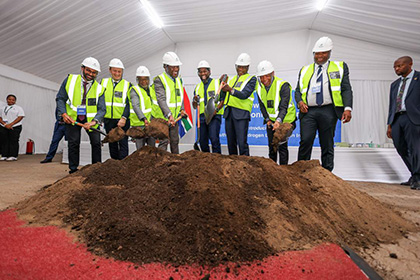
This, as he launched the R100 million Wits Strategic Hydrogen Localisation Investment Facility (Wits-SAHLI) on Friday, 27 February 2026.
Speaking at the University of the Witwatersrand’s West Campus, Deputy President Mashatile positioned the hydrogen initiative as more than a research milestone but a national turning point in rebuilding domestic manufacturing capacity and reclaiming lost industrial ground.
|
|
|
 |
|
| |
“This moment marks not only the beginning of a groundbreaking project, but also the start of a shared national endeavour: to build a new industrial capability that drives innovation, creates quality jobs, and contributes to a just, inclusive, and sustainable economy,” he said.
The Wits-SAHLI initiative is a partnership between Air Liquide South Africa, Wits University and the Localisation Support Fund and forms part of South Africa’s broader Hydrogen Society Roadmap.
From improvised classrooms to world-class laboratories
In a personal reflection, the Deputy President contrasted the modern hydrogen facility with his own school days, when science lessons were conducted in under-resourced classrooms with improvised equipment.
“Our ‘science laboratory’ was nothing more than an ordinary classroom with a cracked chalkboard and wobbly desks. What we had was imagination,” he recalled.
He said facilities such as Wits-SAHLI symbolise how far the country has come and how far it must still go to ensure young South Africans inherit not limitations, but opportunity.
“They close the gap between potential and possibility,” the Deputy President said, adding that the hydrogen plant would serve as both a technical asset and a training ground for the next generation of engineers, scientists and entrepreneurs.
Hydrogen as a reindustrialisation lever
Equipped with a 110-kilowatt electrolyser, 200-kilogram hydrogen storage capacity and a 200- kilowatt clean power output system, the modular pilot plant is designed to bridge the gap between laboratory-scale research and industrial implementation.
Deputy President Mashatile framed localisation as the central pillar of the project, arguing that South Africa cannot afford to remain dependent on imported technologies, particularly in emerging sectors such as green hydrogen.
“Localisation generates jobs, enhances skill sets and supports small businesses. By reducing dependency on external supply chains, it empowers local researchers and industries to innovate,” he said.
He pointed to the steady decline in manufacturing from more than 22% of gross domestic product (GDP) in the early 1990s to about 12–13% today and falling employment in the sector as evidence of the urgency to act.
“Behind every percentage point lost are thousands of vanished opportunities,” he warned.
Initiatives such as Wits-SAHLI, he said, are central to reversing that decline by deepening local value chains, developing supplier ecosystems for SMMEs and ensuring that intellectual property and technical expertise remain within South Africa’s borders.
Anchoring the energy transition
The Deputy President acknowledged the role of Electricity and Energy Minister Kgosientsho Ramokgopa in strengthening policy certainty and positioning green hydrogen within the country’s broader energy transition strategy.
He emphasised that hydrogen development must not occur in isolation, but as part of an integrated national energy plan that includes grid expansion, renewable energy integration and industrial reform.
Academia the backbone of the hydrogen economy
Higher Education and Training Minister Buti Manamela joined the launch, with the Deputy President underscoring the importance of universities in building the skills pipeline required to scale the hydrogen economy from pilot phase to commercial viability.
“Universities and research facilities are the backbone of this initiative. The hydrogen economy will require new thinkers, new problem solvers, new technicians, new researchers and new entrepreneurs,” he said.
By 2028, when the facility is expected to be fully operational, the partnership aims to have cultivated a vibrant ecosystem of locally manufactured hydrogen components, strengthened enterprise development pathways and enhanced South Africa’s competitiveness in global green markets.
In closing, Mashatile described the launch as the foundation of a new chapter in South Africa’s industrial and energy landscape.
– Source: SAnews.gov.za |
|
| |
|
| |
| MINISTER LAMOLA MEETS WITH FAMILIES OF REPATRIATED MEN FROM RUSSIA-UKRAINE CONFLICT |
|
| |
 |
|
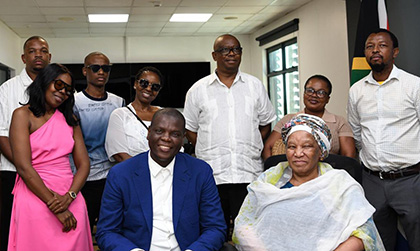
| The Minister of International Relations and Cooperation, Ronald Lamola, has formally met with the families of the South African men recently repatriated after being caught in the ongoing conflict between Russia and Ukraine. |
| |
|
|
|
| |
The meeting on Thursday, 26 February 2026, served as a “humanitarian touchpoint” after the safe return of their family members from the conflict zone, according to the Department of International Relations and Cooperation.
The department said the Minister expressed the government’s relief regarding the safe return of the citizens, acknowledging the immense distress their families have endured.
“The Minister emphasised that this government intervention was an exceptional measure taken to preserve South African lives,” said the department in a statement on Thursday.
Earlier in the day, Minister in the Presidency Khumbudzo Ntshavheni said the South African government, working closely with Russian authorities, had secured the safe return of the men, aged between 20 and 39, after distress calls were received from them seeking assistance to come home.
Minister Ntshavheni confirmed that all 17 men have been released from the contracts they had signed with military contractors.
“Fifteen of the men are back in South Africa, while two remain in Russia, with one in a hospital and the other one being processed before finalising his travel arrangements,” Minister Ntshavheni said.
The South African Embassy in Moscow will continue monitoring the individual who remains in hospital until he has fully recovered and is fit to travel.
Minister Lamola said, “The safety of our citizens abroad is a priority, but we must be clear: the circumstances that led to this situation were highly irregular. Our empathy for the families is matched by our duty to uphold the laws of our Republic.”
The Ministry is deeply concerned by the suspicious circumstances and predatory recruitment tactics used to lure citizens into danger.
“If a job offer abroad sounds too good to be true, it probably is,” the Minister cautioned.
South Africans have been urged to exercise extreme due diligence when pursuing international employment, particularly those involving “security”, “logistics,” or “technical support” in high-risk regions.
The government continues to investigate the networks involved in these recruitment efforts to ensure that those who exploit vulnerable citizens face the full might of the law.
The department said, apart from these 17 men, the South African government had been informed that two South Africans have lost their lives on the frontlines and that the families have been informed.
– Source: www.dirco.gov.za |
|
| |
|
| |
| SOUTH AFRICA CO-CHAIRS THE HAGUE GROUP EMERGENCY MEETING ON ACCOUNTABILITY IN PALESTINE |
|
| |
 |
|
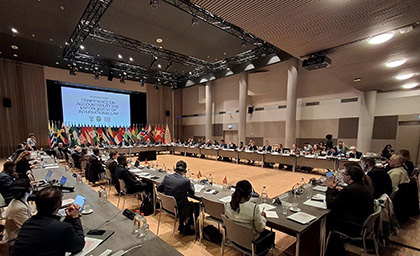
| Deputy Minister of International Relations and Cooperation, Alvin Botes, travelled to The Hague to deliver remarks and participate in The Hague Group Emergency Meeting on Accountability and the Enforcement of International Law in Palestine, held at the World Forum on 4 March 2026. |
| |
|
|
|
| |
The meeting, co-chaired by the Republic of South Africa and the Republic of Colombia, brought together representatives from forty states. It marked the largest gathering of states participating in a meeting convened by The Hague Group since its establishment in January 2025.
Participants met against the backdrop of escalating developments in the Occupied Palestinian Territory, including the acceleration of Israel’s settlement policies and intensified military operations in the West Bank. These developments were highlighted as posing significant challenges to the realisation of the Palestinian people’s right to self-determination and the prospects for a peaceful and just resolution of the conflict.
During the meeting, participating states reaffirmed the central role of the United Nations Charter and the international legal order as the foundation for peaceful and just relations among states. Delegates reiterated their commitment to key principles of international law, including the prohibition of the acquisition of territory by force and the right of peoples to self-determination.
Participants also underscored the importance of accountability for serious violations of international law. In this regard, they reaffirmed their commitment to supporting appropriate, fair and independent investigations and prosecutions related to alleged international crimes.
Drawing on legal obligations identified in the International Court of Justice Advisory Opinion of July 2024 and the United Nations General Assembly Resolution ES-10/24 adopted in September 2024, the meeting presented a number of proposed measures to be further developed and formally tabled at an upcoming ministerial meeting.
These proposed measures focused on three broad areas: strengthening accountability for serious international crimes; enforcing the principle of non-recognition of unlawful settlements; and preventing the transfer of arms or material support that could contribute to violations of international law.
The meeting concluded with a call for states to uphold their obligations under international law and to take concrete steps to ensure accountability and compliance with the international legal framework.
Deputy Minister Botes co-chaired the meeting alongside Mauricio Jaramillo, Vice Minister of Multilateral Affairs of the Republic of Colombia.
– Source: www.dirco.gov.za |
|
| |
|
| |
| DEPUTY MINISTER MORAKA HOSTS SADC OUTREACH IN MPUMALANGA |
|
| |
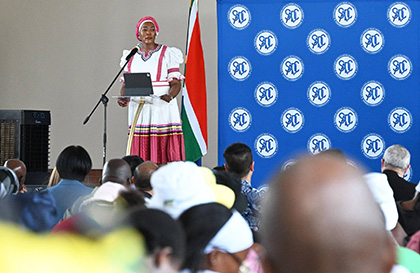
| The Deputy Minister of International Relations and Cooperation, Thandi Moraka, hosted a community outreach focussing on South Africa’s role as the interim and upcoming Chair of the Southern African Development Community (SADC). Organised in partnership with the Mpumalanga Provincial Government, SANParks and Nkomazi Local Municipality, it took place in Nkomazi Local Municipality on Saturday, 28 February 2026. |
| |
|
|
|
 |
|
| |
South Africa is the interim Chair of SADC for the period November 2025 to August 2026, following Madagascar’s decision to relinquish its Chairship due to political developments in the country. Furthermore, South Africa will assume its annual rotational Chairship of the regional bloc in August 2026.
The outreach included a community imbizo, a tourism excursion for members of the diplomatic corps and a cocktail reception for diplomats and targeted provincial stakeholders.
– Source: www.dirco.gov.za |
|
| |
|
| |
| EVACUATION OF SOUTH AFRICAN CITIZENS FROM THE CONFLICT ZONE IN THE MIDDLE EAST |
|
| |
 |
|
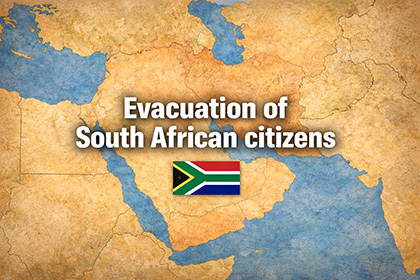
| The Department of International Relations and Cooperation (DIRCO) notes a significant increase in registrations by South Africans on the Travel Smart system, with over 6,400 South African citizens in the Middle East registering their presence as of 4 March 2026. |
| |
|
|
|
| |
South African citizens currently in the region for non-essential travel who wish to evacuate cities and countries affected by the ongoing interstate conflict in the Middle East are strongly advised to use the official channels listed below. This proactive measure is essential to prepare for an exit from the danger zone as soon as it is safe to secure passage.
We urge all citizens to note that several airlines have resumed limited commercial flights out of the region. Citizens are strongly encouraged to take immediate advantage of this opportunity to leave, as heavy attacks are regrettably expected to continue in the coming days. Your safety is our paramount concern.
Furthermore, South Africans are strongly discouraged from all non-essential travel to the region at this time.
If you are experiencing difficulties with the evacuation process or require urgent consular support, please contact a department official immediately through the channels below.
Official Contact Information for Consular Support:
South African Emergency Line (DIRCO): +27 12 351 1000 (Request Consular Services)
South African Embassy (Amman, Jordan): +962 79 552 0245
Jordan Border Inquiry: +962 5 393 3031
Email for coordination: ngwanyaa@dirco.gov.za or segevl@dirco.gov.za
Emergency Consular Support:
Mr Litha Ngwanya: +972 50-520-8100 | Email: ngwanyaa@dirco.gov.za
Ms Lizelle Segev: +972 54-588-0698 | Email: segevl@dirco.gov.za
South Africa takes this opportunity to reiterate its firm call on all parties to the conflict to exercise maximum restraint and to act in a manner consistent with international law, international humanitarian law, and the principles of the United Nations Charter.
– Source: www.dirco.gov.za |
|
| |
|
| |
| SOUTH AFRICA URGES CITIZENS ACROSS MIDDLE EAST TO REGISTER WITH EMBASSIES |
|
| |
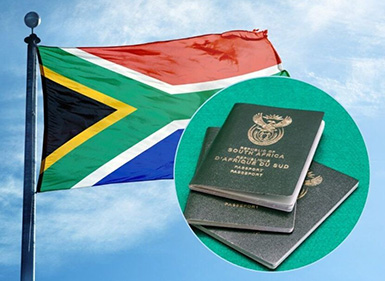
South Africa has called on all its citizens currently in the Middle East to urgently contact the relevant South African embassies accredited to their countries of residence to ensure that they are registered, and that their whereabouts are known to officials amid heightened regional tensions. |
|
|
 |
|
| |
In an advisory issued on Monday, 2 March 2026, by the Department of International Relations and Cooperation (DIRCO), government warned that consular support in parts of the region may be limited, particularly in the event of an emergency.
“It is important to note that South Africa's support in these countries could be limited and that it could be assumed that no face-to-face consular assistance will be possible in an emergency, and the South African Government may not be able to help you if you get into difficulty, depending on your location,” the notice stated.
Citizens have therefore been encouraged to independently assess their safety and security, and act accordingly.
Embassy contact details
South Africans in the region may contact the following missions:
- Tehran, Iran: +98-912-230-8968
- Doha, Qatar: +974-5583-2762
- Dubai, United Arab Emirates: +971-50-558-1235
- Abu Dhabi, United Arab Emirates: +971-50-445-9499 / +971-50-622-4291
- Kuwait City, Kuwait: +965-9916-7899 / +965-9720-0172 / +965-9979-4483
- Riyadh, Saudi Arabia (also accredited to Yemen, Bahrain and Oman): +966-5-5812-2215
- Jeddah, Saudi Arabia: +966-56-244-5376
- Amman, Jordan (accredited to Iraq): +962-79-552-0245
- Damascus, Syria: +963-966-44-4405
- Ramallah, Palestine (also covering Israel): +972-53-2553-113
Citizens may also contact the DIRCO helpline in Pretoria on +27 12 351 1000 for further assistance.
Government further advised that additional contact details are available on DIRCO’s official website.
The advisory forms part of ongoing efforts to monitor developments in the region and ensure that South African nationals remain informed and connected to official channels during the period of heightened uncertainty.
– Source: www.dirco.gov.za |
|
| |
|
| |
| AFRICA POSITIONED AT CENTRE OF GLOBAL ENERGY TRANSITION |
|
| |
 |
|
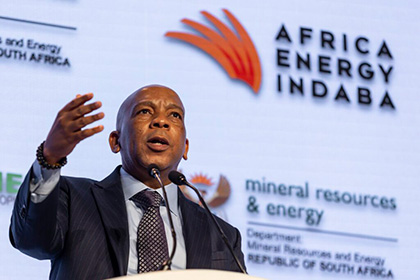
| Africa stands at the centre of the global energy transition at a time when the global order faces evolution and recalibration. |
| |
This is according to Electricity and Energy Minister Dr Kgosientsho Ramokgopa, who addressed the Africa Energy Indaba, which kicked off at the Cape Town International Convention Centre on Tuesday, 3 March 2026.
The Minister highlighted that the gathering comes at a “moment of profound historical consequence” with rising geopolitical tensions, intensifying conflicts around the world, and a global energy transition underway.
“The global order, as we have known it for decades, is not merely evolving; it is being recalibrated in real time. |
|
|
| |
“The energy system that fuelled successive industrial revolutions is undergoing structural transformation. Supply chains are being reorganised under the pressure of strategic rivalry.
“Industrial policy has returned as a central instrument of statecraft, with major economies deploying unprecedented subsidy regimes to secure supply chains, protect domestic manufacturing and reposition themselves within emerging clean technology value chains,” Minister Ramokgopa said.
Africa, with its critical minerals, stands as a key actor in the global transition.
“Energy now sits at the epicentre of this global reordering. Energy has become the silent architecture of global power. In this reconfigured world, Africa is not a peripheral actor. Africa is a structural anchor in the global transition.
“Without African platinum group metals, the hydrogen economy cannot achieve scale. Without African cobalt, manganese and copper, the battery revolution falters. Without African vanadium, long-duration storage remains constrained. Without African uranium, the renewed global interest in nuclear energy cannot advance at pace.
“The transition to net zero is materially dependent on Africa,” the minister stated.
Minister Ramokgopa warned that “history urges vigilance” even as the new structural reality places the continent at the centre of “one of the most consequential economic transformations of our time”.
“Structural centrality does not automatically yield structural prosperity. For generations, Africa supplied the raw materials of industrial revolutions elsewhere, while value addition remained beyond our shores. We exported resources and imported finished goods. We bore environmental costs and absorbed volatility while others consolidated industrial advantage.
“Today, as industrial policy once again shapes global competition, Africa must define its own trajectory within this reconfiguration. We must ensure that the global transition does not replicate historical asymmetries under a new technological banner,” he emphasised.
The minister noted that while Africa’s mineral wealth “places us at the centre of the global transition”, minerals will not guarantee transformation.
“Beneficiation is not rhetoric; it is system design. A battery precursor facility cannot operate on an intermittent supply. Green steel production depends on stable hydrogen and firm baseload capacity. Electrolysers require grid resilience and advanced manufacturing demands quality, predictability and scale.
“Industrial transformation rests on the reliability, affordability and depth of our electricity systems. Minerals without energy do not become industry; industry without transmission does not become exports; exports without infrastructure do not become prosperity.
“If we are to move from quarry to factory, from pit to product, electricity becomes the decisive variable. Industrialising the minerals value chain requires industrialising the energy value chain itself. We must develop manufacturing capacity in transformers, conductors, cables, renewable components and storage systems,” he said.
He also called for investment in local engineering capabilities, technical training institutions and research partnerships that embed technological competence within Africa's economies.
Energy infrastructure development is also key and must be seen as “industrial policy in action”.
“Each transmission line built, each substation expanded and each renewable facility commissioned should reinforce domestic capacity, skills transfer and enterprise development.
“Africa possesses unparalleled renewable potential, critical mineral wealth and a demographic dividend that positions it uniquely within the global energy transition. If aligned with integration, disciplined planning and fair financing, our continent can emerge not only as a supplier of materials, but as a producer of clean technologies, a centre of green industrialisation and a continent that defines its own developmental trajectory,” Ramokgopa added.
Bringing his address to a close, the minister issued a rallying call for Africa to move from rhetoric to reality.
“Let this Indaba serve as a platform where ambition is translated into execution, where continental priorities are structured into bankable pipelines and where Africa’s energy future is shaped with clarity and confidence.
“The African century will not be proclaimed; it will be constructed through planning, financed through discipline, wired through transmission, industrialised through policy and secured through unity.
“And it will be powered by us,” Minister Ramokgopa concluded.
– Source: SAnews.gov.za |
|
| |
|
| |
| SOUTH AFRICA SHOWCASES TOURISM GROWTH AND SMMES AT ITB BERLIN 2026 |
|
| |
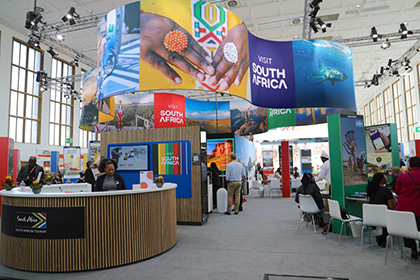
| South Africa is showcasing its tourism sector at ITB Berlin 2026, running from 3 to 5 March 2026, building on last year’s record 10.5 million international arrivals. |
|
| |
The delegation includes 49 exhibitors representing everything from established operators to small and medium enterprises (SMMEs), seeking contracts, partnerships, and exposure in key global markets.
Among them are 24 SMMEs supported by the Tourism Incentive Programme and Limpopo Tourism Agency, gaining direct access to global distribution networks.
Germany remains a key European source market, with arrivals rising 14% from 254,992 in 2024 to 290,795 in 2025.
Delegates aim to increase the average length of stay, boost visitor spending, and strengthen long-term partnerships with European buyers.
Deputy Minister of Tourism Maggie Sotyu said: "ITB Berlin is a strategic platform for South Africa to convert global interest into tangible economic opportunity. Our presence ensures South Africa remains competitive and visible as a value-for-money destination." – Source: www.bizcommunity.com |
|
|
 |
|
| |
|
| |
| CAPE TOWN'S WASTE STRATEGY WINS GLOBAL AWARD |
|
| |
 |
|
| The City of Cape Town has secured global recognition after being named one of the winners of the Bloomberg Mayor’s Challenge 2025, an international competition that rewards cities developing bold solutions to complex urban issues. |
| |
Backed by Bloomberg Philanthropies, the award includes US$1m (about R16m) in funding to scale innovative waste-management initiatives focused on informal settlements.
“We are most appreciative of this prize money and support, and we will use the money to scale up our pilot project on waste management in informal settlement communities," said Mayor Geordin Hill-Lewis.
Cape Town’s winning proposal centres on community-driven approaches to tackling persistent waste challenges in high-density areas where traditional municipal waste systems often struggle to operate effectively. The city’s plan builds on pilot programmes that aim to redesign how waste is collected, sorted and managed in partnership with residents. |
|
|
| |
At the heart of the initiative is the idea that solutions should be co-created with communities rather than imposed from the top down. By involving residents in the design and implementation of waste strategies, the City hopes to develop systems that are more practical, sustainable and responsive to local realities.
The funding will support efforts such as improving waste separation at source, strengthening localised collection systems, and introducing models that better integrate municipal services with community participation.
In many informal settlements, limited space, access challenges and rapid population growth complicate conventional refuse collection. The City's approach, therefore, looks at flexible, neighbourhood-based systems that can adapt to these conditions.
Scaling city solutions
For the construction and infrastructure sector, the recognition highlights the growing importance of innovative urban service-delivery models, particularly in rapidly expanding cities. Informal settlements remain one of the most pressing infrastructure challenges across South Africa and many parts of the developing world.
Effective waste management is not only a sanitation issue but also a key factor in environmental protection, public health and long-term urban resilience.
The Bloomberg competition is known for supporting ideas that can be tested, refined and eventually replicated in other cities. Alongside the financial prize, winning cities typically gain access to technical support, innovation experts and global networks that help turn pilot projects into scalable solutions.
For Cape Town, the award signals international confidence in the City’s efforts to address service-delivery gaps through collaboration and experimentation. If successful, the project could help establish a model for improving waste systems in dense, underserved urban areas — a challenge that municipalities across South Africa continue to grapple with.
As cities increasingly look for ways to manage infrastructure pressures while maintaining sustainability goals, initiatives like this demonstrate how targeted funding, community engagement and practical innovation can converge to drive meaningful change on the ground.
– Source: www.bizcommunity.com |
|
| |
|
| |
| SIBUSISO VILANE COMPLETES WORLD’S HIGHEST MARATHON ON TALLEST VOLCANO |
|
| |
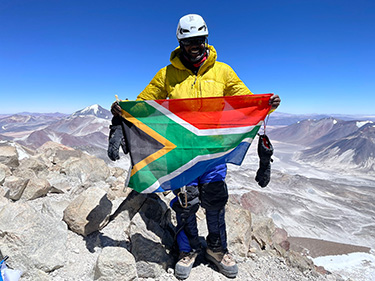
| South African adventurer Sibusiso Vilane has once again pushed the boundaries of human endurance, this time by completing what is believed to be the world’s highest marathon on Ojos del Salado in Chile, the tallest volcano on the planet, standing at 6,893 metres above sea level. |
|
| |
For Vilane, however, the question is not why he keeps seeking extreme challenges, but why he wouldn’t.
“I have been thinking about that for a long time, and I have never found an answer,” he reflects. “But the shortest answer I discovered was that there’s something deep inside me that has a yearning, a calling to go out there and challenge my potential, which I believe is limitless.”
He describes an inner void that can only be filled by action. Completing a challenge brings satisfaction, but only for a short period of time.
“A week later, I feel that no, this is okay, but you’re not there yet.”
It is this restless pursuit of growth that has carried him from the slopes of Everest to the icy lands of the South Pole. And now, nearly 7 000 metres above sea level for a 42.2 km descent marathon in thin air, where oxygen levels sit at roughly 44% of those at sea level. |
|
|
 |
|
| |
The invitation to take part in the marathon came from Paul Gurney of BecomingX in the United Kingdom. Vilane’s response was quick. There was no need to think too much about it.
“You realise that I’m not the kind of person who would normally say no to such an adventure. So yes, I’m in.”
Now, of all these adventures, which one was the most difficult to endure?
He believes it was years of experience that prepared him. Climbing Mount Everest, skiing more than 1,000 km to the South Pole and completing the Comrades Marathon all played a role. Yet none of those pushed him to his absolute limit. One would think surely it must’ve been one of these challenges, but no.
“What almost did that for me was walking up and down the Westcliff steps in Johannesburg for more than 34 hours. I was a walking zombie by the time I finished there.”
Out of 10 runners who set out to summit and then run down, only five ultimately made it to the top to begin the marathon. Many dropped back due to the cold and steep terrain. Vilane remained mentally fixed on standing at the summit and pressing start on his watch.
Acclimatisation was key. The team followed a gradual programme, spending nights at high altitude and undertaking staged climbs to allow their bodies to adapt. By summit night, Vilane felt fully prepared. Support is what made this possible. From guides who led and resupplied them to a driver named Gavin who followed the runners through the night, offering encouragement and even hot coffee at 3am, teamwork was everything.
For Vilane, the word “impossible” doesn’t exist in his vocabulary. And for him, climbing mountains is about growth and the belief that only you can stop yourself from achieving what seems impossible.
Beyond the physical achievement, Sibusiso remains grounded in purpose. As a motivational speaker and humanitarian, he draws a clear distinction between happiness and fulfilment.
“What we do gives us happiness, but happiness is short. Why we do it: serving a purpose beyond yourself gives you fulfilment. And fulfilment lasts.”
– Source: www.goodthingsguy.com |
|
| |
|
| |
| SOUTH AFRICA’S SALT TELESCOPE JOINS ONE OF THE MOST AMBITIOUS SKY SURVEYS EVER |
|
| |
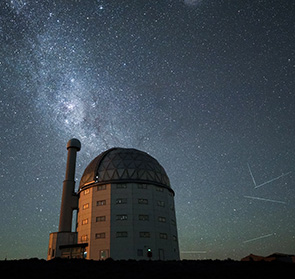
| South Africa is stepping into a new era of time-domain astronomy by investigating new alerts picked up by the Rubin Observatory in Chile. The Rubin Observatory in Chile is conducting one of the most ambitious sky surveys ever. |
|
|
 |
|
| |
The observatory uses the largest digital camera ever built — the Legacy Survey of Space and Time camera — to photograph the sky every 40 seconds. Its software automatically spots anything that’s changed since the last time it looked, whether that’s a star that suddenly brightened, a new explosion in a distant galaxy, or a rock moving through our solar system.
When it spots something unusual like an exploding star (supernova), a flaring black hole, or a new asteroid, it sends out a global “alert”.
The observatory released the first of those alerts this week. In one single night, it issued 800,000 alerts calling scientists’ attention to new asteroids, exploding stars, and other changes in the night sky. Eventually, the system is expected to produce up to seven million alerts per night.
While the Rubin Observatory is great at finding these events, South Africa has the “detective” needed to solve the mystery.
Sutherland is the home of the largest single optical telescope in the Southern Hemisphere, the Southern African Large Telescope (SALT). Its job is to take that alert, point its massive 11-metre mirror at the object, and perform “spectroscopy” — which is basically analysing the light to figure out exactly what the object is made of and how far away it is.
In space things happen fast. An exploding star might only stay bright for a few days or even hours. Because South Africa shares the same southern sky as Chile, we are perfectly positioned to jump into action the moment an alert is triggered.
But SALT isn’t working alone. We also have the Lesedi telescope, a fully automated “robotic” telescope in the Northern Cape. It’s part of the Intelligent Observatory programme, meaning it can respond almost instantly to an alert, providing the first crucial bits of data before the giant SALT telescope takes over for heavy lifting.
“This is an exciting moment for South African astronomy,” said Prof. Rosalind Skelton, Managing Director of the National Research Foundation’s South African Astronomical Observatory. “Rubin Observatory is transforming how we discover dynamic events in the universe, and SALT is ideally equipped to investigate them in detail, building on an existing highly successful transient programme. Our ability to respond quickly to these alerts ensures that South Africa will play a leading role in the scientific return from this global endeavour.”
The partnership puts South African scientists and students at the absolute forefront of international astronomy that will, over time, reshape how humans understand the universe.
– Source: www.goodthingsguy.com |
|
| |
|
| |
| PHOTOGRAPHER’S BO-KAAP SHOT WINS IN WORLD PHOTOGRAPHY COMPETITION |
|
| |
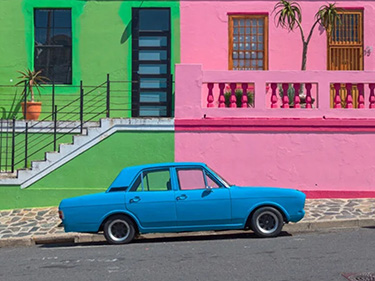
| A photographer visited Cape Town and snapped a shot of a famously colourful Bo-Kaap scene. That photograph has just scooped a global award. |
|
| |
 |
|
Out of almost half a million photographs submitted from hundreds of countries across the world, Robby Ogilvie’s snap of the Bo-Kaap has been announced as a category winner in this year’s Open Competition of the Sony World Photography Awards.
Most South Africans will know the deep history behind the colourful houses of the Bo-Kaap.
They first originated as rental properties painted white by Dutch owners. After slavery was abolished in the 1830s, residents painted their homes in bright colours to celebrate their freedom and reclaim their Cape Malay identity.
“I’m thrilled to share that my photograph, Colour Divides, taken in the Bo-Kaap neighbourhood of Cape Town, has been announced as a category winner in the 2026 Open Competition of the Sony World Photography Awards”, shares Ogilvie. |
|
|
| |
The Open competition accepts entries across the world and rewards the best single, standalone images across 10 categories, including Architecture, Creative, Landscape, Lifestyle, Motion, Street Photography, and Object.
“Selected from over 430,000 photographs submitted from more than 200 countries and territories, this recognition is incredibly humbling and deeply appreciated. To have this work acknowledged among so many remarkable global entries is a real honour,” adds Ogilvie.
In April 2026, his Bo-Kaap photograph will go on display at the Sony World Photography Awards ceremony and exhibition in London, where the Open Photographer of the Year will be announced.
When it’s not a local photographer scooping an acclaimed international award, it’s a local scene that carries a story the world should know.
– Source: www.goodthingsguy.com |
|
| |
|
| |
| SKAI JACKSON SERVES “SCULPTURAL ELEGANCE” IN GERT-JOHAN COETZEE |
|
| |
| March started on a good note for South African fashion designer Gert-Johan Coetzee, whose dress was worn by Skai Jackson. |
| |
Gert-Johan Coetzee, a South African fashion designer, is undeniably one of the go-to designers worldwide. His exquisite black dress from his spring/summer 2025 collection was the perfect pick for Skai Jackson at the 32nd Annual Actor Awards on 1 March 2026 in Los Angeles.
American wardrobe stylist Parker Blaine sourced the dress for Skai, an American actress, best known for her portrayal of Zuri Ross in Jessie.
The dress, tailored by Aza Tailor, fitted her like a glove and was complemented by only her earrings. |
|
|
 |
|
| |
In a brief Instagram post, Coetzee wrote the following as his caption:
“On the red carpet at the 32nd Annual Actors Awards, Skai Jackson stuns in Gert-Johan Coetzee SS25, a showcase of sculptural elegance and modern sophistication.”
Coetzee is a formidable presence in the fashion industry. American musician Chloe Bailey is among many notable stars who have worn a Coetzee design in their lifetime. She wore a yellow figure-hugging dress to the premiere of The Little Mermaid in 2023.
Lerato Kganyago is among Coetzee’s regular clients, while Bonang Matheba has supported him since the early days of his career after leaving Diamond Face Couture in 2009.
– Source: www.thesouthafrican.com |
|
| |
|
| |
| JUNIOR BOKS SECURE DOUBLE WIN OVER GEORGIA U20S |
|
| |
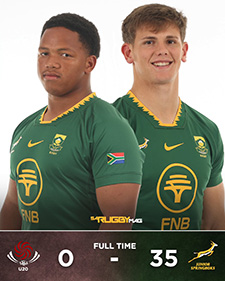
| The Junior Springboks concluded their short tour of Georgia with a 35-5 victory over the hosts on a cold and wet Friday afternoon, 27 February 2026, in Tbilisi, with SA U20 head coach Kevin Foote praising the players’ resilience in the tough conditions. |
|
| |
 |
|
The SA U20s, who won the first game 35-0 last Sunday, led by 21-0 at the break and scored five tries to one.
Junior Boks far from perfect
The tough conditions made handling very difficult, while the South Africans were also guilty of conceding too many penalties, with two players also spending time in the sin-bin.
Yaqeen Ahmed contributed 15 points from a try and five conversions, which means that the Junior Bok flyhalf succeeded with all 10 of his conversions over the two matches.
Reflecting on the performance, Foote said the players showed a lot of character: “The conditions were tough with all the rain. Playing in Georgia is always difficult for different reasons, but I thought the guys showed a lot of maturity today.”
The Junior Boks were forced to be patient, as Georgia’s physical pack made possession difficult to come by. However, the South Africans were clinical when given the opportunity.
“We didn’t get a lot of possession, but when we did, we made use of it, especially in the first half,” Foote added. |
|
|
| |
SA U20 score five tries against Georgia
Lindsey Jansen opened the scoring for the SA U20s after strong runs by the midfield pair of Ethan Adams and Markus Muller had set up play nicely for the speedster to finish.
He was followed over the whitewash by scrumhalf Hendré Schoeman before Zekhethelo Siyaya, who was impressive in the No 15 jersey on attack, scored their third converted try to give the Junior Boks a 21-0 lead at the break.
Georgia started the second half more determined, and the slippery conditions meant a lot of stop-start play as the players struggled with their handling.
The second half proved more abrasive and disjointed, which tested the team’s discipline and defensive resolve. Despite the pressure, the Junior Boks’ defence remained strong as they conceded only one try, their only one in two matches.
Nika Khalvashi (wing) scored the hosts’ only try shortly after the break, from a great cross-kick, but Ahmed and Risima Khosa added two more tries as the South Africans eased into a well-deserved away win.
“The second half was very stop-start, so there were some great learnings for us here in Georgia, as we’ll be playing here again during the Junior World Championship, which they will host,” added Foote.
“It was a good effort to us for only conceding one try, which is important and shows our character, but we still have a long way to go as we head towards the U20 Rugby Championship.”
Scorers:
Junior Springboks 35 (21) – Tries: Lindsey Jansen, Hendré Schoeman, Zekhethelo Siyaya, Yaqeen Ahmed, Risima Khosa. Conversions: Ahmed (5).
Georgia U20 5 (0) – Try: Nika Khalvashi.
– Source: www.citizen.co.za |
|
| |
|
| |
| SOUTH AFRICA'S CASEY JARVIS EARNS MASTERS AND OPEN INVITES WITH SA OPEN TRIUMPH |
|
| |
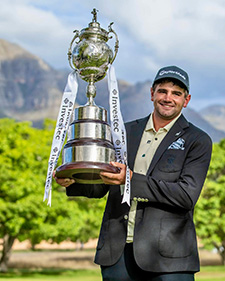
| South African golfer Casey Jarvis earned spots in both The Masters and Open Championship after sealing back-to-back titles on the DP World Tour with a victory at the South African Open on Sunday, 1 March 2026. |
| |
A calm closing round of 67 proved more than enough for the 22-year-old to clinch the 2026 South African Open Championship by three shots at Stellenbosch Golf Club, capping a remarkable fortnight in which he has firmly announced himself at the highest level.
Fresh from last week's breakthrough win at the Magical Kenya Open presented by Absa, Jarvis carried that momentum into the final round, starting the day with a one-shot advantage. Four birdies against a single bogey saw him pull clear once again, finishing on 14-under-par to secure his second three-shot triumph in as many weeks.
The win makes Jarvis the third multiple winner of the season, joining fellow South African Jayden Schaper and American Patrick Reed, and mirrors Schaper's achievement of successive victories.
This year also marked the first time the South African Open awarded places at both the Masters and The Open to its champion, adding extra significance to Jarvis' breakthrough success. |
|
|
 |
|
| |
"I feel on top of the world in this moment," Jarvis said. "I feel absolutely incredible.
"To win in front of my home crowd in my home Open is just absolutely fantastic; I've got no words!
"There's so many good memories (of this event). Brandon Stone, who's a good friend of mine, I watched him when I was about 10 years old and watched him win the SA Open.
"I just had a slight feeling from the start of the week that something crazy was going to happen and it's incredible."
Jarvis ultimately finished three shots clear, with fellow South African Jaco du Plessis mounting the closest challenge before slipping back late on. Du Plessis bogeyed the last to end on 11 under, sharing second place with Italy's Francesco Laporta and France's Frederic Lacroix, while England's Eddie Pepperell posted a blemish-free 64 to claim outright fifth on ten under.
Further down the leaderboard, South Africans Daniel van Tonder and Haydn Porteous, along with Emirati Adrian Otaegui, finished a further two shots back.
– Source: www.sabcsport.com |
|
| |
|
| |
| NICOLE BURGER REFLECTS ON A WHIRLWIND RIDE AT THE WINTER OLYMPICS |
|
| |
 |
|
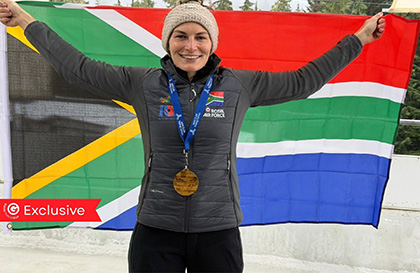
| Nicole Burger describes representing South Africa at the Winter Olympics as a dream fulfilled and a fast-paced adventure filled with pride. |
|
|
| |
When South Africa sent five athletes to the Winter Olympics, it was a historic moment. The largest team the country has ever sent. For Nicole Burger, being part of that milestone was a mix of pride, excitement, and a sense of achievement.
“It’s such a sense of pride, not only to just represent South Africa, but also to see how far we’ve come over the last few years. Walking out with the flags, seeing athletes at other venues, and watching the videos afterwards. It’s a great feeling to be part of that and to show the world that South Africa has winter sports athletes.”
Even as she raced down the icy track in skeleton, lying centimetres from the ice at speeds of up to 130 km/h, Burger was focused and calm.
“When I started, it was more of a ‘get to the bottom of the track. Am I still alive? Am I in one piece?’ Whereas now, at the start line, it’s enjoying the atmosphere, the crowd cheering, and then once the helmet’s on, it’s all concentration. Entering corners, steering, exiting, and thinking about the next one.”
Burger finished 25th overall, but for her, qualifying for the Games was the real achievement.
“My first international race was only in December 2023, and when I started, the Olympics weren’t even on my radar.”
But she now looks back with various achievements under her belt.
“I was just learning the sport and having fun. Now, I’m the North American Cup circuit leader, podiumed multiple times, and competing at the Europe Cup. It’s been a whirlwind.”
Born in Cape Town, Burger’s sporting background is classically South African. You name it, rugby, athletics, and equestrian. But skeleton was something else entirely.
“I saw a poster for the RAF skeleton team trials while working in the United Kingdom (UK). I Googled it, went to the sprint start, loved it, and after just five weeks on ice with the team, I was competing internationally. It was a crazy whirlwind.”
Now based in the UK with the Royal Air Force at High Wycombe, she’s currently in Norway training and competing with the RAF Skeleton team.
“It’s great to get time on the track, play with sled setups, and prepare for future competitions. After this, it’s back to the UK and then hopefully to South Africa to see family.”
Her advice to anyone feeling like they don’t fit a sport because of where they’re from.
“Try anything and give everything a go. Don’t be scared. Step out of your comfort zone and say yes to something completely different.”
– Source: www.goodthingsguy.com |
|
| |
|
| |
| SOUTH AFRICAN SKATERS MAKE THEIR MARK AT RIGA AMBER CUP IN LATVIA |
|
| |
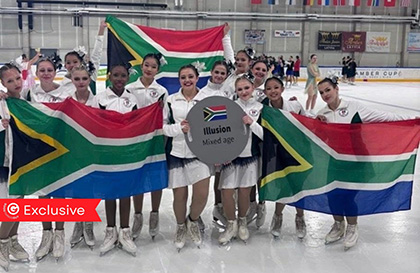
| Despite limited training and funding challenges, Team Illusion’s mixed-age synchronised skating team delivered a standout performance, finishing fourth on the international stage. |
|
|
 |
|
| |
South Africa’s Mixed Age Synchronised Figure Skating team, Team Illusion, recently made a remarkable impression on the international stage. Competing at the prestigious Riga Amber Cup in Latvia, the team delivered a strong performance, finishing fourth in their division.
For Team Illusion, skating is all about blending artistry and unity. Preparing for international competition brought its own set of challenges, from coordinating training sessions to securing the necessary funds for travel.
Dave Draper, a member of the Gauteng North Figure Skating committee and a key supporter in fundraising for the team, says getting the team together was a challenge, but all turned out great in the end.
“One of the biggest challenges was getting all 13 skaters together at the same time; some are at school, some at university, and others work. But seeing them unite and manage the training was amazing.”
Training sessions were limited but intense. The team managed two regular sessions per week, with extra practices added in the lead-up to the competition.
“Coaching a mixed-age team like Team Illusion requires creating a strong sense of unity and shared purpose. The more experienced skaters lead by example while helping develop the younger athletes,” explained Konrad Giering, the team’s coach.
Financially, the journey was just as challenging. While a crowdfunding campaign helped, it didn’t meet the initial target.
“The crowdfunding campaign didn’t go as planned, but through exhibitions, competitions, and some generous sponsors, we managed to make the trip happen. It was incredible to see the team compete and thrive internationally,” said Dave.
Once in Latvia, the team’s preparation and teamwork shone. They acclimatised to the cold, managed limited ice time, and gave it their all on the rink. The result was a fourth-place finish in their division and an experience that left a lasting impression.
“Motivation comes from creating a positive and supportive environment. Celebrating small wins and reminding the skaters of the privilege of representing South Africa keeps them focused and driven,” said Konrad.
What truly sets Team Illusion apart on the world stage, according to their coach, is their authenticity and passion.
“What makes Team Illusion truly stand out is our identity as a South African team.”
The experience has strengthened the bond between skaters and inspired everyone involved.
– Source: www.goodthingsguy.com |
|
| |
|
| |
|
|
|
|
|
|
|
|