| |
| |
|
| |
|
| |
|
| |
| PRESIDENT CALLS FOR RENEWED COMMITMENT TO DIGNITY AND HUMAN RIGHTS |
|
| |
| President Cyril Ramaphosa has called on South Africans to recommit themselves to the values of dignity, equality and human rights as the country prepares to mark Human Rights Day on 21 March. |
|
|
 |
|
| |
Writing in his weekly newsletter on Monday, 16 March 2026, the President reflected on the significance of 2026 marking 30 years since South Africa adopted its democratic Constitution, describing the Constitution as more than the supreme law of the land but a solemn promise that no person should ever again be stripped of their humanity and dignity.
The President said Human Rights Day also commemorates the tragic events of the Sharpeville Massacre of 1960, when apartheid police opened fire on unarmed protesters, killing 69 people and injuring many others. He said the day serves as a moment for the nation to reflect on whether the promise of the Constitution is being fulfilled.
According to the President, one of the most fundamental values of the Constitution is the advancement of human dignity, which underpins rights such as equality, freedom from discrimination, education, healthcare and the right to a safe environment.
He noted that human dignity in South Africa is not merely an abstract ideal but a concrete right that shapes the daily lives of citizens. Courts, laws and democratic institutions, he said, continue to play an important role in protecting and advancing this right.
President Ramaphosa highlighted progress made since the advent of democracy, noting that millions of South Africans now have access to water, electricity, healthcare, education and social support that were denied to them under apartheid. Programmes such as the child support grant, early childhood development, fee-free schooling and funding opportunities for higher education were cited as measures that help restore dignity, particularly for children and young people.
He also pointed to improvements in housing and basic services, which have helped reduce poverty and improve the quality of life for many families.
However, the President acknowledged that significant challenges remain. Poverty, inequality and unemployment continue to limit the full realisation of human dignity for many South Africans, he said, stressing that addressing these challenges is a constitutional imperative shared by all.
He said government is working to accelerate economic recovery, stimulate investment, expand infrastructure development and implement reforms in sectors such as energy, water and logistics to drive growth and job creation.
As the global economic outlook becomes increasingly uncertain, the President urged South Africans to remain committed to the country’s development path, including strengthening skills development and expanding support for small businesses.
Marking Human Rights Day, the President called on citizens to recommit themselves to the Constitution and its core values, urging South Africans to treat one another with dignity and to continue working towards a society where everyone can live in dignity, comfort and peace.
– Source: www.presidency.gov.za |
|
| |
|
| |
| PRESIDENT RAMAPHOSA CALLS FOR TURNING POINT IN SOUTH AFRICA’S TRANSPORT SECTOR |
|
| |
 |
|
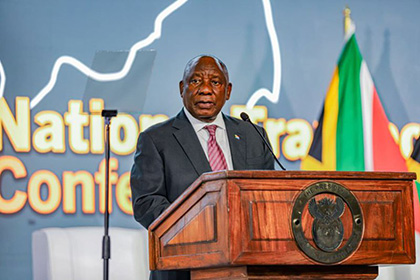
| President Cyril Ramaphosa says the inaugural National Transport Conference should mark a turning point for South Africa’s transport sector, calling for stronger collaboration between government, business and labour to drive reforms and improve the country’s logistics system. |
|
|
| |
Addressing delegates at the conference held at Gallagher Convention Centre on Monday, 16 March 2026, President Ramaphosa said building an effective transport system requires partnerships across sectors.
“To build the partnership that this vision requires, we should consider establishing a permanent Transport Council,” the President said.
The President said the proposed council would bring together government, the private sector and passenger and logistics service providers across land, air and sea transport to strengthen cooperation and support reforms in the sector.
He stressed that an efficient transport and logistics system is essential for economic growth and improving the lives of South Africans.
“Transport is vital to our economy and our people. When our transport arteries are blocked or inefficient, growth stalls, costs rise and opportunity diminishes. When they flow freely, the country thrives,” he said.
The President noted that logistics inefficiencies are estimated to cost the country’s economy close to R1 billion a day, highlighting the urgency of reforms to improve the movement of goods and people.
He said government has placed logistics reform at the centre of its economic recovery strategy through the Medium-Term Development Plan.
Key interventions include the implementation of the National Rail Policy of 2022 and the National Freight Logistics Roadmap of 2023, which aim to restore rail as the backbone of South Africa’s freight logistics system.
Through the establishment of the Transnet Rail Infrastructure Manager, government has started opening the rail network to private operators.
Train slots covering 24 million tonnes of freight a year have already been conditionally allocated to 11 train operating companies, with the first private operator expected to begin operations in April 2027.
President Ramaphosa said government has also set an ambitious target of moving 250 million tonnes of freight by rail by 2029, compared with 160 million tonnes transported in the past financial year.
The President said improvements are already emerging through the work of the National Logistics Crisis Committee, which has been coordinating efforts to address challenges in the freight system and improve operations on key corridors.
President Ramaphosa emphasised that a modern and efficient transport system would lower the cost of doing business, attract investment and create jobs.
“It will strengthen regional integration and make our economy more competitive,” he said.
He added that the conference presents an opportunity for stakeholders to place transport at the centre of the country’s growth path and help shape a more inclusive and resilient transport system.
– Source: SAnews.gov.za |
|
| |
|
| |
| SADC COUNCIL OF MINISTERS CALLS FOR ACCELERATED REGIONAL INTEGRATION |
|
| |
| The Southern African Development Community (SADC) Council of Ministers has called for the accelerated implementation of policies and programmes to advance regional integration and development. |
| |
|
|
|
 |
|
| |
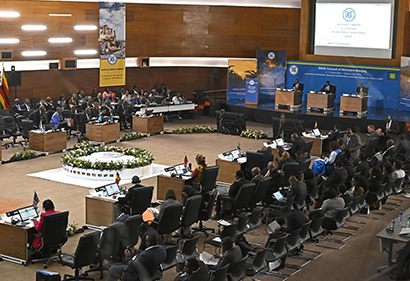
The call was made at the conclusion of the two-day Council of Ministers meeting held in Pretoria from 12 to 13 March 2026 under the theme Advancing Industrialisation, Agricultural Transformation, and Energy Transition for a Resilient SADC.
The meeting was opened and chaired by Minister of International Relations and Cooperation (DIRCO), Ronald Lamola, in his capacity as the Chairperson of the SADC Council of Ministers.
South Africa is currently leading the regional bloc following its election as the interim Chair of SADC during a virtual Extraordinary Summit of Heads of State and Government held on 7 November 2025.
Minister Lamola called for enhanced regional cooperation to make a tangible difference in the lives of the SADC citizens through improved livelihoods, jobs, food security, energy access and resilience.
He also stressed that SADC citizens are looking forward to seeing regional integration producing meaningful economic opportunities and improving their prospects for a better future.
“If integration remains rhetorical, confidence in our common agenda will diminish. But if we act decisively and implement agreed commitments effectively, our region has the potential to emerge as a dynamic force for industrial growth, innovation and sustainable development,” the Minister said.
He called on the Member States to strengthen resource mobilisation efforts, ratify legal instruments that support regional cooperation, and leverage the opportunities that arise from strategic partnerships.
The Chairperson of the Council of Ministers noted progress made, including the expansion of digital connectivity, with internet penetration in the region reaching 54%.
Progress was also reported in infrastructure development through the rollout of One-Stop Border Posts and the addition of more than 14 000 megawatts of new generation capacity, which has increased the share of renewable energy in the regional energy mix from about 25% to 38%.
SADC Executive Secretary Elias Magosi highlighted that consolidating peace and security remains a top priority for regional development.
“Without stability, industrialisation falters, investment declines, and Vision 2050 slips beyond reach,” Magosi said.
He added that the region continues to engage actively in addressing the situation in both the Democratic Republic of Congo and Madagascar to find a sustainable solution to the peace, security and governance challenges facing the two countries.
On trade integration, the SADC Executive Secretary highlighted the advancements made in increasing intra‑SADC trade in manufactured goods, which has risen modestly from 19% to 22%, reflecting progress in market integration and value chain development.
He called on Member States to put in place measures to eliminate trade barriers and boost economic growth.
Magosi highlighted that the region is repositioning the mining sector as a catalyst for industrialisation, with the current shift in focus from exportation of raw materials to value addition.
"Our challenge has never been scarcity, but value addition," Magosi said, citing the revision of the SADC Protocol on Mining to align with its Regional Mining Vision and the adoption of the Critical Minerals Framework at the G20 Summit as opportunities for SADC to reshape global supply chains and fuel prosperity at home.
On resource mobilisation to support regional integration and development, Magosi stressed the importance of the Regional Development Fund (RDF), a regional financing mechanism for driving regional integration and development.
“The RDF is our vehicle for transformation. Without it, we stand still. And with it, we can boldly move forward together,” he said.
Key outcomes of the Council of Ministers meeting
The Council approved the 2026–2027 Annual Corporate Plan, which outlines interventions and outputs designed to accelerate the implementation of the priorities of the Regional Indicative Strategic Development Plan (RISDP) 2020–2030.
These priorities include peace, security, and good governance; industrial development and market integration; infrastructure development in support of regional integration; and social and human capital development; as well as cross-cutting issues such as gender, youth, environment, climate change, and disaster risk management.
In light of geopolitical tensions, economic volatility, climate-induced shocks, and disruptions in global supply chains, all of which directly affect the SADC region, Council resolved to convene an urgent meeting of Ministers of Foreign Affairs to assess the impact of these geopolitical developments on the region.
The Council approved three years of funding for 12 projects to be implemented in SADC Member States under the SADC HIV and AIDS Special Fund Round IV. The selected projects focus, among other areas, on HIV prevention research; integration of mental health services; sexual and reproductive health and gender-based violence prevention and response; and targeted interventions for key populations, including both in-school and out-of-school youth.
Three Memoranda of Understanding were approved between SADC and Japan, the African Wildlife Economy Institute, and the World Food Programme.
These agreements are designed to strengthen cooperation in key areas that align with regional priorities, Agenda 2063, and the Sustainable Development Goals.
The next Ordinary Council meeting will take place in August 2026, ahead of the 46th SADC Summit of Heads of State and Government to be held in eThekwini, KwaZulu-Natal.
– Source: www.dirco.gov.za |
|
| |
|
| |
| SOUTH AFRICA NOTES ISRAEL’S RESPONSE FILING TO THE ICJ |
|
| |
 |
|
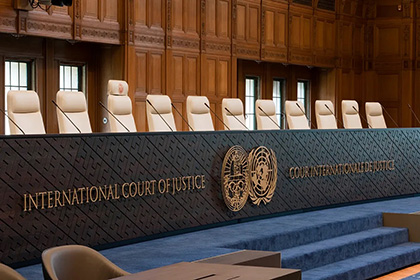
| The South African Government has noted the filing of Israel’s response to South Africa’s written pleadings in the case of Application of the Convention on the Prevention and Punishment of the Crime of Genocide in the Gaza Strip (South Africa v. Israel) before the International Court of Justice (ICJ). |
|
|
| |
The State of Israel filed its response on Thursday, 12 March 2026. The Court had initially ordered Israel to respond by 28 July 2025 to South Africa’s Memorial, which was filed on 28 October 2024, but on two occasions Israel requested an extension to the time limits set by the Court, which the Court granted.
South Africa will now consider Israel’s response and decide whether to request the Court’s permission to make further written submissions in reply, or to proceed directly to the oral phase of proceedings.
In the intervening period Palestinians in Gaza continue to face ongoing bombardment from Israeli strikes, with unabated loss of life, damage to critical infrastructure and precarious living conditions for people in Gaza.
This is despite the purported ceasefire of 10 October 2025 and three binding ICJ Orders secured by South Africa — the first of which came over two years ago — compelling Israel, amongst other things, to prevent the commission of genocidal acts and “ensure, without delay, the unhindered provision of urgently needed basic services and humanitarian assistance”.
Just this week the United Nations (UN) Secretary-General, António Guterres, warned that the “situation remains dire” as a result of strikes and shelling, as well as lack of access to food, humanitarian assistance and other basic services.
The situation in Gaza has been compounded by the escalating crisis in the Gulf and the ongoing attacks by Israel on Lebanon. These developments risk widening the conflict with grave implications for regional and international peace and security.
Israel’s violations of international law that maintain the unlawful occupation of Palestine and deny Palestinians the most basic of human rights, including the right to self-determination, have been documented by multiple United Nations bodies and non-governmental organisations and confirmed by the ICJ — as the UN’s principal judicial organ — as well as the resolutions of the UN’s political organs.
President Cyril Ramaphosa says, “At a time of growing global division and the systematic undermining of the multilateral system, the United Nations in particular, the crisis in Gaza represents an opportunity to unite humanity and remind us of all of our shared values. We must all answer to the call to defend the principles of international law and to re-assert the vital role played by the UN and international dispute settlement mechanisms like the ICJ. South Africa remains committed to playing its part, along with others, to fulfil the promises of the Genocide Convention and the UN Charter to liberate humanity from the “odious scourge” of genocide as described by the 1948 UN Genocide Convention and “save succeeding generations from the scourge of war” as universally pledged in the UN Charter preamble.”
– Source: www.dirco.gov.za |
|
| |
|
| |
| DEPUTY MINISTER BOTES MEETS IRISH MINISTER OF STATE FOR FOREIGN AFFAIRS AND TRADE |
|
| |
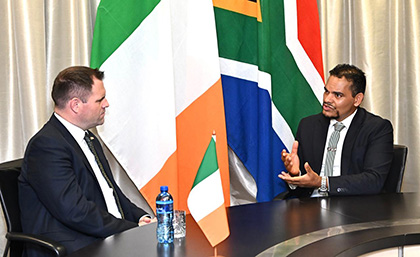
| Deputy Minister of International Relations and Cooperation Alvin Botes met with Ireland’s Minister of State for Foreign Affairs and Trade, Neale Richmond, on Saturday, 14 March 2026, for discussions aimed at strengthening relations between South Africa and Ireland. |
|
|
 |
|
| |
The meeting focused on enhancing bilateral cooperation, including opportunities for collaboration in trade, investment, and diplomatic engagement. Both sides reaffirmed the importance of maintaining strong ties between the two countries and highlighted areas where further partnership could be developed.
The engagement forms part of ongoing efforts to deepen cooperation between South Africa and Ireland and to promote mutually beneficial relations across economic, political and development spheres.
– Source: Public Diplomacy Platforms |
|
| |
|
| |
| DEPUTY MINISTER MORAKA MEETS TANZANIAN COUNTERPART |
|
| |
 |
|
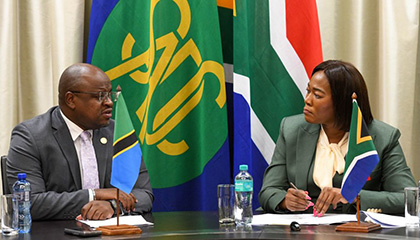
| On Friday, 13 March 2026, Deputy Minister of International Relations and Cooperation, Thandi Moraka, met with her Tanzanian counterpart, Ngwaru Maghembe, Deputy Minister of Foreign Affairs and East African Cooperation of Tanzania, on the margins of the Southern African Development Community (SADC) Council of Ministers Meeting held in Pretoria. |
|
|
| |
The meeting provided an opportunity for the two leaders to exchange views on strengthening bilateral relations between South Africa and Tanzania, as well as on regional cooperation within the SADC.
Discussions also underscored the importance of continued collaboration on regional development, diplomacy and economic cooperation among SADC member states.
– Source: Public Diplomacy Platforms |
|
| |
|
| |
| MINISTER JOHN STEENHUISEN APPLAUDS SOUTH AFRICA’S GOLDEN SHEARS VICTORY |
|
| |
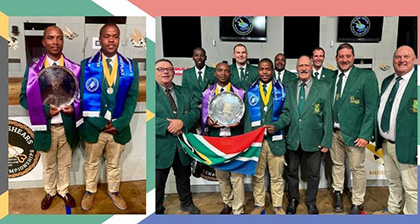
| The Minister of Agriculture, John Steenhuisen, has congratulated the South African hand-shearing team following their victory at the 2026 Golden Shearers World Shearing and Wool Handling Championships held in Masterton, New Zealand. The win marks the sixth consecutive time that South Africa has secured the world championship title in the hand-shearing division. |
|
|
 |
|
| |
Bonile Rabela successfully defended his title as the World’s Best Hand Shearer, while Teboho Nyatsa earned the silver medal in a display of world-class skill and precision.
“This is a monumental achievement for South African agriculture. To maintain a world-title winning streak for six consecutive years is something we can be extremely proud of. It is a testament to the discipline, technical excellence and heritage of our rural workforce,” said Minister Steenhuisen.
The duo also secured a silver medal in the hand-shearing team division. In the All Nations hand shearing division, Nyatsa won a gold medal, and Rabela received a bronze medal.
“Rabela and Nyatsa are more than just athletes; they are ambassadors for our wool industry. Their ability to deliver a clean, efficient finish under extreme pressure showcases the high standards of quality that make South African wool a premium product on the global market,” Minister Steenhuisen added.
– Source: www.gov.za |
|
| |
|
| |
| SOUTH AFRICA AND ESWATINI TO SIGN REVISED KOMATI BASIN WATER TREATY |
|
| |
 |
|
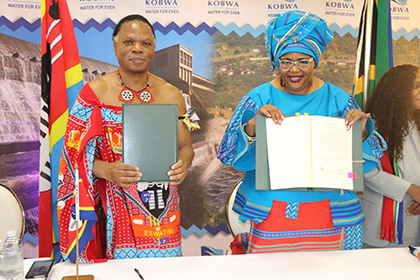
| Water and Sanitation Minister Pemmy Majodina and Eswatini’s Minister of Natural Resources and Energy Prince Lonkhokhela Dlamini formally signed the Revised Treaty on the Development and Utilisation of the Water Resources of the Komati Basin at Maguga Dam in the Kingdom of Eswatini. |
|
|
| |
The signing ceremony, which took place on Friday, 13 March 2026, aims to strengthen bilateral relations between the two countries while enhancing cooperation on the management of shared water resources.
The meeting also focused on strengthening river flow monitoring in the Komati Basin, which is shared by South Africa and Eswatini, and ensuring compliance with statutory water flow obligations to Mozambique.
Department of Water and Sanitation spokesperson Wisane Mavasa said the revised treaty marks a new chapter in the sustainable development and management of the water resources of the Komati River Basin.
“The revised Treaty will unlock Phase Two developments to enable the Member States (South Africa and Eswatini) through the Komati Basin Water Authority (KOBWA) to venture into future Komati Basin dam projects and undertake revenue generation initiatives to benefit the citizens of the two countries and to ensure financial sustainability, and reduce its dependency on the Member States,” Mavasa said in a statement on Thursday, 12 March 2026.
KOBWA was established in 1992 as a bi-national institution through a treaty between South Africa and Eswatini to implement Phase One of the Komati River Basin Development Project.
Phase One included the design, construction, operation, and maintenance of the Driekoppies Dam in South Africa and the Maguga Dam in Eswatini. While the first phase has been completed, Phase Two has not yet been conceptualised.
The Komati River Basin is a transboundary water system shared by South Africa, Eswatini, and Mozambique. It comprises the Mlumati and Komati rivers, which later join the Crocodile River downstream.
South Africa and Eswatini share water from the Maguga Dam on a 60/40 basis, while the Driekoppies Dam is solely used by South Africa.
– Source: SAnews.gov.za |
|
| |
|
| |
| HOME AFFAIRS CUTS RED TAPE FOR VISA APPLICATIONS |
|
| |
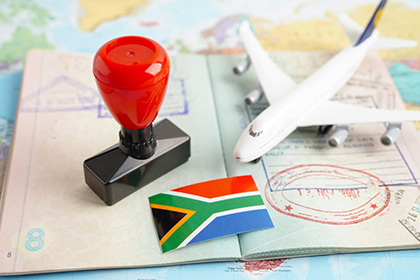
| The Department of Home Affairs has launched a groundbreaking digital platform to fast-track the processing of visa applications for individuals attending major international events. |
|
| |
The new Meetings, Exhibitions, Events and Tourism Scheme (MEETS) serves as a catalytic visa reform designed to boost South Africa’s standing as a leading global destination for international conferences, exhibitions, sporting tournaments and major cultural and entertainment events.
For the first time, MEETS introduces a secure avenue to process high-volume, time-sensitive group visa applications linked to international events hosted in South Africa.
“By cutting red tape and accelerating secure visa processing through technological reform, MEETS ensures that when the world chooses South Africa as a host, our visa system is ready.
“Through MEETS, we are ensuring that our visa system becomes a competitive advantage that helps attract even more conferences, exhibitions, sporting tournaments and cultural events that create jobs and stimulate economic growth,” Minister of Home Affairs Leon Schreiber said on Tuesday, 17 March 2026, in a statement. |
|
|
 |
|
| |
From major music concerts and global trade gatherings such as the Mining Indaba to World Cup tournaments and international academic conferences, South Africa regularly hosts events that attract high volumes of international participants.
These large-scale events often require entire teams, performers, delegates and technical staff to travel together within strict timelines.
“Global events move quickly, and host nations must be ready to respond with equal speed. Through MEETS, Home Affairs is modernising visa processing to support large delegations in a secure and coordinated manner, unlocking greater economic impact from every event hosted in South Africa.
“Instead of fragmented processes and uncertainty, MEETS enables streamlined online submissions tailored for major international events, ensuring that high-volume applications can be processed efficiently when every second counts,” the Minister said.
He emphasised that the launch of MEETS marks another decisive step in the department’s journey of digital transformation.
“By modernising our visa system, we are positioning Home Affairs as an economic enabler that supports tourism, investment, and allows for job creation. The events sector is a powerful driver of growth, and MEETS ensures that our visa regime matches South Africa’s ambition to host world-class international gatherings,” the Minister said.
Domestic event organisers with a proven track record in the sector are invited to submit expressions of interest to join the MEETS visa scheme, subject to qualifying criteria, by visiting https://www.dha.gov.za/index.php/immigration-services/meets.
Accredited organisers will enter into a formal Memorandum of Agreement with the Department of Home Affairs to regulate participation and governance of the scheme. The gazette is available here: https://www.dha.gov.za/images/gazettes/54210_25-2HomeAffairs.pdf.
– Source: SAnews.gov.za |
|
| |
|
| |
| SOUTH AFRICAN CONSULATE IN HONG KONG HOSTS BUSINESS ROUND TABLE WITH CHAMBERS OF COMMERCE |
|
| |
 |
|
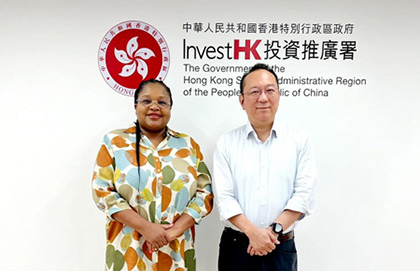
| The Round Table titled “Investment Opportunities in South Africa in the Evolving World”, held at the Consulate-General of South Africa in Hong Kong on 11 March 2026, focused on exploring the diverse and emerging investment potential in South Africa against the backdrop of global economic shifts. In attendance were also the representatives from the various Chambers of Commerce in Hong Kong as well as industry experts. |
|
|
| |
Consul-General Mojalefa Mogono, in his introductory remarks, emphasised the importance of enhancing bilateral relations between South Africa and Hong Kong, forging strategic partnerships, and capitalising on the investment and trade opportunities between South Africa and Hong Kong in an evolving world.
The Consul: Political and Economic, Stella Sigcau gave a comprehensive presentation on the topic, including South African trade and investment opportunities by sector; the strategic importance of Hong Kong as a gateway to China and Asian markets; doing business in South Africa; South Africa’s strategic position as a gateway to Africa; access to African markets and opportunities presented by the African Continental Free Trade Area (AfCFTA) and the Southern African Customs Union (SACU); and incentives to invest in South Africa and legal frameworks. The presentation also touched on the bilateral trade relations between South Africa and Hong Kong, which remain good and continue to grow. This was followed by a questions and answers session and a robust and insightful discussion with inputs from various stakeholders.
Key highlights during discussions included opportunities in sectors such as renewable energy, technology, agriculture and infrastructure development, which present significant growth opportunities for investors. Experts emphasised the importance of fostering bilateral trade relationships and addressing challenges like policy stability and regulatory frameworks to enhance the investment landscape. The event encouraged networking among investors, government representatives and industry leaders aiming to promote South Africa's status as an attractive destination for investment in a rapidly changing world economy.
Participants also explored the impact of global trends such as sustainability and digital transformation on investment strategies. The round table concluded with a call to action for increased collaboration and strategic partnerships to leverage South Africa's unique advantages for mutual economic benefit. The Round Table preceded the Trade and Trade Investment Seminars to be hosted by the Consulate in Macau on 18 March 2026 and in Hong Kong on 24 March 2026, where various stakeholders, including business and government representatives, are expected to participate.
– Source: www.thediplomaticsociety.co.za |
|
| |
|
| |
| SOUTH AFRICAN ARTIVIST NATANIA BOTHA SCOOPS WOW AWARD |
|
| |
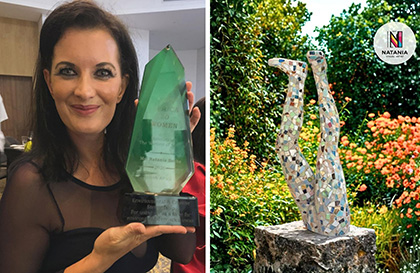
| South African “artivist” Natania Botha turned heads at the WOW Africa 50 Women Awards, receiving the Honour Award for Environmental and Creative Stewardship. |
|
|
 |
|
| |
The awards, held in the first week of March in Sandton, celebrated 50 extraordinary women across the continent who are making the world a better place through leadership, innovation and service to their communities.
Botha has spent years carving out her space in the Venn of art, activism and environmentalism.
It’s a walk along the beach in Durban almost ten years ago that sparked it all. Botha saw a shoreline buried in plastic and couldn’t unsee it, so she threw herself into environmental activism, earned recognition from the Wildlife and Environment Society of South Africa, got herself into global forums, and collaborated with the United Nations (UN) Environment Programme.
Art gets through to people differently. Botha discovered this along the way, and so began her journey as an artivist, creating works that reflected what words perhaps couldn’t say about humanity and the environment, in a manner that captures people in an entirely different way.
Botha’s voice and experiences married in the form of mosaic mannequins, with her sculptures exploring humanity’s relationship with nature. Using recycled materials like reclaimed ceramics, antique teacups and tiles, these sculptures spark conversation about sustainability and the future of our planet.
Her debut collection of 40 pieces called Reflections of Resilience was presented to the UN.
Her latest body of work is as powerful. Especially given the volatile, vulnerable period the world finds itself in now. Peace needs cultivatorsm and art can wake us up. It reaches people on a different level of understanding. That’s exactly where the newest collection takes us.
The Full Metal Jacket is Botha’s response to the growing conflicts and tensions around the world. The sculptures are made with spent bullet casings once designed to harm, now transformed into symbols of hope as well as anchors for contemplation.
“My bullet sculptures were born from a simple but powerful intention: to transform objects made for harm into symbols that invite reflection, dialogue, and healing. Turning weapons of war into conversations. Turning fragments of violence into monuments of peace”, she shares.
These sculptures are currently on display at the UN offices in South Africa.
Botha has received many accolades and awards, but she has always been clear that recognition isn’t the point. The message behind her work is. And if a WOW Award helps that message stretch further, it’s a wonderful thing.
“I’m deeply grateful to the Wow 50 Women Awards for this incredible recognition. This moment isn’t just for me; it’s for every single artist out there pushing boundaries, creating boldly, and refusing to stop even when resources are limited. Your resilience and imagination are what keep art alive and urgent”, she shared.
“To see this work resonate in our time means more than I can put into words. It reminds me that art still has the power to question, to provoke, and to imagine a different future.”
– Source: www.goodthingsguy.com |
|
| |
|
| |
| SOUTH AFRICAN ZEBRA SPOTTED ON THE STREETS OF NEW YORK |
|
| |
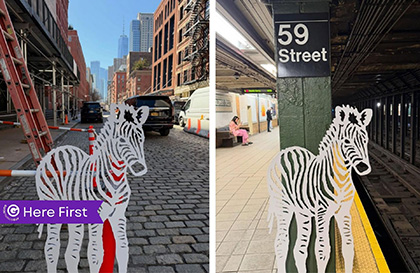
| A zebra from Joburg has been spotted en route to a Starfish in New York... |
|
| |
 |
|
The zebra is an artwork, created by South African contemporary artist James Delaney — the very same man responsible for restoring one of Johannesburg’s most popular parks, The Wilds.
Second in the lineage of his limited edition family of eight, Delaney’s zebra will be joining the Starfish Gala in New York, where a curation of artworks and experiences will be up for silent and live auction this week, all in support of a meaningful cause.
The Starfish Greathearts Foundation has, for a quarter century, worked to support over 300 000 vulnerable children in South Africa with healthcare, nutrition, and stability. Their annual fundraising gala and auction draws on the support of artists and organisations to further that impact.
This year’s selection features around a dozen or more speciality curated pieces and experiences, including artworks by South African artists Astrid Dahl, Arthur Dlamini, and, of course, James Delaney. |
|
|
| |
Delaney has contributed many pieces toward Starfish auctions in the past; more have been donated this year, including the zebra and a first edition print, along with several smaller pieces.
“I’ve given early editions of many doorways prints over the years to the gala, so it’s become a bit of a tradition for me”, he shares on social media. “It’s shot outside Henry Birks & Sons, an old jewellery store on a public square in the city. The door is a very striking blue, and apart from the detail of people walking past in their winter clothes, the clock above shows different times.”
The zebra may also be easily recognisable to South Africans who have travelled Joburg’s major Gillooly’s Highway Interchange in recent months. Five of its family members, along with 80 flying egrets made by Delaney, were installed in the middle of the interchange as part of the JoziMyJozi initiative to revitalise the gateways to the city.
Delaney is in New York currently and will be attending the gala to celebrate 25 impactful years of Starfish.
“It’s so important for artists to use what we have to benefit others. The work that Starfish is doing is important.” Delaney tells us.
– Source: www.goodthingsguy.com |
|
| |
|
| |
| SOUTH AFRICA SHINES ON TIME MAGAZINE’S “WORLD’S GREATEST PLACES TO VISIT IN 2026” LIST |
|
| |
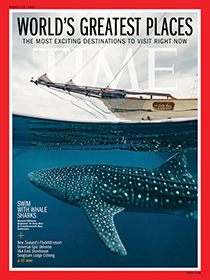
| Every year, one of the world’s greatest titles — “TIME Magazine” — releases a list of The World’s Greatest Places. The list is split in two: places to stay, and places to visit. |
| |
And this year, South Africa appeared on the list three times, and in both categories.
“Each year, TIME solicits nominations of places — including hotels, cruises, restaurants, attractions, museums, parks, and more — from its international network of correspondents and contributors, as well as through an application process, with an eye toward those offering new, exciting, and relevant experiences.”
Two local gems made the list of places to stay: Masiya’s Camp at Royal Malewane in Kruger National Park and Park Hyatt in Johannesburg.
Masiya’s Camp in the Kruger earns the accolade for its stunning interior design that flips the cliché of a “khaki safari” totally on its head. The camp’s six-suite hot-pink tents and jewel-toned furnishings get the nod. Plus, of course, world-class game drives and sundowners in the bush.
“The candy-coloured canvas at the new six-suite Masiya’s Camp at Royal Malewane, just outside Kruger National Park, is the brainchild of owner Liz Biden, whose fearless sensibility has made her Royal Portfolio properties cult favourites among design lovers.” |
|
|
 |
|
| |
Then there’s South Africa’s first Park Hyatt in Rosebank. The luxury hotel opened its doors last year and is already scooping international acclaim. TIME praises it for bringing boutique luxury to the city with a rare level of service, stunning locally-inspired interior design and a restaurant that serves a “treasure chest” for high tea and a dinner perhaps worth extending that layover for.
“Johannesburg has long been a destination for business travellers — and a common layover for leisure visitors en route to a safari. With the opening of Park Hyatt Johannesburg, however, travellers may finally have more reason to linger.”
Hot on the heels of its recognition at the 2026 Luxe Restaurant Awards, the Mother City’s Amura has also earned its flowers in Best Places to Visit. The restaurant, headed by world-renowned Andalusian chef Ángel León, opened at Mount Nelson in December last year.
“The Andalusian chef — who went on to create a three-Michelin-star temple to the sea in Puerto de Santa María — has now crossed to the South Atlantic for his first project outside Spain”, TIME shares. “Here, a new continent becomes his canvas.”
Three incredible spots across three of our country’s most popular destinations — the bush, the city, and the coast — each celebrated for showing the world why South Africa is so worth the trip.
– Source: www.goodthingsguy.com |
|
| |
|
| |
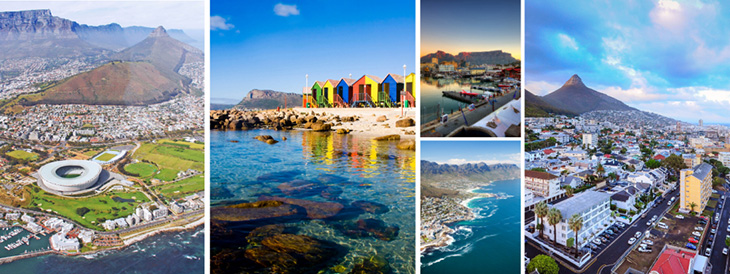
| CAPE TOWN OFFICIALLY THE WORLD’S MOST BEAUTIFUL CITY AND SIXTH-BEST OVERALL |
|
| |
| South Africa’s golden city is back in the global ranks again, this time landing sixth place on the “Time Out” list of the 50 best cities in the world for 2026. |
|
| |
|
| |
The annual ranking, released by Time Out Worldwide, celebrates cities that offer exciting places to visit and a great place to live. This year’s list drew on insights from more than 24 000 locals across 150 cities, alongside votes from over 100 Time Out city experts.
Locals were asked what they love about their cities and how it actually feels to live there. From food and culture to happiness, affordability and quality of life, Cape Town keeps ticking all the boxes.
“This city has it all: pristine beaches, character-filled neighbourhoods and genuinely friendly locals, from the city centre flower sellers and the fishermen hauling in the daily catch in Kalk Bay to the creative excellence of its hospitality entrepreneurs. All of this plays out beneath Table Mountain, framed by the extraordinary Cape Floral Kingdom and the Cape Winelands,” shares Time Out.
The numbers behind the ranking made us smile even more.
Of all 150 cities surveyed, Cape Town locals were the most likely — more than anywhere else in the world — to call their city beautiful. 86% of Capetonians said so. The highest percentage on the entire list. That’s not a travel writer’s opinion, but the people who live here, in traffic, paying rent, on a Tuesday.
There’s also a lot happening in the city. Time Out gives a nod to Cape Town’s tourism reinvention boom, with mention of the world-renowned Montreux Jazz Festival, which makes its debut in nearby Franschhoek later this month. Meanwhile, major hospitality developments, including a new Marriott hotel planned for the V&A Waterfront, turn heads internationally.
It’s also been quite a week for South Africa on the global stage. Three South African destinations — Masiya’s Camp at Royal Malewane, Park Hyatt Johannesburg, and Amura in Cape Town — just made TIME Magazine’s World’s Greatest Places list. The Mother City’s Labia Theatre also landed on Time Out’s list of the world’s 100 greatest cinemas.
– Source: www.goodthingsguy.com |
|
| |
|
| |
| CAPE TOWN’S LABIA THEATRE LANDS ON GLOBAL LIST OF WORLD’S GREATEST CINEMAS |
|
| |
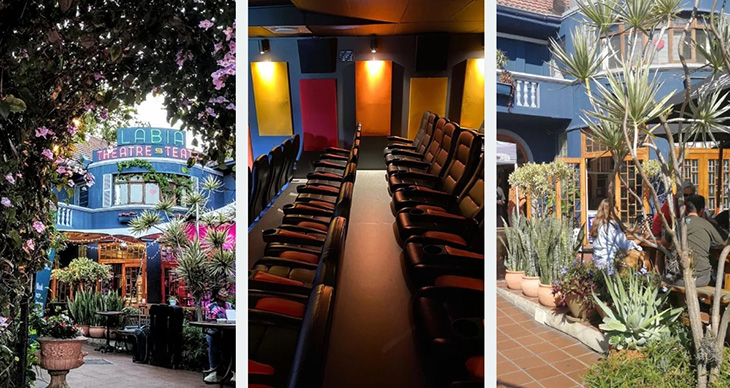
| One of Cape Town’s gems has just earned another international nod. The Labia Theatre has been named one of the 100 greatest cinemas in the world by “Time Out Worldwide”. |
|
| |
|
| |
Landing at number 74 on the global list, the historic Gardens cinema holds its own among legendary movie houses around the globe. Its spot on the list neighbours grand Parisian picture palaces to cult cinemas in Tokyo.
The Labia Theatre was originally built as a ballroom attached to the Italian Embassy before eventually transforming into the independent cinema Cape Town knows and loves today. Over the decades, the cinema has screened arthouse films and cult classics you won’t always find at mainstream theatres. It has also hosted a number of niche local film festivals.
The Labia carries an important piece of South African history. As highlighted by Time Out, the cinema ignored segregationist seating laws during apartheid and welcomed audiences of all races, which made it a rare space where people could gather together to enjoy film.
Over the years, the cinema has welcomed some famous film lovers through its doors, including Matt Damon, Salma Hayek and legendary filmmaker Werner Herzog.
And while its ranking has shifted since last year, being included among the world’s top 100 movie houses is something worth celebrating. This year’s list sees Los Angeles’ TCL Chinese Theatre claim first place on the list, followed by Dublin’s The Stella Cinema and New York’s Film Forum.
At a time when cinemas around the world are battling the advent of streaming, supporting our local cinemas is important. The Labia Theatre has survived for more than seven decades thanks to people who believe that watching a movie on the big screen is an experience worth keeping alive.
– Source: www.goodthingsguy.com |
|
| |
|
| |
| TRIUMPHANT BLITZBOKS FEND OFF FIJI TO CLAIM NEW YORK TITLE AND SERIES CROWN |
|
| |
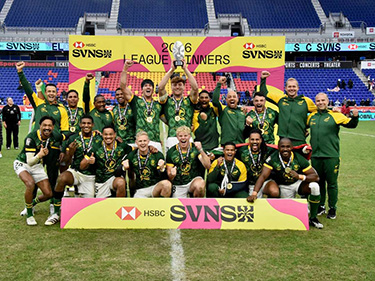
| The Springbok Sevens held off a late Fiji surge to claim a 10-7 victory in the final of the HSBC SVNS New York on Sunday, 15 March 2026, securing their fourth tournament title of the season and clinching the 2026 series crown. |
| |
|
|
|
 |
|
| |
The Blitzboks and Fiji entered the final level on log points and tries on either side of the break gave the South Africans a 10-0 lead that ultimately set them on course for the series title.
Fiji pulled one back later in the half, but outstanding defence in their own territory ensured the South Africans held firm.
There was drama right until the end. Fiji launched one final attack in the closing 30 seconds, but a knock-on with the tryline beckoning handed possession back to the Blitzboks. From the resulting scrum Fiji conceded a penalty, and much to the relief of the green-and-gold supporters, the ball was kicked into touch.
The opening try came from a defensive turnover. Impi Visser ripped the ball free in a tackle and, after some slick passing, Gino Cupido raced in after just two minutes for the only score of the first half.
The second half proved just as tight, with razor-thin margins deciding the outcome. Tristan Leyds struck two minutes after the restart when Fiji lost the ball in a tackle near their line, giving the Blitzboks a two-score cushion with five minutes remaining.
But Fiji's reputation as comeback specialists nearly surfaced again. Terio Veilawa scored and converted soon afterwards to cut the deficit to three points, setting up a tense finish.
The decisive equaliser never came, however, thanks largely to gritty Blitzbok defence that forced crucial errors, while smart game management kept Fiji at bay.
The Blitzboks, who also won tournaments in Cape Town, Perth and Vancouver, underlined their dominance as the standout team in the HSBC SVNS Series.
Earlier on Sunday, they booked their place in the final with a hard-fought 14-5 semi-final victory over Argentina, scoring twice in the first half before defending resolutely.
Sebastiaan Jobb opened the scoring in the second minute after a swift transition from defence to attack. Argentina pressed hard but could not breach the South African line, eventually throwing a stray pass.
The turnover involved Visser and Leyds, and once Jobb received the ball, there was only one outcome. Leyds added the conversion to make it 7-0.
A 70-metre run from Selvyn Davids produced the next try and a 14-0 halftime lead.
Argentina struck early in the second half when Marcos Moneta finished in the corner two minutes after the restart to reduce the deficit to 14-5.
The final five minutes were frantic, featuring a flurry of penalties, turnovers and a disallowed Springbok Sevens try, but the Blitzboks held on to secure victory.
– Source: www.sabcsport.com |
|
| |
|
| |
| ADRIAAN WILDSCHUTT BECOMES FIRST SOUTH AFRICAN TO WIN NYC HALF-MARATHON |
|
| |
 |
|
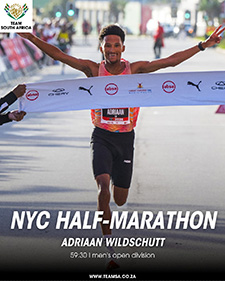
| On his first run through the streets of New York, Adriaan Wildschutt surged past top contenders to become the first South African to claim the NYC Half-Marathon title. |
| |
|
|
|
| |
Adriaan Wildschutt stunned the streets of New York City with a historic performance, becoming the first South African to win the NYC Half-Marathon, finishing in a phenomenal 59 minutes 30 seconds on his debut in the race.
Wildschutt ran a smart, strategic race. He stayed tucked in the pack for the first 10km before making his move after halfway. By 15km, he had taken the lead and extended his advantage to 11 seconds over the USA’s Zouhair Talbi by 20km. With the finish line in sight, Wildschutt spread his arms wide in triumph. He reflected on the mental and physical challenge of the race.
“This felt really good. At some point, I’m going to get up the bridge and make a big surge down the hill. After the downhill, you get a hill again, so I wanted to keep pushing.”
The victory adds to an already remarkable start to his half-marathon career. Last October in Valencia, Wildschutt made his debut over the distance, clocking 59:13 and breaking Stephen Mokoka’s long-standing national record by 23 seconds. His New York triumph cements him as one of South Africa’s brightest distance-running talents and sets a new benchmark for the country’s presence in global long-distance racing.
Wildschutt crossed the finish line with a statement that South African distance running has a new benchmark.
– Source: www.goodthingsguy.com |
|
| |
|
| |
| LYTHE PILLAY POWERS TO A WORLD-LEADING 400 M TIME |
|
| |
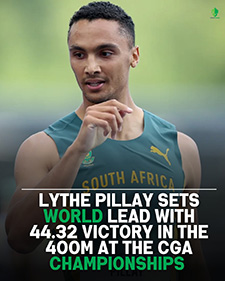
| A world-leading 400 m performance in Johannesburg saw Lythe Pillay surge to victory, continuing South Africa’s strong run in athletics. |
| |
The 23-year-old lit up the track at the CGA Championships in Johannesburg, storming to victory in the 400m and clocking an incredible 44.32 seconds. Making this the fastest time in the world so far this year.
It’s a performance that comes at a time when South African athletics is riding a wave of momentum. Just days after Adriaan Wildschutt made headlines with his New York Half-Marathon triumph, Pillay’s run added even more excitement.
And for Pillay, this is only the beginning.
“I do feel like I was robbed of the time to really see what I can do last year [due to injury], but I am truly blessed and grateful I was able to tie things up at the World Champs in the relay.”
Having already played a key role in South Africa’s relay success on the global stage, Pillay is no stranger to performing under pressure. But as his career evolves, so too has his role within the sport. South Africa has been here before with Wayde van Niekerk rewriting the record books and at this rate, if that record ever falls, don’t be surprised if it’s another South African doing the damage. |
|
|
 |
|
| |
“I wouldn’t necessarily say that the more dividing the limelight between us [Van Niekerk] has made the pressure easier, but I have had a shift in perspective.”
“I think I’ve become more of a middle child now, and I am almost an ‘old topi’.”
While the pressure hasn’t necessarily increased, Pillay admitted that his mindset has had to change in order to handle it, noting that he has adjusted both his approach and perspective as he continues to grow in the sport.
“I’m also being chased. I wouldn’t say the pressure has changed, but I think I’ve had to change my approach and my perspective on the sport to navigate through the pressure.”
With big events on the horizon, including the upcoming World Relays and a chance at individual success later in the year, Pillay’s early-season form hints at the impact he’s set to make in the months to come.
– Source: www.goodthingsguy.com |
|
| |
|
| |
| TEAM SA ANNOUNCED FOR 2026 WORLD ATHLETICS INDOOR CHAMPIONSHIPS |
|
| |
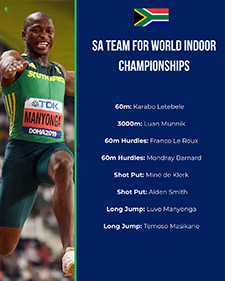
| The countdown is on as eight of South Africa’s finest track and field athletes get ready to take on the world at the 2026 World Athletics Indoor Championships in Poland. |
|
| |
 |
|
Athletics South Africa has confirmed an eight-member squad that will represent the country at the global showpiece taking place from 20 to 22 March in Kujawy Pomorze, Poland. The team features seven men and one woman, competing across a range of track and field events.
Among the names generating excitement is Olympic silver medallist Luvo Manyonga, who returns to the world indoor stage in the long jump. Luvo previously claimed silver at the 2018 indoor championships and will once again be aiming to soar onto the podium.
Joining him in the sandpit is promising 19-year-old long jumper Temoso Masikane. The youngster has been making waves this season, with both athletes recording jumps of 8.11 metres.
On the track, Karabo Letebele will take on the men’s 60m sprint. The 19-year-old, currently based in the United States, recently clocked an impressive indoor personal best of 6.53 seconds in Texas.
Middle-distance runner Luan Munnik will line up in the 3 000 m after producing a strong personal best of 7:38.35 in France last month, showing that he is ready to compete among the world’s best
The hurdles events will feature two South Africans, with Franco le Roux and Mondray Barnard both competing in the men’s 60m hurdles. . |
|
|
| |
In the throwing circle, Aiden Smith will represent the country in the men’s shot put after consistently throwing beyond the 20.30 m mark this year.
Miné de Klerk arrives in excellent form. The national record holder and African Championships silver medallist recently set a new South African indoor mark of 18.48 metres at a collegiate meeting in Indiana.
From sprinters setting personal bests in the US to long jumpers leaping past 8 metres, each member of Team South Africa carries their own flair and experience. And as they head to Poland, the nation cheers them on and hopes their talent turns into medals.
– Source: www.goodthingsguy.com |
|
| |
|
| |
| SOUTH AFRICA’S WOMEN’S ICE HOCKEY TEAM BRINGS HOME THE BRONZE |
|
| |
| South Africa’s women’s ice hockey side showed resilience throughout the tournament, ending their campaign with a strong performance and a well-deserved place on the podium. |
| |
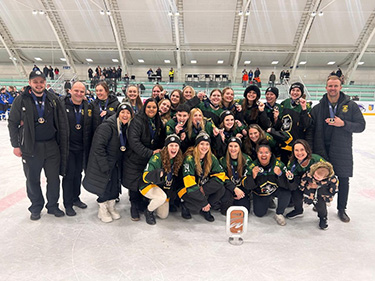
The South African Women’s Ice Hockey Team, affectionately known as the Rhinos, will return home from Tallinn, Estonia, with a well-deserved bronze medal, showing true teamwork on the international stage.
From the first whistle to the final buzzer, the Rhinos brought energy and focus to every match, culminating in a standout 3-0 win over Israel. The team fired 36 shots on goal, with Inge Albertyn netting a brace and Michayla Venter adding another, while Soné Geldenhuys stood tall in goal, stopping 20 of 21 attempts for an incredible 95.2% save rate. MVP honours went to Veronica Lechtanski for yet another stellar performance.
|
|
|
 |
|
| |
Head Coach Jean-Michel praised the squad and reflected on the game.
“That is one of the most fun games that I’ve been on the bench for. There’s only one other one that stands out in my memory, and it was many years ago with the under-18s. And that was really, really, really fun.”
The Rhinos came out firing in their decisive games, showcasing impressive attacking play and solid defence. In their final match, South Africa dominated the ice.
“I thought we were just so solid, period one, period two, period three. Wow. And two wins for the week is amazing.”
The bronze medal marks a significant milestone for the team, highlighting their growth on the international stage.
Adding to the celebration, Kelly Jamieson officially joined the 50 Caps Club, an elite group of players who have proudly represented South Africa at every World Championship over the years. Jamieson, who plays her club hockey for the Chelmsford Cobras in the WNIHL 1, is a shining example of dedication and commitment.
The Rhinos’ bronze medal celebrates teamwork and the growing strength of South African women’s ice hockey.
– Source: www.goodthingsguy.com |
|
| |
|
| |
| TWO-TIME OLYMPIC CHAMPION ELIUD KIPCHOGE KICKS OFF HIS WORLD TOUR IN CAPE TOWN |
|
| |
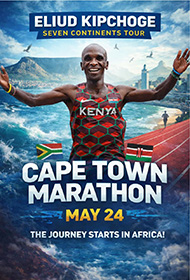
| The streets of Cape Town are set to host a historic moment in running history. Two-time Olympic champion Eliud Kipchoge has announced that the 2026 Sanlam Cape Town Marathon will launch Eliud’s Running World. Through the series, he hopes to inspire communities and unite the world through running. |
|
| |
 |
|
“To start this World Tour in Cape Town is very special. It is about celebrating the strength of African running and inspiring the next generation. To race my first ever marathon on the African continent holds deep meaning for me. I cannot wait!”
Over the next two years, he will run marathons on every continent, connecting with local running communities and inspiring healthier lifestyles worldwide. The project will also raise funds for the Eliud Kipchoge Foundation, supporting education and environmental initiatives in areas that need it most.
The Sanlam Cape Town Marathon has become one of Africa’s premier running events, attracting elite athletes and thousands of participants from across the globe. In 2026, more than 27,000 runners are expected to line up, signalling the race’s growth and its ambition to become Africa’s first Abbott World Marathon Major.
Clark Gardner, the CEO of the Sanlam Cape Town Marathon, said it’s a beautiful reminder of communities coming together.
“To see him race our streets, meet our communities and engage with young runners across the city will be incredibly powerful. Moments like this remind us what is possible when the world’s greatest athletes connect with the places and people that shaped the sport.” |
|
|
| |
Ahead of the event, Kipchoge shared a short video on his social media, holding a globe in his hands. He spoke about how his running foundation is deeply rooted in Africa and with a smile, he said:
“Cape Town, here I come!”
– Source: www.goodthingsguy.com |
|
| |
|
| |
|
|
|
|
|
|
|
|