| |
| |
|
| |
|
| |
|
| |
| GOVERNMENT STRENGTHENING CRIMINAL JUSTICE SYSTEM AND ROOTING OUT CORRUPTION |
|
| |
| President Cyril Ramaphosa says government is reforming and strengthening the criminal justice system, rooting out corruption and building a police service and a prosecuting authority in which people can have trust and confidence. |
| |
|
|
|
 |
|
| |
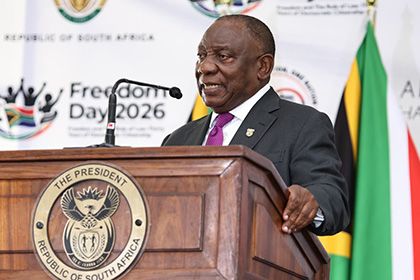
“We call on all South Africans to be part of this work, to build communities, homes, schools and workplaces that are safe and secure,” President Ramaphosa said.
Speaking at the national Freedom Day celebration held at Dr Rantlai Molemela Stadium in Mangaung, President Ramaphosa said government is using the day to reflect, renew and reaffirm government’s commitment to the social contract entered into 32 years ago.
Freedom Day 2026 is commemorated under the theme: Freedom and the Rule of Law: Thirty Years of Democratic Citizenship.
“This is a compact that demands active citizenship, democratic oversight and a State that delivers justice, services, opportunity and dignity in return for public trust,” President Ramaphosa said.
The President said the Government of National Unity is determined to drive inclusive growth and job creation, reduce poverty and tackle the high cost of living, and build a capable, ethical and developmental State.
“This means we must address and overcome the many challenges facing South Africans today. Failing water infrastructure, collapsing municipalities and deteriorating services are not mere inconveniences. They directly affect the quality of daily life. They constrain the growth of businesses and the creation of jobs.
“Our resolve to strengthen local government provides an opportunity to transform municipalities, making them better run, more efficient and more responsive to the needs of our people,” the President said.
Transforming lives
President Ramaphosa said in the 32 years of democracy, South Africa has built a progressive constitutional democracy firmly anchored in the rule of law, with an independent judiciary that serves as a guardian of the rights of all.
“We have expanded access to healthcare, housing, education, water and electricity on an unprecedented scale.”
President Ramaphosa said government has also transformed the education system that was used to perpetuate oppression to ensure universal access to education by introducing no-fee schools to expand access to education to children from poor households.
“Our National School Nutrition Programme feeds more than nine million learners every single day. Through the National Student Financial Aid Scheme, we have made tertiary education accessible to students from low-income households.”
The President said since the dawn of democracy, government has steadily worked to expand access to quality health care for all.
“We have built clinics and hospitals, provided free health care to pregnant women and young children, reduced child mortality and increased life expectancy.
“Now we are working together to establish the National Health Insurance so that every person in this country has equal access to quality health care, regardless of their ability to pay.
“We are making progress on land reform, restoring land to many of those dispossessed since the introduction of the 1913 Natives Land Act and continuing to support its productive use.”
The President said 32 years ago, more than 20 million South Africans participated in the first democratic election that was peaceful, free and fair.
President Ramaphosa said it is an honour to mark that occasion in Bloemfontein, where the flame of freedom was lit.
“It was here in Mangaung that the African National Congress was born in 1912, bringing together for the first time people from across our country to stand against oppression and dispossession.”
President Ramaphosa said the Free State is a province that suffered the cruelty of colonialism and apartheid.
“Here in Bloemfontein and in towns across the province, tens of thousands of Afrikaners and Africans were held in inhuman conditions in British concentration camps during the Anglo-Boer War.
“Many thousands, mostly women and children, died. Their suffering stands as a shared, though unevenly remembered, chapter of South Africa’s past, one that calls for remembrance, honesty and humanity. This is a province with a history of courageous resistance.
“Women from the then Orange Free State were among the first to rise against the extension of pass laws in 1913, with protests breaking out in Jagersfontein, Winburg and Bloemfontein.
“They were arrested and imprisoned, and their families were left without caregivers. Instead of being broken, the women of the Orange Free State became more determined because they would not accept a system that denied them dignity and freedom,” the President said.
President Ramaphosa said it was the people of the Free State province that took Mama Winnie Mandela into their hearts and gave her comfort when she was banished to Brandfort in 1977.
“When Mama Winnie Mandela was banished to Brandfort, the apartheid rulers thought they were isolating her and breaking her spirit and influence.
“The people of Brandfort here in the Free State did something remarkable: they did not let that voice fade. They carried it. They strengthened it. And they made it their own. They united in compassion, and that became stronger than the system of apartheid itself.”
President Ramaphosa said 30 years ago, the Constitution of the Republic was signed into law and became the "birth certificate" of the nation.
“Our Constitution, which is widely regarded around the world as one of the most progressive, visionary and influential constitutions ever adopted, is a powerful promise about freedom and stands as our collective shield protecting the freedom our people fought for.
“We stand here today not only as citizens of a democratic nation, but as custodians of a hard-won legacy of freedom — a legacy won in struggle. A legacy shaped by sacrifice, courage and an unbreakable belief in freedom and justice,” the President said.
Celebrating democracy
In her welcome remarks, Free State Premier Maqueen Letsoha-Mathae said Freedom Day is an important day in the history of South Africa.
“This day ushered in a new dawn. It was the day when South Africans showed their determination for a new government."
Letsoha-Mathae said since the President’s visit to the province in December, much has been done to improve people’s lives.
“We have doubled our efforts to improve people’s lives.”
The Freedom Day celebration was attended by senior government officials, cabinet ministers, politicians and members of the public, who came in their numbers.
Freedom Day 2026 marks the 32nd anniversary of South Africa’s first democratic elections held on 27 April 1994 and stands as a testament to the country’s journey towards democracy, justice, equality and human dignity.
The commemoration highlights three decades since the adoption of the Constitution and underscores the importance of constitutional supremacy, the rule of law, and democratic citizenship in shaping South Africa’s future.
This year’s national event takes place within the context of several significant national milestones, including the 30th anniversary of the adoption of the Constitution, 70 years since the Women’s March in 1956, and 50 years since the Soweto youth uprising.
These milestones continue to shape South Africa’s democratic journey by inspiring continued transformation.
– Source: SAnews.gov.za |
|
| |
|
| |
| PRESIDENT RAMAPHOSA JOINS ESWATINI IN COMMEMORATING CORONATION OF KING MSWATI III |
|
| |
 |
|
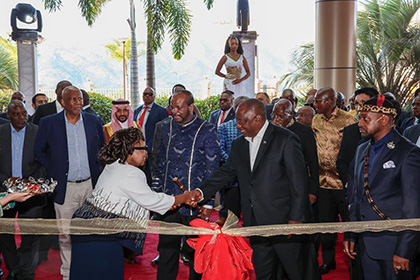
| President Cyril Ramaphosa, on Saturday, 25 April 2026, joined the Kingdom of Eswatini as it commemorated the 40th anniversary of the coronation of His Majesty King Mswati III, as well as the King’s 58th birthday. |
|
|
| |
“President Cyril Ramaphosa arrived in the Kingdom of Eswatini as the Kingdom celebrates the 40th anniversary of the coronation of His Majesty King Mswati III, as well as the King’s 58th birthday,” The Presidency said.
According to The Presidency, 2026 marks King Mswati III’s Ruby Jubilee as the Eswatini monarch, as His Majesty commenced his reign in 1986.
“President Ramaphosa’s honouring of the invitation as a guest at the national celebration in the Kingdom of Eswatini underscores the strong and fraternal relations between South Africa and the Kingdom of Eswatini.
“South Africa and Eswatini share strong historical and cultural ties that were formally established at the end of the apartheid era in South Africa,” said The Presidency.
– Source: SAnews.gov.za |
|
| |
|
| |
| PRESIDENT RAMAPHOSA TO ATTEND F1 AS SA BIDS TO HOST RACE |
|
| |
 |
|
| President Cyril Ramaphosa is set to attend a Formula One Grand Prix later this year as part of efforts to bring Formula One back to South Africa. |
|
|
| |
The visit forms part of the country’s broader ambition to host an F1 race on African soil for the first time since the dawn of democracy.
Sport, Arts and Culture Minister Gayton McKenzie confirmed the development during a media briefing in Pretoria on Thursday.
“His Excellency President Cyril Ramaphosa has agreed to join me at a Formula One Grand Prix later this year. This is a Working Visit, not a social one,” Minister McKenzie said.
Formula One has not staged a race in Africa for more than three decades. During that time, the sport has expanded across the Middle East, Asia and the Americas, leaving Africa as the only continent without a race.
“That is not acceptable, and it is not sustainable. An entire generation of young African motorsport enthusiasts has never seen a Formula One race in their own backyard. We intend to change that,” the Minister said.
He added that the President’s participation signals that the initiative has backing at the highest level of government.
“There are criteria that any country must meet to host a Grand Prix — commercial, logistical, infrastructural and safety requirements — and we are working methodically to meet each of them.
“The President’s visit will allow us to observe, engage and strengthen our case. I will provide further details on the timing and the specific Grand Prix in due course, in coordination with The Presidency,” Minister McKenzie said.
– Source: SAnews.gov.za |
|
| |
|
| |
| MINISTER LAMOLA URGES SADC REGION TO SHIFT FROM POLICY TO ACTION |
|
| |
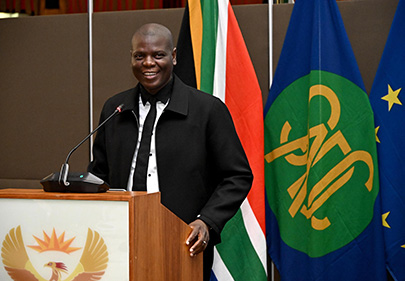
| International Relations and Cooperation Minister Ronald Lamola has called for a decisive shift from policy commitments to implementation as South Africa chairs the Southern African Development Community (SADC) amid growing global uncertainty. |
| |
|
|
|
 |
|
| |
Delivering closing remarks at an interdepartmental workshop on the Regional Indicative Strategic Development Plan (RISDP) 2020–2030 at the O.R. Tambo Building in Pretoria on Friday, 24 April 2026, Minister Lamola said the region’s primary challenge was no longer a lack of frameworks, but the failure to effectively execute them.
“The feedback I have received confirms that the SADC region is not constrained by a lack of frameworks, vision or institutional architecture. The core challenge is implementation,” he said.
The workshop, supported by the European Union and the SADC Secretariat, brought together senior government officials, representatives of state-owned enterprises, development finance institutions and senior officials from the SADC Secretariat in Gaborone, Botswana, to develop a strategy and identify priorities for South Africa’s Chairship of SADC.
The workshop also reflected on the implementation of the SADC RISDP in order to foster synergies with South Africa’s national development frameworks, the National Development Plan (NDP) 2030 and the Medium-Term Development Plan (MTDP) and priorities.
Minister Lamola said discussions over the past two and a half days had focused on assessing performance, identifying constraints and proposing practical interventions aligned with the RISDP, whose implementation currently stands at just over 60%.
“This requires a decisive shift from policy articulation to disciplined execution and from broad commitments to focused, high-impact priorities,” he said.
He warned that South Africa would assume the regional leadership role at a time of “considerable global uncertainty”, with geopolitical and economic developments placing added pressure on the region.
“We cannot afford to be passive observers, while some states reshape the global order in ways that risk reversing gains achieved over decades in international law, global trade, peace and security, food security and ocean governance,” Minister Lamola said.
Among the challenges facing the region are slow domestication of protocols, limited enforcement mechanisms and reliance on external financing, alongside climate vulnerability, debt pressures and exposure to external shocks.
Minister Lamola noted that intra-regional trade remains between 19% and 23%, while manufacturing contributes just over 12% to regional gross domestic product. Indicators, he said, must inform planning and prioritisation during South Africa’s tenure.
He also highlighted the need to strengthen public support for regional integration, warning that low awareness and rising anti-migrant sentiment could undermine progress.
Citing Afrobarometer findings, Minister Lamola said while six in ten South Africans support easier trade with other countries, awareness of key continental initiatives remains low.
“Only 12% of South Africans interviewed had heard of the African Continental Free Trade Area. This means that more than 80% of our citizens were unaware of one of the continent’s most important economic integration projects,” he said.
He condemned recent acts of violence and intimidation against migrants, stressing that such actions have no place in a constitutional democracy.
“Acts of lawlessness, intimidation and violence against migrant communities have no place in our constitutional democracy. Acts of violence constitute a threat to our constitutional order,” Lamola said.
Looking ahead, Minister Lamola urged officials to confront two key questions: how to build public confidence in regional integration, and how to navigate an increasingly unstable global environment.
“This places upon us both a responsibility and an opportunity: to provide steady leadership during a period of transition, and to shape regional integration in a manner that is practical, responsive and focused on implementation,” he said.
SADC consists of 16 Member States, including South Africa. On 7 November 2025, South Africa was elected as interim Chair of SADC until August 2026, when it will be elected as Chair until August 2027.
– Source: www.dirco.gov.za |
|
| |
|
| |
| MINISTER LAMOLA HOSTS ENGAGEMENT WITH EUROPEAN HEADS OF MISSION |
|
| |
 |
|
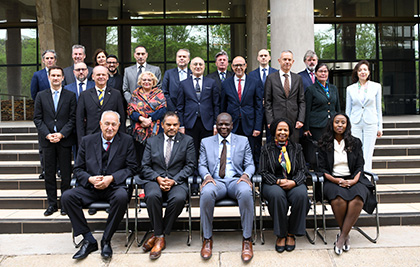
| On 23 April 2026, Minister of International Relations and Cooperation, Ronald Lamola hosted a high-level engagement with resident European Heads of Mission at its headquarters in Pretoria. |
| |
|
|
|
| |
Delivering the keynote address, Minister Lamola, underscored South Africa’s commitment to strengthening strategic partnerships with European counterparts. He highlighted the importance of sustained cooperation in addressing shared global challenges, including economic recovery, peace and security, and climate change.
The session commenced with welcoming remarks by the Deputy Minister of International Relations and Cooperation, Alvin Botes, who emphasised the value of continued diplomatic engagement and collaboration between South Africa and European missions based in the country.
The meeting provided a platform for constructive dialogue, reaffirming mutual interests and exploring avenues to deepen bilateral and multilateral cooperation. It further demonstrated DIRCO’s ongoing efforts to foster strong international partnerships in pursuit of shared development and global stability objectives.
– Source: Public Diplomacy Platforms |
|
| |
|
| |
| STRENGTHENING BILATERAL ENGAGEMENT: SOUTH AFRICA–AUSTRIA DIPLOMATIC MEETING |
|
| |
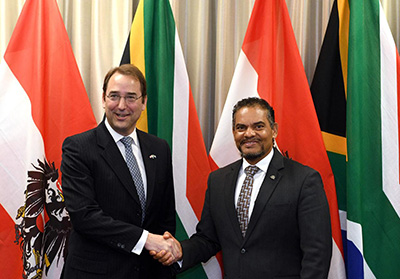
| On 23 April 2026, South Africa’s Deputy Minister of International Relations and Cooperation, Alvin Botes, held a constructive meeting with Dr Nikolaus Marschick, Secretary General of Foreign Affairs at the Federal Ministry for European and International Affairs. |
| |
|
|
|
|
 |
|
| |
The engagement underscored the continued commitment of both South Africa and Austria to strengthening bilateral relations and enhancing cooperation across areas of mutual interest. Discussions focused on advancing diplomatic ties, promoting multilateral collaboration, and exploring opportunities for deeper engagement in political, economic, and cultural spheres.
Both parties reaffirmed the importance of sustained dialogue in addressing global challenges and fostering international stability. The meeting forms part of ongoing efforts to reinforce partnerships between South Africa and European counterparts, in line with the country’s broader foreign policy objectives.
The interaction reflects the enduring value of diplomacy in building bridges and promoting shared priorities on the international stage.
– Source: Public Diplomacy Platforms |
|
| |
|
| |
| SAPS PARTICIPATES IN GLOBAL COMMUNICATION FORUM |
|
| |
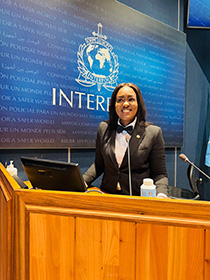
| The South African Police Service (SAPS) Component Head for Corporate Communication and Liaison, Major General Nonkululeko Phokane, is among the distinguished speakers at the first Global Communication Forum hosted by the International Criminal Police Organization (INTERPOL). |
|
| |
The forum is underway in Lyon, France.
The high-level forum has brought together heads of communication, spokespersons, and communication experts from INTERPOL member countries, providing a platform to exchange best practice and strengthen global cooperation in law enforcement communication.
During her presentation, Phokane reflected on the critical role of communication in a contested and rapidly evolving environment.
She emphasised that effective communication is central to modern policing, particularly in shaping public perception and countering misinformation.
She further highlighted the importance of proactively communicating policing successes as a means of building and sustaining public trust.
“SAPS remains committed to strengthening its communication capabilities in line with global best practice, recognising that trusted and transparent communication is key to effective policing,” the South African Police Service said in a statement.
– Source: SAnews.gov.za |
|
|
 |
|
| |
|
| |
| ZIMBABWE–SOUTH AFRICA: BETTER AND STRONGER TOGETHER |
|
| |
 |
|
| The relationship between Zimbabwe and South Africa is often framed through politics and economics, but its true depth lies in a shared civilisational story, one that stretches back millennia before colonial borders divided the region. Archaeological discoveries such as the Great Zimbabwe Kingdom and Mapungubwe reveal a sophisticated pre-colonial world of trade, governance and cultural exchange. These sites stand as a memory of an interconnected, highly skilled society that once thrived across what is now southern Africa. |
|
|
| |
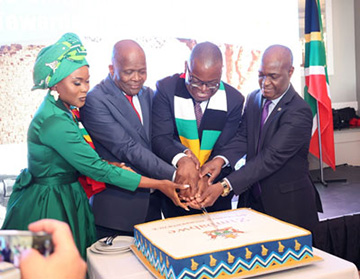
Today, that historical continuity is finding renewed relevance in a rapidly shifting global order. Zimbabwe’s National Day (12 April) celebrations, held annually on Zimbabwe Independence Day, provide a moment for reflection and recalibration. At the 46th anniversary reception in Pretoria, hosted by Ambassador Lovemore Mazemo, this sense of resurgence was palpable. The occasion, attended by South African officials including Deputy Minister of Communications and Digital Technologies, Mondli Gungubele, acknowledged the strength of diplomatic and cultural ties binding the two nations.
In his keynote address, Zimbabwe’s Minister of Foreign Affairs, Amon Murwira, positioned independence beyond a static achievement but as an evolving responsibility. Rooted in the principles of the Constitution of Zimbabwe, the country’s foreign policy is guided by the doctrine of being “a friend to all and an enemy to none”. This approach reflects a pragmatic understanding of global interdependence while maintaining a firm commitment to sovereignty, peace and mutual respect.
Zimbabwe’s aspirations extend beyond regional cooperation. Its bid for a non-permanent seat on the United Nations Security Council for the 2027–2028 term signals a desire to contribute more actively to global governance. Drawing on a history of peacekeeping missions in countries such as Angola and South Sudan, Zimbabwe presents itself as a credible advocate for diplomacy and equitable international relations.
Yet, perhaps the most powerful symbol of Zimbabwe’s ongoing journey of decolonisation and cultural restoration is the return of the Zimbabwe Bird. These iconic soapstone carvings, long removed during the colonial era, have gradually been repatriated, including the final piece returned from South Africa this month after 137 years. More than artefacts, these birds embody national identity, resilience and the reclamation of historical narrative.
The repatriation extended beyond objects to include human remains taken under colonial-era pseudoscientific practices, a process acknowledged by South African officials as an essential act of restorative justice. Such gestures highlight a maturing bilateral relationship, one that is political, economic and also moral and historical.
Economically and socially, the ties between Zimbabwe and South Africa are profound. Millions of Zimbabweans live and work in South Africa, contributing to sectors ranging from healthcare to construction. Trade between the two nations remains robust, with South Africa as Zimbabwe’s largest trading partner. This interdependence reinforces the necessity of cooperation in addressing shared challenges such as migration, energy security and regional development.
At a time when global power structures are shifting and the call for a more representative international system grows louder, the Zimbabwe–South Africa partnership offers a compelling model. It is a relationship grounded in shared struggle and in shared potential, anchored by history, strengthened by diplomacy, and orientated toward a future of collective prosperity.
As Minister Murwira emphasised, the bonds between these nations are foundational. From ancient civilisations to modern statecraft, from the symbolism of the Zimbabwe Bird to strategic engagement on the global stage, Zimbabwe and South Africa continue to demonstrate that their greatest strength lies in unity.
– Source: By Kirtan Bhana www.thediplomaticsociety.co.za |
|
| |
|
| |
| REMOVING BARRIERS FOR WOMEN IN AGRIBUSINESS: TUNISIA-SOUTH AFRICA PERSPECTIVES |
|
| |
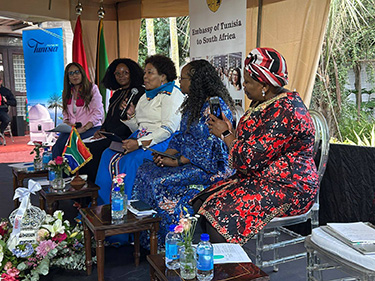
| A timely dialogue by the Embassy of the Republic of Tunisia in Pretoria brought together policymakers, entrepreneurs and development stakeholders to advance a shared agenda on women’s empowerment in agriculture. The event, hosted by the Ambassador of Tunisia, Karima Bardaoui, highlighted both the opportunities and structural challenges facing women across agricultural value chains, while reinforcing the importance of cooperation between Tunisia and South Africa. |
|
|
 |
|
| |
The programme combined high-level panel discussions with practical engagement, as women farmers and crafters showcased their produce and products. The exhibition component served as a reminder that women are not only participants in the agricultural economy, but active drivers of innovation and local enterprise development.
In her opening remarks, Ambassador Bardaoui framed the gathering as an example of “practical diplomacy”, noting that “we are not only exchanging ideas, but we are also building bridges between policy and practice, between vision and impact.” She emphasised that empowering women, particularly in rural economies, is both a social and economic priority, adding that “it is a powerful area of convergence between Tunisia and South Africa and, more broadly, across our African continent.”
Delivering the keynote address, Deputy Minister of Small Business Development, Jane Sithole situated the discussion within a broader continental and global framework. Referencing the designation of 2026 as the International Year of the Woman Farmer, she highlighted the critical but often under-recognised role of women in agrifood systems.
“Women farmers are central to food security, nutrition and economic resilience,” Sithole said, stressing that Africa’s development trajectory cannot be realised without their full participation. She pointed to persistent structural barriers, including limited access to finance, restricted market access and gaps in technical training, noting that “if we are serious about inclusive growth, we must move beyond acknowledging these barriers to systematically dismantling them.”
Importantly, Sithole drew attention to regulatory and administrative constraints at the local level. She emphasised the need to reduce unnecessary red tape, citing cases where longstanding enterprises are hindered by rezoning requirements. She also called for development frameworks to be more responsive to local realities, stating that traditional leadership structures should be considered, particularly in rural areas where they play a central role in economic activity.
The discussions at the embassy echoed themes raised at the recent National Local Economic Development Summit 2026, where government and stakeholders committed to a more coordinated approach to economic development. The LED Summit Pledge and Declaration set out a programme aimed at translating policy into measurable outcomes at the municipal level, addressing persistent challenges such as unemployment, inequality, spatial disparities, infrastructure limitations and institutional capacity constraints.
Minister of Small Business Development, Stella Ndabeni, emphasised at the summit that the declaration represents a shift towards a more integrated and results-driven model for local economic development. The alignment between the embassy dialogue and the summit outcomes was evident, particularly in the shared focus on implementation, collaboration and inclusive growth.
Deputy Minister Sithole reinforced this approach, noting that empowering women in agribusiness is not a peripheral concern but an economic necessity. “Empowering women in agribusiness is not a social obligation; it is an economic imperative,” she said, calling for stronger partnerships between government, the private sector, development finance institutions and regional bodies such as the African Union.
Beyond policy discussions, the event created space for direct engagement between women entrepreneurs and potential partners and customers. This practical dimension aligned with Ambassador Bardaoui’s emphasis on connection and collaboration, as participants were encouraged to build networks and explore opportunities for cross-border cooperation.
As both countries continue to refine their approaches to inclusive agricultural development, the dialogue in Pretoria demonstrated that shared challenges can be met with shared solutions. The convergence of policy, practice and partnership signals a growing recognition that women are central to Africa’s agricultural future and that unlocking their full potential is essential for sustainable economic transformation.
– Source: By Anisha Pemjee www.thediplomaticsociety.co.za |
|
| |
|
| |
| ZERO TARIFFS, NEW HORIZONS: OPPORTUNITIES FOR CHINA–SOUTH AFRICA COOPERATION FROM JOHANNESBURG |
|
| |
 |
|
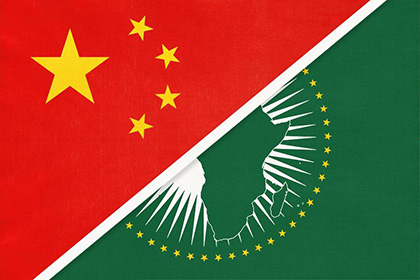
| Amid rising global trade uncertainties and shifting supply chains, a major policy is drawing growing attention across South Africa’s business and industrial sectors: China’s decision to grant 100% tariff-free treatment on products from 53 African countries, effective 1 May 2026. |
|
|
| |
This move goes beyond reducing trade costs. It signals a new phase in China-South Africa economic relations — one defined by greater openness, stronger predictability, and deeper structural cooperation. For years, bilateral ties have steadily expanded across trade, investment, and industry. Now, the zero-tariff policy injects fresh momentum into this already dynamic partnership.
Even before full implementation, early measures have begun to show tangible impact. Since 1 May 2025, China has already extended zero-tariff access to a range of South African agricultural and mineral products. High-quality exports such as citrus, wine, and beef are now poised to benefit from improved competitiveness in the Chinese market.
Against this backdrop, the recent China (Shenzhen Longhua) – South Africa (Johannesburg) Economic and Trade Cooperation Conference, held in South Africa, sent a clear and positive signal. Participants from government, business, and community sectors on both sides emphasised the importance of seizing opportunities presented by China’s upcoming 15th Five-Year Plan and its continued high-level opening-up. They highlighted that, under the dividend of zero tariffs, both countries can better leverage their complementary strengths to elevate practical cooperation to a new level.
On the ground in Johannesburg, the policy is already translating into growing business confidence.
Amukelani Kubayi, Acting Director for Trade and Investment Promotion at the City of Johannesburg, described the zero-tariff policy as a “significant milestone,” particularly for local traders and small businesses. She noted that, with China already one of South Africa’s largest trading partners, eliminating tariffs will further expand trade volumes and unlock new avenues for cooperation.
For businesses, the impact is immediate and tangible. Manelisa Bam, a South African entrepreneur and CEO of Bam Group Holdings, said the policy would significantly reduce the cost of trading with China. “It allows us to procure more products and do more assembly and innovation locally,” he explained. For small and medium-sized enterprises integrated into China-linked supply chains, the cost savings could translate directly into growth and expansion.
The agricultural sector is also seeing strong potential gains. With improved market access mechanisms and zero tariffs working in tandem, South African agricultural exports are expected to reach China more efficiently and competitively. Industry stakeholders say this will reduce costs, streamline processes, and enhance the global competitiveness of South African products — marking a potential turning point for the sector as a whole.
Over the longer term, the significance of zero tariffs extends well beyond cost reduction.
It is reshaping market expectations. With more predictable access to China’s vast consumer market, businesses are more inclined to scale up production, improve quality, and move up the value chain. According to Imram Thabang Makama, a representative of South Africa’s young entrepreneurs, increased trade will stimulate demand across logistics, ports, and processing industries, creating jobs and opening pathways for youth participation in trade and shipping sectors.
At the same time, global developments are reinforcing the importance of such cooperation. Geopolitical tensions and energy price volatility continue to disrupt supply chains and drive up transportation costs. In this context, strengthening stable and predictable trade partnerships has become a shared priority for policymakers and businesses alike.
Zero tariffs, therefore, serve as more than an economic measure—they are a bridge between markets.
Port of Durban
From Johannesburg to Shenzhen, from farms to ports, from SMEs to multinational supply chains, this policy is enabling greater flows—not only of goods, but also of technology, capital, and opportunity.
More importantly, it sends a clear message: at a time of global uncertainty, openness and cooperation remain the most effective path to sustainable growth.
As the policy takes full effect, the scope of China–South Africa cooperation is being redefined. For South Africa, it represents not only improved access to the Chinese market, but also a strategic opportunity to participate more deeply in the evolving global value chain.
From Johannesburg, this new journey has already begun.
– Source: By Zhao Yinan, CMG Africa Bureau Correspondent (Johannesburg) www.thediplomaticsociety.co.za |
|
| |
|
| |
| GARDEN ROUTE NAMED THE WORLD’S BEST ROAD TRIP |
|
| |
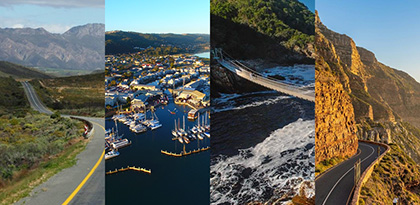
| The Garden Route has been ranked the number one road trip in the world by Autotrader, achieving a score of 90.6 out of 100. |
|
|
 |
|
| |
The global study assessed leading road trips based on factors such as road quality, scenery, weather conditions, visibility, temperature, and overall driving experience.
The Garden Route emerged as the top performer.
“The Garden Route National Park remains a key part of this internationally recognised route, offering diverse landscapes where forests, rivers, mountains, and coastline meet.
“Visitors are encouraged to experience this globally recognised journey and the national park that forms part of it,” South African National Parks (SANParks) said this week.
At the centre of this route is the Garden Route National Park, which spans key sections along the journey and offers a range of nature-based experiences.
The Wilderness Section, located along the N2, is known for its calm waterways, birdlife, forest cabins, and outdoor activities such as canoeing and mountain biking.
The Knysna Section offers access to estuarine and forest environments, with activities including visits to the Thesen Island area to see the endangered Knysna seahorse, as well as forest trails in Diepwalle and scenic viewpoints.
The Tsitsikamma Section features rugged coastal scenery at Storms River Mouth, with accommodation options, camping sites, and access to the famous suspension bridge.
– Source: SAnews.gov.za |
|
| |
|
| |
| BISHOPS LEARNER CROWNED WORLD CHAMPION AT GLOBAL PUBLIC SPEAKING CHAMPIONSHIPS |
|
| |
 |
|
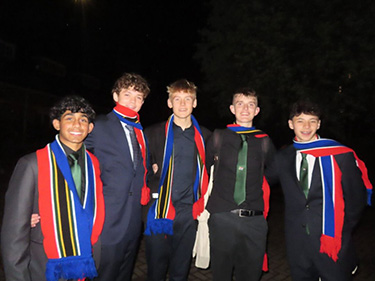
| A group of Bishops Diocesan College learners have returned from the World Individual Debating and Public Speaking Championships in Bristol with plenty to celebrate, including a world title. |
| |
Hamaad Badroodien, Daniel Bursey, Samuel Clarke, Matthew de Jager and Luca Heesom represented both their school and South Africa on the global stage, competing against some of the best young speakers and debaters from around the world.
Leading the charge was Samuel Clarke, who delivered a standout performance throughout the competition. After progressing through the rounds, he secured a place in the Grand Final for Persuasive Speaking. This stage is reserved for only the top three competitors in the category. From there, he went one step further. |
|
|
| |
Clarke was crowned world champion for his speech on the impact of deepfakes on digital identity, finishing first in the world in Persuasive Speaking. This was not a one-man show.
Several of his teammates also made deep runs into the competition. Hamaad Badroodien reached the semi-finals in Interpretative Reading, Impromptu Speaking and Debating, while Clarke himself also featured in multiple semi-final rounds across categories.
Daniel Bursey and Luca Heesom both advanced to the semi-finals in Interpretative Reading, with Bursey going on to compete in the final round of the category. Clarke also featured in the final for Persuasive Speaking before progressing to the Grand Final.
The championships, founded in 1988, bring together top high school speakers from across the globe, with competitors tested across four core disciplines: debating, impromptu speaking, interpretative reading and prepared speeches.
And for the team, it was a chance to test their skills internationally, gain experience and represent their school on a global platform. And of course, with one of them officially being the best in the world in his category.
– Source: www.goodthingsguy.com |
|
| |
|
| |
| SOUTH AFRICAN VIOLINIST NAOMI TAGG SCOOPS “ARTIST OF THE YEAR” HONOURS IN MOSCOW |
|
| |
| One of South Africa’s own just earned a prestigious award on an internationally renowned stage after performing with a full orchestra for the very first time. |
|
| |
South African violinist Naomi Tagg has returned from Moscow with a prestigious award in her bag!
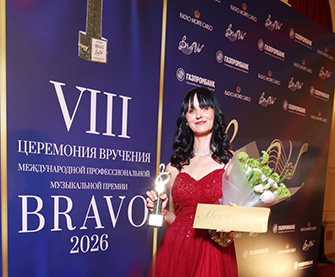
Tagg has earned the top honours of “Artist of the Year – South Africa” at the eighth BraVo International Music Awards. A wonderful achievement for a South African artist on a world-renowned stage.
The grand gala was held at the monumental and historic Bolshoi Theatre in Moscow, where it brought together star performers from dozens of countries around the globe, spanning ballet, opera, classical and contemporary music.
Tagg says that representing South Africa on an esteemed international stage was a great honour.
“It’s an incredible honour to stand on a stage like that and represent South Africa,” she says. “We have such depth of talent in this country, and moments like this show that our artists can stand confidently on any stage in the world.” |
|
|
 |
|
| |
Tagg’s extraordinary performance on the Bolshoi stage was also a first, as she played alongside a full orchestra, performing her own classical crossover arrangement of Asturias.
Tagg has spent more than two decades building a career as an electric violinist. She merges her classical training with modern sound to create a one-of-a-kind style that crosses genres and appeals to many different audiences.
She’s done it all independently, proving that it’s entirely possible to carve out an international career in music totally on your own terms, without relying on traditional structures of institutions, record labels, etc.
All you need is a dream and the drive to get there.
The BraVo Awards ceremony featured global performers, red carpet appearances and international media, and will be broadcast in May across Russia and beyond.
“It’s such a proud moment, not just for me, but for where I come from,” she says. “South African artists are creating work that resonates globally, and I think we’re only just beginning to see that recognised more widely.”
– Source: www.goodthingsguy.com |
|
| |
|
| |
| SOUTH AFRICAN OLIVE OIL SLIDES INTO FIRST PLACE AT INTERNATIONAL AWARDS |
|
| |
 |
|
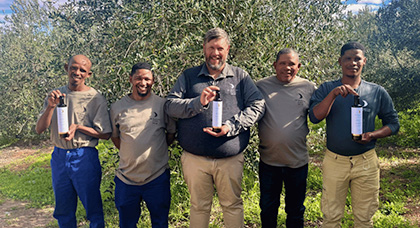
| De Rustica Olive Estate has just taken first prize at the inaugural NOVA Awards 2026 in Spain. This is the top spot at a brand new international competition, in its very first year, judged in Córdoba by some of the biggest names in the global olive oil industry. |
|
|
| |
The NOVA Awards were set up to recognise excellence in modern olive cultivars, honouring the newer varieties being developed to meet changing climates and push quality standards even further. The competition was built around the future of olive oil, and South Africa just walked away with the top prize.
The winning oil is De Rustica’s Estate Collection Favolosa EVOO. The jury praised the winning extra virgin olive oil for notes of green olive, green banana, green almond, basil, chamomile and pine needles, with a smooth entry, well-balanced bitterness and a complex, lingering finish. Basically, a very, very good olive oil.
We should be proud! To put it in perspective, Spain produces over a billion litres of olive oil a year. South Africa produces 1.6 million. Yet here we are in first place.
“South African extra virgin olive oils continue to prove themselves among the best in the world. Awards like this highlight not only the innovation of producers like De Rustica, but also the consistent quality, care and craftsmanship that define our local industry. Research, development and innovation are important for the South African olive industries’ sustainability and position in the global arena. It is encouraging to see South Africa recognised at this level in an international competition focused on the future of olive oil”, says Wendy Petersen, CEO of SA Olive.
Just last year, South Africa claimed some of its biggest international olive oil wins to date. De Rustica earned a spread of those accolades, including Top 2 in the world at Evooleum and a Mario Solinas Silver.
“De Rustica is delighted to win the overall first prize at the 2026 NOVA Awards for our Favolosa cultivar EVOO. This recognition affirms our commitment to innovation and our ongoing pursuit of exceptional quality.” says Rob Still of De Rustica.
– Source: www.goodthingsguy.com |
|
| |
|
| |
| KAROO DONKEY SANCTUARY RECOGNISED WITH WORLD COMPASSION AWARD |
|
| |
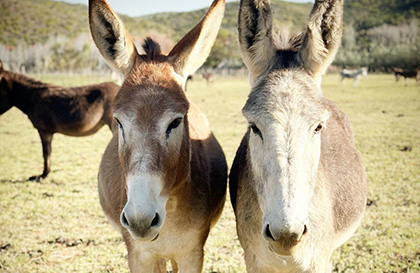
| The Karoo Donkey Sanctuary (KDS) has been presented with the 2026 Shining World Compassion Award by Supreme Master Ching Hai, who is defined by the sanctuary as a world-renowned spiritual leader, author, and humanitarian. |
|
|
 |
|
| |
The award is one of a global series that recognises individuals and organisations who go beyond the call of duty to serve others, human and animal alike, with selflessness and compassion.
“I am so incredibly honoured and proud for KDS to have received the 2026 Shining World Compassion Award, presented by Supreme Master Ching Hai”, says Jonno Sherwin, Founder and CEO of the Karoo Donkey Sanctuary.
Along with a crystal plaque and a personal letter of appreciation from Supreme Master Ching Hai, the sanctuary will receive a financial contribution of US$10,000 (around R163,940) to support their ongoing work at the sanctuary for donkeys.
In her personal letter to the sanctuary, Supreme Master Ching Hai acknowledged the sanctuary’s work rescuing, rehabilitating, and rehoming hundreds of animals, most of them severely abused, overworked, or abandoned. She noted the ongoing battle against the illicit donkey skin trade, which still threatens millions of donkeys worldwide, and honoured the Karoo Donkey Sanctuary, recognising it as the largest of its kind in Africa.
Jonno shared the recognition with his hard-working, committed team who show up every day for the love of donkeys.
“While this recognition is humbling on a personal level, it really belongs to the entire team at the Sanctuary. Every day, they show up to do the hard, often unseen work of caring for our vulnerable animals, and this acknowledgement reflects their dedication just as much as anything else”, he said.
Last year was one of the hardest in the sanctuary’s history, when a donor pledge that fell through left around 400 animals without shelter in the dead of winter, pushing the organisation to the very brink. At the 11th hour, a small group of angel investors stepped in, and the sanctuary was able to purchase a 500-hectare farm at the base of the Meringspoort in De Rust.
The farm’s name, Die Hoop, literally means “The Hope” and it has lived up to that name ever since.
Supreme Master Ching Hai’s letter acknowledged this journey too, noting the spiritual significance of that new beginning and closing with a blessing.
“May Heavens engrave your name with Blessing and Love for you, all involved and all the wonder, lucky residents under your Angelic Wings.”
The financial contribution will go directly toward supporting the sanctuary’s compassionate work with abandoned, abused and neglected donkeys.
“We are sincerely grateful for the support, which will go directly towards strengthening our efforts on the ground and continuing the work that matters most.” said Sherwin.
– Source: www.goodthingsguy.com |
|
| |
|
| |
| SOUTH AFRICAN FILM GOD’S WORK WINS RARE INTERNATIONAL AWARD |
|
| |
 |
|
“To use the power of cinema to build bridges across humanity…”
A South African film has walked away from one of the continent’s most respected film festivals with an award so rare it isn’t even handed out every year. |
| |
|
|
|
| |
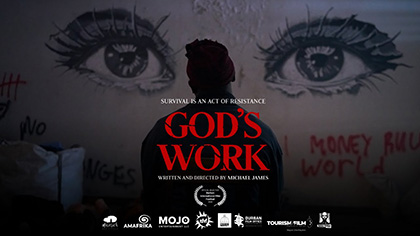
God’s Work, directed by Michael James and produced by Sithabile Mkhize, has been awarded the Radwan El Kashef Prize for Best Film Addressing an African Issue at the Luxor African Film Festival in Egypt.
The prize comes with the Silver Mask of Tutankhamun. The High Committee only grants it when they feel a film has earned it, reserving the honour for works that combine artistic excellence with a deep and honest engagement with African realities.
This time, God’s Work was that film.
The prize is named after Egyptian independent filmmaker Radwan El Kashef, a pioneer who worked from 1952 until his death in 2002, and whose legacy is defined by cinema that lifts marginalised voices with empathy and depth. To win it is to be placed in that tradition.
The award was presented to director Michael James by Dr Hossam El-Mandouh El-Husseini, an Egyptian Member of Parliament.
The film was honoured for what the festival described as its powerful artistic vision and its sincere exploration of African identity and collective struggle.
The film itself is set in a crumbling Durban building that shelters those who have fallen through the cracks of society. God’s Work follows a loose-knit community of homeless friends and survivors navigating addiction, poverty, and the weight of lives lived on the margins.
It merges gritty realism with surrealism to sit inside the interior worlds of men who are so often looked through rather than looked at. It follows their memories, their dreams, their dignity.
“This award is especially important because it acknowledges one of the central intentions of the film, which is to use the power of cinema to build bridges across humanity,” says producer Sithabile Mkhize.
The film stars SAFTA award-winning actor Thobani Nzuza as Simphiwe, supported by Mbulelo Radebe, Omega Mncube, Siya Xaba, Zenzo Msomi, and Nduduzo Khowa.
The film was inspired by real stories gathered from the Denis Hurley Centre in Durban, a shelter and service centre that has long been a lifeline for people living on the streets of the city.
The political conversations around homelessness often tend toward the punitive or the performative, but God’s Work asks you to stay. It insists that the men sheltering in that Durban building have inner lives worth your time. That is both a creative choice and a moral one, the kind of filmmaking that earned this film a rare award.
“Receiving this award on behalf of the film and all involved is deeply humbling. This award affirms the importance of telling African stories with honesty and empathy, and I hope God’s Work continues to contribute to the ongoing dialogue around affirming the humanity of the homeless community.” says director Michael James.
– Source: www.goodthingsguy.com |
|
| |
|
| |
| MIXED RESULTS AND POSITIVE SIGNS FOR SOUTH AFRICA AT WORLD SENIOR CHESS EVENT |
|
| |
| Chess South Africa has been steadily finding its rhythm at the FIDE World Senior Team Championships 2026 in Durrës, Albania, with a mix of tough lessons and encouraging results along the way. |
|
|
 |
|
| |
After arriving and settling in following a tight travel turnaround, the team opened their campaign in the 50+ section against England’s second side. It proved to be a challenging start, with South Africa going down 4–0 in the opening round.
They responded well in round two, holding France to a 2–2 draw in a much-improved team performance. Anton Goosen secured the team’s first win of the tournament with a bold and tactical display, while Andre Schutte and Lyndon Bouah added steady draws to keep things level.
Building on that momentum, South Africa delivered one of their standout results in round five, beating Wales 3.5–0.5 in a strong all-round team effort. Goosen once again impressed with a composed win, while Shabir Bawoodien showed persistence to secure a crucial point. Schutte continued his good run of form with another victory, and Bouah added a solid draw on the top board.
There were also testing moments, including a match against a strong United States women’s team, where South Africa went down despite a determined fight. Schutte provided a highlight with a hard-earned win, while Bawoodien secured a resilient draw.
Across the tournament, the team has shown steady progress, adjusting to the level of international competition and building confidence with each round.
Beyond the results, the experience has also offered valuable insight into the demands of international chess, from preparation and focus to managing the pressures of tournament play.
As the competition continues, the focus remains on consistency and making the most of every opportunity at the board.
– Source: www.goodthingsguy.com |
|
| |
|
| |
| LAURA WOLVAARDT SMASHES WORLD RECORD AS PROTEAS WOMEN CRUSH INDIA TO SEAL SERIES WIN INDIA WOMEN TOUR TO SOUTH AFRICA |
|
| |
 |
|
| The Proteas Women's team wrapped up their ICC T20 World Cup preparations in magnificent fashion with a comprehensive win over India at Willowmoore Park in Benoni to close out the five-match series 4-1. |
| |
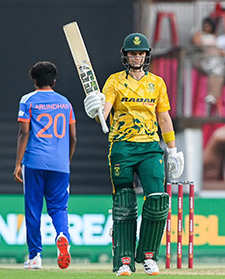
The home team restricted India to 132/8 in response to their 155/6 to claim victory by 23 runs. As so often is the case, in whatever format, it was Laura Wolvaardt who played the most prominent role for her team.
It has been a record-breaking series for the Proteas Women’s captain, and she continued in that vein at Willowmoore Park, with another magical undefeated 92 from 56 balls, pushing her series tally to 330 runs — the most by any batter in a women’s T20I series.
Wolvaardt’s innings was a masterpiece of placement and timing, interspersed with brute force — an element the skipper has successfully added to her game in recent times. She struck 11 boundaries and finished off in style with consecutive sixes off the final two deliveries of the Proteas’ innings. |
|
|
| |
Considering the platform Wolvaardt and opening partner Sune Luus (23 off 23 balls) had provided their team with a 73-run stand for the first wicket, the eventual target would have left the home side feeling they may have left 20 to 30 runs out in the middle.
That was primarily due to the middle-order’s persistent struggles against the Indian spinners. Five wickets fell for just 43 runs between the 11th and 18th overs with spin duo Shree Charani (2/22) and Deepti Sharma (2/37) picking up four wickets between them, while seamer Renuka Singh also delivered an economical spell of 2/21.
The shift in tactics in moving Wolvaardt back up top has certainly reaped dividends, but it may have come at the expense of her former opening partner Tazmin Brits. The 35-year-old has not been able to settle into her new role at No 3, where she averages 21.5 in comparison to 31.63 when she opens, and it may ultimately cost her a place in the Proteas T20 World Cup squad when veterans Marizanne Kapp and Dane van Niekerk return from injury.
It could lead to a shootout between Brits and Anneke Bosch, who too has not been able to show any form of consistency since returning to the squad after a lengthy spell on the sidelines, for the remaining specialist batter’s position in the 15-player squad.
Coach Mandla Mashimbyi will also be well pleased with the way his bowling attack has responded in this series after a disappointing tour to New Zealand recently.
After electing to defend a total for the first time in the series, the bowlers responded by picking up wickets regularly throughout India's innings.
Middle-order batter Bharti Fulmali fought a lone battle with 40 off 30 balls, with the remainder having no answer to the pressure exerted by the Proteas bowling unit. Nonkululeko Mlaba is certainly back to her best, with the left-arm spinner bravely going slower and slower to gift the ball plenty of air before gripping off the surface and turning vigorously.
SCOREBOARD
South Africa 155/6
Wolvaardt 92*, Luus 23, Singh 2/21, Charani 2/22, Sharma 2/37
India 132/8
Mlaba 2/15, De Klerk 2/26, Marie-Marx 1/12
Proteas won by 23 runs, and wins the five-match series 4-1
– Source: www.iol.co.za |
|
| |
|
| |
| CAPE TOWN SKATEBOARDER MAKES HISTORY WITH BREAKTHROUGH IN URBAN WORLD SERIES DEBUT |
|
| |
| After a dream debut in Malaysia, Capetonian skateboarder Jean-Marc Johannes reflects on representing South Africa for the first time on the Urban World Series stage and sets his sights on a podium finish in Barcelona. |
|
| |
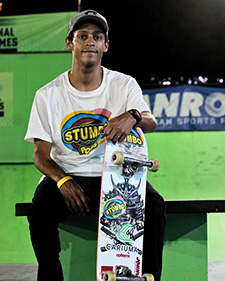
Cape Town professional skateboarder Jean-Marc Johannes has described his recent international breakthrough as a “dream come true” after making history in his first appearance in the Urban World Series, where he finished fourth at a major event in Malaysia.
Jean-Marc, South Africa’s first ten-time international skateboarding medallist in the World Series circuit, competed at the DBKU International X Games in Malaysia in partnership with CanRoll Pro 2026. This was a major stop on the global Urban World Series calendar.
For him, stepping into the competition was a moment of both excitement and nerves.
“I was definitely a little bit nervous at first,” he said. “It was my first time in the Urban World Series, and I’ve followed the series for a long time. I’ve seen some of my favourite skateboarders compete there, so being part of it felt like living one of my dreams.”
The event marked the first time South Africa had been represented in the series, making Johannes’ participation even more significant. He went on to secure a strong fourth-place finish in a highly competitive field, immediately placing himself among the sport’s rising international contenders.
“It was definitely a dream come true. I went in, gave it my all, and I’m happy with the result. It motivated me a lot for what’s coming next.” |
|
|
 |
|
| |
That “next” is already in sight! Barcelona in September 2026, where Jean-Marc will return to the Urban World Series stage. He says the Malaysian experience has already played a major role in shaping his preparation.
“It gave me a lot to work from in terms of what to expect and how to compete. There’s a lot of strategy in high-level contests, and I’ve learnt how to approach that better now.”
Despite narrowly missing out on a podium finish, he says the experience has been invaluable.
“I reflected a lot on how I performed throughout the whole event, not just the final. What I did right, what I could improve, and how I handled different moments. Everything leads to growth.”
Competing against top international athletes also gave him a deeper perspective on his own level and the global skateboarding scene.
“It shows me that it’s possible to reach that level.”
For young South African skaters watching his journey unfold, his message is that possibility is real.
“You realise what you are capable of, not just in competing, but becoming more than you ever thought you could be.”
– Source: www.goodthingsguy.com |
|
| |
|
| |
| SOUTH AFRICAN GYMNASTS OPEN STRONG AT AFRICAN CHAMPIONSHIPS IN YAOUNDÉ |
|
| |
 |
|
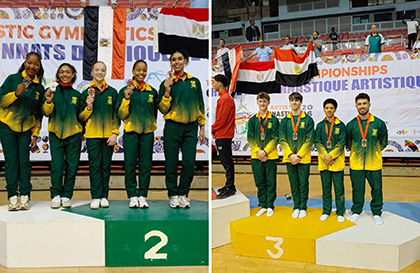
| South Africa secured team silver in the women’s competition and team bronze in the men’s event, with Caitlin Rooskrantz adding an individual silver in the All-Around as the championships continue in Cameroon. |
|
|
| |
South Africa has added to its medal tally at the African Artistic Gymnastics Championships 2026, with strong performances across both the senior women’s and men’s artistic gymnastics teams in Yaoundé, Cameroon.
The results come during the ongoing championships, following a build-up in which the Head Coach of the Senior Olympic Women’s Artistic Gymnastics (WAG) team, Leeland Christian, had highlighted the group’s preparation after a strong national trial period. At the time, he spoke about the importance of the event as a platform for international exposure and a key opportunity for gymnasts to test themselves under competition pressure.
In the senior women’s team event, Caitlin Rooskrantz, Karma Visagie, Naveen Daries, Zelme Daries and Buhle Nhleko delivered a composed performance to secure a silver medal for South Africa.
Rooskrantz also produced a standout individual showing, claiming silver in the Senior Women’s All-Around competition, adding to her strong contribution to the team effort.
On the men’s side, Travis Giles, Kadin Chester, Daniel McLean and Ruan Langer secured a bronze medal in the senior team competition, rounding off another podium finish for South Africa at the championships.
South Africa’s gymnasts continued bringing their A game. They delivered multiple podium finishes and consistent performances across both programmes.
– Source: www.goodthingsguy.com |
|
| |
|
| |
| SOUTH AFRICA OPENS AFRICAN WRESTLING CHAMPIONSHIPS WITH TWO MEDALS |
|
| |
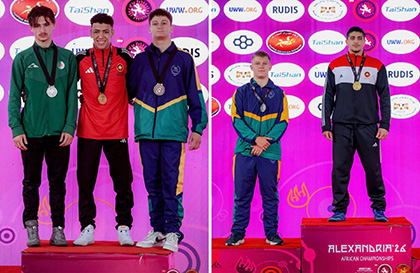
| A bronze for Christian Warner and silver for Stephan van der Westhuizen headline day one of the African Championships, with several U17 wrestlers gaining key continental experience. |
|
|
 |
|
| |
Egypt (28 April 2026) – South Africa’s U17 wrestlers have opened their campaign at the African Wrestling Championships 2026 on Day 1 of the championship, held in Egypt.
Leading the way was Christian Warner, who secured a bronze medal in the Greco-Roman 60kg division after a strong run through the draw. Warner showed control and attacking intent in his early bouts, recording dominant victories before fighting his way back to the podium with a convincing win in the bronze medal match.
There was also a silver medal for Stephan van der Westhuizen in the 110kg category. Competing in a straight final, he finished second overall after facing a strong Egyptian opponent, adding another medal to South Africa’s tally.
Several South African wrestlers gained valuable mat time against tough continental opposition. In the 48kg division, Stefan Roberts finished fourth, picking up a win by forfeit alongside a series of hard-fought bouts. Liam Carstens also placed fourth in the 51kg category, managing a win while facing strong competitors from across the region.
At 55kg, Ntando Matsoso competed in a challenging pool, finishing fourth, while Sebastian Fourie (65kg) placed sixth after two difficult matches.
In the heavier divisions, Jaden Christiaan Deysel (71kg) and Joshua Bothma (80kg) both faced tough opposition, finishing fifth in their respective categories.
On the women’s side, Tanique Jansen van Rensburg showed promise in the 57kg division, winning her quarterfinal bout before narrowly missing out on a medal, finishing fifth overall after a closely contested bronze medal match.
Attention now shifts to the remaining U17 women’s categories and the men’s freestyle events, where Team South Africa will look to build on its early medal success.
– Source: www.goodthingsguy.com |
|
| |
|
| |
| SOUTH AFRICA, MEXICO TO RENEW RIVALRY IN 2026 WORLD CUP OPENER |
|
| |
 |
|
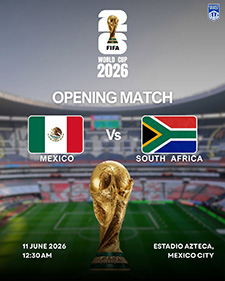
| When Bafana Bafana walk onto the pitch for the opening match of the 2026 FIFA World Cup in June, it will mark exactly 16 years since South Africa, as host nation, kicked off the first World Cup on African soil against Mexico in Johannesburg. |
| |
Fast forward to 11 June 2026, and history repeats itself — with the same two nations meeting again in the tournament’s opening fixture, this time with South Africa playing away in Mexico.
“The same two countries. The same opening fixture. Exactly 16 years later. That is not a coincidence that football often gives you. When history hands you a gift like that, you do something with it,” the Minister of Sport, Arts and Culture, Gayton McKenzie, said on Thursday in Pretoria during a media briefing.
As part of commemorating the historic encounter, the two countries will stage a Legends rematch on 8 June 2026 — three days before the official opener.
The legends of the 2010 Bafana Bafana squad are set to face their Mexican counterparts in Pachuca, Mexico, revisiting the iconic clash from the 2010 FIFA World Cup. |
|
|
| |
“The South African Football Association (SAFA) and the South African Masters and Legends Football Association have been working together to identify 20 of the players and team management from the 2010 squad. The playing kit will be secured by SAFA through its sponsor, Adidas,” the Minister said.
The match will be hosted in partnership with Pachuca, home to Club Pachuca, one of Mexico’s most historic football clubs.
“We are deeply grateful to Pachuca for the role they are playing in making this possible. This is not a match happening next to the World Cup. This is a match happening because two football nations, with a shared moment in history, decided to honour that moment properly,” McKenzie said.
Following the match, the South African Legends will remain in Mexico to host coaching clinics on 9 and 10 June, sharing their experience with young Mexican players and South African diaspora footballers.
They will also attend the opening match on 11 June before returning home the following day.
Ekhaya Centre to showcase South African culture
To promote South Africa’s culture and talent, the Department of Sport, Arts and Culture, in partnership with Brand South Africa and SA Tourism, will host the Ekhaya Centre at the Centro Nacional de las Artes in Mexico City.
“Ekhaya will be a place to watch football. It will be a place to see South African art, to hear South African music, to eat South African food. It will be a media centre for the journalists covering Bafana’s campaign.
“It will be a fan park and a fan engagement space. It will be a venue for business and investment networking – because when our flag is flying, our economy should be working alongside it,” the Minister said.
South Africa will also participate at the Aldea Global centre in Mexico City, alongside exhibitions from the 48 participating nations, with up to 20 South African artists set to perform.
Additional activation centres will be hosted in Atlanta and Monterrey, aligned with Bafana Bafana’s match schedule, to further boost fan engagement and promote South Africa on the global stage.
Cultural ambassadors to travel with the team
The department will also support South African artists to perform at the Ekhaya Centre and other activation hubs.
“We will be supporting South African chefs to cater to our fans, our guests, and curious Mexicans who want to experience South African cuisine. We will also support local podcasters and journalists to cover the tournament and tell our story in our own voices.
“To the South African journalists, podcasters and influencers travelling with us: you are not going to Mexico on holiday. You are going to render a service to your country.
“You will be telling South Africans, in their own voices and on their own platforms, what their players are doing on the world stage. That role is not always adequately recognised in this country, and it should be,” the Minister said.
Details of the selection process will be announced by the department in the coming days.
– Source: SAnews.gov.za |
|
| |
|
| |
| SOUTH AFRICAN SCHOOLS WATER POLO MAKES THEIR MARK IN BRISBANE |
|
| |
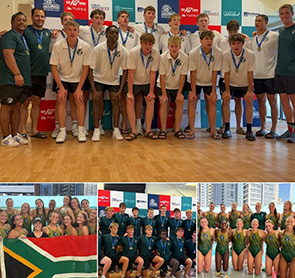
| Across two weeks in Brisbane, the South African Schools Water Polo Association competed across multiple divisions at the Australian Youth Water Polo Championships, returning home with a strong medal haul. |
|
| |
Competing against top international opposition, the South African school sides collected two gold medals and two silver medals, while also securing consistent top-seven finishes across multiple divisions.
Leading the charge were the U18 boys, who went unbeaten on their way to gold. The U16 boys added another gold in the U18 B division, showing the depth within the squad and their ability to step up against older competition.
There was more to celebrate from the girls’ teams. The U16 girls competed in the U18 division and secured a silver medal, holding their own against more experienced opposition. The U16 boys also finished with silver in their Gold division, falling just short in a tightly contested 12–14 final.
Across the board, the South African teams remained competitive throughout. Both the Girls U18 and U16 sides finished seventh in their respective Gold divisions, reinforcing the consistency shown over the two-week tournament.
The experience extended beyond results, as it offered exposure to different styles of play and the intensity of international competition.
U18 boys coach Jon Marc de Carvalho reflected on the tour: |
|
|
 |
|
| |
“We had a truly amazing time in Australia. Everyone was so welcoming and enjoyed having us in the tournament. An amazingly high level of polo was played overall, and it was fantastic for our boys to experience a different playing style and level of intensity.”
The campaign also underscored the support behind the scenes, with coaches, management, families and supporters all playing a role in the team’s journey.
Yes, the medals provide a snapshot of success, but the broader takeaway from Brisbane is the exposure and growing depth within South African schools’ water polo.
– Source: www.goodthingsguy.com |
|
| |
|
| |
|
|
|
|
|
|
|
|