| |
| |
|
| |
| AFRICA’S TRAVEL INDABA SHOWCASES TOURISM AS DRIVER OF GROWTH AND JOBS |
|
| |
| South Africa’s tourism sector is regaining momentum, with President Cyril Ramaphosa declaring that tourism is far more than an economic driver — it is “a living expression of people”. |
| |
|
|
|
 |
|
| |
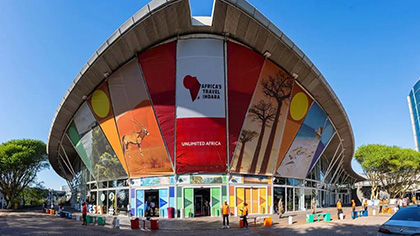
Addressing delegates at Africa’s Travel Indaba on Tuesday, 12 May 2026, at the Inkosi Albert Luthuli Convention Centre in Durban, the President praised the resilience of the sector and the partnerships that helped it weather some of the toughest years faced by the global tourism industry.
“We take pride in the resilience of the tourism sector. We take pride in the partnerships that have carried us through some of the most challenging years the global tourism industry has faced,” President Ramaphosa said.
The President revealed that South Africa welcomed 10.5 million international visitors last year, describing it as a strong indication that global travellers are rediscovering the country with renewed enthusiasm.
As part of efforts to unlock even greater tourism growth, Ramaphosa said South Africa is working with neighbouring countries to advance the Southern African Development Community (SADC) Tourism UNIVISA, which would allow seamless travel across SADC member states.
“When Africans travel within Africa, it strengthens economies, deepens cultural ties and builds a more integrated continent,” he said.
Government is also expanding one-stop border posts and developing cross-border tourism itineraries aimed at showcasing the richness and diversity of the region. Ramaphosa emphasised the need to promote South Africa’s unique cultural, historical and natural attractions, saying he was encouraged by the growing response to this call.
Highlighting Durban’s evolving tourism landscape, the President noted that the City of eThekwini recently unveiled statues of Nelson Mandela and Oliver Tambo, adding two new attractions to the city’s tourism offering.
“This demonstrates the importance of expanding and diversifying our tourism offering, catering to a broad range of domestic and international travellers,” he said.
President Ramaphosa stressed that rising tourism figures translate into real benefits for ordinary South Africans.
“The increases we have seen in tourism figures are not merely of statistical interest. They represent families supported, small businesses revived and communities that are being uplifted,” he said.
According to Statistics South Africa, the tourism sector now accounts for nearly one million direct jobs in the country, meaning around one in every 18 workers is directly employed in tourism.
The President also hailed Africa’s Travel Indaba as one of the continent’s most influential tourism platforms. Last year’s event drew about 10 000 delegates and more than 1 300 exhibitors, showcasing the best of African tourism while contributing to local economic and social development.
“The benefits are felt not only in boardrooms but also in small businesses, township enterprises and the homes of ordinary South Africans,” President Ramaphosa said.
He added that tourism growth depends heavily on connectivity, with South Africa strengthening its tourism presence in China, India, Southeast Asia, Mexico and Brazil — all rapidly growing outbound travel markets.
“Our new visa reforms, including the Electronic Traveller Authorisation system and the Digital Nomad Visa, are designed to make travel easier and more seamless. We must nurture these relationships, expand air access and ensure our tourism products meet visitors’ expectations,” he said.
Welcoming delegates to Durban, eThekwini Mayor Cyril Xaba said the city was proud to once again host the world.
“Tourism remains one of the most powerful tools for economic growth, job creation, and social inclusion,” Xaba said.
He noted that Africa’s Travel Indaba continues to unlock investment, partnerships and opportunities for communities across the continent. Durban, he said, is steadily positioning itself as Africa’s leading tourism and events destination through improved global connectivity and new airline routes linking the city to key domestic, regional and international markets.
“Improved air access is opening Durban to greater tourism and investment opportunities, while making our city more accessible to travellers and business delegates alike,” Xaba said.
The Mayor also highlighted the city’s growing sports tourism sector, saying Durban’s world-class stadiums and facilities continue to attract major international sporting events and thousands of visitors annually.
Tourism Minister Patricia de Lille described tourism as an economic catalyst with life-changing impact.
“According to the recently released Statistics South Africa Satellite Account, by 2024 the tourism sector accounted for 954 000 direct jobs and contributed 4.9% to the country’s GDP [gross domestic product]. And with a record-breaking 10.5 million international arrivals in 2025, we are no longer speaking recovery — we are speaking growth,” Minister de Lille said.
She said Cabinet’s approval of the Tourism Growth Partnership Plan in 2025, co-created with the private sector, marked a major step towards diversifying South Africa’s tourism offerings.
Minister de Lille pointed to significant tourism investments already underway, including the R24 billion expansion of the V&A Waterfront, the R10.5 billion investment into Winelands Airport and the R2.1 billion Club Med Beach & Safari resort in KwaZulu-Natal, set to open in July 2026.
The Minister added that the Department of Tourism continues to drive investment through the Tourism Infrastructure Investment Summit.
Africa’s Travel Indaba 2026 officially kicked off on Monday at the Inkosi Albert Luthuli Convention Centre with BONDay (Business Opportunity Networking Day), opened by Deputy Tourism Minister Makhotso Sotyu.
Held under the theme: Unlimited Africa: Growing Africa’s Tourism Economy, the Indaba runs from 11 to 14 May 2026 and brings together delegates, ministers, exhibitors, buyers, media and tourism leaders from across Africa and the world.
The event coincides with Africa Month celebrations and provides a key platform to strengthen partnerships, unlock opportunities and shape a more inclusive tourism future that benefits communities, entrepreneurs and nations across the continent.
– Source: SAnews.gov.za |
|
| |
|
| |
| PRESIDENT RAMAPHOSA MOURNS PASSING OF FORMER BOTSWANA PRESIDENT FESTUS MOGAE |
|
| |
 |
|
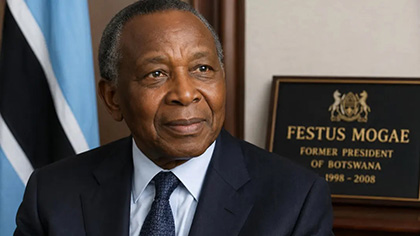
| President Cyril Ramaphosa has extended his condolences to the government and people of the Republic of Botswana following the passing of former President Festus Gontebanye Mogae at the age of 86. |
|
|
| |
On behalf of the government and people of South Africa, President Ramaphosa also conveyed his sympathies to former First Lady Barbara Gemma Mogae, the bereaved family and Botswana President Duma Gideon Boko.
In a statement on Monday, 11 May 2026, the President described Mogae as a great leader who played a significant role in advancing democracy, good governance and regional cooperation.
“As South Africans, we embrace the people of Botswana in our shared grief at the passing of a great leader of the Republic of Botswana and the Southern African Development Community.
“We have lost a dear neighbour and friend, who shared our values of democracy, good governance and fraternal partnership,” President Ramaphosa said.
The President said the passing of Mogae during Africa Month serves as a reminder of the values and principles that guided his leadership and contributed to the development of Botswana and the Southern African region.
“As we observe Africa Month across our continent, the passing of President Mogae impels us to reflect on the principles and values that underpinned his leadership and that contributed significantly to the development of Botswana and our region and brought the citizens of our two nations together more closely,” he said.
President Ramaphosa said Mogae’s legacy would continue to live on through the prosperity and stability of Botswana.
“His legacy lives in our hearts and will live on in the prosperity and stability of the Republic of Botswana. May his soul rest in peace.”
– Source: SAnews.gov.za |
|
| |
|
| |
| RULE OF LAW MUST BE UPHELD, PRESIDENT RAMAPHOSA SPEAKS ON ILLEGAL MIGRATION AND PROTESTS |
|
| |
| President Cyril Ramaphosa has used his weekly newsletter to call on South Africans to respect and uphold the laws of the country as government tackles the challenge of illegal migration. |
|
| |
This, as demonstrations, some violent, against undocumented immigrants have spread across several major cities in South Africa.
“The recent violent protests and criminal acts directed at foreign nationals in parts of our country do not represent the views of South Africa’s people nor reflect our government’s policy. These are the acts of opportunists who are exploiting the legitimate grievances, particularly those of the poor, under the false guise of ‘community activism’.
“Some of these people are assuming functions that only state officials are permitted to perform, including stopping people to check identification and conducting searches of private property. Such lawlessness will not be tolerated, regardless of who the perpetrators or victims are,” President Ramaphosa asserted.
He acknowledged that as a society, South Africa needs to deal “decisively – and within the law” with illegal immigration, which poses a risk to the country’s “social stability, governance and national security”. |
|
|
 |
|
| |
“Undocumented migration places strain on healthcare, housing and municipal services, particularly in poor communities.
“It distorts the labour market. In a country with high unemployment, some employers are exploiting undocumented, cheaper foreign labour over hiring citizens and paying them legal wages. Not only is this fuelling social tension, but it is also actively undermining our labour protection regime and eroding the hard-won rights of workers,” he said.
The President added that the challenge needs a whole-of-society approach “in which the private sector and government should all play a constructive part”.
“South African citizens who collude with undocumented foreign nationals in fake marriages, the illegal sale of state-subsidised housing or accepting bribes to facilitate access to social services only deepen the problem.
“Many South Africans are exploiting undocumented labour in households and in the informal sector,” the President added.
Facing the challenges
President Ramaphosa noted that tackling illegal migration entails “balancing our constitutional and international obligations with safeguarding national security”.
He commended the Border Management Authority (BMA) and the Defence Force for strengthening borders and combatting illegal cross-border activity.
President Ramaphosa further noted that the BMA has intercepted some 450 000 people attempting to cross into South Africa illegally over the past financial year.
“As we strengthen our borders, we continue to reform our migration and citizenship framework. We are stepping up workplace enforcement against employers who hire undocumented foreign nationals in violation of labour and immigration laws.
“We announced in the State of the Nation Address that we would be hiring up to 10 000 inspectors through the Department of Labour and Employment to ensure that our labour and immigration laws are adhered to.
“We continue to arrest and deport undocumented foreign nationals in accordance with the law, as we take forward the fight against corruption within the immigration system,” he said.
On the continent
Turning to the attention that the violent protests have garnered from within the continent, the President insisted that South Africans must push back on attempts to tarnish the country’s reputation.
“As a country, we must reject attempts to damage our country’s international reputation and to undermine the solidarity that has defined South Africa’s relations with the rest of Africa since the dawn of democracy.
“Since 1994, we have actively advanced a culture of human rights, all the while deepening the cause of African integration, cooperation and solidarity. We have a strong refugee protection framework that prioritises the integration of persons displaced by conflict, war and persecution,” he said.
President Ramaphosa highlighted that refugees in South Africa are not “confined to camps” but live within communities, participate in the economy and access services like healthcare and education”.
He pointed to the country’s efforts in not only “deepening regional economic integration and travel” but also “strengthening academic, cultural and institutional ties” with the continent.
“Our demonstrated commitment to deepening African integration and solidarity should not be undermined by isolated acts of criminality.
“South Africa is not unique in confronting the pressures associated with undocumented migration. Many countries across the world, including in Africa, are themselves grappling with similar tensions. This calls for cooperation and understanding between countries on the continent and further afield,” he said.
The President emphasised that, like every country in the world, South Africa will exercise its sovereign right to “regulate migration, secure our borders and enforce our laws”.
“We must make it clear that there is no place in South Africa for xenophobia, ethnic mobilisation, intolerance or violence.
“Everyone in South Africa is bound by the same laws, and we are committed to ensuring that they are respected and upheld by citizens and foreign nationals alike,” President Ramaphosa concluded.
– Source: SAnews.gov.za |
|
| |
|
| |
| MINISTER LAMOLA ARRIVES IN INDIA FOR BRICS FOREIGN MINISTERS’ MEETING |
|
| |
 |
|
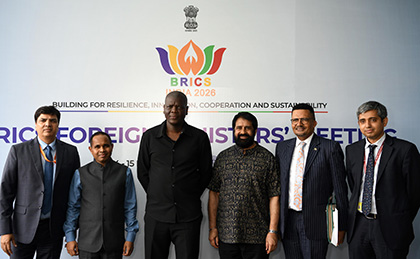
| Minister of International Relations and Cooperation, Ronald Lamola, has arrived in New Delhi, Republic of India. He joins his counterparts for the Meeting of Brazil, Russia, India, China and South Africa (BRICS) Ministers of Foreign Affairs/International Relations, hosted under India’s BRICS Chairship on 14 and 15 May 2026. |
| |
|
|
|
| |
The meeting is convened under the theme, Building for Resilience, Innovation, Cooperation, and Sustainability (BRICS). The 2026 agenda is characterised by a profound commitment to a humanity-first orientation, signalling an approach to strengthen multilateralism and foster inclusive development during this pivotal era of global transformation.
BRICS Foreign Ministers will also deliberate and call for enhanced efforts to de-escalate and promote a pacific resolution of conflicts raging in different parts of the world, including the Middle East.
Minister Lamola expressed his confidence that these high-level deliberations will further cultivate the strategic synergy between BRICS member states, BRICS partner countries and all international partners.
“Our presence here represents a concerted effort to shape a global architecture that is as sustainable as it is equitable,” Minister Lamola stated. “Through principled engagement and collaborative resolve, we seek to secure a future that honours the aspirations of all nations.”
Occupying a unique position as a foundational pillar of the bloc, South Africa continues to serve as the vital nexus between the African continent’s developmental objectives and the vanguard of global innovation.
South Africa’s participation is anchored in a long-standing tradition of principled advocacy, focusing on three core imperatives:
- Equity and Inclusivity: Promoting a balanced international order that upholds the sovereign interests of all states, fostering a more just global community.
- The Modernisation of Global Governance: Championing the reform of international political and financial institutions to ensure that they remain representative of the contemporary geopolitical landscape.
- The Synthesis of African and Global Progress: Ensuring that the priorities of the African continent are seamlessly integrated into the BRICS framework, under the guiding philosophy of “Better Africa, Better World.”
South Africa remains committed to bridging the gap between the developmental priorities of the Global South and emerging frontiers in technological, economic, and social innovation, with a view to ensuring that BRICS cooperation delivers tangible, inclusive, and sustainable socio-economic benefits for all.
– Source: www.dirco.gov.za |
|
| |
|
| |
| DEPUTY MINISTER BOTES ATTENDS CELEBRATION OF SOUTH AFRICA–CUBA BILATERAL RELATIONS |
|
| |
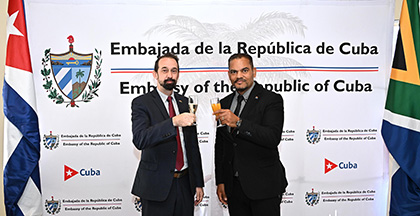
| The Deputy Minister of International Relations and Cooperation, Alvin Botes, attended the occasion marking the 32nd anniversary of bilateral relations between South Africa and Cuba at the Embassy of Cuba in South Africa in Pretoria. |
|
|
 |
|
| |
Upon arrival, Deputy Minister Botes was received by the Ambassador of Cuba to South Africa, Fakri Rodríguez Pinelo.
The occasion commemorated more than three decades of diplomatic relations and cooperation between South Africa and Cuba, underscoring the longstanding friendship and solidarity shared between the two countries.
– Source: Public Diplomacy Platforms |
|
| |
|
| |
| SOUTH AFRICA AND ZIMBABWE REAFFIRM STRATEGIC BILATERAL COOPERATION AT MID-TERM REVIEW MEETING |
|
| |
 |
|
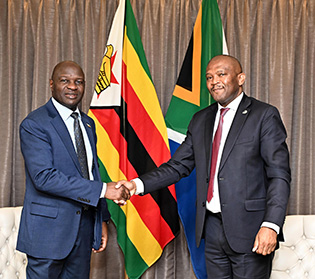
| South Africa and Zimbabwe reaffirmed their longstanding bilateral relations and commitment to regional integration during the Senior Officials Meeting (SOM) Mid-Term Review (MTR) of the South Africa-Zimbabwe Bi-National Commission (BNC), held in Pretoria on Wednesday, 13 May 2026. |
|
|
| |
Delivering the opening remarks, Ambassador Tebogo Seokolo, Acting Director-General of the Department of International Relations and Cooperation (DIRCO), welcomed the Zimbabwean delegation led by Ambassador Albert Chimbindi, Secretary of Zimbabwe’s Ministry of Foreign Affairs and International Trade, ahead of the 4th Session of the South Africa–Zimbabwe BNC scheduled to take place in South Africa from 7 to 10 July 2026.
Ambassador Seokolo described relations between South Africa and Zimbabwe as “historic and fraternal”, rooted in shared history, culture, heritage and geographical proximity. He stressed the importance of the Mid-Term Review in preparing substantive outcomes for the forthcoming BNC session.
The Acting Director-General also extended congratulations to Zimbabwe as the country commemorates 46 years of independence, while welcoming Zimbabwe’s Ambassador to South Africa, Ambassador Lovemore Mazemo, to his inaugural BNC engagement.
The meeting provided an opportunity for both delegations to assess progress in bilateral cooperation, particularly in the areas of trade and investment, social and cultural relations, migration, infrastructure development, regional integration, and peace and security.
Ambassador Seokolo underscored the need for closer cooperation between South Africa and Zimbabwe amid evolving geopolitical and economic challenges affecting the global system. He noted that multilateralism continues to face significant strain and emphasised the importance of solidarity among African countries in advancing peace, stability and development.
Highlighting the strategic importance of regional infrastructure, Ambassador Seokolo pointed to the North-South Corridor as a critical economic artery for Southern Africa. He called for enhanced efficiency through reduced transit and border crossing times, as well as improved port performance at the Port of Durban.
Particular emphasis was also placed on the modernisation and expansion of the Beitbridge Border Post, recognised as Africa’s busiest land border crossing. South Africa welcomed Zimbabwe’s efforts to improve border infrastructure, including the construction of a second bridge and ongoing discussions regarding a possible third bridge.
On economic cooperation, Ambassador Seokolo noted continued South African investment in Zimbabwe and identified opportunities for deeper collaboration in mining, beneficiation of critical minerals, energy infrastructure, and transport networks. He further stressed the importance of diversifying and balancing trade between the two countries for mutual economic benefit.
The Acting Director-General also reflected on regional and continental peace and security challenges, including the situation in the eastern Democratic Republic of Congo, Cabo Delgado in Mozambique, Sudan, and the Sahel region. He called for strengthened African Union peace and security mechanisms, including the operationalisation of the African Standby Force.
Concluding his remarks, Ambassador Seokolo reiterated South Africa’s commitment to working closely with Zimbabwe to ensure successful deliberations and meaningful outcomes during the Mid-Term Review process and the upcoming BNC session in July 2026.
The South Africa–Zimbabwe Bi-National Commission was established in 2015 to strengthen bilateral cooperation and deepen political, economic and social ties between the two neighbouring countries.
– Source: www.dirco.gov.za |
|
| |
|
| |
| MINISTER PARKS TAU WELCOMES CHINA’S TEMPORARY ZERO-TARIFF PREFERENCE SCHEME FOR SOUTH AFRICAN EXPORTS |
|
| |
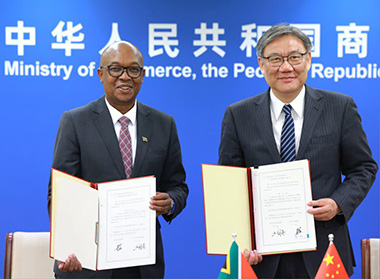
| The Minister of Trade, Industry and Competition, Parks Tau, welcomes the announcement by the Government of the People’s Republic of China regarding the introduction of a temporary zero-tariff preference scheme for 20 non-least developed African countries, including South Africa. |
|
|
 |
|
| |
This measure follows an announcement by President Xi on 14 February 2026 that China will implement zero tariffs for African countries that it has diplomatic relations with. The least developed countries are already enjoying the duty-free treatment in the Chinese market following the announcement at the Forum for China-Africa Cooperation (FOCAC).
From 1 May 2026 to 30 April 2028, qualifying South African goods exported to China will benefit from zero customs duties under this scheme, subject to compliance with the applicable tariff schedule and rules of origin.
Exporters are advised that access to the preference is conditional on meeting the prescribed rules of origin, including product-specific requirements, and on submitting a valid Certificate of Origin, for customs clearance in China.
The Department of Trade, Industry and Competition (the dtic) is working with the South African Revenue Services (SARS) on the customs procedures and the necessary changes to legislation that need to be implemented, including with regard to issuing the certificate of origin. In relation to products already in the water, if a certificate of origin is not issued before or at the time of shipment, the importer will have to pay a deposit. After the importer submits the requested documents, the deposit can be refunded. The certificate of origin shall be marked “ISSUED RETROSPECTIVELY” and shall be valid for one year from the date of shipment.
While the scheme applies across a broad range of products, certain goods may be subject to specific conditions, including tariff rate quotas. Exporters are therefore encouraged to familiarise themselves with the detailed tariff schedule and rules of origin documentation to ensure full compliance and optimal utilisation of the preferences.
This preferential market access framework offers a strategic opportunity for South Africa to enhance export competitiveness, diversify into higher-value-added products, and expand market access for agricultural, industrial, and beneficiated goods. It also supports broader national objectives, including industrial development, employment creation, and export-led growth.
The dtic, in collaboration with relevant government departments and stakeholders, has initiated the necessary processes to facilitate the implementation of the preference scheme.
The Export Help Desk within the dtic will serve as a central point of contact for guidance, queries, and assistance to support traders and guide them on the necessary compliance and market access processes.
According to Minister Tau, this zero-tariff treatment preference scheme is a signal of strong relations that China has with the African continent and a significant outcome of FOCAC 2024. The scheme offers South African exporters a meaningful opportunity to expand into one of the world’s largest and most dynamic consumer markets. Further, Minister Tau added that these developments complement the diversification strategy initiated by the dtic aimed at creating resilience in the South African economy.
– Source: www.gov.za |
|
| |
|
| |
| SOUTH AFRICA, CHINA TO DEEPEN COOPERATION IN DIGITAL EDUCATION |
|
| |
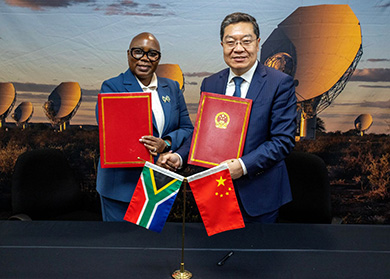
| South Africa and China have agreed on a set of key measures to deepen cooperation in digital education, technical skills development and student mobility. |
|
| |
 |
|
The agreement follows bilateral talks between Higher Education and Training Minister Buti Manamela and China’s Vice Minister of Education Xu Qingsen, held on the sidelines of the World Digital Education Conference in Hangzhou on Tuesday, 12 May 2026.
The meeting produced a framework aimed at strengthening collaboration in areas such as artificial intelligence (AI), vocational training and industry-linked education pathways.
Among the agreed outcomes are the establishment of a structured cooperation framework on AI in education and digital transformation, and the creation of a Joint Technical Working Group to oversee the rollout of China-South Africa Vocational and Technical Centres across all nine provinces.
The two countries also committed to expanding technical and vocational education and training (TVET) cooperation, aligning programmes with key industrial sectors including, AI, robotics, renewable energy and advanced manufacturing. |
|
|
| |
Minister Manamela said the partnership is moving beyond isolated projects towards a more coordinated system of cooperation that directly supports industrialisation, employment, and youth development.
“This engagement is about translating political commitments into practical outcomes that deliver at scale,” he said.
The bilateral meeting also resolved to strengthen scholarship programmes, with a shift towards aligning funding with South Africa’s industrial priorities.
These include AI, engineering, green energy, advanced manufacturing and the development of TVET lecturers.
Currently, South Africa and China are jointly administering multiple scholarship programmes, including initiatives targeting young people not in education, employment or training (NEET), as well as sector-specific training supported by Sector Education and Training Authorities (SETAs).
Both countries agreed to expand postgraduate study opportunities and joint research initiatives as part of the next phase of cooperation.
A major focus of the discussions was strengthening education-to-employment pathways, building on existing cooperation between South Africa and Chinese institutions.
Among these include is the partnership with Beijing Polytechnic College, where a cohort of South African TVET students has completed specialised training in new energy vehicle and hybrid technologies, with Chinese automaker BYD committing to provide internships and employment opportunities.
Another key outcome is the improved alignment of short-term training programmes with South Africa’s developmental priorities.
Future programmes will focus on areas such as AI governance, digital learning systems, industrial policy and digital public infrastructure, with the aim of strengthening institutional capacity across government and the post-school education sector.
Toward a strategic partnership
The bilateral engagement builds on commitments made during the 9th Session of the South Africa–China Bi-National Commission earlier this year, where both countries agreed to deepen cooperation across sectors.
Minister Manamela said South Africa sees the partnership as part of a broader strategy, positioning the country as a gateway for China–Africa collaboration in education and skills development.
“We are ready to move from a relationship defined by individual projects to one characterised by coordinated systems cooperation,” he said.
“South Africa is ready to move from a relationship characterised by individual projects to one defined by coordinated systems cooperation, cooperation that contributes directly to industrialisation, employment, youth development, and the building of capable institutions on both sides,” Minister Manamela said.
– Source: SAnews.gov.za |
|
| |
|
| |
| MINISTER SIMELANE TO LEAD DELEGATION TO URBAN FORUM IN AZERBAIJAN |
|
| |
| Human Settlements Minister Thembi Simelane will lead South Africa’s delegation to the 13th Session of the World Urban Forum 13 (WUF13), scheduled to take place in Baku in the Republic of Azerbaijan, from 17 to 22 May 2026. |
|
|
 |
|
| |
Convened under the theme, Housing the World: Safe and Resilient Cities and Communities, the WUF13 aims to raise awareness of sustainable urbanisation among stakeholders and constituencies, including the public, and improve collective knowledge on sustainable urban development through open and inclusive debate, exchange of best practices and policies, and sharing of lessons learnt.
It also aims to promote collaboration and cooperation between different stakeholders and constituencies engaged in the advancement and implementation of sustainable urbanisation.
It is highly anticipated that the WUF13 will shine a global spotlight on the urgent need to address the global housing crisis and position housing as a driver of inclusive, resilient, and sustainable urban development.
South Africa’s participation comes amid continued urban growth. At the time of adopting the New Urban Agenda, the country was over 60% urbanised. Recent data estimates that this figure has grown to 68.82%, with projections indicating it could reach 71.3% by 2030.
While urbanisation has created opportunities for economic and social development, the department noted that it has also contributed to persistent spatial inequality, challenges in basic services delivery, infrastructure backlogs, and overburdened municipal governance systems, which remain defining characteristics of South African cities.
The department noted that informal land use, housing, and livelihoods pose significant developmental, policy, and management challenges within urban spaces.
“These issues highlight both the dynamic nature of urbanisation and the limitations of current planning and service-delivery systems,” the department said in a statement on Tuesday, 12 May 2026.
WUF13 will explore how housing can advance inclusion, equity, and resilience, with a focus on practical solutions that connect homes to broader urban systems.
This includes integrated planning, climate adaptation, land and tenure security, inclusive governance, and locally driven action.
“The South African delegation will play a significant role through participation in dialogue, roundtable discussions, Ministerial bilateral meetings and stakeholder engagements by placing the country at the centre of global discussion aimed at finding lasting solutions to the world housing crises,” it said.
The delegation will include representatives from all spheres of government, the Chair of the Portfolio Committee on Human Settlements, entities within the human settlements sector, Members of Executive Councils (MECs), the South African Local Government Association (SALGA), mayors and Members of Mayoral Committees (MMCs) responsible for human settlements from all metropolitan municipalities, as well as civil society and academia.
– Source: SAnews.gov.za |
|
| |
|
| |
| DEPUTY MINISTER SINGH ATTENDS LAUNCH OF THE EU-FUNDED KGALAGADI TRANSFRONTIER PARK CONSERVATION AND LIVELIHOODS PROJECT IN BOTSWANA |
|
| |
 |
|
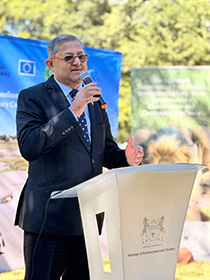
| The Deputy Minister of Forestry, Fisheries and the Environment, Narend Singh, on Tuesday, 12 May 2026, attended the official launch of the European Union (EU)-funded Kgalagadi Transfrontier Park (KTP) Conservation and Livelihoods Project at the MET Garden in Gaborone, Botswana. |
| |
Deputy Minister Singh joined Botswana’s Minister of Environment and Tourism, Hon. Wynter Boipuso Mmolotsi, the European Union (EU) Ambassador to Botswana and SADC, the Chief Executive Officer (CEO) of African Parks, and the CEO of the International Union for Conservation of Nature (IUCN).
Through the EU’s Global Gateway flagship initiative, NaturAfrica, the EU has allocated €2.5 million to support biodiversity conservation and rural livelihoods initiatives on both sides of the Kgalagadi Transfrontier Park. The governments of South Africa and Botswana have appointed African Parks as the implementing partner for the project.
The launch of the Kgalagadi Transfrontier Park Conservation and Livelihoods Project marks the introduction of a new EU-funded initiative aimed at promoting integrated biodiversity conservation and strengthening community resilience within one of southern Africa’s most important transboundary conservation landscapes. |
|
|
| |
Implemented by African Parks under the EU’s NaturAfrica initiative, in partnership with the International Union for Conservation of Nature (IUCN) and in close collaboration with the governments of Botswana and South Africa, the project seeks to lay a strong foundation for long-term collaborative park management while enhancing conservation outcomes and improving livelihoods for local communities.
The KTP, established in 2000 following the signing of a bilateral agreement in 1999 by former Presidents Festus Mogae of Botswana and Thabo Mbeki of South Africa, remains the Southern African Development Community’s first Transfrontier Conservation Area and a symbol of regional cooperation in biodiversity conservation.
– Source: www.gov.za |
|
| |
|
| |
| VICTORY DAY REMEMBERED AMID A WORLD STILL AT WAR |
|
| |
| Eighty-one years after the guns of the Second World War fell silent across Europe, the lessons of that conflict remain deeply relevant in a world once again marked by growing geopolitical tension, military confrontation and ideological division. |
|
|
 |
|
| |
On the night of 8 May 1945, at 23:01, Wilhelm Keitel signed Nazi Germany’s unconditional surrender, formally bringing the war in Europe to an end. Due to the time difference, it was already 9 May 1945 in Moscow, a date that has since become known across Russia and much of the former Soviet Union as Victory Day.
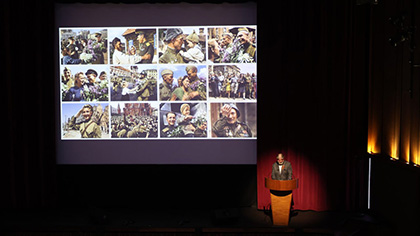
That historic moment was commemorated in Pretoria this week, where the Russian Embassy hosted a Victory Day event reflecting on the sacrifices made during what Russia refers to as the Great Patriotic War.
The evening included the screening of the film Invincible, based on the real-life story of Soviet tank commander Semyon Konovalov and his KV-1 crew, who destroyed multiple German armoured units during fierce fighting in the Rostov region. While the film highlighted battlefield courage, the broader message of the evening focused on the devastating human cost of war.
In his address, the Ambassador of the Russian Federation, Roman Ambarov, described the Soviet Union’s role in defeating Nazi Germany as decisive in ending fascism and restoring peace to Europe. He noted the enormous sacrifice made by the Soviet people between 1941 and 1945, with an estimated 27 million lives lost and thousands of cities and villages destroyed.
Ambassador Ambarov also acknowledged South Africa’s wartime contribution through its support of Allied operations, including supplying resources, opening strategic ports and deploying troops and pilots. Guests also viewed exhibitions depicting South Africa during the war, the liberation of Belgrade, and the Soviet Union and China’s role in bringing the conflict in the Asia-Pacific to a close against imperial Japan.
Musical performances by the Russian duet, “Bohemia”, featuring violin and balalaika renditions of wartime songs, added a reflective atmosphere to the commemoration.
Beyond the ceremonies and historical remembrance, the event carried an underlying relevance to current global affairs. As conflicts continue in different parts of the world and relations between major powers become increasingly strained, the anniversary serves as a reminder of the consequences of prolonged confrontation and unchecked political extremism.
The Second World War reshaped the global order but also left behind destruction on a scale the world had never witnessed before. Entire cities were erased, millions displaced, and generations marked by loss. While modern conflicts differ in form and context, the risks of escalation and deepening divisions remain real.
Victory Day commemorations are, therefore, not only about remembering military victory but also about recognising the value of diplomacy, international cooperation and stability in an increasingly uncertain global environment.
More than eight decades later, the message remains straightforward: the cost of war is always far greater than the promises made before it begins.
– Source: Anisha Pemjee and Kirtan Bhana, www.thediplomaticsociety.co.za |
|
| |
|
| |
| SOUTH AFRICA’S EXTINCT BLUEBUCK COULD WALK THE EARTH AGAIN AFTER 200 YEARS |
|
| |
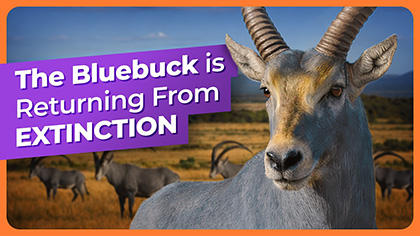
| Once hunted into extinction, the bluebuck is now at the centre of one of the most ambitious conservation science projects the world has ever seen. The bluebuck antelope, the first recorded African mammal driven to extinction, is officially at the centre of a groundbreaking de-extinction project announced by Colossal Biosciences, and it’s putting South Africa back into one of the biggest scientific conversations on the planet. |
| |
|
|
|
 |
|
| |
The bluebuck, or Hippotragus leucophaeus, once roamed the Western Cape with its striking silvery-blue coat and unmistakable beauty. A grassland grazer and natural seed spreader, the animal played an important role in shaping its ecosystem long before humans changed the landscape forever.
But by the early 1800s, it was gone.
“The bluebuck (Hippotragus leucophaeus) was a striking silvery, slate-blue antelope native to South Africa’s Western Cape. As a grassland grazer and seed spreader, it helped shape its ecosystem. By 1800, after climate shifts, habitat conversion, farming, and overhunting, it was gone,” Colossal Biosciences stated in their announcement.
“We don’t love that ending. So we’re rewriting it.”
Colossal became global news in 2024 after bringing back the first-ever woolly mouse and then in 2025, after announcing the return of the ‘Dire Wolf‘. Three pups were born as part of that controversial project: two males, Romulus and Remus, and a female named Khaleesi. Scientists and conservationists debated whether the animals represented a true return of the extinct species or highly accurate genetic proxies, but regardless of the criticism, the achievement changed the conversation around what science may one day be capable of.
Now, that same technology is being pointed toward a species that once belonged to South Africa.
The company explains that advances in genomics now allow researchers to reconstruct the bluebuck’s DNA using high-quality reference genomes as a blueprint. It’s science that feels almost impossible to comprehend, but the implications stretch far beyond one animal.
The reproductive side of the project is equally remarkable. Researchers are developing assisted reproduction technologies for antelope species, including ovum pick-up procedures, IVF, embryo culture, embryo freezing and embryo transfer. Many of these techniques have reportedly never been achieved in antelope before. Eventually, the team plans to use a genetic surrogate to help rebuild the species. The bluebuck’s closest living relatives are the roan and sable antelope, with the roan antelope expected to serve as the genomic surrogate for the first bluebuck embryos.
And while the phrase “de-extinction” sounds like something pulled straight from a science-fiction movie, the bigger picture here is conservation.
Africa’s antelope populations are increasingly under pressure from habitat fragmentation, shrinking wild spaces and declining genetic diversity. Those challenges are isolating species and making long-term survival harder across the continent. Colossal says the tools being developed through this project could eventually strengthen breeding programmes, support reintroductions and accelerate conservation efforts for antelope species everywhere.
This isn’t just about bringing back an animal humans lost centuries ago. It’s about developing technology that could help protect species we still have time to save. There’s something deeply hopeful about that.
For so long, extinction has felt final. Permanent. A full stop at the end of a story humanity helped write. But projects like this challenge that thinking entirely. They ask bigger questions about responsibility, restoration and whether science can help repair pieces of the natural world we once believed were gone forever.
– Source: www.goodthingsguy.com |
|
| |
|
| |
| SOUTH AFRICAN PUPILS HOLD THEIR OWN AMONG WORLD’S BEST SPEAKERS |
|
| |
 |
|
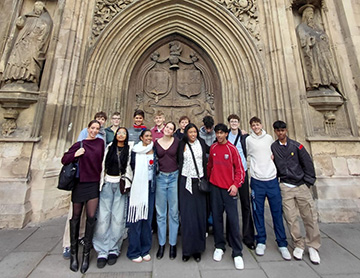
| South Africa’s young public speakers once again proved they can compete with the very best in the world after a strong showing at the World Individual Debating and Public Speaking Championships (WIDPSC) in Bristol, England. |
| |
The prestigious global competition, which has been running since 1988, brought together some of the world’s top high school speakers to compete across five categories: debate, impromptu speaking, interpretive reading, persuasive speaking and after-dinner speaking.
Speaking after the event, South African team manager and accompanying teacher Shaun McCabe praised the standard shown by the country’s 15-member contingent, which featured learners from several schools across South Africa. |
|
|
| |
“South African speakers compete with the best and are able to beat the best.”
The championships follow a layered and demanding format, with competitors taking part in preliminary rounds before advancing to semi-finals, finals and grand finals. Unlike traditional debating formats, the parliamentary debate section pairs learners randomly with competitors from other countries, testing not only speaking ability but also adaptability and teamwork under pressure.
South Africa produced standout performances across multiple categories, with learners advancing deep into the competition. Jemma Trezling won the debate category, while Samuel Clarke claimed victory in persuasive speaking.
Several South African learners also reached the semi-final stages across the different disciplines. In debate, Samuel, Lucy, Connor, Hamad, Benjamin, Shivkar, Jemma and Oliver progressed to the semi-finals, while Daniel reached the reading final. Yalena, Connor, Hamad and Benjamin also advanced in impromptu speaking, highlighting the depth of talent within the South African team.
McCabe explained that the national team is selected through South Africa’s own National Individual Debating and Public Speaking Championships, which are held annually. The competition mirrors the international event and serves as the pathway for learners to qualify for the world stage.
However, he acknowledged that financial challenges remain a major obstacle for many learners hoping to participate internationally.
“Unfortunately, because it necessitates travel, it can be unaffordable for many speakers.”
Despite the challenges, McCabe said one of the most rewarding aspects of the championships was seeing learners from around the world build friendships and support one another beyond national borders.
“They arrive as adolescents and tend to stay within their own delegations at first, but within a few days they’re making friends with people from around the world. It’s less about the individual and more about internationalism. As a teacher, that really fills me with hope.”
Looking ahead, McCabe hopes South Africa will continue maintaining its strong reputation at the championships and inspiring more young people to pursue debating and public speaking.
“We want to continue being featured among the top speakers in the world.”
– Source: www.goodthingsguy.com |
|
| |
|
| |
| ANOTHER BIG MOMENT FOR TYLA AS SHE JOINS FIFA WORLD CUP 2026 OPENING CEREMONY LINE-UP |
|
| |
| Tyla adds another major milestone to her rising global career after being named among the headline performers for the FIFA World Cup 2026 opening ceremony in Mexico. |
| |
On 11 June 2026, the eyes of the world will turn to Mexico City as the FIFA World Cup 2026™ officially gets underway with a landmark opening ceremony set to blend football, music, culture, and global unity on one of sport’s biggest stages.
Staged 90 minutes before kick-off at Mexico City Stadium, the ceremony will set the tone for a tournament that spans Canada, Mexico, and the United States. It will also mark the symbolic start of a month-long celebration that will feature 104 matches across 16 host cities, culminating in the final on 19 July 2026 at New York New Jersey Stadium.
Headlining the line-up are some of Latin America and the world’s most recognisable names in music, including Alejandro Fernández, Belinda, Danny Ocean, J Balvin, Lila Downs, Los Ángeles Azules and Maná. Our very own Tyla brings a strong international crossover element to the event. She has continued to rise on the global stage in recent years, with her music earning her widespread recognition and award success. She has already won two Grammy Awards, cementing her status as one of the most talked-about voices. |
|
|
 |
|
| |
The ceremony itself is expected to combine live music, dance, and visual storytelling, featuring both internationally known performers and local Mexican talent. Organisers have emphasised that the show will spotlight cultural identity as much as global entertainment, creating a shared moment ahead of the first match.
South Africa will also take centre stage on the pitch, playing the opening match of the tournament against Mexico.
– Source: www.goodthingsguy.com |
|
| |
|
| |
| JUNIOR BOKS CROWNED U20 CHAMPIONS AFTER THRILLER AGAINST NEW ZEALAND |
|
| |
 |
|
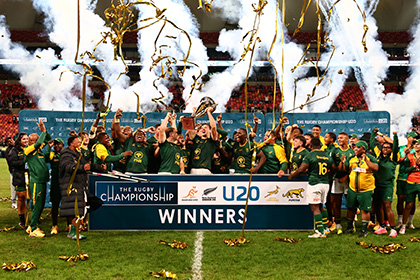
| A packed Nelson Mandela Bay Stadium witnessed the Junior Boks officially crowned champions after an unforgettable tournament on home soil. South African rugby fans were already celebrating the Junior Springboks’ incredible run at the SANZAAR Under-20 Rugby Championship last week, but now it’s official. The Junior Boks are champions. |
|
|
| |
A dramatic 29-29 draw against New Zealand at a packed Nelson Mandela Bay Stadium on Saturday was enough to seal South Africa’s first-ever SANZAAR U20 title, with the hosts finishing top of the standings on 13 points.
And fittingly, the title-clinching match delivered everything. Big moments, late drama and a crowd of more than 18 000 fully invested from start to finish.
The Junior Boks knew they only needed a single log point to secure the trophy, and they got that early in the second half when Samuel Badenhorst crossed for South Africa’s crucial fourth try.
That moment sparked celebrations inside the stadium, but the game itself was far from over.
South Africa started brightly, with flyhalf Yaqeen Ahmed opening the scoring before fullback Akahluwa Boqwana announced himself with a brilliant try out wide. But New Zealand responded quickly, showing exactly why they came into the final day as the defending champions.
Just a minute into the second half, Khuthadzo Rasivhaga fielded a high ball brilliantly before South Africa worked the overlap for Badenhorst to score in the corner. Ahmed added the conversion to stretch the lead to 29-15 and, of course, secure the bonus point the Junior Boks needed.
New Zealand clawed their way back into the contest with a series of late attacks, eventually levelling the scores in the dying minutes after sustained pressure near the South African tryline. Still, by then, the bigger prize already belonged to the Junior Boks. And while the final scoreboard ended level, there was no doubt about who walked away as champions.
– Source: www.goodthingsguy.com |
|
| |
|
| |
| SOUTH AFRICA’S YURAV PREMLALL SECURES A HISTORIC FIRST DP WORLD TOUR TITLE |
|
| |
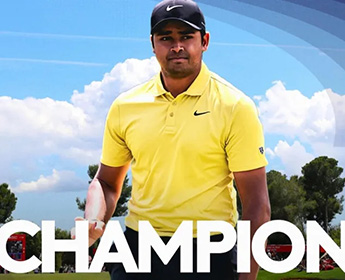
| South African golfer Yurav Premlall delivered the performance of his life in Spain this weekend, storming to a remarkable 14-shot victory at the Estrella Dam Catalunya Championship to secure his maiden DP World Tour title. And he did it in style. |
| |
Premlall finished the tournament at a staggering 28-under-par, capping off a week where almost everything seemed to click. From long-range putts to composed shot-making under pressure, the young South African looked completely in control as the chasing pack struggled to keep up.
His dominant victory margin also saw him surpass one of golf’s biggest names, with the win becoming the largest margin of victory for a maiden winner on the DP World Tour, a record previously held by Tiger Woods.
But despite the history-making performance, Premlall admitted afterwards that it still hadn’t fully sunk in. |
|
|
 |
|
| |
“There are no words,” he said after lifting the trophy. “I’ve worked so hard to get into this position, and it’s so rewarding to finally see the results of it. The last eight or nine months have been such a struggle just to build myself onto a platform where I knew I could give myself a chance to win.”
The foundation for his victory was laid during a sensational third round, where Premlall carded ten birdies and just one bogey to put himself firmly in control heading into Sunday.
“I had a goal today, and that was to execute every shot until that final putt goes in. I can’t give myself enough credit today. It was probably the most complete performance I’ve ever put together purely because of how I executed my process.”
There was also a lighter moment after the win when attention turned to the putter that helped power his incredible week.
“That putter’s staying in the bag for sure. Or there’s going to be a replica of it soon.”
The victory feels like the arrival of another exciting talent on the international stage.
– Source: www.goodthingsguy.com |
|
| |
|
| |
| SOUTH AFRICAN SWIMMERS SHINE AT AFRICAN CHAMPIONSHIPS WITH 84 MEDALS |
|
| |
 |
|
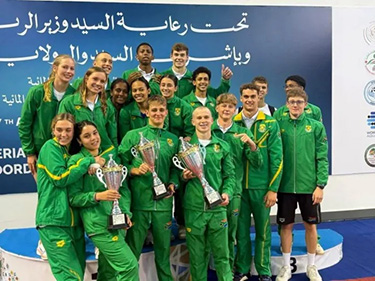
| South African swimmers return from the African Swimming Championships in Algeria with a staggering 84 medals, showcasing the talent of both junior and senior teams, including standout performances. |
| |
Both a senior and junior team competed in the coastal city of Oran, with the juniors earning 25 gold, 15 silver and 12 bronze medals to finish well on top of the continental medal table. The seniors claimed nine gold, 13 silver and 10 bronze medals to finish third on their medal table behind Egypt and Algeria.
Leading the way for the juniors was 18-year-old Scarlett le Roux, who secured five individual gold medals, while Cassidy Burgess claimed three individual golds and two silvers in the butterfly and backstroke events. |
|
|
| |
Le Roux dominated the freestyle events, claiming gold across every distance from 100m to 1500m. She topped the podium in the 100m freestyle after winning in a time of 58.36 seconds; the 200m freestyle (2:06.45); 400m freestyle (4:25.37); 800m freestyle (9:13.65); and the 1500m freestyle (17:34.04).
Adrian van Wyk was equally impressive in the junior boys’ ranks for swimmers aged 14-18. He claimed four individual golds and a bronze, while Zaine Niemand bagged three golds of his own.
Isabeau Coetsee was the pick of the senior swimmers after claiming gold in the 100m backstroke in 1:03.18 and the 200m backstroke in 2:16.42 and a silver in the 50m backstroke in 29.74 seconds, while Matthew Caldwell swam to victory in the 400m freestyle (3:53.65) and 800m freestyle (8:10.30) while also picking up silver in the 200m freestyle (1:50.73).
“It’s incredibly encouraging to see so many of our young swimmers stepping up and delivering performances of this standard on the continental stage,” said Swimming South Africa president Alan Fritz.
“These championships are an important part of the development journey for our next generation of elite athletes. To return home with 84 medals across the junior and senior teams is a reflection of the depth of talent we have in South African swimming, and we congratulate every swimmer, coach and support staff member on their contribution.
“The experience gained in this environment will be invaluable as these athletes continue their progression in the sport.”
– Source: www.iol.co.za |
|
| |
|
| |
| BRONZE MEDAL FINISH FOR SOUTH AFRICAN WHEELCHAIR TENNIS TEAM IN ITALY |
|
| |
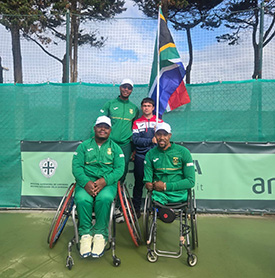
| Lucas Sithole and Donald Ramphadi bounced back from a narrow qualification setback to secure a bronze-medal finish at the BNP Paribas World Team Cup European Qualification event in Italy. |
| |
There was still plenty to play for when South Africa’s wheelchair tennis team stepped onto court for the bronze-medal playoff at the BNP Paribas World Team Cup European Qualification event in Alghero, Italy, and they made sure to finish their campaign on a high.
Paralympic bronze medallists Lucas Sithole and Donald Ramphadi wrapped up the tournament with a podium finish after a week packed with pressure, tight matches and determined performances.
The South African side arrived in Italy chasing a place at the World Team Cup finals later this year, with the qualification tournament also forming part of the pathway towards the 2028 Paralympic Games. Only one nation would secure qualification, meaning every tie carried huge importance. |
|
|
 |
|
| |
Throughout the event, Sithole and Ramphadi once again proved why they remain two of the country’s most respected wheelchair tennis players. Whether in singles or doubles, the pair continued to push themselves against experienced international opposition while proudly flying the South African flag.
Under the guidance of coach Khotso Matshego, the team’s performances also highlighted the continued growth of wheelchair tennis in South Africa. While qualification for the finals may have slipped away this time, South Africa leaves Italy with a podium finish on the international stage.
And the road to the 2028 Paralympics is only getting busier from here.
– Source: www.goodthingsguy.com |
|
| |
|
| |
| LOVEMORE LEADS THE WAY FOR TEAM SA |
|
| |
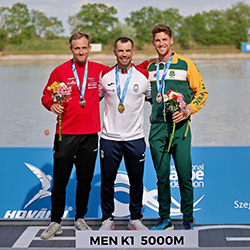
| Hamish Lovemore once again led the charge for South Africa as he collected a bronze medal and reached a final in the season-opening ICF Canoe Sprint World Cup regatta in Szeged, Hungary, over the weekend. |
|
| |
 |
|
Lovemore led the six-person team's results with a third place in the 5 000m event that wrapped up competition on Sunday afternoon, after he had earlier reached the final in the Olympic-distance 1 000m K1 race on Saturday, 9 May 2026.
The Szeged regatta was the first World Cup to count towards the new ranking system for LA28 qualification, which means Lovemore picked up valuable points in his quest to return to the Olympic stage in Los Angeles in 2028.
The big winner in the men's races was 36-year-old Fernando Pimenta, who won the Olympic distance 1 000m event before outsprinting Denmark superstar Mads Pedersen at the finish of the 5 000m event after the pair had broken away from Lovemore earlier in the six-lap race.
Lovemore finished ninth in the 1 000m.
Cape Town's Uli Hart finished 11th in the 5 000m event while Esti Olivier ended eighth in the women's 200m B Final. The only other South African paddler to progress through heats and semi-finals into a final was Nicholas Weeks, who finished seventh in the 200m men's C Final. Hart and Helen Jansen Van Vuuren were eliminated in the semi-finals of the men's and women's 1 000m respectively, while Jansen van Vuuren ended 24th in the women's 5 000m race. |
|
|
| |
The next World Cup takes place in Brandenburg in Germany from Thursday to Sunday with Lovemore, Olivier, Weeks, Jansen van Vuuren, and Chrisjan Coetzee all taking part once again.
– Source: www.iol.co.za |
|
| |
|
| |
| TEAM SA HEADS TO ACCRA AS ATHLETICS SOUTH AFRICA’S HOT STREAK CONTINUES |
|
| |
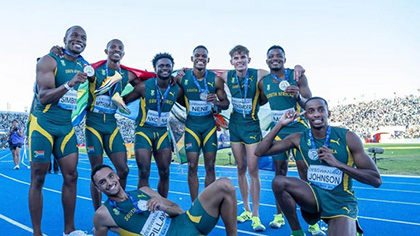
| Athletics South Africa has named a 34-member squad blending experienced continental medallists with rising stars as the team prepares for next week’s African Senior Track and Field Championships in Ghana. |
|
|
 |
|
| |
South Africa’s impressive run in athletics shows no signs of slowing down, with another exciting national team now set to fly the flag on the continental stage.
Athletics South Africa (ASA) has announced a 34-member squad for the African Athletics Senior Track and Field Championships in Accra, Ghana, taking place from 12 to 17 May 2026. While the group may be smaller in size, it is packed with athletes carrying strong form, international experience and genuine medal hopes.
Fresh off their standout performances at the World Athletics Relays in Gaborone, sprinters Bradley Nkoana and Lythe Pillay arrive in Ghana with plenty of momentum after both claimed medals for Team South Africa last week.
The squad also includes several athletes who have already enjoyed success at continental level. Among them are middle-distance star Prudence Sekgodiso, hurdlers Rogail Joseph and Marione Fourie, long jumper Luvo Manyonga, triple jumper Zinzi Xulu and javelin thrower Jana van Schalkwyk.
ASA Acting President John Mathane believes the team has the right mix of experience and emerging talent.
“We have once again selected athletes that we believe will defend our crown and maintain the dignity of the nation. There’s a good balance between experienced and fresh glory-seekers, but all are hungry for the podium. We are always happy to compete at this stage because it’s a contest amongst sister countries, where we face the best-of-the-best. It’s also a good stage to strengthen the character of an athlete.”
On the women’s side, South Africa will also look to athletes like Danielle Nolte, Colette Uys and Karabo Mailula to make an impact, while the men’s team features names such as Edmund du Plessis, Valco van Wyk and Douw Smit.
South African athletics is arguably enjoying one of its strongest periods in recent years, and the Accra championships offer another opportunity for the country’s athletes to continue building confidence ahead of an increasingly busy international season.
– Source: www.goodthingsguy.com |
|
| |
|
| |
| LAST MAN PITCHING: TAYLER SCOTT FLIES THE SOUTH AFRICAN FLAG IN US BASEBALL |
|
| |
 |
|
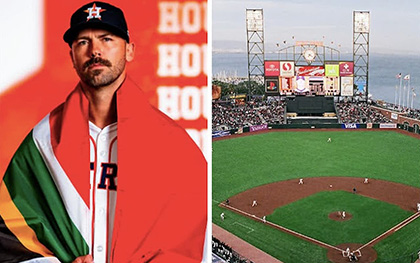
| Johannesburg-born relief pitcher Tayler Scott, 33, officially stands as the sole active South African-born player in the United States (US) professional baseball system today. |
|
|
| |
Currently taking the mound for the Minor League Baseball (MLB) team Gwinnett Stripers in the heart of Georgia, US, Scott continues to keep South Africa’s flag alive on the international stage.
Relocating to Arizona at the age of 16 to pursue his high school education and athletic ambitions, Scott’s talent was quickly recognised when he was drafted by the Chicago Cubs in 2011. He ultimately made history in June 2019 by debuting for the Seattle Mariners, etching his name in the record books as the very first South African pitcher to feature in Major League Baseball (MLB).
Having pitched for eight different MLB franchises during his career, the right-hander recently signed a minor league deal with the Atlanta Braves, landing him in their Triple-A affiliate, the Stripers.
How is Tayler Scott performing in 2026?
Scott has been heavily involved in the Stripers’ bullpen this season, sharing the locker room with prominent prospects and seasoned veterans. By early May 2026, he had recorded 17 strikeouts across 14 innings in 12 game appearances. He currently boasts a 1-0 win-loss record, though he is working to lower his 9.00 ERA.
He was recently called into action on 30 April 2026 during a bruising encounter against the Charlotte Knights, taking over in the sixth inning to help stabilise the defence. Looking ahead, Scott and the Stripers are gearing up for their next big fixture away against the Norfolk Tides on 5 May 2026.
Gift Ngoepe: The trailblazer who led the way
While Scott flies the flag on the diamond today, he follows in the historic footsteps of Gift Ngoepe.
Born in Pietersburg (now Polokwane) and raised in the Randburg Mets clubhouse, where his mother worked, Ngoepe famously became the first continental African to reach the MLB.
He made his unforgettable debut for the Pittsburgh Pirates in April 2017, registering a single off Chicago Cubs star Jon Lester in his very first at-bat. After a globetrotting career that also saw him turn out for the Toronto Blue Jays, Ngoepe officially hung up his bat and glove in January 2023.
However, the 36-year-old remains an integral part of the American system. Earlier in 2026, Ngoepe was promoted to serve as the bench coach for the High-A Hillsboro Hops, a minor league affiliate of the Arizona Diamondbacks.
With Ngoepe successfully transitioning to the dugout and other African talents slowly rising through the lower leagues, Scott proudly stands as South Africa’s final active competitor pitching on the American diamond.
– Source: www.sapeople.com |
|
| |
|
| |
|
|
|
|
|
|
|
|