| |
| |
|
| |
| PRESIDENT CYRIL RAMAPHOSA UNDERTAKES STATE VISIT TO REPUBLIC OF BOTSWANA |
|
| |
 |
|
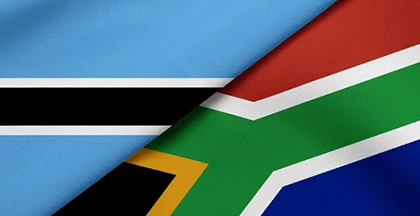
| President Cyril Ramaphosa on Wednesday, 20 May 2026, undertook a State Visit to the Republic of Botswana which will culminated in the Sixth Session of the Botswana and South Africa Bi-National Commission (BNC) in Gaborone. |
|
|
| |
On the two-day State Visit occasion from 20 to 21 May 2026, President Ramaphosa and President Gideon Duma Boko co-chaired the Summit of the Sixth Session of the South Africa-Botswana Bi-National Commission (BNC).
The Summit was preceded by a Ministerial Meeting on 20 May 2026, and the Senior Officials Meeting.
The primary objective of the State Visit and BNC was to deepen and strengthen the existing bilateral partnership between the two countries. The Sixth Session of the BNC represents a critical opportunity to reinforce the strategic partnership between South Africa and Botswana.
While the relationship remains strong, it is evolving in response to new economic realities and shifting global dynamics. A Business Forum that was held on the margins of the BNC to strengthen private sector collaboration and facilitate business-to-business exchanges.
South Africa and Botswana share a historically grounded and mutually reinforcing relationship, rooted in solidarity during the liberation struggle, when Botswana provided support to South African freedom fighters.
This legacy, combined with geographic proximity and shared cultural and linguistic ties, has shaped a durable partnership that continues to expand across multiple sectors.
The BNC serves as a central institutional mechanism through which this relationship is structured and advanced, enabling coordinated cooperation and sustained dialogue at political, technical, and economic levels.
Bilateral trade and investment remain the cornerstone of the economic cooperation between the two countries. South Africa is Botswana’s largest trading partner, accounting for over 50% of Botswana’s imports.
In 2025, total bilateral trade amounted to approximately R82 billion, with South Africa exporting goods to the tune of R73.5 billion to Botswana and with imports from the country amounting to R7.7 billion.
South Africa is also Botswana's largest supplier of agricultural products.
In 2025, of the country’s R15 billion agricultural imports, R14 billion were from South Africa.
South Africa has a significant corporate presence in Botswana, with more than 100 South African companies operating across key sectors, including in financial and banking services, retail and wholesale, mining and mineral beneficiation, infrastructure, construction and logistics, freight, manufacturing and automotive value chains as well as the hospitality and tourism industries.
South Africa’s Development Finance Institutions (DFIs) such as the Development Bank of Southern Africa (DBSA) and the Industrial Development Corporation (IDC) have also developed a pipeline of projects for financing in Botswana.
The DBSA’s aggregate portfolio of investments under consideration in Botswana represents a total project value of approximately R6.5 billion, demonstrating meaningful scale and impact.
The two countries explored renewable energy opportunities in support of Botswana’s effort towards increasing renewable energy to 50 per cent by 2030, creating opportunities for cooperation in renewable energy, grid integration, and capacity building.
The State Visit took place against the backdrop of a political transition in Botswana, following the transition to a new administration in October 2024.
The State Visit signals the new government’s intention to consolidate relations with South Africa while maintaining continuity in bilateral engagement. It also offers South Africa an opportunity to strengthen its strategic relations with Botswana.
– Source: www.gov.za |
|
| |
|
| |
| INVESTMENT CONFERENCES DRIVING JOBS AND ECONOMIC GROWTH |
|
| |
| President Cyril Ramaphosa says South Africa’s investment conferences and international business engagements are yielding tangible results, with investment commitments increasingly translating into infrastructure projects, industrial expansion and job creation. |
|
|
 |
|
| |
In his weekly newsletter to the nation, the President highlighted a series of recent engagements with local and international investors, including business forums held during visits to Brazil and Spain, the sixth South Africa Investment Conference in March 2026, and the recent Infrastructure Investment Summit hosted by global investment firm BlackRock.
The President said these platforms are important for connecting investors with local opportunities and bringing together government, business, banks and development finance institutions to support economic growth.
Since the launch of South Africa’s investment drive in 2018, government has secured investment pledges amounting to R1.5 trillion. Of this amount, R634 billion has already been invested in sectors such as energy, telecommunications, mining, infrastructure, automotive manufacturing and technology.
Projects already implemented include BMW’s R4.2 billion investment to electrify its Rosslyn plant in Gauteng, Tetra Pak’s R500 million plant upgrade in KwaZulu-Natal, Corobrik’s R500 million Kwastina plant in Gauteng, and the Newlyn PX terminal at the Port of Durban.
The President also pointed to the Ivanplats Platreef mine in Mokopane, which originated from a R2.8 billion investment pledge announced at a previous investment conference.
President Ramaphosa said investment projects are also contributing to skills development and youth empowerment. He cited Microsoft’s partnership with the Youth Employment Service (YES), which offers young South Africans globally recognised artificial intelligence certifications as part of the company’s R5.4 billion investment to expand its cloud and AI infrastructure in South Africa by 2027.
While acknowledging progress made, the President noted that South Africa still needs to significantly increase levels of investment in the economy. Gross fixed capital formation currently stands at around 14% of gross domestic product, well below the National Development Plan target of 30% by 2030.
He said government continues to implement reforms aimed at improving investor confidence, stabilising public finances, resolving the energy crisis and enhancing infrastructure planning and execution.
President Ramaphosa further called on the domestic private sector to play a leading role in rebuilding investment momentum, noting that local investors made the highest number of pledges during the sixth South Africa Investment Conference.
“The engagements and commitments made in conference halls are steadily and increasingly translating into the economic activity that creates jobs and opportunities for South Africans,” the President said.
– Source: www.thepresidency.co.za |
|
| |
|
| |
| NATIONAL ORDERS RECIPIENTS EXPRESS PRIDE AND GRATITUDE |
|
| |
 |
|
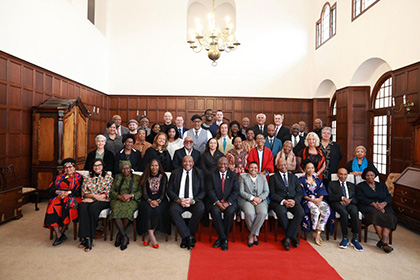
| Recipients of the 2026 National Orders have described the recognition as a deeply emotional and humbling milestone, saying the honours affirm their lifelong contribution to South Africa’s arts, culture and social development. |
| |
|
|
|
| |
President Cyril Ramaphosa, the Grand Patron of the National Orders, bestowed the 2026 National Orders Awards on distinguished citizens and eminent foreign nationals who have contributed towards the advancement of democracy and have made a significant impact on improving the lives of South Africans.
Speaking to SAnews at the Sefako Makgatho Presidential Guest House in Tshwane on Tuesday, 19 May 2026, recipients of the Order of Ikhamanga in Silver reflected on their journeys, their impact, and what national recognition means at this stage of their lives.
Internationally acclaimed musician Jonathan Kenneth Butler was honoured for his contribution to music as a jazz, R&B and gospel artist, songwriter and producer.
From humble beginnings in Athlone, Cape Town, he rose to international prominence as a teen performer and built a global career spanning decades.
Speaking after receiving the Order of Ikhamanga in Silver, Butler said the moment marked a personal and national milestone.
“I feel humbled and honoured in this moment. I feel in this season of my life to be recognised in my country is the greatest blessing anyone could ever ask for,” Butler said.
He thanked The Presidency and South Africans who have supported his journey, saying the award carries deep emotional significance at this stage of his career.
Activist Andiswa Precious Gebashe was recognised for her work in advancing South African Sign Language and advocating for greater inclusion of the Deaf community in arts, media and education.
She has been at the forefront of efforts to ensure accessibility and representation, including work in theatre productions performed in South African Sign Language.
Gebashe emphasised the importance of recognising South African Sign Language as a fully developed language rather than a disability-related tool, saying change requires collective responsibility from institutions and decision-makers.
Reflecting on the honour, Gebashe said the moment was still surreal for her.
“It’s a huge honour; I don’t think I’ve fully processed it yet. I’m extremely humbled,” she said, adding that while progress has been made, more work is needed to ensure accessibility is embedded across all sectors, including media and education.
Veteran DJ, producer and kwaito pioneer Oscar “Oskido” Mdlongwa was also acknowledged for his contribution to music and for developing and mentoring generations of South African artists.
A key figure in the rise of kwaito and the Kalawa Jazmee legacy, Oskido has played a central role in shaping the country’s modern music industry.
He said the award reflected a shared journey with collaborators, artists and fans who have supported his work over the years.
“I’m really thrilled. It shows that what we’ve built over the years is being recognised at this level. It shows what we have planted, and the seed is germinating, and these are the fruits,” he said.
He described the honour as a collective achievement rather than an individual one, crediting his team, fellow pioneers and the broader music community.
“This is a journey which I haven't walked alone, it’s for all the people I've worked with, especially the Kalawa family, the pioneers of Kwaito like Mdu and Arthur and all the artists and the fans who have always been there, my family and the Almighty God,” the Kwaito legend said.
Looking ahead, Oskido said the recognition marked a new chapter rather than a conclusion.
“Someone might think this award is the end for me, but this is a new journey,” he said.
He also noted the evolving nature of the music industry, highlighting new technologies and global genres such as amapiano and Afro house as part of its continued growth.
“For our work to be recognised at this level, it shows that opening doors for other people is going to open other doors for you, and for me, this award is not mine alone,” he said.
Speaking moments before the presentation of the country’s highest honours, the President said the recipients had, through their work and activism, become pillars of the nation.
“We have gathered here this morning to honour those among us who, in many diverse ways, have shaped the country that we call home,” President Ramaphosa said.
– Source: SAnews.gov.za |
|
| |
|
| |
| SADC FOREIGN MINISTERS TO CHART REGION’S RESPONSE TO SHIFTING GLOBAL LANDSCAPE |
|
| |
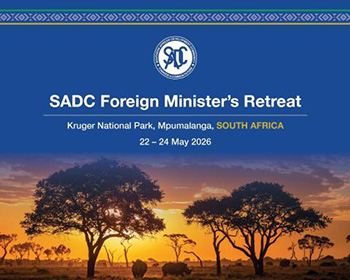
| Foreign Affairs Ministers from across the Southern African Development Community (SADC) are set to gather in South Africa later this month for a high-level retreat aimed at crafting a unified regional response to rapidly evolving global geopolitical dynamics. |
| |
The retreat, scheduled to take place from 22 to 24 May 2026 at Skukuza in the Kruger National Park, Mpumalanga, is expected to provide a strategic platform for regional leaders to reflect on growing global uncertainties while identifying opportunities to strengthen regional cooperation, resilience and economic growth.
According to SADC, the meeting comes at a time when the international system is undergoing profound transformation, driven by heightened competition among major powers, technological advancement and changing economic realities. |
|
|
 |
|
| |
While these shifts have introduced new global challenges, the region believes they also present opportunities for SADC member states to deepen integration, accelerate industrialisation and strengthen their collective voice on the international stage.
International Relations and Cooperation Minister Ronald Lamola will officially open the retreat in his capacity as Chairperson of the SADC Council of Ministers.
“The Retreat will enable ministers to reflect on the implications of these changes and to chart a unified course that safeguards stability while advancing regional development,” SADC said in a statement.
The regional bloc said the discussions will build on SADC’s long-term strategic frameworks, including Vision 2050 and the Regional Indicative Strategic Development Plan (RISDP 2020–2030).
The retreat is expected to focus on practical and forward-looking solutions aimed at ensuring the region can effectively respond to external pressures while unlocking new avenues for growth and prosperity.
Key discussions will centre on infrastructure development, transport and logistics, as well as the free movement of people, goods and services across the region.
Ministers are also expected to deliberate on industrialisation, regional value chains and trade, in addition to issues relating to energy, oil and gas, and mineral resources.
Food security, agricultural supply chains, financing regional integration, investment, debt management and domestic revenue mobilisation will also form part of the agenda.
“These themes reflect the multi-dimensional nature of contemporary geopolitical shifts and will allow ministers to identify cross-cutting linkages and prioritise strategic interventions,” SADC said.
The regional bloc described the gathering as a critical moment for SADC, saying the outcomes of the retreat are expected to reinforce regional solidarity, strengthen collective action and position the region as a proactive and influential player in shaping the future global order.
“By embracing dialogue, unity, and foresight, ministers of foreign affairs will chart a path that safeguards regional stability and unlocks new opportunities for growth and prosperity,” the statement said.
– Source: www.dirco.gov.za |
|
| |
|
| |
| SOUTH AFRICA CONDEMNS ISRAEL’S ILLEGAL ABDUCTION OF SOUTH AFRICAN NATIONALS PARTICIPATING IN THE GLOBAL SUMUD FLOTILLA BOUND FOR GAZA |
|
| |
 |
|
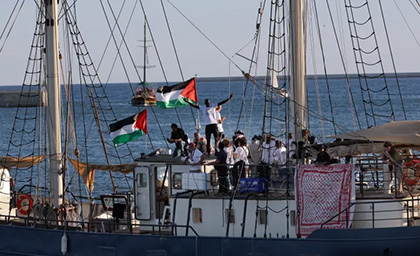
| The Government of South Africa notes with grave concern reports that following the illegal seizure of the Global Sumud Flotilla (GSF) bound for Gaza, South African nationals have been abducted in international waters and may now be facing detention/imprisonment in Israel. |
|
|
| |
It must be underscored that the Flotilla, a civilian-led initiative, embarked upon a peaceful and humanitarian mission. Its participants aim to draw attention to the severe and urgent humanitarian needs of the Palestinian people in Gaza and to deliver vital aid to alleviate the widespread suffering of a people living under occupation and genocide.
Such developments raise serious humanitarian, legal and diplomatic concerns that cannot be treated lightly. South Africa has a longstanding commitment to international law, the protection of human rights and the safety and wellbeing of its citizens wherever they may be.
South Africa calls for restraint, respect for international law and the immediate protection of the rights, dignity and safety of all concerned. The safety, security and physical integrity of all unarmed participants aboard the Flotilla, including South African citizens, are of paramount importance. Any forceful detention of these vessels in international waters constitutes a grave breach of international legal norms and fundamental human rights.
We will be engaging all relevant stakeholders and organisations liaising with the GSF as part of efforts to secure the safe and immediate release of those affected, while ensuring that their families are kept fully abreast of developments as the situation unfolds.
We further call upon the international community and all relevant parties to uphold their obligations under international law and to ensure the safe and unimpeded passage of humanitarian missions.
– Source: www.dirco.gov.za |
|
| |
|
| |
| SOUTH AFRICA AND SWITZERLAND CONVENE SPECIAL ENVOY RETREAT ON PEACE MEDIATION IN AFRICA |
|
| |
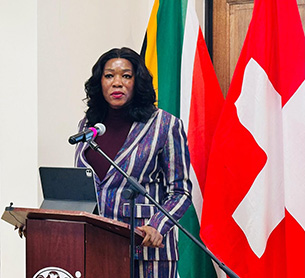
| Deputy Minister of International Relations and Cooperation, Thandi Moraka, delivered opening remarks at the South Africa–Switzerland Special Envoy Retreat currently underway at Irene Farm from 20 to 22 May 2026. |
| |
|
|
|
 |
|
| |
The Retreat commenced with welcome remarks delivered by Zane Dangor, Director-General of the Department of International Relations and Cooperation (DIRCO). The programme also featured a keynote address by former Deputy President of South Africa, Phumzile Mlambo-Ngcuka, as well as remarks by the Swiss Ambassador to South Africa, Miri Manzoni.
Jointly organised and hosted by the Department of International Relations and Cooperation (DIRCO) of the Republic of South Africa and the Swiss Federal Department of Foreign Affairs, the Retreat brings together high-level envoys and mediators for a practical and productive exchange on current challenges and strategic solutions relating to peace mediation on the African continent.
The engagement takes place against the backdrop of increasing geopolitical rivalries, contested multilateralism and increasingly internationalised conflicts, all of which continue to place pressure on global peace mediation efforts. Participants are also reflecting on the growing complexity and duration of intra-state conflicts, the strain on rules-based mediation frameworks, and the increasing competition among mediation actors, which has undermined effective peacemaking efforts in some regions.
The Retreat seeks to strengthen understanding of both the international and African mediation landscapes, while promoting greater coordination, cooperation and professionalisation among mediation practitioners. Discussions are expected to focus on conflict analysis, mediation strategy, peace process design, and coordination among mediation actors.
Among the objectives of the Retreat are to provide a platform for peer learning and exchange among Special Envoys, identify lessons and best practices in mediation, strengthen support systems for mediation teams, and deepen the longstanding partnership between South Africa and Switzerland on mediation initiatives.
Participants include former and current Special Envoys, as well as senior officials from mediation teams representing South Africa, the Southern African Development Community (SADC), the African Union (AU) and Switzerland.
The Retreat further aims to contribute towards strengthening mediation support mechanisms through DIRCO’s Mediation Support Unit content and expertise, while enhancing networks among peacebuilding practitioners working across the African continent.
– Source: Public Diplomacy Platforms |
|
| |
|
| |
| 15TH ANNUAL CANADA-SOUTH AFRICA CONSULTATIONS |
|
| |
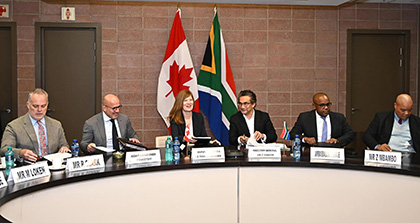
| The Director-General of the Department of International Relations and Cooperation (DIRCO) of the Republic of South Africa, Zane Dangor, and the Deputy Minister of International Development at Global Affairs Canada (GAC), Cindy Termorshuizen, co-chaired the 15th Canada-South Africa Annual Consultations in Pretoria on Friday, 15 May 2026. |
|
|
 |
|
| |
The consultations, grounded in the longstanding and constructive partnership between Canada and South Africa, provided an opportunity to review progress on joint initiatives, advance shared priorities, and further strengthen bilateral cooperation.
This year’s consultations carried particular significance as they advanced priorities identified by Prime Minister Mark Carney and President Cyril Ramaphosa following their meeting on the margins of the G20 Leaders’ Summit in November 2025. Director-General Dangor and Deputy Minister Termorshuizen served as Sherpas for their respective countries throughout South Africa’s hosting of the G20 process in 2025.
The bilateral consultations took place against a backdrop of significant global transition, characterised by geopolitical tensions, economic disruption, climate pressures, and a more complex and contested multilateral environment. In this context, the co-chairs underscored the importance of mutually beneficial economic cooperation, aligning development, economic, and strategic objectives, reinforcing trust and predictability at a time of heightened global uncertainty.
Canada reaffirmed its recognition of South Africa as a key strategic partner on the African continent to advance Canada’s Africa Strategy: A Partnership for Shared Prosperity and Security. South Africa, in turn, acknowledged Canada’s longstanding solidarity and support and welcomed continued deepening of bilateral economic diplomacy, sectoral cooperation, and development partnerships aimed at promoting inclusive growth, employment creation, and skills development.
Discussions on trade, investment, and economic diversification underscored the importance both countries place on advancing stronger economic partnerships as a central pillar of bilateral engagement. Exchanges focused on expanding commercial ties through improved business facilitation, targeted high-level engagement, and closer cooperation between public and private sector stakeholders. The co-chairs welcomed recent exploratory discussions toward a potential Foreign Investment Promotion and Protection Agreement (FIPA) as well as ongoing work toward a Nuclear Cooperation Agreement (NCA).
Participants also identified priority sectors for cooperation—including sustainable mining, clean technologies, information and communications technology, education, and agriculture—as key drivers of inclusive economic growth and diversification. Canada reiterated its support for the implementation of the African Continental Free Trade Area (AfCFTA), as well as enhanced cooperation within the Southern African Development Community (SADC), to unlock regional and continental trade opportunities.
Agriculture featured prominently during the discussions as a sector of strategic and commercial importance for both countries, with South Africa providing an update on preparations for a high-level delegation to Canada centred around participation in the Ag in Motion agricultural trade fair in Saskatchewan in July 2026. The delegation is expected to engage with Canadian agribusinesses and leading agricultural and technology institutions to explore partnerships in innovation, training, and skills development, particularly for young farmers.
Recognising that both countries are leading mining nations, the co-chairs welcomed growing exchanges and investments between Canadian and South African mining companies, supported by platforms such as Africa Mining Indaba and the Prospectors and Developers Association of Canada’s (PDAC) annual convention. Discussions highlighted the increasing strategic importance of critical minerals, resilient supply chains, and responsible resource development to global economic and energy security. Building on their shared legacy of leadership in responsible mining, both sides identified opportunities to collaborate through the Intergovernmental Forum on Mining, Minerals, Metals and Sustainable Development (IGF) to support improved governance, environmental and social performance, and investor confidence across critical minerals value chains in priority African producer countries.
South Africa expressed appreciation for the tangible results achieved through Canada’s international assistance, including climate finance support across priority areas, including the Just Energy Transition (JET), green industrialisation, youth employment and skills development, governance and ethics reform, gender equality and human rights, health systems strengthening, and climate resilience.
Both sides noted the growing link between development cooperation and long-term economic growth, investment readiness, and industrial competitiveness. They agreed to explore opportunities to apply elements of the successful JET partnership, combining policy reform, catalytic finance, private investment and skills development, to other priority sectors of the South African economy.
On climate and environment issues, participants reaffirmed the strength of the bilateral relationship and a shared commitment to deepen cooperation, including through the co-development of a joint workplan with targeted actions and timelines. They highlighted alignment on domestic climate mitigation and adaptation efforts, including South Africa’s Climate Change Act (2024), the importance of advancing South Africa’s Just Energy Transition, and Canada’s Climate Competitiveness Strategy. Both Canada and South Africa underscored the importance of pursuing economic growth pathways that support emissions reductions while strengthening resilience to increasing climate impacts. Priority areas for technical collaboration include methane emission mitigation, water management, biodiversity conservation, circular economy (including plastics), and marine and coastal management. Together, they noted the value of leveraging complementary expertise and knowledge sharing to support shared objectives.
The co-chairs welcomed continued collaboration in science, technology, and innovation, notably through Joint Committee meetings convened by Innovation, Science and Economic Development Canada (ISED) and South Africa’s Department of Science, Technology and Innovation (DSTI), recognising their contribution to collective progress in scientific understanding, to skills development and innovative solutions to shared global challenges. The sustained engagement between DSTI and ISED is a clear indication of the constructive collaboration that has been maintained since the signing of the MoU in November 2019. The co-chairs further acknowledged that high-level policy dialogues have been convened, which stands as a testament to the partnership celebrated through the publication of a joint work marking 20 years of scientific and technological cooperation.
The co-chairs noted significant progress across several areas of mutual interest, including the South Africa–Canada Research Chairs Trilateral Partners and Mobility programmes, as well as collaboration through the South Africa–Canada Universities Network (SACUN), while highlighting continued cooperation in prominent multilateral initiatives. Both sides agreed to pursue further cooperation in researcher mobility and training, recognising the importance of strong foundations in skills development to economic prosperity. In this context, the co-chairs reaffirmed their shared commitment to further strengthening the Canada–South Africa research partnership through practical, mutually beneficial cooperation in support of sustainable and inclusive economic growth, resilience, and shared international priorities.
In the area of cultural cooperation, both sides welcomed the ratification of the renewed Canada–South Africa Audiovisual Co-production Agreement in December 2025, which entered into force in January 2026, replacing the previous agreement signed in 1997. The updated agreement reflects changes in the film and creative industries, including the growth of animation, digital media and emerging technologies such as augmented reality, and is intended to support expanded collaboration in film, television and new media production. The agreement enables eligible co-productions to access national incentives in both Canada and South Africa, helping to encourage investment and broaden market opportunities for producers. Both countries noted ongoing collaboration on joint film projects and welcomed recent exchanges involving South African filmmakers in Canada.
The consultations provided an opportunity to take stock of progress across a broad range of areas and to set a forward-looking agenda for continued bilateral cooperation. The co-chairs reaffirmed their shared commitment to strengthening the Canada–South Africa partnership and agreed that the next bilateral consultations will take place in Canada on a mutually convenient date.
Note: In Canada a Deputy Minister is a senior civil servant equivalent to a Director-General in South Africa.
– Source: www.dirco.gov.za |
|
| |
|
| |
| SOUTH AFRICA’S CITRUS INDUSTRY BECOMES WORLD’S TOP EXPORTER |
|
| |
 |
|
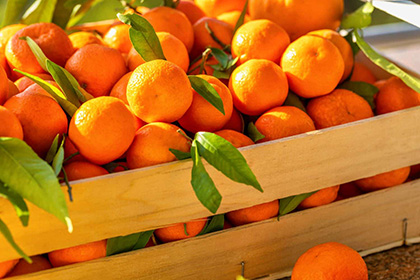
| Agriculture Minister John Steenhuisen has congratulated the country’s agricultural sector, following South Africa’s milestone achievement of becoming the world’s largest citrus exporter by volume. |
|
|
| |
According to the department, the country exported 2.9 million tonnes of citrus in 2025, surpassing long-standing leader Spain.
“This great achievement is one that should be celebrated by all South Africans. To overtake a citrus export giant like Spain, even by a small margin, is no easy feat. We are known for our world-class quality fruit and strict compliance with international plant health standards,” the Minister said in a statement on Thursday, 14 May 2026.
The Minister noted, however, that the figures reflect a unique set of global dynamics. While South Africa now leads in export volume, countries including China, Brazil and Spain continue to dominate in terms of total production, focusing heavily on their domestic markets.
He also pointed out that Spain’s export performance in 2025 was affected by increasingly complex climatic challenges, which contributed to the shift in global rankings.
Minister Steenhuisen emphasised that South Africa and Spain play complementary roles in the international citrus market. Spain supplies fruit during the Northern Hemisphere season, while South Africa ensures continuity during the summer months.
This seasonal coordination ensures that consumers worldwide have year-round access to fresh citrus, thereby maintaining category stability and shelf presence.
The Minister also commended the Citrus Growers Association (CGA) for its strategic leadership in navigating a period of significant volatility.
He reaffirmed the Department of Agriculture’s commitment to expanding market access and reducing the trade costs.
“Our production growth must be met with intensified diplomacy and infrastructure support. We are continuously looking for new market opportunities while working to ensure that we expand our current markets,” Minister Steenhuisen said.
– Source: SAnews.gov.za |
|
| |
|
| |
| SOUTH AFRICA PARTICIPATES IN GLOBAL EDUCATION FORUM IN LONDON |
|
| |
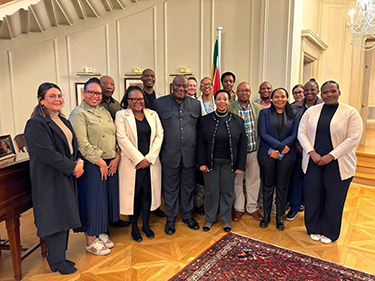
| Higher Education and Training (DHET) Deputy Minister Nomusa Dube-Ncube has undertaken an Official Working visit to London, United Kingdom, to represent South Africa at the Education World Forum (EWF). |
|
| |
Taking place from 17 to 20 May 2026, this year’s forum will bring together education and training ministers from over 130 countries around the world, alongside key multilateral organisations and strategic industry partners to learn from one another and explore how education, at all levels, in all settings and throughout life, can be reimagined to tackle today’s most pressing challenges and unlock opportunities for growth.
The forum will convene under the theme, Educating for a Shared Future: Peace, Planet, Purpose and Pathways. It represents a cohesive vision that education, supported by strong international dialogue and partnerships, is the key to unlocking opportunities, mitigating crises and building a shared, sustainable future for all.
South Africa’s participation is anchored in the country's most urgent developmental imperatives, including addressing youth unemployment through education pathways that produce work-ready and entrepreneurial graduates aligned to the demands of a changing economy. |
|
|
 |
|
| |
The delegation will also highlight efforts to accelerate adaptation to the Fourth Industrial Revolution (4IR) by integrating artificial intelligence, digital skills, and green economy competencies across universities, Technical and Vocational Education and Training (TVET) colleges, and community learning institutions.
Expanding access and reducing structural inequality remain central to the country’s agenda, with programmes such as the National Student Financial Aid Scheme (NSFAS), the Comprehensive Student Funding Model, and initiatives to reposition TVET colleges as institutions of first choice expected to feature prominently.
The visit will also promote entrepreneurship as a driver of economic inclusion, supported by initiatives such as the Entrepreneurship Development in Higher Education (EDHE) programme and skills development linked to the Just Energy Transition.
During the forum, the Deputy Minister is expected to participate in high-level plenary debates, bilateral ministerial meetings and multilateral engagements, while advocating for the priorities of the Global South.
These include decolonised curricula, multilingual artificial intelligence development, and equitable education financing as non-negotiable pillars of the world's shared educational future.
Speaking ahead of the forum, Deputy Minister Dube-Ncube said South Africa would participate as an active contributor to global education reform.
“South Africa goes to EWF not as an observer, but as a nation actively rebuilding an education system from the legacy of apartheid, adapting to a fast-changing world, while striving to ensure no young person is left behind,” the Deputy Minister said.
– Source: SAnews.gov.za |
|
| |
|
| |
| UNITED STATES, MEXICO AND CANADA CELEBRATE BAFANA BAFANA AHEAD OF FIFA WORLD CUP |
|
| |
 |
|
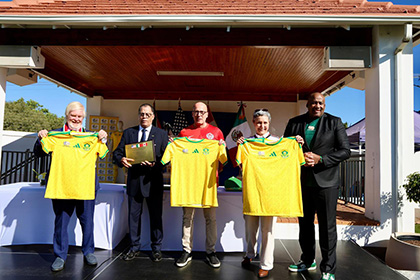
| The United States (US) Ambassador L. Brent Bozell III, Mexican Ambassador Sara Valdés, and Canadian High Commissioner James Christoff co-hosted a reception in honour of South Africa’s national football team, Bafana Bafana, as it prepares for the FIFA World Cup. |
|
|
| |
The event brought together the South African Football Association; past Bafana Bafana players; South African government officials, including Minister of Sports, Arts and Culture Gayton McKenzie; and members of the diplomatic community to celebrate the team’s World Cup participation and to demonstrate trilateral North American international cooperation.
“Sports bring the world together like nothing else, and today proves it,” said Ambassador Bozell. “Three North American missions united here in Pretoria to celebrate South African football. When Bafana Bafana takes the field, millions of citizens from our four countries and beyond will be watching and cheering.”
“On the auspicious occasion of the first-ever FIFA World Cup jointly hosted by our three North American countries, Mexico is particularly pleased that El Tri and Bafana Bafana will once again play in an opening match, as they did in South Africa in 2010,” said Ambassador Valdés.
“While we may be competitors on the field, we are, above all, friends and trusted partners beyond the game. Today’s reception is a testament to the strength of our bonds—rooted in cooperation, shared prosperity, and a common belief that, together, we can achieve great things,” said High Commissioner Christoff.
The reception highlighted the strong partnership among the three World Cup co-host nations and underscored the enduring power of sports diplomacy, cultural exchange, and economic cooperation.
– Source: www.thediplomaticsociety.co.za |
|
| |
|
| |
| CAPE TOWN, ZIMBABWE AND NAMIBIA FORGE TOURISM PARTNERSHIP |
|
| |
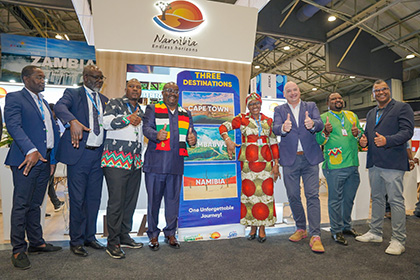
| Cape Town, Zimbabwe, and Namibia have entered into a strategic partnership poised to revolutionise regional travel dynamics in a move aimed at amplifying Southern Africa’s presence on the global tourism stage, “Cape {town} Etc” reports. |
|
|
 |
|
| |
This collaboration was first explored at the World Travel Market Africa 2025, where stakeholders laid the groundwork for a synergy that promises to enhance the delivery of unique travel experiences to international visitors.
The agreement, which formalises a commitment to regional coordination, unified marketing, and improved cross-border travel, aims to shift the focus of tourism from mere volume to substantial value.
This initiative champions longer stays, higher expenditure per trip, and encourages a more equitable distribution of tourism benefits throughout the diverse landscapes and cultures of Southern Africa.
Mayco for Economic Growth, James Vos articulated the partnership’s intent, stating, ‘Cape Town has always been a gateway, but the opportunity now is to be a gateway with intent.’
Enver Duminy, CEO of Cape Town Tourism, echoed this sentiment, elaborating on the new direction for tourism in Southern Africa. He noted that today’s travellers seek depth and diversity rather than simple, one-stop experiences.
With Zimbabwe and Namibia on board, this partnership will lead to the creation of rich, multi-faceted journeys that enhance Southern Africa’s appeal as a high-end destination, ensuring that it competes effectively in the international tourism arena.
The core of this initiative includes the rollout of joint digital campaigns and multi-country itineraries, fortified by shared insights into digital marketing and storytelling. ‘This collaboration is not merely about attracting more visitors; it’s about turning interest into travel,’ Duminy added.
Events serve as pivotal anchors in this strategy. Major cultural, sporting, and business events will not only spark interest but also encourage visitors to extend their trips, maximising their engagement with the region.
As they explore beyond their primary destinations, they will help unlock extensive economic impacts along the way.
Expressing his enthusiasm, CEO of the Namibia Tourism Board, Sebulon Chicalu, remarked, ‘This partnership marks a milestone in regional integration. Our collective investment supports the economic resilience of our entire region by removing friction in regional travel.
Chicalu reaffirmed Namibia’s readiness to welcome travellers and provide them with an authentic experience of its rich diversity.
For Zimbabwe, this partnership is emblematic of a significant shift in how the region presents itself globally.
Chief Executive of the Zimbabwe Tourism Authority, Dr George Manyaya, highlighted that ‘this collaboration signals a new era’ for Southern Africa
– Source: www.capetownetc.com |
|
| |
|
| |
| SOUTH AFRICAN STUDENT’S HANDCRAFTED PICTURE BOOK WINS GLOBAL AWARD |
|
| |
 |
|
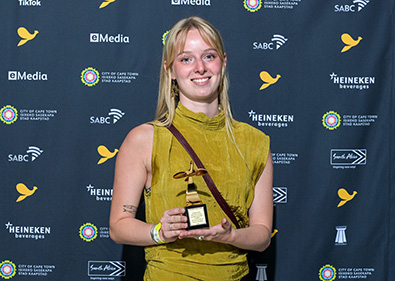
| A South African student’s creativity has turned heads and earned an international award at The One Club for Creativity’s 2026 Young Ones Student Awards. |
| |
Emma Blomerus, a student at the Red & Yellow Creative School of Business, has scooped the Student Merit Award in the Young Ones ADC Illustration/Print category for her project, With Love.
The category’s competition is one of the world’s most established student award programmes in advertising and interactive design, dating as far back as the 1980s. In this year’s archive of illustrations, Blomerus’ project was the only work selected from an African institution. |
|
|
| |
With Love was created as a postmodern picture book that comes with a wider social awareness campaign. The story focuses on themes like belonging, difference, and the often-overlooked perspective of the birth mother. It all comes to life through the Doodle family – Mommy Inky, Daddy Scribble and Baby Stamp.
With Love is a social impact campaign built around a narrative picture book that introduces the Doodle family. Mommy Inky, Daddy Scribble, their curious little one, Baby Stamp, and the Postman of Forgotten Dreams, who delivers letters never received. This playful family, formed through adoption, brings to life a story that fills two key gaps in adoption literature: the absence of a true narrative and the missing perspective of the birth mother. The book’s primary tale follows Baby Stamp’s adventures of belonging and discovery, with adoption explored as a gentle secondary focus. The campaign extends into a hand-bound book, an interactive 3D post office diorama where viewers can post their own dreams, and OOH elements raising awareness and funds for The Empathologist, an NGO supporting birth mothers,” Blomerus shares in her campaign.
The project was designed to teach a lesson and create impact. The picture book is the heart of it all.
All illustrations were developed by Blomerus by hand. She also constructed detailed 3D models to create the charming world that exists within the picture book. Going against the grain of increasingly polished “sameness” of digitally generated work, With Love embraces imperfections and quirks. That resonates with people and earns awards.
“Winning a Merit Award at The One Club Young Ones is a profound moment for With Love. This book is a celebration of adoption and the beauty of being different,” shares Stephanie Simpson, Illustration Lecturer for Red & Yellow’s BA Visual Communication Design and number one-ranked lecturer in Africa according to the 2025 Loeries Official Rankings. “In an era increasingly dominated by slick, AI-generated imagery, Emma’s commitment to hand-crafting every illustration, coupled with her meticulously constructed 3D models, proves that the soul and “imperfection” of tactile work remain incredibly valuable and resonant,” she adds.
– Source: www.goodthingsguy.com |
|
| |
|
| |
| SOUTH AFRICAN RESEARCHER DR MONIKA MOIR AWARDED R14 MILLION GRANT TO MAP WEST NILE VIRUS |
|
| |
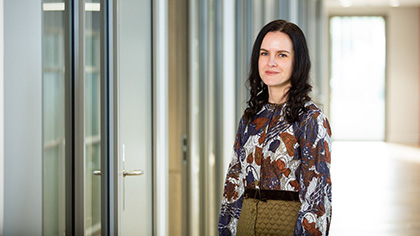
| Stellenbosch University’s Dr Monika Moir has landed a major R14 million international research grant that will help scientists monitor and prepare for potential West Nile virus outbreaks. |
|
|
 |
|
| |
A recent report released by the Centre for Epidemic Response and Innovation (CERI) at Stellenbosch University shares that a South African doctor and researcher has been awarded an international grant worth R14 million to help the world better understand and predict, the spread of a dangerous mosquito-borne disease.
It’s positive news for public health across Africa. The research is aimed at building better disease monitoring systems and stronger preparedness. This could help health systems act before potential outbreaks occur, which scientists warn may be made possible due to climate change and shifting ecosystems.
Dr Monika Moir, a researcher at CERI, is currently focused on research involving a virus spread by mosquitoes that has flown somewhat under the radar across Africa, despite it being present here for a very long time.
Most people have heard of malaria, dengue, or Zika, but West Nile virus is less commonly discussed, even though it can cause serious illness.
“This project is about understanding how climate change is reshaping the spread of West Nile virus in Africa,” said Dr Moir. “Although the virus is endemic to Africa and can cause severe neurological disease in humans, it remains surprisingly understudied across much of the continent.”
It’s carried by mosquitoes and circulates between birds and insects long before people start getting sick. The way it spreads is part of what makes it difficult to track. In many parts of Africa, it goes undetected because the monitoring systems to catch it don’t exist yet.
“One of the main reasons for the lack in local knowledge is that surveillance in many African countries remains limited and inconsistent,” Dr Moir explained. “West Nile virus is endemic in Africa, meaning it is regularly circulating, but many infections probably go undetected or unreported.”
The R14 million grant comes from a partnership between the South African Medical Research Council (SAMRC) and UK Research and Innovation (UKRI), funded through the United Kingdom’s (UK) International Science Partnerships Fund.
It will run over three years and will fund a collaboration between research institutions in South Africa, Ghana, Kenya, Tunisia, and the UK.
Together, the team will collect mosquitoes across all four African countries, test them for the virus, and use genomic sequencing (reading the virus’s genetic code) to understand how different strains of West Nile virus are evolving and moving across the continent. They’ll then combine this data with climate and environmental information to build maps that show where outbreaks are most likely to occur and why.
As mentioned, scientists warn that climate change is causing a shift in ecosystems. Because of this, mosquitoes are expected to move into new areas, bringing disease to places they haven’t been before.
Dr Moir’s project, supported by the three-year grant, aims to anticipate these outbreaks before they happen and create better preparedness. The project also includes a strong training component, which will build skills and expertise among African public health scientists so that this kind of advanced disease monitoring doesn’t depend on outside help in the future.
“I think the grant reflects growing international recognition of the importance of African-led research and collaboration in addressing global infectious disease threats,” she said, adding that “Africa is central to the ecology and evolution of many emerging pathogens.”
– Source: www.goodthingsguy.com |
|
| |
|
| |
| TEAM SOUTH AFRICA STRIKES GOLD AGAIN AT RHS CHELSEA FLOWER SHOW |
|
| |
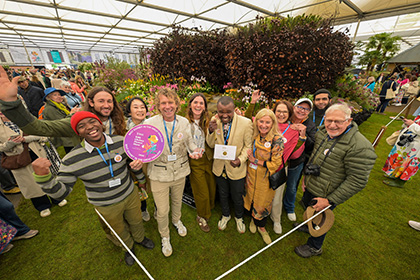
| South Africa’s floral display has once again impressed on the international stage after taking home a gold medal at the prestigious RHS Chelsea Flower Show in London, United Kingdom. |
|
| |
 |
|
Led by renowned landscape designer Leon Kluge and artist-gardener Tristan Woudberg, Team South Africa’s exhibit, titled “Life After Fire”, explored the beauty that emerges in the Cape’s fynbos ecosystem after wildfires sweep through the region.
The display marked South Africa’s 50th year participating in the globally recognised flower show and added another gold medal to the country’s growing record at Chelsea.
The garden, described as striking, featured burnt Protea skeletons, charred wood and blackened branches inspired by the fires that affected parts of the Western Cape last year.
Against that scorched backdrop were thousands of colourful blooms, orchids and indigenous plants that naturally flourish after fire. |
|
|
| |
More than 20 000 stems of fresh flowers sourced from fynbos farms across the Western Cape were reportedly used to bring the exhibit to life.
Among the flowers featured were King Proteas, pine-leaf Proteas, Guernsey lilies, Disa orchids and other indigenous wildflowers.
The installation also included a flowing stream element surrounded by moisture-loving plants and rare species from different South African landscapes, including flowers from the Drakensberg region, according to “Agri News”.
This year’s win is particularly significant for Kluge as it came with numerous challenges.
Severe storms, flooding and difficult harvesting conditions in the Western Cape reportedly threatened the shipment of flowers ahead of the show.
However, following a brief break in the weather, growers successfully harvested and transported the flowers to London in time for the final build.
Alongside winning gold, South Africa’s exhibit also received the highly coveted “Best Exhibit in the Great Pavilion” award at the show.
Speaking after the win, Kluge described the experience as “a bit of a roller coaster”, admitting there were moments where the team genuinely did not know whether the flowers would even make it to London.
“We had so many floods in South Africa, lots of rain, and even snow on the farms where we needed to harvest all of these flowers, and at some point we didn’t know whether we were actually going to get to Chelsea,” he shared.
Despite the uncertainty, the flowers arrived in time for the final build.
“When we came into the Grand Marquis this guy was waiting for us,” Kluge said while holding up the gold medal.
According to the landscape designer, the exhibit was about far more than flowers alone.
He explained that “Life After Fire” was created as a celebration of South Africa’s unique fire-driven ecosystem and a reminder of the importance of protecting the country’s natural flora following the destruction caused by last year’s Cape fires.
“It’s a celebration of our flowers in South Africa. It’s a celebration of our fire-driven ecosystem which is so special,” he said.
“It’s depicted here after the massive destruction which we had in the Cape this past year, showing people how important it is to maintain our flora, to have a healthy ecosystem.”
Kluge also thanked South Africans for their support throughout the process, calling the award “a very special moment” after what he described as an intense two-week build leading up to the show. “This one is for South Africa, it’s for all our flowers,” he added.
– Source: www.iol.co.za |
|
| |
|
| |
| SOUTH AFRICAN CITY RANKED AMONG THE TOP 10 IN THE WORLD |
|
| |
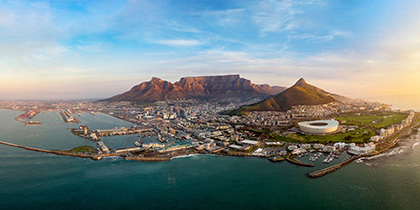
| Cape Town has been ranked fifth in the world in “Time Out” 2026 Top 20 Best Cities for Art and Culture, noted for its layered and evolving cultural scene. |
|
|
 |
|
| |
Each year, Time Out seeks to identify the world’s cultural capitals—places where locals and visitors can easily access and enjoy art collections, theatre, music, and cultural celebrations at affordable prices. To compile this year’s list, Time Out surveyed 24 000 residents from over 150 cities, asking them to evaluate the quality and affordability of their local culture scene.
In addition, residents shared what their city excels at, whether it’s comedy, carnivals, live music, or literature.
The feedback was combined with insights from Time Out’s culture panel, which consists of editors, writers, and local experts who voted for the cities they consider the most exciting for culture and the arts at present.
To ensure the list represents the best cultural cities globally, Time Out said it included only the highest-scoring cities from each country.
“Africa’s collective creativity is anchored at the Zeitz MOCAA and in the Norval Foundation’s contemporary sculpture garden,” said Time Out Cape Town Editor, Selene Brophy.
“You can catch the Cape Town Philharmonic Orchestra at City Hall, home to a bronze statue of Nelson Mandela honouring his first address to the nation after his release from prison.”
Additionally, the Labia, Baxter Theatre, and Artscape Theatre were highlighted as the city’s attractions.
“In 2026, Cape Town is experiencing a blockbuster year for art; brand-new cultural moments include the recent immersive digital art installation LUMENOCITY and the limited-edition Veuve Clicquot’s Emotions of the Sun’s Magnum Photos collaboration,” said Brophy.
Time Out reported that in its survey, Capetonians expressed strong approval for their city’s art and culture scene, giving it an 84% approval rating, along with a 60% score for affordability.
When asked what Cape Town excels at, 57% of respondents highlighted festivals, while 59% pointed to live music as the city’s strengths.
South Africa’s competitor
In Time Out’s top 20 cities for art and culture, London ranked first, followed by Paris, New York City, and Berlin in fourth place. London is ranked the best city in the world for art and culture in 2026, due to its museums, food, and historic attractions, which place it in the spotlight.
“A vibrant food scene that caters to all palates and income brackets, residents drawn from all corners of the planet, historic attractions, genuinely walkable neighbourhoods and a mysterious shop on Essex Road that’s absolutely rammed full of taxidermied animals,” said United Kingdom Editor Joe Mackertich.
“Off the bat: there’s nowhere in the world with so many elite galleries and museums that are entirely free to visit.”
The Quentin Blake Centre for Illustration, located in Clerkenwell, will open in June 2026 and should be a priority for any art enthusiast, according to Mackertich. He also highlighted that the new Museum of Youth Culture is finally debuting in the vibrant area of Camden Town.
Additionally, the Museum of London will reopen at the end of the year in its new location in Smithfield.
“The only way to experience it is to come and have a look for yourself. And that’s the best thing about London: you’re always welcome,” said Mackertich.
Alongside a strong 95% culture rating from Time Out’s panel of experts, 99% of Londoners said culture in the capital is either ‘good’ or ‘amazing’ in Time Out’s survey.
Equally impressive for this notoriously expensive city is that 60% of locals deem art and culture in London affordable. The city scored particularly highly for theatre, with the strongest rating (90%) of all cities surveyed, closely followed by museums (88%) and art galleries (81%).
– Source: www.businesstech.co.za |
|
| |
|
| |
| SOUTH AFRICAN UNIVERSITY WINS A GLOBAL ARCHITECTURE AWARD FOR PEDAGOGY |
|
| |
 |
|
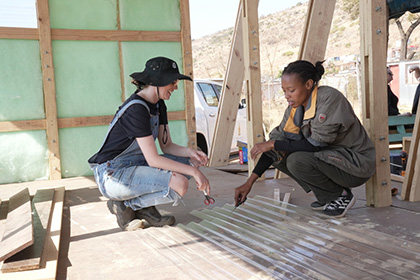
| The University of Pretoria’s architecture department has won an international award for prioritising climate responsibility and social justice in how it trains South Africa’s future architects. |
| |
The International Union of Architects is a global body representing architecture institutions across more than 70 countries in the world. This year, over 70 schools entered their Award for Innovation in Architectural Education. The University of Pretoria (UP) was among just a handful that won!
Architecture programmes focus on teaching students how to design. UP’s programme does that, but it also teaches students to think carefully about who they’re designing for, and what the real-world impact of their work will be. |
|
|
| |
The programme is structured around five stages that students work through over their full five years of study – awareness, philanthropy, activism, solidarity, and collaboration.
When students graduate, they are architects who know how to work alongside communities and how to navigate difficult social realities like poverty and inequality. They also have the ability to make design decisions they can actually defend and explain.
“The curriculum is intentionally developmental,” said Professor Carin Combrinck, Head of the Architecture Department. “It prepares graduates not only to design, but to read complex contexts, work with others as legitimate knowledge partners and translate evidence into implementable spatial responses.”
They’re trained to understand the context they’re working in, collaborate with the people affected, and produce something that can actually be built and used. In the honours studios, they work with communities and sites, under real constraints.
This kind of work includes mapping climate risks in specific neighbourhoods, designing with communities rather than just for them, and developing building solutions that use materials responsibly and reduce waste.
“Students are required to justify their decisions in relation to risk, justice, feasibility and material consequence,” said Jason Oberholster, Director of UP’s Unit for Urban Citizenship. “They are learning not only how to design, but how to listen, translate, negotiate and respond within complex urban realities.”
The award that UP has received specifically recognises programmes that take on the big challenges of our time, including climate change, inequality, housing, and limited resources.
What impressed the jury about UP’s entry was that these topics are woven into the entire five-year programme, from the first year through to the postgraduate level.
“What makes the model significant is that it doesn’t separate social and environmental questions,” said Dr Jan Hugo, professional postgraduate programme coordinator. “It treats them as interconnected, which is why it’s both contextually grounded and globally relevant.”
UP’s programme is built around the specific realities of South African cities. That includes considering the legacy of the apartheid-era in spatial planning, environmental pressures, and communities that have historically been left out of design decisions.
The jury recognised that this approach is relevant far beyond South Africa’s borders. Cities everywhere are grappling with the same pressures.
“This is not only a moment of recognition,” Oberholster, Dr Hugo and Prof Combrinck concluded. “It confirms that architectural education in South Africa can make a meaningful contribution to global conversations about the future of the discipline, the profession and the city.”
– Source: www.goodthingsguy.com |
|
| |
|
| |
| TEAM SOUTH AFRICA BRINGS IMPACT, EQUITY, AND EXCELLENCE TO CANNES 2026 |
|
| |
| Team South Africa arrived at the 79th Cannes Film Festival in France with a renewed sense of purpose and a clear vision for global expansion. |
| |
| Building on the success of last year’s strategic groundwork established by partners of Brand South Africa: National Film and Video Foundation (NFVF), Screen International, Department of Sport, Arts and Culture, the South African Embassy in France, WESGRO and the Industrial Development and Corporation (IDC), the plot thickens in 2026 as we strengthen South Africa’s story, highlighting our world-class infrastructure and competitive incentives. |
|
|
 |
|
| |
There is no show without South Africa’s greatest creative export: our filmmakers. Team South Africa is now positioned to showcase not just the nation’s grandest locations, but also the visionary talent behind the lens.
At the heart of this year’s mission is a distinguished group of filmmakers, producers, and industry leaders identified as the “Architects of the South African Screen”. This delegation represents the diverse and multifaceted nature of the nation’s cinematic landscape, bringing together an equilibrium of veterans and fresh creatives who are reshaping how the world perceives African cinema, while leaning into the weight of both audiences.
Key filmmakers at Cannes from South Africa
Key figures participating in the 2026 Cannes programme include Obett Motaung, Rosetta Mabaso, and Dian Weys. Their presence in the Marché du Film and various festival side events signals a strategic push toward high-value co-productions that blend authentic local narratives with international commercial appeal. This is a big moment for Dian Weys who, six months ago, was selected to participate in the 50th edition of La Résidence, a four-month writing residency at the festival. According to the NFVF, Dian makes up part of a delegation of six filmmakers globally and is only the third South African filmmaker to be selected.
The 2026 delegation also features seasoned professionals such as Mark Engels, Steven Markovitz, and Taryn Joffe, whose collective expertise in high-end production and international distribution is vital for securing the global footprints of South African projects. They are joined by influential voices like Mbali Mashaba, Firdoze Bulbulia, and Milton Reddy, each of whom brings a unique perspective to the South African story, focusing on everything from cultural heritage to the future of digital media. The inclusion of Babalwa Baartman and Tarina Patel further underscores the industry’s commitment to showcasing both creative depth and commercial glamour on the world stage.
Reflecting on the successes of 2025, where Brand South Africa facilitated numerous networking sessions and bilateral agreements, the 2026 team is heavily focused on finalising distribution deals and securing investment for future slates. Leaders such as Robert dos Santos, Vuyelwa Mpakanyiswa, and Nolulamo Maquthu are instrumental in these high-level negotiations, ensuring that South African stories are accessible to audiences across the African continent and the global diaspora. The delegation is rounded out by the technical and creative insights of Neil Bedeker and Tiny Mungwe, ensuring that the “architects” are represented at every stage of the cinematic lifecycle, from initial development to post-production.
The impact of the South African film industry on jobs and the economy
This collective of excellence demonstrates the robustness of the South African film ecosystem, which generates approximately R2.5 billion for the South African economy, creating over 25 000 jobs. By leveraging the momentum from the previous year’s branding efforts, these architects of the South African screen are ensuring that the country remains a central player in the global film economy. Their work at Cannes 2026 is a testament to the enduring power of South African storytelling and its capacity to resonate across borders.
As we evolve from milestones to movies in this significant year that celebrates 30 years of our Constitution, 50 years since the Sharpeville massacre and 70 years since the Women’s March, we remember that ours is a story about legacy.
– Source: www.brandsouthafrica.com |
|
| |
|
| |
| TEAM SA SHINES IN GHANA TO DEFEND AFRICAN TITLE DESPITE CHALLENGES |
|
| |
| Team South Africa once again proved why they remain one of the best athletics nations on the continent after finishing on top of the medal table at the African Senior Championships in Ghana. |
|
| |
 |
|
Despite facing challenges away from the track and field, the South African team delivered an outstanding performance over six days of competition, collecting 21 medals made up of nine gold, four silver, and eight bronze medals to successfully defend their African title.
At the previous African Senior Championships held in Mauritius in 2024, South Africa finished with 19 medals, including nine gold, four silver, and six bronze medals.
The team travelled to Ghana with a relatively small squad of only 34 athletes, but they competed with courage, determination, and pride against some of Africa’s best athletes.
Throughout the championships, the athletes remained united and focused on their performances, refusing to let the off-field issues distract them from their goals. |
|
|
| |
Concerns around accommodation and conditions at the University of Ghana became one of the major talking points during the week.
Earlier in the championships, two-time national shot-put champion Aiden Smith voiced his frustration on social media regarding the treatment of athletes.
His comments quickly attracted attention and led to Sports Minister Gayton McKenzie stepping in to offer alternative accommodation for Team SA athletes.
However, despite the difficulties, the South African team chose to stay together with the official athletes at the University of Ghana.
There were also complaints regarding scheduling and timing during the competition, but the South Africans continued to rise above the disruptions. Instead of allowing the problems to affect them, the athletes responded with impressive performances and medal-winning displays.
Smith led the way for Team SA after winning gold in the men’s shot put, continuing his excellent form this season.
Former world champion Luvo Manyonga also produced an emotional comeback by winning his first African senior title in the men’s long jump.
Kristi Snyman secured gold in the women’s high jump, while Ansuné de Beer added another gold medal in the women’s pole vault.
On the track, World Under-20 100 m bronze medallist Bradley Nkoana continued his rise by winning silver in the men’s 100 m sprint.
Leandri Holtzhausen also impressed by winning silver in the women’s hammer throw, while Wernich van Rensburg claimed bronze in the men’s 400 m hurdles.
Another bronze medal came from Righardt Stander in the men’s decathlon.
Team SA finished the championships strongly on the final day of competition.
Luan Munnik won gold in the men’s 1500 m, while Karabo More claimed victory in the women’s 1500 m.
Rogail Josephs also added gold in the women’s 400 m.
Silver medals were won by Tshepo Tshite in the men’s 1500 m, Enya Pooler in the women’s heptathlon, and Mateo Le Roux in the men’s high jump.
Bronze medals were collected by Tshepang Makhetha in the men’s hammer throw; Zinzi Xulu in the women’s high jump; Mihlali Xhotyeni in the men’s 200 m; Jana van Schalkwyk in the women’s javelin; and Douw van As in the men’s javelin.
– Source: www.sabcsport.com |
|
| |
|
| |
| HAMISH LOVEMORE ADDS TWO MORE WORLD CUP MEDALS |
|
| |
| The South African canoe sprinter claimed silver and bronze in Germany to make it three World Cup medals across two consecutive weekends in Europe. |
| |
South African canoe sprinter Hamish Lovemore is building serious momentum on the international stage after adding two more medals to his growing World Cup collection in Germany over the weekend.
Competing at the ICF Canoe Sprint and Paracanoe World Cup in Brandenburg, Lovemore claimed silver in the men’s K1 1000m before following it up with bronze in the K1 5000m, taking his tally to three World Cup medals across two consecutive weekends in Europe.
And he did it all while adjusting to icy European conditions far removed from the South African weather he is used to training in. Lovemore was overjoyed after his silver medal performance. |
|
|
 |
|
| |
“I’m so happy … it’s the best end to the trip. The conditions were really difficult coming from South Africa, the cold! It’s the first time I have had to wear a thermal with a rain jacket underneath.”
The silver medal in the Olympic-distance K1 1000m was a particularly strong response after Lovemore finished ninth in the same event at the opening World Cup regatta in Szeged, Hungary just a week earlier. This time, however, the South African looked completely at home among the front-runners.
Lovemore stayed within touching distance throughout the race before taking the lead heading into the closing stages. Hungary’s Balint Kopasz eventually surged late to take the win, while Australia’s Thomas Green finished third behind the South African.
Then came another podium finish on Sunday, 17 May 2026.
Lovemore raced to bronze in the K1 5000m, matching the medal he picked up in the same event during the previous World Cup weekend. Denmark’s Mads Pedersen claimed victory after breaking away from the field, while Portugal’s Fernando Pimenta finished second.
There were also solid performances from the rest of the South African team in Brandenburg.
Esti Olivier reached two C Finals and finished second in the 200m and ninth in the 500m, while Christjan Coetzee placed sixth in the men’s 200m C Final. Helen Jansen van Vuuren also reached the semi-finals of the women’s 1000m event.
– Source: www.goodthingsguy.com |
|
| |
|
| |
|
|
|
|
|
|
|
|