| |
| |
|
| |
|
| |
|
| |
| BE OF SERVICE TO THOSE WHO NEED IT MOST THIS MANDELA DAY |
|
| |
 |
|
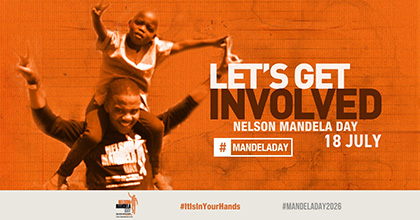
| President Cyril Ramaphosa has used the weekly newsletter to galvanise South Africans to dedicate their Mandela Day to acts of service, including feeding the hungry and comforting those who need it most. |
|
|
| |
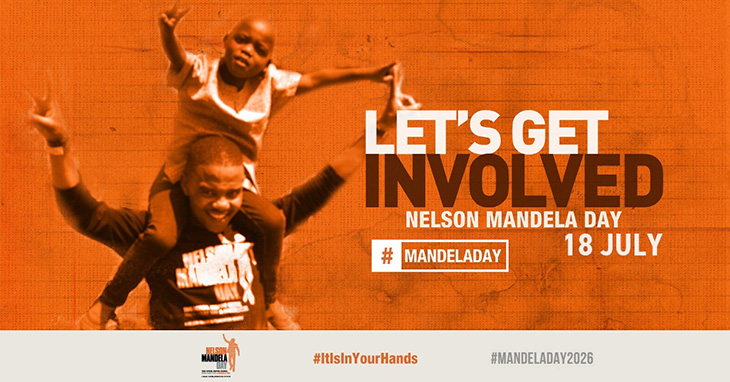
International Mandela Day is commemorated annually on former President Nelson Mandela’s birthday, 18 July.
“In 2009, the United Nations General Assembly declared 18 July Nelson Mandela International Day. It is a global day of action to harness Madiba’s legacy in service of a challenge that confronts most nations: the fight against poverty, inequality and injustice.
“This year, we ask every South African to heed that call. Let us give our 67 minutes through acts of service that feed the hungry, comfort the lonely or support the elderly. Let us lend our skills and time to the organisations that serve our communities every day. These acts matter because they change lives,” President Ramaphosa said.
He noted that overcoming poverty, as the former president said, is not an act of charity but an “act of justice”.
“On this Mandela Day, let us also recommit ourselves to the difficult task of ending poverty and inequality in our country and in our world.
“Among other things, this means transforming the rules and institutions that govern the world's finances so that they serve the needs of developing economies, not only the wealthiest. It means ensuring that the commitments made to the countries bearing the heaviest burden of climate change are honoured and strengthened,” the President said.
A government at work
On the world stage, the South African government used its Group of 20 (G20) presidency last year to put inequality firmly on the global agenda, commissioning the first-ever report on global inequality to G20 world leaders. That work continues.
“We are now working with other countries and institutions to establish an International Panel on Inequality to monitor global inequality, assess its causes and consequences and recommend the policies needed to reverse it.
“No nation can overcome inequality alone. We need coordinated multilateral action, rooted in solidarity and shared responsibility,” President Ramaphosa said.
Locally, the President said Mandela Day serves as a reminder to refocus efforts by sustaining investment in education and health and “prioritising the needs of the poorest and most vulnerable”.
“We must continue to direct energy and resources towards strengthening early learning in our schools and completing the overhaul of our skills development system. At the same time, we must continue to build a health care system that provides quality care to all who need it, regardless of their ability to pay.
“To tackle poverty and inequality, we must ensure that our laws and policies protect workers and that our regulatory environment encourages investment.
“At the same time, we are continuing to improve our social protection system and helping people build livelihoods, gain skills and find work through our public and social employment programmes,” President Ramaphosa said.
He called on South Africans to work with government to renew resolve to “tackle the poverty and inequality that make such service necessary in the first place”.
“Madiba taught us that building a just, caring and inclusive society is not the work of governments alone. It is the work of ordinary people performing extraordinary acts of compassion, courage and service. As Madiba said, 'It is now in your hands'.
“Let the acts of service that we undertake this week be part of the foundation on which we build a better country and a better world for all,” President Ramaphosa said.
– Source: SAnews.gov.za |
|
| |
|
| |
| PRESIDENT CYRIL RAMAPHOSA MOURNS HIS HIGHNESS SHEIKH HAMAD BIN KHALIFA AL ATHANI |
|
| |
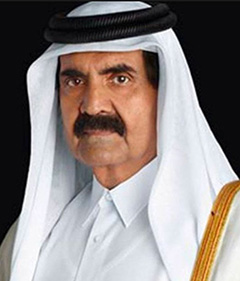
| President Cyril Ramaphosa has, on behalf of the government and people of South Africa, expressed his deep condolences at the passing of His Highness Sheikh Hamad bin Khalifa Al Thani, former Amir of the State of Qatar. |
| |
His Highness passed away on Sunday, 12 July 2026, at the age of 74.
President Ramaphosa extends his condolences to the Royal Family and the government and people of Qatar.
President Ramaphosa said, “As South Africa, we consider ourselves to be close friends and partners of the State of Qatar, which has been a model of peace, development, prosperity, and global influence inspired by the extraordinary leadership of the late Sheikh Hamad bin Khalifa Al Thani.
“In this moment of sorrow, we join the people of Qatar and the allies and friends globally in mourning the loss of a distinguished leader whose vision, wisdom, and unwavering dedication to the socio-economic progress and prosperity of his nation and the Global South left an enduring legacy. |
|
|
 |
|
| |
“May his soul be favoured with forgiveness and mercy.”
– Source: www.gov.za |
|
| |
|
| |
| SOUTH AFRICA REAFFIRMS COMMITMENT TO STRENGTHENING RELATIONS WITH FRANCE |
|
| |
 |
|
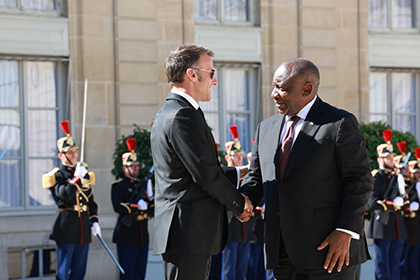
| South Africa has reaffirmed its commitment to strengthening relations with France, with growing cooperation in investment, science and technology, and cultural diplomacy, among others. |
|
|
| |
“France is a key strategic partner for South Africa, and we enjoy longstanding bilateral cooperation spanning trade and investment, energy, defence, education, people-to-people exchange and other fields,” President Cyril Ramaphosa said on Friday, 10 July 2026, during his meeting with French President Emmanuel Macron.
President Ramaphosa, who was on an Official Visit to France from 10 to 12 July, said the economic relationship between South Africa and France is growing from strength to strength and that the sixth South Africa Investment Conference, held in Johannesburg in March, saw a strong showing by French companies.
“This is a premier event for showcasing the opportunities for domestic and international investors in the South African economy, aligned with our national investment drive. This year, 30 French companies pledged approximately €1.11 billion (R20.7 billion) in investments across a range of key economic sectors.”
This, said President Ramaphosa, demonstrates the increasing confidence French businesses have in the South African economy and its future growth prospects.
“As we embark on the largest mass infrastructure build in our country’s history, we look forward to participation by French firms in this as well as other sectors.”
President Ramaphosa has also been briefed on several agreements that are currently under negotiation, including an agreement on transport-related matters; on cooperation in the peaceful uses of nuclear energy; and a draft declaration of intent on mobility.
In addition, South Africa and France continue to collaborate in the fields of science, technology and innovation, said the President while also congratulating France on becoming a full member of the Square Kilometre Array Observatory (SKAO), making it the 14th Member State of the intergovernmental organisation.
“I am told that the recently held Joint Committee Meeting on science, technology and innovation was a productive one. The priority focus areas for cooperation include artificial intelligence (AI), oceans and marine sciences, and soil health and water.
“We welcome this ongoing cooperation in pursuit of innovation-led growth and environmental sustainability.”
Defence dialogue and cultural diplomacy
On cooperation in the defence space, the two countries have agreed to convene the long overdue 13th Defence Strategic Dialogue to take stock of implementation of the Memorandum of Understanding (MoU) on defence cooperation and to explore additional areas of cooperation.
It is expected that the Strategic Dialogue will take place in South Africa in October this year.
“France and South Africa continue to advance cultural diplomacy between our two countries to develop our respective creative industries. This relationship has a key role to play in harnessing the potential of the sector to support growth, transformation, social cohesion and job creation.”
Multilateralism
On multilateralism, President Ramaphosa said the world is confronting multiple, complex and interconnected challenges, including trade tensions, wars, pandemics, poverty and unemployment that threaten to undermine the quest to achieve a more peaceful, egalitarian and sustainable world.
“Multilateralism is the most effective means for addressing these collective global challenges. No country can resolve these issues in isolation. The current global environment requires stronger partnerships, collective action, and a renewed commitment to the principles of the United Nations Charter and international law,” he said.
Earlier on Friday, the President co-chaired the Leaders Group meeting of the High-Level Steering Committee on Education alongside the Director-General of the United Nations Educational, Scientific and Cultural Organisation (UNESCO), Professor Khaled El-Enany, and attended the Transforming Education Summit +4.
– Source: SAnews.gov.za |
|
| |
|
| |
| FUTURE GENERATIONS MUST BE TAUGHT ALL OF SOUTH AFRICA’S HISTORY |
|
| |
| While it is fitting that the Delville Wood Memorial has evolved from being a monument associated primarily with white South African sacrifice into a place that seeks to commemorate all South Africans who served in the war, the true test of remembrance lies in what future generations are taught of the war effort. |
| |
|
|
|
 |
|
| |
“While it is fitting, therefore, that the Delville Wood Memorial has evolved from being a monument associated primarily with white South African sacrifice into a place that seeks to commemorate all South Africans who served.
“This transformation is an important act of historical justice. But memorials alone are not enough. The true test of remembrance is what we teach our children. It is the stories we include in our textbooks. It is the names we speak at national ceremonies. It is the dignity we afford to the descendants of those who served,” President Cyril Ramaphosa said on Sunday, 12 July 2026.
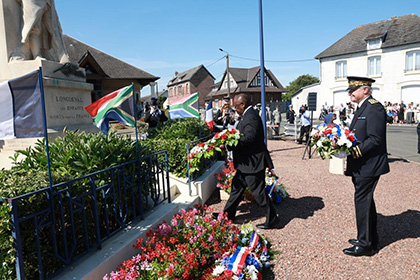
The President, who was on an Official Visit to France, attended the 110th Commemoration of the Battle of Delville Wood in Longueval, northern France. The President remembered South African soldiers who fought in the battle.
“We remember them not merely as names inscribed upon stone, nor as figures recorded in military archives, but as human beings whose lives were interrupted by war. They were sons, husbands, fathers and brothers.”
He said South Africa remembers all those whose contribution was diminished, ignored or deliberately excluded from the official history of the country.
“We gather to affirm that the memory of a nation cannot be divided according to race. Sacrifice has no colour, and courage belongs to no single community.”
In July 1916, during the Battle of the Somme, the 1st South African Infantry Brigade was ordered to capture and hold a small, wooded area near the French village of Longueval. It was called Delville Wood. The South African soldiers were given an instruction to take and hold the wood — at all costs — which saw more than 3 000 South African soldiers enter Delville Wood on 15 July 1916. For six days and five nights, the South Africans endured relentless shelling, repeated attacks and close-quarter fighting.
“Of the more than 3 000 men who went into the wood, only a small fraction were able to walk out in organised formation. Hundreds had been killed. Thousands had been wounded, captured or reported missing. Delville Wood became a symbol of South African courage,” President Ramaphosa said, adding that it also became a symbol of the terrible cost of war.
While honouring their courage, the President said the conditions under which they died should not be romanticised.
“The true honour lies not in war itself, but in the courage, loyalty and humanity shown by those who endure it. The men of Delville Wood endured what few human beings should ever be asked to endure. Their sacrifice deserves the eternal gratitude of our country.”
He added that the story of South Africa in the First World War does not end at Delville Wood and cannot be told only through the experience of white combat soldiers. He said it must also include the thousands of Black South Africans who served in the South African Native Labour Contingent.
“Under the racial policies of the Union of South Africa, Black South Africans were generally not permitted to carry arms as equal soldiers in the European theatre of war. They were willing to serve. But they were denied the status, recognition and dignity afforded to white combatants.”
More than 20 000 Black South African men travelled to France to perform essential labour in support of the Allied war effort, including unloading ships, maintaining railway lines and carrying supplies.
“The contribution of the labour contingents was therefore not secondary to the war effort. Yet, for decades, their service was treated as though it mattered less. Their names were absent from prominent memorials.”
The President also referred to the tragedy of the SS Mendi, which had been carrying over 800 members of the South African Native Labour Contingent to France. The SS Mendi sank in February 1917 and its sinking, he said, remains one of the greatest maritime disasters in South African history.
“The men of the SS Mendi were not armed soldiers. But they died in the service of a war effort to which South Africa had committed them. Their deaths were deaths in service. But the nation did not fully acknowledge the debt it owed them. The same was true of many members of the Cape Corps and other South Africans of colour who served in various theatres of war.”
He said the task today was not merely to add forgotten names to old memorials but that a democratic South Africa must remember differently from the governments of the past.
“We cannot repeat a history that elevates some lives and diminishes others,” he said.
He said the country cannot speak of national sacrifice while excluding the majority of the nation and that a common memory must be built.
“Black servicemen often served under discriminatory conditions and were denied equal military status.”
Confronting history
He said future generations must be taught the full story of the past.
“We must tell them that South Africans fought with extraordinary bravery in the fields and forests of Europe.
“Above all, we must teach them that a nation is strengthened when it has the courage to confront all of its history.”
Patriotism
President Ramaphosa said true patriotism does not require one to hide injustice.
“True patriotism requires us to correct it”, saying the First World War was born of militarism, imperial rivalry, nationalism and the failure of diplomacy.
He said the consequences of war remind “us that leaders have a profound responsibility to pursue peace”.
“As South Africa, we must remain committed to the peaceful resolution of conflict. We must support diplomacy, dialogue and negotiation. At the same time, we honour those who serve in our armed forces today,” said President Ramaphosa.
– Source: SAnews.gov.za |
|
| |
|
| |
| PRESIDENT RAMAPHOSA MOURNS THE DEATHS OF YOUNG SPORTSMEN |
|
| |
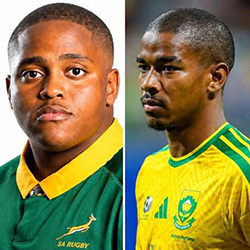
| President Cyril Ramaphosa has extended condolences to the families of Bafana Bafana and Mamelodi Sundowns midfielder Jayden Adams and former South African Rugby Under-18 prop Luqobo Makwedini, following the announcement of their deaths on Saturday, 12 July 2026. |
|
|
 |
|
| |
Adams, 25, who participated in Bafana Bafana’s matches at the 2026 FIFA World Cup, was found deceased at his Cape Town home.
Makwedini, 20, passed away after reportedly suffering cardiac arrest during a training session of his French-based rugby team.
“It is particularly tragic that we are suffering the loss of two outstanding young athletes at a time when our nation continues to immerse itself in the FIFA World Cup tournament, as well as the Springboks’ and Springbok Women’s matches against Scotland and the United States Eagles in Pretoria today,” the President said on Saturday.
The President said he was grateful for the “joy and victories Jayden and Luqobo have given us and their teams as they lived their dreams” and held South Africa’s name high on the scoreboards of global sports.
“May their souls rest in peace,” President Ramaphosa said.
– Source: SAnews.gov.za |
|
| |
|
| |
| PRESIDENT RAMAPHOSA CALLS FOR ACTION TO TRANSFORM GLOBAL EDUCATION SYSTEMS |
|
| |
 |
|
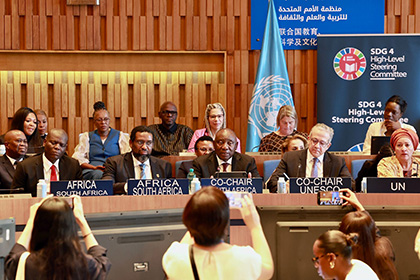
| President Cyril Ramaphosa has called on world leaders to move beyond commitments and accelerate the transformation of education systems, saying the world has reached a critical point in achieving quality education for all before the 2030 deadline. |
|
|
| |
Addressing the Transforming Education Summit (TES+4) at the United Nations Educational, Scientific and Cultural Organisation (UNESCO) Headquarters in Paris on Friday, 10 July 2026, the President said education remains the most powerful instrument for driving economic growth, reducing inequality and creating opportunities for future generations.
Quoting South Africa's founding democratic president, Nelson Mandela, President Ramaphosa reminded delegates of the enduring value of education.
“The founding father of democratic South Africa, President Nelson Mandela, said that education is the most powerful weapon which you can use to change the world. These words ring as true today as when they were first spoken.
“Education builds. It unlocks human potential. It dismantles ignorance. Every classroom and every lesson empowers the individual to transform not only their own lives but also their communities, their societies and their countries,” the President said.
The President highlighted examples from across the world, including Rwanda, China and India, where sustained investment in education has driven economic transformation and expanded opportunities for millions of people.
He also pointed to South Africa's own progress, describing the country's latest matric results as a source of national optimism.
“Last year, we achieved the highest school-leaving certificate pass rate in our democratic history. What makes this all the more extraordinary is that the majority of those passes qualifying for university entry were learners from poor communities.
“These are young people who will go on to pursue their dreams at a university, technical or vocational college of their choice, where they will study for free. This is a generation taking up opportunity that would have been denied to their parents and grandparents under apartheid,” the President said.
President Ramaphosa said these achievements demonstrate that education is more than a pathway out of poverty.
“These stories are a powerful reminder that when opportunity is extended, education becomes not merely a ladder out of poverty, but a tool with which a nation can transform itself, as President Mandela said,” the President said.
Challenges and improving working conditions
Reflecting on progress since the 2022 Transforming Education Summit, the President acknowledged that while countries had committed to recovering learning losses caused by the COVID-19 pandemic and improving equity in education, significant challenges remain.
“The pandemic may be behind us, but serious challenges remain. Tightening fiscal conditions impact our ability to invest in education. Conflicts and climate-related shocks are disrupting education and displacing millions. At the same time, we stand at the threshold of a technological revolution that will fundamentally reshape the skills our young people need to thrive,” President Ramaphosa said.
He said the summit must honestly assess global progress and ensure that countries remain accountable for delivering on their commitments.
“Our credibility will be measured not by the aspirations we declare, but by the progress we achieve for learners everywhere,” the President said.
President Ramaphosa stressed that teachers remain central to any meaningful education reform, calling for improved working conditions and greater recognition of the profession.
“The teaching profession stands at the heart of any meaningful education transformation. We cannot transform education without transforming the conditions under which our teachers work and the respect with which we treat them,” the President said.
Inclusivity and transformation
The President also underscored the importance of ensuring education systems are inclusive and equitable.
“Similarly, we cannot achieve SDG 4 [Sustainable Development Goal 4] without prioritising equity and inclusion with absolute clarity and purpose. Inclusive quality education means reaching all learners, whether they are male or female, able-bodied or living with disabilities, urban or rural, rich or poor.
“Without equity at the centre of education policy, reform risks reproducing the very inequalities it seeks to overcome,” he said.
With the world now halfway between the commitments made in 2022 and the 2030 Sustainable Development Goal deadline, President Ramaphosa said incremental reforms would no longer be enough.
“This is not a time for incremental adjustments or business as usual. This is a time for bold, system-wide transformation that builds more resilient, adaptive, and future-ready education systems,” the President said.
He said building resilient education systems would require coordinated global action, sustained political commitment, innovative financing and meaningful participation by young people.
President Ramaphosa also highlighted South Africa's efforts during its Group of 20 (G20) presidency to align global education priorities with Sustainable Development Goal 4.
“During South Africa's presidency of the G20 last year, we sought to align the outcomes of our presidency with the SDG4 global agenda by championing foundation-quality learning, strengthening the education profession and promoting mutual recognition of qualifications and skills across borders,” he said.
He encouraged member states to maintain strong alignment between G20 education priorities and the work of the Transforming Education Summit while also urging young people to see education as a means to shape a better future.
“Your education is not simply about gaining qualifications. It is about equipping yourselves to solve the problems of your generation. Your education must prepare you not just to inherit the world we leave you, but to transform it,” he said.
– Source: SAnews.gov.za |
|
| |
|
| |
| MINISTER LAMOLA ARRIVES IN MALAWI FOR SADC MINISTERIAL COMMITTEE OF THE ORGAN |
|
| |
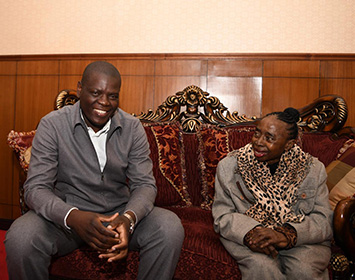
| Minister of International Relations and Cooperation, Ronald Lamola, has arrived in Lilongwe, Malawi, on 15 July 2026 on an Official Visit to participate in the 28th Southern African Development Community (SADC) Ministerial Committee of the Organ (MCO), which will take place in Salima. |
| |
|
|
|
 |
|
| |
Upon his arrival at Kamuzu International Airport, Minister Lamola was welcomed by South Africa's High Commissioner to Malawi, Her Excellency Ms Yvette Myakayaka Manzini. The Minister's participation in the SADC Ministerial Committee of the Organ underscores South Africa's continued commitment to promoting peace, security, political stability and regional cooperation within the SADC region. The meeting provides an opportunity for Member States to deliberate on matters relating to peace and security, in line with the objectives of the SADC Organ on Politics, Defence and Security Cooperation.
– Source: Public Diplomacy Platforms |
|
| |
|
| |
| DEPUTY MINISTER ALVIN BOTES PARTICIPATES IN THE INAUGURAL NELSON MANDELA GLOBAL LEADERSHIP FORUM |
|
| |
 |
|
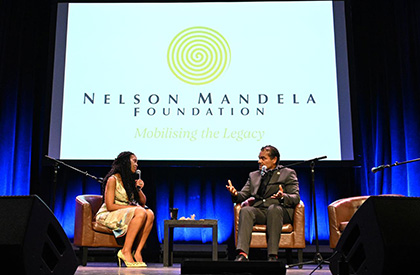
| Deputy Minister of International Relations and Cooperation, Alvin Botes, participated in the inaugural Nelson Mandela Global Leadership Forum in New York, United States of America, on 15 July 2026. |
| |
|
|
|
| |
As part of the programme, Deputy Minister Botes took part in a conversation with renowned South African journalist and broadcaster Redi Tlhabi, where they reflected on South Africa's foreign policy priorities, the enduring legacy of former President Nelson Mandela and the importance of principled leadership in addressing today's global challenges.
The inaugural Nelson Mandela Global Leadership Forum brought together political leaders, diplomats, academics, business leaders and members of civil society to promote dialogue on ethical leadership, peace, justice and international cooperation. The Forum served as a platform to explore how Mandela's values continue to inspire collective action in advancing democracy, human rights and sustainable development in an increasingly complex global environment.
Deputy Minister Botes' participation reaffirmed South Africa's commitment to promoting multilateralism, dialogue and international solidarity, while showcasing the country's continued leadership in advancing the values and vision of Nelson Mandela on the global stage.
– Source: Public Diplomacy Platforms |
|
| |
|
| |
| SOUTH AFRICA, NAMIBIA URGED TO ACCELERATE ENERGY, MINING COOPERATION TO DRIVE REGIONAL GROWTH |
|
| |
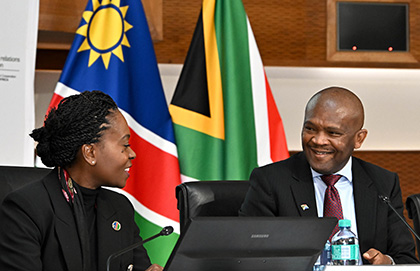
| South Africa and Namibia have been urged to accelerate cooperation in the energy and mining sectors to unlock the economic potential of recent oil and gas discoveries and deepen regional integration. |
|
|
 |
|
| |
Delivering opening remarks at the Senior Officials' Meeting of the Fourth Session of the South Africa–Namibia Bi-National Commission in Pretoria on Tuesday, 14 July 2026, South African Co-Chair Ambassador Tebogo Seokolo said the two countries must place greater emphasis on strengthening the economic dimension of their bilateral relationship.
“Our principals have made clear the need for greater emphasis on strengthening the economic dimension of our bilateral relations. In this regard, our deliberations should seek to identify a focused set of high-impact priority projects capable of advancing trade, investment, industrial development and shared prosperity,” Seokolo said.
The meeting brings together senior officials from both countries to assess progress made since the third Session of the Bi-National Commission, held in Namibia in October 2023, and prepare for the fourth session.
Ambassador Seokolo said the meeting follows a successful Midterm Review held in South Africa in November 2025, which confirmed that while considerable progress had been made in implementing bilateral commitments, more work was needed.
“We must therefore use this meeting to build on the progress achieved, address areas where implementation has been slower than anticipated, and inject greater momentum into our bilateral programme of cooperation,” he said.
He said officials are also expected to identify new and emerging areas of cooperation that could further strengthen the partnership between the two neighbouring countries.
Among the priority areas is cooperation in mineral, petroleum and gas resources, with Seokolo highlighting the vast economic potential of the Orange Basin, which stretches offshore between South Africa and Namibia.
He congratulated Namibia on its recent oil and gas discoveries, noting the country's exceptional exploration success.
“We congratulate Namibia for its recent oil and gas discoveries. We understand that the exploration of the Namibian Orange Basin is among the highest ever recorded in a deepwater frontier basin,” he said.
According to Ambassador Seokolo, 15 of the 17 wells drilled in Namibia's Orange Basin between February 2022 and mid-2026 resulted in commercial discoveries, representing a success rate of approximately 88%.
He said the geological formations associated with Namibia's discoveries extend into South African waters, presenting an opportunity for the two countries to establish a regional energy corridor.
Ambassador Seokolo also highlighted opportunities for collaboration in the mining sector, noting that the two countries share significant deposits of critical minerals, including rare earth minerals, uranium, copper, lithium, graphite and manganese.
He said finalising a memorandum of understanding on geology and mining would provide a framework for technical cooperation, data sharing and investment promotion.
Ambassador Seokolo called for accelerated efforts to maximise the potential of the Trans-Kalahari Corridor as a strategic trade and transport route that would improve connectivity, facilitate the movement of goods and services, and expand intra-regional trade.
He said he was confident that the discussions would lay the foundation for a successful fourth Session of the South Africa–Namibia Bi-National Commission and an even stronger partnership between the two countries.
– Source: www.dirco.gov.za |
|
| |
|
| |
| MINISTER CHIKUNGA CALLS FOR STRONGER BRICS ALLIANCE TO UNLOCK WOMEN'S ECONOMIC POWER |
|
| |
 |
|
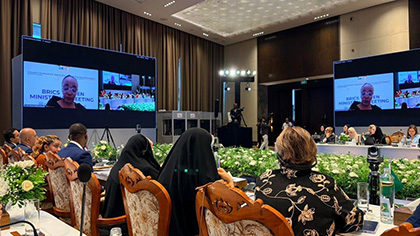
| Minister in The Presidency for Women, Youth and Persons with Disabilities, Sindisiwe Chikunga, has called for a stronger Brazil, Russia, India, China and South Africa (BRICS) partnership to accelerate women's economic empowerment, saying the bloc has the potential to become a global force for women-led development. |
|
|
| |
Addressing the BRICS Ministerial Meeting on Women's Affairs virtually on Wednesday, 8 July 2026, Minister Chikunga said women's empowerment must be treated as a core driver of economic growth, innovation and sustainable development, rather than a narrow social policy issue.
“Our shared task is to ensure that women's empowerment is not treated as a narrow social policy issue, but as a central developmental imperative,” she said.
The BRICS grouping — comprising Brazil, Russia, India, China, South Africa and newer members Egypt, Ethiopia, Iran, Saudi Arabia and the United Arab Emirates — represents major emerging markets and developing countries, with a growing share of global economic output.
Across these countries, women are increasingly driving entrepreneurship, innovation, agriculture, digital services and community development, yet many still face barriers to finance, leadership opportunities, technology access and equal participation in the economy.
Minister Chikunga said closer cooperation among BRICS nations is essential to eliminate these barriers, expand women's participation in leadership and decision-making, and improve access to finance, entrepreneurship, education and digital opportunities.
“Through the leadership of India [BRICS 2026 chair], we believe this platform will help us advance joint initiatives on women-led development — recognising women as leaders, entrepreneurs, innovators and drivers of sustainable change across our economies,” she said.
The Minister said the meeting's focus areas — governance and leadership, financial and digital inclusion, entrepreneurship and skills, climate action, food security and nutrition — are deeply interconnected and critical to achieving meaningful gender equality.
The BRICS Ministerial Meeting on Women's Affairs was established during South Africa's BRICS Chairship in 2023 to create a dedicated platform for Member States to coordinate efforts on women's rights, economic empowerment and inclusive development. Since its establishment, the forum has become an important mechanism for sharing policy experiences and identifying practical ways to increase women's participation in the economy.
Expanding inclusion
Highlighting South Africa's own efforts, Minister Chikunga said government is finalising a Women's Economic Assembly framework aimed at increasing women's representation in procurement structures, state-owned enterprise boards and decision-making bodies across both the public and private sectors.
She said the initiative is grounded in Section 9 of the Constitution and seeks to move women beyond consultative participation to meaningful representation and influence.
On financial inclusion, Minister Chikunga said South Africa is advancing a Cooperative Banking Institution Initiative designed to help close the estimated US$1.7 trillion global financing gap faced by women entrepreneurs. The initiative aims to build a women-owned and women-controlled banking architecture that addresses challenges such as limited collateral, gender bias in lending and financial products that do not adequately serve women.
Minister Chikunga also highlighted the role of social protection programmes, including the Child Support Grant, which reaches more than 13 million children, as well as the Older Persons Grant, Disability Grant and Social Relief of Distress Grant, which provide critical support to millions of women, who are the primary caregivers in many households.
Minister Chikunga said the implementation of the Public Procurement Act, which sets aside 7% of public procurement opportunities for businesses owned by women, youth and persons with disabilities, is among the most ambitious empowerment interventions on the African continent.
“Women across BRICS countries are not only affected by developmental challenges, but are also key to solving them,” she said.
On climate change and food security, the Minister said Cabinet has adopted the Climate Change and Disability Impact Report and is integrating gender-responsive measures into climate adaptation, disaster response and food security programmes.
“The women of South Africa carry the burden of climate-driven food insecurity — and they must therefore be at the centre of the solution,” she said.
She added that women farmers, small-scale food producers and women working in the informal food economy are being placed at the centre of South Africa's response to climate-related challenges.
“South Africa stands ready to work with India and all BRICS member states to convert these commitments into measurable progress in the lives of women across our economies,” Minister Chikunga said.
– Source: SAnews.gov.za |
|
| |
|
| |
| SOUTH AFRICA REAFFIRMS COMMITMENT TO ACHIEVING 2030 AGENDA FOR SUSTAINABLE DEVELOPMENT |
|
| |
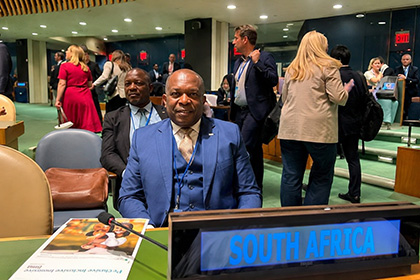
| The Deputy Minister in the Presidency for Planning, Monitoring and Evaluation, Seiso Mohai, today reaffirmed South Africa's unwavering commitment to achieving the 2030 Agenda for Sustainable Development. |
|
|
 |
|
| |
Deputy Minister Mohai was addressing the General Debate of the United Nations High-Level Political Forum (HLPF) on Sustainable Development held at the United Nations Headquarters in New York on 12 July 2026.
The Deputy Minister called for renewed global solidarity and decisive action to accelerate progress towards the Sustainable Development Goals with only four years remaining before the 2030 deadline.
He emphasised that South Africa's development agenda remains firmly anchored in the principles of inclusivity, equality, human dignity and sustainable economic transformation.
He highlighted that the Sustainable Development Goals are fully integrated into the implementation of South Africa's National Development Plan (NDP) Vision 2030 and the Medium-Term Development Plan (MTDP).
"South Africa remains committed to ensuring that no one is left behind, particularly women, youth, persons with disabilities, rural communities and other vulnerable groups," said Deputy Minister Mohai.
The Deputy Minister noted that South Africa continues to strengthen partnerships with civil society, the private sector, academia, development partners and international organisations to advance inclusive and sustainable development.
While acknowledging the country's progress in expanding access to electricity, safe drinking water, sanitation, digital connectivity and social protection, the Deputy Minister recognised that significant development challenges remain.
He further stressed that stronger implementation, enhanced partnerships and sustainable financing are essential to achieving the SDGs.
He called on the international community to honour commitments on development financing, technology transfer, capacity building, debt sustainability and reform of the global financial architecture, particularly to support developing countries.
Deputy Minister Mohai also congratulated Member States presenting their Voluntary National Reviews (VNRs) at this year's Forum and confirmed that South Africa looks forward to presenting its next VNR in 2027, providing an opportunity to reflect on progress, lessons learnt and actions to accelerate implementation of the SDGs.
Concluding his address, the Deputy Minister reaffirmed South Africa's commitment to solidarity, inclusive economic growth and sustainable development, while paying tribute to the enduring legacy of Nelson Mandela, whose values continue to inspire efforts towards a more just, peaceful and equitable world.
– Source: SAnews.gov.za |
|
| |
|
| |
| SADC WATER AND ENERGY MINISTERS TO MEET AHEAD OF ORDINARY SUMMIT |
|
| |
 |
|
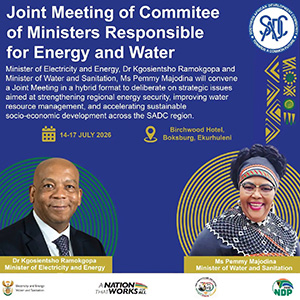
| Ministers responsible for Energy and Water in the Southern African Development Community (SADC) will meet to deliberate on strategic issues aimed at strengthening regional energy security and improving water resource management. |
| |
The joint meeting will take place from 14 to 17 July 2026 in Pretoria, Republic of South Africa, in a hybrid format.
“[The meeting will] deliberate on strategic issues aimed at strengthening regional energy security, improving water resource management, and accelerating sustainable socio-economic development across the SADC region.
“The meeting will bring together ministers, senior officials, representatives of the SADC Secretariat, regional institutions, cooperating partners and other stakeholders to review progress in implementing regional programmes and projects in the energy and water sectors, while providing policy direction on emerging priorities,” the SADC said in a statement. |
|
|
| |
The ministers meet ahead of the 46th Ordinary Summit of SADC Heads of State and Government, which will be held in August 2026.
Energy Ministers are expected to review the electricity demand and supply in the region and assess progress made in “implementing regional energy projects designed to strengthen energy security”.
“Discussions will also focus on expanding renewable energy deployment, promoting energy efficiency, advancing the implementation of the Dar es Salaam Declaration on Mission 300 to increase electricity access in Sub-Saharan Africa by 2030, and promoting the development of hydrocarbons infrastructure, including fuel pipelines and storage facilities.
“Ministers will further deliberate on emerging technologies such as green hydrogen, smart grids and electric mobility, progress towards a regional Just Energy Transition Framework, clean cooking initiatives, and the outcomes of the 2026 SADC Sustainable Energy Week,” the statement read.
Meanwhile, Ministers of Water will turn their attention to “progress made in implementing regional water and sanitation projects, transboundary water initiatives coordinated through River Basin Organisations and Shared Water Institutions, as well as the implementation of previous Council decisions”.
“The meeting will also review progress under the SADC Groundwater Programme and the SADC Water Fund, while considering the extension of the implementation period for the Fifth Regional Strategic Action Plan (RSAP-V) to 2030.
“In addition, ministers will discuss the review of the Revised Protocol on Shared Watercourses, human capacity development, and the Regional Research Agenda,” the statement continued.
The outcomes of the meeting will provide guidance for accelerating implementation of the SADC’s regional programmes aimed at achieving the objectives of the SADC Regional Indicative Strategic Development Plan (RISDP 2020-2030), the African Union Agenda 2063, and the United Nations Sustainable Development Goals.
“The Joint Meeting forms part of SADC's continued efforts to promote regional integration through coordinated policy implementation, sustainable infrastructure development, improved access to reliable energy services, enhanced water security, climate resilience, and inclusive economic growth,” the statement read.
– Source: SAnews.gov.za |
|
| |
|
| |
| NORTH WEST, TURKISH COOPERATION UNVEILS COFFEE FARMING INITIATIVE TO DIVERSIFY AGRICULTURE |
|
| |
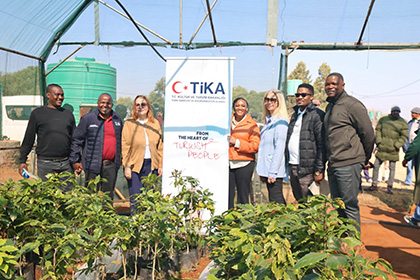
| The North West Department of Agriculture and Rural Development, in partnership with the Turkish Cooperation and Coordination Agency (TIKA), has officially launched a coffee bean production project at the state-owned Kgora Farmer Training Centre near Ramatlabama in Mahikeng. |
|
|
 |
|
| |
First announced by MEC Madoda Sambatha during the department's Budget Vote and Policy Speech, the project aims to diversify agricultural production, creating new economic opportunities and supporting emerging farmers in the province.
The initiative will focus on coffee cultivation, processing and value addition, as well as creating market opportunities for locally produced coffee. The project also includes the construction of a processing facility that will enable the on-site de-husking, roasting and packaging of coffee beans and granules.
The project is expected to create employment opportunities, transfer agricultural and processing skills to farmers, and contribute to the growth of the agricultural sector in the North West. It will also explore opportunities to access local and international markets, including potential exports to Türkiye and other countries.
Speaking at the launch on Monday, 13 July 2026, Sambatha said the partnership with TIKA demonstrates the department’s commitment to introducing new agricultural opportunities that can benefit farmers and rural communities.
“This project marks an important step towards diversifying agriculture in the North West. Through our partnership with TIKA, we are introducing a new commodity that has the potential to create jobs, support farmers and open new market opportunities. We appreciate TIKA’s support in helping us establish this project,” Sambatha said.
He also highlighted that the project has the potential to expand beyond Kgora Farmer Training Centre and could be replicated in other districts if it proves successful.
“Our aim is for this project to grow and benefit more communities across the province. As we implement it, we will assess opportunities to expand coffee production to other areas and ensure that more farmers can participate in this value chain,” he said.
As part of its contribution, TIKA has provided coffee trees and processing equipment and will continue supporting the project through technical assistance, skills development, and market access support.
Most beneficiaries are drawn from communities surrounding the Kgora Farmer Training Centre and Ramatlabama area, ensuring that local residents benefit from skills development, employment opportunities and economic activities linked to the project.
The department believes the coffee bean production project will contribute to agricultural innovation, strengthen value addition, and support the development of a more inclusive and sustainable agricultural sector in the North West Province.
– Source: SAnews.gov.za |
|
| |
|
| |
| WORLD BANK STUDY HIGHLIGHTS SOUTH AFRICA'S SEZ POTENTIAL |
|
| |
 |
|
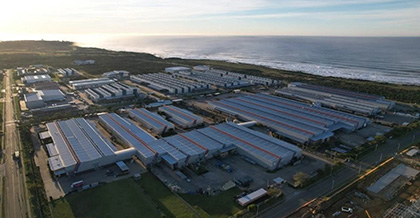
| A World Bank study has found that South Africa's Special Economic Zones (SEZs) programme has the infrastructure, legal framework and institutional capacity to become a world-class investment platform while identifying measures to strengthen its long-term performance. |
|
|
| |
The study examined all 12 Special Economic Zones across South Africa, drawing on surveys; interviews with provincial government representatives and businesses operating within the zones; administrative data from the Department of Trade, Industry and Competition (the dtic), the South African Revenue Service, and National Treasury; as well as international case studies from India, China, Poland, the United Arab Emirates and Jordan.
According to the study, South Africa's operational SEZs have generated R14.8 billion in revenue and created more than 30 000 jobs.
"As government we are encouraged by the outcomes of this study. It has confirmed the impressive progress that we have achieved in the roll-out of the programme, as well as the hugely positive impact that it has made on the economy of the country in general and the provinces where they are located in particular," says Minister of Trade, Industry and Competition Parks Tau.
"The fact that a revenue of R14.8 billion has been generated by the SEZs that are operational and more than 30 000 jobs have been created speaks volumes of the capacity and potential of the programme to contribute immensely to the country’s economic growth, transformation and industrialisation," adds Minister Tau.
Recommendations focus on improving performance
Minister Tau says the department will assess the study's recommendations as it seeks to expand the programme and increase its economic impact.
"The study has identified various areas of improvement and recommendations, which we need to thoroughly analyse and consider implementing in line with the Revised Special Economic Zones Implementation Model, which is part of our Spatial Industrial Development Strategy," says Minister Tau.
Among the recommendations are:
- Establishing a formal five-year intervention framework for underperforming zones.
- Extending the 15% Corporate Income Tax rate to all SEZs.
- Designating private-sector industrial parks within all SEZs using the Dube TradePort model.
- Formalising municipal service-level agreements across the network.
- Accelerating build-to-let mixed-use complexes to attract SME tenants.
Formalising the SEZ Fund with distinct infrastructure and top-structure pathways.
Government plans further expansion
Minister Tau says government has already prioritised several interventions for the current financial year, some of which align with the study's recommendations.
"We have already designed various interventions that we have prioritised for this financial year, some of which are in line with the recommendations of the study. These are going to result in more SEZs being designated, more investments flowing into the SEZs, more jobs being created, and more small businesses being created in and around the SEZs," concludes Minister Tau.
– Source: www.bizcommunity.com |
|
| |
|
| |
| DURBAN TO HOST GLOBAL INVESTORS AT RESURGENCE CONFERENCE |
|
| |
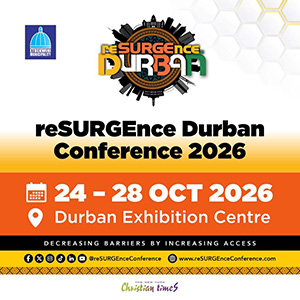
| Durban is set to welcome delegates from the United States (US), the Caribbean and other parts of the African diaspora when it hosts the reSURGEnce Durban conference later this year. The reSURGEnce Conference is an international gathering aimed at strengthening investment, trade and economic collaboration between Africa and global partners. |
|
|
 |
|
| |
The reSURGEnce Durban Conference will take place at the Durban Exhibition Centre from 24 to 28 October 2026, under the theme: Decreasing Barriers by Increasing Access.
The event is expected to bring together investors, business leaders, entrepreneurs, government representatives and faith leaders to explore opportunities for expanding investment, entrepreneurship and strategic partnerships between Africa and the global diaspora.
International delegates have been encouraged to depart for South Africa from 21 October 2026 to allow sufficient time ahead of the conference programme.
The eThekwini Municipality said preparations for the event are well advanced, with plans in place to ensure the successful hosting of the international conference.
eThekwini City Manager Musa Mbhele and US reSURGEnce Conference Convenor, Reverend Dennis Dillon, have reaffirmed Durban's readiness to welcome delegates from across the world and showcase its investment potential.
"Durban is open for business and ready to welcome the world. As a leading investment and trade destination, our city offers world-class conferencing facilities, modern infrastructure and an enabling environment for business growth. We look forward to connecting global delegates with local opportunities while showcasing Durban's investment potential,” Mbhele said.
Mbhele added that comprehensive safety and security measures are well in place to ensure delegates enjoy a safe and seamless experience throughout the conference.
The municipality said the programme will include an exhibition showcasing locally manufactured products, business and investment discussions, business-to-business meetings, networking sessions, cultural exchanges and faith-based engagements designed to strengthen international collaboration.
Collectively, these activities position Durban as a gateway for investment, collaboration and meaningful partnerships.
The programme will continue in the US from 17 to 22 November, with follow-up events scheduled for New York and Newark, building on the momentum of the Durban conference by advancing discussions and strengthening the partnerships established during the Durban conference.
For conference and exhibition registration, travel packages, and further event information, visit www.resurgenceconference.com.
– Source: SAnews.gov.za |
|
| |
|
| |
| 215 YEARS OF VENEZUELA INDEPENDENCE, RESILIENCE AND THE ENDURING PURSUIT OF SOVEREIGNTY |
|
| |
 |
|
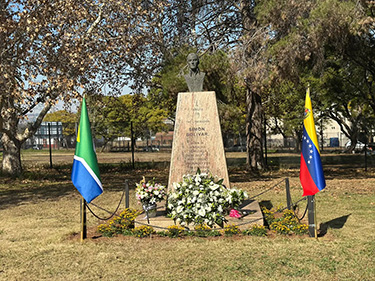
| Set in the surroundings of the Pretoria Art Museum, home to one of South Africa's most prominent busts of the Liberator Simón Bolívar, Venezuela's 215th Independence Day commemoration unfolded in an atmosphere of solemn reflection rather than celebration. |
|
|
| |
At the foot of Bolívar's likeness, wreaths were laid in memory of those who lost their lives in the recent double earthquakes that devastated parts of Venezuela. A book of condolences was opened, inviting members of the diplomatic corps, government representatives and friends of Venezuela to express messages of sympathy, solidarity and hope for the country's recovery and reconstruction.
Every nation celebrates independence through the lens of its own history. For Venezuela, 5 July is a reaffirmation of a struggle for sovereignty that began in 1811 under the leadership of Simón Bolívar and continues to shape the country's national identity today.
This year's 215th anniversary became an occasion of remembrance, resilience and solidarity for the nation that is experiencing widespread destruction, loss of life and communities facing the immense challenge of rebuilding. As one of the world's most resource-rich nations and home to the largest proven oil reserves, Venezuela has long embodied both extraordinary promise and profound contradiction. Its abundant natural wealth has been both a blessing and, at times, a burden, attracting global attention while exposing the country to decades of economic, political and geopolitical pressures.
On 6 July, against this backdrop, the Embassy of Venezuela in Pretoria commemorated Independence Day with dignity and solemn reflection. In an address that resonated with both emotion and historical perspective, Ambassador Carlos Feo Acevedo reminded guests that Venezuela has repeatedly risen from adversity, drawing parallels between the catastrophic earthquake of 1812 and the country's present-day challenges. His message was that while nature may test a nation's resolve, the spirit of its people remains unbroken.
The Ambassador also outlined the Venezuelan government's perspective on the complex political and security challenges confronting the country. He stated that Venezuela's sovereignty has faced sustained external interference and referred to what his government describes as the illegal detention of President Nicolás Maduro and his wife, Cilia Flores, in the United States, while reiterating calls for their release and for the lifting of international sanctions. These remain matters of significant international dispute, reflecting the broader geopolitical divisions that continue to surround Venezuela.
Yet beyond the politics lies a deeper human story. Throughout history, the resilience of the Venezuelan people has been tested by conflict, economic hardship and natural disasters. Once again, they find themselves rebuilding not only homes and communities but also hope for future generations.
Deputy Minister in The Presidency, Kenny Morolong, represented the South African government. His presence reflected the enduring friendship between South Africa and Venezuela and continued support for dialogue, sovereignty, multilateralism and solidarity among nations of the Global South. It reaffirmed a relationship forged through shared struggles against oppression and a common commitment to an international order founded on mutual respect and non-interference.
The symbolism of gathering beneath the watchful gaze of Simón Bolívar was particularly poignant. The liberator who inspired independence across much of South America has come to embody not only freedom, but also resilience in the face of overwhelming odds. The wreath-laying ceremony and the many heartfelt messages entered into the condolence book served as reminders that while diplomacy is conducted through governments, it is ultimately about people standing together in moments of grief and extending a hand of friendship when it is needed most.
As Venezuela marked 215 years of independence, its journey continues to be defined by resilience. Its magnificent landscapes, immense biodiversity, abundant energy resources and rich cultural heritage speak to a nation whose potential remains considerable. The challenge ahead is one of reconstruction after natural disaster, as well as creating conditions in which its people can fully realise that potential in peace, stability and prosperity.
For the international community, the Venezuelan experience is a reminder that true solidarity extends beyond words. It requires compassion in times of tragedy, respect for national sovereignty, support for humanitarian recovery and a sustained commitment to dialogue over division. These are the enduring principles that diplomacy seeks to uphold and that The Diplomatic Society continues to champion.
– Source: www.thediplomaticsociety.co.za |
|
| |
|
| |
| SOUTH AFRICA’S B.A.L.L.S. COULD SOON BE ON THE MOON |
|
| |
 |
|
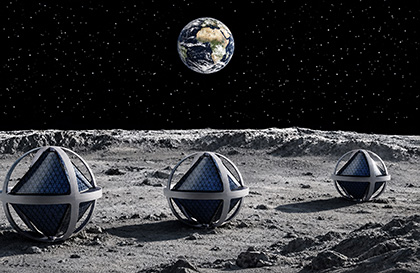
| South Africa is taking another giant leap into space with Africa2Moon, an ambitious project aiming to place the world’s first radio telescope array on the moon. In 2029, China’s Chang’e-8 mission will blast off for the moon’s south pole, carrying 11 international payloads. One of them is a set of South African-designed metal spheres called Bounced African Low Lunar Spheres (B.A.L.L.S.), each filled with a low-frequency radio antenna. |
| |
|
|
|
| |
Africa2Moon is led by the Foundation for Space Development Africa, working alongside the South African Radio Astronomy Observatory (SARAO), the South Africa National Space Agency (SANSA), and researchers from Stellenbosch University, Rhodes University and the University of KwaZulu-Natal (UKZN). The dream is to eventually place 55 of these antennas on the moon – one for every African nation – to study radio waves from space that can’t be picked up from Earth.
SARAO engineers are building the physical structure of the B.A.L.L.S. spheres, working closely with researchers from UKZN’s Aerospace Systems Research Institute to get the antennas and systems working together.
Stellenbosch University’s Electronic Systems Laboratory is involved too, with researchers and Master’s students helping build the electronics for the demonstration model that shows how the antennas and lander will communicate.
A test version of the B.A.L.L.S. design will be sent to China by mid-2026 for rigorous testing to make sure it can handle the trip and survive on the lunar surface. If it passes, a final, space-grade version will be built for the actual mission!
It’s the latest milestone in a South African space journey that stretches back decades, from the country’s first satellite, SUNSAT, in 1999, to a thriving local space industry that’s now helping build technology destined for the moon. That’s a giant leap worth celebrating.
– Source: www.goodthingsguy.com |
|
| |
|
| |
| SOUTH AFRICA RANKS AMONG THE WORLD’S TOP WILDLIFE HOLIDAY DESTINATIONS |
|
| |
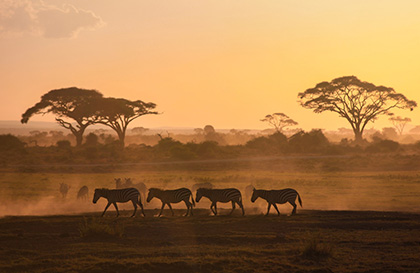
| A new global survey by adventure travel company Explore has ranked South Africa as the second-most sought-after wildlife destination in the world, with only Australia placing ahead of us. Kenya, Canada and China round out the top five. |
|
|
 |
|
| |
The survey looked at the animals people most dream of seeing in the wild, as well as the countries they’d most like to visit to experience them. More than 2400 people across 12 countries took part.
South Africa’s shining second-place ranking shows that our wildlife is one of our greatest treasures. How could it not be, when our country is home to the world-famous Big 5? Our top national parks, like the Kruger, give visitors the chance to tick all five off their bucket lists, sometimes in a single trip.
Beyond wildlife you’d expect to see on a typical safari, we’ve also got African penguins waddling along our beaches and southern right whales off the coast of Hermanus. Few destinations can match all of that.
The research also found that South Africans themselves place enormous value on our natural heritage. An incredible 99% of local respondents said it’s important to experience wildlife in their own country, which is the highest of any nation surveyed.
The survey also explored which animals people around the world most want to see in their natural habitats. Interestingly, pandas claimed first place, followed by elephants, kangaroos, koalas and whales. Elephants were the only member of Africa’s traditional Big Five to feature in the new global “Big Five”.
Interest in wildlife travel is growing. According to the report, online searches for “wildlife holidays” have jumped by 211% over the past year – happy news that more travellers are looking for meaningful experiences in nature. The more time we spend connecting with nature, the more we’ll want to protect and conserve it.
– Source: www.goodthingsguy.com |
|
| |
|
| |
| CAPE TOWN AIRPORT NAMED AFRICA’S BEST FOR THE 11TH YEAR RUNNING |
|
| |
 |
|
| South Africa has plenty to celebrate after Cape Town, Johannesburg and Durban all featured among Africa’s top five airports in the latest Skytrax rankings. |
|
|
| |
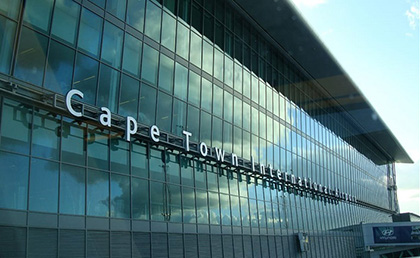
Cape Town International Airport has once again been crowned Best Airport in Africa at the 2026 Skytrax World Airport Awards, marking an incredible 11th consecutive year at the top of the continent.
The awards are among the most respected in global aviation. Often referred to as the “Oscars of the aviation industry”, the Skytrax World Airport Awards are based entirely on passenger feedback rather than judging panels or commercial submissions. Millions of travellers from around the world took part in the 2025/2026 World Airport Survey, rating everything from check-in and security to cleanliness, shopping, dining, baggage collection and overall customer experience.
In other words, the people who actually use the airports decide the winners. That makes Cape Town’s continued success even more impressive.
This year, Cape Town International Airport was ranked 74th among the world’s Top 100 airports and was also recognised for having the Best Airport Staff Service in Africa. The airport has built a reputation for being welcoming, efficient and easy to navigate, while consistently delivering the kind of travel experience passengers remember for all the right reasons.
But South Africa had another reason to celebrate too. The OR Tambo International Airport in Johannesburg secured the 84th spot on the global Top 100 list, meaning only two African airports featured among the world’s best, and both were South African.
Looking at the continental rankings, South Africa’s performance becomes even more impressive. The regional top five airports in Africa were:
- Cape Town International Airport
- O.R. Tambo International Airport
- Marrakech Menara Airport
- King Shaka International Airport
- Mohammed V International Airport (Casablanca)
That means South Africa claimed three of Africa’s top five airports, with Cape Town, Johannesburg and Durban all earning places among the continent’s very best.
Globally, the competition remains fierce. Singapore’s Changi Airport claimed the number one position, followed by Seoul Incheon International Airport in South Korea and Tokyo Haneda Airport in Japan. To see two South African airports standing among the world’s Top 100, while Cape Town continues its remarkable run as Africa’s favourite airport, is something worth celebrating. Airports are often our first impression of a country and our last memory before heading home. They welcome families, reunite loved ones, launch adventures and mark the beginning of business trips, holidays and life-changing moments. Getting that experience right matters more than many people realise.
Congratulations to everyone behind the scenes who keeps South Africa’s airports running every day. You’re helping create first impressions that leave millions of travellers with another reason to smile about our beautiful country.
– Source: www.goodthingsguy.com |
|
| |
|
| |
| THREE SOUTH AFRICAN HOTELS CRACK “WORLD’S BEST” AWARDS |
|
| |
| Three South African hotels have just earned top honours in the Travel + Leisure World’s Best Awards, with two being named the very best in Africa and one cracking the top five hotels in the entire world. |
|
|
 |
|
| |
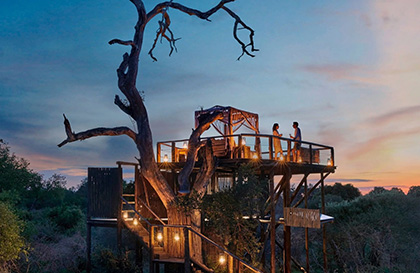
Leading the way is Lion Sands Game Reserve, which was voted the No. 1 safari lodge in Africa and the No. 4 hotel in the world. Cape Cadogan Boutique Hotel in Cape Town was named Africa’s Best City Hotel, while Johannesburg’s much-loved Saxon Hotel, Villas & Spa claimed second place in the same category.
The annual awards are among the travel industry’s biggest honours, decided by travellers. This year, more than 200 000 readers from around the world cast over 661 000 votes for the hotels, destinations and experiences that left the biggest mark.
South Africa cracked the list with three properties – jumping from bush to coast and inland luxury.
Lion Sands, on the edge of the Kruger, has become famous for offering guests more than a traditional safari. Visitors enjoy wildlife photography experiences, hands-on involvement with conservation projects and community visits alongside world-class game viewing. The reserve is well-known for its knowledgeable guides, with one of its own – Jason Gipson – having won Safari Guide of the Year last year.
Cape Cadogan, tucked away in the Mother City’s Gardens neighbourhood, has won visitors over with its beautiful heritage setting and warm hospitality, while Joburg’s Saxon Hotel sets the standard for luxury stays in the city.
Interestingly, Lion Sands and Cape Cadogan are both part of the MORE Collection, making it the first South African hospitality group to hold the number one spot in both the Safari Lodge and City Hotel categories in the same year.
South Africa has been appearing on more and more international travel lists over the past year! We’ve come out on top for our beaches, safari parks, cities and natural wonders which have all earned global golden stars.
– Source: www.goodthingsguy.com |
|
| |
|
| |
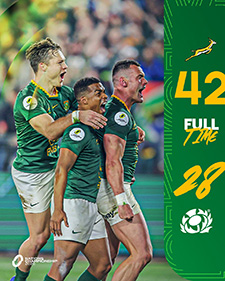
| SOUTH AFRICA BEAT SCOTLAND 42-28 AT LOFTUS VERSFELD |
|
| |
 |
|
| The Springboks beat Scotland 42-28 in a thrilling, edge-of-the-seat round two Nations Championship match at Loftus Versfeld in Pretoria on Saturday, 11 July 2026. |
| |
In a match full of drama and in which Scotland played their part with some excellent attacking rugby, the game was tied up at 14-all at the break.
The Boks scored six tries to Scotland’s four, with both teams’ kickers also enjoying a 100% record.
Bok boss Rassie Erasmus won’t be too pleased with his team’s defensive frailties. They scrummed well though and probably shaded their opponents in the rucks and mauls. The tries they scored were also top-notch, while their power play late on to seal the game was impressive.
The Boks were much changed from last week when they beat England at Ellis Park, with several younger, inexperienced players getting a run. Many of them stuck up their hands, especially flanker Paul de Villiers, who was outstanding.
– Source: www.citizen.co.za
|
|
|
| |
|
| |
| SOUTH AFRICA FINISHES UNBEATEN AS IMPRESSIVE MALAYSIA SERIES ENDS ON A HIGH |
|
| |
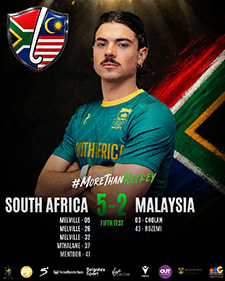
| South Africa’s men’s hockey team ended their five-Test series against Malaysia on a high, producing another polished display to complete an unbeaten week and take the series 3-0. |
| |
The series highlighted just how much confidence this South African side is building. Match after match, the hosts continued to find another gear, combining disciplined defence with clinical finishing to stay one step ahead of their visitors.
Despite already having the series in the bag and giving captain Dayaan Cassiem a well-earned rest for the final encounter, South Africa showed the depth within their squad by delivering one of their strongest performances of the week.
Malaysia made a brighter start when Syed Cholan converted a penalty corner to put the visitors ahead. South Africa’s response was immediate. A clever pass from Mustapha Cassiem released Kenton Melville, who calmly brought the ball under control before finding the back of the net to restore parity.
Melville struck again before the half-time break, putting the hosts ahead after another confident finish to send South Africa into the interval with the advantage. |
|
|
 |
|
| |
The second half belonged to the South Africans.
Melville completed his maiden international hat-trick, becoming the first South African men’s player to score three goals in a match since Mustapha Cassiem achieved the feat during last year’s African Cup of Nations final.
The goals kept coming as Ayakha Mthlane capitalised during a penalty-corner scramble before Carlon Mentoor added another from a set piece to widen the gap.
The five-match series underlined the progress this group has made, with different players stepping up throughout the week and giving the coaching staff plenty of positives ahead of the challenges still to come.
– Source: www.goodthingsguy.com |
|
| |
|
| |
| JUNIOR BOKS ONE WIN AWAY FROM BACK-TO-BACK WORLD CHAMPIONSHIP GLORY |
|
| |
 |
|
| Last year’s breakthrough victory ended more than a decade of waiting. Now, the Junior Boks have the opportunity to prove it was the start of something special. |
|
|
| |
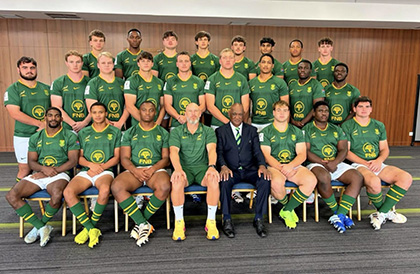
Just 12 months after ending a 13-year wait for Junior World Championship glory, South Africa’s Under-20 rugby team is on the brink of making history once again.
The Junior Springboks booked their place in the 2026 World Rugby U20 Championship final after producing a breathtaking second-half display to beat England 53-37 in Tbilisi, Georgia.
Last year’s title triumph was more than just a trophy. It ended a drought that had stretched back to 2012 and reignited belief in South Africa’s junior rugby structures. Now, the class of 2026 has the chance to prove that victory was not a once-off moment, but the start of a new era.
Things did not come easily against England.
South Africa struggled to find rhythm during an error-filled first half, with handling mistakes and missed opportunities allowing England to build a 20-12 lead at the break.
The match turned late in the opening half when England were reduced to 14 players after flanker Seb Kelly received a red card, giving the Junior Boks a lifeline heading into the interval.
Whatever was said in the changing room had the desired effect.
South Africa emerged after the break looking like a completely different side, overwhelming England with pace, power and precision. Four unanswered tries inside the opening 13 minutes of the second half completely shifted the momentum and put the defending champions firmly in control.
England fought back with late scores, but South Africa always had the answers, sealing a deserved victory that keeps their title defence alive.
The Junior Springboks will now face France in Saturday’s championship decider after the French edged New Zealand 26-22 in the other semi-final.
Victory would see South Africa successfully defend its crown and secure consecutive Junior World Championship titles.
– Source: www.goodthingsguy.com |
|
| |
|
| |
| KGOTHATSO MONTJANE’S WIMBLEDON JOURNEY IS ABOUT MORE THAN WINNING TITLES |
|
| |
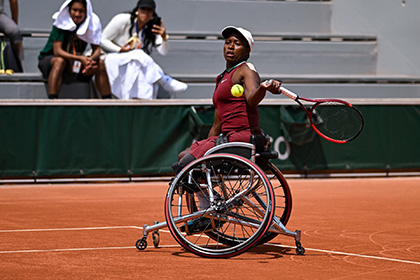
| South African wheelchair tennis star Kgothatso Montjane may have fallen short of another Wimbledon final this year, but her impact on and off the court continues to inspire. |
| |
Fresh off another appearance at the prestigious Grand Slam, Montjane recently caught up with Wimbledon to reflect on her remarkable journey, South Africa’s growing sporting success, and why giving back to the next generation has become one of her biggest priorities.
The 2024 Wimbledon women’s wheelchair doubles champion says returning to the All England Club always brings back special memories. |
|
|
 |
|
| |
After making history alongside Japanese partner Yui Kamiji by lifting the doubles trophy last year, Montjane says seeing their names among the Wimbledon champions is a feeling that never fades. While Kamiji has enjoyed several Grand Slam successes throughout her career, Montjane says the title meant something incredibly special to her as a South African athlete. The pair have developed a close friendship away from the court, making their partnership even more meaningful whenever they compete together.
Although this year’s campaign ended in the doubles semi-finals, Montjane remains focused on the bigger picture, continuing to represent South Africa on one of tennis’ biggest stages.
She also believes South Africans have every reason to celebrate the country’s recent sporting achievements. From rugby’s continued success to cricket’s rise and football’s return to the FIFA World Cup after a 16-year absence, Montjane says sport has a unique way of bringing South Africans together.
Away from international competition, her attention is increasingly turning towards creating opportunities for others. Through her foundation, Montjane hopes to introduce wheelchair tennis to children from disadvantaged communities who may never have considered the sport as an option. She says many talented young people simply don’t have access to sports like tennis, and her goal is to change that by taking the game directly into communities.
As another Wimbledon campaign comes to an end, the South African star has once again reminded fans that her greatest legacy may not only be the history she continues to make on court, but also the doors she is opening for those who dream of following in her footsteps.
– Source: www.goodthingsguy.com |
|
| |
|
| |
| COUNTDOWN TO GLASGOW: SOUTH AFRICA’S GYMNASTS READY TO SHINE ON THE COMMONWEALTH STAGE |
|
| |
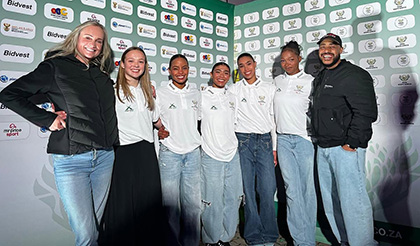
| Only 14 days remain until the 2026 Commonwealth Games begin in Glasgow, and the excitement is becoming impossible to ignore. As Team South Africa continues to come together, the country’s gymnastics stars are getting ready to tumble, flip and fly their way onto one of the biggest stages in international sport with one of the strongest squads the nation has assembled in years. |
|
|
 |
|
| |
Gymnastics South Africa has confirmed a six-member artistic gymnastics team for the Games, with the squad bringing together Olympic experience, continental champions and exciting young talent eager to make their mark when competition gets underway on 24 July 2026.
Leading the women’s team is two-time Olympian Caitlin Rooskrantz, who returns to the Commonwealth Games as South Africa’s most decorated gymnast at the event. Rooskrantz famously won bronze on the uneven bars at the 2022 Games in Birmingham, ending the country’s long wait for a Commonwealth gymnastics medal. She heads to Glasgow after another impressive season, which included a silver medal in the all-around at the African Championships.
Joining her is fellow Olympian Naveen Daries, who will compete at her third Commonwealth Games. Daries continues to be one of South Africa’s most experienced gymnasts and will be hoping to build on her historic sixth-place all-around finish in Birmingham, the highest ever by a South African gymnast in that event.
The women’s squad also features Zelmé Daries, Buhle Nhleko and Karma Visagie, all of whom helped South Africa secure the silver medal in the women’s team event at the 2026 African Artistic Gymnastics Championships in Cameroon. That performance has provided the squad with plenty of momentum heading into Glasgow.
Women’s head coach Ilse Pelser believes the group has what it takes to challenge on the international stage.
“We have athletes who have competed on Olympic floors, athletes who know what it takes to medal at this level, and exciting young talent who are ready for this moment.”
Representing South Africa in the men’s competition is 20-year-old Daniel Mclean, whose breakthrough year has earned him a place at the Games. Mclean arrives in Glasgow after winning gold in the floor exercise at the African Championships, a performance that underlined his rapid rise in the senior ranks.
“Daniel is hungry, and he is ready to put his training and preparation into this competition to make South Africa proud in Glasgow,” said men’s head coach Kevin Basson.
South Africa’s gymnasts will be looking to build on their African Championship success and deliver another memorable chapter.
– Source: www.goodthingsguy.com |
|
| |
|
| |
|
|
|
|
|
|
|
|