| |
| |
|
| |
|
| |
|
| |
| EXPANDING ACCESS TO WATER IS CENTRAL TO MANDELA’S LEGACY |
|
| |
| President Cyril Ramaphosa says government is accelerating efforts to expand access to safe and reliable water to underserved communities as part of honouring the legacy of former President Nelson Mandela. |
|
|
 |
|
| |
In his weekly newsletter on Monday, 20 July 2026, following the Mandela Day commemorations on 18 July, President Ramaphosa said celebrating Madiba's birthday through acts of service reflects a commitment to continue the work he devoted his life to.
“For Madiba, the freedom he fought for was not merely the right to vote. It was the freedom to live with dignity, to live in decent conditions and to enjoy the basic necessities of life,” the President said.
He said government had launched the National Water Access Acceleration Programme through decentralised water supply schemes to respond to the need for safe and reliable water in underserved communities. The initiative forms part of the priorities announced in this year's State of the Nation Address to tackle the country's water crisis, which continues to affect households, communities and businesses.
The programme was launched in Hammanskraal, Gauteng, a community that has faced longstanding water challenges and where lives were lost during a cholera outbreak three years ago. As part of the intervention, boreholes were handed over to the community, and the Klipdrift Package Water Treatment Plant was officially commissioned.
Similar projects, including borehole drilling, groundwater development, rainwater harvesting and the rehabilitation of existing water supply schemes, have also been rolled out in parts of Gauteng, KwaZulu-Natal and the Eastern Cape.
According to the President, the programme is designed to reduce the time between identifying a community's water needs and delivering functioning water supply systems by using solutions suited to local conditions instead of relying solely on large-scale infrastructure projects.
President Ramaphosa noted that expanding access to water has been one of democracy's major achievements, with the 2022 Census showing that more than 82% of households have access to piped water either inside their dwelling or within their yard.
He added that the proportion of households without access to piped water has more than halved since 1996. However, the President acknowledged that many municipalities continue to struggle with maintaining infrastructure, managing water services and responding urgently to service delivery challenges.
“We must acknowledge that in too many municipalities, government has not succeeded with the maintenance of infrastructure, to manage water services properly and to respond with sufficient urgency. Parts of our country are experiencing worsening water shortages and deteriorating water quality. In some places, ageing water infrastructure has collapsed,” he said.
To address these challenges, President Ramaphosa said government established the National Water Crisis Committee earlier this year to coordinate interventions across all spheres of government. He said the committee is focused on strengthening municipal water and sanitation services, increasing investment in water infrastructure, reforming water sector institutions, improving the legal and regulatory framework, and tackling corruption and criminality in the sector.
“As we learned during the energy crisis, sustainable solutions require putting the necessary building blocks in place rather than relying on quick fixes. Our response to the water crisis focuses on sustainable, long-term reform,” the President said.
He said the National Water Action Plan brings together national, provincial and local government, water boards, regulators and water service authorities under a single programme of action with clear responsibilities and timelines. Among the immediate interventions already underway are emergency infrastructure projects, including the boreholes in Hammanskraal, which government intends to expand to more communities.
President Ramaphosa also highlighted ongoing legislative reforms, including the establishment of the National Water Resources Infrastructure Agency to coordinate investment in bulk water infrastructure. He said public hearings on the Water Services Amendment Bill will begin soon to strengthen enforcement and enable municipal managers who fail to manage water infrastructure to be held personally liable.
Over the next three years, government has allocated R156 billion towards water and sanitation infrastructure as part of its broader public infrastructure investment programme.
The President said municipalities remain at the frontline of service delivery and will continue receiving support to improve financial sustainability and reinvest water revenue into infrastructure. He added that where municipalities or officials fail to comply with environmental and water services legislation, government will use available enforcement mechanisms, including directives, criminal proceedings and, where permitted by law, personal liability.
“Water security is among government's most urgent priorities. Households and businesses experiencing shortages and outages have had enough, and underserved communities across the country still waiting for taps to be installed 32 years into democracy are justifiably tired of waiting,” President Ramaphosa said.
He reaffirmed government's commitment to resolving the water crisis through coordinated action and structural reform.
“Our ultimate goal is not merely to get over the current crisis, but to fulfil Madiba's vision of all South Africans enjoying their constitutionally enshrined right to access to water and of this right being secured for generations to come. Water is dignity and therefore central to Mandela's legacy,” he said.
– Source: SAnews.gov.za |
|
| |
|
| |
| SOUTH AFRICA, NAMIBIA STRENGTHEN TIES WITH SEVEN AGREEMENTS |
|
| |
 |
|
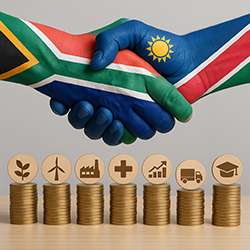
| South Africa and Namibia have reaffirmed their commitment to deepening bilateral cooperation by signing seven agreements aimed at boosting trade, investment, industrialisation and regional integration during the Fourth Session of the South Africa-Namibia Bi-National Commission (BNC) in Pretoria. |
| |
|
|
|
| |
Co-chaired by President Cyril Ramaphosa and Namibian President Netumbo Nandi-Ndaitwah, the Commission reviewed progress in bilateral relations and adopted measures to accelerate implementation of agreements and programmes that will deliver tangible economic and developmental benefits to the people of both countries.
The Fourth Session was preceded by meetings of senior officials from 14 to 15 July 2026 and a ministerial segment on 16 July 2026, where progress on previous decisions was assessed and recommendations were prepared for consideration by the two Heads of State.
In a joint communiqué issued after the meeting on Friday, 17 July 2026, the two Presidents reaffirmed the historic bonds of friendship forged during the struggle against colonialism and apartheid.
“The two Presidents reviewed the full spectrum of bilateral relations and expressed satisfaction with the steady growth of cooperation between the two countries. They reiterated their commitment to further strengthening political, economic, social and cultural relations for the mutual benefit of their peoples,” the joint communiqué said.
The leaders also reaffirmed their commitment to strengthening cooperation within the Southern African Development Community (SADC), the African Union (AU) and other multilateral forums, while advancing regional peace, security, economic integration and sustainable development.
They underscored the urgency of accelerating implementation of regional and continental frameworks, including the SADC Regional Indicative Strategic Development Plan (RISDP) 2020–2030, the African Union's Agenda 2063 and the African Continental Free Trade Area (AfCFTA).
Namibia also expressed its support for South Africa as host of the 46th Ordinary SADC Summit of Heads of State and Government in August 2026.
Recognising the geographical proximity, economic interdependence and complementary resource endowments of the two countries, the Presidents agreed to intensify economic cooperation.
“They agreed to promote greater trade and investment, strengthen cross-border value chains, facilitate private-sector partnerships and pursue opportunities for joint industrial development and beneficiation,” the joint communiqué said.
The two countries also agreed to deepen collaboration in the mining, petroleum and natural gas sectors by expanding cooperation across mineral and energy value chains.
The communiqué said the partnership would place greater emphasis on exploration, research, technology, skills development, local value addition and beneficiation to support industrialisation, economic diversification, energy security and employment creation.
Energy cooperation featured prominently during the discussions, with the two leaders agreeing to strengthen collaboration in electricity generation and transmission, renewable energy and regional energy security.
They also committed to accelerating implementation of the Kudu Gas Power Project.
Transport and logistics were identified as critical enablers of trade, with both countries reaffirming their commitment to strengthening cooperation on the Trans-Kalahari Corridor and other transport links connecting South Africa, Namibia and the broader Southern African region.
The two governments also agreed to strengthen cooperation in water resource management, agriculture and food security, public health, skills development and public-sector capacity building to improve resilience, service delivery and socio-economic development.
The Commission culminated in the signing of seven bilateral agreements and instruments of cooperation covering:
- Employment and labour;
- Public administration capacity building between South Africa's National School of Government and Namibia's Institute of Public Administration and Management;
- Bilateral air services;
- Legal cooperation;
- Correctional services;
- An economic partnership agreement between the Namibia Chamber of Commerce and Industry and the South African Chamber of Commerce and Industry; and
- Gender equality and women's empowerment.
The two Heads of State also welcomed the convening of the South Africa-Namibia Business Forum, describing it as a strategic public-private partnership platform that will promote greater economic cooperation between the two countries.
Held under the theme: Driving Regional Industrialisation, Investment and Sustainable Growth Through Strategic South Africa–Namibia Partnerships, the forum brought together government and business leaders to strengthen trade, investment and industrial partnerships.
South Africa and Namibia already enjoy strong trade and investment relations, with more than 50 South African companies investing in Namibia between 2023 and 2025. These investments contributed approximately US$1.2 billion in capital and created around 4 900 jobs across sectors, including mining, banking, insurance, property and renewable energy.
Established in 2013, the Bi-National Commission is the highest formal mechanism for cooperation between South Africa and Namibia. Since its inception, it has become the principal platform for coordinating bilateral relations across political, economic, social, environmental, scientific and technological, defence and security sectors.
The two countries have concluded 75 agreements and memoranda of understanding covering a broad range of areas, including political and economic cooperation, social development, defence and security, as well as historical agreements relating to the handover of Walvis Bay.
To ensure decisions taken during the Fourth Session are implemented, the two Presidents directed relevant ministries, departments and agencies to develop clear implementation plans with defined responsibilities and timelines.
They further instructed senior officials to monitor implementation regularly and use the Mid-Term Review mechanism to assess progress, address challenges and ensure accountability.
President Nandi-Ndaitwah also invited President Ramaphosa to undertake a Working Visit to Namibia to co-chair the Fifth Session of the Bi-National Commission at a mutually agreed date. President Ramaphosa accepted the invitation.
– Source: SAnews.gov.za |
|
| |
|
| |
| DIRCO REAFFIRMS COMMITMENT TO PAN-AFRICAN SOLIDARITY, RULE OF LAW, AND CONTINENTAL DIALOGUE ON MIGRATION FOLLOWING ECOWAS COMMUNIQUÉ |
|
| |
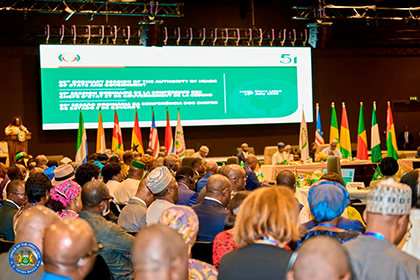
| The Department of International Relations and Cooperation notes the final communiqué issued following the 69th Ordinary Session of the Economic Community of West African States (ECOWAS) Authority of Heads of State and Government. |
|
|
 |
|
| |
South Africa views ECOWAS as a vital pillar of continental integration. In the spirit of Pan-African solidarity, South Africa remains deeply committed to open, constructive, and action-orientated dialogue with ECOWAS Member States on matters of mutual concern, most notably regional stability and migration management.
South Africa reiterates, in the strongest terms, its unyielding stance against all forms of social prejudice. We categorically reject xenophobia, racism, homophobia, and intolerance and discrimination in all their manifestations.
Upholding the dignity of every person within our borders is both a constitutional imperative and a moral duty. South Africa remains steadfast in maintaining the rule of law and ensuring that those who perpetrate violence or unlawful acts are held fully accountable under our judicial system.
While South Africa continues to proactively resolve specific bilateral matters with West African partners, such as Ghana and Nigeria, our most high-volume migration dynamics are naturally concentrated within our immediate region, the Southern African Development Community (SADC).
Minister Lamola welcomes the opportunity to engage on migration at the highest level of the African Union (Heads of State Summit) to ensure that migration across the continent becomes a choice rather than a necessity. “Establishing a dedicated agenda item at the African Union to address the primary push-and-pull factors and root causes of irregular migration, focusing squarely on good governance, democracy, and economic stability, will enable a pragmatic, comprehensive approach to continental migration challenges,” says Minister Lamola.
Finally, regarding the opportunistic petition submitted to the International Criminal Court by two Ghanaian civilians, South Africa notes that this filing fails to satisfy the statutory legal triggers and jurisdictional requirements necessary for action by the Court. Furthermore, under the foundational principle of complementarity, South Africa maintains full confidence in its domestic legal framework. Crucially, legislation such as the Prevention and Combating of Hate Crimes and Hate Speech Act directly gives effect to the Republic’s obligations under the Constitution and international human rights instruments concerning racism, racial discrimination, xenophobia, and related intolerance. This legal framework specifically provides for distinct offences such as hate crimes and hate speech, ensuring the prosecution of any persons who commit such offences.
– Source: www.dirco.gov.za |
|
| |
|
| |
| MINISTER LAMOLA CONCLUDES OFFICIAL VISIT TO MALAWI |
|
| |
 |
|
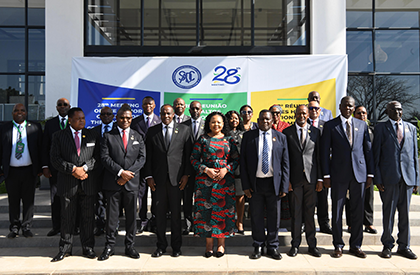
| Minister of International Relations and Cooperation, Ronald Lamola, undertook an Official Visit to Lilongwe, Malawi, from 15 to 17 July 2026 to lead the South African delegation to the 28th Southern African Development Community (SADC) Ministerial Committee of the Organ (MCO) meeting, held in Salima. |
| |
|
|
|
| |
Upon his arrival at Kamuzu International Airport on 15 July 2026, Minister Lamola was welcomed by South Africa's High Commissioner to Malawi, Her Excellency Yvette Myakayaka Manzini.
The Minister's participation in the meeting, in his capacity as Interim Chair of SADC, reaffirmed South Africa's commitment to advancing peace, security, political stability and regional cooperation across the SADC region. The Ministerial Committee of the Organ provides Member States with an important platform to deliberate on regional peace and security matters in support of the objectives of the SADC Organ on Politics, Defence and Security Cooperation.
Minister Lamola was joined by Deputy Minister of Defence and Military Veterans, Mr Bantubonke Holomisa, during the closing session of the meeting on 17 July 2026.
Key outcomes of the 28th SADC Ministerial Committee of the Organ included the signing by Malawi of the SADC Protocol on the Facilitation of the Movement of Persons, regional security assessments by SADC Ministers responsible for security, discussions on counter-terrorism and the adoption of strategies to strengthen regional cooperation in combating transnational organised crime.
South Africa's participation in the meeting reflects its continued commitment to working with SADC Member States to promote regional peace, security and sustainable development through strengthened multilateral cooperation.
– Source: Public Diplomacy Platforms |
|
| |
|
| |
| DEPUTY MINISTER ALVIN BOTES CONCLUDES WORKING VISIT TO SASKATCHEWAN, CANADA |
|
| |
 |
|
| Deputy Minister of International Relations and Cooperation, Alvin Botes, concluded a productive Working Visit to Saskatchewan, Canada, on 23 July 2026, aimed at strengthening bilateral cooperation between South Africa and Canada in trade, investment, science, technology and innovation. |
| |
|
|
|
| |
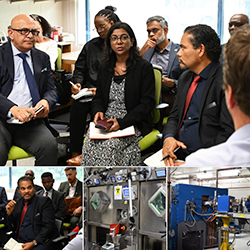
Leading a South African delegation, Deputy Minister Botes participated in Ag in Motion (AIM), Canada's largest outdoor agricultural exhibition, where discussions focused on expanding collaboration in sectors that support sustainable economic development and innovation.
During the visit, Deputy Minister Botes held bilateral meetings with Canada's Minister of International Trade, Honourable Maninder Sidhu, and Saskatchewan's Minister of Trade and Export Development, Honourable Warren Kaeding. The engagements explored opportunities to deepen cooperation in trade, investment and economic development between South Africa and Canada.
The delegation also visited the Sylvia Fedoruk Canadian Centre for Nuclear Innovation in Saskatoon, where discussions centred on nuclear research and innovation priorities, as well as opportunities for future collaboration. This was followed by a visit to the Saskatchewan Research Council (SRC), where officials showcased the Council's work in applied research, technology commercialisation and innovation, with particular emphasis on rare earth minerals and their contribution to strategic industries and sustainable economic growth.
Deputy Minister Botes was accompanied by South Africa's High Commissioner to Canada, His Excellency Rieaz Shaik, together with officials from the Department of Science, Technology and Innovation, the Department of Higher Education and Training, and the Department of Trade, Industry and Competition.
Speaking to Ubuntu Radio following the conclusion of the visit, Deputy Minister Botes underscored the importance of strengthening partnerships that promote innovation, investment and mutually beneficial economic growth between South Africa and Canada.
– Source: Public Diplomacy Platforms |
|
| |
|
| |
| SOUTH AFRICA REAFFIRMS COMMITMENT TO INCLUSIVE URBAN DEVELOPMENT |
|
| |
| Human Settlements Minister Thembi Simelane has reaffirmed South Africa's commitment to building inclusive, resilient and sustainable cities. |
| |
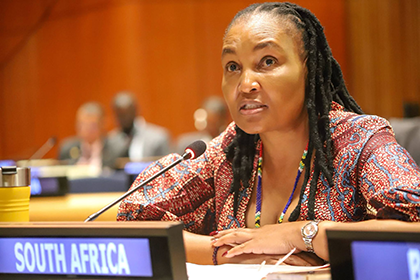
Delivering the country’s statement at the High-Level Political Meeting on the Review of Progress in the Implementation of the New Urban Agenda (NUA) in New York, Minister Simelane said the country is intensifying efforts to tackle informal settlements, improve housing delivery and accelerate urban transformation.
|
|
|
 |
|
| |
Minister Simelane said South Africa remains committed to fulfilling the global commitments adopted in Quito, Ecuador, in 2016. The meeting, held from 16 to 17 July 2026, reviewed progress made by Member States in implementing the New Urban Agenda, which seeks to promote sustainable urban development and support the achievement of Sustainable Development Goal (SDG) 11 on sustainable cities and communities.
Minister Simelane said South Africa has submitted its second national report on the implementation of the New Urban Agenda, outlining progress achieved since the country's first report while identifying persistent challenges and priorities for accelerated action.
"The report reflects our national efforts and reaffirms South Africa's commitment to the effective implementation of the New Urban Agenda and the achievement of Sustainable Development Goal 11," Minister Simelane said.
The Minister highlighted several policy reforms that have strengthened South Africa's urban development agenda, including the National Development Plan (NDP) and the Integrated Urban Development Framework (IUDF), which guides the creation of inclusive and resilient cities.
“Our National Development Plan, covering 2012 to 2030, guides sustainable development, while the Integrated Urban Development Framework, adopted in 2016, has concretised policies for inclusive and resilient cities, centred on human advancements. The IUDF is further underpinned by targeted efforts to drive equitable urban transformation,” Minister Simelane said.
She said the review of key policy instruments, including the White Paper on Local Government and the White Paper for Human Settlements, is intended to improve service delivery, accountability and government responsiveness in the face of rapid urbanisation.
Minister Simelane also highlighted the District Development Model (DDM), introduced in 2019, as an important mechanism for improving coordination across all spheres of government to ensure integrated development that responds to community needs.
Recognising informal settlements as one of South Africa's most pressing urban challenges, the Minister said government has expanded its informal settlements upgrading programme through improved planning, stronger tenure security and accelerated upgrading interventions.
She said these efforts are aligned with commitments contained in the draft political declaration adopted during the review process, including advancing social inclusion and reducing poverty, expanding access to basic services, and accelerating the transformation of informal settlements and slums. According to Minister Simelane, these interventions are aimed at restoring dignity to vulnerable communities while fostering more people-centred urban spaces.
The Minister also reaffirmed South Africa's commitment to implementing the outcomes of the Africa Urban Forum, especially the mainstreaming of housing delivery as an integrated economic and social development instrument.
She stressed the importance of stronger partnerships between government, development finance institutions, communities, civil society organisations and the private sector to scale up the delivery of adequate housing.
“These priorities are particularly important, as South Africa, like many countries across our continent, continues to experience the effects of rapid urbanisation and the complex challenges associated with human mobility. Addressing these challenges requires integrated, inclusive and forward-looking approaches that ensure that no one is left behind,” the Minister said.
She reaffirmed South Africa's commitment to international solidarity, human dignity and the rule of law, saying the country would continue working with regional and international partners to promote sustainable development, inclusive urbanisation and expanded economic opportunities.
“We will continue to work with regional and international partners to advance sustainable development, promote inclusive urbanisation and expand economic opportunities, recognising that these efforts are essential to advancing a shared vision of sustainable urban development.
“Through strengthened regional cooperation, we reaffirm our commitment to a shared, peaceful and prosperous Africa, as envisaged in 'Agenda 2063: The Africa We Want', while upholding the human rights, dignity and fundamental freedoms of all people in accordance with international law and applicable international obligations,” Simelane said.
– Source: SAnews.gov.za |
|
| |
|
| |
| GERMAN AMBASSADOR SAYS FAREWELL TO SOUTH AFRICA AFTER FIVE YEARS |
|
| |
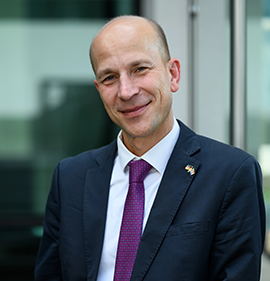
| Germany’s Ambassador to South Africa, Andreas Peschke, is preparing to leave the country after five years, marking the end of his diplomatic posting with a heartfelt farewell reflecting on South Africa’s people, culture and the close relationship between the two nations. |
|
|
 |
|
| |
The announcement was shared by Germany in South Africa on X, where the embassy wrote: “After five years, our Ambassador, His Excellency @AmbPeschke, is leaving South Africa for his next posting. He wrote a farewell letter to the country about his highlights of our countries’ relations’.”
A farewell rooted in ubuntu
In the letter, Peschke described Germany’s relationship with South Africa as its closest partnership on the African continent. “Germany’s relationship with South Africa is wider and deeper than it is with any other partner in Africa.”
He highlighted cooperation in trade, renewable energy, education, science and culture, noting that hundreds of German companies operate in South Africa and support thousands of jobs.
The ambassador also reflected on the experiences that left the greatest impression during his time in the country. “What my wife and I loved most of all are the people of South Africa, their diversity, their humour, their languages and their big, open hearts.”
He said the philosophy of ubuntu offered an important lesson for diplomacy, writing, “Maybe if we had more ubuntu diplomacy across the world, we would probably have fewer conflicts.” Peschke also praised South Africans’ resilience and their ability to “make a plan” when faced with challenges.
This is not the first time a German envoy has departed South Africa with a public message of gratitude. Peschke follows former ambassador Martin Schäfer, who also reflected on the countries’ longstanding friendship when his posting ended in 2021 before taking up a new diplomatic role.
Concluding his farewell, Peschke thanked South Africans for welcoming him and his family during their stay. “It has been a privilege to work and live with you … Kini nonke sithi siyabonga. Re a leboga.” He ended his letter with a blessing for the country: “May God continue to bless this country.”
– Source: www.capetownetc.com |
|
| |
|
| |
| KWIBOHORA 32 — RWANDA'S JOURNEY CONTINUES |
|
| |
 |
|
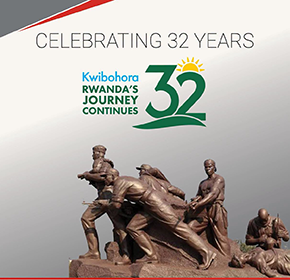
| Rwanda's 32nd Liberation Day celebration in South Africa honoured the country's remarkable journey of renewal while reflecting the renewed momentum in relations between Rwanda and South Africa. |
| |
The afternoon came alive with music, celebration and cultural pride as the award-winning Rwandan dance troupe, Itorero Inyamibwa, captivated guests with energetic performances that showcased Rwanda's rich cultural heritage and national pride.
Addressing the gathering, Rwanda's High Commissioner to South Africa, Emmanuel Hategeka, reflected on the meaning of liberation beyond military victory.
Quoting former South African President Nelson Mandela, he reminded guests that, "there is no easy walk to freedom anywhere," saying Rwanda understood those words deeply because its freedom had been earned through sacrifice, courage and determination. |
|
|
| |
"The Rwanda we proudly celebrate today was reborn through liberation 32 years ago. One lesson remains unmistakably clear; nations are transformed by the choices they make. Rwanda deliberately chose unity over division, accountability over blame, self-reliance over dependency, and long-term vision over short-term expediency."
He said those choices had shaped every aspect of Rwanda's development and delivered significant progress in healthcare, education, electricity access, poverty reduction and life expectancy over the past three decades.
"The greatest tribute to our liberation heroes is to build a Rwanda that is more prosperous than yesterday, more innovative than today, and even more united tomorrow."
In June this year, Rwanda's Minister of Foreign Affairs and International Cooperation, Olivier Nduhungirehe, paid a Working Visit to South Africa, where he met Minister of International Relations and Cooperation Ronald Lamola. Guided by the political will of Presidents Paul Kagame and Cyril Ramaphosa, the visit marked an important step in renewing relations between the two countries.
The meetings resulted in the agreement to the resumption of visa issuance for holders of ordinary Rwandan passports within twelve months and the revival of the Joint Commission for Cooperation, which is expected to convene in Kigali during the first quarter of 2027. The renewed partnership is expected to expand cooperation in trade, investment, tourism, education, health, mining, energy, innovation and people-to-people exchanges.
The renewed engagement marks an important turning point after several years of strained relations and demonstrates the commitment of both governments to building a constructive partnership based on mutual respect and shared African interests.
Speaking on behalf of the South African government, Minister of Mineral and Petroleum Resources and ANC National Chairperson Gwede Mantashe described Rwanda's liberation as a story of resilience, courage and determination. Drawing parallels between Rwanda's liberation on 4 July 1994 and South Africa's democratic transition earlier that year, he said both countries had emerged from painful histories to pursue reconciliation and nation-building.
He said Africa's future depended on deeper cooperation, stronger regional integration and African solutions to African challenges, adding that South Africa and Rwanda were well placed to advance peace, economic development and the aspirations of Agenda 2063.
"The reality is that South Africa and Rwanda need one another."
He added, "Our presence here today reaffirms South Africa's commitment to revitalising and strengthening bilateral relations with Rwanda, founded on trust, mutual respect and shared understanding."
Minister Mantashe also thanked Rwanda for facilitating the safe transit of South African National Defence Force personnel returning from the eastern Democratic Republic of Congo, describing it as an example of practical regional cooperation.
Kwibohora, meaning "liberation", commemorates the end of the 1994 Genocide against the Tutsi and the beginning of Rwanda's national rebuilding process. Thirty-two years after liberation, Rwanda continues to demonstrate how determined leadership, national unity and long-term planning can transform a country.
The celebration was a reminder that liberation is not simply a moment in history but an ongoing commitment to building peace, opportunity and prosperity. As Rwanda and South Africa continue rebuilding their partnership, both countries appear committed to ensuring that stronger bilateral relations deliver practical benefits for their citizens while contributing to a more united, peaceful and prosperous Africa.
– Source: www.thediplomaticsociety.co.za |
|
| |
|
| |
| SOUTH AFRICA, WORLD BANK SIGN US$1.5BN LOAN TO SUPPORT INFRASTRUCTURE REFORMS |
|
| |
| The South African government and the World Bank have signed a US$1.5 billion Development Policy Loan aimed at supporting infrastructure reforms and boosting inclusive economic growth. |
|
|
 |
|
| |
The loan, announced by National Treasury on Tuesday, 21 July 2026, is intended to help address infrastructure constraints that the government identifies as a major barrier to job creation amid persistent challenges of low economic growth and high unemployment.
The financing will support reforms in the electricity, freight and logistics sectors, as well as efforts to address challenges in water and sanitation.
Treasury said the funding forms part of the government’s broader programme of structural reforms in the energy, logistics and water sectors, which it described as critical to laying the foundation for faster and more inclusive growth.
The fourth development policy loan under the partnership between South Africa and the World Bank is built around three key areas: strengthening energy competitiveness and security, upgrading freight transport services, and improving the delivery of water and sanitation services.
According to Treasury, these reforms are expected to contribute to economic growth and job creation.
The loan is valued at US$1.5 billion and has a 15-year maturity, including a three-year grace period. The interest rate is set at the six-month Secured Overnight Financing Rate (SOFR) plus 1.35%.
Treasury said the financing terms are aligned with the National Treasury’s borrowing strategy, which seeks to maintain long-term debt sustainability and affordability by securing funding at the lowest possible cost.
It said the loan’s favourable interest rate and flexible repayment terms would help minimise the increase in debt-service costs.
The World Bank loan, together with financing secured from other multilateral development partners, has enabled the government to meet its US$3.2 billion foreign currency borrowing requirement for the 2026/27 financial year, according to Treasury.
National Treasury thanked the World Bank for its continued support, saying the partnership was critical to maintaining momentum on reforms and advancing South Africa’s broader development objectives.
– Source: www.goodthingsguy.com |
|
| |
|
| |
| CAPE TOWN EARNS A PLACE AMONG THE WORLD’S FINEST TRAVEL STAYS |
|
| |
 |
|
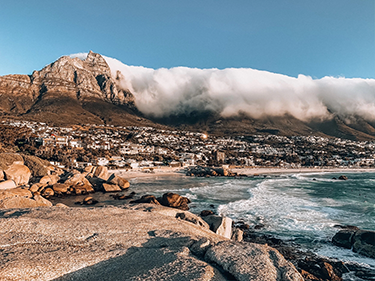
| Cape Town has added another international accolade to its growing list of achievements after being ranked among the ten most beautiful places to stay in the world in a new global study, “Cape {town} Etc” reports. |
|
|
| |
The Mother City secured eighth place in research conducted by interior design specialists Sharps, placing it alongside some of the world’s most sought-after holiday destinations.
The ranking celebrates destinations where travellers can experience exceptional accommodation that blends striking architecture, thoughtful interiors and memorable surroundings.
For locals, the recognition is another reminder that Cape Town’s appeal stretches far beyond its famous beaches and mountain views. Increasingly, visitors are travelling here not only for the scenery but also for the unique homes, villas and boutique stays that reflect the city’s distinctive character.
A city where design meets natural beauty
Cape Town scored 96.2 out of 100 in Sharp’s ‘Beautiful Base’ rankings, which assessed more than 200 luxury travel destinations around the world.
Researchers evaluated each destination using several factors, including:
- The number of luxury accommodation options available
- Average nightly accommodation costs
- Guest reputation scores
- The overall availability of design-focused places to stay
The result places Cape Town among a global collection of destinations where accommodation is considered an essential part of the travel experience rather than simply a place to sleep.
That recognition reflects something many visitors already discover when they arrive. Whether it’s a contemporary villa overlooking the Atlantic Ocean, a restored heritage home in the city centre or a luxury retreat surrounded by vineyards, Cape Town offers accommodation that often mirrors the landscapes and culture around it.
Cape Town stands proudly alongside global favourites
While Bali claimed the number one position thanks to its tropical villas inspired by traditional island architecture, Cape Town comfortably held its own against internationally recognised travel hotspots.
The top 10 destinations include Bali, Indonesia; Paris, France; Yucca Valley/Joshua Tree, United States; Florida’s 30A Area, United States; Saint Barthélemy; Los Cabos, Mexico; London, United Kingdom; Cape Town, South Africa; Big Island, Hawai’i; and Park City, Utah.
Cape Town was the only African destination to feature in the global top 10, highlighting the continent’s growing reputation for world-class hospitality and design-led tourism.
Why travellers are choosing homes over hotels
According to Sharps interiors expert Natalie Prince, travellers are increasingly looking for accommodation that tells the story of a destination.
Rather than booking standard hotel rooms, many visitors now prefer homes that showcase local architecture, craftsmanship and interior design. These properties offer more privacy, extra space and a stronger connection to the places they are visiting.
That trend has worked in Cape Town’s favour. Across the city, travellers can choose from modern cliffside homes, elegant heritage properties and stylish apartments that embrace natural light, local materials and spectacular views.
More than just a beautiful destination
Cape Town has long been recognised for iconic attractions such as Table Mountain, the Cape Winelands and its world-famous coastline. This latest recognition suggests that where visitors stay has become just as memorable as the destinations they explore.
– Source: www.capetownetc.com |
|
| |
|
| |
| AFRICA’S FIRST PAEDIATRIC AND RECONSTRUCTIVE SURGEON |
|
| |
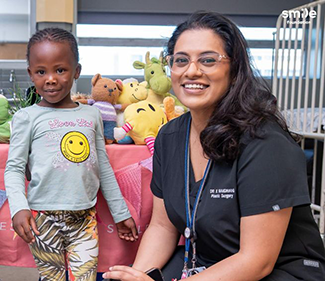
| South African surgeon Dr Kirthi Ramdhani has made medical history by becoming the first person in Africa to qualify as both a paediatric surgeon and a plastic and reconstructive surgeon. |
| |
Paediatric surgeons specialise in operating on babies, children and teenagers, while plastic and reconstructive surgeons focus on restoring form and function after birth conditions, injuries or illnesses. By qualifying in both fields, Dr Ramdhani brings an exceptionally broad set of skills to the operating theatre, particularly when caring for children with complex conditions.
The Smile Foundation, where Dr Ramdhani is part of the surgical team, celebrated the milestone.
“This extraordinary achievement reflects her dedication to advancing specialised care for children. We are proud to have Dr Ramdhani as part of the Smile Foundation family and look forward to the many lives she will continue to change,” the foundation shared. |
|
|
 |
|
| |
The non-profit works alongside South Africa’s public healthcare system to help children living with facial paralysis, cleft lip and palate, craniofacial abnormalities, burns, and a range of ear, nose and hand conditions receive life-changing surgery and ongoing care.
Having a surgeon who specialises in both paediatric surgery and reconstructive surgery means children with complex needs can benefit from a more integrated approach to treatment. It also strengthens the specialist care available through the Smile Foundation’s programmes and supports its mission of giving more children the opportunity to live with confidence and possibility.
Dr Ramdhani’s historic qualification is not only an incredible personal achievement but also an important milestone that will undoubtedly change many young lives in the years ahead.
– Source: www.goodthingsguy.com |
|
| |
|
| |
| EASTERN CAPE PIANIST TAKES SOUTH AFRICAN TALENT TO THE UK STAGE |
|
| |
 |
|
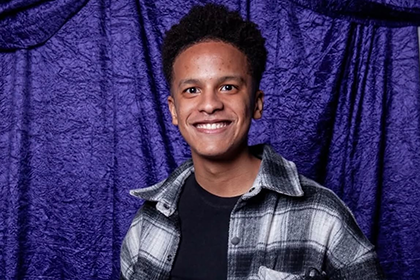
| With music shaped by family, dedication to his craft and a deep love for storytelling through sound, Nelson Mandela University (NMU) pianist Mathew Draai is currently bringing South African talent and Eastern Cape pride to the prestigious British Isles Music Festival in the United Kingdom (UK). |
|
|
| |
Fourth-year Nelson Mandela University Bachelor of Music (BMus) student Mathew Draai is representing South Africa on the global stage this July, showcasing the high calibre of musical talent emerging from the Eastern Cape.
As Mathew takes the stage and plays on the keys, his goal is simple yet powerful: to show that South African musicians can stand shoulder to shoulder with young artists from anywhere in the world.
Mathew’s diverse programme comprises a solo work, a duet and a trio. His repertoire includes Chopin’s Ballade No. 3, Schumann’s Three Fantasy Pieces for Piano and Clarinet, Op. 73, and Shostakovich’s Piano Trio No. 1, highlighting both his solo and collaborative performance skills.
According to NMU, it was Mathew’s audition recording of Rachmaninoff’s Prelude in G minor, Op. 23, No. 5 that paved the way to this incredible global opportunity. He had performed the same piece at one of the lunchtime concerts hosted by the university’s Department of Music and Performing Arts under the Faculty of Humanities. His performance impressed his lecturers so much that they encouraged him to audition for the UK music festival. Mathew seized the opportunity and carefully refined his performance.
“I told myself that even if I wasn’t accepted, I would at least have tried. Receiving the acceptance email, along with news that I had been awarded a bursary, was incredibly exciting and a real validation of the work I’ve put in,” the musician said ahead of the festival.
Mathew’s love of music was nurtured from an early age in a family with deep musical roots. His late grandfather played in church, one aunt is a retired piano teacher, and another serves as a church organist, with whom Mathew regularly performs.
His international gig kicked off this week and runs from 14 to 22 July 2026. In the lead-up to the festival, Mathew remained dedicated to preparation while balancing an intensive practice schedule with completing an original composition and his fourth-year research treatise.
Mathew says he has always been drawn to music because of its ability to communicate emotion. Those privileged to witness his performances can expect a programme filled with contrast, ranging from the expressive lyricism of the Romantic period to the rhythmic intensity and wit of twentieth-century repertoire.
Head of the Department of Music and Performing Arts at MU, Dr Rudi Bower, commends Mathew as a diligent and highly focused musician who actively seeks opportunities to challenge himself and grow.
Mathew hopes the international experience will strengthen his path as both a solo and collaborative pianist while broadening his artistic perspective. As he shares:
“I want this experience to solidify my career as a versatile performer. Engaging with different musical traditions and perspectives will give me fresh insights that I can bring back home. Ultimately, I hope to use what I learn to continue raising my own standards and one day contribute to developing the next generation of South African pianists and music educators.”
– Source: www.goodthingsguy.com |
|
| |
|
| |
| SOMERSET COLLEGE LEARNER SHORTLISTED FOR GLOBAL JOHN LOCKE ESSAY PRIZE |
|
| |
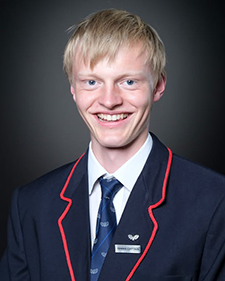
| Petrus Bosman, a Cambridge AS student at Somerset College, has been shortlisted in the Economics category of the prestigious John Locke Institute Global Essay Prize. This places him among an exceptional group of young thinkers from around the world. |
| |
This year’s competition attracted an incredible 100 227 entrants from 183 countries, making it one of the largest and most competitive editions of the essay prize to date. After a rigorous judging process, only the top 17.5% of eligible submissions were shortlisted. Bosman’s economics essay was one of them.
The John Locke Institute’s annual essay competition challenges students in honing independent thought, clear reasoning, critical analysis and persuasive writing. Essays are judged by senior academics from some of the world’s leading universities, including Oxford, Cambridge, Harvard, Princeton and Stanford.
Students compete across ten subject categories, from Economics and Law to Philosophy, Politics, Psychology and Science and Technology. |
|
|
 |
|
| |
Bosman earned his place on the shortlist in the Economics category, where entrants were asked to tackle one of three thought-provoking questions.
In Economics, students could tackle whether we should fear a cashless society, what personalised pricing means for consumers in an increasingly digital economy, or whether Jeff Bezos got rich at the expense of his customers, his employees, both, or neither.
In a congratulatory message, the Director-General of the John Locke Institute praised shortlisted entrants for the achievement.
“To be numbered among the best of the best is a remarkable achievement. Well done.”
Somerset College said it is immensely proud of Bosman for representing both the school and its programme with distinction on the international stage.
His achievement has earned him an invitation to attend the John Locke Institute Global Essay Prize awards ceremony in London this October, where the winners in each category will be revealed.
Whether or not he takes home the top prize, making the shortlist in a competition of this scale is already an extraordinary accomplishment, and one that places him among the world’s most promising young academic writers.
– Source: www.goodthingsguy.com |
|
| |
|
| |
| THESE SOUTH AFRICANS HAVE JUST JOINED THE ACADEMY BEHIND THE GRAMMYS |
|
| |
 |
|
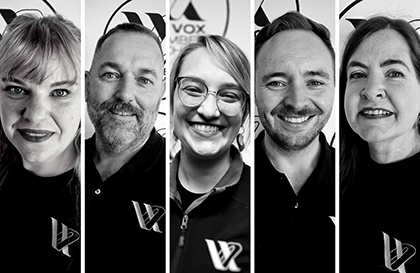
| Five members of Pretoria’s Vox Chamber Choir have just been admitted to the Recording Academy, the organisation behind the annual GRAMMY Awards. This good news brings the Vox Chamber Choir’s total members in the international Recording Academy to 10. |
|
|
| |
The five new Professional Members are Genine Scheepers, Jaco de Wet, Hanni Beyers, Klaus-Louis Jansen van Vuuren and Lynni du Toit. They join five existing Voting Members already part of the Academy – Franco Prinsloo, Andries Brümmer, Anja Pollard, Chris Vale and Tiaan Ras.
The announcement comes as the choir prepares to celebrate its tenth anniversary in 2027.
The Recording Academy is the world’s leading membership organisation for music creators and professionals in the industry. It brings all the right people together to advance excellence in recorded music through collaboration, advocacy, education and industry leadership.
Voting Members get to help decide who takes home a GRAMMY. Professional Members bring their skills to the Academy’s broader mission of strengthening the international music community. An invitation to join means you’ve been recognised as a peer among some of the biggest names in music.
“As South African musicians, we often speak about taking our music to the world. But meaningful international representation begins when South African professionals are recognised as peers within the organisations that help shape the future of music.” says composer-conductor Franco Prinsloo.
Collectively, the five newly admitted members bring to the Recording Academy not only their expertise in music but also in finance, technology, production, education and artistic performance, too.
Each of them opens new doors that create space for South African and African voices across the wider classical music world.
“It reminds us that South African expertise has a place in the world’s foremost music community,” says Prinsloo. “Our goal has never simply been to perform for international audiences. It is to ensure that South African classical music contributes meaningfully to the conversations, collaborations and creative leadership that shape the future of recorded music worldwide.”
– Source: www.goodthingsguy.com |
|
| |
|
| |
| SOUTH AFRICAN ROOIBOS HEADS TO SPACE IN STEM INITIATIVE |
|
| |
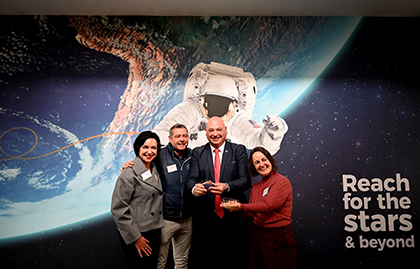
| A new space biology and agricultural initiative will see South African Rooibos seeds launched to the International Space Station (ISS) in October 2026 to study the effects of microgravity and radiation on crop resilience. |
|
|
 |
|
| |
The Rooibos in Space programme, conceptualised by the South African Rooibos Council (SARC) and delivered in collaboration with MaxIQ Space and the South African National Space Agency (Sansa), connects local agricultural heritage with international research on sustainable food systems for future space exploration.
The project officially launched at Parklands College’s Innovation Centre in Cape Town, bringing together representatives from government, academia, education, agriculture, and the space sector.
Cederberg learners to drive comparative research
The core of the initiative involves sending the indigenous Rooibos seeds to orbit for several weeks. Upon their return to Earth, the seeds will be planted in comparative trials to monitor germination, growth rates, yield, and overall resilience.
Learners from seven schools in the Cederberg region—the natural home of Rooibos—will conduct the primary experiment in partnership with local farms. A parallel experiment at Parklands College will provide additional data for the comparative study.
According to Dawie de Villiers, Director of the South African Rooibos Council (SARC), the project connects traditional agriculture with forward-looking research:
“Rooibos has long been part of South Africa’s agricultural heritage. This project places it within a broader scientific context, where plant biology, space research and education intersect. It also reflects the importance of investing in scientific literacy and skills development for the next generation of researchers and innovators.”
In addition to the practical experiment, participating schools will take part in an extended STEM education curriculum covering space science, plant biology, and sustainable agricultural systems.
The initiative aims to build practical technical skills by giving students direct access to space-based experimental data. Learners will also be invited to design the official Rooibos in Space mission patch during July and August 2026.
Judi Sandrock of MaxIQ Space highlighted the value of giving learners exposure to actual research methodologies:
“The value of this project lies in giving learners exposure to real research processes linked to space science. It provides a structured opportunity to develop scientific thinking, data analysis skills and an understanding of how experimentation works in practice.”
Aligning space science with national skills development
The project forms part of a wider global interest in space-based plant research, driven by long-duration missions like NASA’s Artemis programme. Previous experiments aboard the ISS have successfully grown crops like lettuce, peas, and soybeans to study plant responses to gravity and environmental stress.
Thandile Vuntu, science engagement manager at Sansa, noted that integrating space science with primary industries like agriculture supports national developmental objectives:
“Space science is becoming more integrated into areas that affect daily life, from communications to environmental monitoring. Initiatives such as this help build awareness of the skills required for future participation in the sector, but also align with national priorities around skills development, innovation capacity and strengthening South Africa’s position in emerging scientific fields.
"They further highlight the importance of collaboration between industry, government, academia and the science sector in building a strong pipeline of future scientists, engineers and researchers.”
– Source: www.bizcommunity.com |
|
| |
|
| |
| SOUTH AFRICA’S UPCOMING YOUNG CHEFS GEAR UP FOR CULINARY WORLD CUP |
|
| |
 |
|
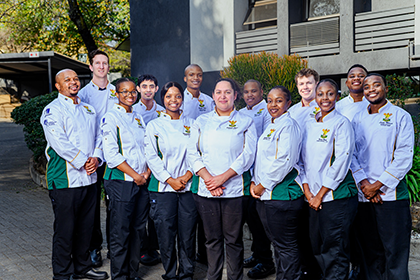
| The South African Chefs Association (SA Chefs) has announced its Junior Team Masakhane Training Squad – ten young chefs who have been selected to begin their training for the 2026 Culinary World Cup in Europe. |
|
|
| |
The squad was chosen through a national call for entries, followed by trials and a full judging process. Together, they represent seven prestigious training institutions across the country.
Those include Capsicum Culinary Studio, HTA School of Culinary Art, Soweto Chefs Academy, The Professional Cooking Academy, CTIA, FBI Chef School and SHS South Africa.
The Culinary World Cup is one of the most respected competitions in the industry and in the world. National teams compete at the highest level of professional cookery.
South Africa’s young culinary stars, dubbed the Junior Team Masakhane Training Squad, will now work on sharpening their kitchen knives—along with their technical skills, teamwork, creativity and discipline—before they take on the world’s best.
Leading the coaching team is Head Coach Chef Donaldson Madubela, supported by Technical Head Coach Chef Marcus Gericke and Pastry Coach Chef Catherine Adonis. Team Manager and Director of Competitions Chef Pieter Malan and Head of Team Talent Mahlomola Thamae will also oversee the squad’s development.
The skills the student squad will acquire for their run at the Culinary World Cup will play a great role in setting up their careers for the future.
“The Culinary World Cup provides an invaluable platform for young chefs to develop their skills while representing South Africa on one of the most respected stages in international culinary competition. This group represents the future of our industry, and we are committed to guiding and supporting them as they grow into world-class culinary professionals,” says Chef Pieter Malan.
Training now gets underway, backed by the squad’s coaches, employers, training institutions and partners as Team Masakhane works towards flying South Africa’s flag high at the 2026 Culinary World Cup in Luxembourg.
“This talented group of young chefs embodies the passion, resilience and innovation that define South Africa’s culinary future. Their selection is not only a personal achievement but also a reflection of the strength of our industry’s training and mentorship. We are proud to support them as they prepare to showcase South African excellence on the global stage,” says South African Chefs’ President, Chef Coo Pillay.
– Source: www.goodthingsguy.com |
|
| |
|
| |
| ST CYPRIAN GIRLS WIN GRAND PRIX GOLD AT INTERNATIONAL CHOIR CONTEST |
|
| |
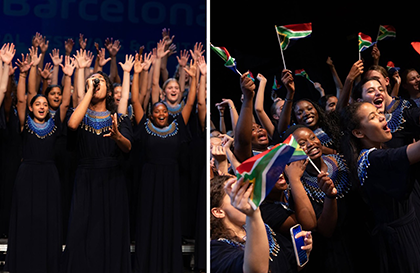
| St Cyprian’s Choir and Chamber Choir have given South Africa a reason to sing after being crowned the overall winners of the prestigious Golden Voices of Barcelona International Choir Competition. The contest was held in Lloret de Mar, just outside Barcelona in Spain. |
|
|
 |
|
| |
The Girls in Blue shone throughout the competition, earning first place in the World Sacred Music, Folklore and Youth Choirs of Equal Voices (Ages 16 to 25) categories, while also taking second place in the Pop-Jazz-Gospel category.
Their outstanding performances ultimately secured them the Grand Prix, making them the overall champions of the international competition.
“This extraordinary achievement is the culmination of months of dedication, discipline and collaboration. From hours of rehearsals and early mornings to performing on an international stage, our choristers have represented St Cyprian’s with excellence, grace and an unmistakable Girl in Blue spirit. We are immensely proud of the talent, commitment and heart they have shared with audiences across France, Monaco and Spain,” the school shared.
The Golden Voices of Barcelona competition welcomes choirs from around the world and creates opportunities for young musicians to perform on international stages while celebrating the art of choral singing and building connections across cultures.
Winning the Grand Prix also came with a once-in-a-lifetime opportunity. As the overall champions, the choir enjoyed the honour of performing in the Crypt of the Sagrada Família, one of the world’s most iconic sacred spaces and the resting place of renowned architect Antoni Gaudí.
“The tour concluded with a moving final performance in the Crypt of the Sagrada Família, one of the world’s most iconic sacred spaces and the resting place of Antoni Gaudí. It was a fitting tribute to an unforgettable journey that saw our girls share their music across cities, cultures, and communities.”
– Source: www.goodthingsguy.com |
|
| |
|
| |
| LIMPOPO LEARNERS SHINE ON THE GLOBAL ROBOTICS STAGE |
|
| |
 |
|
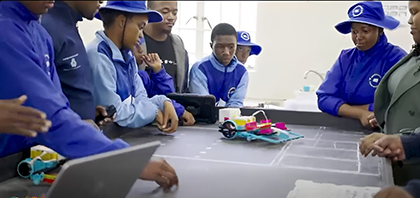
| Two Limpopo robotics school teams recently progressed through the local, provincial and national rounds of the Robotics for Good Youth Challenge to ultimately represent South Africa in Geneva, where they showcased their innovative solutions to real-life problems. |
|
|
| |
From the humble heart of Seshego in Limpopo, two schools have defied the odds and exceeded expectations to take their place on the global stage.
The Robo-Kidz team from Mashupye Tladi Primary School and the Roborise team from Bokamoso Secondary School qualified as South Africa’s representatives at the prestigious Robotics for Good Youth Challenge Grand Finale in Geneva, Switzerland.
The two teams earned their place after progressing through the local, provincial and national rounds of the competition.
The Grand Finale took place in the second week of July 2026 at the Palexpo International Exhibition and Convention Centre, where these rising roboticists competed against teams from 50 countries to design, build and programme robots that could help solve real-world food security and farming challenges.
Though it was team Venezuela that emerged as the double champion for 2026, our South African teams put up a strong fight and flew the South African flag high.
The South African Department of Basic Education congratulated Robo-Kidz and Roborise for representing the country, noting that their achievement reflects the growing impact of its investment in coding and robotics education. This forms part of the department’s commitment to equipping learners with the knowledge, skills and competencies needed to succeed in the Fourth Industrial Revolution.
As South Africa continues to expand the implementation of coding and robotics across the schooling system, achievements like these reinforce the vision of developing a generation of digitally capable, innovative and globally competitive learners.
“These learners are highlighting the best of South African education on the global stage. Their success proves what is possible when we invest in innovation, quality teaching and meaningful opportunities that allow young people to apply their knowledge to real-world challenges,” said Acting Director for Communications, Terence Khala.
From impressively coming out tops in every round at home to travelling across the world and standing among some of the world’s rising innovative thinkers, these brilliant young minds have made South Africa proud.
– Source: www.goodthingsguy.com |
|
| |
|
| |
| UP STUDY IS FIRST TO UNCOVER HIDDEN BACTERIA IN HIPPO MOUTHS |
|
| |
| South African researchers have completed a world-first study into the bacteria living in hippos’ mouths, revealing previously undiscovered information about why hippo bite wounds are so often complicated by serious infection. |
|
|
 |
|
| |
The study was led by Professor Anita Michel of the University of Pretoria (UP), whose team wanted to understand why hippo bite wounds so often lead to severe complications.
“We knew the injuries were extraordinary, especially with the exceptional biting force hippos possess, but we didn’t fully understand the link between the microbes and the severe complications from wound infections that clinicians have to deal with,” says Prof. Michel.
Working alongside veterinary bacteriologist Dr Annelize Jonker and ecologist Francois Roux from the Mpumalanga Tourism and Parks Agency, Prof. Michel’s team examined the oral bacteria of 34 healthy hippos captured during routine wildlife operations in Mpumalanga.
It was the first time anyone had systematically studied the bacterial flora found in hippos’ mouths. The team identified 41 different species of bacteria, many of them types typically found in aquatic environments and capable of causing opportunistic infections in humans.
“This was the first time that anyone has systematically studied the bacterial flora of hippos’ mouths,” Prof. Michel says. “And what we found was concerning – not just the types of bacteria, but their resistance to some of the most commonly used antibiotics.”
The team tested the bacteria against a panel of antibiotic drugs and found moderate to high resistance to commonly prescribed treatments like amoxicillin/clavulanate and early-generation cephalosporins – the same antibiotics often used for bite wounds from dogs and cats.
“Using these standard antibiotics for a hippo bite may delay effective treatment and allow infections to take hold,” Prof. Michel notes.
On the other hand, the study found that antibiotics from the tetracycline, aminoglycoside and quinolone families were more effective against the bacteria identified. The researchers recommend that wound cultures be taken as early as possible to identify the exact pathogens involved.
“It is critically important that wound infections, whether in animals or humans, are treated early with an effective antibiotic regimen aligned with the expected causative infectious agents,” Prof. Michel says.
The implications of the study reach beyond individual bite wounds. Prof. Michel frames the work as part of a “One Health” approach, recognising that antibiotic resistance is shaped by ecosystems and species interactions, not just clinical settings.
“Our goal is to take a One Health approach with healthcare providers in regions where humans and wildlife intersect to ensure that they are not caught off guard,” she says. “When you’re dealing with a hippo bite, minutes matter – and so does the right antibiotic.”
The common hippopotamus is found in rivers, lakes and wetlands across sub-Saharan Africa, and this study gives clinicians in those regions a clear picture of which antibiotics are likely to fail against a hippo bite wound, which ones are more likely to work, and why early wound cultures matter.
– Source: www.goodthingsguy.com |
|
| |
|
| |
| SOUTH AFRICAN FILM HEN MAKES HISTORY WITH MAJOR INTERNATIONAL WIN |
|
| |
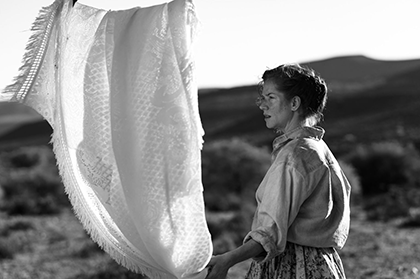
| A South African film has made history after becoming the first African production ever to win the top prize at one of the world’s most prestigious genre film festivals. |
| |
|
|
|
 |
|
| |
Hen, the acclaimed Afrikaans arthouse horror directed by Nico Scheepers and produced by Nagvlug Films, walked away with the H.R. Giger Narcisse Award for Best Feature Film at the Neuchâtel International Fantastic Film Festival in Switzerland.
The victory marks a major milestone, with Hen becoming the first African film to claim the festival’s highest honour in its 25-year history. Scheepers travelled to Switzerland to accept the award, which also includes prize money of CHF10,000.
The latest accolade is the film’s 10th international award, adding to an already impressive run that has seen it recognised for everything from cinematography and editing to costume design and sound.
Set on an isolated farm, Hen follows a man who discovers a young boy locked inside a wooden chest surrounded by bodies before bringing him home to his wife. The haunting story has earned praise from critics both locally and abroad, with festival judges describing it as a striking and unforgettable exploration of evil within a deeply religious community.
Much of the story was inspired by Scheepers’ childhood growing up on a remote farm in Limpopo, where isolation and survival shaped many of his earliest memories.
The success of Hen continues an exciting chapter for South African filmmaking on the international stage. Recent years have seen local productions earning recognition at some of the world’s biggest festivals, proving that South African storytelling continues to resonate with audiences far beyond its borders.
For Nagvlug Films producer Zandré Coetzer, the award is about more than a single film.
“This is the first African film to win the top prize at Neuchâtel, but I doubt it will be the last. Our industry is export-ready.”
– Source: www.goodthingsguy.com |
|
| |
|
| |
| UFC STAR DRICUS DU PLESSIS BACK IN THE WINNERS' CIRCLE AFTER DOMINANT PERFORMANCE |
|
| |
 |
|
| South African UFC star Dricus du Plessis earned a statement victory over Kamaru Usman at UFC Fight Night 281 in Oklahoma on Saturday, 18 July 2026. |
| |
The former UFC middleweight champion showed his all-around skills as he bossed his way to a unanimous decision win, taking the scorecards 50-45, 49-46, 49-46. The victory was his first since losing the title to Khamzat Chimaev in August 2025.
Du Plessis found his range early and had Usman wobbled in both the first and second rounds. His high kick from southpaw found its target with alarming regularity, as did several looping right hands. |
|
|
| |
Usman's path to victory was his ground game, but the Nigerian Nightmare struggled for takedowns. Du Plessis discouraged attempts with vicious knees almost every time Usman shot forward. Usman wore a couple of them.
In round three, another right hand from du Plessis caught Usman's left eye, sending him reeling, and the fight was stopped with claims of an eye poke. But the replay showed du Plessis' fist was closed and the action swiftly resumed. Usman finally executed a successful takedown, only for the Pretoria native to bounce right back up again.
Usman landed a perfect straight jab combo in the fourth, his best strike of the fight. But a durable du Plessis brushed it off and continued to press forward.
The fifth and final round saw an impressive late rally from Usman as he searched for a KO. He flailed at a visibly tiring du Plessis in the dying embers of the fight, forcing him to cover up to survive the melee. But the 32-year-old knew he had already done enough to win the bout, and he raised his hands on the buzzer.
UFC overlord Dana White presented du Plessis and Usman with Fight of the Night bonuses of US$100 000 each.
"That was the hardest head I've ever hit in my life," said the Team CIT fighter in the octagon interview.
– Source: www.sabcsport.com |
|
| |
|
| |
| SPRINGBOKS CRUISE PAST WALES AS NEW FACES SHINE IN DOMINANT DURBAN DISPLAY |
|
| |
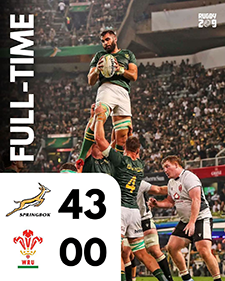
| The Springboks continued their perfect start to the Nations Championship with a commanding 43-0 victory over Wales at Kings Park on Saturday, 18 July 2026. |
| |
It was a good day for the Bok debutants, with young flyhalf Vusi Moyo at times showing his inexperience but also his composure and confidence with ball in hand. Fellow newcomer Jaco Williams was arguably even more impressive, marking his debut with a try and playing a key role in several others.
After a nervy start from both sides, the Boks suddenly sparked into life via a couple of strong forward carries, which ended with powerful No 8 Jasper Wiese bursting through a tackle and charging over for the first try.
It was slightly ominous-looking stuff from a Welsh perspective, as was the first scrum of the day, which ended with a Bok penalty.
A superb steal from Malcolm Marx and a barnstorming run from Cobus Wiese followed before Wales were driven back over their own try-line from the ensuing scrum, as the Boks continued to play all of their greatest hits. |
|
|
 |
|
| |
From the next scrum, with South Africa now in possession, Cobus Reinach spotted a gap at the base and used his blistering pace to coast over for their second try.
Had it not been for some untidiness in possession from the hosts limiting the damage, Wales would have found themselves going even further behind.
It took until the final action of the first half for the Boks to score again, as a well-placed crossfield kick from Moyo was parried by fellow debutant Jaco Williams into the path of Jesse Kriel, who went over unchallenged to send South Africa into the break with a 19-0 lead.
Less than a minute into the second half, the Boks added to their tally, with Reinach gathering a high ball before a couple of short passes opened up the space for Williams to cross in the corner on debut.
But once again, the Boks couldn't quite kick on, even though Wales continued to live dangerously. It wasn't until the 63rd minute that some great interplay between substitute Herschel Jantjies and Williams down the blindside resulted in the Boks' fifth try.
Try number six followed five minutes later, as a beautiful long ball from Manie Libbok picked out Kurt-Lee Arendse out wide.
And there was time for one more score before the final whistle, Paul de Villiers going over for a deserved debut try in Bok colours from the back of a rolling maul to cap a dominant night at the office for the Boks.
– Source: www.sabcsport.com |
|
| |
|
| |
| WE NEVER GAVE UP — KEVIN FOOTE PRAISES JUNIOR SPRINGBOKS' GRIT AFTER WORLD TITLE TRIUMPH |
|
| |
 |
|
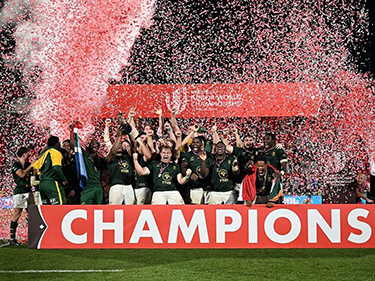
| Resilience has been the defining trait of South Africa's world champion Junior Springbok side, according to coach Kevin Foote after his team ground out a memorable 16-5 victory over France to retain the World Rugby Under-20 Championship title in Tbilisi on Saturday. |
|
|
| |
Having overcome an hour-long weather delay before kick-off and then absorbed wave after wave of French pressure, the Junior Boks produced a defensive masterclass to claim South Africa's third world title at this level and second in succession.
For Foote, the triumph was about far more than the final score.
"It means everything to us; it means everything to South Africa," the emotional coach said afterwards.
"South Africa is a very special place, and we are very lucky to represent our people. Right now, we're just feeling incredibly grateful for the opportunity."
The final tested every ounce of the character the Junior Boks have displayed throughout the tournament as France's powerful pack repeatedly asked questions of the South African defence. But Foote never sensed panic among his players.
"We knew France were big and physical and they just kept coming at us," he said.
"We had to soak up a lot of pressure, but the story of this team has been that they never give up. We always felt that if we got our opportunity, we'd take it."
Foote also highlighted the impact of his replacements, whose energy helped South Africa close out another tense contest.
"The starting players had absorbed so much pressure and the fresh legs brought energy at a crucial time. That's been a strength of this squad all season."
Captain Siphosethu Mnebele, one of the few survivors from last year's title-winning squad, said this group's success had been built on something deeper than rugby ability.
"It feels seriously special," he said.
"This was a completely different team, different connections and a different journey. One thing about this team is that we just keep grinding it out because of the care we have for each other."
Mnebele revealed the squad's simple philosophy had carried them through every challenge during the tournament.
"We talk about giving love on defence, giving love on attack, and doing it for the guy next to you and for the people back home in South Africa. That's what drove us throughout the tournament," he said.
The captain also praised the team's composure after lightning delayed the start of the final.
"It was tough waiting because you prepare for a certain kick-off time and then suddenly you have to sit and wait," he said.
"This group is very adaptable. We made sure we stayed switched on, kept our energy up and remained focused on the job we had to do."
After four weeks in Georgia, the Junior Boks return home as deserving world champions, their unbeaten campaign built as much on resilience and togetherness as it was on rugby ability.
– Source: www.iol.co.za |
|
| |
|
| |
| SOUTH AFRICAN HOCKEY WOMEN OFF TO WINNING START AHEAD OF HOCKEY WORLD CUP |
|
| |
| South Africa’s opening victory over Namibia provided the ideal platform as preparations for the FIH Hockey World Cup gather pace. |
|
|
 |
|
| |
South Africa’s women’s hockey team got their final World Cup preparations off to the perfect start with a confident victory over Namibia in the opening match of their four-Test series, laying down an encouraging marker ahead of the biggest tournament on their calendar.
The series forms a crucial part of the Proteas’ build-up to the FIH Hockey World Cup, where they will take on England, China and India. With the global showpiece fast approaching, the fixtures against Namibia give the coaching staff one last opportunity to fine-tune combinations, assess performances and settle on their strongest line-up.
It was also a memorable afternoon for Ntsopa Mokoena, who celebrated her 50th international cap in style. The experienced forward marked the milestone by finding the back of the net and walking away with the Player of the Match award.
South Africa controlled large periods of the contest from the opening whistle. Although they dominated possession early on, they initially struggled to convert that control into goals before Kayla de Waal finally broke the deadlock with a clever turn and composed finish.
Mokoena’s landmark appearance was capped with South Africa’s fourth goal after she finished off an excellent move created by Thati Zulu down the right flank.
While the Proteas created several dangerous attacking opportunities throughout the encounter, there will still be areas to sharpen before the World Cup begins, particularly in making the most of their chances inside the circle.
The two sides meet again on Tuesday at Elkanah House High School, where the Proteas will be aiming to build on an encouraging opening performance and continue gathering momentum before heading to the World Cup.
– Source: www.goodthingsguy.com |
|
| |
|
| |
| BANYANA BANYANA ARRIVE IN MOROCCO AHEAD OF WAFCON 2026 CAMPAIGN |
|
| |
 |
|
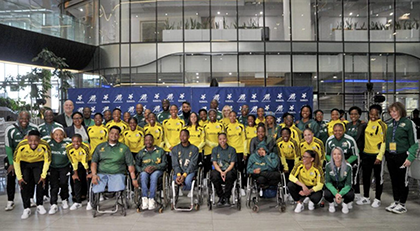
| The journey to another continental crown is officially underway after Banyana Banyana arrived safely in Morocco ahead of the 2026 CAF Women’s Africa Cup of Nations (WAFCON). |
|
|
| |
Following a journey lasting just over 20 hours from South Africa, the national women’s team landed in Casablanca on Sunday before checking into their hotel and wasting little time getting back to work. Training resumed on Monday as preparations intensified for Africa’s biggest women’s football tournament, which runs from 26 July to 16 August 2026.
For South Africa, the stakes could hardly be higher. Not only will the team be defending the title they famously won in 2022, but this year’s tournament also serves as a qualification pathway for the 2027 FIFA Women’s World Cup in Brazil.
Head coach Dr Desiree Ellis recently confirmed her final squad of 26 players, blending proven experience with exciting new talent. Seventeen members of the group featured in the previous WAFCON tournament, while nine players have earned places for this year’s campaign.
Among the fresh faces are Katlego Moletsane, Isabella Ludwig, Asanda Hadebe, Antonia Maponya, Zoe October, Robyn Moodaly-Salgado, Nthabiseng Majiya and Thembi Kgatlana, giving the squad a new look while maintaining a strong core of experienced internationals.
Moodaly-Salgado returns to the national setup after last representing South Africa in 2023, while Ronnel Donnelly is back in the fold after falling out of recent selections despite being part of the squad that finished fourth at the last tournament.
Six players will experience WAFCON for the very first time. Moletsane, Hadebe, Maponya, Phila, Ludwig and 18-year-old Zoe October will all make their tournament debuts, with October becoming the youngest member of the travelling squad.
South Africa will be making its 14th appearance at the Women’s Africa Cup of Nations and has been drawn into a challenging Group B alongside Tanzania, Ivory Coast and Burkina Faso.
The defending champions begin their campaign against Tanzania, with kick-off scheduled for 19:00 South African time. Four days later they face Ivory Coast before rounding off the group stage against Burkina Faso, with all three fixtures taking place at Moulay Rachid Stadium in Casablanca.
Having ended years of near misses by lifting the continental trophy in 2022, Banyana Banyana now return to Morocco carrying the expectations of a nation. With a balanced squad, valuable tournament experience and several emerging stars eager to make their mark, Ellis’ side will believe they have every chance of defending their African crown while taking another significant step towards the 2027 FIFA Women’s World Cup.
– Source: www.capetownetc.com |
|
| |
|
| |
| TEAM SA’S COMMONWEALTH GAMES SQUAD ARRIVES IN GLASGOW |
|
| |
| Team South Africa’s athletes have started arriving in Glasgow ahead of the 2026 Commonwealth Games starting on Thursday, 23 July 2026. |
| |
Team South Africa’s athletes have started arriving in Glasgow ahead of the 2026 Commonwealth Games, with excitement building as the multi-sport event gets under way later this week.
A large contingent departed from Johannesburg’s OR Tambo International Airport on Monday evening to join team-mates who had already arrived in Scotland, while others continue to make their way to the host city.
SASCOC CEO Nozipho Jafta, who travelled with the squad, said the team features an exciting mix of experienced campaigners and emerging talent. |
|
|
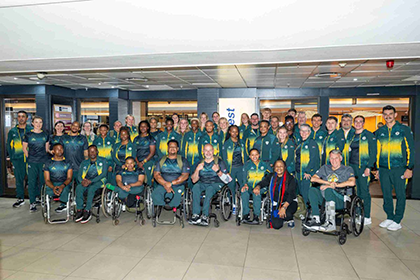 |
|
| |
“It’s so exciting to see these athletes, a blend of youth and experience, all so eager to do their best for Team SA. We go there full of hope for these Games and we look forward to seeing their progress. It’s a lovely blend of athletes carrying the country’s hopes,” Jafta said.
Team SA represented across all 10 sports
The 2026 Commonwealth Games will feature 10 sports, including six fully integrated para-sports.
South Africa will compete in:
- Athletics
- Swimming
- 3×3 basketball
- Lawn bowls
- Powerlifting
- Artistic gymnastics
- Boxing
- Judo
- Netball
The South African team consists of 111 athletes (58 men and 53 women) competing in all 10 sports.
Chad le Clos eyes another slice of history
One of the biggest storylines for Team SA is veteran swimmer Chad le Clos, who is set to compete at his sixth Commonwealth Games.
The decorated Olympian has already won 18 Commonwealth Games medals since making his debut in 2010 and needs just one more medal to become the outright most decorated male athlete in Commonwealth Games history.
He currently shares the record with Australian shooter Phillip Adams and England’s Mick Gault.
Defending champions back in the pool
Team SA also boasts two defending Commonwealth champions from the Birmingham 2022 Games.
Backstroke specialist Pieter Coetze returns after claiming a gold, silver and bronze medal four years ago, while Lara van Niekerk will look to defend the women’s 50 m and 100 m breaststroke titles after completing an impressive sprint double in Birmingham.
With a blend of proven stars and exciting young talent, Team South Africa will be hoping to make a strong impression when the Commonwealth Games run from 23 July to 2 August 2026 in Glasgow.
At the Birmingham 2022 Games, South Africa finished ninth in the final medal table with a total of 27 medals, which comprises seven golds, nine silvers and 11 bronzes.
– Source: www.thesouthafrican.com
|
|
| |
|
| |
| NKOSI NDEBELE TAKES SOUTH AFRICAN MMA TO THE WORLD |
|
| |
 |
|
| After capturing the PFL Africa bantamweight title and transforming his career, South African MMA star Nkosi Ndebele says his next fight is not about proving himself. This is more about showing the world what years of sacrifice and hard work have prepared him for. |
|
|
| |
The 2025 PFL Africa champion will make his PFL Global debut on 25 July 2026 in Washington, DC, where he takes on American Brandon Davis in a catchweight bout. The opportunity also makes Ndebele only the second South African mixed martial artist to compete on the PFL Global stage.
Reflecting on the next chapter of his career, Ndebele says his mindset has shifted dramatically.
“I’m not hoping to prove anything. I’m hoping to showcase the talent and the hard work I’ve put in over all these years. I’ve had many battles and many fights. Right now it’s just time to take over.”
He believes competing on the global stage is the natural next step after years of chasing opportunities.
“Having this opportunity with PFL Global just fits perfectly. I’m here to shine.”
While the spotlight now shines brightly on the South African, the journey has been anything but easy. Ndebele says pursuing a career in MMA meant leaving home, spending months away from his family and walking away from a more conventional career path.
He also had to ignore those who questioned whether mixed martial arts could ever become a successful profession in South Africa.
“There were people who didn’t understand what I was doing. They believed success only looked one way, but I kept believing in myself.”
Winning the inaugural PFL Africa title proved to be a turning point. Beyond the trophy, Ndebele says it opened new opportunities, improved life for his family and reinforced his belief that the sacrifices were worthwhile.
“It changed my life. It gave me opportunities in business, helped my family and motivated me even more. It showed me there’s a career in this if you stay focused and keep working.”
Now, as he prepares for arguably the biggest fight of his career, Ndebele hopes his story encourages other young South Africans to trust their own path.
– Source: www.goodthingsguy.com |
|
| |
|
| |
|
|
|
|
|
|
|
|