| |
| |
|
| |
| SOUTH AFRICA COMMEMORATES 70 YEARS OF 1956 WOMEN’S MARCH |
|
| |
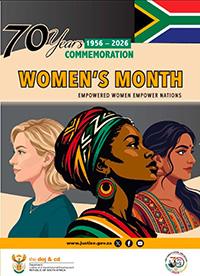
| President Cyril Ramaphosa has led the nation in commemorating the 70th anniversary of the 1956 Women’s March, describing the occasion as one of the most important days on South Africa’s national calendar. |
|
| |
 |
|
Addressing the gathering at the Union Buildings in Tshwane on Sunday, 9 August 2026 – the site to which the women marched – the President honoured the more than 20 000 women who marched against the apartheid government’s pass laws on 9 August 1956.
“Today is no ordinary commemoration. National Women’s Day is a day on which we honour the women of South Africa. But it is also a day of profound significance for our entire country.
“The Women’s March of 1956 was not a footnote in our struggle for freedom. That helped to change the course, the character and the leadership of that struggle. It demonstrated that women were not merely supporters of the struggle. They were its leaders, its organisers and its authors,” President Ramaphosa said.
On that day in 1956, women marched to the seat of apartheid power, bearing petitions with some 100 000 signatures, and then stood in complete and determined silence.
“But theirs was not the silence of fear. It was not the silence of submission. It was the silence of courage gathering its strength. It was the silence of women who knew that they carried the justice of their cause within them.
“For 30 minutes, there was no chant, no speech and no cry. Yet their silence said everything that needed to be said. The Union Buildings may have been quiet, but the conscience of a nation was being awakened,” the President said. |
|
|
| |
He saluted the four women who were at the forefront of the march, Lilian Ngoyi, Helen Joseph, Rahima Moosa and Sophie de Bruyn.
He emphasised, though, that they were strengthened by thousands of women behind them – names which ought to be recorded in history.
“We know the names of some, but we do not yet have the names of all of them. We therefore welcome the work of the Ahmed Kathrada Foundation and the Sophia and Henry De Bruyn Legacy Foundation through the “Write Her into History” campaign.
“Through the campaign you are restoring the names and stories of the women of 1956 to our national memory. I call on every family and everyone who knew any one of those women who marched, who took part in that march, to come forward and present their story to these two foundations so that we can complete the roll call of courage and honour,” President Ramaphosa said.
Leaps of democracy
Since the advent of democracy in 1994, South Africa has made significant strides to empower women, with women occupying some of the country’s highest offices, including that of Ministers and Deputy Ministers and other political offices, Chief Justice, National Speaker of the National Assembly, Chairperson of the National Council of Provinces, Public Protector and Auditor-General.
“These gains matter. They were fought for. They must be defended.
“South Africa ranks highly on global indices...for women’s empowerment, including for gender parity, educational outcomes, financial inclusion, and political representation and decision-making. We are proud of how far we have come. We are proud to stand on the shoulders of giants, of the imbokodo of 1956,” President Ramaphosa said.
Gender-based violence
At the same time, he acknowledged that much work remains to be done, particularly in addressing gender-based violence and femicide (GBVF), which the government has classified as a national disaster.
“In 1956, the women of our country lived in fear of being arrested for not having a pass. Today, women live in fear of the gender-based violence that continues to stalk them in the streets of our country, in the pathways of our villages and in their homes.
“That is why we classified [GBVF] as a national disaster. We did this, so that we could harness all the resources and capabilities of the state to end these crimes. [GBVF] is not a women’s problem. It is a problem of society. It is a problem of violent men,” he emphasised.
The President called on men and boys to step forward and be part of the solution.
“We must prevent this violence, as we are doing, by working with young men, with the support of traditional, community and religious leaders. We need to steer men away from behaviours as well as mindsets that breed violence against women.
“We need to break the silence that renders us complicit in this crime. It is not only the perpetrators of such acts that are guilty. It is also when we choose to look away,” the President insisted.
Looking to the future
The President urged South Africans to come together to honour the legacy of the women of 1956 by “delivering the future for which they marched”.
“We commit to build a South Africa in which no woman’s potential is limited by poverty, prejudice, violence or discrimination. We will build a nation in which women are equal in law, equal in opportunity, equal in safety and equal in power.
“The women of South Africa have shaped our freedom, and we thank them. Together, we will shape our future,” he said.
Meanwhile, De Bruyn has urged a new generation of women to rise against the contemporary plagues of gender-based violence, corruption and inequality.
In her address, she spoke of how the women marched, not without fear, but with determination and courage to confront the brutal apartheid government.
“The joy of that solidarity, the triumph of knowing that we could break the back of oppression is a fire that still burns deep within me even today,” she said.
– Source: SAnews.gov.za |
|
| |
|
| |
| PRESIDENT RAMAPHOSA MEETS PEREZ FAMILY FOLLOWING GOVERNMENT INTERVENTION |
|
| |
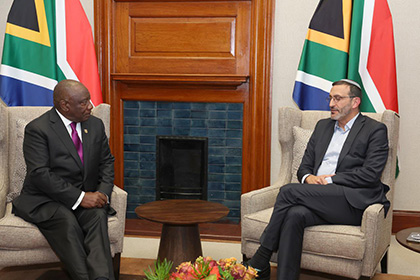
| President Cyril Ramaphosa has met with the family of the late Captain Daniel Perez, following the South African Government’s intervention to facilitate the release of his remains by Hamas. |
|
|
 |
|
| |
The President met with the Perez family on Monday, 10 August 2026, and expressed his condolences following the return of the remains of Perez, who was born and raised in South Africa.
Perez was taken hostage and killed on 7 October 2023.
The meeting follows the South African government’s efforts to facilitate the release of his remains and assist the family during the difficult period.
President Ramaphosa expressed his condolences to the Perez family and reaffirmed South Africa’s support for an all-inclusive peace process that will deliver lasting peace for the people of Israel and Palestine.
Government assistance in conflict zones
The Presidency said the South African government remains engaged in assisting South Africans, irrespective of race or religion, who are caught up in conflict zones.
Government also provides assistance to other foreign nationals where such support is requested.
“This includes facilitating the release of South Africans trapped in a war in Syria, citizens that were sold to Russian mercenaries, and the safe return of Ukrainian children,” The Presidency said.
The intervention involving the Perez family forms part of the broader assistance provided by government to people affected by conflict and humanitarian crises.
The Presidency said South Africa remained committed to supporting efforts aimed at achieving lasting peace and resolving conflicts through inclusive peace processes.
– Source: SAnews.gov.za |
|
| |
|
| |
| SOUTH AFRICA’S SADC CHAIRPERSONSHIP TO PRIORITISE ECONOMIC GROWTH, JOB CREATION |
|
| |
 |
|
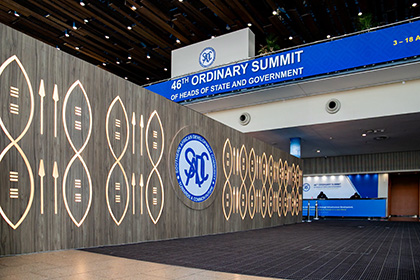
| South Africa has outlined its main priorities for its Chairpersonship of the Southern African Development Community (SADC), with a strong emphasis on driving economic growth and job creation, while strengthening peace and regional stability. |
| |
|
|
|
| |
International Relations and Cooperation Minister Ronald Lamola says the priorities are informed by the region’s growing young population and the need for SADC economies to create opportunities at a pace that matches demographic growth.
Speaking at the SADC Council of Ministers meeting in Durban on Wednesday, 12 August 2026, Minister Lamola said South Africa’s 2026-2027 Chairpersonship would focus on four strategic areas: peace, security and stability; accelerated industrialisation; infrastructure development; and social and human capital development.
“It brings responsibility into our hands to ensure that the level of economic growth and job creation is on par with this reality of a growing population. We must be responsive to this reality, and it means it cannot be business as usual. This Council of Ministers needs to guide this region. How do we contribute to change the tide of events on our continent?” the Minister said.
On peace and security, Minister Lamola said South Africa would work to strengthen the region’s collective response to security and political challenges.
“We will promote peace, security and stability. The security of one Member State is inseparable from the security and stability of the entire Community,” he said.
SADC’s history of collective action, Minister Lamola said, remains one of its greatest strengths.
“Our regional bloc has a proud history of collectively responding to threats to peace and security in our region. Time and again, we have demonstrated that regional solidarity remains our greatest strength in addressing emerging security and political challenges,” the Minister said.
On the economic front, South Africa will prioritise accelerated industrialisation through agricultural transformation, critical minerals beneficiation, increased regional trade and the development of regional value chains.
Minister Lamola said the region must use its mineral wealth to drive local economic development rather than continue exporting raw materials.
“There is a growing consensus that rising demand for critical minerals presents a unique opportunity for our region’s economic and social development.
“Reversing this pattern requires us to beneficiate our resources, build regional value chains and trade more with one another,” Minister Lamola said.
Infrastructure development will also be central to the Chairpersonship, with South Africa seeking to strengthen the energy, transport, ports, digital and water networks that support regional economic activity.
“We will champion the expansion and modernisation of the infrastructure that connects our region,” Minister Lamola said.
He said stronger regional infrastructure is essential to expanding manufacturing and creating employment.
“Without these foundations, regional manufacturing cannot expand. At only 10% of GDP [gross domestic product], it cannot generate employment on the scale our region requires.”
Minister Lamola said the region’s youthful population makes job creation an urgent priority, noting that nearly 60% of Africa’s population is under the age of 25.
“This means our economies and level of job creation must be on par with population growth.”
The priorities will also be underpinned by a focus on gender equality, climate resilience and disaster risk management.
Minister Lamola said South Africa would approach its SADC Chairpersonship as a collective responsibility, working with Member States to advance regional integration and shared prosperity.
“As Southern Africa’s most industrialised economy, we recognise the duty and obligation to place our capabilities at the service of regional integration and shared prosperity. We approach the Chairpersonship in that spirit, with humility, purpose and a commitment to work with every Member State,” he said.
– Source: SAnews.gov.za |
|
| |
|
| |
| MINISTER LAMOLA CO-CHAIRS AMBASSADORIAL BREAKFAST ON STRENGTHENING ECONOMIC DIPLOMACY ACROSS AFRICA |
|
| |
 |
|
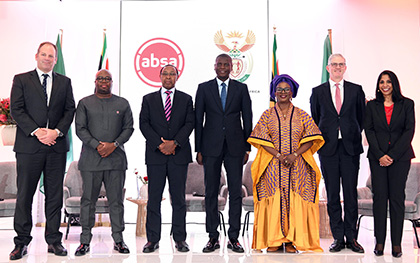
| Minister of International Relations and Cooperation Ronald Lamola co-chaired an Ambassadorial Breakfast on Strengthening Economic Diplomacy, Trade and Investment Across Africa, hosted by the Department of International Relations and Cooperation (DIRCO) in partnership with Absa on Friday, 7 August 2026, at the Maslow Hotel in Sandton. |
|
|
| |
The breakfast brought together African Heads of Mission accredited to South Africa, senior government representatives, Absa leadership and other strategic stakeholders to explore opportunities to deepen economic cooperation, promote intra-African trade and investment, and advance regional economic integration.
The engagement provided a platform for government, diplomatic missions and the private sector to exchange views on how stronger public-private partnerships can support Africa’s economic development priorities, including the implementation of the African Continental Free Trade Area (AfCFTA). Discussions also focused on strengthening regional value chains, infrastructure development, investment opportunities and sustainable economic growth.
The initiative forms part of DIRCO’s efforts to leverage diplomacy to advance South Africa’s economic diplomacy agenda and strengthen partnerships across the continent. It also underscored the importance of closer collaboration between diplomatic missions and the private sector in identifying commercial opportunities and supporting greater intra-African trade and investment.
The engagement reaffirmed South Africa’s commitment to advancing practical partnerships that contribute to continental integration, industrialisation and shared economic prosperity.
– Source: Public Diplomacy Platforms |
|
| |
|
| |
| DEPUTY MINISTER BOTES ON OFFICIAL VISIT TO CUBA |
|
| |
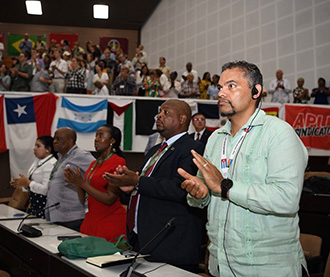
| Deputy Minister of International Relations and Cooperation, Alvin Botes, participated in a number of engagements in Havana, Cuba, on 10 and 11 August 2026, including the official opening of the 34th Havana International Book Fair and the First Fidel International Colloquium. |
|
|
 |
|
| |
On 10 August, Deputy Minister Botes attended the official opening of the 34th Havana International Book Fair on the sidelines of the First Fidel International Colloquium.
On 11 August, Deputy Minister Botes participated in the First Fidel International Colloquium, held at the Havana Convention Palace.
The colloquium brought together prominent figures to reflect on the legacy of former Cuban President Fidel Castro and the foreign policy of the Cuban Revolution.
Among the speakers was Dr Nkosazana Dlamini-Zuma, former Chairperson of the African Union Commission, who addressed the dialogue titled Fidel and the Foreign Policy of the Cuban Revolution.
On the margins of the colloquium, Deputy Minister Botes held a bilateral meeting with Dr Tania Margarita Cruz Hernández, Deputy Minister of Public Health of Cuba.
The engagement provided an opportunity for the two Deputy Ministers to meet on the sidelines of the international gathering and further engage on matters of mutual interest between South Africa and Cuba.
Deputy Minister Botes also met with the Speaker of the Cuban National Assembly of People's Power, HE Mr Esteban Lazo Hernández, on the margins of the First Fidel International Colloquium held at the Havana Convention Palace, Cuba, on 12 August 2026.
The First Fidel International Colloquium forms part of ongoing international reflections on Fidel Castro’s legacy and Cuba’s role in international affairs.
– Source: Public Diplomacy Platforms |
|
| |
|
| |
| TEAM SOUTH AFRICA ADVANCES ENERGY INVESTMENT AGENDA IN CHINA |
|
| |
| Team South Africa has completed a mission to China aimed at unlocking critical investment for South Africa’s energy infrastructure and strengthening cooperation with Chinese industrial players. |
|
|
 |
|
| |
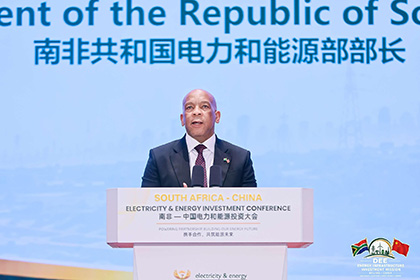
Electricity and Energy Minister Dr Kgosientsho Ramokgopa led a South African delegation at the South Africa-China Electricity and Energy Investment Conference in Beijing last week, where he advocated for strategic partnerships and investment to secure the country’s energy future, with opportunities underpinned by the Integrated Resources Plan (IRP) 2025.
The mission sought to align Chinese industrial capability with South Africa’s national priorities under the country’s industrial-led inclusive growth path, anchored by the energy sector.
According to the Department of Electricity and Energy, the mission has solidified a robust pipeline of investment interest, including advance interest from six key Original Equipment Manufacturers (OEMs) in the energy sector.
The delegation also made significant progress on several long-standing initiatives.
Among the key developments was Sasol’s commissioning of Envision to design a green hydrogen system for its Sasolburg operations.
The project will explore the production of green hydrogen for eMethanol and eventually, sustainable aviation fuel (eSAF), in line with Sasol’s broader strategy to decarbonise its industrial assets.
The mission also facilitated the signing of a Memorandum of Understanding between South Africa’s National Radioactive Waste Disposal Institute (NRWDI) and the China National Nuclear Corporation (CNNC).
The agreement will see the two institutions collaborate on advanced nuclear waste disposal technologies.
The visit further included technical site visits focused on green hydrogen, green ammonia, green energy supply to data centres, nuclear waste storage and disposal facilities, and ultra-high-voltage transmission technologies, as well as Special Economic Zones.
The department said these engagements are focused on strengthening industrial expansion.
“By bridging the gap between policy and implementation, the delegation has established a clear roadmap for the next phase of development,” the department said.
The mission concludes with Team South Africa fully prepared to consolidate and reconcile final commitments, translate technical insights from the site visits into actionable project pipelines, and accelerate the execution of high-impact energy and infrastructure projects.
The Department of Electricity and Energy said the mission represents progress in efforts to attract investment and build partnerships that support South Africa’s energy infrastructure and industrial development priorities.
– Source: SAnews.gov.za |
|
| |
|
| |
| DEPUTY MINISTER, CHINESE EMBASSY TO DONATE EDUCATIONAL EQUIPMENT |
|
| |
 |
|
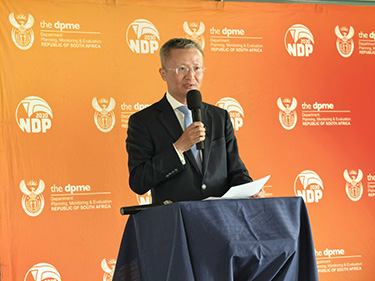
| As part of efforts to create an enabling learning environment, Deputy Minister in the Presidency for Planning, Monitoring and Evaluation, Seiso Mohai, and the Embassy of China donated educational equipment and learning materials to the Thiboloha Special School in the Maluti-aPhofung Local Municipality in the Free State on Friday, 7 August 2026. |
|
|
| |
The visit to the school that caters for learners from Grade R to Grade 12 living with deafness, blindness, autism and intellectual disabilities forms part of government’s commemoration of Nelson Mandela International Day under the 2026 theme: It is still in our hands to combat poverty and inequity.
“The school has been identified for developmental support, including learning aids, sports equipment, boarding-house essentials and infrastructure-related improvements.
“As part of preparations for Mandela Month, the Deputy Minister engaged the Ambassador of the People’s Republic of China to South Africa, His Excellency Wu Peng, regarding possible support for the school and broader cooperation linked to District Development Model (DDM) initiatives in the Thabo Mofutsanyana District,” the Department of Planning, Monitoring and Evaluation said.
The department said the donation will contribute towards the educational needs of learners.
“The donation will contribute to the educational needs of learners and support teachers in creating an enabling and inclusive learning environment,” said the department.
– Source: SAnews.gov.za |
|
| |
|
| |
| SOUTH AFRICA SECURES US$500 MILLION TO IMPROVE BASIC SERVICES IN METROS |
|
| |
| The Asian Infrastructure Investment Bank (AIIB) and South Africa have signed a US$500 million sovereign-backed loan to support improvements in the provision of water and sanitation, electricity, and solid waste services in South Africa’s eight metropolitan cities. |
|
|
 |
|
| |
South Africa’s metropolitan municipalities are home to approximately 22 million people and generate around 85% of the country’s economic output, yet face mounting challenges from ageing infrastructure, rapid urbanisation and increasing climate risks.
The loan will support the Metro Trading Services Programme to address these pressures by helping reduce non-revenue water and electricity losses, improve solid waste management and strengthen institutional capacity, contributing to more reliable service delivery and greater climate resilience.
The programme will help improve the financial sustainability, accountability and operational performance of municipal services, including water supply and sanitation, electricity and solid waste management services, while supporting South Africa’s transition to low-carbon, climate-resilient urban development.
“By strengthening municipal governance and improving the performance of essential urban services, the Metro Trading Services Programme will enhance infrastructure delivery while supporting South Africa's climate and development objectives,” AIIB's Director-General, Public Sector Clients Department, Rajat Misra, said in a statement on Friday, 7 August 2026.
The financing marks AIIB’s first investment in South Africa, establishing a new partnership to advance the country’s sustainable infrastructure priorities.
According to National Treasury, by 2031, the programme is expected to enable all eight participating metropolitan municipalities to meet the program’s minimum performance conditions, reduce non-revenue water from 41% to 28% and lower electricity losses from 22% to 12%, delivering more efficient, reliable and sustainable municipal services.
“The AIIB financing strengthens the government’s broader package of support to improve the governance, financial management and operational performance of trading services in metropolitan municipalities,” National Treasury Director-General Duncan Pieterse said.
The Asian Infrastructure Investment Bank is a multilateral development bank dedicated to financing “Infrastructure for Tomorrow,” with sustainability at its core.
– Source: SAnews.gov.za |
|
| |
|
| |
| PLANNING FOR COMMON PROSPERITY |
|
| |
 |
|
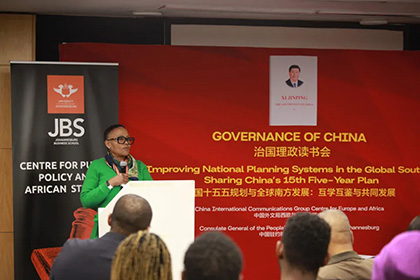
| China is committed to working hand in hand with African countries, including South Africa, to advance modernisation and build a community with a shared future for mankind. It also strives to strengthen coordination and cooperation among countries of the Global South and promote the reform and improvement of global governance, said Pan Qingjiang, Consul-General of China in Johannesburg, at the “Governance of China” seminar. |
|
|
| |
Held on Friday, 7 August 2026, at the Johannesburg Business School of the University of Johannesburg, the seminar was themed Improving National Planning Systems in the Global South: Sharing China’s 15th Five-Year Plan (2026-2030). More than 100 participants from South Africa’s political, academic and media circles attended.
People-centred philosophy
Pan further stated that this year marks the 105th anniversary of the founding of the Communist Party of China (CPC). At the commemorative gathering in Beijing, CPC Central Committee General Secretary Xi Jinping delivered an important speech, elaborating, for the first time to the world, the secret behind the CPC’s success in leading the Chinese people through an extraordinary journey and achieving remarkable accomplishments. Formulating and implementing medium- and long-term development plans constitutes one concrete embodiment of this success formula.
“Progressive long-term planning provides clear guidance for successive endeavours,” said Pan. Since the launch of the first Five-Year Plan in 1953, 14 such five-year plans have propelled China from building an independent and relatively complete industrial system to completing the building of a moderately prosperous society in all respects and now towards basically realising socialist modernisation. All these efforts revolve around the long-term goal of building China into a great modern socialist country.
He added that over more than seven decades, China has transformed from a nation unable to manufacture even a single automobile or aircraft into the world’s largest manufacturing powerhouse, testament to the vital role of long-term planning in national development.
The Report to the 20th National CPC Congress laid out a two-stage strategic plan for building a great modern socialist country and advancing towards the second Centenary Goal. The first stage, basically realising socialist modernisation by 2035, requires three consecutive five-year plans: the 14th, a starting phase; the 15th, a critical phase for consolidating foundations and launching all-round efforts; and the 16th, a decisive phase for final breakthroughs. This phased planning framework turns the distant vision of basic socialist modernisation into decomposable, implementable and verifiable stage-specific tasks.
For her part, Pinky Kekana, Deputy Minister of Public Service and Administration of South Africa, noted that South Africa and China have followed different historical paths, operate within different political systems and are guided by different constitutional traditions. Yet both recognise that the state has a central responsibility to improve the lives of its citizens through strategic planning, effective governance and long-term investment in people.
“China’s experience in long-term national planning offers important lessons regarding strategic coordination, infrastructure planning, industrial policy and implementation over extended time horizons,” she said, adding that equally, South Africa contributes valuable experience in constitutional governance, institutional accountability and cooperative governance across spheres of government.
She noted that these perspectives should not be viewed as competing alternatives, but as complementary contributions to the broader conversation on development in the 21st century. “As countries of the Global South, we have much to gain from partnerships that are based not on dependency, but on mutual respect, shared learning and practical cooperation,” she added.
Such cooperation should increasingly extend beyond trade and investment to include public sector innovation, digital government, artificial intelligence, public administration, leadership development and skills exchange. The future developmental state will be digitally enabled, data-driven and citizen-centred. Technology will undoubtedly transform government, but technology alone will never substitute for ethical leadership, institutional integrity and professional public servants, she pointed out.
Bandile Masuku, member of the Gauteng Provincial Legislature, said that both China and South Africa are implementing their respective development plans and are supporting each other.
“Today we meet at a particularly significant moment, as China has embarked on the implementation of its 15th Five-Year Plan, while South Africa approaches the final years of its National Development Plan 2030,” he said. “Both plans are ambitious national visions designed to improve the lives of citizens, strengthen economies and build prosperous societies.”
He noted that one of the most remarkable features of China’s development experience is the consistency of its planning framework. The 15th Five-Year Plan builds upon previous plans and seeks to strengthen scientific and technological innovation, industrialisation, infrastructure development, national security, social development and long-term economic growth.
“It emphasises policy alignment and coordination across all levels of government, and measures outcomes. South Africa similarly adopted the National Development Plan 2030 as a long-term blueprint aimed at eliminating poverty, reducing inequality and creating jobs by 2030,” he said.
Promoting progress in the Global South
Zama Mthombeni, Associate Professor of Anthropology and Development Studies at the University of Johannesburg, also shared her views on development planning and implementation.
“When we look at [South Africa’s] National Development Plan 2030 and [China’s] 15th Five-Year Plan, one thing that does stand out is the different planning philosophies,” she said. “So, we are trying to redress certain inequalities that emerged because of apartheid, at the same time trying to keep up with the economic demands of the time.”
She noted that China’s current plan, like those that preceded it, is part of a longer-term process, with each Five-Year Plan building towards broader goals. China has been able to achieve the goals set under one plan before moving on to the next, she said. She believes China shares some similarities with South Africa. China was once a poor country, but it was able to industrialise and establish itself as one of the world’s major economic powers.
“I think implementation is one thing that we’ve been reiterating: it is not just about who has the better plan, but more about whether we are able to implement it,” she argued. “So, it is important to see that in the National Development Plan 2030, we are saying we want quality education, quality health care, employment, reduced inequality.”
Frank Lekaba, Professor at the Thabo Mbeki African School of Public and International Affairs at the University of South Africa, reflected on China’s development experience.
“When you look at China’s 15th Five-Year Plan, you will find that the Chinese are able to understand not only the level and trajectory of development, but also that development happens in a global context,” he said.
He noted that Chinese foreign policy shares the principle of multilateralism with South Africa. China, he said, has managed to exercise multilateralism effectively, enabling it to navigate tensions within the international system.
The seminar was co-hosted by the China International Communications Group Centre for Europe and Africa and the Consulate General of China in Johannesburg. Experts and scholars discussed topics including the role of China’s Five-Year Plans in the development of Global South countries, mutual learning between China and African countries in governance, and the importance of leadership in a country’s development.
– Source: www.thediplomaticsociety.co.za |
|
| |
|
| |
| MPUMALANGA TEEN’S BRILLIANT WATER INNOVATION EARNS GLOBAL RECOGNITION |
|
| |
| Seventeen-year-old Sinenhlanhla Sikhulile Nkosi is showing the world what young South African brilliance looks like, after turning a real concern about water safety into an award-winning innovation now earning him global recognition. |
| |
|
|
|
 |
|
| |
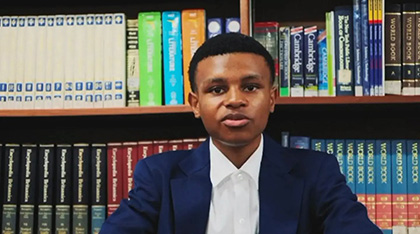
Mpumalanga changemaker Sinenhlanhla Sikhulile Nkosi has made his community, province and South Africa at large proud after being named the winner of the 2026 South African Youth Water Prize (SAYWP).
Nkosi, a Grade 11 learner from Sitintile Secondary School in Mbombela, Mpumalanga, has also made history as the first learner from the province to win the Water and Sanitation Department’s flagship South African Youth Water Prize competition.
Sinenhlanhla secured the national title with his project, The Sentinel Barrier, a special silicone-based elastomeric coating applied inside PET plastic bottles.
His invention helps prevent microplastics and chemicals from leaching into drinking water, offering a practical solution to some of the biggest environmental and health challenges facing communities today.
“I wanted to develop a solution that prevents this contamination before it happens. Instead of trying to remove microplastics after they have already entered the environment, my project aims to prevent them at the source before they form,” Nkosi shared.
Now, the 17-year-old has the opportunity to earn further international recognition through the Stockholm Junior Water Prize People’s Choice Award, where members of the public can vote for his project online.
As South Africa’s youth representative, the young innovator will stand alongside some of the world’s most promising young scientists at the Stockholm Junior Water Prize in Sweden in a few weeks, competing against students from more than 30 countries who share his passion for water and environmental issues.
What makes Sinenhlanhla’s achievement so inspiring is not only the prize he has won, but the brilliance behind it: he saw a real problem affecting himself and the people around him, then applied his innovative thinking to create a solution with the potential to make drinking water safer. He is not waiting for the future; he is already shaping it, and his growing global recognition is well deserved.
– Source: www.goodthingsguy.com |
|
| |
|
| |
TWO CAPE TOWN INNOVATORS SHORTLISTED FOR AFRICA PRIZE FOR ENGINEERING INNOVATION 2026 |
|
| |
| Chemical engineer Professor Dyllon Randall and biomedical researcher Sincengile Ntshingila have both been shortlisted for the prestigious Africa Prize for Engineering Innovation 2026, placing them among just 16 innovators selected from across 11 African countries. |
|
| |
|
| |
Their recognition comes at a time when South Africa continues to grapple with one of the world’s highest youth unemployment rates. With more than 60% of people aged between 18 and 24 unemployed, the achievement serves as another reminder that local innovation has the potential to create both businesses and jobs when backed by investment and mentorship.
Although their projects tackle very different problems, both innovators share a common goal, using engineering to solve real-world challenges that affect millions.
Professor Randall, a specialist in water quality engineering, developed Pee-Cycling, a system designed to recover valuable nutrients from human urine instead of allowing them to be flushed away.
The technology collects urine through specially designed urinals before treating it through a multi-stage process that preserves nutrients and produces reusable water together with high-grade liquid fertiliser for nurseries.
The concept addresses several growing pressures facing Africa, where water scarcity, sanitation challenges and rising fertiliser costs continue to place strain on communities and food production. Randall previously described the traditional sanitation model as a ‘flush and forget’ system, arguing that valuable resources are unnecessarily discarded every day.
While Randall is rethinking sanitation, Ntshingila is focused on improving biomedical education. She created LabZero, a browser-based virtual laboratory that allows students to practise tissue culture techniques before entering real laboratories.
Training in tissue culture is essential for areas such as vaccine development, regenerative medicine and drug research, but mistakes in physical laboratories can contaminate experiments, waste expensive materials and delay research.
LabZero recreates the entire cell culture process digitally, allowing students to develop practical skills in a safe environment while reducing contamination risks and cutting plastic waste. The platform could also make advanced laboratory training more accessible to universities and institutions that lack expensive research facilities.
The Africa Prize for Engineering Innovation is regarded as the continent’s leading award for engineering-led entrepreneurship and supports innovators whose technologies have strong commercial and social potential.
Beyond financial support, shortlisted entrepreneurs participate in an eight-month programme covering business development, financial management, communications and mentorship from engineering and industry experts across Africa and the United Kingdom.
Meredith Ettridge, Associate Director for International at the Royal Academy of Engineering, said the calibre of innovation across the continent continues to grow.
‘The Africa Prize community continues to grow, and each year we’re seeing increased engagement from innovators across the continent, continually showcasing the depth and diversity of engineering talent in sub-Saharan Africa.’ – Meredith Ettridge, Associate Director for International at the Royal Academy of Engineering
She added that hosting this year’s final in Johannesburg is expected to encourage even more South African entrepreneurs to showcase engineering solutions that address local challenges.
The Africa Prize programme now supports more than 180 businesses across 24 African countries, with alumni collectively securing more than US$34 million (R556.3 million) in grants and equity funding. The 2026 Africa Prize final will take place in Johannesburg on 28 October 2026.
Alongside announcing this year’s shortlist, the Royal Academy of Engineering has officially opened applications for the 2027 Africa Prize. Entry is free for eligible innovators across sub-Saharan Africa, with a total prize pool of £85 000 (R1.8 million) available.
The overall winner will receive £50 000 (R1.092 million), while finalists also receive funding alongside extensive mentorship and commercialisation support.
Applicants must be developing scalable engineering innovations with clear social or environmental impact and submit their applications before the September deadline.
– Source: www.capetownetc.com |
|
| |
|
| |
| SEVEN WESTERN CAPE LEARNERS MAKE HISTORY AT INTERNATIONAL SPACE COMPETITION |
|
| |
 |
|
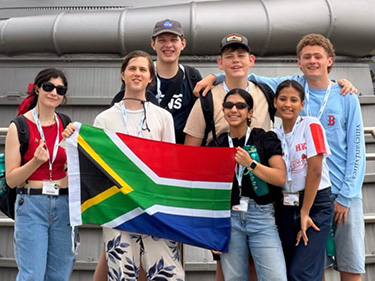
| Seven high school learners from the Western Cape have etched their names into history by winning the prestigious International Space Settlement Design Competition. |
|
|
| |
This renowned competition, held at NASA’s Kennedy Space Center in Florida, is the world’s longest-running space engineering contest for schools, and Team ZA’s victory marks South Africa’s first-ever entry into the finals.
Selected through the inaugural South Africa Space Design Competition hosted by the University of Cape Town, Team ZA was the sole representative from Africa, standing tall among competitors from the United Kingdom, Australia, Brazil, China, and the United States.
The team comprised Zayaan Abdurahman (Mondale High School), Joseph Allderman (Westerford High School), Benjamin Honigwachs (Bishops Diocesan College), Alaya Kaplen (Cannons Creek Independent School), Qayalah Omar (Cannons Creek Independent School), Ethan Schoombee (Fairmont High School), and Dean Weich (Bishops Diocesan College).
Team ZA’s winning proposal, dubbed Hermes, was an innovative design for a futuristic spacecraft capable of transporting 3 000 people across the inner Solar System, setting a benchmark for future space engineering projects.
The members of the team played integral roles, with Qaylah Omar showcasing their design as a presenter, while Benjamin Honigwachs, Joseph Allderman, and Ethan Schoombee defended their concept before the esteemed panel of judges.
Joseph Allderman also had the honour of receiving the Anita Gale Creative Genius Prize, one of only four awarded throughout the competition.
Reflecting on their collaborative success, Allderman noted, “Team ZA worked so cohesively together that we all deserved this award. I was just the one who got picked to represent it.”
His sentiments were echoed by the Acting Provincial Minister for Education, Anton Bredell, who congratulated the talented students: “On behalf of the Western Cape Government, I congratulate these remarkable young South Africans on their achievement. Their success is a powerful reminder that South African learners have the talent, determination, and creativity to compete with the very best in the world when they are given the opportunity.”
Chair and Executive Director of the South Africa Space Design Competition, Jagger Cooper-Doubell, reinforced the significance of this achievement, stating, “This achievement proves that South Africa’s talent can compete with the very best in the world. The talent was never missing in South Africa. The opportunity was.”
He highlighted the competition’s vital role in providing a platform and challenge for the learners, allowing them to excel on a global scale.
Following their groundbreaking success, plans are underway to expand the competitive landscape of space design in South Africa, with regional events slated for the Western Cape and KwaZulu-Natal in 2027.
Ambitious outreach plans aim to include all nine provinces, with entries for the 2027 South African season opening later this year.
– Source: www.capetownetc.com |
|
| |
|
| |
| TEAM SA’S JESSIE AND JAMES WIN AT WORLD’S BIGGEST COSPLAY COMPETITION |
|
| |
| Two South African cosplayers have won a special award at the World Cosplay Summit, the largest cosplay competition in the world. |
| |
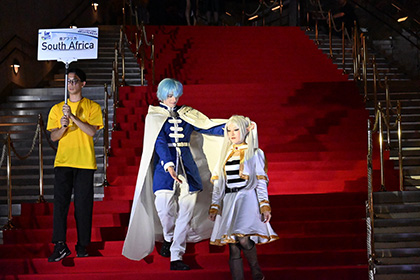
Jessica Lin (Jessie_Jestar) and James Avence (Speedyy) represented South Africa at the international championship in Nagoya, Japan, where teams of two from 40 countries competed with handmade costumes and performances inspired by Japanese games, anime and manga.
The Cape Town duo won the coveted Matsuri Award, which celebrates the team that brings the most energy, theatre and performance flair to the stage. |
|
|
 |
|
| |
“The team won the ‘Matsuri’ Award, whose core purpose is to honour a team that best captures the fun and dynamic atmosphere that can be created by cosplay and skit performances. Unlike technical awards that focus on armour fabrication or precise sewing techniques, the Matsuri/Festival category highlights enthusiasm and performance flair. It’s tough to generate tension in 2 mins 30 seconds, and the team was awarded for their portrayal of fear and suspense,” says team organiser Les Allen.
South Africa holds its own qualifying event every year at Comic Con Cape Town, where one team earns the chance to represent the country in Japan. Jessica and James were selected in May last year, which gave them more than a year to prepare for this month’s championship.
The pair chose characters from the hugely popular game Elden Ring. Jessica portrayed the Tarnished, while James became the terrifying Aging Untouchable monster, which hunts players by sound.
Their performance at the World Cosplay Summit captured the tension of that encounter so well that it earned them the award.
Les says the duo spent more than 200 hours building their costumes.
“Jess estimated over 200 hours of work going into the creation of their costumes. Making costumes at high-level competition covers the gamut of skills: sewing, painting, 3D printing, electronics work, and working with various types of foam and sealants,” shares Les.
Jessica and James’ win has earned them an invitation to appear as international cosplay guests at Florida’s largest cosplay convention, Holiday Matsuri.
South Africa has built quite the reputation on the international cosplay stage over the past few years. The country was the first in Africa to be invited to compete at the World Cosplay Summit 2018. Since then, our local competitors have earned five podium finishes in global championships.
“We would very much like to express our deepest thanks and gratitude to the Embassy of Japan in South Africa, who have been incredible in helping to get our team to Japan for the competition,” says Les.
– Source: www.goodthingsguy.com |
|
| |
|
| |
| STRANDFONTEIN’S BEACON OF HOPE WINS INTERNATIONAL ARCHITECTURE AWARD |
|
| |
 |
|
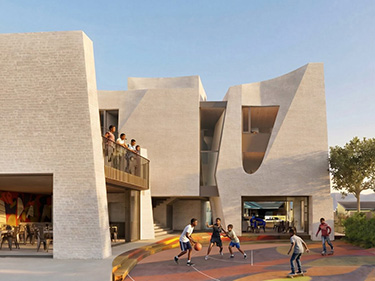
| A new Learning Centre for the 9Miles Project by SAOTA has just won an architectural award and is set to give the young people of Strandfontein a safe space to learn, grow, create and dream beyond their circumstances. |
|
|
| |
The 9Miles Project recognises that young people need safe environments, mentorship, structured after-school programmes and holistic support to help them beat the odds stacked against them.
By using surfing as a gateway to engagement and empowerment, alongside a range of development programmes, 9Miles provides exactly that.
At the heart of this work is the 9Miles Learning Centre by SAOTA, a new space that will soon be built as a permanent piece of community infrastructure.
Building Hope for Strandfontein’s Youth
Designed to bring together learning spaces, mentorship programmes, digital education and community activities, the centre will offer a safe, resilient environment for vulnerable young people and the wider community.
In recognition of this powerful social vision and community development focus, the Learning Centre recently received the 2026 WAFX Award in the Power & Justice category.
The award follows the project’s recent shortlisting for the World Architecture Festival (WAF) 2026, where it was named a finalist in the Future Projects – Education category.
The WAFX Award is a discretionary recognition that celebrates the world’s most forward-looking architectural concepts. It honours future projects that respond to key challenges architects will need to address in the years ahead, with judges recognising work that tackles significant issues facing architecture, society and the planet.
Beyond its award recognition, the centre is designed as an adaptable learning environment that extends well beyond the classroom. It will include educational rooms, quiet study areas, digital access, conference rooms and recreational spaces, as well as a kitchen for practical skills development.
A café will operate as an informal co-working space, enabling broader community use, while a rooftop vegetable garden will support hands-on learning in gardening and sustainability. These elements have been deliberately integrated to encourage interaction among the youth, recognising that mentorship and social exchange are as important as formal instruction.
Creativity is also built into the centre’s design. Its sports court will feature integrated artwork by renowned South African artist and designer Yay Abe, reinforcing the space as a place of expression, collaboration and shared identity.
Created with input from local youth, the artwork will also serve as a reminder of what can be achieved through creativity and purpose. 9Miles Founder Nigel Savel says having Yay Abe join the project “shows our youth that when you do what you love and were born to do, you’re not limited by circumstances.”
More than a place for learning, the project embodies 9Miles Project’s motto: “Going the Distance.” The building represents the organisation’s journey, its longstanding relationship with SAOTA, and its commitment to creating a lasting legacy for future generations.
Designed to support children and young adults beyond education alone, the centre seeks to empower them economically, emotionally and psychologically. It aims to help future generations become active citizens and agents of change within Strandfontein and beyond.
“We want to build up people with legacies that last forever. SAOTA has understood our vision of what we’re trying to achieve in the community and has walked alongside us every step of the way for many years now,” shares Sher’Neil Savel, 9Miles Project’s Co-Founder and Head of Sustainability.
For the Strandfontein community, the facility will demonstrate what is possible in a place where a building of this kind does not yet exist. In Sher’Neil’s words, the project is a testament that:
“It doesn’t matter where you come from; it matters that you have a vision and a dream, and that you’re going to pursue it and never give up.”
Ultimately, the project shows how architecture can support long-term social impact by creating places that foster education, opportunity and community resilience. As 9Miles Project prepares to begin construction on the Learning Centre, the organisation is actively pursuing funding and sponsorships to bring the project to life and enable lasting change.
– Source: www.goodthingsguy.com |
|
| |
|
| |
| WORLD’S FIRST-EVER MARIMBA CHAMPIONSHIPS HAPPENING IN CAPE TOWN |
|
| |
 |
|
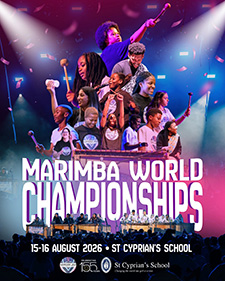
| On 15 and 16 August 2026, more than 1000 marimba players will descend on St. Cyprian’s School for the first-ever Marimba World Championships, bringing more than 100 bands and players of all ages together for one massive celebration of marimba music. |
| |
Musicians are travelling from across South Africa and from beyond the country’s borders to compete, connect and share the sound of African music with the world.
The event is being hosted by Marimba Jam, the Guinness World Records title holders for the Largest Marimba Ensemble.
Behind the championships is Kiara Ramklass, the founder of Marimba Jam, who has spent more than a decade building an organisation that brings the joy of marimba music to schools across South Africa.
The theme of the Marimba World Championships is one we can get behind! Harmony in Diversity aims to show how our differences can bring us together. |
|
|
| |
There will be two competition streams running across the weekend – the Golden Champs Stream in the Main Hall and the Main World Champs Stream in the Multi-Purpose Hall.
Preliminary rounds will take place throughout both days before things build towards the Finale Showcase on the evening of Sunday, 16 August.
Fifteen of the top bands from the competition will perform at the showcase, with four going head-to-head for the title of world champion.
There’s South African talent joining the celebrations, too. Biko’s Manna, the Joburg sibling trio who made it through to the quarter-final stages of America’s Got Talent, will also perform during the Finale Showcase.
While there is a world championship title up for grabs, Marimba Jam says the competition forms part of its greater mission to use African music to unlock the potential that exists in every child and bring people together through music.
– Source: www.goodthingsguy.com |
|
| |
|
| |
| SPRINGBOKS RISE TO SECOND-HALF CHALLENGE TO BEAT ARGENTINA IN BUENOS AIRES |
|
| |
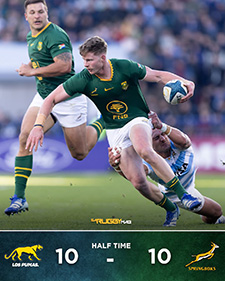
| The Springboks were far from their best but showed their trademark resilience to overcome a spirited Argentina 17-10 in Buenos Aires, Argentina. |
| |
Argentina opened the scoring after Cameron Hanekom was penalised for a high tackle, with Santiago Carreras converting from the tee. The Boks hit back a few minutes later when Sacha Feinberg-Mngomezulu converted a penalty after Pablo Matera was penalised for getting too eager at the ruck.
The Boks were looking rusty in the early exchanges, with a straightforward pass in the midfield not going to hand before an Argentina restart was also knocked on. A penalty at scrum time followed shortly after, and the hosts made the Boks pay, kicking for the corner before a clever little pop pass in the tackle created space for Benjamin Grondona, who charged through to score their opening try.
The Boks enjoyed a solid spell of possession but were not offering much on attack and struggling to trouble the home side's defence. They eventually found a way to the line, with Siya Kolisi impressing with a couple of strong carries, but the Bok captain left the field shortly afterwards. The Boks then lost their lineout after kicking for the corner, as the errors continued to mount. |
|
|
 |
|
| |
But with the first half winding down, the Boks finally found a bit of inspiration as a couple of smart offloads from Canan Moodie and Andre Esterhuizen in the tackle created the space for Edwill van der Merwe out wide, as they went into the sheds somewhat fortunately tied at 10-10.
More sloppiness from the Boks after the break put the hosts back on the front foot, with only the uprights coming to the rescue as Carreras narrowly missed from the penalty spot.
When a missed lineout from the hosts finally gave the Boks another opportunity, the ball was held up over the line, though the visitors were starting to see more possession and getting over the advantage line more regularly.
The Boks were unlucky not to score when a TMO intervention spotted that the ball had gone out of play way earlier in the build-up, as the home side escaped once again.
Argentina were beginning to live more dangerously, and when a clever kick from the recently introduced Handre Pollard pinned them back on their own goal line, the Boks turned the resulting scrum into a driving maul, with Cameron Hanekom dotting down from the back of the advancing pack as they finally hit the front for the first time in the match.
When a scrum penalty went the Boks' way shortly after, all suddenly seemed right with the world once again, even if the danger was far from over.
While the Boks weren't creating further daylight on the scoreboard, they had finally managed to grab the game by the scruff of the neck, and Argentina weren't able to exert much pressure.
That was until a superb 50-22 put them right on the attack and gave them a chance to snatch a draw in the dying embers of the match.
But after pounding at the line for phase after phase without success, an unfortunate knock-on from a disconsolate Matias Moroni brought their challenge to an end, as the Boks valiantly defended their line to hang on for a 17-10 victory.
– Source: www.sabcsport.com |
|
| |
|
| |
| SPRINGBOK WOMEN OVERPOWER FIJI IN SUVA TO OPEN TOUR WITH EMPHATIC WIN |
|
| |
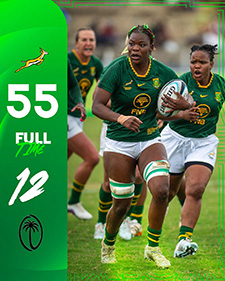
| The Springbok Women made a flying start to their two-Test tour of Fiji with a dominant 55-12 victory over the Fijiana XV in Suva on Saturday, 8 August 2026. |
| |
South Africa's forwards laid the platform for the nine-try win, dominating at scrum time and repeatedly powering over the gain line with pick-and-drives and mauls.
The Bok Women made the most of the wet and blustery conditions, with their set-piece work proving particularly effective. They led 27-7 at half-time after tries from props Xoliswa Khuzwayo and Nombuyekezo Mdliki, Lindelwa Gwala, Vainah Ubisi and Sizo Solontsi.
Khuzwayo's opener came after a clever training-ground move from a lineout, while Gwala and Solontsi both crossed from powerful driving mauls.
Fiji briefly threatened a comeback after Adi Vani Buleki scored early in the second half to make it 27-12, but their hopes were quickly dashed when No 8 Alfreda Fisher's yellow card for a high tackle on Catha Jacobs was upgraded to a red.
Khuzwayo added her second try soon afterwards before Maceala Samboya finished a slick backline move to put the result beyond doubt. |
|
|
 |
|
| |
Fullback Byrhandre Dolf then crossed after another well-worked set piece before replacement flanker Sinelitha Noxeke rounded off the scoring with her first Test try.
Dolf finished with 13 points, while South Africa's defence also stood firm against Fiji's dangerous counter-attacking game, limiting the hosts to two tries.
The Springbok Women will now look to complete a series sweep when the sides meet again next week.
– Source: www.sabcsport.com |
|
| |
|
| |
| TUMI RAMOKGOPA LEADS TEAM SA’S EIGHT-MEDAL WORLD U20 HAUL |
|
| |
 |
|
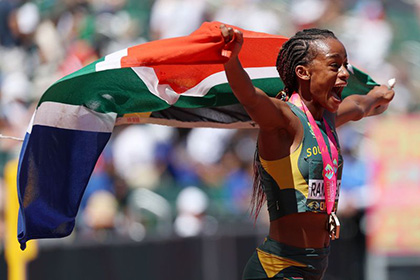
| Two races. Two medals. One seriously impressive World U20 Championships for Tumi Ramokgopa. |
| |
The South African hurdler signed off from Eugene, Oregon, with another silver medal in the bag, helping Team SA finish the championships with an impressive eight-medal haul.
Ramokgopa saved one of her best performances for the final day, racing to silver in the women’s 400 m hurdles in a personal best of 55.88 seconds. She shaved 0.02 seconds off her previous best and added another international medal to her growing collection.
And that came just a day after she had already stormed to silver in the 100 m hurdles, finishing just 0.03 seconds outside her South African U20 record. |
|
|
| |
Ramokgopa wasn’t the only South African making waves on the final day. Matodzi Ndou powered to bronze in the men’s 400 m hurdles, while Leendert Koekemoer helped the men’s 4x400 m relay team sprint to silver in a new African U20 record of 3:02.76.
Koekemoer, who had already picked up individual 400 m bronze earlier in the championships, produced the fastest split in the relay final, with Ryno Riekert, Kryn Romijn and Abelines Schoeman helping the team make history.
There were plenty more encouraging performances from the young South Africans, with Tiisetso Malungane finishing ninth in the 1 500 m, Joshua Gerber taking ninth in the discus and the men’s 4x100 m relay team finishing sixth.
By the time the final medals were handed out, Team SA had collected eight medals to finish 10th overall.
It is South Africa’s biggest medal haul at a World Athletics U20 Championships since the nine medals won in Nairobi in 2021.
Eight medals, a new African record and a double-medal performance from Ramokgopa. Team SA certainly left Eugene with plenty to celebrate.
– Source: www.goodthingsguy.com |
|
| |
|
| |
| BANYANA BANYANA URGED TO HOLD THEIR HEADS HIGH AFTER WAFCON EXIT |
|
| |
 |
|
| The Minister of Sport, Arts and Culture, Gayton McKenzie, has urged Banyana Banyana to hold their heads up high following their elimination from the Women’s Africa Cup of Nations (WAFCON 2026). |
| |
“Defeat is temporary, but our love for Banyana Banyana is permanent. Lessons were learned, and we shall return a better team. Hold your heads high, ladies,” the Minister said in a post on social media platform X.
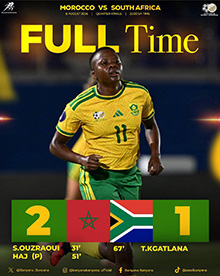
The national senior women’s football team crashed out of the WAFCON following a 1-2 defeat to tournament host Morocco on Saturday night, 8 August 2026.
“Banyana Banyana found themselves a goal down in the first half after Sakina Ouzraoui scored the opening goal of the match in the 31st minute. The Moroccans were awarded a penalty early in the second half,” the South African Football Association (SAFA) said.
Saturday’s quarter-final match was played at the Moulay el Hassan Stadium in Rabat. |
|
|
| |
“Coach Dr Desiree Ellis’ charges fought their way back and forced the hosts on the back foot, with Thembi Kgatlana pulling one back in the 67th minute. Banyana Banyana fought very hard for the equaliser, but in the end, Morocco held on to proceed to the next stage of the tournament,” said SAFA.
Meanwhile, Gauteng MEC for Education, Sport, Arts, Culture and Recreation, Lebogang Maile, commended the team for putting up a good fight at WAFCON.
“The team gave it their all, but unfortunately it was not enough to see them through this time around. It is unfortunate that Banyana’s journey in the competition came to an end unexpectedly.
“We are still proud of Banyana Banyana despite their elimination from the competition, as they displayed courage, determination and resilience. The team put up a brave fight against formidable teams of the continent throughout the competition. We thank the coach, players and the technical team for not giving up after a rough start. Reaching the knockout stages was not easy, and they gave it their best”.
“Their determination to keep on fighting is emblematic of the spirit of the women of 1956 who never wavered even when it was difficult. As we observe the 70th anniversary of the historic Women’s march, we wish to encourage Banyana not to be despondent and learn from those who came before them as they prepare for the future”, said the MEC.
This is as government encouraged all South Africans to unite behind the team and celebrate how far they have come.
– Source: SAnews.gov.za |
|
| |
|
| |
| SOUTH AFRICA TO HOST AFRICA’S BIGGEST BMX SHOWDOWN |
|
| |
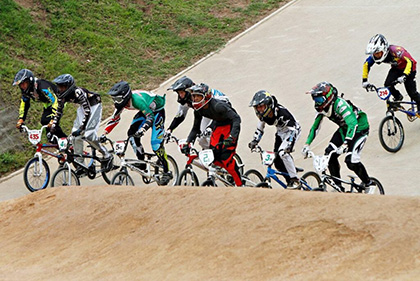
| Africa’s top BMX riders are heading to South Africa later this year after the country was awarded the honour of hosting the 2026 CAC BMX Racing African Continental Championships. |
|
|
 |
|
| |
The prestigious continental event will take place at Cradle BMX Club in Kromdraai, Gauteng, on 29 November 2026, with riders from across Africa competing for the coveted African champion titles.
The championships will feature the continent’s best talent across multiple categories, including Elite, Under-23, Junior and Challenge divisions, with competitors ranging from six years old to seasoned international riders.
Cycling South Africa says hosting the championships is a major boost for the local BMX community and an opportunity to showcase the country’s world-class facilities and passionate cycling culture.
BMX Commissioner Lorette Robertson described the event as a proud milestone, saying South Africa is ready to welcome Africa’s finest riders and deliver a championship worthy of the occasion.
The event is expected to attract riders representing their countries from across the continent, while local supporters will have the chance to cheer on Team South Africa on home soil.
– Source: www.goodthingsguy.com |
|
| |
|
| |
|
|
|
|
|
|
|
|