| |
| |
|
| |
PRESIDENT PLEDGES TO DRIVE DEEPER ECONOMIC INTEGRATION AS SOUTH AFRICA TAKES SADC CHAIR |
|
| |
| President Cyril Ramaphosa has pledged to use South Africa’s Chairship of the Southern African Development Community (SADC) to deepen regional economic integration and advance resilient, sustainable and inclusive industrialisation. |
| |
|
|
|
 |
|
| |
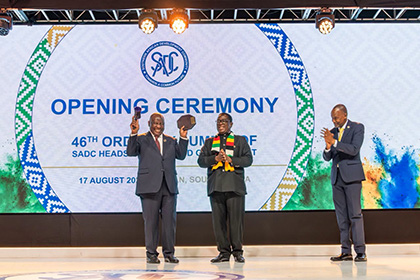
Accepting the SADC chairpersonship from Zimbabwean President Emmerson Mnangagwa at the 46th Summit of SADC Heads of State and Government in eThekwini on Monday, 17 August 2026, President Ramaphosa said South Africa assumed the responsibility with great humility and a deep sense of responsibility.
The handover marked the conclusion of Zimbabwe’s tenure and the beginning of South Africa’s leadership of the 16-member regional bloc.
President Ramaphosa said South Africa’s participation in SADC was deeply rooted in the region’s contribution to the country’s liberation.
“As a nation, we owe a debt of gratitude to the members of SADC and its predecessor, the Southern African Development Coordination Conference, for their contribution to the achievement of democracy in our country. Our participation in SADC is founded on this history,” the President said.
He said this history continued to underpin South Africa’s belief that the region’s future depended on working together.
“It is sustained by an abiding conviction that progress in our region will be secured only through unity, cooperation and solidarity,” President Ramaphosa said.
Driving regional economic integration
Setting out South Africa’s priorities for its tenure, President Ramaphosa pledged to work closely with all Member States while respecting the principles of sovereign equality, mutual respect and consensus building.
He said South Africa would build on the work of previous SADC chairpersons and take forward efforts to achieve the bloc’s Vision 2050 and implement the SADC Regional Indicative Strategic Development Plan.
A key focus would be strengthening economic ties across the region.
“We will seek greater integration of our economies, building ties of trade and investment that drive resilient, sustainable and inclusive industrialisation,” he said.
The commitment comes as SADC seeks to unlock the economic potential of its regional market by strengthening trade and investment links, industrial capacity and cross-border cooperation.
President Ramaphosa also committed South Africa to promoting peace, security and stability across the region, describing these as essential conditions for the wellbeing and development of its people.
Building on a legacy of solidarity
The President placed South Africa’s new role within the broader history of regional solidarity, expressing gratitude to outgoing Chairperson President Emmerson Mnangagwa for his leadership.
He also thanked the SADC Secretariat, led by Executive Secretary Elias Magosi, for supporting the Community’s work.
As South Africa assumes the chairpersonship, President Ramaphosa said the country would seek to ensure continuity while advancing the region’s long-term development priorities.
He said South Africa’s leadership would be guided by the same spirit of solidarity that brought the region together during the liberation struggle.
“As the Government and the people of South Africa, we are determined that through our Chairship and through our continued participation in SADC, we will be worthy of the struggles that were fought by the members of this Community for the achievement of our freedom,” he said.
South Africa’s Chairship comes as the regional bloc seeks to accelerate implementation of its development agenda, strengthen regional integration and translate its shared vision into tangible economic opportunities for its more than 400 million people.
– Source: SAnews.gov.za |
|
| |
|
| |
| PRESIDENT RAMAPHOSA HONOURS OR TAMBO’S LEGACY OF REGIONAL SOLIDARITY |
|
| |
 |
|
| President Cyril Ramaphosa has paid tribute to late African National Congress (ANC) President Oliver Reginald Tambo, highlighting his enduring contribution to South Africa’s liberation and the solidarity of Southern African countries in the struggle against apartheid. |
| |
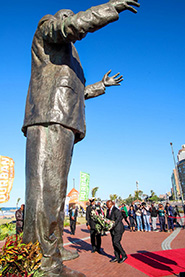
President Ramaphosa on Sunday, 16 August 2026, joined Heads of State and Government from across the Southern African Development Community (SADC) region for a wreath-laying ceremony at the statue of O.R. Tambo at OR Tambo Square in eThekwini, KwaZulu-Natal.
The ceremony was held on the margins of the 46th Ordinary Summit of SADC Heads of State and Government, which is taking place in Durban this weekend.
President Ramaphosa was received at the ceremony by KwaZulu-Natal Premier Thami Ntuli, Minister of International Relations and Cooperation Ronald Lamola and eThekwini Executive Mayor Cyril Xaba.
The wreath-laying honoured Tambo’s legacy as one of South Africa’s foremost liberation struggle leaders and recognised his leadership, sacrifice and international advocacy in the fight against apartheid. It also highlighted his role in mobilising regional support for South Africa’s liberation struggle and advancing solidarity among the countries of Southern Africa. |
|
|
| |
Delivering the opening remarks, Minister in the Presidency Khumbudzo Ntshavheni said the ceremony was an opportunity to honour the fallen heroes who sacrificed their lives for the liberation of Southern Africa.
“I take this opportunity to welcome you to the wreath-laying ceremony in honour of the fallen heroes for the struggle of the countries of Southern Africa in their totality. We do this at the foot of the statue of President General Reginald Oliver Tambo of the African National Congress, who led the ANC during their years in exile and made sure that he mobilised the region to make sure that they support South Africa to live in their fight for freedom and liberation,” the Minister said.
Minister Ntshavheni said Tambo’s leadership extended beyond South Africa, with the former ANC President playing a significant role in mobilising the Frontline States [a coalition of Southern African nations formed in the 1970s to end apartheid, minority rule and colonialism] to support liberation efforts across the region.
“In the quest for the liberation of South Africa, the Frontline States worked together to make sure that other countries within the region also get their freedom,” Minister Ntshavheni said.
She said the region’s liberation came at a significant cost, with many men and women sacrificing their lives in the struggle against apartheid and destabilisation.
“In this, we honour the fallen heroes of the Matola massacre, of the Maseru massacre, of the Battle of Cuito Cuanavale and the many contributions that were made by other countries to the freedom and liberation of South Africa, but also for the region of SADC, and the peace and stability we enjoy today as a region is because the men and women we are going to honour today sacrificed their lives for SADC to be free and to enjoy total liberty,” she said.
The Minister said the wreath-laying ceremony also served as a reminder of the unity and common purpose that underpinned the region’s liberation struggle.
“As requests for the economic development and continued solidarity of SADC, this symbolism of wreath laying reminds us of our unity and unity of purpose,” she said.
Following the welcome remarks, military honours were rendered before President Ramaphosa laid a wreath at the statue of Tambo alongside leaders from the SADC region. The ceremony further underscored the continued relevance of Tambo’s legacy to SADC’s pursuit of peace, stability, regional integration and economic development.
Tambo, who led the ANC in exile for decades, was instrumental in building international support for the anti-apartheid struggle and strengthening relations with countries that supported South Africa’s liberation. His contribution is closely associated with the solidarity extended by the Frontline States to South Africa and other liberation movements in the region.
The commemoration comes as SADC leaders gather in Durban, KwaZulu-Natal, to deliberate on matters affecting the region, including peace and security, development and regional integration.
The wreath-laying ceremony served as a reminder that the regional cooperation enjoyed today was forged through a shared history of struggle, sacrifice and solidarity.
– Source: SAnews.gov.za |
|
| |
|
| |
| PRESIDENT RAMAPHOSA OFFERS CONDOLENCES ON LAKE KARIBA TRAGEDY |
|
| |
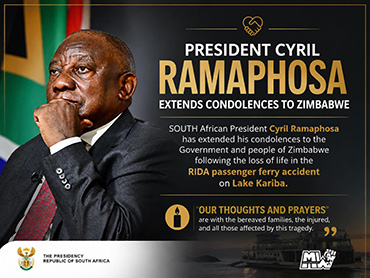
| President Cyril Ramaphosa has extended his condolences to the government and people of Zimbabwe following the loss of 44 lives in a ferry tragedy on Lake Kariba. |
|
|
 |
|
| |
The ferry capsized on 11 August 2026, resulting in the deaths of 44 people.
On behalf of the Government and people of South Africa, President Ramaphosa expressed his sympathies to the families of those who lost their lives, as well as to survivors of the tragedy.
His thoughts are also with families awaiting the outcome of ongoing search operations.
“As South Africans, we stand in solidarity today with the nation of Zimbabwe as we mourn this extensive loss of life.
“We wish survivors a speedy recovery, and we pay tribute to the emergency services who are working tirelessly to support and bring closure to affected families and communities,” President Ramaphosa said in a statement on Thursday, 13 August 2026.
– Source: SAnews.gov.za |
|
| |
|
| |
| DEPUTY MINISTER MORAKA URGES MEDIA TO TELL THE BIGGER SADC STORY |
|
| |
| International Relations and Cooperation Deputy Minister Thandi Moraka has called on media across Southern Africa to tell a broader story of regional integration, highlighting the deep cultural, historical and economic ties that bind the Southern African Development Community (SADC) countries together. |
|
|
 |
|
| |
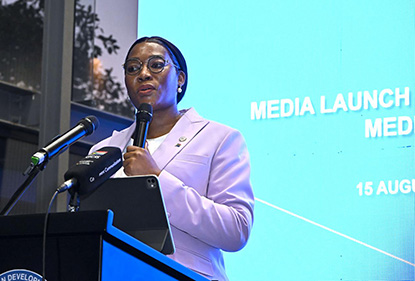
Deputy Minister Moraka was speaking at the SADC Media Welcome Cocktail and Documentary Launch at the Durban International Conference Centre (ICC) on Saturday evening, 15 August 2026, on the eve of the 46th Ordinary Summit of SADC Heads of State and Government.
She said the region’s shared history, cultures, languages and patterns of migration had created strong connections between communities that predated the borders drawn during the colonial era.
“We need to also appreciate that we do not just share rivers and mountains. We also share cultures and languages that continue to move from KwaMashu and all the way going to Lilongwe. We are indeed one people of one region of SADC,” she said.
Deputy Minister Moraka said these longstanding connections should inform how South Africans and citizens across the region understand migration and relations between neighbouring countries.
She reiterated that South Africa remained committed to welcoming people from across the continent, while stressing the importance of lawful migration.
“I want to reiterate the statement that is always said by our president, His Excellency Mr Cyril Ramaphosa, when he says South Africans are not xenophobic. South Africans are welcoming to those brothers and sisters who continue to come to our country through legal means,” she said.
Moraka urged the media to help promote a more informed understanding of migration and regional relations, while encouraging people entering South Africa to comply with the country’s immigration laws and regulations.
“We want to urge everyone [who] want[s] to come to South Africa to do that through legal means,” she said, calling for greater cooperation among SADC member states to “regularise issues of migration”.
She noted that migration was a global phenomenon, with people moving across borders for a range of reasons, including seeking economic opportunities and pursuing academic development.
Against this backdrop, Deputy Minister Moraka said governments and the media had an important role to play in ensuring citizens understood migration and the regulatory frameworks governing the movement of people across borders.
Telling the wider SADC story
Deputy Minister Moraka also challenged journalists to broaden coverage of SADC beyond crises and conflict, saying citizens needed to better understand the organisation’s work, aspirations and achievements.
“It should not be that a threshold for reporting about SADC is when there are crises around our region. Let us make it a point that we speak of the aspirations and the achievements of our community, not just only focusing on the hurdles that we continue to encounter as various member states,” she said.
She said stronger regional cooperation was essential as SADC countries confronted shared challenges, including climate change, youth unemployment and low economic growth.
For Deputy Minister Moraka, effective communication was central to making regional integration meaningful to ordinary citizens.
“Communication is not an accessory to regional integration; it is an essential part of our regional integration.
“Citizens cannot support institutions that they do not understand. Communities cannot take ownership of initiatives they know nothing about. And young people cannot inherit values and aspirations that have never been shared with them,” she said.
The Deputy Minister called on journalists, editors, broadcasters, photographers, content creators and communicators covering SADC to help bridge the gap between regional institutions and citizens.
“You help bridge the distance between institutions and citizens. You help transform information into understanding. And you help ensure that regional integration remains people-centred rather than institution-centred,” she said.
Decades of regional solidarity
Deputy Minister Moraka also launched the documentary, 30 Years of South Africa's Contribution Towards Building a Common Future in the Southern African Development Community (SADC).
The documentary reflects on South Africa’s three decades of participation in SADC and seeks to preserve the history of regional solidarity while reconnecting younger generations with the organisation’s significance.
Deputy Minister Moraka said South Africa’s democratic journey had been strengthened by the support of countries across the region and that the country’s future remained closely linked to the prosperity and stability of Southern Africa.
She urged media organisations to use the documentary to broaden public understanding of the region as South Africa assumes the substantive Chairship of SADC.
“Today, we want to entrust this story to you as various members of the media. Please take this documentary and turn it widely to the entire community of SADC. Tell it in an honest way.
“This is the SADC story that must be protected and preserved by all of us, and ultimately the story of the people of one region of SADC. And it is a story that is worth telling,” she said.
Deputy Minister Moraka said the documentary should not mark the end of the conversation on regional integration, but rather the beginning of a wider dialogue that continues beyond the SADC Summit.
She expressed appreciation to the German Development Cooperation (GIZ), through the Strengthening National-Regional Linkages in SADC Programme, as well as DIRCO officials, interview participants and production teams who contributed to the documentary.
South Africa is hosting the 46th Ordinary SADC Summit in Durban, where regional leaders are expected to deliberate on peace and security, economic development, regional integration and other matters affecting Southern Africa.
– Source: SAnews.gov.za |
|
| |
|
| |
| UN-HABITAT COUNTRY OFFICE TO STRENGTHEN SOUTH AFRICA’S DRIVE FOR INCLUSIVE HUMAN SETTLEMENTS |
|
| |
 |
|
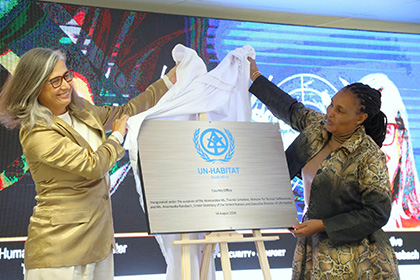
| South Africa’s drive to build sustainable, inclusive and resilient human settlements has received a major boost with the launch of a dedicated UN-Habitat Country Office in the country. |
|
|
| |
Human Settlements Minister Thembi Simelane and UN-Habitat Executive Director Anacláudia Rossbach officially launched the office in the City of Tshwane, Gauteng, on Friday, 14 August 2026, marking a new chapter in the longstanding partnership between South Africa and the United Nations (UN) agency.
Minister Simelane described the establishment of the country office as a significant step towards strengthening efforts to transform human settlements, upgrade informal settlements and advance sustainable urbanisation.
She said the office would help integrate sustainable urbanisation and human settlements development into the broader United Nations Sustainable Development Cooperation Framework, while providing additional support to South Africa’s national priorities.
Through its collaboration with UN-Habitat, South Africa has gained international recognition for its efforts to provide adequate housing and upgrade informal settlements.
“With the unwavering support of UN-Habitat, our country stands as a vocal champion for the transformation and upgrading of informal settlements, addressing poverty, ensuring adequate shelter, and delivering essential services to our people,” Minister Simelane said.
Established in 1975, UN-Habitat supports transformative change in cities and human settlements around the world through knowledge sharing, policy advice, technical assistance and collaborative action.
Minister Simelane said the UN-Habitat Country Programme for South Africa, adopted in September 2023 following extensive consultations with stakeholders in the human settlements sector, is aligned with the country’s national priorities and government’s constitutional mandate to provide adequate housing.
The programme is aligned with the National Development Plan, particularly Chapter 8 on transforming human settlements and Chapter 12 on building safer communities.
It also supports the Medium-Term Development Plan 2024-2029, particularly Priority 2, which focuses on reducing poverty and tackling the high cost of living.
“The Country Programme offers additional impetus, guidance, and support from UN-Habitat to augment the implementation of policies and initiatives related to spatial integration, the development of sustainable, inclusive, and resilient human settlements, and capacity-building within local government,” Minister Simelane said.
She said the programme further supports the Comprehensive Plan for the Creation of Sustainable Human Settlements, which seeks to provide adequate living environments and shelter for all through the transformation of informal settlements and improvement of substandard housing conditions.
Strengthening regional cooperation
Beyond supporting South Africa’s domestic human settlements agenda, Simelane said the partnership with UN-Habitat could help strengthen the continent’s urban development agenda and contribute to the implementation of Agenda 2063 – The Africa We Want.
“It serves as a springboard for establishing a Southern African Development Community (SADC) consolidated agenda on human settlements, thereby filling a critical gap in current SADC regional development programmes,” she said.
The launch builds on several years of cooperation between South Africa and UN-Habitat.
In October 2022, the then Human Settlements Minister hosted former UN-Habitat Executive Director Maimunah Mohd Sharif. The visit resulted in the adoption of the Global Action Plan on Accelerating the Transformation of Informal Settlements and Slums.
The two sides also signed a Memorandum of Understanding to strengthen cooperation on the implementation of the Sustainable Development Goals (SDGs) and the New Urban Agenda in South Africa.
Discussions during the visit included plans to establish a dedicated UN-Habitat Country Office.
Simelane said the newly launched office would now provide a stronger platform for collaboration between government, UN-Habitat, other United Nations agencies, development partners and stakeholders across the human settlements sector.
The Country Programme seeks to:
- Strengthen collaboration between government, UN-Habitat, UN agencies, development partners and other human settlements stakeholders;
- Promote integrated and cross-sectoral urban interventions that accelerate progress towards national and global development goals;
- Capture lessons and global best practices to inform new partnerships and programmes;
- Identify contextual challenges and opportunities and develop catalytic solutions rooted in international experience and local realities; and
- Strengthen the capacity of national and subnational institutions to improve urban management and development.
Minister Simelane called on all stakeholders to use the new platform to deepen their commitment to creating human settlements where communities can live safely, inclusively and with dignity.
“Let us reaffirm our collective commitment to the vision of sustainable, inclusive, prosperous human settlements and leave no one behind,” she said.
– Source: SAnews.gov.za |
|
| |
|
| |
| SOUTH AFRICAN CITRUS EXPORTS TO INDIA RECEIVE A BOOST |
|
| |
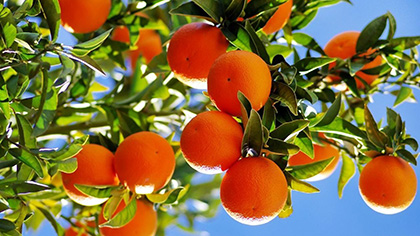
| South African citrus exporters are set to benefit from improved market access to India, following the approval of additional treatment options for fresh citrus fruit after nearly a decade of negotiations. |
|
|
 |
|
| |
In a statement, the Citrus Growers’ Association of Southern Africa (CGA) and the Department of Agriculture announced that India has approved additional fruit fly cold treatment options, which will allow the quality of the fruit in the market to improve and add important logistical flexibility.
South Africa already exports citrus to India using various fruit-fly treatment protocols.
Agriculture Minister Willie Aucamp welcomed the development, saying, “It indicates how advanced technology enables South African farmers to push barriers to have other countries enjoy our high-quality produce.”
With a population of approximately 1.47 billion people and one of the world’s largest and fastest-growing economies, India presents significant growth potential for South African citrus exporters.
Despite this, India’s share of exports from South Africa is very small and thus presents an exceptional opportunity for growth. India is itself one of the world's largest citrus producers, with consumers already familiar with the product category.
South Africa's counter-seasonal production provides an opportunity to complement domestic supply, particularly as the middle class expands, health-conscious consumption grows and demand for mandarin-type citrus increases.
Citrus Growers' Association of Southern Africa Chief Executive Officer, Dr Boitshoko Ntshabele, commended the Department of Agriculture and Citrus Research International for their continued technical engagement with Indian authorities that have made the new treatment options possible.
“This demonstrates the importance of sustained public-private partnership in improving technical conditions for accessing markets,” Ntshabele said.
He also emphasised that attention should now shift towards improving the commercial conditions under which South African citrus enters the Indian market.
Most-Favoured-Nation tariffs of approximately 25-30% continue to place South African citrus at a disadvantage compared with Southern Hemisphere competitors benefiting from preferential tariff arrangements.
“We look forward to working with the Department of Trade, Industry and Competition (the dtic) on the critical task of addressing these tariff barriers and improving the competitiveness of South African citrus in the Indian market going forward," Ntshabele said.
The CGA said that with positive developments in the Southern African Customs Union (SACU)-India Preferential Trade Agreement process, continued momentum towards improved preferential access will help unlock India's great market potential and support the long-term sustainability and diversification of the South African citrus industry.
“The CGA sees combining improved phytosanitary market access with more competitive tariff conditions as being key to growing South Africa's presence in India and supporting the long-term sustainability, growth and diversification of the South African citrus industry.”
– Source: SAnews.gov.za |
|
| |
|
| |
| THAILAND-SOUTH AFRICA BUSINESS MATCHMAKING FORUM CREATES NEW TRADE OPPORTUNITIES |
|
| |
 |
|
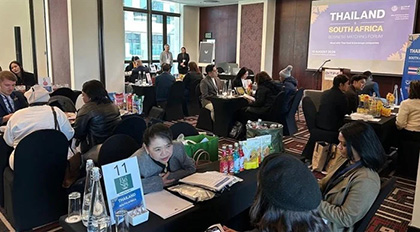
| The Thailand-South Africa Business Matchmaking Forum successfully brought together Thai exporters and South African buyers on 13 August 2026, held at the Southern Sun Santon Hotel, creating a focused platform for new sourcing, distribution and market-entry opportunities. |
|
|
| |
Supported by the Department of International Trade Promotion in Thailand and the Office of Commercial Affairs, Royal Thai Embassy in Pretoria, the forum connected export-ready Thai manufacturers with South African importers, distributors, retailers, wholesalers, hospitality groups and procurement decision-makers through a structured programme of pre-arranged, one-on-one business meetings.
Strong business engagement
The forum generated:
- 252 pre-arranged B2B meetings
- 37 South African buyers and business representatives
- 12 participating Thai companies
Each meeting was tailored according to the buyers’ product interests, purchasing requirements and business capabilities, ensuring relevant discussions between the Thai exporters and South African companies.
The structured 15-minute meeting format enabled participants to engage with multiple potential partners during a single business programme.
Thai products showcased to the South African market
The participating Thai companies presented a diverse range of products suited to South African retail, wholesale, hospitality, food-service and distribution markets.
Products showcased included:
- Thai sauces, marinades, curry pastes and seasonings
- Chilli sauces and traditional Thai condiments
- Coconut milk, coconut cream and coconut-based products
- Rice, noodles and convenient meal solutions
- Ready-to-eat and packaged food products
- Snacks, confectionery and speciality foods
- Beverage products
- Natural, health-conscious and wellness-focused products
- Frozen food
The meetings gave South African buyers the opportunity to evaluate products, inspect samples and discuss pricing, minimum order quantities, packaging, certifications, exclusivity and local market requirements directly with the manufacturers.
Several buyers expressed interest in continued discussions, product testing, sample evaluation and potential supply arrangements.
For the Thai companies, it offered valuable insight into South African consumer demand, retail requirements, importing processes, packaging preferences and potential routes to market.
H.E. Ekapol Poolpipat, Ambassador of Thailand to South Africa, highlighted the strong complementarity between the two countries’ agricultural and food sectors. Thailand’s strengths in tropical agriculture, food processing, innovation and international standards complement South Africa’s strong agricultural base, creating opportunities for cooperation in trade, distribution, food processing, technology and investment.
He noted that South Africa offers Thai companies not only a sophisticated domestic market but also a strategic platform for reaching the wider African market, while Thailand can serve as a gateway for South African businesses to Southeast Asia.
The Ambassador encouraged participating companies to look beyond individual products and use the forum to build long-term commercial partnerships, stressing that the ultimate objective was to translate business discussions into “new orders, new partnerships and new opportunities” for both countries.
Mrs Wichuda Akaramethathip, Director of the Office of Commercial Affairs, Royal Thai Embassy, stated, “Thank you to the Thai exporters and the buyers from South Africa for participating in today’s event. This forum created a valuable foundation for continued trade between Thailand and South Africa. In the future, should South African importers wish to import Thai products, please contact the Office of Commercial Affairs, Royal Thai Embassy in Pretoria.
Event results at a glance
Event: Thailand–South Africa Business Matchmaking Forum
Date: 13 August 2026
Venue: Southern Sun Sandton, Johannesburg
Thai companies: 12 companies
South African buyers: 37
B2B meetings: 252
The Thailand-South Africa Business Matchmaking Forum was supported by the Department of International Trade Promotion in Thailand and the Office of Commercial Affairs, Royal Thai Embassy in Pretoria.
– Source: www.bizcommunity.com |
|
| |
|
| |
| TOURISM MONTH PUTS DOMESTIC TRAVEL AND DIGITAL GROWTH IN FOCUS |
|
| |
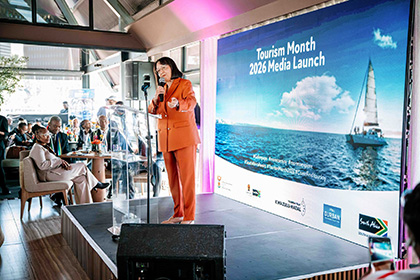
| Tourism Minister Patricia de Lille has officially launched Tourism Month in Durban with the theme “Growing South Africa’s Tourism Sector in the Digital Era”. The campaign combines a renewed push for domestic travel with a focus on technology, artificial intelligence and broader participation in the tourism economy. |
|
|
 |
|
| |
The launch also comes as South Africa prepares to host the 46th SADC Summit in Durban from 16 to 17 August 2026, as the country takes over the chairmanship of the Southern African Development Community for the 2026/27 term.
Minister de Lille said Southern Africa should not be viewed as 16 separate tourism destinations, but as a connected region shaped by geography, culture, family, trade and travel.
Domestic tourism in focus
South Africans took 21.2 million overnight trips during the first half of 2026, up 4% from 20.4 million in the same period last year, according to figures cited by Minister de Lille.
Holiday trips increased by 36% to 5.2 million, although domestic tourism spending remained below the level recorded during the corresponding period last year.
“This is why domestic tourism matters. It is not a secondary part of our tourism economy. It is one of the foundations of a resilient tourism economy. And this Tourism Month, we want to see even more South Africans experiencing their country.”
Minister de Lille also pointed to the launch of South Africa's Electronic Travel Authorisation (ETA), saying the new system signals progress towards growing the tourism sector.
She said domestic tourism requires participation from government, the private sector, provinces, cities, technology platforms, media, content creators, tourism businesses and South Africans themselves. Government, she said, must create an enabling environment, while tourism businesses need to develop competitive and affordable products. Provinces and cities also have a role in promoting experiences beyond traditional tourism routes.
Minister de Lille said tourism's economic contribution extends beyond the act of travelling, supporting jobs, entrepreneurs, heritage, communities and national pride.
Making domestic travel accessible
Affordability, accessibility, awareness and the relevance of tourism experiences are among the factors influencing domestic travel, according to Minister de Lille.
South Africans will again be encouraged to take a Sho’t Left during September, whether for a day trip, weekend getaway or longer journey.
Through Sho’t Left Travel Week, travellers will have access to discounts and packages intended to make domestic tourism more affordable.
The programme will be complemented by South African Parks Week, which will provide free entry to national parks for day visitors, as well as various provincial Mahala Weeks.
September is also Heritage Month, creating an opportunity to connect domestic travel with the discovery of South Africa's heritage. Minister de Lille encouraged South Africans to look beyond familiar routes and explore destinations and experiences closer to home.
“This September, remember that it is your country; enjoy it because there is nothing more fun than a Sho’t Left.”
Travel discovery moves online
Minister de Lille said the way travellers discover destinations has changed, with many journeys now beginning through digital platforms.
“Today, many journeys begin on a screen.”
She pointed to destinations being discovered through TikTok, travel content creators, online searches and videos showcasing experiences such as waterfalls, township tourism, beaches, hiking trails and cultural festivals.
TikTok participated in the Tourism Month launch, with Minister de Lille highlighting the role of digital platforms in helping tourism businesses, particularly smaller operators, reach audiences beyond their immediate geographic markets.
The Tourism Month programme will culminate in World Tourism Day on 27 September, under the global theme Digital Agenda and Artificial Intelligence to Redesign Tourism.
South Africa's localised theme is Growing South Africa’s Tourism Sector in the Digital Era.
AI enters tourism
Artificial intelligence (AI) was another focus of the launch, with attendees introduced to an AI Robot for Tourism.
Minister de Lille said AI is already influencing how travellers search for destinations, develop itineraries, compare experiences, translate information and make travel decisions.
“We cannot ignore it.”
She said the technology could help smaller tourism businesses reach new markets and enable travellers to discover destinations beyond South Africa's established tourism routes.
Minister de Lille highlighted the potential for a tourism operator in Limpopo to reach a family in Germany or India, while a township restaurant could use technology to showcase its offering to thousands of potential visitors.
She also pointed to the possibility of AI helping travellers create itineraries that include smaller communities and emerging destinations.
“Imagine technology helping a traveller build an itinerary that takes them beyond our traditional attractions and introduces them to smaller communities and emerging destinations.”
“That is when technology becomes more than innovation. It becomes economic inclusion.”
Digital shift must include SMMEs
Minister de Lille stressed that the digital transformation of tourism should not benefit only larger businesses.
“The digital transformation of tourism cannot benefit only the large players. It must work for the SMME.”
She said technology should make participation easier rather than introduce additional barriers.
“Technology should lower barriers to participation and not create new ones.”
Minister de Lille said building a digitally enabled tourism economy would require partnerships rather than government acting alone.
South Africa competes for global growth
While Tourism Month places significant emphasis on domestic travel, Minister de Lille said South Africa must also compete for international visitors as global tourism expands.
The Growth Amid Uncertainty report projects that annual international visits could exceed two billion by 2030.
Minister de Lille said this growth represents an opportunity but also increases competition between destinations for travellers and the economic activity they generate.
“South Africa cannot simply assume that because global tourism is growing, our share will automatically grow with it.”
South Africa welcomed close to 5.6 million tourists between January and June 2026, according to figures cited by De Lille, representing a 12% increase compared with the same period last year.
She said the increase was supported by strong regional demand from Africa and steady growth from Europe.
Cricket World Cup opportunity
South Africa, Zimbabwe and Namibia will co-host the 2027 ICC Men's Cricket World Cup in October and November next year.
The tournament will feature 14 teams and 57 matches, creating another opportunity to showcase the region to an international audience.
“You have heard me say it, and you will hear me say it again. Come for the cricket, stay for the culture.”
Minister de Lille also highlighted the role of regional travel in building connections between Southern African countries.
She said travel allows people to experience neighbouring countries and communities directly, rather than relying solely on tourism campaigns.
Tourism remains human
Despite the growing role of technology and AI, Minister de Lille said tourism should remain centred on human interaction.
“Tourism remains a human business.”
She said technology may help travellers discover destinations, plan itineraries and make bookings, but the people they encounter are often what they remember.
“The person who welcomed them. The guide who told them the story. The chef who prepared the meal.
“The entrepreneur who created the experience. The community that opened its doors. Tourism Connects People.”
Minister de Lille said communities are custodians of many of the authentic experiences that distinguish South Africa, and that technology should strengthen rather than replace those connections.
Limpopo takes the spotlight
Minister de Lille announced Limpopo as the province of focus for Tourism Month 2026, positioning the province as an opportunity to encourage South Africans to discover more of the country's tourism diversity.
She said the sector needs to continue creating new reasons for people to travel, including new experiences and destinations beyond established tourism routes.
“Do not just say you know South Africa.
“Go and explore South Africa.
“Take that Sho’t Left. Go to Limpopo.”
Minister de Lille encouraged travellers to share their experiences online, highlighting the potential for digital word-of-mouth to influence future travel decisions.
“Because in today’s digital world, one traveller’s experience can inspire many others to take their own journey.”
Tourism begins at home
Minister de Lille said the domestic tourism campaign forms part of a wider effort to grow the sector's contribution to South Africa's economy while strengthening the country's international competitiveness.
She said tourism should create opportunities for young people, women, entrepreneurs and SMMEs, while technology should help broaden participation in the sector.
The Minister returned to the central message of the Tourism Month campaign: Encouraging South Africans to discover their own country while continuing to position South Africa as a destination for international travellers.
“Tourism begins at home.”
“Let us discover South Africa — together.”
– Source: www.bizcommunity.com |
|
| |
|
| |
| FROM HARVEST TO SHARED HERITAGE: UMUGANURA BUILDS CULTURAL BRIDGES BETWEEN RWANDA AND SOUTH AFRICA |
|
| |
| More than 450 Rwandans gathered in Cape Town to celebrate a centuries-old tradition whose values of gratitude, unity and shared responsibility find familiar echoes in South Africa’s cultural heritage. |
|
|
 |
|
| |
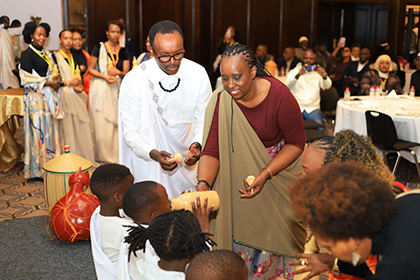
More than 450 members of the Rwandan community gathered in Cape Town on Sunday, 9 August 2026, for Umuganura, bringing together Rwandans and friends of Rwanda for an afternoon of culture, reflection and community.
Held under the theme Umuganura, Isoko y’Ubumwe n’Ishingiro ryo Kwigira — Umuganura, Source of Unity and Foundation for Self-Reliance, the celebration provided an opportunity to reflect on Rwanda’s progress, the values that have sustained it and the role of Rwandans living abroad in shaping the country’s continued development.
Cultural performances by Itorero Inkumburwa, the sharing of milk with children and the Kuganura ceremony brought Rwandan traditions to life, while presentations on the Rwandan Community Abroad (RCA) Youth Tour to Rwanda and the Rwanda Professionals Abroad (RPA) Medical Outreach highlighted the practical ways in which the community is supporting their country’s development aspirations.
Beyond the harvest
At the heart of Umuganura is the idea of giving gratitude for what has been achieved and sharing the fruits of collective effort. In contemporary Rwanda, that harvest extends well beyond agriculture.
In his address, H.E. Emmanuel Hategeka, Rwanda’s High Commissioner to South Africa, reflected on the country's progress across sectors including agriculture, tourism, manufacturing, construction, services and information technology. He noted that these achievements have been supported by unity, good governance, discipline, hard work and a shared national vision. But the celebration was also a reminder that progress brings responsibility for every Rwandan.
For Rwandans abroad, the High Commissioner highlighted the importance of contributing to Rwanda through professional expertise, investment, remittances, knowledge and community engagement initiatives. He pointed to the RCA Youth Tour, which connected young Rwandans in South Africa with Rwanda, and the medical outreach by Rwandan medical professionals, as examples of the contribution the diaspora can make beyond financial support.
These initiatives reflect an increasingly active relationship between Rwanda and Rwandans abroad which can encourage skills development, networks and experiences to contribute to national development.
Finding common ground through culture
The celebration also offered an opportunity to consider Umuganura within the broader cultural landscape of South Africa. The country has its own long-standing harvest traditions. Among the Zulu, for example, uMkhosi Wokweshwama marks the first harvest, while other communities observe their own ceremonies around the harvest season. Although these traditions have their own histories and practices, they share familiar ideas of gratitude, community, sharing and responsibility.
The common denominator between both countries’ traditions is the opportunity to preserve and celebrate their own heritage. That connection was showcased throughout the celebrations. Rwandan cultural performances brought together members of the Rwandan community and friends of Rwanda to celebrate the country's heritage and share in traditions that reflect the values of community, unity and belonging.
Passing the tradition to future generations
For many of those attending, particularly younger Rwandans, the celebration was also about maintaining a connection with a culture they may experience differently from previous generations. The participation of children in the milk-sharing ceremony was one of the day's highlights. Alongside the cultural performances and Kuganura, it provided a practical way for younger members of the community to encounter traditions that might otherwise remain something they hear about rather than experience. This matters for the Rwandan community. Cultural identity is sustained not only through formal teaching, but through the occasions when families and communities come together, practise traditions and give younger generations the opportunity to participate in them.
The High Commissioner’s message returned repeatedly to the importance of unity and responsibility. For Rwandans living abroad, representing Rwanda positively and supporting one another are part of that responsibility. The proverb “Ibisangiye imizi bisangira no kuma”, meaning those who share the same roots also share a common destiny, captures the importance placed on solidarity within the community.
It is a message that gives Umuganura relevance beyond the celebration itself. The harvest is not simply something to reflect on. It becomes a measure of what has been achieved collectively and a compass of what is yet to be accomplished.
As the celebration drew to a close, that sense of looking forward remained central. The community had gathered to honour a tradition rooted in Rwanda's history, but also to consider how that tradition can continue to speak to Rwandans living far from home.
The answer lies partly in the simple values that Umuganura continues to bring together, which are gratitude, sharing, unity within the community and a willingness to work towards the next harvest.
In Cape Town, those values found expression not only in the cultural performances and ceremonies, but in the gathering of a community that continues to find ways to remain connected to Rwanda while contributing to the society in which it lives.
Umuganura, Isoko y’Ubumwe n’Ishingiro ryo Kwigira! – By Ian Nkera Ford: Communications Officer at Rwanda High Commission in South Africa.
– Source: www.thediplomaticsociety.co.za |
|
| |
|
| |
| CAPE TOWN RANKED AMONG WORLD’S MOST STUNNING LUXURY DESTINATIONS |
|
| |
 |
|
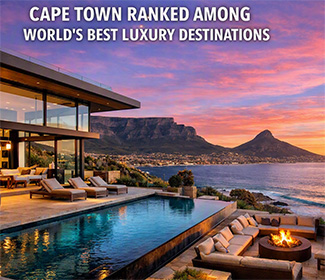
| Cape Town has once again earned international recognition for its striking beauty, this time being named one of the most beautiful places in the world to stay. |
| |
Research by British interior design company Sharps ranked the Mother City eighth in its global list of destinations with the most luxurious, design-led homes for travellers. The findings were reported by BusinessTech.
The study looked at homes across more than 200 tourist destinations, assessing the number of luxury properties available, average nightly prices and reputation scores. These factors were combined to create a ‘Beautiful Base’ score.
Cape Town achieved an impressive score of 96.2 out of 100, placing it ahead of destinations including Miami, Palm Springs, Ibiza and Malibu. |
|
|
| |
Cape Town makes the global top 10
According to the research, Cape Town has 122 luxury homes included in the ranking, with an average nightly price of £1 109 and a reputation score of 98.
Sharps highlighted the city’s architecture and its relationship with the surrounding landscape as key reasons for its strong showing.
Many of Cape Town’s luxury homes make use of expansive glass walls, allowing visitors to take in views of the Atlantic Ocean and Table Mountain. The interiors also incorporate natural materials, indigenous plants, African textiles and minimalist Scandinavian-inspired furniture.
The result is a style that reflects Cape Town’s distinctive combination of dramatic scenery, contemporary design and local influences.
Cape Town’s luxury property market is also well established. BusinessTech has previously reported that the city’s Atlantic Seaboard, including areas such as Clifton, Camps Bay, Bantry Bay and Fresnaye, is home to some of South Africa’s most expensive residential properties.
Cape Town continues to collect global accolades
The latest ranking adds to a growing list of international recognition for Cape Town. The city topped Time Out’s Best City in the World 2025 list and was also named the world’s best city by The Telegraph in 2025 for the seventh consecutive year, according to BusinessTech.
Cape Town’s appeal extends beyond its scenery and accommodation, too. The city was ranked among the world’s best destinations for food, while its combination of beaches, mountains, vineyards, restaurants and cultural attractions continues to attract international visitors.
Its luxury accommodation offering is another part of the appeal, with everything from contemporary villas overlooking the Atlantic to historic homes and stylish apartments providing visitors with a memorable base from which to explore the city.
The world’s most beautiful bases
Bali claimed the top position in Sharps’ ranking, achieving a perfect Beautiful Base score of 100. The Indonesian island was praised for its open-air homes, natural materials and seamless connection between indoor and outdoor spaces.
Paris came second with a score of 99.5, followed by California’s Yucca Valley and Joshua Tree with 99. Other destinations in the top 10 included the 30A area of Florida, Saint Barthélemy, Los Cabos, London and the Big Island of Hawai’i.
Cape Town’s eighth-place position puts it firmly among some of the world’s most sought-after luxury holiday destinations.
The top 10 destinations
- Bali, Indonesia – 100
- Paris, France – 99.5
- Yucca Valley/Joshua Tree, United States – 99
- 30A Area, United States – 98.6
- Saint Barthélemy – 98.1
- Los Cabos, Mexico – 97.1
- London, United Kingdom – 96.7
- Cape Town, South Africa – 96.2
- Big Island, Hawai’i, United States – 95.7
- Park City, United States – 95.2
Cape Town’s position is particularly notable because it comes ahead of several globally recognised luxury destinations, including Miami, Ibiza and Malibu.
With its mountain-and-ocean setting, distinctive architecture and growing reputation as a world-class travel destination, the Mother City continues to make a strong case for a place on the global travel map.
– Source: www.capetownetc.com |
|
| |
|
| |
| BOULDERS BEACH NAMED ONE OF THE BEST BEACHES IN THE WORLD… AGAIN |
|
| |
| Boulders Beach has made the list again. The famous Cape Town beach has been named one of the world’s best, coming in at No. 20 for 2026. |
|
|
 |
|
| |
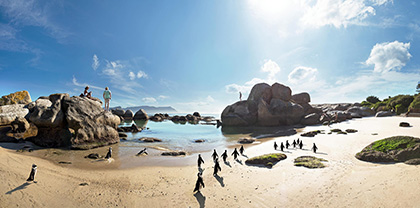
There are plenty of beautiful beaches around the world, but very few where you can swim in calm, clear water while watching endangered African penguins going about their day. That is what makes Cape Town’s Boulders Beach so wonderfully South African, and it has once again earned international recognition as one of the world’s best beaches.
Boulders Beach has landed at No. 20 on Big 7 Travel’s 50 Best Beaches in the World for 2026, putting this little corner of Simon’s Town firmly among some of the most spectacular stretches of coastline on the planet.
From tropical lagoons in the South Pacific to volcanic shores in Iceland, Big 7 Travel’s 2026 list celebrates beaches that offer something beyond simply a beautiful place to put down a towel. Boulders delivers that in spades.
The sheltered beach, with its enormous granite boulders and calm False Bay waters, has become one of Cape Town’s most beloved attractions. But it is the colony of African penguins that gives it something almost no other beach can offer.
Big 7 Travel describes Boulders as one of the only beaches in the world where visitors can see penguins without travelling to Antarctica, thanks to its year-round colony of endangered African penguins.
The calm waters of the sheltered cove also make the beach a popular swimming spot, offering visitors the unusual experience of sharing the coastline with one of Africa’s most recognisable seabirds.
Boulders is part of the Table Mountain National Park and forms part of the protected area around the penguin colony. Visitors can walk along designated boardwalks and viewing areas to see the birds in their natural environment, while the beach itself offers an opportunity to get into the water.
It is worth remembering, though, that these are wild animals. The best way to enjoy the penguins is to give them plenty of space, never feed them and resist the temptation to touch them, even if one happens to waddle closer than expected.
The beach has been a global favourite for years, and this is not the first time Boulders has caught the attention of international travel lists.
Back in 2021, Boulders Beach landed at No. 12 on Big 7 Travel’s list, just as the beach was enjoying another moment in the global spotlight thanks to Netflix’s Penguin Town, which introduced viewers around the world to the charismatic colony.
Five years later, it is still proving that its appeal has nothing to do with a passing trend. It is the combination that makes Boulders so special.
There are the giant granite boulders that shelter the little coves. There is the cool, clear water of False Bay. There is the extraordinary biodiversity. And then there are the penguins, waddling across the sand, swimming through the shallows and reminding visitors that this is their home too.
Big 7 Travel’s 2026 list describes the world’s best beaches as places offering everything from relaxation and wildlife encounters to spectacular underwater experiences. Boulders manages to tick several of those boxes at once.
With around 3 000 penguins calling Boulders home, it’s little wonder the beach stands out. Best viewed during the summer months, these waddling wonders have made Boulders a must-see for travellers and nature-lovers alike. Add to that one of the most scenic drives on the continent, and you’ve got the perfect combo of wild beauty and unforgettable wildlife.
– Source: www.goodthingsguy.com |
|
| |
|
| |
| FIVE DANCE STUDIOS UNITED UNDER ONE FLAG AT GLOBAL COMPETITION IN SPAIN |
|
| |
 |
|
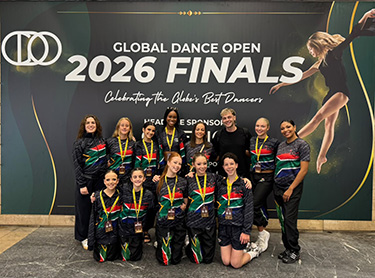
| Ten dancers from five South African studios returned from San Sebastián with 20 Top-5 finishes, eight medals and a host of international scholarships and training opportunities. |
| |
South Africa’s young dance talent has been making some serious moves on the international stage. Competing alongside more than 2 000 dancers from 37 countries, Team South Africa walked away with an impressive 20 Top-5 finishes, including two silver and six bronze placings.
Several of the dancers also caught the attention of leading international dance institutions, opening the door to scholarships, training programmes and opportunities that could shape their futures long after the competition ended. |
|
|
| |
Among the standout opportunities was a three-year full scholarship towards a BA (Hons) in Dance & Performance at BIRD Conservatoire, while another South African dancer was accepted into the Joffrey Ballet School’s full-time Pre-Professional Trainee Programme for Jazz & Contemporary Dance in 2027.
Other opportunities came from institutions including Rambert School, Codarts, Broadway Dance Center and Steps on Broadway.
Five dance studios to one team
What makes the team’s journey even more special is that these dancers did not all come from the same place. They represented Shablam Dance Academy, Eborall Melville DeWitt, Break-Thru Dance Academy & Co, AH Dance Studios and Gift of Dance.
Back home, they train under different teachers and may even compete against one another.
But once they arrived in Spain, those studio lines disappeared. They supported one another from the wings, celebrated each other’s achievements and proudly represented the country together.
Team captain Allan Botha said the results were only one part of what made the experience special.
“Watching these dancers represent South Africa on one of the world’s biggest dance stages was incredibly special. While we’re immensely proud of every placement, what stood out most was the way they supported one another throughout the week.”
Getting to the Global Dance Open Finals was an achievement in itself.
The dancers first had to compete at the official South African qualifier at the Roodepoort Theatre from 3 to 6 March 2026.
Because South Africa hosts an official GDO qualifier, dancers cannot simply sign up for the World Finals. They must first compete at home and meet the relevant qualification requirements.
Performances were assessed by a panel of international and South African judges, with technical ability and artistic performance forming part of the adjudication.
So, by the time the South African dancers stepped onto the stage in San Sebastián, they had already earned their place there. Botha believes their success is also a reflection of the talent being developed on home soil.
“Qualifying for the Global Dance Open Finals is already a remarkable achievement because every dancer has to earn their place through their country’s official qualifier. To then compete on an international stage and return home with medals, scholarships and international recognition speaks volumes about the talent we have here in South Africa.”
– Source: www.goodthingsguy.com |
|
| |
|
| |
| TYLA MAKES HISTORY AT SAMAS AND SHARES CELEBRATION |
|
| |
 |
|
| The global star became only the second South African artist to receive the AfriPure International Achievement Award before inviting artists she admires onto the stage to celebrate with her. |
|
|
| |
The 24-year-old star made her SAMA debut on Saturday, 15 August 2026, and walked away with the AfriPure International Achievement Award, becoming only the second South African artist to receive the honour after Black Coffee.
But the night’s most memorable moment came after Tyla accepted her award, when she invited a number of artists she admires, has worked with and looks up to onto the stage to celebrate alongside her.
The stage filled with artists from different parts of the South African music scene.
Tyla also took a moment to thank South Africans for continuing to support her and for being part of her journey as her international career continues to grow.
“I am inspired by you guys every day.”
The SAMAs, held at the Sun City Super Bowl in the North West, brought together some of the country’s biggest names in music and entertainment for an evening of performances, celebrations and major accolades.
Hosted by Casper Nyovest and Zanele Potelwa, the ceremony celebrated another year of South African musical talent.
– Source: www.goodthingsguy.com |
|
| |
|
| |
| BANYANA BANYANA BEAT NIGERIA TO SECURE FIFA PLAYOFF SPOT |
|
| |
| Banyana Banyana secured a 2-1 victory over Nigeria on Thursday at the Moulay Rachid Stadium in Casablanca, Morocco, qualifying for the FIFA playoff tournament for next year’s Women’s World Cup in Brazil. |
| |
Thembi Kgatlana opened the scoring for Banyana Banyana in the 56th minute, finding the back of the net after receiving a well-placed pass from Hilda Magaia.
“Captain Refiloe Jane increased the lead to 2-0 when she fired a shot from the edge of the box and rattled the net in the 77th minute,” the South African Football Association (SAFA) said on its website.
Kaylin Swart walked away with the Woman of the Match Award after a series of saves kept the Nigerians at bay.
According to SAFA, the next phase of the FIFA qualification process will be played in November 2026 and will feature two teams from Africa and Asia, and one each from Oceania and South America.
– Source: SAnews.gov.za |
|
|
 |
|
| |
|
| |
| SOUTH AFRICA RETURNS TO PAN PACS OPEN-WATER ACTION |
|
| |
 |
|
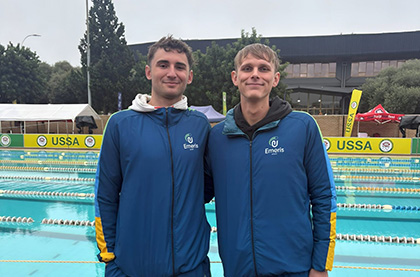
| After a 12-year absence, South Africa has fielded a full 10 km open-water team at the Pan Pacific Swimming Championships, with Pretoria swimmer Connor Albertyn leading the men’s contingent. |
|
|
| |
The 2026 Pan Pacs are taking place in Irvine, California, bringing together some of the world’s top swimmers for one of the biggest international swimming events outside the Olympic Games and World Aquatics Championships.
The 10 km open-water races got the championships underway on 10 August 2026 at Long Beach Marine Stadium, where Albertyn emerged as South Africa’s leading male finisher.
The 20-year-old stopped the clock at 1:55:28 to finish 18th, with the South African team placing among the stronger fields without reaching the podium.
Albertyn says the result was about much more than a finishing position.
“There are always some nerves because you want to do your best and make everyone proud, but it’s also exciting being in a different country, meeting new people and being part of such a big event.”
The return of a full South African 10 km team made the experience even more special, with the country’s previous appearance at the Pan Pacs dating back to 2014.
Albertyn said his race strategy included careful planning around feeding, but adaptability was just as important once the race got underway.
Unlike the shorter, more controlled environment of pool racing, the 10 km event can last close to two hours, giving swimmers plenty of time for conditions, tactics and momentum to change.
Albertyn’s coach, Rocco Meiring, increased both the distance and intensity of his training sessions, alongside demanding gym blocks, as the pair prepared for the competition.
In 2021, Albertyn won the 7.5 km event at the South African National Open Water Championships, earning selection for the World Aquatics Junior Open Water Swimming Championships. But the event was postponed because of the COVID-19 pandemic, delaying what would have been his first international team appearance.
Albertyn will now turn his attention to the pool, where he is set to compete in the 400 m and 1500 m freestyle events. Fellow Emeris Pretoria student Cameron Casali will also represent South Africa in the pool, competing in the 200 m and 400 m freestyle and individual medley events.
– Source: www.goodthingsguy.com |
|
| |
|
| |
| OPENING DOORS THROUGH RUGBY: TEAM SA’S DEAF RUGBY JOURNEY |
|
| |
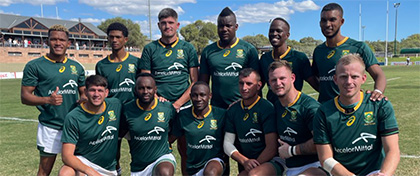
| SADRA is creating opportunities for Deaf and Hard of Hearing athletes while preparing to represent South Africa at the World Deaf Rugby Sevens. |
|
|
 |
|
| |
For the players of the South African Deaf Rugby Association (SADRA), rugby is about far more than what happens between the try lines.
Established in 2015 and affiliated with both the South African Rugby Union (SARU) and World Deaf Rugby (WDR), SADRA has been building a pathway for Deaf and Hard of Hearing athletes to participate, develop their skills, compete and ultimately represent their country.
And that pathway stretches from the school field all the way to the international stage.
Through school development programmes, provincial competitions and national team opportunities, SADRA is working to remove the barriers that can prevent talented athletes from pursuing their sporting ambitions. It’s giving boys, girls, men and women the chance to chase those dreams on an equal footing.
Now, that journey is taking Team South Africa all the way to Tokyo.
The World Deaf Rugby Sevens Championships will take place in Japan from 30 October to 4 November 2026, bringing together elite Deaf rugby players from around the world for a tournament that celebrates high-level sport, inclusion and disability awareness.
For the South African squad, making it to Tokyo represents years of early mornings, training sessions, sacrifice and persistence.
Most importantly, it represents the opportunity to pull on the Springbok jersey and show the next generation of Deaf and Hard of Hearing athletes what is possible.
– Source: www.goodthingsguy.com |
|
| |
|
| |
|
|
|
|
|
|
|
|