| |
| |
|
| |
| PRESIDENT RAMAPHOSA CALLS FOR STRONGER SOUTH AFRICA-ZIMBABWE ECONOMIC TIES |
|
| |
 |
|
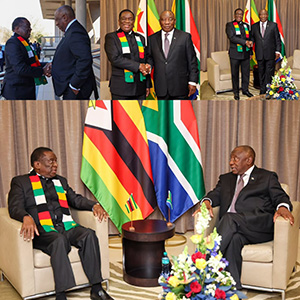
| President Cyril Ramaphosa has called for stronger economic cooperation between South Africa and Zimbabwe, with a particular focus on balancing trade, expanding infrastructure investment and turning the two countries’ abundant natural resources into jobs and greater prosperity. |
| |
|
|
|
| |
Addressing the Fourth Session of the South Africa-Zimbabwe Bi-National Commission (BNC) in Pretoria on Friday, 21 August 2026, President Ramaphosa said the two countries must use existing bilateral mechanisms and opportunities presented by the African Continental Free Trade Area (AfCFTA) to increase trade and address the significant imbalance between the neighbours.
“Zimbabwe is one of our largest trading partners. Over the last four years, the value of our bilateral trade has almost doubled.
“However, there is a significant imbalance in trade between our two countries. South Africa exports much more to Zimbabwe than it imports,” the President said.
He said the two countries should work together to narrow the trade deficit and expand the production and export of goods manufactured from their natural resources.
“We must use the opportunities presented by the African Continental Free Trade Area to increase the volume and balance the composition of trade between our two countries,” President Ramaphosa said.
The President said the Ministerial report before the BNC would assess progress and identify further opportunities in mining, energy, agriculture, transport, logistics and water management.
He also emphasised the importance of infrastructure investment in supporting economic growth and expanding trade between the two countries.
“We should be working together to build the bridges, roads, dams, airports, health facilities and schools that will drive our economies into the future,” he said.
President Ramaphosa said institutions such as the Development Bank of Southern Africa and the Industrial Development Corporation were ready to invest in high-impact projects in Zimbabwe.
“These are projects that connect factories and farms to markets. Projects that connect power stations to businesses and homes. That connect dams to taps. That connect countries to their neighbours,” he said.
Mineral beneficiation and energy cooperation
The President said South Africa and Zimbabwe should deepen cooperation in mining and ensure that their mineral wealth contributes more directly to economic development and job creation.
“Working together, we must convert our abundant mineral resources into jobs, opportunity and prosperity for our people,” he said.
He noted Zimbabwe’s growing production of gold, platinum and critical minerals such as lithium, saying the country was “fast emerging as a global participant”.
President Ramaphosa said South Africa was also increasing investment in exploration and beneficiation.
“We have said for many years that our minerals should be processed at home, that we should export finished products. Together, we need to put that aspiration into practice,” he said.
The President also called for closer cooperation in energy, highlighting the potential of the Southern African Power Pool to support the development of clean, affordable and reliable energy across the region.
Water and food security
President Ramaphosa said there was significant potential for cooperation on water, pointing to the agreement to supply water from Zimbabwe’s Beitbridge Water Works to Musina as an example of how the two countries can work together to meet basic needs and strengthen resilience to climate change.
He also urged greater cooperation on food security and agricultural production.
“We must work together to ensure that all our people have enough food. Let us use our vast arable land for intensified production and support our communal and commercial farmers,” he said.
President Ramaphosa said agricultural cooperation was particularly important as the region contends with accelerating climate change and droughts that are putting pressure on water sources and grazing land.
Strengthening border management and security
The President also called for closer cooperation on migration, border management and the fight against trans-border crime.
“As neighbours that have so much to offer each other, it is critical that we continue our cooperation on migration and border management. To ease the movement of people and goods, we must modernise our facilities and systems,” he said.
He said the two countries must also strengthen their joint efforts to combat trans-border crime.
Beyond bilateral matters, President Ramaphosa said peace and stability remained essential for development in Southern Africa and the continent.
He expressed concern over ongoing conflict and instability in the eastern Democratic Republic of the Congo, Cabo Delgado in Mozambique and Madagascar, while also highlighting the humanitarian crisis in Sudan, instability in South Sudan and armed insurgency in the Sahel.
“In a geopolitical environment that has become unpredictable and fractured, there is now even a greater need for the peaceful resolution of conflict, mediation and dialogue,” he said.
President Ramaphosa congratulated Zimbabwe on its election to a non-permanent seat on the United Nations Security Council for the 2027–2028 term.
He said South Africa expected Zimbabwe to use its position to focus international attention on conflicts that are holding back Africa’s development and to support African-led efforts to resolve them.
Historic ties
At the opening of the BNC, President Ramaphosa also reflected on the deep historical ties between the two countries.
“We are one people. Our spirits are inseparable. Our past has been shaped by shared culture, history and language. Our future will be shaped by shared aspirations,” he said.
He recalled Zimbabwe’s support for South Africa during the struggle against colonialism, white minority rule and apartheid.
“As South Africa, we will forever remember that the people of Zimbabwe gave us shelter, protection and support in the darkest times of our struggle,” the President said.
Lake Kariba tragedy
The remarks came as the two countries mourned the loss of life in the Lake Kariba ferry tragedy. President Ramaphosa conveyed his condolences to President Emmerson Mnangagwa, the people of Zimbabwe and the bereaved families following the tragedy, which claimed close to 100 lives.
Reviewing progress
The Fourth Session of the BNC provides an opportunity for the two Heads of State to review progress in implementing existing bilateral commitments and identify opportunities to further strengthen cooperation.
Established in April 2015, the BNC is the central mechanism for managing and advancing the strategic partnership between South Africa and Zimbabwe. More than 33 agreements and memoranda of understanding have been concluded between the two countries across various areas of cooperation.
The session culminated in the signing of several agreements and memoranda of understanding aimed at expanding bilateral cooperation in strategic areas.
President Ramaphosa said the people of both countries expected the BNC to deliver tangible outcomes.
“Our people expect that this Bi-National Commission will deliver concrete results. South Africa and Zimbabwe stand together. We are two countries with a common history and a common destiny,” the President said.
– Source: SAnews.gov.za |
|
| |
|
| |
| SOUTH AFRICA, BRAZIL SEEK STRONGER GLOBAL SOUTH VOICE, AMID GLOBAL HEADWINDS |
|
| |
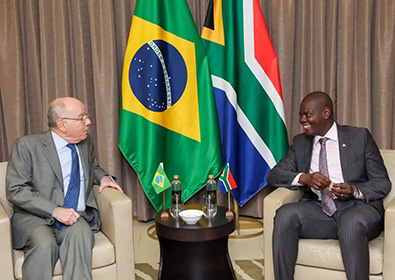
| South Africa and Brazil must use their Strategic Partnership to advance a stronger Global South voice, reform the global financial architecture and ensure that critical minerals drive industrialisation and prosperity in their own economies. |
| |
|
|
|
 |
|
| |
International Relations and Cooperation Minister Ronald Lamola urged this on Wednesday, 26 August 2026, while delivering opening remarks at the Eighth Session of the South Africa-Brazil Joint Commission in Pretoria, which he co-chairs with Brazil’s Minister of Foreign Affairs Mauro Vieira.
The Joint Commission took place against the backdrop of what Minister Lamola described as strong headwinds facing the multilateral system and global peace, with the two countries facing an increasingly important role in defending multilateralism and advancing the interests of developing countries.
“Today, as the multilateral system and global peace face strong headwinds, our joint efforts are more important than ever,” Minister Lamola said.
He said South Africa and Brazil, as two leading economies on their respective continents, were well positioned to act as bridge builders between the Global North and Global South.
“As two leading economies on our continents, Brazil and South Africa are bridge builders between the countries of the Global North and the Global South,” he said.
Minister Lamola said the two countries had consistently pursued common positions in multilateral forums, particularly on reforming global governance to better reflect the aspirations of the majority of the international community.
He highlighted the urgent need to reform the global financial architecture, pointing to the burden of debt servicing across Africa and Latin America and the Caribbean.
“On our continent, as many as 750 million people, more than half of Africa’s population, live in countries that spend more on interest payments than on hospitals and classrooms.
“In Latin America and the Caribbean, many countries are also saddled with debt. More than half of the population, or roughly 350 million people, live in countries that spend more on debt repayments than on health,” he said.
Minister Lamola said the two countries had used their membership of the G20 to highlight these inequalities and push for concrete reforms.
“As founding members of the G20, Brazil and South Africa have used the forum to place these imbalances under the microscope and to advance concrete reforms,” he said.
The Minister also identified critical minerals as an area where South Africa and Brazil could deepen cooperation and pursue a different development model for the Global South.
Both countries are rich in minerals needed for the transition to a green economy, with Lamola warning that growing global demand should not simply reproduce historical patterns in which developing countries export raw materials while value and wealth are created elsewhere.
“Our countries have not hesitated to use their voice and soft power to call attention to the challenges and crises bedevilling countries of the global South,” he said.
He added that South Africa and Brazil could work together to ensure that critical minerals contribute to industrialisation, skills development and technological advancement.
“Our countries are well placed to advance a different model – one in which the minerals that power a green future also power industrialisation, skills development, technological exchange and prosperity in our own societies,” he said.
The Joint Commission will also examine ways to strengthen bilateral economic ties and expand market access between the two countries.
Brazil is South Africa’s largest trading partner in Latin America, with bilateral trade amounting to approximately US$2 billion in 2025.
Minister Lamola said South African companies had established a presence in Brazil in sectors including pharmaceuticals, technology, mining, financial services and chemicals, while Brazilian companies were investing in South Africa’s automotive and food-manufacturing sectors.
He said the African Continental Free Trade Area offered Brazilian companies access to a rapidly integrating African market of more than 1.4 billion people, while Brazil offered South African companies an important gateway into Latin America and the Caribbean.
The SACU-MERCOSUR Preferential Trade Agreement also provided a platform on which the two countries could build.
“This Joint Commission gives us an opportunity to explore ways to expand market access, address trade barriers, and ensure this partnership fulfils its true promise. South Africa is equally committed to achieving more balanced and diversified trade between our countries,” Lamola said.
The Minister said South Africa also looked forward to concluding the Agreement on Investment Promotion, Cooperation, Facilitation and Protection, which he said would strengthen the framework for productive and mutually beneficial investment.
The two countries are expected to review existing bilateral agreements and identify new areas of cooperation, including agrotech, aerospace and defence industries, biopharmaceuticals, creative industries, critical minerals beneficiation, energy, science and innovation, youth and women’s empowerment, transport and health.
Minister Lamola also highlighted growing tourism ties, noting that Brazil had become South Africa’s ninth-largest source market for tourism. Nearly 65 000 Brazilians visited South Africa in 2025, with Lamola attributing the recovery towards pre-pandemic levels partly to the bilateral 90-day visa agreement and the expansion of direct flights between South Africa and São Paulo.
The Joint Commission follows President Cyril Ramaphosa’s State Visit to Brazil in March, during which the two countries reaffirmed their Strategic Partnership.
Minister Lamola said the relationship was rooted not only in contemporary political and economic interests but also in a shared history of struggle against colonialism, slavery and racial exclusion.
He recalled that former President Nelson Mandela visited Brazil in August 1991, where he met political leaders, representatives of the black movement and ordinary Brazilians to thank them for their solidarity with South Africa’s liberation struggle.
The Minister said the historical ties between the two countries continued to inform their contemporary partnership.
“Our histories and our difficult journeys towards building united and diverse societies have taught us important lessons. Democracy is always a work in progress.
“Democratic victories are never permanent. Democracy survives through vigilance, strong institutions and the active participation of citizens,” he said.
Against this backdrop, Minister Lamola expressed confidence in the resilience of Brazil’s democracy as the country approaches its upcoming elections.
“It is in this spirit that we wish the people of Brazil well as they approach the upcoming elections. We are confident in the strength and resilience of Brazil’s democracy,” he said.
Minister Lamola said South Africa viewed Brazil as a dependable ally in the pursuit of a more equitable international order.
“South Africa is proud to have in Brazil a dependable ally and co-creator of a just, democratic and equitable world,” he said.
The Eighth Session of the South Africa-Brazil Joint Commission will assess progress in existing areas of cooperation and identify new opportunities to deepen the Strategic Partnership.
– Source: SAnews.gov.za |
|
| |
|
| |
| STRONGER BRICS COOPERATION NEEDED TO TACKLE YOUTH CHALLENGES |
|
| |
 |
|
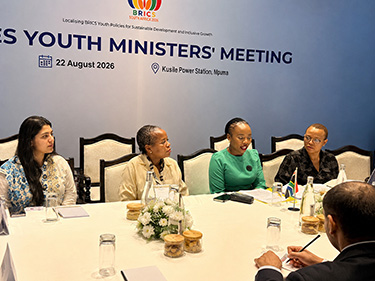
| Minister in The Presidency responsible for Women, Youth and Persons with Disabilities Sindisiwe Chikunga has called for stronger cooperation among BRICS countries to equip young people with the skills, opportunities and support needed to thrive in a rapidly changing global economy. |
|
|
| |
Addressing the Brazil, Russia, India, China and South Africa (BRICS) Youth Ministerial Meeting in Visakhapatnam, India, on Saturday, 22 August 2026, Minister Chikunga said young people across the world continue to face unemployment, poverty, inequality, skills mismatches, and uneven effects of technological and economic change.
She said these challenges require deeper cooperation among BRICS nations in areas such as skills development, entrepreneurship, innovation, digital transformation, education, and youth leadership.
“By investing in youth today, we invest in the resilience, prosperity and sustainability of our nations tomorrow,” Minister Chikunga said.
The Minister held a bilateral meeting with the United Arab Emirates (UAE) Minister of State for Youth Affairs, Dr Sultan bin Saif Al Neyadi, aimed at strengthening South Africa-UAE cooperation in youth empowerment, and skills development. Minister Chikunga said the meeting reflected the shared commitment of BRICS nations to place young people at the centre of global development.
Prevailing global context
Turning to the global context, Chikunga noted that young people continue to face the challenges of unemployment, poverty, inequality, skills mismatches, and uneven impacts of technological and economic change.
She said these realities demand stronger cooperation among countries to ensure that youth are equipped with the skills, opportunities and support.
“With only 12% of the Sustainable Development Goals (SDG) targets on track to be met by 2030, the current global reality is untenable, undesirable and unsustainable. All of this makes our meeting particularly significant,” Chikunga said.
Minister Chikunga highlighted South Africa’s investments in youth development through the National Youth Development Agency and the National Youth Service Programme, which have expanded opportunities for volunteerism, civic participation, entrepreneurship and employment support.
She said volunteerism remains an important instrument for promoting social cohesion, active citizenship and people-to-people cooperation among BRICS countries.
The Minister also noted President Cyril Ramaphosa’s announcement of the implementation of paid voluntary work targeting 100 000 young people in 2026.
Investment in basic and higher education
On education, the Minister highlighted government investment over the past three decades, with expanded access to basic and higher education and improved opportunities for young people from disadvantaged backgrounds.
“At basic education level, in 1994, the matric pass rate stood at around 58%. Three decades later, the Class of 2025 achieved a record-breaking National Senior Certificate (NSC) pass rate of 88%. This is the result of three decades of making education an apex priority of government.
“In higher education and training, we have also honoured the call for the doors of learning and culture to be opened through the National Student Financial Aid Scheme (NSFAS).
“From its humble beginnings in the early 1990s, NSFAS has grown from a budget of R33 million in 1991, serving only 7 240 students, to a budget well over R50 billion in 2026, funding over 1.1 million students at universities and Technical and Vocational Education and Training (TVET) colleges,” Minister Chikunga said.
The Minister also highlighted the role of South Africa’s social protection programmes, saying they continue to cushion vulnerable young people and their families against poverty and support access to education and economic participation.
Minister Chikunga said the inclusion of young persons with disabilities should also remain a key priority within the BRICS Youth Track.
“We must ensure that young persons with disabilities have equal access to education, skills development, employment opportunities, entrepreneurship support, digital technologies and leadership platforms,” the Minister said.
The Minister emphasised that an inclusive BRICS youth agenda should recognise the contributions of all young people, including women, rural youth, and persons with disabilities.
She reaffirmed South Africa’s commitment to peace, stability, and development as essential conditions for young people to realise their full potential.
The Minister welcomed the adoption of the Joint Statement of the BRICS Youth Ministers’ Meeting and the BRICS Youth Cooperation Framework.
“These instruments provide an important basis for continuity, structured cooperation and practical initiatives that will strengthen the BRICS Youth Track and enhance opportunities for our young people. As BRICS continues to evolve, let us ensure that the voices, aspirations, and innovations of young people remain at the heart of our collective agenda,” Minister Chikunga said.
– Source: SAnews.gov.za |
|
| |
|
| |
| SOUTH AFRICA TO ADVANCE SPORTS COOPERATION AT 2026 BRICS SPORTS MINISTERS’ MEETING |
|
| |
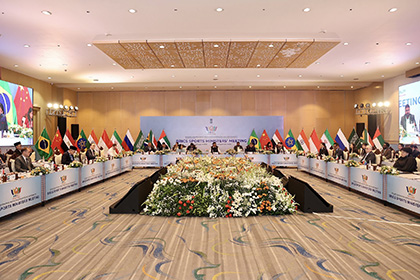
| South Africa will use the upcoming 2026 Brazil, Russia, India, China and South Africa (BRICS) Sports Ministers’ Meeting in India to strengthen sport cooperation and identify practical areas of collaboration that advance the shared priorities of BRICS partners. |
|
|
 |
|
| |
“Sport transcends borders. It brings nations and people together, builds lasting friendships, and promotes mutual understanding and cultural exchange. Through coordinated efforts, BRICS countries can harness the power of sport to advance the development and well-being of their people,” Deputy Minister of Sport, Arts and Culture Peace Mabe said in a statement.
The Deputy Minister will participate in the 2026 BRICS Sports Ministers’ Meeting on behalf of the Minister of Sport, Arts and Culture, Gayton McKenzie, from 22 to 23 August 2026, in Visakhapatnam, India.
The meeting will be held under the theme: Building for Resilience, Innovation, Cooperation and Sustainability.
Deputy Minister Mabe said BRICS cooperation must help strengthen sports development across the African continent and the broader Global South.
“Our participation must contribute to tangible outcomes that bring sport closer to communities and strengthen development pathways, from grassroots participation to the highest levels of competition.
“We look forward to working with our BRICS partners to advance sport as an instrument of unity, resilience and sustainable development,” the Deputy Minister said.
Hosted by India’s Ministry of Youth Affairs and Sports, the meeting will bring together ministers and representatives from BRICS member countries for high-level deliberations on strengthening cooperation in sport.
The meeting will provide a strategic platform for participating countries to engage on identified priority areas and consider how these can be translated into practical, actionable outcomes. It will also recognise the important role of sport in fostering lasting friendship, mutual understanding and cultural exchange among nations.
The ministerial meeting will be preceded by a meeting of senior officials, who will finalise the Joint Ministerial Declaration.
The ministers will seek to adopt the declaration, marking the culmination of the participating countries’ collective efforts.
– Source: www.bizcommunity.com |
|
| |
|
| |
| DEPUTY MINISTER NOMALUNGELO GINA CALLS FOR STRONGER BRICS SCIENCE COOPERATION |
|
| |
| Deputy Minister of Science, Technology and Innovation, Dr Nomalungelo Gina, has called for stronger Brazil, Russia, India, China, and South Africa (BRICS) science cooperation to help countries respond to an increasingly complex geopolitical environment and growing challenges to international collaboration. |
|
| |
|
| |
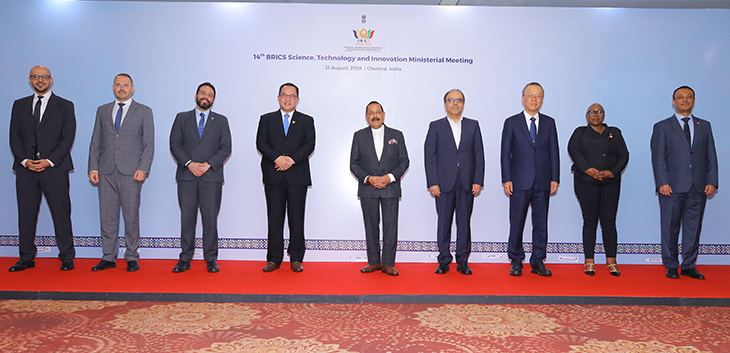
The Deputy Minister was speaking at the BRICS Science, Technology and Innovation (ST&I) Ministerial Meeting in Chennai, India, on Friday, 21 August 2026, which concluded with the adoption of the Chennai Declaration.
Deputy Minister Gina said BRICS is a dynamic platform for advancing ST&I in support of resilience, inclusive development, sustainability and shared prosperity.
Chaired by India’s Minister for Science and Technology and Earth Sciences, Dr Jitendra Singh, the meeting announced the unanimous adoption of the “Chennai Declaration”, reaffirming BRICS' commitment to build an effective, resilient and future-ready framework in science, technology and innovation.
“As we are confronted with a more complex geopolitical environment and polycrisis, it is therefore important to strengthen the multilateral system of cooperation. BRICS becomes even more important in the strengthening of the multilateral order,” said Dr Gina.
The theme for India’s Chairship, Building for Resilience, Innovation, Cooperation and Sustainability, underscored a people-centred and humanity-first approach, highlighting the importance of evaluating the achievements and contributions to address global priorities while contributing to respective national growth and development.
Dr Gina said South Africa welcomed the outcomes of the meeting, with the Declaration reaffirming the country’s commitment to practical implementation, stronger cooperation and measurable impact.
She added that the value of the Ministerial Meeting lies in the renewed confidence that BRICS countries can work together to strengthen scientific excellence, support emerging technologies, empower young scientists and innovators, and respond collectively to the complex challenges facing our societies.
“As we move forward, South Africa remains committed to working closely with all BRICS partners to translate the commitments made here into concrete programmes, strengthened partnerships and tangible benefits for our people. Implementation, coordination and delivery must remain at the centre of our collective efforts,” said Dr Gina.
The ministers discussed key national ST&I policies and priorities and advanced the shared priorities of BRICS STI cooperation.
As access to shared joint research infrastructures and platforms is becoming increasingly important, the Minister welcomed the progress towards the operationalisation of the BRICS Global Research Advanced Infrastructure Network (BRICS GRAIN).
This will be a flagship mechanism for mapping, sharing and joint use of research infrastructure across BRICS member countries. This will assist in conducting scientific discoveries and research activities in areas such as artificial intelligence, quantum technologies, and biomedical sciences, among others.
The BRICS Science and Research Repository is also proposed as a structured platform to map, curate and share research outputs, datasets, infrastructures, expertise and collaboration opportunities across BRICS.
Deputy Minister Gina said South Africa welcomed this initiative as a sustainable digital repository strengthening BRICS STI cooperation through knowledge sharing, informed decision-making and enhanced visibility of BRICS research capacities.
– Source: www.gov.za |
|
| |
|
| |
| SOUTH AFRICAN DELEGATION HEADS TO STOCKHOLM WORLD WATER WEEK 2026 |
|
| |
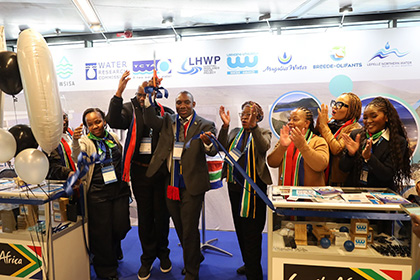
| Dr Risimati Mathye, Deputy Director-General responsible for Water Services Management at the Department of Water and Sanitation (DWS), will lead the South African water sector delegation to World Water Week 2026 in Stockholm, Sweden, from 23 to 27 August 2026. |
|
|
 |
|
| |
The delegation will include representatives from various water sector entities and catchment management agencies, who will participate in high-level panel discussions and knowledge-sharing sessions alongside international water leaders, policymakers and sector experts.
Hosted by the Stockholm International Water Institute (SIWI), this year's event will be held under the theme: Water for People and Progress, emphasising equitable water security, sanitation and climate resilience.
World Water Week is an annual global conference on water issues and an enduring meeting place for water action, championing cooperation across sectors and national boundaries.
The conference delves into a broad range of topics, from food security and health to agriculture, technology, biodiversity and the climate crisis. It also provides a meeting platform for policymakers and institutions to accelerate progress in international processes related to water, climate and sustainable development.
During the conference, the department said Mathye is expected to highlight South Africa's efforts, priorities, and experiences in strengthening water security, enhancing sanitation services, and building resilience to climate change.
He will also highlight the importance of collaboration, innovation, and investment in addressing shared water issues.
“Water is essential to health, dignity, education, livelihoods and inclusive development. Reliable access to safe water and sanitation, particularly in informal settlements, rural communities and peri-urban areas, helps reduce disease, supports education and strengthens the livelihoods of vulnerable communities.
“Water is essential to health, dignity, education, livelihoods and inclusive development. Reliable access to safe water and sanitation, particularly in informal settlements, rural communities and peri-urban areas, helps reduce disease, supports education and strengthens the livelihoods of vulnerable communities.
“For South Africa, achieving water security means ensuring that water and sanitation services are reliable, safe, accessible and affordable, while addressing the inequalities that continue to affect vulnerable communities. Investment in basic services is therefore not only a social obligation, but an investment in healthier communities, stronger economies and inclusive progress,” Mathye said.
The department said South Africa's participation in the conference will provide an opportunity to showcase the country's water reforms, innovations and management approaches, while learning from global experiences and strengthening partnerships that support sustainable and inclusive water solutions.
“The department considers events like World Water Week crucial for fostering cooperation and collective action toward a water-secure future, recognising that water issues cross borders and require cross-sector collaboration,” the department said.
– Source: SAnews.gov.za |
|
| |
|
| |
| HISTORY MADE: SOUTH AFRICA’S FIRST EINSTEIN FELLOW IS DELECIA DAVIDS |
|
| |
 |
|
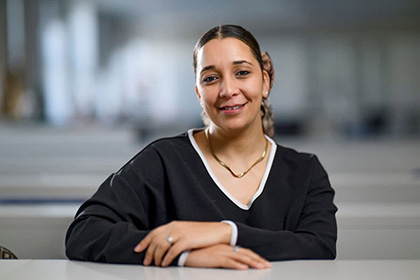
| Stellenbosch University academic Delecia Davids has made history as the first South African selected for the prestigious Einstein Fellowship. |
| |
The fully funded fellowship is offered by the Einstein Forum and the Wittenstein Foundation. It gives young academics under the age of 30 the opportunity to step outside their usual field and explore an interdisciplinary project, following Albert Einstein’s own wide-ranging approach to ideas.
The fellowship is granted once a year and only to one person. Davids will spend her fellowship living and working in the garden cottage at Einstein’s own former summer home in Caputh, Germany. |
|
|
| |
As per Stellenbosch University (SU), Davids is currently an early-career researcher, lecturer and teacher educator at the university, where she works in the Department of Curriculum Studies.
Davids grew up in Delft and began her studies at Stellenbosch University in 2012. She initially planned to become a maths and science teacher, but her interest later moved towards teacher education. She realised that working with future teachers could extend her impact to all the learners they would one day teach.
Her fellowship project is titled Reparative Storytelling, Memory, and Identity and it will move her work into a deeply personal area. Davids will examine the stories of people who identify as coloured in South Africa.
It grew out of personal loss after her father’s death in 2023, which led her to explore family and community histories that are often left unasked.
“I realised there was so much I didn’t know about him and his history and where he came from,” she says. “You don’t really ask until it’s too late,” she says, as per SU.
She’ll begin with 10 families, tracing their stories across generations to document both difficult histories and joyful heritage. She will also consider these stories alongside the ways Germany remembers and speaks publicly about its past.
The fellowship will take Davids into questions of memory and identity, but her current research is focused on an entirely different realm where education meets technology.
Her PhD, now in its final stages, looks at trainee teachers (students about to finish their teaching degree) and how they think about and use technology. She wants to understand why they see technology the way they do – what in their lives shaped those views.
The university has also credited her for revolutionising education by introducing game-based learning and assessments as alternatives to standardised assessments. Davids designed digital escape rooms specifically for the education field that incorporate elements like timers, puzzles, collaboration, clues, and locks to create engaging tests.
Davids is also the founder and academic lead of Stellenbosch University’s Digital Agency Studio, where students, academics and young people examine how technology shapes learning. She is also the curator of TEDx Stellenbosch.
Being chosen for the Einstein Fellowship is a big first for South Africa and an incredible achievement. While she’s in Caputh, Davids will have time and space to dig up stories that might have otherwise been forgotten, and to think about how telling these stories can help families better understand who they are.
– Source: www.goodthingsguy.com |
|
| |
|
| |
| AMBER-ROSE BERRY MAKES HISTORY AS THE YOUNGEST SOUTH AFRICAN WOMAN TO SWIM THE ENGLISH CHANNEL |
|
| |
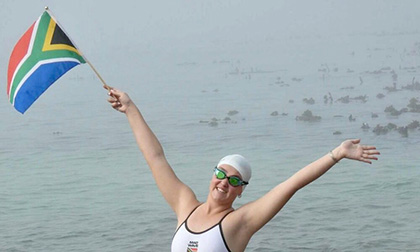
| Eighteen-year-old Amber-Rose Berry from Pringle Bay, near Cape Town, has made history after becoming the youngest South African woman to swim the English Channel. |
| |
| Berry completed the gruelling 33km open-water crossing from England to France in an unofficial time of 10 hours and 27 minutes on Sunday, 23 August 2026. Her time is still subject to ratification, but if confirmed, it would place her well ahead of the average 12 to 14 hours taken to complete the crossing. |
|
|
 |
|
| |
She began her swim from Shakespeare Beach in Dover at 5.27am and reached the rocks at Pointe du Riden, near Cap Gris-Nez in France, at 3.54pm.
The achievement came despite a series of challenges during the crossing, including painful jellyfish stings, strong currents, cold water and the wake of a passing ship.
“That was bloody tough,” Berry said shortly after completing the swim. “But I was motivated by the opportunity I was given to complete this swim. And by the fact that, by finishing, so many opportunities would be afforded to student-athletes like me.”
Berry's mother, Karen, who supported her aboard the escort vessel Sea Leopard, said her daughter faced one of her toughest moments just beyond the halfway point.
“She was tired and cold, and there was still so far to go,” Karen said.
However, Berry's training and determination helped her push through. She was also forced to battle the huge wake created by a ship, which her mother said appeared to give her renewed energy.
“Funnily enough, that just seemed to energise her,” Karen said.
Berry trained for months under the guidance of open-water swimming coach Clinton le Seuer. During the crossing, she fed regularly, taking liquid nutrition every hour for the first two hours before moving to feeds every 30 minutes.
The crossing also adds another milestone to Berry's already remarkable open-water swimming career.
At just 16, she became the youngest person to complete Cape Town's 33km False Bay crossing, finishing the swim solo in nine hours and 40 minutes. She completed that challenge without a wetsuit, wearing only a swimming costume and cap.
Her latest achievement carries additional significance as it comes exactly 100 years after Gertrude Ederle became the first woman to swim the English Channel in 1926.
It also coincides with South Africa's Women's Month, which commemorates the historic 1956 Women's March against the pass laws.
Berry follows in the footsteps of another record-breaking South African swimmer, Otto Thaning, who became the oldest person to complete the English Channel crossing when he swam it at the age of 73 in 2014. His record remains intact.
Beyond the sporting achievement, Berry's swim was also aimed at raising funds for student-athletes.
More than US$7,000 has already been raised through a campaign supporting the Ukukhula Institute in Makhanda. The initiative aims to provide scholarships for disadvantaged student-athletes from Eastern Cape high schools to attend Rhodes University.
The campaign carries the message, “Believe in What You Can Achieve”, reflecting Berry's own journey from months of preparation to hours spent alone in the English Channel.
With her historic crossing now awaiting official ratification, Berry has once again demonstrated the heights that South African young athletes can reach when sporting ambition is matched with resilience and purpose.
– Source: www.iol.co.za |
|
| |
|
| |
| FIFTEEN RESCUED BIG CATS ARRIVE SAFELY AT LIONSROCK |
|
| |
 |
|
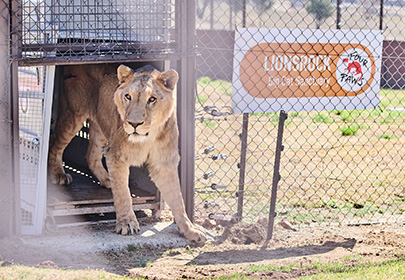
| Fifteen big cats rescued from the former Zoo Luján in Argentina have arrived safely at Lionsrock Big Cat Sanctuary, marking a significant milestone in an international rescue mission led by global animal welfare organisation Four Paws. |
|
|
| |
The nine tigers and six lions travelled thousands of kilometres from Argentina to their new home in South Africa and eight tigers and seven lions to the United States. Upon arrival at Lionsrock, the animals were carefully introduced to specially prepared adaptation enclosures, where they have begun settling into their new surroundings.
For many of these animals, this is the first time they have experienced expansive natural habitats after spending years in inadequate enclosures at the former Zoo Luján, which was closed by Argentine authorities in 2020 due to animal welfare concerns.
"The arrival of these lions and tigers at Lionsrock marks the beginning of a chapter for animals who have endured years of hardship. Seeing them finally step into an environment where they can simply be lions and tigers is incredibly emotional and rewarding for our teams around the world," says Fiona Miles, Director of Four Paws South Africa.
The transfer follows months of planning by veterinarians, animal welfare experts, transport specialists and sanctuary teams from multiple countries, with animal welfare remaining the highest priority throughout the operation.
Since arriving at Lionsrock, the big cats are being closely monitored by the sanctuary's dedicated animal care team. Veterinarians and caretakers are observing their behaviour, appetite and mobility while enrichment activities and carefully managed routines support their adjustment to their new environment.
"The coming weeks are crucial for these animals as they settle into their new surroundings. Every lion and tiger responds differently to change, particularly after long periods of confinement. Our team is monitoring them closely and giving them the time and space they need to adapt at their own pace. We are already seeing encouraging signs of curiosity and confidence from several of the animals," says Hildegard Pirker, Sanctuary Manager at Lionsrock Big Cat Sanctuary.
Lionsrock Big Cat Sanctuary provides a safe, species-appropriate environment where rescued lions and tigers can live free from exploitation and receive expert care for the remainder of their lives. The arrival of these animals highlights the impact of international collaboration in securing a better future for wildlife in need.
– Source: www.bizcommunity.com |
|
| |
|
| |
| SOUTH AFRICA'S HOCKEY WOMEN CLAIM FIRST WORLD CUP WIN AS MEN ARE HELD BY MALAYSIA |
|
| |
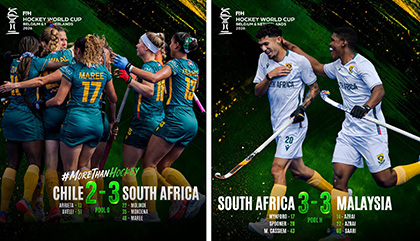
| South Africa’s women finally had their breakthrough at the FIH Hockey World Cup on Sunday, 23 August 2026, fighting back to beat Chile 3-2 and claim their first victory of the tournament, while the men were held to a 3-3 draw by Malaysia. |
|
|
 |
|
| |
The women’s win at the Wagener Hockey Stadium capped a much-improved showing in the 9th-16th classification phase and provided welcome reward after a difficult pool campaign against England, India and China.
Chile made the brighter start, with captain Manuela Urroz converting a penalty corner in the 13th minute to put the South Americans ahead.
South Africa responded through their own captain, Edith Molikoe, who produced an excellent piece of individual skill to win possession before finishing in the 22nd minute and sending the teams into half-time level at 1-1.
The African champions then completed the turnaround 10 minutes into the second half.
Ntsopa Mokoena, who scored against Japan on Friday, struck again in the 35th minute after Kayla de Waal created the opportunity, giving the forward two goals in as many matches.
South Africa extended their advantage three minutes into the final quarter when Caylin Maree finished off another excellent attacking move involving de Waal.
Chile pulled one back through Simone Avelli in the 51st minute to set up a tense finish, but South Africa held their nerve to secure a 3-2 victory.
The result follows Friday’s 1-1 draw against Japan and leaves coach Inky Zondi’s side unbeaten in the classification phase. It also gives South Africa a much-needed confidence boost after they were unable to secure a point during the pool stage.
The final position of the women's team was set to be confirmed after the remaining classification matches, with South Africa expected to contest the 13th-place play-off.
The men, meanwhile, looked set for a second successive classification victory before Malaysia struck in the final minute to secure a dramatic 3-3 draw in Wavre.
Luke Wynford and Nic Spooner cancelled out two goals from Malaysia’s Abu Kamal Azrai to leave the sides level at half-time.
South Africa's highest World Cup goalscorer of all time, Mustapha Cassiem, then put them ahead in the 43rd minute with another impressive World Cup goal. The African champions protected their 3-2 lead for most of the final quarter, but Faizal Saari found the equaliser in the 60th minute after South Africa failed to clear a long ball into their circle.
The draw leaves South Africa unbeaten in the classification phase with four points from their matches against France and Malaysia, with their final World Cup position and opponent still to be determined.
– Source: www.iol.co.za |
|
| |
|
| |
| TWO SOUTH AFRICAN HOCKEY STARS CELEBRATE WORLD CUP MILESTONES |
|
| |
 |
|
| With the 2026 FIH Hockey World Cup already underway in Belgium and the Netherlands, South African hockey has had two major milestones for players in the green and gold. |
|
|
| |
On the women’s side, Taheera Augousti marked her 50th international appearance for South Africa when she took on India at the tournament.
While she was still in Grade 11, Augousti spoke about her dream of representing her country. She has since turned that ambition into reality on some of the biggest stages in international hockey.
Her international journey has included representing South Africa at the 2023 Junior World Cup in Chile and the Paris 2024 Olympic Games. Now, she has added a 50th senior international cap to the list.
There was also a landmark moment on the men’s side, with South African captain Dayaan Cassiem earning his 100th cap for the national team at the World Cup.
Cassiem made his international debut at just 18 and has spent the past decade establishing himself as one of the key figures in South African men’s hockey. Reaching a century of appearances while captaining his country at a World Cup makes the achievement even more special.
Reaching 50 and 100 international appearances, respectively, is no small feat, particularly on a World Cup stage. For Augousti and Cassiem, these milestones are markers of careers that continue to grow in the green and gold.
– Source: www.goodthingsguy.com |
|
| |
|
| |
| JOSHUA GERBER CAPS WORLD U20 CAMPAIGN WITH TWO WORLD AGE BESTS |
|
| |
 |
|
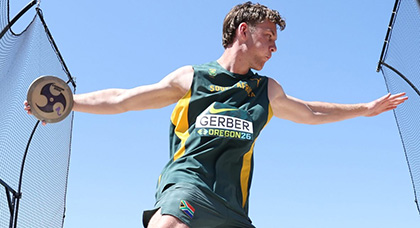
| Sixteen-year-old South African discus thrower Joshua Gerber has plenty to be proud of after an extraordinary World Athletics U20 Championships campaign in Eugene, Oregon, where he broke his own World Age Best twice and finished ninth in the world. |
|
|
| |
Gerber first set a new personal best of 61.19 metres in qualifying before going even further in the final with a 61.43 m throw. The Grade 11 learner was the youngest athlete in the final, which featured six of the top 10 competitors setting personal bests.
Despite the significance of his achievement, he says he was so focused on competing that he barely thought about the record during the championships.
“I did not really think about the record during the championship, to be honest, because I was just so absorbed in the competition itself.”
His second record-breaking throw came after he had already produced what he described as a “basically perfect throw” in qualifying.
“It was only after I calmed down a bit after the final that the realisation dawned on me, and I was overjoyed.”
With 10 athletes having already reached the automatic qualifying distance, Gerber knew he needed a big throw to secure his place in the final. Finding another 24 centimetres in the final, however, was something even he wasn’t sure he could manage.
“Luckily I just hit it a bit better or had that tiny bit more adrenaline to hit it harder.”
Away from the competition circle, Gerber says balancing elite athletics with Grade 11 schoolwork remains one of his biggest challenges.
His school, Hoërskool Menlopark, has also supported his sporting commitments by accommodating him when necessary, including allowing him to write missed tests as soon as possible after returning from competitions.
Gerber credits his parents, coach and personal trainer Brendan for helping him reach this level.
“Without them none of this would have been possible.”
Returning to the U18 1.5 kg discus, he wants to find his rhythm before chasing a serious personal best. He also hopes to push his shot put above 1000 points before moving up to the heavier weight next year.
But above all, he wants to enjoy himself along the way.
“My main goal would be just to have fun for the rest of the season,” he says.
And admitted that he took the first half of the year “way too seriously”.
– Source: www.goodthingsguy.com |
|
| |
|
| |
| TOMAS DUMINY MAKES HISTORY WITH FIFTH-PLACE WORLD FINISH |
|
| |
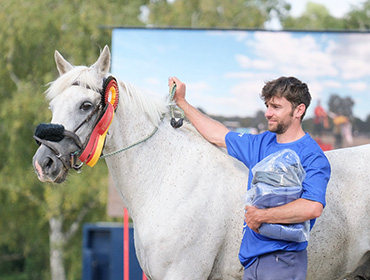
| South African rider Tomas Duminy has made history at the 2026 World Individual Mounted Games Championships in Luhmühlen, Germany, becoming the first South African to reach the competition’s final. |
|
|
 |
|
| |
Duminy finished fifth overall in a field of 63 competitors, with only seven riders qualifying for the final. The result marks a significant milestone in a journey that has seen him spend the past five years competing and training in the United Kingdom (UK) in pursuit of success at the highest level.
“It means a lot. I’ve been working hard for about five years in the UK to get to this level, and although I’ve had success in other competitions, this felt like a massive breakthrough at the highest level.”
His route to the final was particularly impressive. It became clear from the first race of the qualifying sessions that he was on course to progress to the semi-finals, allowing him to focus on executing his plan rather than looking too far ahead.
He admitted to feeling nervous going into the semi-final and getting off to a shaky start but stayed with his game plan and eventually finished tied for first with the rider who would go on to win the competition.
“That was probably my proudest moment as I have struggled previously with the different mental approach you need for a semi-final.
The final did not quite go according to plan. Still, fifth place represents a huge improvement on his previous best World Championship finish of around 17th.
“Fifth in the world sounds pretty cool and is an insane jump from my previous best.”
Duminy’s journey in Mounted Games began much earlier, in Hilton, KwaZulu-Natal, where the sport was a regular activity at his local pony club.
He had previously competed in show jumping and dressage but found himself battling nerves at competitions. Mounted Games, which involves riders and their ponies racing through a series of fast-paced games, offered a different experience.
“With Mounted Games there’s no one judging you; it’s just a case of getting over the line first.”
He credits the sport with helping him overcome those nerves, eventually influencing other areas of his life. He hopes his success can inspire riders in South Africa and elsewhere to believe they can compete at the highest level, regardless of where they come from.
“I hope I can be an inspiration for other riders in Africa and also Australia and New Zealand, where everyone is at a huge disadvantage compared to anyone living in Europe competing on their own ponies.”
Despite reaching a milestone no South African has achieved before, Duminy is already looking ahead. He hopes to return to the World Championships in Wales next year and challenge for a place on the podium, while also targeting strong results in World Pairs.
– Source: www.goodthingsguy.com |
|
| |
|
| |
| CAPE TOWN’S 13-YEAR-OLD SKIER CONQUERS THE ANDES IN INTERNATIONAL VICTORY |
|
| |
 |
|
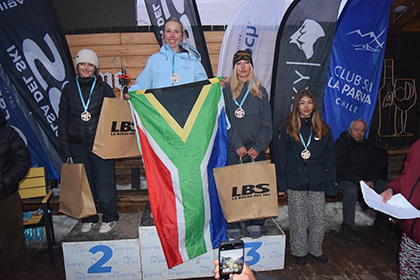
| At just 13 years old, Cape Town’s Julia Whitaker is already making waves on the international skiing scene after claiming first place at the IFSA La Parva 2-Star Junior Freeride Competition in Chile. |
|
|
| |
Whitaker travelled from South Africa to the Andes during the local winter. The team, including Freeride World Tour winners Juliette Willmann, Drew Tabke and Reine Barkered, took on some of the world’s junior freeride talent at La Parva.
Her winning run earned 34.47 points, with the youngster impressing the judges with her technique, control, fluidity and style. Unlike traditional ski racing, freeride competitors aren’t given a set route. Instead, they choose their own line down an ungroomed mountain face, using the natural terrain to showcase their skill and creativity.
Whitaker embraced that freedom, launching off natural features and incorporating freestyle elements into her run. Her style score was particularly impressive, earning 7.40 from all three judges, her highest-scoring category.
But the podium finish came just days after a very different experience on the mountain.
At the 3-Star event at El Colorado, Whitaker opted for an ambitious line that included three major natural features. Things didn’t quite go to plan, with the teenager taking two big crashes.
Rather than letting the falls get to her, Whitaker picked herself up, finished the run with a massive smile and later laughed about the spectacular blooper with fellow young freeriders and friends from California, Clay Willett and Chloe Mahoney.
That journey is even more remarkable because she comes from South Africa, where access to snow and regular mountain training is limited. Much of her preparation happens off the snow in Cape Town, with international trips providing opportunities to train, compete and gain experience on actual mountain terrain.
Freeride skiing and snowboarding were confirmed for the Alpes 2030 Winter Olympic Games in France, where the disciplines will make their Olympic debut.
Whitaker has also drawn inspiration from South Africans who have already broken into winter sport, including Matthew Smith, who represented the country in cross-country skiing at the 2026 Milano Cortina Winter Olympics.
Whitaker will be 17 when the Olympic flame is lit in the French Alps in 2030. For now, there is still plenty of skiing, training, and travelling between her and that Olympic dream.
– Source: www.goodthingsguy.com |
|
| |
|
| |
|
|
|
|
|
|
|
|