| |
| |
|
| |
|
| |
|
| |
| PRESIDENT WELCOMES R4BN VOLKSWAGEN INVESTMENT IN EASTERN CAPE |
|
| |
 |
|
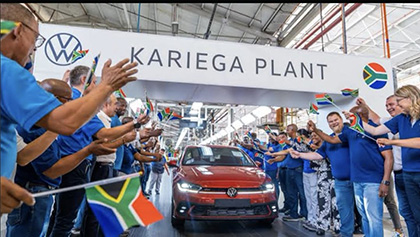
| President Cyril Ramaphosa has welcomed Volkswagen Group Africa’s R4 billion investment linked to the introduction of the new Volkswagen Tengo, describing it as a vote of confidence in South Africa’s manufacturing capabilities, workers and investment environment. |
|
|
| |
President Ramaphosa was speaking at Volkswagen Group Africa’s 75th anniversary celebration at the company’s Kariega plant in the Eastern Cape on Monday evening, 1 September 2026. The investment will support the introduction of the Tengo, which will become the third model manufactured at the Kariega plant, alongside the Polo and Polo Vivo.
“We are greatly encouraged by Volkswagen's continued investment in our country. We particularly welcome the R4 billion investment associated with the introduction of the new Volkswagen Tengo.
“It is a vote of confidence in our workers. It is a vote of confidence in our manufacturing capability. And it is a vote of confidence in South Africa as an investment destination,” President Ramaphosa said.
The President said the investment should not be taken for granted, particularly in an intensely competitive global environment. He said South Africa must continue demonstrating that it has the capabilities, skills and policy environment required to attract and retain major investments.
Automotive sector vital to economy
President Ramaphosa highlighted the importance of the automotive sector to South Africa’s economy, noting that it supports more than 115 000 direct manufacturing jobs and more than half a million jobs across the automotive value chain.
The industry accounts for just over 5% of gross domestic product and reaches 155 export destinations.
“Vehicles manufactured by our plants reach markets across Europe, the United Kingdom, the United States, Africa and many other parts of the world.
“The automotive industry is therefore vital to our efforts to grow the economy, expand exports, attract investment and create jobs,” he said.
Volkswagen has produced close to five million vehicles at the Kariega plant since the first Beetle rolled off the production line in what was then Uitenhage on 31 August 1951.
The President said the plant is the oldest Volkswagen manufacturing facility outside Europe and the only plant in the world manufacturing the Volkswagen Polo and exporting it to Europe and Asia-Pacific. Last year, more than 156 000 vehicles were produced at Kariega, with almost 120 000 exported to international markets.
Focus on new-energy vehicles
President Ramaphosa said the automotive industry was undergoing profound change as manufacturers transitioned towards battery electric vehicles, hybrids and other new-energy technologies. For South Africa, he said, this presented both a challenge and a significant opportunity.
“We have an established automotive manufacturing base. We have skilled workers. And we have significant reserves of many of the critical minerals required for the technologies of the future. We must build on these strengths,” he said.
Government is working to create a stable, predictable and supportive policy environment that enables automotive companies to invest, localise and grow. President Ramaphosa said government is reviewing the South African Automotive Masterplan and the automotive policy framework to ensure that they respond to changing conditions in the industry.
“Detailed discussions are underway among all partners, including the industry, unions and government, to develop a common programme to grow and sustain the automotive sector in South Africa. We are committed to concluding this work as a priority,” the President said.
He said the country needs a sustainable plan that addresses constraints, unlocks opportunities, builds skills, creates policy certainty and enhances South Africa’s competitiveness as an investment destination.
Growing local value
The President said government’s objective is to increase vehicle production in South Africa, ensure more vehicles sold locally are manufactured domestically and create more jobs and opportunities.
He also called for greater participation by black industrialists in the automotive value chain and for South African companies to develop capabilities in batteries, electronics and other technologies that will shape future vehicles.
“We must not only assemble the vehicles of the future. We must increasingly manufacture the components, process the materials and develop the skills and technologies that go into them,” he said.
President Ramaphosa also pointed to the African Continental Free Trade Area as an opportunity to build larger markets, develop regional value chains and expand automotive manufacturing across the continent.
“And we want South Africa to remain an important manufacturing base for vehicles made for South Africa, for Africa and for the world,” he said.
Investment in communities
The President also welcomed Volkswagen’s investment of more than R800 million in social investment in communities around the Kariega plant.
He highlighted the establishment of the LEAP 9 Maths and Science School in KwaNobuhle and Volkswagen’s work with the Department of Basic Education on early childhood development and mathematics and science competencies.
The company also invests R40 million annually in the Youth Employment Service, which gives unemployed young people their first experience of work.
“These investments remind us that the future of advanced manufacturing begins long before a young person enters a factory.
“It begins in our schools, in the teaching of mathematics and science, and in giving young South Africans the skills and confidence to participate in the economy of the future,” President Ramaphosa said.
He commended Volkswagen for its contribution to skills development, supplier development and community investment.
75 years of partnership
Reflecting on Volkswagen’s 75-year presence in South Africa, President Ramaphosa said the company had become part of the country’s social and economic fabric. He noted that during apartheid, Volkswagen was the first company in the automotive industry to recognise black trade unions and employ black artisans.
“Tonight we celebrate this proud history. We celebrate generations of Volkswagen employees who have built this company. We celebrate the suppliers, dealers, organised labour and communities that have been part of this journey,” he said.
President Ramaphosa called for stronger partnership between government, business and labour as the global automotive industry transitions towards new-energy vehicles.
“And as the global industry transitions towards new-energy vehicles, we want South Africa to be part of Volkswagen's future technology and manufacturing strategy,” he said.
He said investment decisions being made today would determine where vehicles of the next decade are manufactured.
“Much has changed since then. The vehicles have changed. The technologies have changed. The markets have changed. And the world has changed. But what has endured is the partnership between Volkswagen and South Africa.
“We thank the Volkswagen Group for its continued confidence in our country. And we look forward to the next chapter of this relationship,” he said.
President Ramaphosa concluded by thanking Volkswagen for its 75 years of investment in South Africa.
“Let us work together to build people’s cars in this country for many years to come,” the President said.
– Source: SAnews.gov.za |
|
| |
|
| |
| MINISTER LAMOLA'S CONDOLENCE MESSAGE FOLLOWING THE PASSING OF AMBASSADOR MKJ NKOSI |
|
| |
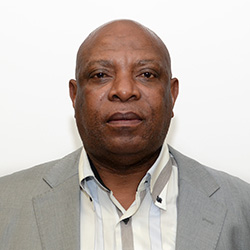
| The Department of International Relations and Cooperation (DIRCO) announces with deep sorrow the untimely death of His Excellency Muzikayifani Khehla Joseph Nkosi on 29 August 2026. |
| |
Ambassador Nkosi joined DIRCO on 18 September 2017 and served with unwavering dedication as Ambassador to the Bolivarian Republic of Venezuela from 11 March 2018 to 31 March 2022 and subsequently as Ambassador to the Republic of Chad from 3 August 2022 until his untimely passing.
Ambassador Nkosi was also known for his distinguished history of political activism, having served as the first Deputy President of the Congress of South African Trade Unions (COSATU) and as the South African Communist Party (SACP) Provincial Chairperson in KwaZulu-Natal.
Ambassador Nkosi demonstrated exemplary commitment to South Africa through his steadfast representation of the country's national interests, promoting its economic strengths, diversity and industrial capabilities, thereby reinforcing bilateral relations in the nations where he served. |
|
|
 |
|
| |
Minister Ronald Lamola, Deputy Minister Alvin Botes, Deputy Minister Thandi Moraka, Director-General Zane Dangor and colleagues convey their deepest condolences to the family and friends of the late Ambassador Nkosi. May his soul rest in peace.
– Source: www.dirco.gov.za |
|
| |
|
| |
| MINISTER LAMOLA LEADS SOUTH AFRICAN DELEGATION TO AU EXTRAORDINARY SESSION ON CONFLICT PREVENTION AND RESOLUTION |
|
| |
 |
|
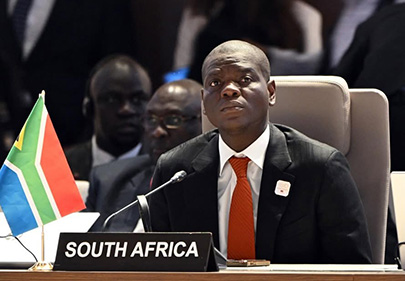
| Minister of International Relations and Cooperation, Ronald Lamola, led South Africa’s delegation to the 21st Extraordinary Session of the Assembly of Heads of State and Government of the African Union (AU), held in Luanda, Angola, from 29 to 30 August 2026. |
| |
|
|
| |
Minister Lamola represented His Excellency President Cyril Ramaphosa at the high-level gathering, which brought together African leaders to deliberate on matters of continental peace and security. The Session was held under the theme: Strengthening Mechanisms for Conflict Prevention and Resolution in Africa.
The Session provided an opportunity for African leaders to undertake a strategic assessment of the effectiveness of existing continental mechanisms for preventing, managing and resolving conflicts. It also provided a platform to consider ways of strengthening Africa’s collective capacity to address conflicts and promote sustainable peace and security on the continent.
Ahead of the Assembly, Minister Lamola participated in the 26th Extraordinary Session of the AU Executive Council in Luanda on 29 August 2026, as part of preparations for the high-level gathering.
On the margins of the Extraordinary Session, Minister Lamola held bilateral engagements with regional and continental partners. On 29 August 2026, he met with the Minister of Foreign Affairs and International Relations of the Kingdom of Lesotho, Limpho Tau. The engagement provided an opportunity to discuss matters of mutual interest and strengthen the close relations between South Africa and Lesotho.
On 30 August 2026, Minister Lamola met with Kenya’s Prime Cabinet Secretary and Cabinet Secretary for Foreign and Diaspora Affairs, Musalia Mudavadi. The meeting took place on the margins of the AU Assembly and provided an opportunity for the two countries to exchange views on matters of bilateral and continental importance.
Minister Lamola also met with Ambassador Carolyn Rodrigues-Birkett, a candidate for the position of United Nations Secretary-General, on the margins of the 21st Extraordinary Session of the AU Assembly.
South Africa’s participation in the Extraordinary Session reaffirmed its commitment to strengthening African-led mechanisms for conflict prevention and resolution and advancing peace, security and stability across the continent.
– Source: Public Diplomacy Platforms |
|
| |
|
| |
| SOUTH AFRICA SUBMITS DOSSIER TO THE ICJ ON ISRAEL’S NON-COMPLIANCE WITH PROVISIONAL MEASURES ORDERS |
|
| |
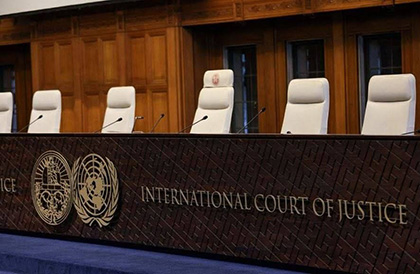
| The International Court of Justice (ICJ) has issued three legally binding Provisional Measures Orders against Israel that seek to protect the Palestinian people’s rights under the Genocide Convention. |
|
|
 |
|
| |
The ICJ determined that there is a real and imminent risk that irreparable prejudice will be caused to the rights of Palestinians in Gaza to be protected from genocide.
On 25 August 2026, South Africa submitted a substantial dossier of information to the ICJ in order to assist the Committee of Judges responsible for monitoring the implementation of the Provisional Measures and recommending potential options for the court. The dossier was submitted pursuant to Article 11 of the ICJ’s rules concerning Internal Judicial Practice, which provides that such a committee “shall examine information supplied by the parties in relation to provisional measures”. South Africa trusts in the Court’s continued and diligent exercise of its functions.
As of August 2026, at least 73 407 Palestinians have been killed and 174 335 injured in Gaza since 7 October 2023: over 10% of the Palestinian population in Gaza. A total of 46 000 of the surviving Palestinians in Gaza, including children, are estimated to live with severe conflict-related injuries, including amputations and traumatic brain and spinal cord injuries.
Since the announcement of the so-called “ceasefire”, on average, one Palestinian child has been killed every day by the Israeli military. Palestinian miscarriage rates in Gaza have increased more than threefold in 2026. Surviving Palestinians in Gaza are further traumatised, herded into an ever-shrinking sliver of territory and subjected to unbearable conditions of life. They are deprived of water, adequate healthcare and medicine, and other essential resources for survival.
The Court’s orders are binding on Israel, and the international community also has an obligation to protect the Palestinian people from genocide, including to take all necessary action to prevent and punish genocide.
Regrettably, Israel has not complied with the orders. South Africa continues to pursue all avenues available to it to seek Israel’s full and immediate compliance with the court’s orders.
South Africa’s continuing efforts at the court follow its earlier submissions of letters enclosing public dossiers of evidence to the United Nations (UN) Security Council on 29 May 2024, 27 February 2025 and 8 September 2025, urging all States to urgently act so as to prevent and punish genocide and to ensure Israel’s compliance with the court’s provisional measures orders. Similarly, letters enclosing dossiers of evidence on starvation were submitted by South Africa to the UN General Assembly and the UN Economic and Social Council in October 2025, requesting their urgent action under Article VIII of the Genocide Convention.
For almost three years, Israel has bombarded Gaza, killing and maiming tens of thousands of children, men and women. The violence has displaced Palestinians internally and is depriving them of basic services. Israel has arbitrarily detained and deported Palestinians to its prisons and detention centres, where they have subsequently been tortured, subjected to sexual and gender-based violence, and to cruel, inhuman and degrading treatment.
To prevent any record of its crimes, Israel has killed local journalists, barred foreign journalists and prevented UN-mandated investigative bodies from entering Gaza.
Israel’s failure to comply with the Provisional Measures Ordered by the Court undermines their protective function and entails further destruction of the Palestinian group. The provisional measures were not only ordered to protect the rights of the Palestinian people under the Genocide Convention, they also safeguard the administration of justice and the legitimacy of the ICJ itself by ensuring that the rights the court is called upon to vindicate are not destroyed before it renders its final decision.
South Africa’s submission reaffirms its commitment to upholding and defending international law and multilateral institutions, including the UN’s principal judicial organ.
– Source: www.dirco.gov.za |
|
| |
|
| |
| DEPUTY MINISTER BOTES PARTICIPATES IN IHL COLLOQUIUM AND NUCLEUS INSTITUTE SEMINAR |
|
| |
| Deputy Minister of International Relations and Cooperation, Alvin Botes, participated in two high-level engagements in Johannesburg on 27 August 2026, highlighting South Africa’s role in advancing international humanitarian law (IHL) and contributing to discussions on the evolving role of middle powers in international relations. |
| |
|
|
|
 |
|
| |
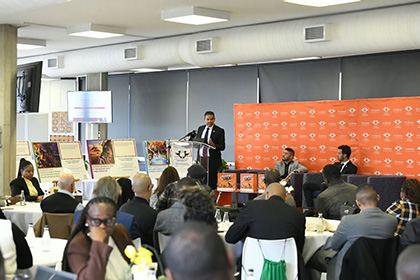
Deputy Minister Botes delivered the keynote address at a colloquium held at the University of Johannesburg in Auckland Park, marking the culmination of the 22nd All Africa Course on International Humanitarian Law.
The colloquium brought together academics, practitioners, military and judicial personnel, as well as members of the Red Cross and Red Crescent Movement. Discussions focused on South Africa’s role in promoting and developing IHL, as well as emerging challenges associated with artificial intelligence and autonomous weapons systems.
The programme also included the formal launch of the board game Rapid Response: IHL, an educational initiative aimed at strengthening awareness and understanding of international humanitarian law. The colloquium further provided a platform for discussions on the role and voice of young people in shaping conversations on IHL and emerging technologies.
Later that day, Deputy Minister Botes participated in a panel discussion at the Nucleus Institute Seminar: Middle Power Alignment: South Africa and Canada Perspectives, held at the Maslow Hotel in Sandton.
He joined a panel examining The Perils and Promise of the Middle Power Doctrine: The Political and Diplomatic Perspective, contributing South Africa’s perspectives on the opportunities and challenges facing middle powers in an evolving global order.
The Deputy Minister’s participation in both engagements underscored South Africa’s continued commitment to multilateralism, international humanitarian law and constructive diplomatic engagement, while highlighting the country’s contribution to discussions on emerging global security challenges and the role of middle powers.
– Source: www.dirco.gov.za I Public Diplomacy Platforms |
|
| |
|
| |
| DIRCO HOSTS SOUTH AFRICAN WOMEN CAPACITY BUILDING PROGRAMME |
|
| |
 |
|
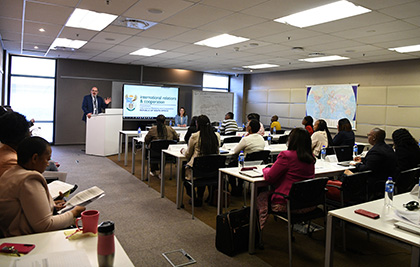
| The Department of International Relations and Cooperation (DIRCO), through its Diplomatic Academy and International School, hosted the annual South African Women Capacity Building Programme on Conflict Resolution, Mediation and Negotiation from 24 to 28 August 2026 at the OR Tambo Building in Rietondale, Pretoria. |
|
|
| |
Held in close consultation with the Directorate: Mediation and Support Unit, the programme brought together 30 participants from South African civil society organisations and selected government departments, including DIRCO, the Department of Defence, the Department of Justice and Constitutional Development, the Department of Social Development, the South African Police Service, the State Security Agency, Statistics South Africa and the Department of Women, Youth and Persons with Disabilities.
The programme aimed to strengthen the skills and capacity of South African women in conflict resolution, mediation and negotiation, with a particular focus on developing the next generation of mediators from government and civil society.
Through practical training and the exchange of experiences among participants from different sectors, the programme contributed to strengthening a pool of trained women who could support political principals and international organisations in mediation and peacebuilding processes.
The initiative forms part of the Diplomatic Academy’s longstanding efforts to build the capacity of women in South Africa and Africa more broadly. Since 2013, the International School has trained women from government, the security cluster, civil society, academia and faith-based organisations in conflict resolution, mediation and negotiation. The previous South African Women Capacity Building Programme was held in August 2025.
The 2026 programme also advanced South Africa’s commitment to the Women, Peace and Security (WPS) agenda by promoting the meaningful participation and leadership of women in mediation and peace processes.
By equipping women with specialised mediation and negotiation skills, the programme strengthened South Africa’s capacity to contribute to peacebuilding efforts on the continent and internationally. It also supported the objectives of the African Union’s Agenda 2063, particularly the aspiration of Silencing the Guns through peaceful conflict prevention and resolution.
The programme reaffirmed DIRCO’s commitment to investing in women’s leadership and ensuring that women are equipped to play a meaningful role in shaping sustainable solutions to conflict and advancing peace and security.
– Source: Public Diplomacy Platforms |
|
| |
|
| |
| DTIC DEPUTY MINISTER UNDERTAKES WORKING VISIT TO CZECHIA, POLAND AND GERMANY |
|
| |
| Trade, Industry and Competition (dtic) Deputy Minister John Steenhuisen is taking South Africa’s trade and investment agenda to Europe, with a Working Visit to Czechia, Poland and Germany from 31 August to 10 September 2026, aimed at strengthening bilateral economic relations and opening new opportunities for South African businesses. |
|
|
 |
|
| |
The visit will focus on expanding trade, attracting investment and deepening industrial cooperation with three important European partners.
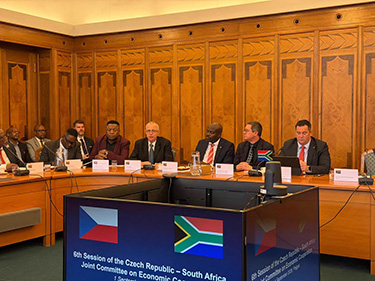
In Czechia, Minister Steenhuisen will chair the sixth session of the South Africa-Czechia Joint Committee on Economic Cooperation (JCEC), while also meeting with businesses to advance the dtic’s investment attraction and export diversification mandate.
Czechia was South Africa’s ninth-largest trading partner within the European Union in 2025, with bilateral trade reaching US$1.1 billion.
Czech investment in South Africa is also growing, particularly in renewable energy, electronic components, boat building, textiles, communication, hospitality and services.
At the same time, several South African companies have established a presence in Czechia across sectors including food and beverages, paper, printing and packaging, financial services, plastics, transportation and warehousing, as well as software and information technology (IT) services.
Minister Steenhuisen’s engagements will seek to further diversify and grow South African exports to the Central European market, while identifying opportunities for industrial cooperation and attracting Czech investment into productive sectors such as renewable energy, defence, critical mineral beneficiation, chemicals, advanced manufacturing, rail and electric vehicles (EVs).
The visit will also provide an opportunity to advance discussions under the Southern African Development Community-European Union Economic Partnership Agreement (SADC-EU EPA) and promote Clean Trade and Investment Partnership (CTIP) projects to facilitate inward investment.
Deepening ties with Poland
In Poland, Minister Steenhuisen will co-chair the inaugural session of the South Africa-Poland Joint Commission for Economic Cooperation with his Polish counterpart, Deputy Minister of Economic Development and Technology Michał Baranowski.
His programme will include government-to-government engagements, a South Africa-Poland Business Roundtable and industry site visits.
Poland is an important economic partner for South Africa within the EU, with bilateral trade increasing by 7% from US$1.5 billion in 2024 to US$1.6 billion in 2025. Poland is South Africa’s seventh-largest trading partner within the EU.
While Poland’s foreign direct investment footprint in South Africa remains modest, its investments span sectors such as electronic components, software and IT services, and consumer products.
South African companies are also investing in Poland in areas including real estate, software and IT services, consumer electronics, transportation and warehousing, paper, printing and packaging, textiles and business services.
The engagements in Poland are expected to support efforts to increase and diversify South African exports, attract Polish investment into productive sectors such as renewable energy, advanced manufacturing and automotive, and advance discussions under the SADC-EU EPA.
The visit will also explore potential industrial cooperation in green manufacturing, mineral processing, robotics and industrial automation, tooling and precision engineering, as well as research and development.
Strengthening the Germany partnership
From Poland, Minister Steenhuisen will travel to Munich and Frankfurt in Germany for the final leg of his working visit.
In Munich, he will meet Bavarian Secretary of State for the Ministry of Economic Affairs Tobias Gotthardt, engage with key investors in South Africa, including BMW and Siemens, and undertake an industrial site visit to UnternehmerTUM.
In Frankfurt, the Deputy Minister will participate in a roundtable with the Frankfurt Chamber of Commerce, undertake industrial site visits and visit the South African National Pavilion at the Automechanika exhibition, where the dtic has supported several South African companies to showcase their products.
Germany remains a critical economic partner for South Africa. Based on 2025 trade data, Germany is South Africa’s third-largest trading partner globally, after China and the United States, and its largest trading partner within the EU.
Bilateral trade between South Africa and Germany expanded by approximately 14%, from US$14.3 billion in 2024 to US$16.5 billion in 2025.
Germany also continues to play an important role in supporting South Africa’s industrial development through partnerships between the dtic and the German Ministry of Economic Affairs and Climate Action.
These include the Global Eco Industrial Parks Partnership (GEIPP), which seeks to harness resource efficiency for energy and water projects in industrial parks and special economic zones, and the Partnering in Business with Germany programme, which provides capacity building, mentorship and international exposure to small and medium enterprises (SMEs).
Through engagements across Czechia, Poland and Germany, the working visit is expected to strengthen South Africa’s economic partnerships in Europe while creating opportunities to expand exports, attract investment and support industrial development.
– Source: SAnews.gov.za |
|
| |
|
| |
| ASEAN DAY BRINGS SOUTHEAST ASIA’S VIBRANT DIVERSITY TO SOUTH AFRICA |
|
| |
 |
|
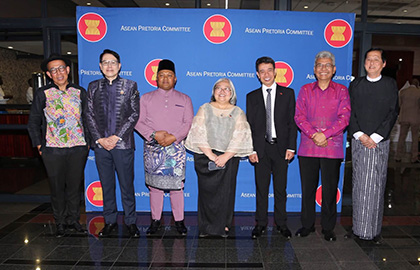
| The vibrant cultures of Southeast Asia were showcased in Pretoria as the ASEAN Pretoria Committee hosted a reception marking ASEAN Day, bringing together diplomacy, culture and cuisine in a colourful celebration of the region’s diversity. |
|
|
| |
Held at the National Library of South Africa, the event marked the 59th anniversary of the Association of Southeast Asian Nations (ASEAN), the 50th anniversary of the Treaty of Amity and Cooperation in Southeast Asia, and the third anniversary of the ASEAN-South Africa Sectoral Dialogue Partnership.
Myla Grace Ragenia Macahilig, Ambassador of the Republic of the Philippines and Chair of the ASEAN Pretoria Committee, in her welcoming remarks said that fifty-nine years ago, on 8 August 1967, ASEAN was founded on a simple yet powerful conviction that countries with different histories, cultures and political systems could build peace and prosperity by working together.
“ASEAN was envisioned as a region united in purpose, bound by friendship and committed to peace, stability and growth. That conviction has stood the test of time. Today, ASEAN is home to more than 680 million people and is one of the world’s most dynamic economic regions. More importantly, ASEAN has helped transform Southeast Asia from a region once marked by conflict and division into one characterised by dialogue, cooperation and growing economic integration.”
In 2023, South Africa became ASEAN’s first Sectoral Dialogue Partner from Africa, reflecting its importance to ASEAN and a shared ambition to bring Southeast Asia and Africa closer together. The partnership has since moved towards practical cooperation, with the ASEAN–South Africa Practical Cooperation Areas 2024–2028 identifying opportunities in trade and investment, the digital economy, agriculture and food security, education and skills development, tourism, sustainable development and people-to-people exchanges.
The partnership gives South Africa an important platform from which to deepen engagement with one of the world's most dynamic regions. ASEAN is home to more than 680 million people and has evolved into a major centre of economic activity, while its experience of managing diversity through dialogue and cooperation offers lessons for relations between Africa and Asia.
South Africa can also serve as a bridge between ASEAN and the wider African continent, while ASEAN provides South African businesses and institutions with a gateway into the dynamic economies of Southeast Asia. The ASEAN Pretoria Committee highlighted the need to translate diplomatic goodwill into practical partnerships connecting businesses, entrepreneurs, academic institutions and young people.
The significance of the relationship was particularly evident in the broader message of the celebration: diversity does not have to be a source of division. ASEAN's 11 member states have different languages, cultures, histories, religions and political systems, yet have built a regional framework based on consultation, mutual respect and cooperation.
That spirit found a natural resonance in South Africa through the philosophy of Ubuntu. Ambassador Macahilig drew a parallel between Ubuntu and the Filipino concept of Kapwa-tao — both emphasising shared humanity and the importance of relationships and community.
The reception offered guests a glimpse of the extraordinary cultural richness of Southeast Asia through music, dance, fashion and gastronomy.
Cultural performances included Filipino contemporary music, a traditional Javanese Klana Topeng mask dance from Indonesia and a Thai traditional flower dance associated with the Phu Thai people of northeastern Thailand.
National dress was also showcased, highlighting the distinctive traditions of Indonesia, Malaysia, Myanmar, the Philippines, Singapore, Thailand and Vietnam. From Indonesian kebaya and batik and Malaysian songket to Myanmar’s vibrant Jinghpaw attire, the Philippine Barong Tagalog and Traje de Mestiza, Singaporean batik and cheongsam, Thai Chud, Thai Phra Ratcha Niyom and Suea Phraratchathan and Vietnam’s iconic Ao Dai, the showcase demonstrated how clothing carries history, identity and cultural memory.
Guests undertook a culinary journey through Southeast Asia, with the seven resident ASEAN missions in Pretoria presenting traditional dishes, delicacies and drinks from their respective countries. Food, Ambassador Macahilig noted, occupies a special place in both Southeast Asian and South African cultures as a way of welcoming guests, celebrating friendship and bringing communities together.
– Source: by Anisha Pemjee, www.thediplomaticsociety.co.za |
|
| |
|
| |
| SOUTH AFRICAN BUSINESSES PRESENTED WITH KAZAKHSTAN’S INVESTMENT OPPORTUNITIES |
|
| |
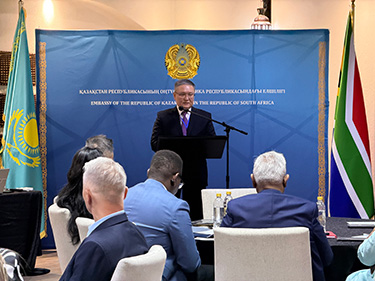
| A roundtable dedicated to the investment potential of the Republic of Kazakhstan and the prospects for expanding economic cooperation with the Republic of South Africa was held in Pretoria on 27 August 2026. |
|
|
 |
|
| |
The event was organised by the Embassy of the Republic of Kazakhstan with the support of the South Africa–Kazakhstan Trade and Cultural Association (SAKTCA). Representatives of the local business community, investors and the media attended the meeting.
Ambassador of the Republic of Kazakhstan to the Republic of South Africa Yerkin Akhinzhanov briefed participants on the country’s ongoing political and economic reforms. “The entry into force of Kazakhstan’s new Constitution on 1 July 2026, together with the recent elections to the Kurultai, is creating institutional conditions to strengthen the resilience and diversification of the national economy, while fostering a favourable environment for long-term business development,” said Akhinzhanov.
The presentation highlighted key areas of Kazakhstan’s socio-economic development and promising sectors for investment, including transport and logistics, agriculture, tourism, metallurgy, mining, innovation and technology. Particular attention was drawn to the opportunities offered by the Astana International Financial Centre, as well as special economic and industrial zones, which provide foreign companies with a wide range of incentives and support mechanisms.
The event also provided an opportunity to exchange views on the development of Kazakhstan–South Africa economic cooperation, followed by a question-and-answer session. Representatives of the South African business community expressed interest in Kazakhstan’s investment opportunities and their readiness to continue a practical dialogue aimed at developing a mutually beneficial economic partnership between Kazakhstan and South Africa.
– Source: www.thediplomaticsociety.co.za |
|
| |
|
| |
| BOOM IN SOUTH AFRICAN TOURISM |
|
| |
| South Africa’s tourism sector continues its strong growth trajectory, with 991 696 international tourists welcomed in July 2026. This marks an increase of 12.5% compared to July 2025. |
|
| |
|
| |
Cumulatively, this growth brings total international tourist arrivals between January 2026 and July 2026 to 6 576 169, representing growth of 12.4%, compared to the same period last year.
During this period, arrivals from Africa increased by 14.3% year-on-year, while overseas arrivals grew by 5.7%.
“The data reveals that the growth is becoming geographically diversified, which has been one of our strategic priorities. Together with the private sector and stakeholders, we’ll continue to build on this momentum through the recently launched digital visa, the Electronic Travel Authorisation system,” Tourism Minister Patricia de Lille said.
President Cyril Ramaphosa recently announced that tourism is part of four key sectors identified to drive inclusive economic growth, job creation and build confidence under phase three of the Government-Business Partnership, Operation Vulindlela.
In 2024, tourism sustained 954 000 direct jobs and contributed 4.9% to the gross domestic product.
– Source: SAnews.gov.za |
|
| |
|
| |
| SOUTH AFRICA’S NATIONAL COUNCIL OF SPCAS NAMED BEST ANIMAL WELFARE ADVOCACY: AFRICA EXCELLENCE AWARDS |
|
| |
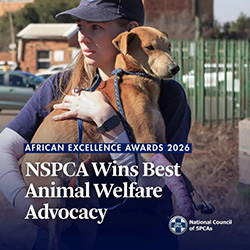
| The national council responsible for standing up for animals across the country has been named best animal advocacy in South Africa. |
| |
The recognition comes from the African Excellence Awards, which celebrate organisations, leaders, and professionals pushing Africa’s business landscape forward. Awards span various fields like financial services, energy, agribusiness, manufacturing, technology, logistics, and telecommunications.
They also recognise those putting their power behind animal advocacy.
For more than 70 years, South Africa’s National Council of SPCAs (NSPCA) has protected animals across the country from cruelty, neglect and suffering. It supports and oversees all local SPCAs, whose incredible work we often shine a light on.
The council trains the heroic inspectors we call our ‘animal heroes’, investigates serious cases of animal cruelty and helps enforce animal protection laws. Its work goes far beyond looking after dogs and cats, too. Farm animals, wildlife, working animals and animals used in research are all protected by the NSPCA. |
|
|
 |
|
| |
The council also responds to bigger welfare problems and pushes for better animal rights laws and standards in South Africa. Ultimately, it works at a national level to make sure animals are treated humanely and that people who abuse or neglect them can be held accountable.
There are many wheels that keep animal welfare advocacy turning within the NSPCA – and this new recognition is a nod to each of them.
“This recognition reflects more than 70 years of steady work protecting animals across South Africa. Our focus stays where it has always been, on the animals who need us and the law that protects them.” says NSPCA Chief Executive Officer Esté Kotzé.
Search for the ‘SPCA’ tag on our website, and you will see just how much good is achieved on a daily basis by countless heroes standing up for abandoned, abused, and neglected animals across South Africa. This win belongs to each of them.
The NSPCA shares:
“We are proud of this one, and prouder still of the people behind it. For more than 70 years, our inspectors have stood up for animals across South Africa, enforcing the Animals Protection Act, investigating cruelty, and answering the call in every province, on the days that make headlines and the many more that do not.
This award is shared with every inspector on the road, every team member behind the scenes, and every South African who has ever reported cruelty or supported the work. Thank you for standing with the animals, and with us.”
– Source: www.goodthingsguy.com |
|
| |
|
| |
| SOUTH AFRICAN CITY RANKED AMONG THE TOP 10 IN THE WORLD FOR NIGHTLIFE |
|
| |
 |
|
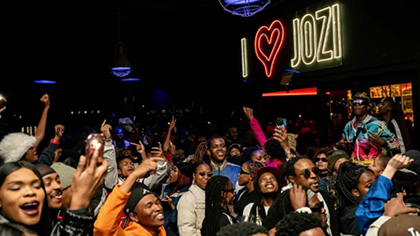
| Johannesburg has been named the seventh-best city in the world for nightlife. “Time Out” has recently published its new Global Nightlife Ranking for 2026, placing Johannesburg as the highest-ranked African city on the list. |
|
|
| |
The ranking is based on a survey of over 24 000 respondents living in cities, as well as the assistance of Time Out’s global network of local editors and city experts.
In the new ranking, Bangkok, Thailand, was voted the best for nightlife worldwide. Johannesburg received an affordability score of 66%, which makes it one of the more budget-friendly places to experience a night out.
According to Time Out, 80% of people living in Johannesburg said it was easy to find connections and community in Joburg. For this sector, this is one of the highest scores recorded for the 2026 survey. The activities voted Joburg’s best nightlife endeavours include clubbing, casual pubs, and cocktail bars.
“Johannesburg’s nightlife has always thrived on reinvention. From the legendary Carfax warehouse parties of the 1990s to today’s genre-blurring dance floors,” local expert Mlili Mpondo told Time Out.
“Jozi remains one of Africa’s most exciting places to stay out until sunrise,” Mpondo said.
Mpondo said that Newtown remains one of the best places to experience vibrant energy, especially On Gwigwi Mrwebi Street. The street was named after the South African jazz musician and saxophonist Benni/Gwigwi Mrwebi, who took local sounds beyond the country’s borders.
Club A.M., AND Club, Bad Manors, and Carfax are very popular clubs in Joburg, and are located next to each other in one of the city’s biggest nightlife precincts. Johannesburg’s nightlife has been praised for its diversity, ranging from deep house, techno, Afro-house, gqom, drum and bass, to experimental sounds.
Melville and Rosebank in Johannesburg offer cocktail bars, live music and neighbourhood hangouts. Local favourites include Six Cocktail Bar on 7th Street and A Streetbar Named Desire on Bolton Road.
Earlier this year, South Africa took home another global award. Cape Town was ranked the 11th-best city in the world for food in Time Out’s 2026 ranking. Cape Town has joined the ranks of global cities such as Lima, Bangkok, Mexico City, London, and Barcelona.
The annual ranking, which evaluates cities based on a global survey of residents, is conducted by Time Out’s international network of food experts. The assessment considers factors such as food quality, affordability, innovation, diversity, and local dining culture.
Although Cape Town fell from fourth place in the 2025 rankings, it achieved the third-highest score worldwide for food quality, with 93% of locals rating it positively. The city’s drop in the rankings was mainly due to issues with affordability.
Among the standout culinary experiences highlighted by Time Out were Amura by Ángel León and the Test Kitchen Fledglings.
The group said that this recognition is part of a broader wave of international acclaim for South African food and culture.
Time Out also ranked Zuney Burger’s Wagyu Burger as the second-best burger in the world, following Tokyo’s Smash Things, in an earlier 2026 ranking.
Johannesburg’s Mafia Bite secured the eighth position, demonstrating the depth and diversity of South Africa’s culinary scene.
– Source: www.businesstech.co.za |
|
| |
|
| |
| SOUTH AFRICAN CREATIVITY GOES VIRTUAL AND ALL THE WAY TO THE EMMYS |
|
| |
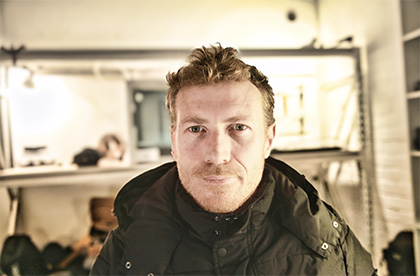
| Created by South African artist Rick Treweek, “Uncanny Alley: A New Day” has gone from a lockdown passion project to one of three nominees at this year’s Primetime Emmys. |
| |
|
|
|
 |
|
| |
A South African virtual reality creation that began as an escape from lockdown is now heading for one of the biggest stages in entertainment.
Uncanny Alley: A New Day, a collaboration between Cape Town immersive studio Virtual Worlds Company and Los Angeles-based Ferryman Collective, has been nominated for a Primetime Emmy in the Outstanding Emerging Media Program category.
It is one of just three productions shortlisted in the category, alongside Blumhouse Enhanced Cinema and The World of Fallout.
For South African artist and worldbuilder Rick Treweek, the nomination is the latest chapter in a journey that began with a simple idea: if people could no longer gather in the real world, why not create somewhere they could meet virtually?
Treweek, who is known in the virtual world as MetaRick, created the Uncanny Alley universe in 2020 during South Africa’s strict initial COVID-19 lockdown. Unable to meet people in person, he began building what he describes as a cyberpunk back alley of the internet.
It wasn’t necessarily designed to become an Emmy contender. And then something unexpected happened.
Treweek’s first narrative experience in the universe, The Search for Gh0st, was selected for Venice VR Expanded in 2021 and later won the Spirit of Raindance Award in 2022.
The virtual world had officially taken on a life of its own. Now, Uncanny Alley: A New Day takes that world a step further.
The production is a live virtual reality theatre experience performed inside VRChat, a social VR platform where audiences don’t simply sit back and watch the action.
When Treweek and Ferryman Collective began discussing a live theatrical production in 2024, they decided not to simply stage the show inside the existing Uncanny Alley.
Instead, Virtual Worlds Company built an entirely new virtual environment for the production.
The result is a sprawling world made up of more than 30 environments, designed to run on standalone Meta Quest headsets.
For Treweek, though, the most rewarding part has been seeing his creations become something he could never have achieved alone.
“The most extraordinary part of this for me has been watching actors step inside characters I had drawn and lived with for years and give them a voice and a body in real time.”
For years, he says, one of his biggest challenges was believing his ideas were simply too unusual for other people to appreciate.
“My biggest struggle’s always been my conditioning that my stuff is too weird and no one will like it, so it’s only for me.”
At the heart of the production, however, is a story about imagination. Treweek says the Uncanny Alley world has always been about giving people a place to explore, connect and experience something different.
Treweek’s curiosity has been shaped by an unconventional journey.
He grew up in Kokstad and says getting his first computer relatively late in life may actually have helped fuel his fascination with technology.
“Because it was so alien, I still have so much curiosity,” he says. “And it’s definitely an industry for the curious right now.”
He points aspiring immersive creators towards Electric South’s labs, saying the organisation has done more for immersive content on the continent than anyone else.
Then comes the advice that perhaps best sums up his own journey:
“Remove the fear. Whatever you break, you can build again.”
– Source: www.goodthingsguy.com |
|
| |
|
| |
| FIVE STARS AND FULL HEARTS: EDINBURGH FALLS FOR NDLOVU YOUTH CHOIR |
|
| |
 |
|
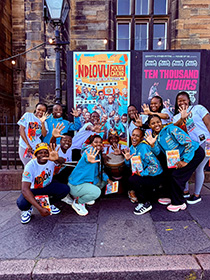
| A little piece of South Africa is making a very big impression in Scotland, where the Ndlovu Youth Choir is earning rave reviews and leaving audiences deeply moved. |
| |
|
|
|
| |
South Africa is currently taking centre stage at the biggest arts festival on the planet, and the people lucky enough to be sitting in the audience cannot stop talking about what they are seeing.
Held across Edinburgh every August, the Festival Fringe is the world’s largest arts festival, transforming the Scottish capital into one enormous stage filled with theatre, comedy, dance, circus, cabaret, music and just about every form of live performance imaginable. The 2026 edition features more than 4 200 shows from 74 countries across nearly 300 venues, with more than 60 000 performances taking place during the month (and over 2.5 million tickets sold). And right there, among thousands of performers from across the globe, is a choir from rural Limpopo showing international audiences just how extraordinary South African talent can be.
The Ndlovu Youth Choir is performing at the Assembly Hall until 30 August 2026, with a one-hour production blending African music, choreography, global hits, reimagined classics and powerful African repertoire. The official Fringe listing describes it as a “high-energy spectacle”, and the professional reviews have backed that up spectacularly — five stars from The Scotsman, five from Edinburgh Festivals Magazine and five from One4Review.
One video shared by @GillyWorking has gone viral after they described the talent, the message and the entire experience as “the most wonderful thing” they had ever seen, before urging everyone at the Fringe to find a way to see the South Africans live.
And social media agrees!
“I cried and smiled the whole way through too. It was so emotional – wonderful, inspiring, moving, exciting and all of the things. I came out and continued crying as I processed it all. I’m going back to see them. The choir leader was incredible too. He’s the music leader I aspire to be. I wanted to speak to them afterwards but I couldn’t find the words. Completely wonderful.
Another audience member, a South African far from home, summed up exactly why this choir means so much more than the music.
“I saw them on the 6th, awesome and amazing! I am South African, a long way from home, and their energy and joyfulness just exacerbated my homesickness. South Africa may have problems, but when it also has Ndlovu you know there’s hope!!”
That South African happiness seems to follow the choir wherever they perform.
One independent five-star review described the group as “talented, charismatic and joyful, praising a show filled with traditional African songs, popular hits, original music, colourful costumes and an energy that had audience members dancing in the aisles”.
And now even more people are getting a taste of what Edinburgh audiences have been experiencing. The choir recently shared a video created for the BBC which is also going viral. It offers a glimpse of the performance currently winning hearts in Scotland, with the presenter even calling Ndlovu Youth Choir the best thing at the Edinburgh Festival Fringe.
– Source: www.goodthingsguy.com |
|
| |
|
| |
| SPRINGBOKS LEVEL RUGBY'S GREATEST RIVALRY TOUR WITH GRITTY PERFORMANCE IN CAPE TOWN |
|
| |
 |
|
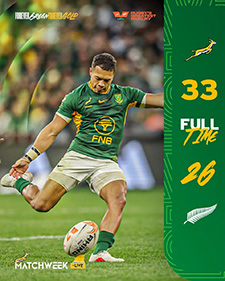
| The Springboks ended the All Blacks' unbeaten streak on tour with a nail-biting 33-26 victory at the Cape Town Stadium on Saturday night, 29 August 2026. |
| |
The result was built on a strong kicking performance from Cheslin Kolbe, who added 21 points with the boot, and a dogged defensive effort that forced an uncharacteristically high number of handling errors by New Zealand.
It took less than two minutes for the Springboks to get on the board, with centre Jesse Kriel smashing his way over the line after a strong lineout maul by the forwards took the ball up to the All Blacks tryline.
New Zealand hit back shortly afterwards after Will Jordan broke down the right wing and teed up a simple finish for Cam Roigard.
Kolbe added a penalty to put the Springboks back in the lead and Damian de Allende scored a poacher's try in the 22nd minute. The All Blacks answered again with a flowing backline move that cut the Springbok defence open and allowed Damian McKenzie to score. |
|
|
| |
Siya Kolisi then went crashing over the line from close range on the stroke of half-time to put South Africa 24-14 up at the break. There was some bad news, though, as Damian Willemse was injured in the play and is now in doubt for the remainder of the tour.
The Boks stretched their lead with a couple of Kolbe penalties early in the second half before Leroy Carter crossed the whitewash to claw the All Blacks back into the contest.
They reduced the deficit even further when Ardie Savea scored a try in the 76th minute to bring the score to 33-26.
Things got even more tense for the home side when Lood de Jager was shown a yellow card for a head-on-head challenge with only a couple of minutes left on the clock, leaving them to defend their lead with just 14 men.
However, a late turnover by Malcolm Marx, who had been superb at the breakdowns all game, allowed them to win possession and boot the ball to touch to secure the narrow victory.
The result leaves Rugby's Greatest Rivalry tour wide open at 1-1 with two tests still to play, meaning no matter what the result is at the FNB Stadium next weekend, it will not be definitively decided until after the final Test of the tour in Baltimore, United States on 12 September 2026.
It was a special Test for Ox Nche and Pieter-Steph du Toit, who celebrated their 50th and 100th Test caps for South Africa with a win, as well as Deon Fourie, who became the oldest player in history to win a Test cap for the Springboks at a few days short of 40 years old.
– Source: www.sabcsport.com
|
|
| |
|
| |
| LHUAN-DRE PRETORIUS FIRES WITH THE BAT AS PROTEAS CRUSH ZIMBABWE IN T20I TRI-SERIES |
|
| |
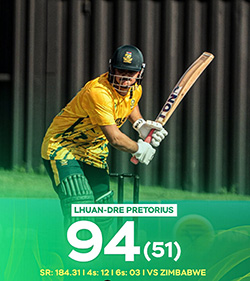
| Lhuan-dre Pretorius smashed 94 before captain Bjorn Fortuin took four wickets as the Proteas cantered to a 43-run victory against Zimbabwe in the T20I tri-series in Windhoek. |
| |
The victory lifts the Proteas into first place in the tournament after bouncing back from an opening-day defeat to hosts Namibia with two comfortable wins against Zimbabwe.
After opting to bat first at the toss, Pretorius and opening partner Jordan Hermann gave the Proteas a quick start with the willow, putting on 59 in the powerplay.
Hermann was the first to fall for a 25-ball 28, the left-handed batter slicing off-spinner Wessly Madhevere (3-20) straight in the hands of backward point.
Dewald Brevis walked to the crease in hot form, having made 75 in both previous encounters, and immediately looked at ease as he made his way to 41 from 27 balls.
Brevis and Pretorius put on stand of 86 for the second-wicket as the Proteas looked well on course to be the first team to breach the 200-run mark in the tournament. |
|
|
 |
|
| |
Zimbabwe seamer Brad Evans (2-33) made the breakthrough, removing the dangerous Brevis, and the Proteas then suffered a mini-collapse as they lost their next six wickets for 31 runs to finish with a total of 185-7.
Zimbabwe's run-chase got off to a disastrous start as they slipped to 54-7 with Fortuin (4-24) at the forefront of the collapse, while lanky seamer Duan Jansen continued to make a good impression with 3-21.
Captain Sikandar Raza showed some resistance with 45, while some lower-order boundaries from Newman Nyamhuri (27) meant Zimbabwe got up to a total of 142 all out.
The next game in the T20I tri-series will be on Thursday when hosts Namibia take on Zimbabwe in a crucial clash in Windhoek.
– Source: www.sabcsport.com |
|
| |
|
| |
| SOUTH AFRICAN SPRINTERS MAKE THEIR MARK IN BRESCIA |
|
| |
 |
|
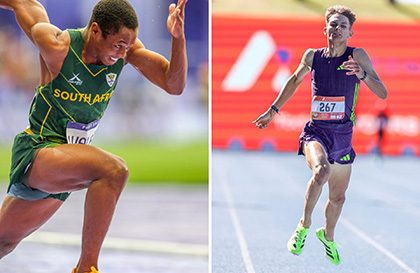
| It was a weekend of speed and history in Brescia as Bayanda Walaza claimed the 100 m title and Leendert Koekemoer produced a record-breaking run in the men’s U20 400 m. |
|
|
| |
There was no shortage of South African speed on show in Italy this weekend, with Bayanda Walaza and Leendert Koekemoer both producing performances worth talking about at the Grand Prix Brescia.
Walaza walked away with the senior men’s 100 m title after powering across the line in 10.00 seconds at the Centro Gabre Gabric on Sunday, 30 August 2026. The 20-year-old held off a strong international field, with American Courtney Lindsey finishing second in 10.09 and fellow American Trayvon Bromell taking third in 10.16.
The victory is another encouraging step for Walaza, who already boasts an impressive personal best of 9.89 seconds. He was among a stacked line-up in Brescia that included several sprinters with sub-10-second personal bests, but when it mattered, the South African was the quickest of the lot.
While Walaza was making his presence felt in the 100 m, Koekemoer was putting together a performance of his own.
The University of Johannesburg sprinter stormed to 44.52 seconds in the men’s Under-20 400 m, breaking a South African junior record that had survived for 31 years.
Riaan Dempers had held the record since running 45.15 seconds in 1994, but Koekemoer took a huge chunk off that mark with his explosive run in Brescia.
Going under 45 seconds at junior level is no small feat, and Koekemoer’s performance puts him among an elite group of young 400 m runners capable of producing world-class times.
Two sprinters, two standout performances and plenty of reason for South African athletics fans to keep watching.
– Source: www.goodthingsguy.com |
|
| |
|
| |
| SOUTH AFRICAN JUNIOR CHESS TEAM IMPRESSES AT AFRICAN CHAMPIONSHIP |
|
| |
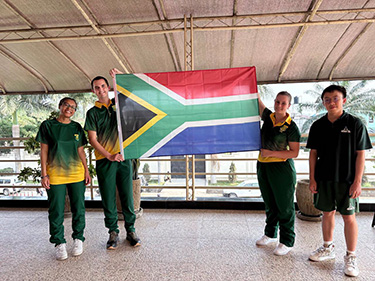
| South African junior chess has made a strong statement in Burundi, with Chisomo Boshoma leading the way after claiming bronze at the African Junior Chess Championship and securing a Women’s International Master (WIM) norm in the process. |
|
|
 |
|
| |
The result caps an impressive tournament for the South African contingent, with Megan Dove, Michael Berndt and Zhengfei Li also putting together strong performances across the girls’ and open sections.
For Boshoma, though, there was an extra reason to celebrate. Her run to the podium not only earned her a medal but also moved her closer to the prestigious WIM title, with the performance enough to secure a WIM norm.
The achievement adds to what has already been a standout year for the young chess star. Earlier this year, she finished fifth at the African Individual Chess Championships in Botswana after scoring six points from nine games against some of the continent’s leading female players.
She is also proving that her ambitions extend well beyond the chessboard. Boshoma is studying Actuarial Science at the University of Cape Town and was crowned the 2025 USSA Chess Champion, balancing a demanding academic path with her continued rise in competitive chess.
Boshoma wasn’t the only South African making waves in Burundi.
Megan Dove finished ninth in the girls’ section, while Michael Berndt narrowly missed out on a podium place in the open section after finishing fourth. Zhengfei Li also delivered a solid showing, ending the tournament in 10th place.
For Boshoma, the bronze medal is another significant marker in a rapidly developing career. As the reigning South African Under-20 Girls Junior Closed Champion, she is continuing to build a reputation both locally and on the continental stage.
And with a WIM norm now added to her growing list of achievements, there is clearly more to come.
– Source: www.goodthingsguy.com |
|
| |
|
| |
| YOUNG SOUTH AFRICAN DANIEL GROVE CLAIMS WORLD CHAMPIONSHIP SILVER |
|
| |
 |
|
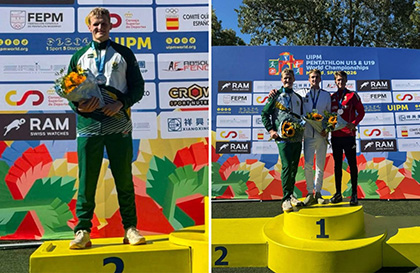
| A young athlete from the Hemel-en-Aarde Valley has taken his talent all the way to the world stage, with Daniel Grove finishing second at the International Modern Pentathlon Union (UIPM) 2026 U19 World Championships in Madrid, Spain. |
|
|
| |
The 17-year-old delivered a standout performance to claim silver and finish as the second-best athlete in the world in his age group.
Grove laid the foundation for his podium finish on the fencing piste, producing the performance he needed to put himself firmly in contention.
One of the defining moments came in the obstacle course, an event that brought Daniel’s training closer to home in more ways than one.
Years of preparation, including countless hours working on his grandfather’s obstacle course in the Hemel-en-Aarde Valley, came to the fore as Grove attacked the course with confidence and determination.
He followed that up with another strong showing in the swimming leg, fighting for every second as the competition intensified.
By the time Grovel reached the laser run, there was little room for error.
With fatigue setting in and the pressure of a world championship podium firmly on his shoulders, the South African continued to push until the final moments.
From a training ground in the Hemel-en-Aarde Valley to a podium in Madrid, Grove has now added his name to the list of South African athletes who have made their mark on the world stage.
– Source: www.goodthingsguy.com |
|
| |
|
| |
| KENDRA DE BEER WINS BACK-TO-BACK AFRICAN CUP JUDO TITLES |
|
| |
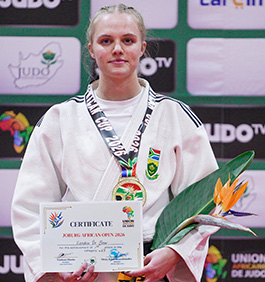
| The two-time South African champion defended her U/19 -63 kg title in Johannesburg before finishing fifth at the African Judo Championships in Morocco. |
| |
The Reddam House Helderfontein student has successfully defended her U/19 Women’s -63 kg title at the Johannesburg Junior African Cup, making it two African Cup victories in a row.
And she did not have much time to celebrate before another major test came along. De Beer travelled to Morocco to compete at the African Judo Championships, where she finished fifth against some of the continent’s leading young judokas.
The result may not have been the medal she wanted, but it gave the two-time South African national champion another valuable taste of what awaits at senior international level.
“Every year brings new challenges, so defending the title is never easy. For me, it’s not just about the medal, it’s about seeing how much I’ve grown and proving to myself that dedication really pays off.” |
|
|
 |
|
| |
There is plenty happening before De Beer even gets onto the tatami. She trains three times a week with Sensei Allerdyce Fulton at Kazuno Judo, where repetition and attention to detail are a big part of her preparation.
But she is also making sure her game does not become predictable.
“I’ve been working on becoming a more complete judoka rather than relying on one technique. That includes improving my transitions into groundwork, sharpening my grip fighting and becoming more adaptable depending on the opponent in front of me.”
And if there is one thing he believes gives De Beer an edge, it is not something that can simply be added to a training programme.
De Beer had hoped to leave the African Judo Championships with another medal, but fifth place gave her something almost as useful: a clearer idea of what separates the best competitors at this level.
And while the judo is getting more serious, so is the balancing act outside the sport.
De Beer is still juggling international competition with school, often working ahead before travelling and catching up on missed lessons and tests when she returns.
Next up is another opportunity to test herself. De Beer has qualified for the Region 5 Games in Mozambique in December 2026, with her sights firmly set on continuing to develop as she works towards senior international competition.
And representing South Africa has added another layer to what success means to her.
“Wearing the Protea badge reminds me that I’m competing for something bigger than myself,” she says. “It has also made me realise that younger athletes are watching, so I want to set a positive example through my attitude, sportsmanship and work ethic.”
– Source: www.goodthingsguy.com |
|
| |
|
| |
|
|
|
|
|
|
|
|