| |
| |
|
| |
|
| |
|
| |
| BRICS SUMMIT CONCLUDES WITH ADOPTION OF NEW DELHI DECLARATION |
|
| |
 |
|
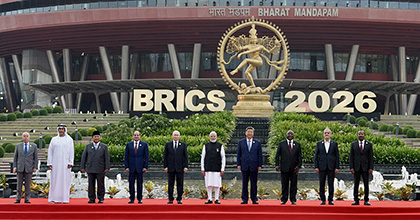
| The 18th BRICS Summit, held under India’s presidency, has officially concluded, with leaders adopting the New Delhi Declaration, which reaffirms the spirit of mutual respect and understanding, sovereign equality, solidarity, democracy, openness, inclusiveness, collaboration, and consensus. |
| |
|
|
|
| |
The New Delhi BRICS Leaders’ Declaration sets out the shared priorities, commitments, and direction for BRICS cooperation going forward.
President Cyril Ramaphosa participated in the gathering, where leaders of BRICS countries met in New Delhi, India, from 12 to 13 September 2026 for the XVIII BRICS Summit, held under the theme: Building for Resilience, Innovation, Cooperation and Sustainability.
During a media briefing at the conclusion of the summit on Sunday, 13 September 2026, the President congratulated India for hosting a successful gathering and said he looked forward to the next summit, which will be held in China in 2027.
“What really stood out was our commitment, as BRICS, to focus on advancing global governance of the multilateral system.
“All of us are saying that we adhere to a multilateral system where there is no dominance of one player or country over others, where we want countries that are in BRICS, and indeed countries outside of BRICS as well, to respect one another and to respect the sovereignty of all our countries in the world,” he said.
He stressed that BRICS wants a multilateral system without dominance by any one country.
“For instance, all of us did confirm that we want a multipolar world, a world that will live in harmony and that will advance the interests of each one of us,” President Ramaphosa said.
The BRICS grouping wants to focus on the advancement of all economies and improving people’s lives.
“And that, to me, was the key and central issue because we now live in a world that faces a lot of challenges and conflicts at the geopolitical level," the President said.
South Africa used the Summit to advance its diplomatic and economic priorities, particularly by expanding intra-BRICS trade and investment, promoting industrialisation and value addition, and mobilising investment in African infrastructure aligned with the African Continental Free Trade Area (AfCFTA).
During its presidency, India convened over 400 meetings and engagements involving ministers, parliamentarians, heads of agencies, officials, experts, businesses, and people in 30 cities across India under the BRICS cooperation framework, contributing to the strengthening of the BRICS strategic partnership.
“We welcome the progress made in enhancing collective resilience, promoting innovation-driven economic growth, advancing sustainable development, deepening people-to-people exchanges, and amplifying the voice of BRICS for greater representation in global governance,” the New Delhi Declaration said.
The leaders reaffirmed their commitment to the BRICS spirit of mutual respect and understanding, sovereign equality, solidarity, democracy, openness, inclusiveness, collaboration, and consensus.
“Building on two decades of BRICS, we further commit ourselves to strengthening cooperation in the expanded BRICS under the three pillars of political and security, economic and financial, [and] cultural and people-to-people cooperation, and to enhancing our strategic partnership for the benefit of our people through the promotion of peace, a more representative, fairer international order, a reinvigorated and reformed multilateral system, sustainable development and inclusive growth.
“We recognise the valuable contribution of Partner Countries to BRICS cooperation. We underscore our strong belief that advancing the BRICS partnership with Emerging Markets and Developing Countries (EMDCs) will further contribute to strengthening the spirit of solidarity and international cooperation for the benefit of all,” the Declaration said.
The leaders also reaffirmed their commitment to fostering inclusive, mutually beneficial and development-orientated partnerships with Partner Countries.
“We encourage their increasing participation in BRICS engagements and practical cooperation in areas of shared interest.
“We commend India for hosting the Outreach/BRICS Plus Dialogue segment of the 18th BRICS Summit, which injects new impetus to strengthen international cooperation and solidarity,” the Delhi Declaration said.
The grouping commended the significant progress achieved under India's BRICS Chairship in 2026, under the theme Building for Resilience, Innovation, Cooperation and Sustainability, which reflects a shared commitment to strengthening BRICS cooperation in addressing common challenges through a balanced, practical, actionable, inclusive, development-orientated and people-centred approach.
“We reaffirm our commitment to advancing cooperation on the thematic priorities, particularly through strengthening capacities, promoting innovation, and advancing sustainable development and resilience,” the Declaration noted.
Having arrived in India on Friday, President Ramaphosa delivered remarks at the BRICS Business Forum focusing on trade and supply chains, agriculture, women-led development, the digital economy and innovation.
The forum brought together BRICS leaders and business representatives, including members of the BRICS Business Council and BRICS Women’s Business Alliance, as well as investors and entrepreneurs from BRICS countries and partner economies.
The forum plays an important role in shaping the BRICS economic agenda and strengthening business-to-business cooperation.
On Saturday, 12 September 2026, President Ramaphosa addressed the India-South Africa Business Leadership Roundtable, focusing on enhancing bilateral trade and investment between the two countries.
The forum also sought to encourage additional Indian foreign direct investment in key sectors, including pharmaceuticals, infrastructure, critical minerals, and the electric vehicle battery value chain.
Later in the day, he participated in a closed session of BRICS Leaders entitled: Inclusive Global Governance and Strengthening Multilateralism.
The session considered the need for a more inclusive, representative, and responsive global governance architecture, with a focus on reforming the United Nations system, the international financial architecture, and the multilateral trading system.
On Sunday, 13 September 2026, President Ramaphosa delivered a statement during the summit’s open session for BRICS and invited leaders, which focused on India’s Chairship priorities.
– Source: SAnews.gov.za |
|
| |
|
| |
| WELL WISHES OVER ROSH HASHANAH AND YOM KIPPUR |
|
| |
| President Cyril Ramaphosa has wished the Jewish community in South Africa and around the world a peaceful, safe, and joyous Rosh Hashanah and Yom Kippur. |
|
|
 |
|
| |
“As the Jewish community enters the period of the high holy days, we are reminded of the abiding value in faith and family”, President Ramaphosa.
In his statement on Friday, 11 September 2026, the President said: “In Jewish tradition, Rosh Hashanah is a time for renewal and reflection and carries a profound and timeless message about our power to bring about change - not only in our own lives, but in the lives of those around us.”
The President paid tribute to the South African Jewish community as an important part of South Africa’s national fabric.
“On behalf of all South Africans, we wish those who are observing Rosh Hashanah a sweet year full of hope and happiness, and a meaningful Yom Kippur fast,” the President said.
– Source: SAnews.gov.za |
|
| |
|
| |
| MINISTER KUBAYI MARKS 25TH ANNIVERSARY OF DURBAN DECLARATION AND PROGRAMME OF ACTION |
|
| |
 |
|
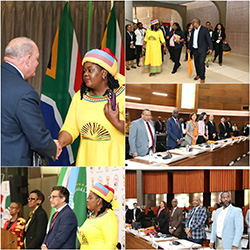
| Minister of Justice and Constitutional Development, Mmamoloko Kubayi, participated in a high-level commemorative dialogue marking the 25th anniversary of the adoption of the Durban Declaration and Programme of Action (DDPA) on 11 September 2026 at the DIRCO Conference Centre in Pretoria. |
| |
|
|
|
| |
Held under the theme, Mobilising Global Public Support for the Full Implementation of the Durban Declaration and Programme of Action, the dialogue provided a platform to reflect on progress made over the past 25 years in combating racism, racial discrimination, xenophobia and related intolerance, while considering the challenges that continue to impede racial equality and social justice. The event brought together representatives of government, the diplomatic community, United Nations entities, civil society, human rights organisations, academia, youth and other stakeholders.
The commemoration highlighted the continued relevance of the DDPA as a global framework for addressing racism and racial discrimination and provided an opportunity to identify concrete measures to strengthen its implementation. The dialogue also underscored South Africa’s continued commitment to advancing equality, human dignity and non-discrimination, in line with the country’s constitutional values and its role in promoting the principles of the DDPA at national, regional and international levels.
– Source: Public Diplomacy Platforms |
|
| |
|
| |
| MINISTER PATRICIA DE LILLE HOSTS MINISTER OF HAJJ AND UMRAH, H.E. DR TAWFIQ BIN FAWZAN AL-RABIAH |
|
| |
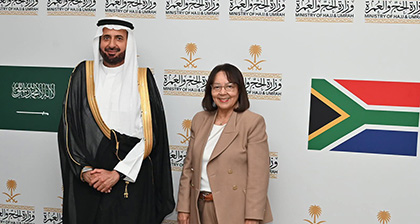
| Minister of Tourism Patricia de Lille hosted Saudi Arabia’s Minister of Hajj and Umrah, H.E. Dr Tawfiq bin Fawzan Al-Rabiah, during his Official Visit to South Africa, with discussions focused on strengthening cooperation to better serve South African pilgrims and Umrah visitors travelling to the Kingdom. |
|
|
 |
|
| |
Minister de Lille said the engagement provided an opportunity to develop a broader tourism relationship that benefits travellers and the tourism economies of both countries.
“South Africa and Saudi Arabia already have an important connection through the thousands of South African Muslims who travel for Hajj and Umrah. We now have an opportunity to build on that relationship by encouraging greater two-way travel, strengthening connectivity and introducing more Saudi travellers to the diversity of experiences that South Africa has to offer. As part of our approach, South African Tourism will also build seasonal packages that we can market to Saudi travellers,” said Minister de Lille.
The visit provided an important opportunity for Minister Al-Rabiah to meet with Minister de Lille and representatives of the travel and tourism sector and to hear directly their views on the Hajj and Umrah experience and the challenges facing South African pilgrims and Umrah visitors.
Discussions focused on facilitating the journey of pilgrims and Umrah visitors, supporting the transition to digital services, strengthening coordination with tour operators, and working together on practical solutions to address existing challenges.
The two sides agreed to establish a joint working group to follow up on the recommendations arising from the meetings and further strengthen cooperation between the two countries. They also agreed to encourage airlines in both countries to explore increasing flight frequencies, helping facilitate the movement of pilgrims, Umrah visitors and other travellers, while strengthening connectivity between Saudi Arabia and South Africa.
“Last year, around 56 000 South Africans travelled to the Kingdom for Umrah, an increase of approximately 10% compared to the previous year. This growth means a great deal to us. Our priority is to listen to South African pilgrims, Umrah visitors and service providers, understand their needs, and work together to make their journey more accessible, seamless and enriching,” said Minister Al-Rabiah.
Arrivals from Saudi to South Africa increased from 5 461 in 2021 to 24 942 in 2025.
“Travel brings people closer together. Hajj and Umrah have connected South Africa and Saudi Arabia for generations, and we look forward to building on this historic connection to further strengthen the relationship between our two countries,” added Minister Al-Rabiah.
The ministers also discussed opportunities for closer cooperation between the tourism sectors of both countries, including destination promotion, skills development, and showcasing South Africa’s rich Islamic heritage and halaal tourism offering.
The visit forms part of ongoing efforts by South Africa and Saudi Arabia to deepen cooperation, strengthen people-to-people ties and continuously enhance the experience of South African pilgrims and Umrah visitors.
– Source: www.gov.za |
|
| |
|
| |
| MINISTER MAJODINA ON WORKING VISIT TO LESOTHO |
|
| |
 |
|
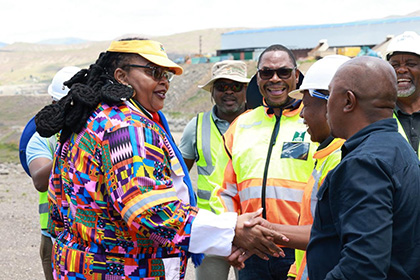
| Water and Sanitation Minister Pemmy Majodina was in Lesotho for a three-day Working Visit that included a quarterly oversight of the ongoing Lesotho Highlands Water Project Phase 2 (LHWP2). |
|
|
| |
The visit, which kicked off on Friday, 11 September 2026, saw the Minister, together with Lesotho Minister of Natural Resources Mohlomi Moleko, officially unveil the newly completed Mabunyaneng and Khubelu bridges in Mokhotlong District.
Friday’s unveiling follows the recent completion of the 90-metre-high Senqu Bridge, one of the landmark structures forming part of the project’s infrastructure.
The two bridges, which will be officially opened at the Mabunyaneng Bridge site in Mapholaneng, form part of the restoration infrastructure associated with LHWP2.
The bridges will provide communities in Mokhotlong with continuous access across the future Polihali Dam, as two existing low-lying crossings along the route will be submerged once the reservoir is impounded.
The Khubelu Bridge, the second largest of three bridges, features a 270-metre curved deck comprising nine 30-metre spans, supported by eight piers and two abutments.
The structure rises approximately 25 metres above the valley floor and is supported by 63 precast beams, each weighing 52 tonnes and measuring 30 metres in length.
Water and Sanitation spokesperson Wisane Mavasa said the Mabunyaneng Bridge spans 120 metres across the valley and consists of four 30-metre spans supported by three piers and 28 precast beams.
The bridge stands approximately 12 metres above the valley floor.
“Together with the Senqu Bridge, these landmark structures will provide safe, reliable and uninterrupted access to the A1 Road between Mokhotlong and Maseru, ensuring year-round connectivity even when the Polihali reservoir reaches full supply,” Mavasa said.
Designed to accommodate two-way vehicular traffic and pedestrians, the bridges will provide critical infrastructure to surrounding communities, while supporting the long-term operation and sustainability of the Lesotho Highlands Water Project.
Mavasa said the launch marks more than the unveiling of two bridges, describing it as a celebration of engineering excellence and the enduring partnership between Lesotho and South Africa.
“It also recognises the dedication of the many individuals, institutions and communities whose collective efforts made this milestone possible,” Mavasa said.
Over recent months, LHWP2 has recorded progress towards its objective of providing an additional 490 million cubic metres of water per annum, strengthening water security for South Africa’s economic hub, Gauteng.
The project is being implemented in partnership between the governments of South Africa and Lesotho under the Lesotho Highlands Water Project.
The launch of the two bridges will be followed by an oversight visit to the Polihali Dam construction.
On Saturday, Minister Majodina visited the Polihali-Katse Water Transfer Tunnel and resettlement sites for communities relocated because of the project. The visit concluded with a bilateral meeting between the two ministers.
Minister Majodina was accompanied by Deputy Minister for Planning, Monitoring and Evaluation in the Presidency, Seiso Mohai, and a delegation from the Department of Water and Sanitation.
– Source: SAnews.gov.za |
|
| |
|
| |
| SCIENCE, TECHNOLOGY AND INNOVATION ON SOUTH AFRICA AND JAPAN EXPLORING COOPERATION IN HYDROGEN AND AMMONIA VALUE CHAINS |
|
| |
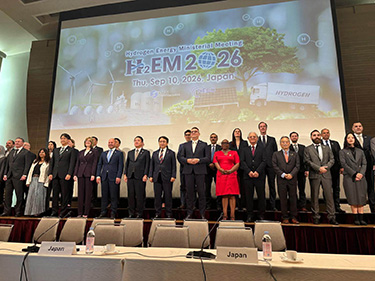
| South Africa and Japan have agreed in principle to explore strategic areas of collaboration to advance a memorandum of cooperation on hydrogen and ammonia signed between the two countries in 2023. |
| |
This follows a meeting between the Deputy Minister of Science, Technology and Innovation, Dr Nomalungelo Gina, and Japan's Vice Minister of Economy, Trade and Industry (METI), Mr Komori Takuo, on the sidelines of the Hydrogen Energy Ministerial Meeting in Chiba last week.
The meeting reaffirmed commitment to deepen cooperation in science, technology and innovation, particularly in the hydrogen and ammonia sectors, which are increasingly recognised as critical to the global transition to low-carbon economies. |
|
|
 |
|
| |
The parties agreed to develop and use relevant technologies, including renewable and low-carbon hydrogen and ammonia production, distribution and storage.
Human capital development was also identified as a strategic priority, including strengthening capacity across the hydrogen value chain through Technical and Vocational Education and Training (TVET) colleges, universities of technology, historically disadvantaged institutions and research-performing organisations.
Both parties further highlighted the importance of supporting the reskilling and upskilling of the current and future workforce to participate meaningfully in the emerging hydrogen economy.
The two sides also underscored the importance of strengthening public-private partnerships and encouraging greater private sector participation in the development of hydrogen and ammonia projects.
Welcoming the outcomes of the engagement, Dr Gina said the discussions marked an important step towards translating bilateral commitments into practical programmes that can drive innovation, industrial development and economic growth.
"South Africa values its enduring partnership with Japan and welcomes the progress made in identifying concrete areas of cooperation in hydrogen and ammonia. Through collaboration in research, innovation, skills development and technology deployment, our two countries can contribute meaningfully to a sustainable and inclusive energy transition," said Dr Gina.
Also on the margins of HEMM, Dr Gina met with Mr Terazawa Tatsuya, President of the Institute of Energy Economics, Japan (IEEJ), to discuss ongoing cooperation under the 2023 Memorandum of Cooperation.
Dr Gina reaffirmed South Africa's commitment to deepening cooperation with both METI and IEEJ and indicated South Africa’s readiness to engage further on a programme of action to advance the implementation of the bilateral agreements.
– Source: www.gov.za |
|
| |
|
| |
| SOUTH AFRICA MUST BUILD STRONGER SCIENCE TALENT PIPELINE |
|
| |
 |
|
| South Africa is seeking to strengthen its pipeline of scientists and innovators through investment in young researchers, skills development and international cooperation, while recognising that support must begin long before students enter university. |
|
|
| |
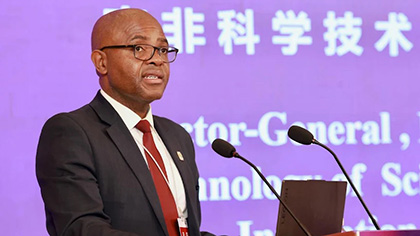
Department of Science, Technology and Innovation Director-General, Dr Mlungisi Cele, outlined this approach during the Science and Technology Policy Thematic Forum in Shanghai, China, on Sunday, 13 September 2026.
“While our system is relatively strong, given its size, there is an opportunity to strengthen our talent pipeline,” he said.
The engagement examined how countries can better integrate education, scientific research, technological innovation and talent development so that knowledge contributes meaningfully to economic growth and social progress.
Cele’s address placed the development of young people at the centre of this effort, linking opportunities at school with postgraduate training, research careers and the skills required for emerging technologies.
He said government continues to invest in strategic interventions to cultivate a new generation of postgraduate researchers, including opportunities for postgraduate students and early-career researchers in international research settings.
The department also supported postgraduate development through scholarships, alongside investment in research capacity at public universities.
Cele highlighted the South African Research Chairs Initiative as an instrument for strengthening research and innovation through the establishment of chairs at universities and sustained investment.
These interventions formed part of a broader effort to build scientific capabilities while ensuring that researchers had opportunities to develop their expertise.
Talent development
However, his remarks also acknowledged that the country’s future research workforce depends on the strength of the education pipeline feeding into universities.
He pointed to the need for greater specificity in supporting younger students, “from early childhood to high school”.
The department’s support included the National Science Olympiad and science projects that gave learners opportunities to demonstrate their capabilities.
Such initiatives featured in his account of a connected talent development pipeline stretching from basic education through tertiary study and into the pursuit of national economic and social goals.
Cele acknowledged that existing challenges within the system were affecting progress towards the country’s aspirations. Alongside this focus on younger learners, he emphasised preparing people for technological changes that could reshape research and employment.
“We also support the development of skills for the future of work, as well as foundational research capabilities,” he said.
He referred to the growing impact of artificial intelligence and the potential significance of quantum computing, linking skills development to the country’s wider digital economy ambitions.
Partnerships
International partnerships are another central element of the approach, offering a means to support talent development through shared research interests and cooperation. Cele identified the Young Scientists Programme, joint research centres and collaborative research among the instruments contributing to South Africa’s efforts.
He also pointed to China-Africa cooperation and bilateral government agreements as avenues for advancing the development of scientific talent. His participation brought South Africa’s experience into a discussion about capable institutions, future generations of researchers and innovators, and policy systems that enable scientific advances to address societal challenges.
The focus was on developing people alongside research capacity, with education, skills and cooperation contributing to the country’s longer-term scientific and development ambitions.
He outlined an ambition for a South Africa with an expanded talent pipeline, a stronger national research workforce and a more inclusive economy driven by innovation.
Achieving that vision, he said, involved connecting support across different stages of education and research while maintaining cooperation with international partners. This connected approach linked the cultivation of scientific talent to the country’s broader economic and social aspirations.
“We will continue strengthening scientific excellence, drawing on our national strengths, while also leveraging collaboration strategies with partners such as China and Shanghai,” Cele said.
The forum, which the Minister of Science, Technology and Innovation, Professor Blade Nzimande, addressed on Saturday, concluded on 14 September 2026.
– Source: SAnews.gov.za |
|
| |
|
| |
| NINE SOUTH AFRICAN COMPANIES RANKED AMONG THE BEST IN THE WORLD – INCLUDING FOR WORK-LIFE BALANCE |
|
| |
| “Time Magazine” has published its list of the best-performing companies in the world, with nine South African businesses being named. The list ranks the top 1,000 businesses in the world based on several factors that determine each one’s overall performance and assigns a score out of 100. |
|
|
 |
|
| |
The factors used to determine company success include employee satisfaction, revenue growth, and sustainability transparency.
The highest-ranking South African company was Sanlam, which placed 388th.
The South African insurance giant also ranked “very high” in the growth sub-ranking, with the group planning to introduce banking services as part of its amenities in the next year. Sanlam CEO Paul Hanratty said it was a proud moment for the company to receive global recognition for its efforts.
“We are proud to see Sanlam acknowledged on this global stage. The recognition reflects the commitment of our people and the trust our clients place in us,” he said.
“What makes this ranking particularly meaningful is that it looks beyond financial performance alone, recognising companies that create long-term value through their people, sustainable growth and responsible business practices.”
The next highest ranked South African company was Absa in 410th, which joined two other banks from the country on the list – Standard Bank and Capitec. Capitec was another company which received distinction in the growth sub-ranking, being deemed “very high” by the list.
Old Mutual, South Africa’s oldest insurer and one of its oldest companies, ranked 699 on the list and also achieved the “very high” growth rate distinction.
South Africa’s telecommunications sector was represented on the Times’ list, with MTN ranking 636 out of the 1,000 companies named. In the country’s retail sector, both Shoprite and Pick n Pay made the list, ranking 563rd and 842nd, respectively.
Bidvest, the logistics and international services group founded and based in South Africa, ranked 664th on the list.
South African businesses in Time Magazine’s World’s Best Companies:
- Sanlam
- Absa
- Standard Bank
- Shoprite
- MTN
- Bidvest
- Old Mutual
- Pick n Pay
- Capitec
In the overall list, the American company NVIDIA ranked first with an overall score of 97.51 and an “outstanding” growth sub-ranking. Of the top ten companies, seven were based in the United States, while the remaining three were situated in Ireland, Germany, and the United Kingdom.
Time Magazine noted that the top of the list was dominated by companies involved in the artificial intelligence (AI) industry.
“The economy built around AI has continued to boom even as experts and leaders work to hammer out the technology’s execution problem and debate the guardrails that should be put around it,” it said. Meta, Apple, and NVIDIA are some of the biggest names in the AI industry, and were all ranked in the top five.
Outside of AI, European companies in the defence industry performed well after the EU pledged approximately €800 billion in investments to defence readiness by 2030.
Companies such as Thales and Leonardo, both involved in the European defence sector, ranked in the top 50 on the Times’ list.
Time Magazine noted that these companies are performing well as countries work to bolster their defensive capabilities with new technologies. It noted that technology such as drones and unmanned vehicles had seen sizeable increases in investment in the last few years.
In the employee satisfaction subcategory, Microsoft ranked first while also ranking sixth on the overall list.
Among the South African companies listed, the best-performing in the employee satisfaction sub-category was Absa.
– Source: www.businesstech.co.za |
|
| |
|
| |
| RIFUMO MATHEBULA NAMED OBAMA FOUNDATION AFRICAN LEADER |
|
| |
 |
|
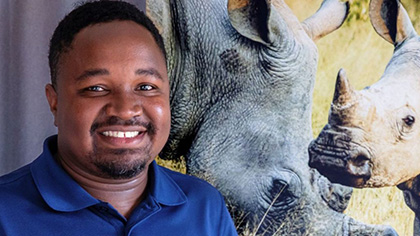
| A South African conservation photographer who grew up in a rural community bordering the Kruger National Park has been selected for the Obama Foundation’s 2026 African Leaders cohort. |
|
|
| |
At 29, Rifumo Mathebula, who is the Programme Director of Wild Shots Outreach, has moved from a childhood spent herding livestock near one of Africa’s most prominent protected areas to an international leadership programme focused on strengthening the work of emerging African leaders.
Wild Shots Outreach announced Mathebula’s selection in a press release, describing the recognition as acknowledgement of his work using photography, conservation and visual storytelling to create opportunities for young people.
A childhood close to wildlife, but without access
Mathebula grew up close to the Kruger National Park, but proximity did not necessarily translate into access to the wildlife on his doorstep. According to the organisation, he often had to miss school while herding livestock and had never experienced the park’s wildlife firsthand despite living alongside the protected area.
That changed after he joined Wild Shots Outreach.
The organisation, founded in 2015, uses photography workshops, conservation education, mentorship and practical skills development to introduce young people from disadvantaged communities to wildlife while creating possible pathways into conservation, tourism and creative industries.
For Mathebula, that first experience with wildlife became a turning point, with photography providing a means of expression and conservation becoming a professional focus. His subsequent work has taken him into programme leadership, where he has helped expand opportunities for young people to engage with wildlife and develop photographic and digital skills.
Wild Shots Outreach says its programmes have enabled more than 2 000 young people to experience wildlife for the first time since its establishment. The organisation’s approach places visual storytelling at the centre of that work, using photography not only as a creative discipline but also as a way of introducing young people to conservation and potential careers linked to the sector.
Mathebula has also contributed to programmes and partnerships beyond South Africa, including work in Botswana and Namibia. His role has increasingly focused on encouraging young people living near protected areas to participate in conservation rather than viewing wildlife protection as something carried out solely by external organisations.
The Obama Foundation’s African Leaders programme brings together emerging leaders from across the continent and provides leadership development, networking and collaboration opportunities.
As part of the 2026–27 cohort, Mathebula will join other African leaders working on initiatives aimed at addressing challenges in their respective communities. Reflecting on the selection, Mathebula said the recognition had reinforced his belief that a person’s background does not determine the extent of their future opportunities.
“I am overwhelmed to receive this honour. It shows that where you come from does not define where you can go. I hope my journey encourages other young people to dare to dream. Photography gave me a voice, conservation gave me purpose, and now I want to help other young Africans discover that same passion and belief in themselves. My vision is to build a future where young people living alongside our national parks see themselves as leaders in protecting Africa’s wildlife.”
From student to programme director
For Wild Shots Outreach founder Mike Kendrick, Mathebula’s progression illustrates the organisation’s emphasis on creating opportunities for young people to develop their skills.
‘Watching Rifumo grow from one of our first students into an internationally recognised leader has been one of the greatest privileges of my life. His selection by the Obama Foundation is a tremendous recognition of his remarkable leadership and determination. It also demonstrates the transformative impact of investing in young people and giving them the opportunity to see a positive future for themselves.’
Mathebula’s trajectory also reflects a less conventional route into conservation leadership, as his entry point was not formal access to wildlife tourism or an established conservation career, but a photography programme that introduced him to wildlife he had previously only lived alongside.
Today, his work sits at the intersection of photography, conservation education and youth development.
Wild Shots Outreach frames its work around the idea that communities living alongside protected areas should have opportunities to become participants in conservation and not simply neighbours to it. That approach places young people at the centre of a conversation that increasingly extends beyond wildlife protection itself – towards skills, employment, storytelling and representation.
For Mathebula, the Obama Foundation selection marks another stage in that journey. From the rural communities bordering the Kruger to programmes across southern Africa, his career has developed around connecting young people with wildlife and showing how photography can become a route into a much wider field.
The 2026–27 African Leaders programme will now provide another platform for that work, as Mathebula joins a continental network of emerging leaders while continuing his involvement with Wild Shots Outreach and its programmes for young people living alongside protected areas.
– Source: www.capetownetc.com |
|
| |
|
| |
| FROM REFILWE TO THE NORTH POLE: SOUTH AFRICAN LEARNER MAKES HISTORY ON RUSSIA’S ICEBREAKER OF KNOWLEDGE |
|
| |
| From a classroom in Refilwe, east of Pretoria, to the frozen reaches of the Arctic, Ntsako Sithole has taken an extraordinary journey that places a young South African at the intersection of science, education, international cooperation and exploration. |
|
|
 |
|
| |
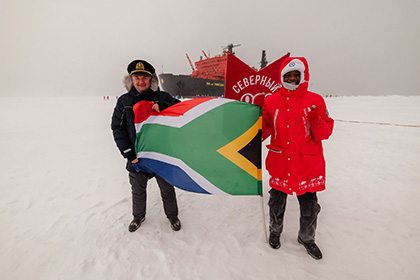
The learner from Chipa-Tabane Comprehensive High School was the sole South African selected to participate in the Icebreaker of Knowledge Arctic expedition, joining young people from around the world aboard Russia’s nuclear-powered icebreaker 50 Let Pobedy on a ten-day voyage to the North Pole.
Selected from approximately 5 000 applicants representing 22 countries, Ntsako earned his place through a demanding three-stage international selection process that tested knowledge of natural sciences, nuclear energy and Arctic exploration, culminating in creative projects examining how nuclear technologies are shaping the contemporary world.
The expedition returned to the Russian port of Murmansk in August 2026, following a remarkable journey that gave its participants first-hand exposure to one of the world's most challenging environments and to some of Russia's most advanced nuclear and Arctic technologies.
Captain Ruslan Sasov of 50 Let Pobedy described the expedition as an important investment in the next generation, noting that bringing talented young people together through such experiences contributes to their development and allows them to turn ambitions and dreams into reality.
For Ntsako, the experience was both scientific and deeply personal. “This trip still feels almost surreal to me. The sheer scale of the Arctic ice caught me off guard – no photo could have prepared me for it. I’ve studied nuclear energy for years, but it was only here, next to a ship that has run on nuclear power alone for years, that I truly grasped its potential. This expedition only strengthened my desire to build my future in this field.”
The scientific and educational programme aboard the vessel exposed participants to practical applications of science and technology, including an aerospace laboratory. Working alongside scientists, they participated in experiments involving the launch of a radiosonde designed to support communication in remote Arctic areas and along the Northern Sea Route, as well as testing a recoverable stratospheric platform.
The North Pole itself provided the defining moment of the expedition. At the 90-degree northern latitude, there is no landmass beneath the ice, but an ocean covered by drifting sea ice. For Ntsako, accustomed to the Highveld winter of Pretoria, the Arctic environment offered a dramatically different world – one of near-constant daylight, vast expanses of ice and the possibility of encountering polar wildlife.
The expedition also marked the 200th occasion on which a surface vessel had reached the North Pole, adding another historic dimension to an already remarkable journey.
A symbolic international circle dance was held at the 90-degree point, bringing together young participants from different countries at one of the world's most remote locations.
From a Refilwe classroom to an international scientific community
The significance of Ntsako's achievement journey illustrates the possibilities that international educational programmes can create for young people, particularly those from communities that may otherwise have limited access to international scientific networks and advanced technological environments.
His return to South Africa was celebrated with a special reception at Chipa-Tabane Comprehensive High School, where fellow learners, teachers and members of the Refilwe community gathered to welcome him home. The celebrations reflected not only pride in an individual achievement, but the wider aspirations of a community seeing one of its young people engage with the world at the highest level.
Ryan Collyer, CEO of Rosatom Central and Southern Africa, said Ntsako's achievement was earned on merit and demonstrated the potential of programmes that connect young African learners with international opportunities. He said the most memorable moment was Ntsako's return home, when the community gathered to hear his stories of the nuclear icebreaker, the Arctic and the polar bears. “These programmes aren’t just about the science or the travel – they are about the hope a single young person can bring back to their home,” Collyer said.
Ntsako's participation was facilitated through Rosatom's international education and skills programmes, which provide opportunities for students across Africa to engage with the nuclear sector and related fields.
The broader educational relationship between South Africa and Russia is also developing. In March 2026, Rosatom and the South African Nuclear Energy Corporation (Necsa) signed a memorandum relating to personnel cooperation, creating further opportunities for South African students and young specialists to access educational and professional opportunities at leading Russian technical universities.
Such initiatives are particularly relevant as South Africa considers the future of its energy, scientific and technological capabilities. Developing the next generation of scientists, engineers and technical specialists is not only an educational priority, but an important component of national development.
The Icebreaker of Knowledge project is supported by Rosatom and is designed to promote natural sciences and nuclear technologies, identify and encourage talented young people, develop their abilities and provide career guidance. The programme brings together students aged 14 to 16 from different countries, with the strongest participants earning the opportunity to join the Arctic expedition.
The international selection process began on 5 May 2026 and comprised three stages. Participants first competed in a science quiz covering natural sciences, breakthrough technologies, nuclear energy and Arctic exploration. The second stage involved webinars with nuclear industry experts, providing participants with insight into advanced technologies and the role of nuclear energy in the future of science and the global economy.
The finalists were then required to present creative projects on the theme How Nuclear Technologies Are Changing the World Today. Their work was assessed by an international jury drawn from the nuclear industry, science, education, Arctic affairs and science communication. Over seven seasons, more than 470 young people from around the world have participated in Rosatom's Arctic expeditions.
For South Africa, however, the story of this year's expedition has a distinctly local face. It is the face of a young learner from Refilwe who looked beyond the boundaries of his classroom, competed against thousands of students from around the world, travelled to Russia and stood at the top of the world.
His journey from Chipa-Tabane Comprehensive High School to the North Pole is a powerful reminder that the most important destinations in international cooperation are sometimes not places on a map, but the opportunities created for the next generation.
– Source: By Kester Kenn Klomegah, Moscow Bureau Correspondent, The Diplomatic Society and Rosatom, www.thediplomaticsociety.co.za |
|
| |
|
| |
| "THIS IS WHERE WE ACTUALLY SHINE": SOUTH AFRICA NAMED AFRICA'S MOST BEAUTIFUL COUNTRY BY ROUGH GUIDES IN 2026 |
|
| |
 |
|
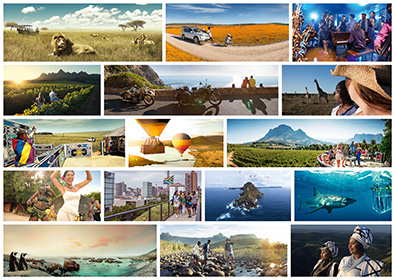
| Rough Guides named South Africa Africa's most beautiful country in 2026, placing it among the top 20 globally. The recognition highlights the country's diverse landscapes, from Table Mountain and the Garden Route to Kruger National Park and Namaqualand in South Africa stands as the only African nation to feature among the world's 20 most beautiful countries. |
|
|
| |
South Africa has been named Africa's most beautiful country in 2026 by global travel authority Rough Guides, making it the only African nation to feature among the world's 20 most beautiful countries. The accolade recognises South Africa's rare combination of landscapes packed into a single destination. White-sand beaches, ancient mountain ranges, sweeping wildlife reserves, scenic road routes and one-of-a-kind floral scenery all contributed to the country earning its place on the prestigious list.
The Western Cape drew particular praise, with Cape Town's Table Mountain, dramatic coastlines and whale-watching opportunities singled out as standout features. The Garden Route, where mountains meet the ocean at nearly every turn, further cemented the province's reputation as one of the continent's most breathtaking regions.
Beyond the Cape, South Africa's mountain landscapes also impressed. The Drakensberg and the ancient Makhonjwa Mountains offer some of Africa's most dramatic scenery, reflecting a geological history stretching back billions of years. Kruger National Park remained a major drawcard, offering visitors the chance to encounter the Big Five across vast, undisturbed wilderness. Then there is Namaqualand, which transforms seasonally from a dry, arid plain into a vivid carpet of wildflowers, creating one of the country's most distinctive natural spectacles. The Rough Guides recognition is not the only international travel award South Africa has received this year. Cape Town also earned major honours at the World Travel Awards Africa 2026, adding further weight to the country's growing tourism profile.
– Source: www.briefly.co.za |
|
| |
|
| |
| AFRICAN FASHION LEADERS HEAD TO MOSCOW FOR FOURTH BRICS+ FASHION SUMMIT |
|
| |
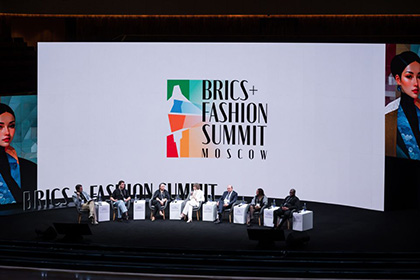
| African fashion leaders will be among the participants at the fourth BRICS+ Fashion Summit in Moscow from 28 to 30 September 2026, with South African and other continental representatives joining discussions around international trade, designer mobility and collaboration across the Global South. |
|
|
 |
|
| |
The event has grown into a major meeting point for fashion businesses from fast-growing economies. Last season, it attracted more than 15 000 attendees and delegates from more than 60 countries.
Africa takes a bigger role
The 2026 programme features participants from across the African fashion industry, including representatives from South Africa, Egypt, Ethiopia, Morocco, Ghana, Kenya, Botswana, Namibia, Seychelles and South Sudan.
South Africa will be represented by Stephen Manzini, CEO of Soweto Fashion Week and the South African Fashion Association, and Colleen Eitzen, co-founder of retailer The Space.
African voices at the summit
- Susan Sabet – board member and secretary general of the Egyptian Fashion and Design Council
- Mahlet Teklemariam – Founder of Hub of Africa Fashion Week
- Hind Joudar – Founder and CEO of Maroc Fashion Week
- Nana Addo Tamakloe – Accra Fashion Week
- Brian James Kihindas – Kenya Fashion Council
- Mmantlha Sankoloba – CEO of Botswana Exporters and Manufacturers Association
- Kalistu Ramos Mukoroli – Director of MTC Windhoek Fashion Week
- Tery Carola – CEO of Seychelles Fashion Week
- Dawson Deng – Co-founder and executive director of South Sudan Fashion Week
Looking beyond local markets
The three-day summit will give African brands and manufacturers an opportunity to meet counterparts from across the continent, as well as representatives from fashion businesses in Asia, the Middle East and Latin America.
For South African businesses, the event offers potential routes into other fast-growing markets, including opportunities for exports, partnerships and industry exchanges.
Some African participants have already begun developing connections through the forum. Botswana-based House of Ditso is exploring a potential presence in the Russian and CIS markets, while MTC Windhoek Fashion Week is in discussions with Moscow Fashion Week about a designer exchange programme.
Building connections across Africa
The summit has also provided a platform for African fashion week organisers to connect with one another.
Brian James Kihindas, director of Nairobi Fashion Week and a representative of the Kenya Fashion Council, hosted a meeting that brought together fashion week organisers from East, West, Southern and North Africa.
The meeting focused on the potential for greater collaboration between fashion weeks across the continent, particularly around trade, designer mobility, sponsorship, production and access to buyers.
“In Moscow, inspired by the broader BRICS framework of multilateral cooperation, we made a collective decision: to build a unified umbrella body for African fashion week conveners,” says Kihindas.
“What started as a pivotal meeting in Moscow has evolved into an active, everyday network driven by our dedicated digital community hub: conveners regularly exchange insights on production standards, buyer acquisition, sponsor engagement, and event logistics suited for African markets.”
Fashion as a creative and economic force
Stephen Manzini, CEO of Soweto Fashion Week and the South African Fashion Association, returns to the summit for the 2026 edition.
He sees the event as an opportunity for African fashion businesses and creatives to connect with partners beyond the continent.
“The BRICS+ Fashion Summit is a critical communication platform for emerging countries, especially for Africa. It provides a rare space where our voices, stories, and design philosophies are seen and respected on equal footing.”
“For African creatives, it’s a gateway to connect with like-minded partners from the Global South, share our cultural richness, and position fashion as both a creative and economic force.”
Moscow Fashion Week also returns
The BRICS+ Fashion Summit will coincide with the latest season of Moscow Fashion Week, running from 26 September to 1 October 2026.
The programme will feature more than 70 runway shows by brands from more than 10 countries, with participating designers representing markets ranging from Türkiye and Sri Lanka to Spain and China.
– Source: www.bizcommunity.com |
|
| |
|
| |
| SPRINGBOKS SHOW THEIR CLASS TO SEAL RUGBY'S GREATEST RIVALRY SERIES WIN IN USA |
|
| |
 |
|
| The Springboks clinched the first-ever edition of Rugby's Greatest Rivalry as they beat a valiant All Blacks side 43-28 in Baltimore to seal a 3-1 series win on Saturday, 12 September 2026. |
| |
It was a thoroughly deserved victory for Rassie Erasmus' men, as the world champions showed why they are still the benchmark in world rugby. The South Africans' dominance was also reflected in the try column, as they outscored their opponents six tries to four.
The Springboks started brightly, playing their way out of their own 22 and winning back-to-back penalties to allow Sacha Feinberg-Mngomezulu to open the scoring from the kicking tee.
It didn't take the All Blacks long to hit back, however, as they moved the ball from end to end with their trademark pace and accuracy before creating the space for Codie Taylor to score.
But the Boks had also come to Baltimore to play, and after a series of strong carries from their backs and forwards, there was no stopping Damian de Allende from crashing over. Feinberg-Mngomezulu added the extras as the Boks retook the lead. |
|
|
| |
Following a lengthy delay in the game due to a breakdown in communication between the refs and the TMO, the Boks won a penalty and kicked for the corner. Behind the rolling maul, Morne van den Berg spotted a gap, dummied and sniped through for the Boks' second try. Feinberg-Mngomezulu converted again as the Boks stretched their lead to 17-7.
Then came an incredible All Blacks attack, lasting more than 30 phases as they kept coming in the face of some superb Bok defence. They stayed patient, and, eventually, slick handling in the backline created the opening for Will Jordan to score under the posts, as a breathless first half ended 17-14 to the Boks.
The Boks started the second half strongly, and the breakthrough soon came from an attacking line-out as their rolling maul stayed patient before Malcolm Marx dotted down from the back of another powerful drive. Moments later, another great break masterminded by Van den Berg and Feinberg-Mngomezulu took them into the All Blacks 22, where a couple of quick recycles saw Pieter-Steph du Toit go over for another try.
But the All Blacks weren't done yet, as a series of penalties brought them right to the Springbok line, where Ethan Blackadder crashed over for a much-needed score.
Then came a big moment, as Kurt-Lee Arendse burst through for a fantastic solo score from broken play. The All Blacks felt there had been some foul play in the build-up, but a lengthy TMO check couldn't convince the officials, and the try stood.
That stretched the Boks' lead back to 15 with eight minutes to play, and this time there was no way back for Dave Rennie's men. Instead, it was another green wave that put the final nail in the coffin as Cameron Hanekom crashed over following another relentless assault.
There was time for another consolation try for Beauden Barrett as the New Zealanders once again showed their fighting spirit in the face of defeat, but there was no doubt who the winner was in Baltimore.
– Source: www.sabcsport.com |
|
| |
|
| |
| SOUTH AFRICA COMPLETE NAMIBIA ODI CLEAN SWEEP WITH NINE-WICKET VICTORY |
|
| |
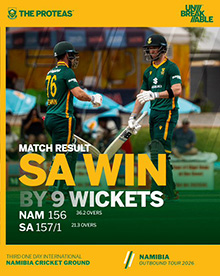
| The Proteas wrapped up their ODI series against Namibia with a commanding nine-wicket victory in Windhoek on Sunday, 13 September 2026, completing a 3-0 clean sweep. |
| |
The Proteas needed only 21.3 overs to chase down Namibia's 156, with Jordan Hermann and Connor Esterhuizen again proving too strong for the hosts. The opening pair put on 150 for the first wicket before Hermann was bowled, with victory almost secured.
Hermann continued his impressive start to international cricket with 77 off 59 balls, including 13 fours, while Esterhuizen finished unbeaten on 68 from 68 deliveries, hitting four fours and three sixes. Dewald Brevis then ended the match in style, clearing the boundary with just his second ball.
The result followed South Africa's 99-run DLS victory in the opening ODI and a 157-run triumph in the second.
Earlier, Namibia were restricted to 156 inside 37 overs after South Africa's bowlers maintained control throughout their innings. |
|
|
 |
|
| |
Stand-in captain Bjorn Fortuin was the pick of the attack, claiming a career-best 4/33 as he continued an excellent run of form across the T20I and ODI series. Nqabayomzi Peter added 2/39, with spin proving particularly effective on a surface offering assistance.
Namibia briefly threatened to recover after slipping to 20 for 2, with Alexander Busing-Volschenk and Louren Steenkamp sharing a 53-run partnership. But Fortuin broke the stand by beating Steenkamp in flight, before Busing-Volschenk was run out from the following delivery.
The hosts then collapsed from 73/4 to 90/6, leaving the lower order with the task of pushing the total towards 150. Zane Green and Max Heingo managed a 31-run last-wicket partnership, but Namibia's eventual total was never likely to trouble the Proteas.
Hermann, meanwhile, finished the series as South Africa's leading run-scorer with 247 runs. He had already made history on debut by scoring 150 in the opening ODI, equalling the record for the highest score by a batter on a men's ODI debut.
Esterhuizen also enjoyed a breakthrough series, following his maiden ODI century of 119 in the second match with another unbeaten half-century in the finale.
The Proteas' next assignment is a three-match ODI series against Australia later this month followed by a three-match Test series against the same opposition beginning in October 2026.
– Source: www.sabcsport.com |
|
| |
|
| |
| “CLEAR MINDS”: RECORDS FALL AND MILESTONES REACHED AS PROTEAS CRUSH ZIMBABWE |
|
| |
 |
|
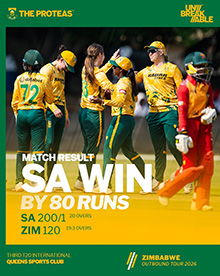
| Laura Wolvaardt bashed a record ton, Karabo Meso made her maiden half-century and Annerie Dercksen took her first five-wicket haul. |
| |
With both players achieving milestones, teenager Karabo Meso said she and captain Laura Wolvaardt had fed off each other as they laid a match-winning foundation for the Proteas women during their 80-run victory over Zimbabwe in the third T20 International in Bulawayo on Tuesday, 15 September 2026.
Opening batter Wolvaardt, who had struggled in the first two games of the series, hit a record ton. And wicketkeeper-batter Meso, who had a highest score of 14 runs in her previous 10 T20 International matches, achieved her first half-century.
“It was just clear minds, not getting ahead of ourselves. She made me feel good about myself, I made her feel good about herself,” Meso said after the game.
“She had been struggling for the last two games but today was just about commitment and clear conversations, and she said: ‘You’ve just got to keep things simple and don’t try too hard because it will come naturally’.” |
|
|
| |
Solid partnership
After winning the toss and choosing to bat, Wolvaardt and 18-year-old Meso combined in an unbroken 173-run stand for the second wicket, which was the third-highest partnership by a Proteas women pairing for any wicket in the T20 format.
The skipper made 126 not out off 62, while Meso hit an unbeaten 50 off 51, with the duo carrying the Proteas to 200/1.
Wolvaardt broke the record for the highest score by a Proteas woman in a T20 International, surpassing the previous mark of 116 not out achieved by Shandré Fritz against Netherlands in Potchefstroom in October 2010.
Zimbabwe innings
In response, Zimbabwe were bowled out for 120 in the final over of their innings, despite tail-ender Michelle Mavunga putting up a stubborn fight by contributing 41 off 23.
The impressive Proteas attack were led by all-rounder Annerie Dercksen who took 5/15 for her first international five-wicket haul.
Dercksen became only the third SA woman to take five wickets in a T20 International match, after Suné Luus and Shabnim Ismail, who both previously achieved the feat on two occasions.
– Source: www.citizen.co.za |
|
| |
|
| |
| GREEN AND GOLD ON SHOW AT THE IRONMAN 70.3 WORLD CHAMPIONSHIP |
|
| |
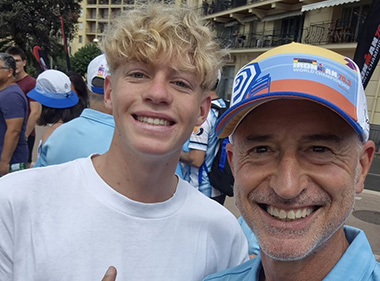
| Among the South African contingent was Dylan Holm, the youngest athlete in the field, whose IRONMAN journey began when he was carried across the finish line as a four-month-old baby. |
| |
In 2008, Dylan Holm crossed the IRONMAN South Africa finish line in his father’s arms as a four-month-old baby. This weekend, he crossed one himself.
Holm was the youngest athlete at the 2026 IRONMAN 70.3 World Championship in Nice, France, where he lined up alongside some of the best triathletes in the world.
His connection to the event goes back almost two decades. When his father competed at IRONMAN South Africa in 2008, four-month-old Dylan was in his arms as they crossed the finish line together. At the time, bringing a baby across the line was still allowed, giving Holm a rather unique introduction to the world of IRONMAN. |
|
|
 |
|
| |
Fast-forward to 2026, and Holm was back at the finish line. He got to experience the race for himself and chase the iconic words his father heard all those years ago: “You are an IRONMAN.”
South Africa was also represented by athletes including Jamie Riddle and Bridget Theunissen, with Riddle producing another impressive performance on the world stage.
Riddle finished seventh overall in 3:54:44, holding his own against one of the strongest fields in world triathlon. He was among the leaders from the opening swim and remained in the fight throughout the race before crossing the line in seventh.
The result also gave Riddle back-to-back seventh-place finishes at the IRONMAN 70.3 World Championship, having finished in the same position at the 2025 edition.
For a South African contingent that proudly showed up at the Parade of Nations before the racing began, there was plenty to celebrate by the time the weekend came to an end.
– Source: www.goodthingsguy.com |
|
| |
|
| |
| TEAM SA WRAPS UP JUNIOR OPEN WATER SWIMMING CHAMPIONSHIPS IN ARGENTINA |
|
| |
 |
|
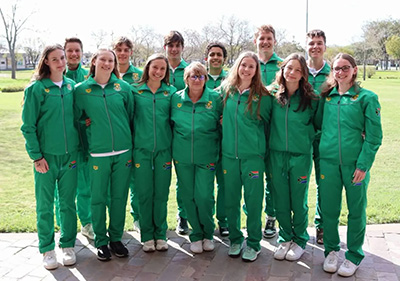
| South Africa’s junior open water swimmers have wrapped up their campaign at the 2026 World Aquatics Junior Open Water Swimming Championships in Santa Fe, Argentina, with the young squad putting in a series of determined performances against some of the best junior swimmers in the world. |
|
|
| |
The championships, held from 3 to 6 September 2026, saw South African swimmers compete across the 5 km and 7.5 km races, the 3 km knockout sprint and mixed 4x1500 m relays.
One of the standout performances came from 15-year-old Carter Markgraaff, who narrowly missed out on a podium place in the boys’ 14-15 5 km event. Markgraaff finished fourth in 56:40.60, coming agonisingly close to a medal.
He was joined in the event by teammate Noah Nice, who finished 16th in 59:37.70.
In the girls’ 14-15 5 km race, Taylia Smith finished 20th in 1:04:26.90, while Shalea Hamilton crossed the line 21st. The older junior swimmers also took on the 7.5 km events.
In the boys’ 16-17 race, Kellen Jones finished 29th in 1:30:38.40, with Wian Bartleman following in 35th. Leah Markgraaff was South Africa’s best finisher in the girls’ 16-17 7.5 km event, placing 15th, while Caitlin Evans finished 20th in 1:35:47.90. The team also tackled the fast-paced 3 km knockout sprint.
Katie Horne was the highest-placed South African in the women’s event, finishing 14th. Leah Markgraaff was 17th, while Kellen Jones finished 18th in 15:31.60 in the men’s event and Troy McWilliam placed 22nd in 16:24.60.
The mixed 4x1500 m relays brought another opportunity for the swimmers to compete as a team. In the junior 14-16 relay, Carter Markgraaff, Taylia Smith, Caitlin Evans and Kellen Jones finished ninth. The senior 14-19 team of Troy McWilliam, Katie Horne, Leah Markgraaff and Noah Nice finished 16th.
While there were no medals for Team SA in Santa Fe, the performances provided valuable international experience for a group of young swimmers still developing on the world stage.
The South African team was also praised for the effort that went into the campaign, with coaches, managers and support staff playing their part throughout the championships.
The experience was about more than the finishing positions. They took on challenging open-water races, competed against international opposition and gained experience that will form part of their development as they continue to represent South Africa in the years ahead.
And if fourth place was anything to go by, there were certainly a few swimmers in Argentina who came away knowing that the podium is within reach.
– Source: www.goodthingsguy.com |
|
| |
|
| |
|
|
|
|
|
|
|
|