| |
| |
|
| |
| PRESIDENT RAMAPHOSA PARTICIPATES IN AU MID-YEAR COORDINATION MEETING IN EGYPT |
|
| |
 |
|
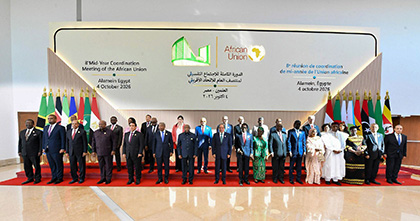
| President Cyril Ramaphosa on Sunday, 4 October 2026, participated in the plenary of the eighth African Union (AU) Mid-Year Coordination Meeting in his capacity as Chairperson of the Southern African Development Community (SADC). |
|
|
| |
Held in El-Alamein, the Arab Republic of Egypt, the meeting brought together African leaders to deliberate on key continental priorities, including strengthening regional integration, advancing the implementation of the African Continental Free Trade Area (AfCFTA), accelerating infrastructure development and addressing peace and security challenges across the continent.
Progress in implementing the division of labour between the African Union, Regional Economic Communities and Member States, alongside efforts to strengthen peace, security and economic cooperation across the continent, were the issues the meeting would discuss, the Presidency said in a post on social media platform X.
In a statement, Chairperson of the AU Commission, Mahmoud Ali Youssouf, said the meeting remains a critical platform for strengthening cooperation between the AU, Regional Economic Communities (RECs) and Regional Mechanisms (RMs) for harmonising efforts towards the implementation of Africa’s continental integration agenda.
Against a complex and rapidly changing global geopolitical environment, the Chairperson stressed the need for Africa to deepen its collective reflection and strengthen its capacity to respond to the challenges affecting peace, security and stability & socio-economic development across the continent.
He further emphasised that, while important progress has been made, institutional operational obstacles continue to constrain regional and continental integration.
“The second decade of Agenda 2063 requires renewed political commitment, stronger coordination and effective implementation of the continental frameworks and instruments already adopted, and a clearer division of labour between the Union, RECs and RMs is essential.
"Such a division must be based on solidarity, complementarity and comparative advantage, while avoiding duplication and ensuring that collective efforts are directed towards tangible results for African citizens,” said the AU.
The Chairperson reaffirmed the commitment of the AU Commission to working with Member States, RECs and RMs to strengthen peace and stability across the continent.
Youssouf also highlighted the importance of strengthening Africa’s financial architecture and mobilising predictable, sustainable and sufficient resources for the implementation of Agenda 2063.
In his remarks, the President of Egypt, Abdel Fattah El Sisi, welcomed African leaders and delegations to Egypt and stressed the importance of strengthening coordination between the AU, RECs and RMs.
“President El Sisi emphasised that coordination must serve a practical purpose: moving Africa from fragmented efforts towards greater integration and from shared aspirations towards concrete, implementable projects that deliver tangible benefits to African peoples,” said the AU.
Bilateral meetings
Meanwhile, on the margins of the AU Mid-Year Coordination Meeting, President Ramaphosa held a bilateral meeting with Chairperson Youssouf.
The engagement provided an opportunity for the two leaders to discuss issues of mutual interest and strengthen cooperation in support of Africa’s integration agenda.
The President also held a bilateral meeting with President El-Sisi to discuss issues of mutual interest and strengthen relations between South Africa and Egypt.
The meeting provided an opportunity for the two leaders to reaffirm the importance of bilateral cooperation and explore areas of shared interest within the broader context of African development and regional collaboration.
– Source: SAnews.gov.za |
|
| |
|
| |
| DEPUTY MINISTER MORAKA ATTENDS LESOTHO’S 60TH INDEPENDENCE ANNIVERSARY |
|
| |
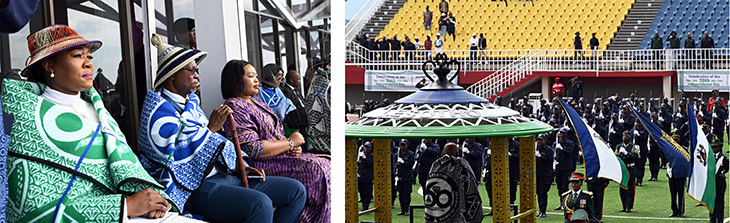
| The Deputy Minister of International Relations and Cooperation, Ms Thandi Moraka, arrived in Maseru, Kingdom of Lesotho, on 2 October 2026, where she was received by South Africa’s High Commissioner to Lesotho, Her Excellency Ms Constance Seoposengwe. |
|
| |
|
| |
Deputy Minister Moraka attended the celebrations marking the 60th Independence Anniversary of the Kingdom of Lesotho on 4 October 2026.
Lesotho gained independence from Britain on 4 October 1966. The Diamond Jubilee celebrations in 2026 commemorate six decades of independence, highlighting the country's heritage, unity, gratitude and aspirations for national renewal. The commemorations included nationwide activities such as national prayers, cultural events and the unveiling of a special Diamond Jubilee logo by King Letsie III.
– Source: DIRCO Public Diplomacy Platforms |
|
| |
|
| |
| SOUTH AFRICA AND NEW ZEALAND STRENGTHEN BILATERAL COOPERATION |
|
| |
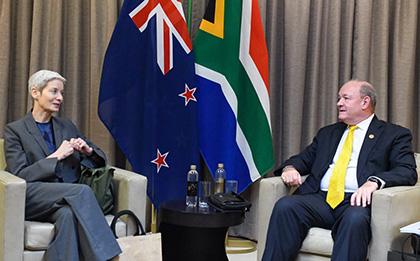
| South Africa and New Zealand held the 11th Senior Officials’ Meeting (SOM) in Pretoria on 2 October 2026, providing an opportunity to review bilateral relations and explore avenues for strengthening cooperation between the two countries. |
|
|
 |
|
| |
The meeting was preceded by a tête-à-tête between Acting Deputy Director-General Ambassador Dave Malcomson and Deputy Secretary Paula Wilson, who led their respective delegations.
The SOM serves as a structured bilateral mechanism through which South Africa and New Zealand assess progress in their relations and advance cooperation across various sectors, including trade, agriculture, science and technology, education, sport, arts and culture, transport, tourism, immigration and correctional services.
The meeting provided an opportunity for both countries to take stock of developments and progress since the previous SOM in 2022, identify new areas of sectoral cooperation and exchange views on multilateral and global issues of mutual interest.
Economic cooperation remains an important component of the bilateral relationship, with total trade between South Africa and New Zealand amounting to approximately R4.1 billion in 2025.
The 11th SOM reaffirmed the importance of continued engagement and dialogue in advancing the bilateral relationship and identifying opportunities for mutually beneficial cooperation.
– Source: DIRCO Public Diplomacy Platforms |
|
| |
|
| |
| CALL FOR STRONGER PARTNERSHIPS TO DRIVE AUTOMOTIVE INVESTMENT, JOB CREATION |
|
| |
 |
|
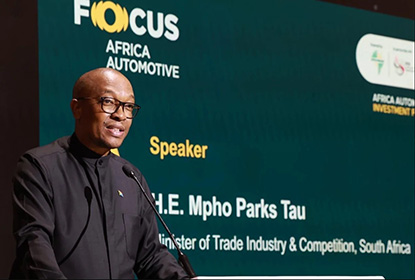
| South Africa has called for stronger regional cooperation, increased investment and deeper industrial integration to build a competitive African automotive industry capable of creating jobs, expanding trade and strengthening the continent’s position in global markets. |
|
|
| |
Delivering an address at the Africa Automotive Investment Forum hosted by Afreximbank at the Rixos Hotel Alamein in Egypt, Minister of Trade, Industry and Competition Parks Tau emphasised the importance of translating Africa’s automotive ambitions into practical investment projects, manufacturing capacity and sustainable economic opportunities.
The forum was held on the margins of the inaugural Alamein Africa Forum. Headquartered in Egypt, Afreximbank is a multilateral financial institution established to facilitate, promote and expand both intra-African and extra-African trade.
In his address on Friday, 2 October 2026, the Minister highlighted the need for governments, financiers, vehicle manufacturers, suppliers and investors to work together to develop bankable projects, strengthen regional value chains and increase investment in automotive manufacturing.
He also stressed the importance of using the African Continental Free Trade Area (AfCFTA) to expand intra-African trade and support industrial development.
Africa has produced approximately 1.23 million vehicles overall, representing about 1.3% of global production. South Africa produced approximately 618,077 vehicles in 2025, while Morocco reported reaching one million vehicles in production in December 2025. Together, the two countries accounted for more than 91% of Africa’s vehicle production.
“Africa still accounts for a small share of global automotive production, but the continent has strong foundations to build on,” he said.
To expand the continent’s manufacturing capacity, the AfCFTA Automotive Fund, supported by Afreximbank’s US$1 billion facility for local content development, is expected to contribute to efforts to strengthen local production and supplier networks.
Longer-term continental ambitions include increasing Africa’s vehicle production to between four million and five million vehicles by 2035, including new energy vehicles and related components.
The AfCFTA Automotive Fund, supported by Afreximbank’s US$1 billion facility for local content development, gives practical expression to this ambition, while continental automotive work points to a longer-term objective of producing 4–5 million vehicles in Africa by 2035, including new energy vehicles and related components.
Automotive Pact
The Minister also spoke about the proposal for an Automotive Pact Between SACU (Southern African Customs Union) and Egypt — A SACU-Egypt Auto Pact.
“The concept of automotive pacts within Africa has been under consideration for some time, including the work undertaken by the African Association of Automotive Manufacturers (AAAM).”
He further added that industry has long argued for Africa to build a viable and competitive automotive manufacturing sector. He added that leading automotive economies on the continent will need to cooperate in a more structured way through industrial and trade arrangements that promote complementarities rather than fragmentation.
Within SACU, this thinking has informed consideration of possible automotive pacts with key African partners, including Egypt and Algeria.
“The proposal for these Industrial Participation Agreements (IPAs) was presented to SACU structures as part of broader discussions on regional industrialisation, value chain development, and strategic responses to changes in the global trading environment.
SACU has noted the increasing importance of developing resilient African production systems in light of heightened protectionism, supply chain vulnerabilities, and the growing market access uncertainty in traditional markets.
“Against this backdrop, SACU sees value in exploring structured partnerships with major African economies such as Egypt to strengthen developmental integration and expand intra-African trade,” he explained.
A SACU-Egypt Automotive Pact presents the following opportunities:
- Support economies of scale in production and trade.
- Encourage complementary production patterns rather than the duplication of small-scale production of similar competing models in separate markets.
- Increase intra-Africa trade in new vehicles and components.
- Facilitate trade diversion towards African suppliers, where commercially viable.
- Create a viable basis for supplier development and feeder industry growth.
The Minister added that through the South African Automotive Master Plan 2035, government and industry are working together to expand production, deepen local content, increase participation by black-owned and women-owned firms, strengthen supplier capability and use regional markets as a springboard for sustained industrial growth.
He said the country is also seeking investment across the full automotive value chain. This includes vehicle assembly for passenger vehicles, light commercial vehicles, buses and trucks.
Investment
In addition, he said South African firms are ready to invest outward into African markets in assembly, components, dealerships, after-sales services, logistics, charging infrastructure, battery value chains, industrial park development and supplier partnerships.
He further added that Egypt is a particularly important partner for several reasons. This is because it is one of the continent’s largest and most diversified economies, with substantial industrial capacity, a large domestic market, and a strong geographic position linking Africa, the Middle East, and Europe.
Minister Tau is part of President Cyril Ramaphosa’s delegation to the 8th African Union (AU) Mid-Year Coordination Meeting (MYCM).
– Source: SAnews.gov.za |
|
| |
|
| |
| SOUTH AFRICA RETAINS POSITION AS SEVENTH-LEADING COUNTRY GLOBALLY IN CIVIL AVIATION |
|
| |
| South Africa has retained its position as the highest-ranking country in Africa and the seventh-leading country globally for the effectiveness of its civil aviation safety system. |
|
|
 |
|
| |
This is according to Transport Minister Barbara Creecy, who received confirmation from the International Civil Aviation Organization (ICAO) last month that the country had achieved a final safety rating of 94.99%.
“This outcome from the United Nations’ specialised agency for international aviation safety and security affirms once again the strength and maturity of the country’s aviation safety oversight system,” the Minister said on Thursday, 1 October 2026, in Midrand.
The Minister was speaking at the launch of Transport Month, held under the theme, Building a Safe, Sustainable, Reliable and Affordable Transport System. This year marks 21 years since the inaugural October Transport Month in 2005.
Establishment of a Transport Digital Authority
To keep pace with rapid developments in digital technology and artificial intelligence, which are changing transport ecosystems and regulatory processes, government will establish a Transport Digital Authority.
Immediate priorities include launching online registration for e-hailing vehicle owners and drivers from November this year; digitising Flight Operator Permits by December; and accelerating the implementation of a new online licensing system to clear renewal backlogs for taxi operators and support provincial regulatory authorities.
“Across the world, the rapid development of digital technology and artificial intelligence is changing transport ecosystems and regulatory processes.
“To catch up with the times, the Department of Transport and its entities have taken a decision to establish a Transport Digital Authority with the aim of developing an integrated digital transport platform for all online permitting services through one citizen interface,” the Minister said.
Investment in public infrastructure projects
Minister Creecy outlined the National Roads Agency’s (SANRAL) investment in public infrastructure projects, highlighting their significant role as catalysts for job creation and economic development.
Through SANRAL, government will undertake several large-scale projects to improve safety, shorten travel distances, create more than 35 000 job opportunities and support over 2 000 small enterprises.
SANRAL projects connect communities. Major projects include the following:
- The upgrading of the 160 km Moloto Road corridor linking Gauteng, Mpumalanga and Limpopo;
- Upgrades to the N2 at Piet Retief in Mpumalanga, improving links with northern KwaZulu-Natal and Richards Bay;
- Resurfacing, drainage improvements and road widening on the R52 from Koster to the N4 near Rustenburg in North West;
- A new northbound carriageway and upgrades to section 16 of the N1 from Zandkraal to Scottland in the Free State, increasing capacity and reducing delays;
- Ongoing improvements to the N2 in the Eastern Cape; and
- Improving flood resilience on the R37 and R40 between Mpumalanga and Limpopo through stabilised embankments, reinforced drainage and flood-resistant resurfacing. SANRAL has committed more than R260 million to repairing and climate-proofing roads damaged in this year’s Mpumalanga floods. We hope to show you some of these developments next week.
“In response to recent court cases, SANRAL will end pre-selected panels for routine road-maintenance tenders and return to open, route-by-route tendering to widen participation and competition.
“Open tendering will be supported by procurement reforms, revised supply-chain procedures, updated committee terms of reference, and mandatory templates and checklists.
“SANRAL has strengthened governance by adding independent specialists to its Audit and Risk, Loss Control, and Road Infrastructure and Projects committees,” Minister Creecy said.
– Source: SAnews.gov.za |
|
| |
|
| |
| MINISTER MANAMELA CONGRATULATES UCT ON GLOBAL UNIVERSITY RANKING |
|
| |
 |
|
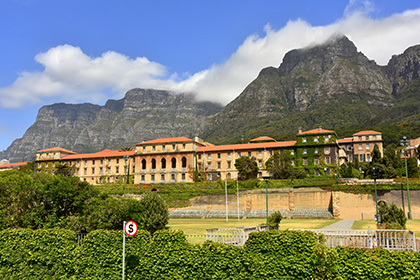
| Higher Education and Training Minister Buti Manamela has congratulated the University of Cape Town (UCT) on its rise to 147th place in the Times Higher Education (THE) World University Rankings 2027. |
|
|
| |
The university is the highest-ranked university in sub-Saharan Africa, climbing to joint 147th position from its joint 164th position last year. The university is ranked 147th with four other universities, including Case Western Reserve University in the United States, Sapienza University of Rome in Italy, Scuola Normale Superiore di Pisa in Italy, and the University of Osaka in Japan. The university now officially retains its position as Africa’s highest-ranked university.
“Its return to the global top 150 is a significant achievement for UCT and South African higher education,” Minister Manamela said.
The Minister also acknowledged the contribution of the academics, researchers, staff and students to its international standing.
The Minister also commended UCT for hosting the first Times Higher Education (THE) World Academic Summit (WAS) on African soil, in partnership with the University of Bristol.
Higher education summit
Minister Manamela also commended UCT for hosting the first Times Higher Education (THE) World Academic Summit (WAS) on African soil, held in partnership with the University of Bristol.
The three-day summit was held from 29 September to 1 October 2026, under the theme: Knowledge, Justice and Futures: Universities in the Age of Intelligence.
The summit brings together global leaders in higher education, research, policy, business and civil society to explore how universities can harness intelligence – human, artificial and collective – to shape fairer, more sustainable and future-ready societies.
“I congratulate Professor Mosa Moshabela, the university’s leadership, staff and students.
“This achievement reflects the sustained work of a university community whose contribution reaches well beyond its campus. UCT has also done our country and continent proud by bringing this important global conversation to Africa,” Minister Manamela said.
The Minister participated in discussions at the summit, focusing on the relationship between government and universities, international collaboration, artificial intelligence (AI), and the responsibility of higher education institutions to expand opportunities.
Addressing delegates, Minister Manamela said universities must remain autonomous while being deeply engaged with the communities they serve.
“Government must protect academic freedom and create the conditions for teaching, research and innovation to flourish.
“Together, we must ensure that this work improves people’s lives,” the Minister said.
Minister Manamela also acknowledged the progress made by other South African universities in the latest global rankings and highlighted the role of academic excellence and sustained institutional efforts in maintaining the country’s international standing. The Minister commended the university’s excellent work and the conditions that make good work possible.
“Our responsibility is to ensure that a young person’s background does not determine their access to quality education and that the knowledge produced in our universities helps us confront unemployment, poverty and inequality,” Minister Manamela said.
He called for stronger partnerships between universities and industry to expand practical learning, employment and entrepreneurship opportunities.
The Minister emphasised the need to equip students and lecturers on how to use artificial intelligence (AI) responsibly, supported by investment in digital infrastructure, connectivity and training. Delegates were encouraged to translate the summit’s discussions into equitable partnerships, joint research and opportunities for students and academics across Africa.
“International collaboration must involve a real exchange of knowledge and opportunity. African universities have much to contribute.
“We must help shape the future of higher education,” Minister Manamela said.
– Source: SAnews.gov.za |
|
| |
|
| |
| AU HUMAN RIGHTS MISSION TO SOUTH AFRICA CONCLUDES |
|
| |
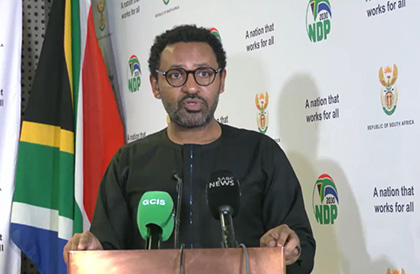
| Preliminary observations of the Promotion Mission undertaken by the African Union’s (AU) African Commission on Human and Peoples' Rights (ACHPR) have found that South Africa has a comprehensive framework for the protection of human rights. |
|
|
 |
|
| |
This was revealed by ACHPR mission delegate and Commissioner Rapporteur on the human rights situation in the Republic of South Africa and Chairperson of the Working Group on Extractive Industries, Environment and Human Rights Violations in Africa, Dr Solomon Ayele Dersso, during a media briefing held on Friday, 2 October 2026.
The delegation arrived in the country on Sunday, 27 September 2026, and ended the Promotion Mission on Friday, 2 October 2026.
“It is the finding that South Africa has a very robust and comprehensive framework for the protection of human and people’s rights in South Africa. [This is] not only the rights of South African citizens but also the rights of non-nationals are legally provided with protection (sic).
“It is with deep appreciation that we recognise, for example, the fact that South Africa has a robust protection regime for refugees and asylum seekers who come to South Africa in search of protection from persecution that they are running from.
“This is something that sets an example for others on the continent. Particularly in terms of the fact that South Africa doesn’t actually confine asylum seekers and refugees to a refugee camp somewhere outside of society. South Africa allows [them] to live in and as part of society. This is something we acknowledge with appreciation,” Dersso said at the briefing held in Pretoria.
Furthermore, the mission acknowledged South Africa’s “very robust” institutions.
“The independence of the judiciary, whose jurisprudence has enhanced the protection that is availed through the Constitution and other legislation that gives effect to the rights and freedoms in the African Charter on Human and Peoples Rights, including the protection of refugees and asylum seekers [and] including as it relates to certain social benefits like social grants, for example.
“We recognise Chapter 9 institutions that give richness to the democratic and Constitutional strength of South Africa. We consider the [Commission for] Gender Commission, the Human Rights Commission, and the Cultural, Religious and Linguistic Rights Commission as important aspects of the protection regime of South Africa.
“We also recognise the role the Public Protector plays in holding government officials accountable in terms of ethical standards, [and] abuse of power which directly affect the access of citizens to their rights, including to the delivery of services,” he explained.
Dersso noted that the mission’s work was not only confined to South Africa’s treatment of refugees and asylum seekers.
“It also covered all the other areas of human rights. Whether that relates to indigenous peoples, the rights of women and girls, the rights of older persons, or human rights in the extractive industries or freedom of expression, access to information, and rights in prison conditions.
“These are the wide range of rights. Of course, we have also covered economic, social and cultural rights which are critical for the majority of South Africans on account of the history of the country,” the Commissioner said.
Challenges
He added, however, that the mission observed “some issues” in South Africa, adding that the Commission appreciates the socio-economic context in which the challenges exist.
“These include the nearly 40% unemployment rate that affects so prominently the youth in particular. This creates social implications for social cohesion and also for the enjoyment of a life of dignity. He also pointed to the poverty in the country.
“These conditions are a result of, in significant ways, the apartheid history of South Africa. This requires robust intervention from South Africa, including taking positive measures for removing the conditions that keep people from having access to equality and access to opportunities.
“Interventions need to be strengthened. These are not the kinds of things South Africa needs to relent on; it should actually persist in order to achieve equality and a better standard of living, particularly for the historically marginalised population,” Dersso said.
He acknowledged that the country has “come a long way but [that] there is a long way yet to go”.
“Not just the incidents relating to foreign nationals but incidents, including gender-based violence and femicide. The incidents of crime and its impact on the lives, opportunities and economic conditions of people.
“These and recent incidents of mass killing highlight the gravity of what South Africans have to deal with in terms of their protection from violence.
“We take note of the efforts that are being deployed. But it is our appeal that there is a need for a more robust response to crime. Not just to individuals but also to the system that makes crime possible,” the Commissioner said.
A full report of the mission’s observation is expected to be released soon.
– Source: SAnews.gov.za |
|
| |
|
| |
| JAMAICA’S SPIRIT COMES ALIVE THROUGH DANCE IN SOUTH AFRICA |
|
| |
 |
|
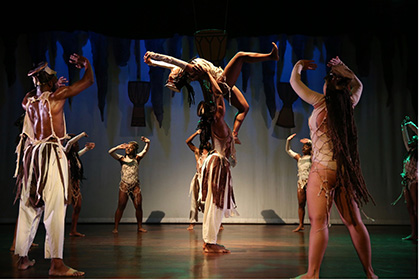
| Jamaica’s 64th anniversary of independence was celebrated in South Africa with an exhilarating performance by L’ACADCO: A United Caribbean Dance Force, bringing the rhythm, movement and cultural spirit of Jamaica to the University of Johannesburg. |
|
|
| |
Led by renowned choreographer Dr L’Antoinette Stines, the Jamaican dance company presented its production 1LUV in Johannesburg after performing at the JOMBA! Contemporary Dance Experience in Durban.
The performance was a vibrant celebration of Jamaican culture, combining powerful movement, rhythm and storytelling. The dancers commanded the stage with energy and precision, creating an experience that was both visually striking and deeply rooted in Jamaica’s cultural traditions.
The performance reflected the spirit of 1LUV, exploring black creativity, spirituality and identity through contemporary Caribbean dance.
Welcoming guests, High Commissioner of Jamaica to South Africa Joan Thomas Edwards spoke of the significance of bringing Jamaican culture to South Africa and of the enduring connections between Jamaica, Africa and the Caribbean. She noted that while Jamaica and South Africa established formal diplomatic relations in 1994, the relationship between their peoples has much deeper roots. Jamaica’s support for the struggle against apartheid and South Africa’s journey to democracy remain important parts of that shared history.
The High Commissioner also reflected on the powerful African consciousness found within Jamaican culture. The Atlantic Ocean separates Jamaica from Africa geographically but has never erased the cultural and ancestral connections between them. Those connections can be heard in Jamaican music, seen in its traditions and felt in the spirituality that continues to influence Jamaican identity.
She referred to Peter Tosh’s Mama Africa, which expresses the deep Jamaican consciousness of Africa as an ancestral home and an essential part of identity. The reference was particularly fitting during a performance that drew so strongly on African and Caribbean cultural influences. Tosh, alongside Bob Marley and other Jamaican musicians, helped carry Jamaica’s cultural voice to audiences around the world.
Bob Marley’s music, in particular, gave international audiences an enduring introduction to Jamaica’s reggae tradition and its themes of love, unity, freedom and human dignity. His influence remains an important part of Jamaica’s global cultural presence.
L’ACADCO continued that cultural journey through dance.
Rather than relying on words, the dancers communicated through movement, rhythm and physical expression. Their performance brought together traditional influences and contemporary choreography, creating a production that was unmistakably Caribbean while speaking to a modern audience. For those watching, the performance offered an opportunity to experience an important part of Jamaican culture at close range — its rhythm, its storytelling and its distinctive artistic energy.
The High Commissioner described culture as an important means of preserving the experiences of previous generations while giving them new meaning for those who follow. That was evident in the performance. The dancers carried stories of heritage onto the stage while presenting them through a contemporary artistic form.
The evening also reflected the growing people-to-people relationship between Jamaica and South Africa. The High Commissioner referred to the recent official visit to Jamaica by South Africa’s Deputy Minister Alvin Botes, who attended the country’s Independence Day celebrations and experienced Jamaica’s culture firsthand. Such exchanges add a human dimension to the formal relationship between the two countries.
But at the University of Johannesburg, the strongest connection was made through the performance itself, when the music began, the dancers moved and the rhythms filled the auditorium. L’ACADCO brought the colour, energy and spirit of Jamaica to Johannesburg in a performance that left a lasting impression.
As Jamaica celebrates 64 years of independence, the evening was a fitting celebration of a culture that has travelled far beyond its shores while retaining a strong sense of where it comes from.
The final standing ovation was an appreciation for an exceptional performance and a beautiful embrace of Jamaica.
– Source: By Anisha Pemjee, www.thediplomaticsociety.co.za
|
|
| |
|
| |
| SOUTH AFRICA WELCOMES MORE THAN ONE MILLION INTERNATIONAL TOURISTS IN AUGUST |
|
| |
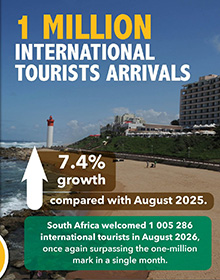
| South Africa welcomed 1 005 286 international tourists in August 2026, once again surpassing the one-million mark in a single month. This represents growth of 7.4% compared with August 2025. |
|
| |
The total international tourist arrivals between January and August 2026 now stand at 7 581 455, representing an increase of 11.7% compared with the same period last year.
Minister of Tourism Patricia de Lille said the August 2026 figures demonstrate strong demand for South Africa and reinforce the importance of translating growing arrivals into greater economic value.
“Welcoming more than one million international tourists in August demonstrates the demand that exists for South Africa. Our focus must now be on converting that demand into investment, jobs and economic opportunities. We must give visitors more places to go, more experiences to enjoy and more reasons to stay longer, while ensuring that the benefits of tourism reach more communities across our country,” says Minister de Lille.
The United States remained South Africa’s largest overseas source market with 37 134 tourists in August 2026, followed by the United Kingdom with 25 749 and Germany with 14 731.
The latest figures build on South Africa’s resilient performance during the first half of the year. According to United Nations (UN) Tourism, South Africa emerged as the strongest-performing African destination in the first half of 2026, recording 12% growth in international tourist arrivals compared with the same period in 2025. UN Tourism also places South Africa among the top 20 best-performing destinations globally among destinations reporting data for the first half of 2026. |
|
|
 |
|
| |
The growth in demand strengthens the case for expanding and diversifying South Africa’s tourism offering. Through this week’s South African Tourism Infrastructure Investment Summit (SATIS), government is bringing together investors and tourism stakeholders to help translate tourism demand into new and expanded tourism products, experiences and infrastructure.
– Source: www.gov.za |
|
| |
|
| |
| MATTHEW BOWEN SOARS TO SILVER IN AIRCRAFT MAINTENANCE AT WORLDSKILLS |
|
| |
 |
|
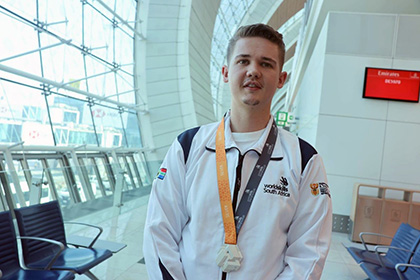
| South Africa’s Matthew Bowen was put through his paces among the best young technicians on the planet. The pressure was sky-high, but he came back with a silver medal and a Best of Nation award. |
|
|
| |
Bowen won his medal in Aircraft Maintenance at the 48th WorldSkills International Competition in Shanghai, China, which ran from 22 to 27 September 2026.
The event brought together young people, industry members, academia and government leaders to shine a light on the world’s best in Technical and Vocational Education and Training (TVET).
Team South Africa was well represented, with 29 young people competing across 27 skills categories, including mechatronics, plumbing and heating, refrigeration, construction and water technology.
Competitors in aircraft maintenance were tested under time pressure on fault-finding, repairs, documentation and compliance with international aviation standards – all areas in which Bowen soared.
“Nothing would have been possible without the hard training of SA and Nicholson Helicopters. A tough journey, but all the while worth it. I encourage everybody to participate in the future; it’s truly a life-changing event!” Nicholson said, in conversation with WorldSkills.
Bowen’s win will go a long way in shifting perceptions about TVET colleges and inspiring more young people to pursue careers as artisans, which in turn supports South Africa’s infrastructure and economic development.
“We are encouraged by Team South Africa’s historic achievement,” said Tebogo Letsie, Chairperson of SA’s Portfolio Committee on Higher Education and Training. “This achievement on the global stage shows that we have some of the world’s best artisans, and we should be proud of these young people. They have demonstrated that hard work and discipline lead to excellence.”
“The TVET sector should take pride in this achievement and claim its rightful place as a producer of the skilled people who keep our industries running,” Letsie adds.
– Source: www.goodthingsguy.com |
|
| |
|
| |
| TWO MICHELIN KEYS PUT SOUTH AFRICA’S SOUTPANSBERG ON THE GLOBAL LUXURY MAP |
|
| |
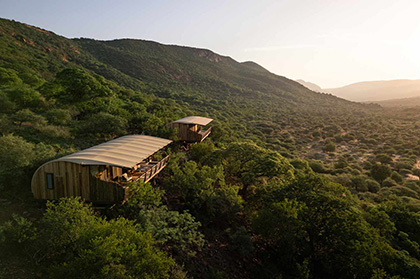
| Two Michelin Keys have put the Soutpansberg mountains in Limpopo firmly on the international luxury travel map, with the eco-lodge Few & Far Luvhondo receiving the distinction from the Michelin Guide. |
|
|
 |
|
| |
The property is now among fewer than 700 hotels worldwide to hold two Keys, recognising what Michelin describes as an “exceptional stay” defined by character, personality and careful hospitality. The Michelin Key is the hotel equivalent of the Michelin star, recognising outstanding properties around the world.
Few & Far Luvhondo’s two-Key distinction highlights its combination of luxury, setting and personalised hospitality, with the cliffside lodge overlooking the Soutpansberg’s wild mountain landscape.
For founder and owner Sarah Dusek, the recognition is particularly significant because of the location.
“When we started Luvhondo, we were betting on a place that most of the world had never heard of,” says Dusek. “We believed that if we could create something truly extraordinary here, we could do more than build a lodge; we could help put the Soutpansberg mountains on the map.”
Luvhondo’s suites are designed around privacy and views of the surrounding wilderness, while the guest experience is built around connecting visitors with the landscape. Activities include curated sleepouts beneath the Milky Way, guided game drives, birding safaris and mountain biking.
The lodge’s culinary offering also draws on its surroundings, combining farm-to-table fine dining with signature feasts featuring ingredients from the bush, including indigenous herbs, fresh flowers and baobab leaves.
South Africa’s Minister of Tourism Patricia de Lille has called for technology and innovation to help convert South Africa’s tourism appeal into more travel, investment, jobs and opportunities for communities (Image source: @ Facebook).
Beyond the luxury offering, conservation sits at the centre of the lodge’s model. Luvhondo describes itself as a carbon-negative property and is leading a 50-year rewilding initiative aimed at restoring tens of thousands of hectares of wilderness.
Every stay contributes towards removing invasive plants and regenerating grasslands, with the long-term goal of restoring wildlife habitat and supporting a conservation-based economy that benefits surrounding communities. The approach has also led to the creation of the Few & Far Foundation, which aims to extend the property’s conservation work and its focus on protecting the natural environment.
For Dusek, the Michelin recognition is less a conclusion than another step in the lodge’s development.
“Two Michelin Keys feels like an incredible milestone, but to me, it feels much more like a beginning,” she says.
“The Soutpansberg mountains deserve to be known, and we’re going to do everything we can to make sure they are.”
With its combination of high-end hospitality, immersive wilderness experiences and long-term conservation, Few & Far Luvhondo is positioning the Soutpansberg not simply as a place to stay, but as a destination in its own right.
– Source: www.bizcommunity.com |
|
| |
|
| |
| SOUTH AFRICAN OLIVE OIL HISTORY HAS JUST BEEN MADE |
|
| |
 |
|
| De Rustica has just made South African olive oil history. The estate has just become the first South African producer ever to take the top prize at the International Olive Council (IOC) Mario Solinas Quality Awards in the Southern Hemisphere. The awards are run by the IOC itself – this is about as serious as olive oil recognition gets. |
|
|
| |
The winning oil is De Rustica’s Coratina. It came second in the 2025 competition, and this year it climbed all the way to first.
South Africa is one of the smallest olive oil producers in the southern hemisphere, and it went up against Argentina, Chile, Australia, Brazil and Uruguay, all with much larger industries.
“I think sometimes, coming from a smaller industry, we can be a little too modest about where we believe we belong,” says Eleanor Stoker, CEO of De Rustica. “Results like this challenge that thinking. South African producers have the climate, the skill and, importantly, the ambition to make truly exceptional olive oil. For me, this is less about celebrating one result and more about what it says is possible – for De Rustica and for our industry.”
International wins like this are shaping how the world sees South African extra virgin olive oil.
“The international awards being won by South African olive oil producers are making a significant contribution to the reputation and recognition of South African Extra Virgin Olive Oil (EVOO) on the global stage,” says Wendy Petersen, CEO of the South African Olive Industry Association.
“Every international award is not only an achievement for an individual producer – it is recognition of the quality, commitment and growing excellence of the entire South African olive industry,” she adds.
Just this month, the South African olive industry formally asked to become a member of the International Olive Council. Winning at this level makes a good case.
De Rustica, based in De Rust in the Klein Karoo, has been collecting wins for years.
In 2023, their Coratina was ranked the world’s highest-rated EVOO by EVOOLEUM. In 2025 it scored 97 points and placed second. This year it topped the EVOOLEUM Southern Hemisphere chart. Their Favolosa also took the top award for new clonal cultivars at the 2026 NOVA Awards at Mercacei.
Here in South Africa, they picked up five gold awards at the 2026 SA Olive Awards, for Coratina, Medium, Favolosa, Chemlali and Koroneiki.
“Different cultivars, different competitions, different judging panels and different harvests seem to serve rather than hinder De Rustica’s winning abilities – because it’s all about the place, the environment, the people and our shared belief in creating an outstanding quality product. Awards are simply one of the ways that our efforts are measured beyond the farm.”
– Source: www.goodthingsguy.com |
|
| |
|
| |
| FROM BONN TO SOUTH AFRICA: TURNING GLOBAL GOVERNANCE LESSONS INTO LOCAL IMPACT |
|
| |
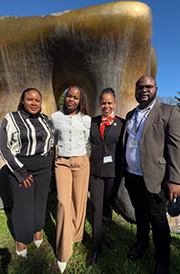
| Four South African professionals are connecting the country's public-sector experience with global governance at the MGG Academy in Bonn, Germany, writes Dr Izimangaliso Malatjie. |
| |
In an increasingly interconnected world, public servants are expected to understand not only the challenges facing their own institutions and countries, but also the global forces shaping governance, development and public policy.
This was my experience as a visiting researcher from the National School of Government, alongside my colleague Ntobeko Magubane, Angel Mathebula from the Department of Higher Education and Training, and Tlhompho Shikwambane from the Institute of Global Dialogue, who also participated in the Managing Global Governance (MGG) Academy in Bonn, Germany.
The MGG Academy is an international training and dialogue programme designed for early-to-mid-career professionals shaping the future of global cooperation and sustainability. It brings together experts and practitioners from governmental institutions, think tanks and research organisations, civil society, and the private sector across Brazil, China, the European Union, India, Indonesia, Mexico, and South Africa. The academy combines academic learning, leadership development, and action-orientated collaboration in an international and diverse learning environment. |
|
|
 |
|
| |
For the South African participants, the MGG Academy is more than an international learning opportunity. It is a space for reflection, dialogue and professional exchange. Engagements with participants from diverse countries demonstrated that many public-sector challenges - such as inequality, institutional effectiveness, sustainable development, accountability and leadership - transcend national boundaries.
The experience also highlighted the value of learning from different contexts while critically considering how international lessons can be adapted to South Africa's own developmental realities.
The participants contributed their own experiences of South Africa's public sector and its ongoing efforts to strengthen democratic governance, public institutions and service delivery. South Africa's experience of democratic transformation offers important perspectives to international discussions on governance and institutional development.
At the same time, exposure to international practices encourages the participants to reflect on opportunities for innovation and improvement within their own professional environments. The Academy reinforced a central principle of public-sector development: learning is most valuable when it is shared and translated into action.
A key lesson from the MGG experience was the importance of leadership in navigating complexity. Modern public servants must be able to collaborate across organisational and national boundaries, engage diverse stakeholders, adapt to change and approach problems from multiple perspectives. The Academy's emphasis on dialogue, peer learning and reflection provided the participants with an opportunity to strengthen these capabilities while developing a broader understanding of global governance.
The real impact of the MGG Academy will be measured by what participants do with the knowledge and relationships gained. As knowledge multipliers, myself, Mr Magubane, Ms Mathebula and Ms Shikwambane have an opportunity to share insights with colleagues and contribute to leadership development, research, institutional learning and innovation within South Africa's public service. Their participation also creates opportunities for continued international collaboration and professional networking.
The MGG Academy has demonstrated the power of connecting public servants across borders. For the four South African participants, the experience provided new perspectives, meaningful professional connections and opportunities to reflect on how global knowledge can contribute to local solutions. Our journey represents an important message for the public service: global exposure should ultimately translate into local impact.
As South Africa continues its efforts to build a capable, ethical and developmental public service, investing in public servants who can learn, collaborate and think globally remains an important part of strengthening public-sector leadership. From South Africa to the global stage—and back again—the MGG experience is ultimately about turning knowledge into action.
– Source: SAnews.gov.za |
|
| |
|
| |
| PHILIPSTOWN’S WIRECAR GRAND PRIX GETS INTERNATIONAL EMMY NOD |
|
| |
 |
|
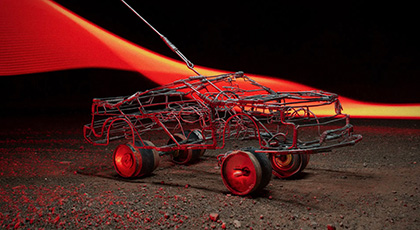
| It started with children, scrap materials and handmade wire cars racing through a small Northern Cape town. Now the “Philipstown WireCar Grand Prix” is heading to one of the biggest stages in international television. |
| |
|
|
|
| |
The documentary has been nominated for a 2026 International Emmy Award in the Sports Documentary category, putting the quirky and proudly South African story among just four productions recognised in the category globally. The 54th International Emmy Awards will take place in New York on 23 November 2026.
Every year, young racers in the small Karoo town build their own wire cars from scrap materials before taking part in a roughly three-kilometre race through the community. The documentary captures the creativity, determination and excitement behind the event, while also shining a light on the town and its youth upliftment programme.
Created by Accenture Song South Africa, in partnership with the Philipstown WireCar Foundation and produced by Giant Films, the film was directed by South African filmmaker Paul Ward. It also brought technology into the story, using data from the race to digitally map Philipstown and recreate the event as a virtual Grand Prix.
“Technology and creativity gave us a new way to tell a very human story,” says Tseliso Rangaka, Chief Creative Officer of Accenture Song South Africa. “During the race, we tracked the children’s handmade wire cars and digitally mapped Philipstown, using that data to recreate the race as a virtual Grand Prix.”
In less than a year, the Philipstown WireCar Grand Prix has gone from a local race in the Karoo to major international creative and entertainment platforms. The documentary, which is available to watch on Prime Video, is up against productions from Brazil, Spain and the UK in the Sports Documentary category.
And there is another South African connection at this year’s International Emmys, with actor Ian Roberts nominated for A Kind of Madness.
For a town like Philipstown, the international attention is another reminder that a big story does not always need a big setting.
– Source: www.goodthingsguy.com |
|
| |
|
| |
| SOUTH AFRICAN ARTISTS NAAK AND VUMAALA TAKE SOUND TO AMSTERDAM |
|
| |
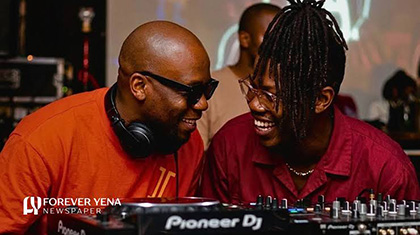
| South African electronic music is set for an international showcase this October, with NAAK and Vumaala heading to Amsterdam Dance Event (ADE) 2026 for performances, industry engagements and networking opportunities. |
|
|
 |
|
| |
The trip comes as ADE prepares to mark its 30th anniversary from 21 to 25 October 2026, bringing artists and music professionals together across Amsterdam. The official ADE programme describes the event as a five-day electronic music festival and industry platform spanning more than 300 venues and more than 1 200 events.
The artists’ participation is supported by the SAMPRA Development Fund, which forms part of the South African Music Performance Rights Association’s initiatives supporting recording artists and the wider music industry.
For NAAK, the Amsterdam programme coincides with the next stage of his music campaign and the introduction of Intoxicated, a collaboration with Bun Xapa featuring Rowlene. The track is the first single from his forthcoming After Hours EP and brings together three South African artists working across Afro-house, electronic production and contemporary R&B.
NAAK’s previous collaborations have included Black Coffee, Heavy-K, Bucie and DJ Tira, while his work spans vocal performance, production and DJing. The ADE appearance therefore provides a platform for the new release while placing the project within an international electronic music programme.
Alongside NAAK will be Vumaala, the artist project of Grammy-nominated South African producer and multi-instrumentalist Bubele Booi. Booi has production credits connected to artists including Beyoncé, John Legend, Cynthia Erivo and Clean Bandit. Under the Vumaala name, his work moves through Afro-house, three-step and gqom, placing African electronic influences at the centre of the project.
The Amsterdam programme gives audiences an opportunity to encounter Vumaala as an artist in his own right, beyond the production credits associated with his career. NAAK and Vumaala are scheduled to perform back-to-back at House of A at art’otel Amsterdam on Thursday, 22 October 2026, as part of a Paradise Sound System showcase.
The event will bring together the Africa Rising Music Conference, Bridges for Music, Oskido’s Big Day Out and Paradise Worldwide Africa, with performances and industry conversations focused on African electronic music.
The wider programme is also set to feature Kususa, Yamz & Phiwo, and Oskido & guests, placing the South African artists alongside other contributors to the continent’s electronic music ecosystem.
ADE’s 2026 edition is already shaping up as a major anniversary programme, as the event has confirmed that its 30th anniversary edition will run from 21 to 25 October 2026, following a 2025 edition that attracted 600 000 visitors and nearly 3 500 artists across more than 1 200 events.
The Amsterdam visit will also include industry engagements. On Wednesday, 21 October 2026, NAAK and Vumaala are expected to take part in the Association for Electronic Music (AFEM) Members Mixer, connecting their performance programme with broader discussions within the international electronic music sector.
Earlier that day, Pfanani Lishivha, Chief Executive Officer of SAMPRA, is scheduled to contribute to the AFEM Annual General Meeting, where topics including artificial intelligence, rights and rights management are set to be discussed. SAMPRA identifies its Development Fund as the organisation’s corporate social investment arm, with funding information made available through the fund’s dedicated platform.
The 2026 programme follows a previous ADE initiative involving Busiswa, Dwson and Gigi Lamayne, through a collaboration between SAMPRA, Paradise Sound System and Africa Rising Music Conference.
This year’s participation continues that international-facing approach, with the focus extending beyond individual performances to include networking, industry dialogue and opportunities for South African artists to engage with international music professionals.
With ADE’s anniversary edition now less than three weeks away, NAAK and Vumaala’s appearances will place new music, established production experience and South African electronic genres within a programme that brings together artists and industry figures from across the global scene.
– Source: www.capetownetc.com |
|
| |
|
| |
| SOUTH AFRICA’S CANDICE SWANEPOEL WILL ROCK HER WINGS IN VICTORIA’S SECRET FASHION SHOW |
|
| |
 |
|
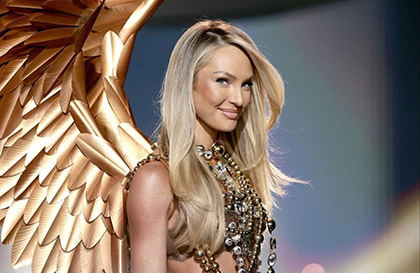
| South African supermodel Candice Swanepoel walks the Victoria’s Secret runway later this month, nearly two decades after she first “got her wings.” |
| |
The South African supermodel has been confirmed for the 2026 Victoria’s Secret Fashion Show, adding another sizzling appearance to the more than a dozen occasions she has walked the renowned lingerie brand’s world-famous runway.
Swanepoel was born and raised in Mooi River, where she grew up on a dairy and beef farm. She was spotted by a modelling scout at a Durban flea market when she was just 15 years old. Within a few years, she was working internationally and walking major runways.
|
|
|
| |
Her first Victoria’s Secret Fashion Show came in 2007. She flew her mom over from South Africa to watch her walk. She speaks about that treasured memory in a recent Ask Anything video that Victoria’s Secret posted online, just weeks ahead of her anticipated return to the runway.
The South African beauty says that even after more than a dozen Victoria’s Secret shows, the nerves have not disappeared. In fact, she says she gets more nervous each year.
“My first Victoria’s Secret show was probably the only show that I wasn’t nervous because I didn’t really understand the level of fandom, and of media. I was just a little girl enjoying her moment on the stage,” she says. “And now I think I put a lot of pressure on myself to be better each year. It’s just a part of my personality. So yeah, I get more and more nervous. You can’t see it, but it’s in there.”
Swanepoel will be back on the runway on Sunday, 18 October 2026, when the 2026 Victoria’s Secret Fashion Show goes live from Los Angeles.
The iconic and elaborate wings have become one of the show’s most famous signatures. “Angels” have walked the runway wearing custom-made wings that can be feathered, bejewelled, sculptural or dramatically oversized.
Swanepoel herself has worn plenty of memorable pairs over the years, including classic white feathered wings, darker punk-inspired wings, flowing black celestial-style wings and, for her runway return last year, a huge sculptural pair of golden feathers. The South African supermodel hasn’t revealed any details about her look for this year’s fashion show.
“It’s one of the most exciting parts to me, to see what they’ve come up with, what they’ve created, the artistry behind it. So hopefully something sickening,” she says.
– Source: www.goodthingsguy.com |
|
| |
|
| |
| SPRINGBOK WOMEN BEAT SPAIN IN WXV AS IRELAND HOME TESTS LOOM |
|
| |
| The South African women’s rugby team wrapped up their WXV Global Series tour with a second win, ahead of a home double against Ireland. |
| |
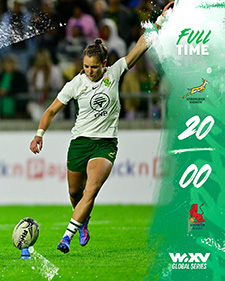
The Springbok Women are building momentum heading into their final WXV Global Series tour fixtures. They sealed a convincing 20-0 win over Spain in Seville on 4 October 2026, running in 3 tries. It took the South Africans 14 minutes to get on the scoreboard, with Catha Jacobs dotting down. Jakkie Cilliers added the conversion and then added a penalty at the half-hour mark.
Early in the second half, Aseza Hele scored the Springbok Women’s second try. Cilliers then added to her points tally by crossing the try line in the 67th minute. This sealed a flawless 20-0 result for the visitors in Seville, according to the South Africa Rugby website.
South Africa hammered in Wales
Their start to the WXV Global Series was less than ideal following a loss in Cardiff on 18 September 2026. Wales outscored South Africa by 8 tries to 3, with Sisilia Tuipulotu doing much of the damage, according to Rugby365. Things went from bad to worse after Danelle Lochner was red-carded for a high tackle.
|
|
|
 |
|
| |
Despite going into halftime 31-5 behind, the Springbok Women managed to claw back some ground but were never in the game. The match ended 50-19 to the hosts, with Wales recording their first win in more than a year.
Springbok Women bounce back in Italy
The team switched things up against Italy in Pordenone on 26 September 2026 with a hard-fought 41-29 win. The Springbok Women relied on more polished set pieces but were still guilty of multiple errors.
South Africa used their wits and physicality better against the Italians, heading into the break 12 points ahead. However, the hosts were not counted out, capitalising on a Yonela Ngxingolo yellow card to score twice in the second half.
Italy then took the lead in the final quarter of the game before Micke Gunter scored a crucial try to seal the result.
Upcoming fixtures
The Springbok Women have two tests against Ireland on 24 and 31 October 2026. Both games kick off at 15:00 at the Athlone Stadium in Cape Town.
Ireland are currently fifth in the World Rugby rankings, and this will be a huge test for South Africa, who are 10th.
The women’s teams have only met once before, during the 2006 World Cup hosted in Canada. South Africa exited after three losses in the pool stages, including a 0-37 thumping by the Irish.
– Source: www.thesouthafrican.com |
|
| |
|
| |
| LLOYD HARRIS COMPLETES COMEBACK TO LIFT JINGSHAN OPEN TITLE |
|
| |
 |
|
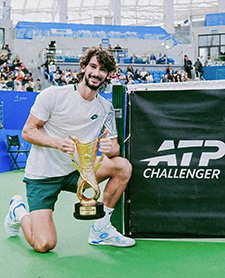
| Lloyd Harris has added another title to his season after producing a brilliant comeback to win the Jingshan Open on Sunday, 4 October 2026, and it comes at the end of a pretty encouraging few weeks for the 29-year-old. |
| |
Harris had to dig deep in the final against Italy’s Mattia Bellucci after dropping the opening set 6-1. Instead of letting the match run away from him, he turned things around to take the second 6-3 before clinching the deciding set 7-6(4).
That means Harris leaves Jingshan with the trophy after winning five matches during the week. And while the title is obviously the headline, there is something bigger happening with Harris at the moment.
The South African has been putting together some proper momentum on the Chinese swing. Before arriving in Jingshan, he reached the quarter-finals of the Chengdu Open, where he came through qualifying and then beat Monaco’s Valentin Vacherot before eventually losing to Hubert Hurkacz. |
|
|
| |
The semi-final was a little more dramatic. Harris lost the first set 7-5 to Australian Alex Bolt, fought back to take the second set on a tie-break, and then advanced to the final after Bolt retired with a right-leg injury.
First Chengdu. Then Jingshan. And with the Shanghai Masters now getting underway, Harris has barely had time to unpack before another big tennis week arrives. He is in the Shanghai qualifying draw, where he is chasing another opportunity to test himself against some of the biggest names on the ATP Tour.
– Source: www.goodthingsguy.com |
|
| |
|
| |
| TEAM SA FIGHT BACK TO U19 ALL AFRICA CHAMPIONSHIP GOLD |
|
| |
| South Africa battled through a dramatic final and a tense semi-final to finish their campaign with championship gold. |
| |
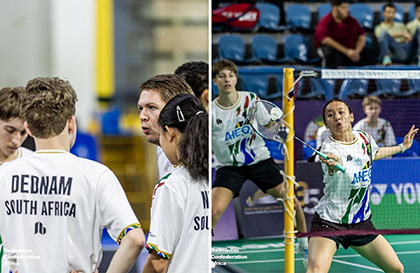
Team South Africa have gone all the way at the U19 All Africa Championship 2026, fighting through a dramatic final and a few serious moments of “okay, we’ve got this”, before eventually getting their hands on the gold.
The South African badminton team capped off their campaign with a brilliant comeback against Algeria in a three-game final, turning things around after a difficult start to finish as U19 All Africa Champions.
It was Algeria who landed the first blow, taking the opening game 55-42 and putting Team SA on the back foot. But South Africa weren’t about to let one game decide the championship. |
|
|
 |
|
| |
They responded in the second, showing plenty of composure under pressure to take it 55-49 and force a deciding third game. And when it came down to the final game, Team SA came out firing.
South Africa took control from the opening point, putting Algeria under constant pressure and dictating the pace. The crucial rallies went their way as the team kept its composure and powered to a convincing 55-41 victory.
Gold secured. Championship won. Earlier in the tournament, Team SA had opened their campaign in dominant fashion, getting the better of Zimbabwe in both games, winning 55-12 and 55-26.
South Africa suffered a shaky start, losing the opening game 55-33. With their place in the final on the line, there was no room for another slip-up.
It’s a gold medal that sums up this South African campaign rather nicely: plenty of pressure and a team that simply refused to stay down.
– Source: www.goodthingsguy.com |
|
| |
|
| |
| PIETER COETZÉ SETS AFRICAN RECORD ON WAY TO BAKU GOLD |
|
| |
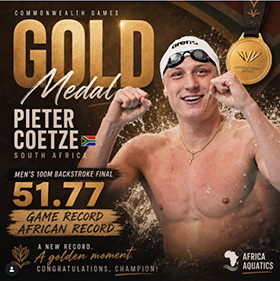
| The South African swimmer clocked 49.11 in the 100 m backstroke to claim gold and rewrite the continental record. Pieter Coetzé has added another big moment to an already impressive week in Baku, Azerbaijan. |
| |
The South African swimmer claimed gold in the men’s 100 m backstroke on the third night of the World Aquatics Swimming World Cup, stopping the clock at 49.11 to set a new African record.
Coetzé had already collected gold in the 200 m backstroke on the opening night before taking silver in the 50 m backstroke on day two. This time, he went one better and rewrote the continental mark along the way.
“I’m very happy with that. I just wanted to get the win, and it’s a good time too, so I’ll take it,” Coetzé said.
The result came in front of another lively Baku crowd, with the South African holding off Russia’s Pavel Samusenko, who finished second in 49.24, while American Shaine Casas took third in 49.89. |
|
|
 |
|
| |
“I got some feedback, I’m going to look at the videos and tweak what I need to tweak, and hopefully I can improve,” he said.
The South African currently sits third in the men’s overall World Cup rankings on 55.6 points, behind Luke Barr on 57.4 and Russian leader Kirill Kornev on 59.3.
Kornev claimed his third gold medal of the Baku stop in the men’s 50 m butterfly, winning in 21.64, while Dutch star Marrit Steenbergen also finished the opening leg at the top of the women’s rankings.
China’s Yu Yiting also had a record-breaking night, setting an Asian record of 2:02.80 in the women’s 200 m individual medley.
But for South Africa, the spotlight was firmly on Coetzé. The 22-year-old’s three medals in Baku have given him a strong start to the Silk Road Tour. There is still plenty of racing ahead, with Coetzé already looking towards what he can improve rather than simply settling for the results he has banked.
The African record is his. And with the South African still looking for ways to get faster, there is still plenty more to come.
– Source: www.goodthingsguy.com |
|
| |
|
| |
| RICARDO MALAJIKA RETURNS HOME AS NEW WBC WORLD CHAMPION |
|
| |
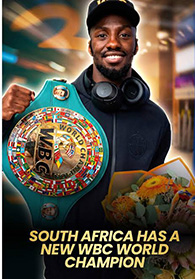
| Ricardo “Magic Man” Malajika returned to South Africa on Monday to a hero’s welcome at OR Tambo International Airport after achieving one of the biggest milestones of his boxing career. |
|
| |
 |
|
The 28-year-old was crowned the new WBC junior bantamweight world champion after edging highly rated Japanese boxer Tomoya Tsuboi by split decision in Tokyo on Sunday, 27 September 2026.
It was a closely contested fight, but Malajika did enough to convince two of the three judges. The scorecards read 116-112 and 115-113 in his favour, with the third judge siding with Tsuboi. The victory adds the prestigious WBC belt to Malajika’s IBO world title in the same division, further cementing his place among South Africa’s boxing champions.
He is now just the sixth South African boxer to win a WBC world title, joining an impressive list that includes Thulani “Sugarboy” Malinga, the late Dingaan “The Rose of Soweto” Thobela, Kevin Lerena, Siyakholwa “One Way” Kuse and current female junior lightweight champion Bernice Ferreira.
He has described winning a WBC world title as a dream for every boxer, while reflecting on how much the sport has given him and his family.
– Source: www.goodthingsguy.com |
|
|
| |
|
| |
|
|
|
|
|
|
|
|