| |
| |
|
| |
| PRESIDENT RAMAPHOSA CALLS FOR STRONGER SADC INSTITUTIONS |
|
| |
| President Cyril Ramaphosa has called for stronger, more effective Southern African Development Community (SADC) institutions to accelerate regional integration, consolidate peace and stability, while improving the lives of people across the region. |
|
|
 |
|
| |
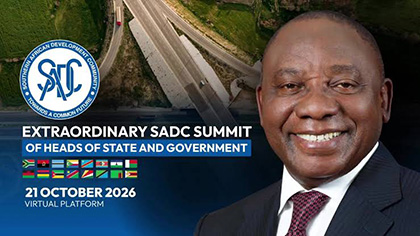
Addressing the Virtual Extraordinary Summit of SADC Heads of State and Government on Wednesday, 21 October 2026, President Ramaphosa said the effectiveness of the regional organisation depended not only on the decisions it made, but also on its ability to implement them.
“We need an organisation that moves with greater urgency from agreements to implementation, from strategies to programmes, and from commitments to measurable results,” he said.
The Extraordinary Summit, held just over two months after the 46th Ordinary SADC Summit in Durban in August, was convened primarily to resolve outstanding leadership and institutional matters. These include the appointment of the Deputy Executive Secretary responsible for Regional Integration and the election of the incoming Chairperson of the Organ on Politics, Defence and Security Cooperation.
President Ramaphosa said the leadership decisions were critical to strengthening SADC’s institutional capacity and advancing the Regional Indicative Strategic Development Plan 2020–2030 and the region’s longer-term Vision 2050.
He emphasised that regional integration must deliver tangible benefits to citizens through employment opportunities, improved transport and energy networks, greater food security, increased trade and expanded economic opportunities.
“Regional integration should be more than a mere aspiration expressed in declarations. It must become a reality for the people living in Southern Africa,” he said.
Peace and stability
The President said the election of the incoming Chairperson of the Organ on Politics, Defence and Security Cooperation was equally important, as peace, security and political stability underpin the region’s development and prosperity.
He highlighted the ongoing instability and humanitarian suffering in the eastern Democratic Republic of Congo (DRC), calling for continued regional cooperation to achieve a peaceful solution.
“We will continue to support the African Union and other regional and international partners to put an end to conflict and create the conditions for lasting peace.
President Ramaphosa also called for continued support for inclusive dialogue, political stability and institutional reform in Madagascar, as well as a return to constitutional normality. In Mozambique, he acknowledged ongoing efforts to promote peace, security and development, including measures to combat terrorism in Cabo Delgado.
“These examples show that peace does not come easily. Peace must be nurtured, institutions must be strengthened, and the legitimate aspirations of our people must be addressed,” he said.
He stressed the importance of upholding constitutionalism, democratic governance, the rule of law and the peaceful resolution of disputes.
Climate resilience, disaster preparedness
The President also highlighted the increasing frequency and severity of climate-related disasters as a major challenge facing Southern Africa. He said droughts, floods, tropical cyclones and other extreme weather events continue to threaten communities, food supplies, shared infrastructure and economic activity across the region.
The severe El Niño-induced drought of 2023 and 2024 had exposed the region’s vulnerability to changing climatic conditions, with millions of people affected by food and water insecurity, declining agricultural production, livestock losses and disrupted livelihoods.
As the region approaches another agricultural season, developing El Niño conditions present further threats to food security, water supplies and economic activity. He warned that recurrent flooding and cyclones could reverse development gains and place additional pressure on public finances. He called for stronger regional disaster preparedness and response capabilities, improved early warning systems and increased investment in climate-resilient infrastructure.
The President also congratulated Mozambique’s President Daniel Francisco Chapo on organising the International Conference on Disaster Risk Reduction and Resilience in Africa, held in Maputo from 13 to 15 October 2026.
President Chapo was selected by the African Union as its Champion for Disaster Risk Management.
President Ramaphosa said the conference provided an opportunity to strengthen cooperation, mobilise investment and promote a more proactive approach to disaster risk management.
He called on SADC member states to build on the conference’s outcomes through greater cooperation in water management, agricultural resilience, disaster financing, infrastructure development and the protection of vulnerable communities.
“It requires us to recognise that our security is not only political and military. It is economic, environmental and human,” he said.
Delivering tangible results
President Ramaphosa said the challenges facing the region reinforce the need for capable and effective regional institutions that could provide leadership and practical solutions to shared problems.
He called on member states to preserve the solidarity, consensus and mutual respect that had characterised SADC throughout its history, while ensuring continuity and stability within its institutions.
“The true measure of our success will not be the number of resolutions we adopt, but the progress we make in improving the lives of the people of Southern Africa,” he said.
The President expressed confidence that member states would reach decisions that strengthened the organisation and served the interests of the people of the region.
– Source: SAnews.gov.za |
|
| |
|
| |
| PRESIDENT RAMAPHOSA CALLS FOR MORE MINERAL BENEFICIATION IN NORTHERN CAPE |
|
| |
 |
|
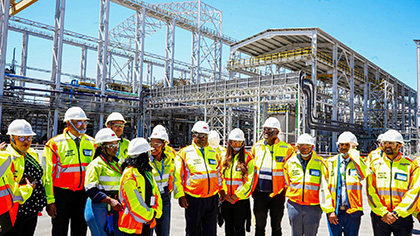
| President Cyril Ramaphosa has called for South Africa to move beyond exporting raw and semi-processed minerals towards greater local processing and manufacturing, saying the country must retain more of the economic value generated by its mineral wealth. |
|
|
| |
Speaking at the official inauguration of the Vedanta Gamsberg Phase II Concentrator Plant in Aggeneys in the Northern Cape on Friday, 16 October 2026, President Ramaphosa said the expansion is an opportunity to strengthen domestic industrial capacity and establish the province as a centre of mineral beneficiation and manufacturing.
“Why should the mineral wealth beneath our soil create more industrial opportunities elsewhere than it creates here at home?
“Our ambition must be to ensure that a growing share of the value generated from our minerals remains within our economy,” the President said.
He noted that South Africa and other African countries had for too long extracted minerals for processing and manufacturing elsewhere, only to import finished products made from those same resources.
“In the process, other countries have captured much of the value, the technology, the industrial capability and the employment opportunities associated with our natural resources,” he said.
President Ramaphosa said the country must expand its refining, smelting and manufacturing capacity, while supporting local suppliers, engineers, artisans, entrepreneurs and technology companies.
“We must become a country that adds greater value to its mineral resources through processing, refining, manufacturing and technological innovation,” the President said.
The Gamsberg Phase II expansion will double the mine’s annual ore capacity from approximately four million to eight million tonnes and increase its annual zinc-in-concentrate production capacity to approximately 500 000 tonnes.
The expansion positions Gamsberg among the major zinc-producing operations globally and provides a foundation for further industrial development.
President Ramaphosa highlighted that zinc is essential for galvanising steel and had applications in construction, transport infrastructure, automotive manufacturing and emerging energy technologies.
He added that in that regard, South Africa should position itself to benefit from opportunities arising from global investment in infrastructure, industrial development and the energy transition.
Northern Cape industrial ambitions
The President said the Northern Cape boasts the potential to become one of the country’s next major centres of industrial growth given its mineral resources, renewable energy potential, land availability and strategic position for connecting producers to export markets.
He identified the Namakwa Special Economic Zone as central to this vision, with Vedanta serving as an anchor investor capable of attracting further investment in mineral beneficiation, manufacturing and related economic activity.
The development of the zone, he said, needs to be integrated with the proposed Boegoebaai Port and industrial developments, Upington’s industrial and energy initiatives and other components of the Northern Cape Industrial Corridor.
“Our vision is of a province in which mineral extraction, renewable energy, industrial production and modern logistics reinforce one another,” he said.
President Ramaphosa said coordinated planning between all three spheres of government, state-owned enterprises and private investors is essential to ensure these developments advance as part of an integrated programme.
He welcomed Vedanta’s ambition to establish zinc smelting capacity in the Northern Cape, which would enable the country to move from producing zinc concentrate towards refined zinc metal.
Such an investment could create additional opportunities for industrial production, local procurement and employment.
However, he acknowledged that further beneficiation would require commercially viable electricity, reliable infrastructure and an enabling regulatory environment.
“Our objective must be to create the conditions in which further beneficiation investments become viable and competitive,” President Ramaphosa said.
The President said the Gamsberg expansion should therefore mark the beginning of a new phase of industrial development rather than the end of the investment journey.
“We want the zinc that is mined here to become the foundation of industries that manufacture here, employ here and create prosperity here,” he said.
Jobs, skills and local businesses
President Ramaphosa emphasised that the benefits of mining should extend beyond mineral production and export earnings to include quality employment, skills development, local enterprise growth and improved living conditions.
More than 1500 people were employed during construction of the Gamsberg Phase II expansion, with between 800 and 1000 jobs expected to be sustained during operations.
The President called for greater opportunities for local communities to participate in higher-skilled occupations and for local businesses to become competitive suppliers of equipment, components and specialised industrial services.
Furthermore, he highlighted the importance of protecting the environment and ensuring that mining development did not compromise the Northern Cape’s unique ecosystems and biodiversity.
He commended Vedanta’s community initiatives, including investments in education, bursaries, skills training, water security and the JF Boeboe Van Wyk Oncology Centre in Springbok.
Building on international partnerships
The President said South Africa’s relationship with India provided an important foundation for expanding investment in manufacturing, energy, infrastructure, technology and mineral beneficiation.
Vedanta is a major Indian multinational mining conglomerate.
He noted that more than 150 Indian companies had established a presence in South Africa, contributing investment, employment and industrial expertise.
President Ramaphosa called on investors to support the country’s broader development objectives through skills transfer, local procurement and industrial expansion.
He said the government remained committed to creating the infrastructure and economic conditions needed to attract productive investment.
“The Northern Cape must become known not only for the wealth beneath its soil, but for the industries, innovation and prosperity that grow above it,” he said.
President Ramaphosa said the country’s mineral wealth should ultimately underpin a stronger domestic industrial base, creating opportunities for businesses and communities while supporting economic growth.
“We must be a country that does more than extract the minerals that the world needs. We must become a country that uses those minerals to manufacture the products that the world needs,” he said.
– Source: SAnews.gov.za |
|
| |
|
| |
| SOUTH AFRICA, UGANDA SEEK TO BOOST TRADE AND INVESTMENT TIES |
|
| |
| South Africa and Uganda are seeking to strengthen trade and investment ties by addressing barriers facing businesses, improving connectivity and expanding cooperation across key economic sectors. |
| |
|
|
|
 |
|
| |
Delivering opening remarks during the Third Session of the South Africa-Uganda Joint Commission for Cooperation (JCC) in Pretoria on Tuesday, 20 October 2026, International Relations and Cooperation Minister Ronald Lamola emphasised the need to translate bilateral commitments into tangible economic benefits.
Minister Lamola said the two countries had significant opportunities to expand cooperation in transport, mining, energy, agriculture, agro-processing, manufacturing, infrastructure, financial services, telecommunications and tourism.
“I welcome Uganda’s emphasis on economic diplomacy and on converting diplomatic engagement into tangible trade and investment opportunities. This is an area in which our two countries can work particularly closely. The economic discussions are therefore particularly important,” he said.
He noted that South African companies, including MTN, Standard Bank Group, Absa and Sanlam, had established operations in Uganda, contributing to the country's economic development.
However, the investment relationship had yet to reach its full potential, requiring both governments to address challenges affecting investors and create a more supportive business environment.
“We should therefore use this JCC to identify practical measures that can make it easier for businesses from both countries to invest and operate in each other’s markets,” Minister Lamola said. He called for regulatory and administrative barriers to be addressed, trade facilitation to be improved and cooperation on standards to be strengthened.
The proposed Joint Working Group on Trade and Investment could provide a mechanism for identifying opportunities for increased two-way investment and monitoring challenges experienced by businesses operating in both countries.
Minister Lamola also called for greater efforts to ensure that Ugandan businesses and investors could expand their presence in South Africa.
Improving connectivity and trade
The Minister highlighted the importance of the Bilateral Air Services Agreement in improving connectivity and facilitating the movement of people, goods and business between the two countries.
He welcomed the expansion of South Africa's Electronic Travel Authorisation (eTA) system to Ugandan passport holders, saying it could facilitate legitimate short-term travel for business and other eligible purposes.
He said improved air connectivity, efficient customs procedures and predictable regulatory processes should form part of broader efforts to support business mobility and strengthen economic relations.
The two countries should also advance cooperation in mining, geology, hydrocarbons and energy resources, while completing outstanding technical and institutional processes.
Minister Lamola said Uganda's commitment to regional integration through the East African Community presented opportunities to advance continental economic transformation and implement the African Continental Free Trade Area. A more integrated East Africa, supported by improved infrastructure, trade facilitation and connectivity, could contribute significantly to economic development across the continent.
Strengthening regional and international cooperation
Beyond economic relations, Minister Lamola called for stronger coordination between South Africa and Uganda within the United Nations, the African Union and other multilateral forums.
He said the two countries should work together on African peace and security, development and reform of global governance, including the reform of the United Nations Security Council to address Africa's underrepresentation.
He acknowledged Uganda's role in regional peace and security efforts, including in South Sudan, Somalia, the Horn of Africa and the eastern Democratic Republic of the Congo (DRC).
Minister Lamola said South Africa remained committed to African-led approaches to resolving conflicts and called for sustained efforts to protect civilians, ensure humanitarian access and pursue lasting political solutions in conflict-affected areas.
He also highlighted concerns about conflicts in Sudan, the DRC, Palestine and Ukraine, emphasising the importance of international law, diplomacy and the peaceful settlement of disputes.
The Minister said geopolitical tensions should not distract from Africa's development priorities, including securing fairer access to development finance, climate finance, technology and international markets.
Cooperation on health and security
Minister Lamola also underscored the importance of cooperation on defence, security and law enforcement, including extradition, mutual legal assistance in criminal matters, the transfer of sentenced persons and immigration matters. He urged both delegations to establish clear pathways and timeframes for concluding outstanding agreements and memoranda of understanding requiring further legal and technical work.
The Minister further congratulated Uganda on bringing its Ebola outbreak under control, highlighting the importance of continental solidarity and coordinated responses to public health emergencies.
South Africa had supported the continental response, with President Cyril Ramaphosa, in his capacity as African Union Champion on Pandemic Prevention, Preparedness and Response, announcing an initial US$5 million contribution to the Africa Centres for Disease Control and Prevention.
Minister Lamola said Uganda's response demonstrated the value of regional preparedness, information-sharing and African-led public health interventions.
The Third Session of the JCC provides an opportunity for the two countries to review progress in bilateral relations, address outstanding matters and identify further areas of cooperation.
Minister Lamola said the success of the meeting would ultimately depend on the implementation of its commitments.
“The success of this JCC should ultimately be judged by what follows today: stronger trade and investment, improved connectivity, closer institutional cooperation, greater movement of people, stronger regional cooperation and closer coordination on matters of common interest,” he said.
– Source: SAnews.gov.za |
|
| |
|
| |
| MINISTER LAMOLA URGES RENEWED COMMITMENT TO SAMORA MACHEL’S LIBERATION IDEALS |
|
| |
 |
|
| International Relations and Cooperation Minister Ronald Lamola has called on South Africa and Mozambique to honour the legacy of former Mozambican President Samora Machel by advancing economic freedom, regional integration, peace and development, as the two countries commemorated the 40th anniversary of the Mbuzini tragedy. |
|
|
| |
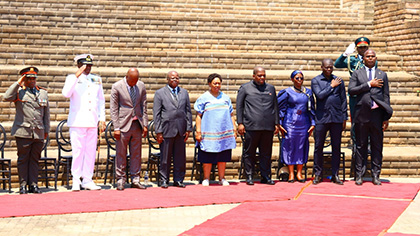
Addressing the commemoration at the Mbuzini Crash Site in Mpumalanga on Monday, 19 October 2026, Minister Lamola said the tragedy remained one of the most painful chapters in Southern Africa’s liberation history and a symbol of the shared sacrifices that brought the region closer to freedom.
“Today, 40 years after the tragedy, we gather here to renew that pledge,” Minister Lamola said.
Machel, a prominent liberation struggle leader and founding president of independent Mozambique, died on 19 October 1986 when the aircraft carrying him and members of his delegation crashed in the Lebombo Mountains near Mbuzini, close to South Africa’s border with Mozambique and Eswatini.
Thirty-four other people, including Cuban doctors and the ambassadors of Zambia and Zaire, also perished in the crash. Machel had been returning from a regional summit focused on peace, stability and development in Southern Africa.
The tragedy occurred during apartheid, when Mozambique and other Frontline States supported South Africa’s liberation struggle despite facing significant political, economic and security consequences for their opposition to the apartheid regime.
The Samora Machel Memorial was unveiled in 1999 by former President Nelson Mandela to honour those who died and commemorate the solidarity between the peoples of Southern Africa.
Minister Lamola said the memorial served as a reminder of the cost of freedom and the need to guard against attempts to romanticise apartheid and colonialism.
“We honour the legacy of President Machel and memorialise all those who perished alongside him. We also celebrate the ideals they championed: freedom, human dignity, solidarity and the right of all people to determine their own future,” he said.
The commemoration was attended by Mozambican President Daniel Chapo, First Lady Mrs Chapo, Mama Graça Machel, survivors of the crash and families of those who died alongside government leaders and representatives from both countries.
Advancing the unfinished work of liberation
Minister Lamola said while Africa had overcome formal colonialism and minority rule, the struggle for freedom remained incomplete as many people continued to experience poverty, inequality, unemployment and exclusion.
He called for greater efforts to build local economies, create jobs, improve service delivery and expand opportunities for young people.
“This is the unfinished task of our generation. It is also the most meaningful way we can honour the legacy of Samora Machel and all who dedicated their lives to the cause of freedom,” he said.
The Minister outlined priorities for South Africa and Mozambique, including accelerating regional integration through the Southern African Development Community (SADC) and the African Continental Free Trade Area, promoting local manufacturing and beneficiation, strengthening food security, investing in education and skills development, and advancing peace and security.
He highlighted the close economic ties between the two countries, noting that more than 2 500 commercial trucks travel along the Maputo Corridor daily, transporting goods between the countries and to other markets.
Mozambique is South Africa’s largest trading partner on the African continent, while approximately 300 South African companies operate in Mozambique, supporting more than 40 000 jobs, Minister Lamola said.
He also called for stronger cooperation in responding to climate-related disasters, addressing cross-border crime and resolving conflicts through dialogue and mediation.
Violence against migrants condemned
Minister Lamola also condemned violence, intimidation and displacement directed at migrants, stressing that there could be no justification for attacks against fellow Africans.
“We reiterate that there is no justification for the violence, displacement and intimidation of fellow Africans,” he said.
He acknowledged public concerns about undocumented migration and corruption at ports of entry, while emphasising that the enforcement of immigration laws must be consistent with human rights, dignity and non-discrimination.
The Minister further highlighted the need to intensify efforts to combat gender-based violence and femicide, describing gender equality and women’s participation in political and economic life as central to the region’s development. He said Machel’s belief in women’s emancipation remained relevant, particularly as violence against women continued to affect communities across the SADC region.
Preserving a shared legacy
Minister Lamola said South Africa and Mozambique had a responsibility to ensure that younger generations understood the sacrifices that made their freedom possible.
He recalled the pledge made after Machel’s death that the monument at Mbuzini would symbolise the common suffering of Southern Africa’s people and affirm their shared destiny of liberty, peace and social progress.
“The task of our generation is to give concrete meaning to the vision they championed. An Africa that is united, peaceful and prosperous, where every person can live with dignity and fulfil their potential,” Minister Lamola said.
He said advancing that vision would be the most meaningful tribute to Machel and all those who lost their lives in the tragedy.
– Source: SAnews.gov.za |
|
| |
|
| |
| DEPUTY MINISTER ALVIN BOTES ATTENDS THE BERLIN GLOBAL DIALOGUE 2026 |
|
| |
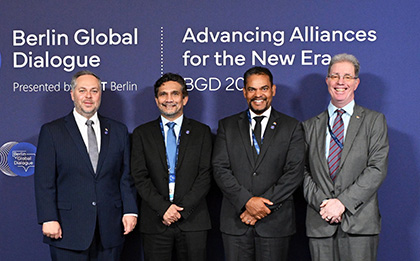
| Deputy Minister of International Relations and Cooperation, Mr Alvin Botes, attended the Berlin Global Dialogue 2026, a high-level international conference bringing together leaders from government, business, finance and academia to address global economic and geopolitical challenges. |
|
|
 |
|
| |
Held at ESMT Berlin from 20 to 22 October 2026, the Dialogue was convened under the theme Advancing Alliances for the New Era and provided a platform for strategic engagement on global economic governance, geopolitical change and international cooperation.
On 20 October 2026, Deputy Minister Botes met with the Vice-President of the German Africa Foundation, Mr Chris Matschie, and its Secretary-General, Ms Sabine Odhiambo. Discussions focused on current developments in Germany and Europe and their implications for Africa and South Africa.
The Deputy Minister also met with Dr Müller of the German Institute for International and Security Affairs (SWP) to discuss European Union–South Africa cooperation in the critical minerals sector. The engagement provided an opportunity to discuss an area of strategic importance in strengthening economic cooperation and partnerships between South Africa and the European Union.
Established in response to growing fragmentation in the international system, the Berlin Global Dialogue aims to strengthen collaboration between the public and private sectors and encourage collective responses to challenges such as geoeconomic competition, technological transformation and sustainable growth.
The 2026 edition brought together senior political leaders, business executives, financial experts and academics from across the world to explore opportunities for building strategic alliances and advancing cooperation in an increasingly complex international environment.
Deputy Minister Botes’s participation and engagements highlighted the importance of sustained international dialogue and strategic partnerships.
– Source: DIRCO Public Diplomacy Platforms
|
|
| |
|
| |
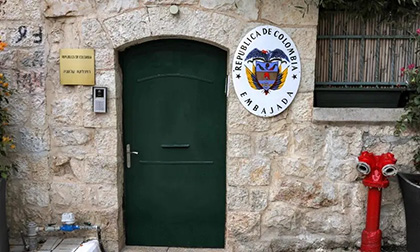
| SOUTH AFRICA JOINS OTHER COUNTRIES IN REJECTING COLOMBIA’S INAUGURATION OF ITS EMBASSY IN JERUSALEM |
|
| |
| The Foreign Ministers of the Arab Republic of Egypt, the State of Palestine, the Republic of Turkey, the Republic of Djibouti, the Republic of Lebanon, the State of Libya, the Republic of Yemen, the State of Qatar, the Hashemite Kingdom of Jordan, the Federal Republic of Somalia, Malaysia, the Republic of Indonesia, the Kingdom of Saudi Arabia, the State of Kuwait, the Democratic People's Republic of Algeria, the Sultanate of Oman, the Syrian Arab Republic, the Republic of Sudan, the Islamic Republic of Pakistan and the Republic of South Africa strongly condemn and express their unequivocal rejection of the inauguration by the Republic of Colombia of its embassy in Jerusalem, a step that contravenes relevant United Nations Security Council (UNSC) resolutions and undermines international efforts to achieve a just and lasting peace based on the two-State solution. |
|
| |
 |
|
The Ministers reaffirm that any measure or decision intended to alter the legal or historical status of occupied Jerusalem, or to recognise it as Israel’s capital, is null and void and has no legal effect. This position is consistent with relevant UNSC and General Assembly resolutions, particularly Security Council Resolutions 476 (1980) and 478 (1980), which reject attempts to change Jerusalem’s character or status and call on States to withdraw diplomatic missions from the city, which is part of the Palestinian territory occupied in 1967.
The Ministers call upon the Colombian Government to reconsider and reverse this decision, uphold its obligations under international law, and refrain from measures that prejudice the legitimate rights of the Palestinian people, including their right to an independent and sovereign Palestinian State with East Jerusalem as its capital.
– Source: www.dirco.gov.za |
|
|
|
| |
| SOUTH AFRICA NOTES WITH SERIOUS CONCERN THE RENEWED ATTACKS IN THE RED SEA REGION |
|
| |
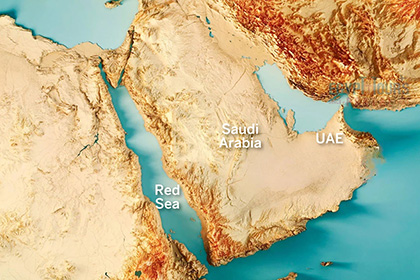
| The Government of the Republic of South Africa notes with serious concern the renewed escalation of attacks in the Red Sea region, particularly in and around the Bab el-Mandeb Strait, including the attacks on the Kingdom of Saudi Arabia, as well as in the context of the protracted conflict in Yemen. |
|
|
 |
|
| |
South Africa expresses concern over actions that threaten the sovereignty and territorial integrity of the Kingdom of Saudi Arabia, including the neighbouring states.
South Africa condemns any attacks against civilians and civilian infrastructure in accordance with established principles of international law and wishes to convey its condolences for the loss of lives and serious injuries caused in these attacks.
South Africa urges all parties to exercise maximum restraint and refrain from actions that could further escalate regional instability.
South Africa concurs with the Special Envoy of the United Nations Secretary-General for Yemen that the suffering of the Yemeni people can only be addressed sustainably through negotiations between the parties and an inclusive political process under UN auspices. South Africa calls for the launch of an inclusive political process to comprehensively end the conflict.
South Africa further reaffirms the importance of safeguarding the navigational rights, the freedom of vessels and the safety of seafarers of all States in the Red Sea and the Straits of Bab el-Mandeb and Hormuz, in accordance with international law, including the United Nations Convention on the Law of the Sea (UNCLOS) of 10 December 1982.
South Africa has noted with deep concern the attacks on places of worship and sites of religious significance, including areas associated with the holy cities of Mecca and Medina, undermining both freedom of religion and cultural heritage. Such sites hold profound significance for millions of Muslims worldwide and must be protected in accordance with international humanitarian law.
Minister Ronald Lamola has reiterated South Africa's commitment to the peaceful resolution of conflicts through inclusive dialogue, diplomacy and respect of international law. The Minister emphasised that sustainable peace in Yemen and stability in the Red Sea region remain essential for regional prosperity, international trade and the advancement of Africa's development agenda. South Africa therefore renews its call for restraint, diplomacy and constructive engagement by all parties in support of a peaceful and lasting resolution to the conflict.
– Source: www.dirco.gov.za |
|
| |
|
| |
| SOUTH AFRICA, MOZAMBIQUE STRENGTHEN COOPERATION AGAINST ORGANISED CRIME |
|
| |
 |
|
| The South African Police Service (SAPS) has reaffirmed South Africa and Mozambique’s commitment to tackling transnational organised crime through stronger cooperation and coordination between their law enforcement agencies. |
|
|
| |
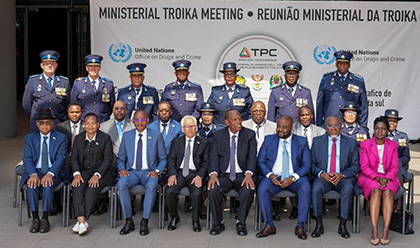
The commitment was reinforced during a bilateral meeting on Friday, 16 October 2026, between SAPS and Mozambique’s Minister of the Interior, Paulo Chachine, aimed at strengthening joint efforts to combat organised crime.
The meeting was attended by Acting National Commissioner of the SAPS, Lieutenant General Puleng Dimpane, Deputy National Commissioner of the Mozambican Police, General Fabiõ, and senior officials from both countries.
“The bilateral meeting followed the Ministerial Troika meeting of the Trilateral Planning Cell (TPC), held on Thursday, which brought together South Africa, Mozambique and Tanzania,” the South African Police Service Ministry said in a statement.
The meeting resolved to expand the TPC’s membership to include Angola and Uganda, broadening the regional cooperation framework in the fight against transnational organised crime.
In their opening remarks, both Ministers reaffirmed the importance of strengthened cooperation and coordination between South Africa and Mozambique in safeguarding the safety and security of their respective citizens.
The meeting also received a report on the operational work undertaken by the various work streams, detailing progress made, challenges encountered and areas requiring further intervention.
“The Ministers endorsed and adopted the report, reaffirming their commitment to addressing identified challenges and advancing the implementation of agreed activities,” the ministry said.
In closing, the Ministers acknowledged and commended the dedication and hard work of the operational teams.
They also emphasised the importance of building and sustaining strong working relationships between the two countries’ law enforcement agencies to improve coordination, strengthen the collective response to organised crime and promote security across the region.
– Source: SAnews.gov.za |
|
| |
|
| |
| DURBAN TARGETS 2 500 JOBS THROUGH SUPERYACHT MARINA PROJECT |
|
| |
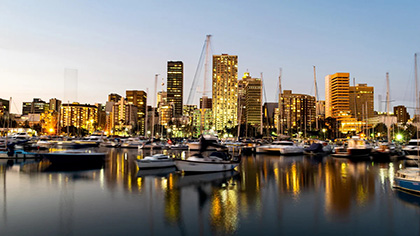
| The eThekwini Municipality is advancing plans to position Durban as a leading African destination for superyachts and a service hub, with the city set to host the first African edition of the Yachting Aftersales and Refit Experience (YARE) On Tour Symposium in November 2026. |
|
|
 |
|
| |
The KwaZulu-Natal Superyacht Marina forms part of an R1.9 billion investment pipeline and is expected to create more than 2 500 direct jobs by 2030.
The project is a strategic component of the Durban Bay Waterfront development and aims to establish the city as the entry point to Africa on an emerging superyacht route linking the Mediterranean with Africa’s eastern seaboard.
A proposed superyacht precinct has been earmarked for a 24-hectare site within the Port of Durban. eThekwini City Manager Musa Mbhele said the project extends beyond tourism to include industrial development, skills transfer, and economic growth.
“The KZN Superyacht Marina is not just about berthing boats. It is about industrial development, skills transfer, and positioning Durban as the gateway to the Indian Ocean superyacht circuit. By hosting YARE and working with global partners such as Navigo, we are turning our maritime heritage into a high-value economic engine for the city and its residents,” Mbhele said.
Investment and job creation
The municipality is working with Italy-based Navigo, which is associated with the YARE programme, to advance the estimated R1.9 billion private-sector investment pipeline.
According to Mbhele, the project’s employment targets complement the Transnet National Ports Authority’s (TNPA) ship repair strategy, which is projected to support more than 25 000 employment opportunities across the sector.
The municipality anticipates significant economic benefits from superyacht visits, including spending on fuel, maintenance, repairs, provisions, accommodation, and tourism services.
A single superyacht visiting Cape Town has reportedly spent about R10 million on diesel alone. Navigo has committed to bringing 10 or more superyacht visits to Durban annually from 2028, potentially generating about R100 million a year in fuel sales, before other expenditure is taken into account.
“Every superyacht that calls at our port supports local suppliers, technicians, hospitality businesses, and young people entering maritime careers. Our task is to make sure this opportunity translates into real jobs and skills for the people of eThekwini,” Mbhele explained.
Key project milestones
The municipality signed a letter of intent with Navigo in Viareggio, Italy, in March 2026, introducing Durban’s new route to the international superyacht community.
In July, the municipal council approved a three-year partnership with Navigo and authorised the development of a KZN Superyacht Implementation Plan.
The city engaged global industry leaders at the Monaco Yacht Show in September under the Navigo umbrella.
In October, eThekwini participated in discussions on the blue economy at the African Boating Conference in Cape Town, represented by Captain Londy Ngcobo (Ship Navigator and Africa's First Female Dredge Master).
Durban will host the YARE On Tour Symposium at Moses Mabhida Stadium in November, bringing together captains, shipyards, refit specialists, marine companies, ports, institutions, and international stakeholders around the development of new yachting routes and destinations.
Supporting the ocean economy
The initiative aligns with national and provincial ocean economy priorities, including Operation Phakisa: Unlocking the economic potential of South Africa's oceans and the Oceans Economy Master Plan 2035.
It also complements the TNPA’s Ship Repair and Manufacturing Plan, which seeks to expand private-sector participation through a landlord port model and concessions, as well as the work of the Presidential eThekwini Working Group.
The municipality has called on investors, maritime businesses, and skills development partners to engage with the programme ahead of the November symposium.
– Source: SAnews.gov.za |
|
| |
|
| |
| MALAYSIA LAUNCHES INTEGRATED TRADE MISSION TO EXPAND JOM BELI PRODUK MALAYSIA, DIRECT SELLING AND FRANCHISE OPPORTUNITIES IN AFRICA |
|
| |
 |
|
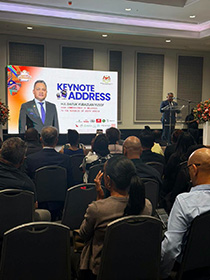
| Malaysia launched the Jom Beli Produk Malaysia (JOM MALAYSIA) — Local to Global Retail Programme and Integrated International Trade Mission in Johannesburg, on Friday, 16 October 2026, marking a strategic step towards expanding Malaysian retail, franchise and direct selling businesses into the South African and broader African markets. |
| |
Organised by Malaysia’s Ministry of Domestic Trade and Cost of Living (KPDN), and in strategic engagement with the High Commission of Malaysia in Pretoria, the launch brought together about 120 potential investors, including 14 Malaysian business representatives, government officials, South African industry organisations and commercial stakeholders to strengthen business connections, develop export opportunities and facilitate cross-border partnerships.
High Commissioner calls for stronger commercial partnerships
Delivering the opening keynote address, His Excellency Datuk Yubazlan Yusof, High Commissioner of Malaysia to South Africa, highlighted South Africa’s longstanding importance as one of Malaysia’s largest trading partners on the African continent since the establishment of diplomatic relations between the two countries in 1993. |
|
|
| |
He noted that high-level bilateral engagements have provided fresh momentum for Malaysia - South Africa relations and emphasised the importance of converting diplomatic goodwill into meaningful business partnerships, commercial agreements and sustainable economic benefits.
The High Commissioner outlined South Africa’s potential as a strategic gateway for Malaysian companies seeking to expand into African markets, while positioning Malaysia as a regional hub for South African businesses pursuing opportunities in the Association of Southeast Asian Nations (ASEAN).
He also encouraged Malaysian businesses to look beyond conventional product exports by leveraging direct selling and franchising to introduce established brands, proven business concepts and entrepreneurial models to international markets.
Emphasising the importance of the JOM MALAYSIA initiative, Datuk Yubazlan underscored that national identity and brand recognition can open doors to new markets, but sustained commercial success depends on product quality, competitive pricing and consistent regulatory compliance.
Advancing Malaysia’s “Local to Global” Strategy
Led by YBhg. Dato’ Rohaizi Bahari, Undersecretary of KPDN’s Distributive Trade and Business Division, the trade mission supports the Ministry’s “Local to Global” strategy to strengthen the international competitiveness of Malaysian businesses and expand their participation in overseas markets beyond traditional buyers.
The initiative focuses on three (3) strategic pillars:
- JOM MALAYSIA Brand Globalisation - Promoting Malaysian food and beverage products, lifestyle offerings, including halal, consumer goods and technology solutions to international retailers, distributors and buyers;
- Franchise Internationalisation - Facilitating master franchise arrangements, joint ventures and other strategic partnerships to expand Malaysian franchise brands into South Africa and the wider Southern African region.
- Enhanced Direct Selling Development Program (EDSD) - Supporting the development of ethical and sustainable direct selling networks that encourage micro-entrepreneurship, create local economic opportunities and strengthen structured distribution channels.
Through these complementary initiatives, the trade mission seeks to provide Malaysian businesses with practical market access opportunities while encouraging long-term commercial cooperation between Malaysian and South African enterprises.
The Undersecretary emphasised that by bringing together government facilitation, industry expertise and direct commercial engagement, the initiative aims to help Malaysian businesses establish a stronger international presence while creating new opportunities for South African companies to connect with Malaysian brands, products and business models.
Market insights and business matching take centre stage
The official programme featured High Commissioner Datuk Yubazlan Yusof’s keynote address, an official address by Dato’ Rohaizi and the formal launch of the JOM MALAYSIA – "Local to Global” Retail Programme and Integrated International Trade Mission.
To prepare Malaysian delegates for the South African market, Mrs Bernadette Zeiler, Chief Executive Officer of JCCI, delivered a market insights briefing covering key considerations for market entry, including regulatory compliance, import requirements and local distribution dynamics.
The afternoon programme moved into business-to-business (B2B) matching and networking sessions, providing participating companies with opportunities to engage directly with prospective buyers, distributors, franchise partners and investors.
These sessions are intended to support commercial discussions, identify potential areas of cooperation and advance negotiations towards future distribution arrangements, franchise agreements and other trade partnerships.
– Source: www.thediplomaticsociety.co.za |
|
| |
|
| |
| COUNCIL OF ARAB AMBASSADORS IN SOUTH AFRICA AND AUDA-NEPAD STRENGTHEN ARAB–AFRICAN DEVELOPMENT PARTNERSHIPS |
|
| |
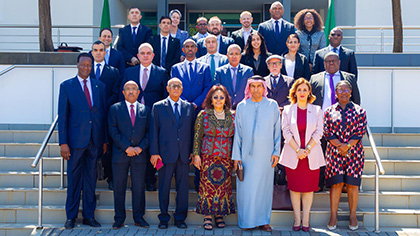
| The Council of Arab Ambassadors accredited to the Republic of South Africa paid an official visit to the headquarters of the African Union Development Agency–NEPAD (AUDA-NEPAD) last week, where they held a meeting with Dr Nardos Bekele-Thomas, Chief Executive Officer of the Agency, and several senior officials. The meeting focused on ways to strengthen Arab–African cooperation and explore opportunities for establishing development and economic partnerships in areas of shared priority. |
|
| |
The visit began with a welcome reception for the Arab diplomatic delegation by the Agency’s Chief Executive Officer and senior officials, followed by a guided tour of AUDA-NEPAD headquarters, during which the ambassadors were briefed on the Agency’s mandate, activities, and development programmes.
Dr Nardos Bekele-Thomas delivered a presentation outlining the Agency’s mandate, strategic priorities, and flagship programmes, as well as its role in implementing the African Union’s Agenda 2063, achieving the Sustainable Development Goals, promoting economic and regional integration, and mobilising resources and expertise to support development across the African continent.
|
|
|
 |
|
| |
The Agency’s directors also presented an overview of the projects and sectors under their respective responsibilities. The presentations included statistics on Africa’s development, the challenges facing the continent, and prospects for joint cooperation on major projects across various sectors, including initiatives involving Arab countries that are members of the African Union.
Ambassador Mahash Saeed Al Hameli, Ambassador of the United Arab Emirates and Dean of the Arab Diplomatic Corps; Ambassador Ahmed Hassan bin Hassan, Ambassador of the Republic of Yemen and Acting Chair of the Council for October 2026; and Ambassador Reyad Al-Akbari, Head of the League of Arab States Mission in South Africa, subsequently addressed the meeting, expressing their appreciation for the warm hospitality and the valuable information presented.
An interactive dialogue followed between the Arab ambassadors, the Chief Executive Officer, and senior officials of the Agency. Discussions explored opportunities for cooperation and partnerships in food security and agriculture, infrastructure, renewable energy, trade and investment, digital transformation, education and training, youth skills development and women’s empowerment, alongside the importance of promoting local industrialisation and adding value to Africa’s natural resources.
The speakers highlighted Africa’s immense human potential and abundant natural and mineral resources, noting that the fundamental challenge lies in transforming these assets into productive, industrial and technological capabilities, as well as employment opportunities and knowledge creation. They emphasised the importance of investing in infrastructure, education and technology, while strengthening local industrialisation, value chains and intra-African trade.
The speakers further highlighted that Arab–African relations are rooted in a long history of interaction and solidarity, reinforced by geographical, cultural and human ties, as well as shared interests. They stressed that current international developments call for elevating these relations beyond political solidarity towards broader and more effective economic, developmental and institutional partnerships.
At the conclusion of the meeting, participants emphasised the importance of building on the visit by maintaining regular communication and engagement between AUDA-NEPAD, the Council of Arab Ambassadors, the League of Arab States Mission and Arab diplomatic missions accredited to South Africa, while exploring opportunities for cooperation in areas of shared priority.
The visit concluded with an exchange of commemorative gifts and a group photograph of the participants.
– Source: www.thediplomaticsociety.co.za |
|
| |
|
| |
| SOUTH AFRICAN TOURISM WINS A GLOBAL AWARD AT WTTC SUMMIT |
|
| |
 |
|
| South African tourism has earned international recognition, proving that teamwork can deliver more than another meeting and a signed memorandum. |
| |
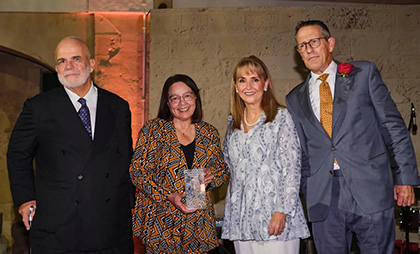
The World Travel & Tourism Council (WTTC) recently presented Tourism Minister Patricia de Lille with its Global Champion Award. The ceremony took place during the WTTC Global Summit in Valletta, Malta, earlier in October.
The award recognises her leadership in strengthening cooperation between government and private businesses. However, the achievement extends beyond one person, highlighting an industry that supports millions of livelihoods. |
|
|
| |
The WTTC recognised Minister de Lille for championing partnerships that encourage tourism growth, investment and long-term competitiveness.
The council also praised her commitment to bringing government and industry leaders together. According to the WTTC’s announcement, these partnerships can unlock opportunities and spread tourism’s benefits across communities.
South Africa welcomed a record 10.5 million international arrivals in 2025. Minister de Lille attributed this achievement to deliberate cooperation through the Tourism Growth Partnership Plan (TGPP).
Cabinet endorsed the plan, while President Cyril Ramaphosa identified tourism as a strategic economic growth sector. These commitments aim to turn visitor demand into lasting economic opportunities.
The number of investment-ready tourism projects also increased from eight in 2025 to 15. Together, these projects represent R3.5 billion in potential investment.
The award therefore recognises more than impressive visitor numbers. It highlights efforts to build the partnerships and investment pipeline needed for continued growth.
International recognition can strengthen confidence among investors, tourism businesses and potential visitors. It also puts South Africa’s tourism strategy before influential global industry leaders.
The WTTC summit brought together more than 1 000 delegates, including over 200 leading tourism executives and government representatives.
The economic stakes are substantial. The WTTC’s economic research showed that travel and tourism contributed around R659.8 billion to South Africa’s economy in 2025. The sector also supports 1.9 million direct and indirect jobs, representing 11.3% of national employment.
By 2035, the WTTC forecasts another 620 000 jobs and an economic contribution of R911.7 billion. Achieving that potential requires more than international applause. South Africa needs reliable infrastructure, stronger connectivity, diverse experiences and sustained investment.
Recent arrivals figures suggest that international interest continues to grow. The Department of Tourism reported that 1 005 286 international tourists visited South Africa in August 2026. That represented a 7.4% increase compared with August 2025.
Between January and August 2026, the country welcomed 7 581 455 international tourists. This represented growth of 11.7% year on year.
The United States led overseas source markets in August, followed by the United Kingdom and Germany. United Nations Tourism also identified South Africa as Africa’s strongest-performing destination during the first half of 2026.
These visitors support accommodation providers, restaurants, guides, transport operators and attractions. Their spending can also sustain small businesses and create opportunities beyond established tourism hotspots.
Minister de Lille has stressed the need to convert rising demand into investment, jobs and community benefits. That means giving visitors more experiences and reasons to extend their stays. It also means ensuring smaller destinations and local entrepreneurs share in tourism’s rewards.
The Global Champion Award offers South Africa valuable international recognition. The real victory, however, will come for South African tourism when stronger partnerships translate into more jobs, viable businesses and wider economic opportunities.
– Source: www.sapeople.com |
|
| |
|
| |
| UKZN DOCTORAL STUDENT MELISSA SIBANDA TO REPRESENT SOUTH AFRICA AT BRICS DEBATE FINALS IN MOSCOW |
|
| |
 |
|
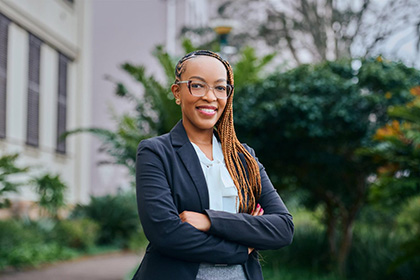
| University of Kwazulu-Natal (UKZN) doctoral student Melissa Sibanda will represent South Africa at the Brazil, Russia, India, China, South Africa (BRICS) Debate finals in Moscow in December 2026 after winning the national championship. |
|
|
| |
The 29-year-old, who is pursuing her PhD in the Discipline of Geography, Planning and Housing within UKZN’s School of Social Sciences, emerged victorious in the national debate hosted by the BRICS Research Institute.
Sibanda will now compete against national champions from the other BRICS founding countries: Brazil, Russia, India and China, at the finals in December 2026. The winner will receive a fully sponsored academic exchange at a university of their choice in a BRICS country.
Her academic research focuses on the disproportionate burden faced by women living in informal settlements without reliable and affordable energy. Her work has also exposed her to wider issues of poverty, gender inequality, energy access and urban development across the Global South.
Sibanda said her interest in the BRICS debate was sparked after she received funding from the College of Humanities Research Office to attend the third BRICS Research Institute Conference in China in 2024.
“I went in as a housing researcher and came out convinced that the questions I care about, such as poverty, gender, energy, and how cities are built globally, are exactly the ones being negotiated in multilateral spaces,” she said.
“It reinforced, for me, the importance of the Global South setting its own terms, rather than simply inheriting someone else’s.”
The experience prompted Sibanda to seek a more active role in these discussions, leading her to apply for the open call for the BRICS Debate in March this year.
In preparation for the competition, she immersed herself in the history, structures and institutions of BRICS, while also examining the political and economic interests of its member states and debates around reforming global governance.
“That tension is precisely the debate’s theme: whether BRICS reforms global governance or reproduces existing inequalities,” she said.
Sibanda said she intends to approach the international finals with the same composure that helped her through the national rounds.
“My strategy for the finals is to remain composed and think clearly under pressure. This is what the national rounds have taught me, and I intend to carry this with me,” she said.
She also believes effective representation of South Africa will require her to listen as much as she argues.
“To represent South Africa well doesn’t require out-talking anyone; instead, it calls on engaging seriously with their positions while maintaining my own evidence-based perspective with clarity,” Sibanda said.
Beyond her doctoral studies, Sibanda serves as an Academic Development Officer in UKZN’s College of Humanities, where she supports students in their academic growth and development. Her own academic journey at UKZN began with her undergraduate studies before she went on to complete her master’s degree at the university.
Dr Normah Zondo, Executive Director of UKZN’s Corporate Relations Division, congratulated Sibanda on her achievement, describing it as a proud moment for the university and a reflection of the calibre of its students and staff.
“We congratulate Melissa on this outstanding achievement, which reflects not only her intellectual ability and confidence, but also the global perspective and critical engagement that we seek to cultivate in our students,” said Zondo.
“Her success demonstrates the value of rigorous scholarship, informed debate, and the ability to engage with complex global issues with clarity, evidence, and purpose.”
Zondo said Sibanda’s ability to connect her academic expertise with pressing social challenges demonstrated the wider impact of scholarship.
“We are particularly proud of the way Melissa brings her academic knowledge to bear on issues with profound consequences for communities, including poverty, gender inequality, energy access and the development of cities across the Global South,” she said.
“In doing so, she demonstrates how scholarship can extend beyond the classroom to contribute meaningfully to the conversations shaping our shared future.”
Zondo said Sibanda’s achievement was a testament to the young scholars emerging from UKZN and their contribution to global intellectual discourse.
“We wish Melissa every success as she takes her place on the international stage and represents South Africa with the intellectual rigour, confidence and distinctive perspective that have defined her academic journey,” she said.
– Sources: www.iol.co.za I ww.sundaytribune.co.za |
|
| |
|
| |
| CHEF JEAN DELPORT JOINS OTHER SOUTH AFRICAN CULINARY GREATS |
|
| |
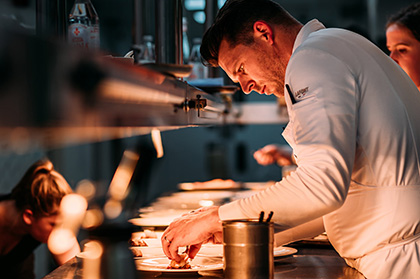
| Chef Jean Delport has earned a place among Britain’s leading culinary talents with a nomination for a prestigious UK hospitality award. |
| |
|
|
|
 |
|
| |
The Cape Town-born chef leads the kitchen at Restaurant Interlude in West Sussex, England. His nomination recognises his combination of classical French techniques and South African influences.
It also highlights a restaurant celebrated for its food and sustainability. His achievement continues a proud tradition of South African chefs making their mark on international dining.
Why has Chef Jean Delport earned this nomination?
The official Hotel Cateys shortlist confirms Delport’s nomination for Hotel Restaurant Chef of the Year. He joins three other shortlisted chefs in a category recognising talent across Britain’s hotel restaurant industry.
Organised by The Caterer magazine, the Hotel Cateys celebrate outstanding people, teams and properties across British hospitality. The organisers will announce this year’s winners at a London ceremony on 23 November 2026.
Delport’s nomination follows several notable achievements at Restaurant Interlude. The restaurant earned a Michelin star within its first year. It later received a Michelin Green Star for its sustainable approach.
Its team also won Hotel Restaurant Team of the Year at the 2025 Hotel Cateys. The restaurant’s 10 bedrooms have earned a Michelin Key for hospitality excellence.
How does Chef Jean Delport reflect South African culinary talent?
Chef Jean Delport combines his South African heritage with classical French techniques. He uses seasonal ingredients from the Leonardslee estate and surrounding Sussex countryside.
His career also includes a strong television achievement. In 2025, he represented London and the South East on the BBC’s Great British Menu. He reached the banquet final after winning the fish and main-course heats.
Delport joins a wider group of South African chefs who have earned international acclaim. Jan-Hendrik van der Westhuizen became one of the first South African chefs to earn a Michelin star. His Restaurant JAN in Nice has maintained that distinction for a decade.
Another standout is Kobus van der Merwe, whose Paternoster restaurant Wolfgat won international recognition at the 2019 World Restaurant Awards. Wolfgat claimed both Restaurant of the Year and Off-Map Destination.
Peter Tempelhoff has also earned international recognition through his restaurant work. FYN appeared in the World’s 50 Best Restaurants rankings, highlighting South African fine dining on the global stage.
What does his nomination mean for South African chefs?
These achievements show how South African culinary talent reaches audiences far beyond the country’s borders. Each chef brings a distinct perspective, from local ingredients and heritage to international techniques.
Delport’s nomination adds another chapter to that story. His work at Interlude connects South African roots with Sussex produce, while his restaurant’s accolades reflect a commitment to quality and sustainability.
The Hotel Cateys’ results will reveal whether he claims the title on 23 November 2026. Whatever the outcome, his nomination places another South African chef firmly in the international spotlight.
– Source: www.sapeople.com |
|
| |
|
| |
| MAHIKENG GRADE 9 LEARNER NAMED AMERICAN LUNG CANCER SCHOLAR FOR AI SCREENING RESEARCH |
|
| |
 |
|
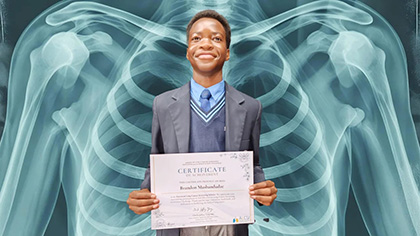
| In Grade 9, Brandon Mashandudze is already exploring how technology could help save lives. His research on using artificial intelligence to detect lung cancer earlier has earned him international recognition as an American Lung Cancer Scholar. |
|
|
| |
What started as a keen interest in lung cancer has quickly turned into a passion for Brandon Mashandudze, leading him to ask a crucial question: how could technology be used to prevent it?
Driven by this curiosity, the Grade 9 learner delved deep into the topic and was recently named an American Lung Cancer Scholar for his research on how artificial intelligence can help detect lung cancer earlier.
He earned the recognition through the Lung Cancer Innovation Challenge – an international competition for middle and high school students run by the American Lung Association’s Lung Cancer Screening Initiative.
Entrants were tasked with developing a medical innovation project focused on lung cancer awareness, screening, or early detection, working alongside mentors along the way.
Brandon’s winning proposal explored how AI and digital health technologies could improve prevention, early detection, and personalised risk assessment. To complete it, he immersed himself in oncology, epidemiology, machine learning, and biostatistics (complex subjects not typically taught in Grade 9), refining and perfecting his project over several rounds.
“At some point, it stopped feeling like a normal school project and felt more like I was actually investigating a question,” Brandon said.
He chose lung cancer because he believes early detection is important and says the research shaped how he sees technology.
“AI isn’t here to replace doctors,” he said.
“It can be a tool to help doctors look at information and possibly identify things earlier.”
The recognition builds on a strong run of results. At the 2025 Eskom Expo International Science Fair, Brandon won a silver medal and the Junior AI for Impact Award after winning gold and Best Project in Social Sciences at the regional level. In 2026, he received the Best Innovation award. Brandon and fellow Curro learner Yewo Nyirenda were also named among the Cell C Top Project Award recipients.
For that science fair, Brandon presented a separate research project examining how environmental conditions may influence the spread of infectious diseases.
Janita Maritz, Executive Head of Curro Mahikeng, where Brandon attends school, described him as hardworking, humble, and curious about how things work. She said the school aims to give learners room to explore ambitious questions, with teachers acting as mentors.
His physical sciences teacher, Miss Tshireletso Pitso, guided his research methodology, helped him sharpen how he communicated his findings and encouraged him when the work became challenging.
“We are incredibly proud of Brandon,” Maritz said.
“It is wonderful to see his hard work recognised on an international stage.”
Brandon plans to continue his research with more data and more time, and is interested in work where medicine, science and technology overlap.
“I want other young people to know that they don’t need to wait until they’re older to start researching something that interests them,” he said.
– Source: www.goodthingsguy.com |
|
| |
|
| |
| LOCAL OCEAN CHAMPION ZOË PRINSLOO TAKES HER MISSION GLOBAL |
|
| |
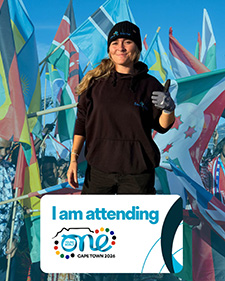
| From cleaning up Cape Town’s beaches to sharing her bold ocean conservation ideas with world leaders, local champion Zoë Prinsloo is heading to the One Young World Summit. |
| |
When it comes to advocating for a cleaner, healthier, and safer planet while rallying people to be part of the change, Zoë Prinsloo is right at the front of that line! She’s a coastal clean-up champ and the leader of Save a Fishie, an environmental movement that clears litter from Cape Town’s beaches while inspiring communities to do the same and make better choices for the planet.
The One Young World Summit is a premier global gathering that brings together thousands of the brightest young changemakers, activists, and social entrepreneurs from over 190 countries.
The summit unites this next generation of leaders with world-renowned political, business, and humanitarian figures to collaborate, share innovative solutions, and tackle pressing global issues like climate change, poverty, and human rights.
For the first time since the 2013 summit in Johannesburg, the event is returning to Africa in Cape Town, and Zoë can hardly believe she gets to join over 2 200 young leaders from around the globe for one shared mission: to spark change. |
|
|
 |
|
| |
“As the founder of Save a Fishie, I am passionate about protecting our oceans, inspiring environmental action, and educating and empowering people to make a difference. I am so excited to connect with young leaders from across the globe, share ideas, learn from others, and explore how we can create an even bigger impact for our planet,” Zoë says.
She is looking forward to the conversations, the inspiration, the collaborations, and the possibility of turning great ideas into meaningful action.
We doubt there is a stretch of Cape Town coastline Zoë hasn’t touched, especially those beaches most in need of attention. Now, that tireless weekly dedication, passion for ocean conservation, and commitment to community service are taking centre stage on a global platform.
“Feeling incredibly grateful for this opportunity and excited for what lies ahead,” says Zoë.
– Source: www.goodthingsguy.com |
|
| |
|
| |
| LONGEST TRANSNET FREIGHT TRAIN SETS NEW WORLD RECORD FROM SALDANHA TO SISHEN |
|
| |
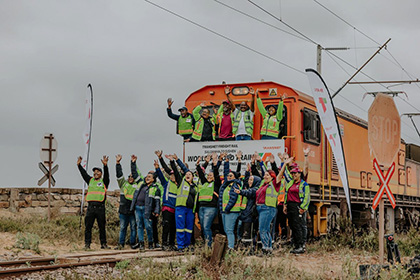
| Transnet Freight Rail (TFR) has set a new world record for freight rail operations after successfully operating an empty train comprising 696 wagons on the Iron Ore Export Line from Saldanha to the Northern Cape on Sunday, 18 October 2026. |
|
|
 |
|
| |
The train reached Loop 18 on the Sishen–Saldanha railway line at the 741 km mark near Witpan in the Northern Cape, completing the journey of the longest train ever assembled and operated on the corridor.
According to TFR, the achievement goes beyond setting a world record, demonstrating South Africa’s engineering expertise and ability to conduct large-scale heavy-haul rail operations safely.
The initiative was led by TFR’s Train Design Technology and Operations teams, in collaboration with Transnet Engineering, the Transnet Rail Infrastructure Manager (TRIM) and the Railway Safety Regulator. The train comprised 696 empty CR13/14 wagons hauled by a combination of Class 15E electric and Class 43D diesel-electric locomotives.
The locomotives were arranged using Radio Distributed Power (RDP) technology, which allows them to operate as a synchronised unit. This distributes traction and braking forces across the train’s entire length, improving stability and safety.
According to Russell Baatjies, chief executive of TFR, the successful operation of this train demonstrates the depth of engineering expertise, operational excellence and innovation within TFR.
“While setting a world record is a significant achievement, the real value lies in the technical knowledge and operational insights gained through this exercise. These learnings will contribute to the continued advancement of rail operations, support innovation and strengthen our freight rail capability into the future.”
Extensive planning, modelling and simulations were conducted before the journey to ensure safe operations.
Specialist personnel accompanied the train to monitor its performance, while locomotive data collected during the run will be analysed to improve future rail operations.
The achievement reinforces the Iron Ore Export Line’s position as one of the world’s leading heavy-haul rail corridors.
It also highlights South Africa’s ability to conduct rail operations on a scale achieved by only a select number of railway operators globally, supporting TFR’s efforts to increase capacity, improve operational performance and strengthen the competitiveness of the country’s logistics network.
– Source: www.novanews.co.za |
|
| |
|
| |
| TABLE MOUNTAIN VENUE SNAGS ANOTHER WORLD-CLASS WIN FOR SOUTH AFRICA |
|
| |
 |
|
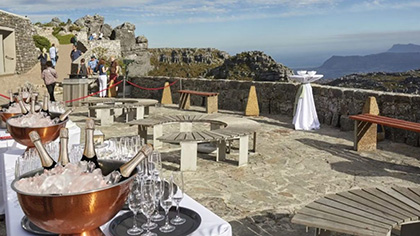
| South Africa’s iconic Wonder of Nature is on an absolute winning streak. The Twelve Apostles Terrace at the Table Mountain Aerial Cableway has officially been named Africa’s Best MICE Event Venue at the 2026 World MICE Awards, proudly defending the title it scooped up last year. |
|
|
| |
The winners were celebrated on 12 October 2026 at a ceremony held at Princess Grand Jamaica. Part of the prestigious World Travel Awards portfolio, the World MICE Awards recognise global excellence across the meetings, incentives, conferences, and exhibitions (MICE) sector.
Located at the very top of the mountain, the venue boasts breathtaking views of the Mother City and the Atlantic seaboard.
This latest win adds to a growing collection in Table Mountain’s trophy cabinet. The event spaces of South Africa’s most famous mountain are continuously grabbing global attention and picking up prestigious accolades. Earlier this year, experiential agency Chaos Theory teamed up with the Millat Group to host the award-winning Skift Africa Megatrends sunrise event right at the top.
In its MICE win, the Cape venue took top honours against nominees from Morocco, the Republic of the Congo, and Kenya.
The victory comes as the Table Mountain Aerial Cableway Company (TMACC) celebrates its 97th birthday this month, marking nearly a century of welcoming local and international visitors to the tabletop.
“We are proud to receive this recognition. Hosting an event on Table Mountain brings people together in an extraordinary natural setting, and this award acknowledges the team behind those events and their commitment to creating memorable experiences for event organisers and their guests,” said Tracy Mkhize, Managing Director of TMACC.
“Cape Town continues to attract leisure and business travellers from around the world. The Twelve Apostles Terrace contributes to the city’s business tourism offering with its distinctive setting for events, ” she added.
– Source: www.goodthingsguy.com |
|
| |
|
| |
| SOUTH AFRICA RANKED AMONG THE WORLD’S TOP 10 COUNTRIES FOR FOOD |
|
| |
| South Africa has made the top 10 best countries for food in the world, according to “Condé Nast” Traveller’s 2026 Readers’ Choice Awards. We placed 10th with a score of 94.26. |
|
|
 |
|
| |
The awards are decided by the magazine’s readers. They were asked to vote for the countries they go back to again and again for the tastiest dishes and the best recipes. Each country’s score is the average level of satisfaction among the people who voted, shown as a percentage.
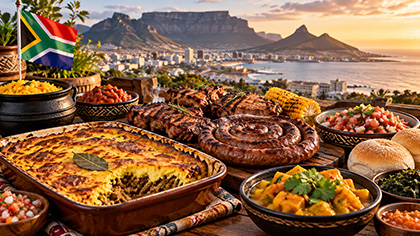
Condé Nast credits our spot on the list to variety. South African cooking draws on indigenous traditions as well as Indian, Malay and European ones, and the magazine says meat is the centre of most meals. The braai even got a mention of its own.
“Succulent meats are the cornerstone of all meals, so tuck into a traditional ‘braai’, or South African barbecue, to really get under the skin of the foodie culture. Stretching from dawn to dusk, the South African take on barbecuing forces attendees to slow down, enjoying hours of laughter and conversation while refuelled by never-ending plates of flame-grilled chicken, lamb, and beef.”
For restaurants, the magazine’s top pick was Jan Franschhoek, which was also on its 2025 Hot List. The local gem serves family feast-style meals in a quaint little cottage surrounded by the vineyards and lavender fields of the Franschhoek Valley.
At the top of the list, Italy took first place with 96.92. Greece came second on 96.72, and Portugal third on 96.57. That puts the gap between Italy and South Africa at 2.66 points. The scores across the whole list are tightly packed, so we’re only a few points off the very top.
Japan landed in fourth, followed by Turkey, Indonesia, Spain, Thailand and Croatia, with South Africa tucked in just behind at number 10.
South Africa’s good run in the Readers’ Choice Awards didn’t stop at the dinner table. Cape Town came in 15th on the list of the best cities in the world, and it also made the list of the friendliest cities in the world, taking 10th place.
Then there are the hotels. In the best hotels in Africa category, 12 of the 15 top spots for Eastern and Southern Africa went to South African properties. Mount Nelson took first place, Cape Grace came second and Babylonstoren took third.
– Source: www.goodthingsguy.com |
|
| |
|
| |
| THE CAPE 1000 PUTS SOUTH AFRICA’S CLASSIC MOTORING SCENE ON THE INTERNATIONAL MAP |
|
| |
 |
|
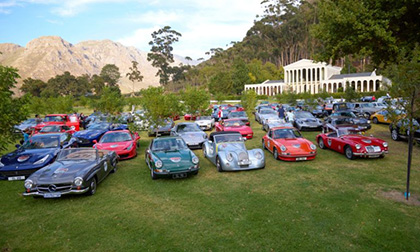
| The Cape 1000 combines classic cars and scenic Western Cape routes with a charitable mission that raised more than R300 000 in 2026. |
| |
The Western Cape rally has been shortlisted for Rally or Tour of the Year at the 2026 International Historic Motoring Awards.
Some of the Western Cape’s most spectacular roads will once again provide the backdrop for The Cape 1000, but the South African motoring event has another reason to celebrate: it has earned a place on an international awards shortlist. |
|
|
| |
The 1000-mile grand touring rally has been shortlisted in the Rally or Tour of the Year category at the 2026 International Historic Motoring Awards, which recognises achievements across the global classic and historic motoring community.
Founded in 2022, The Cape 1000 combines a carefully selected collection of classic and collectable cars with a five-day route through the Western Cape. Its regularity format challenges participants to maintain precise timing across stages, placing as much emphasis on consistency and control as the cars themselves.
The event also raises money for charity. Its 2026 rally generated more than R300,000 for the Motorsport Legends Benevolent Fund and the QuadPara Association of South Africa.
Event director Vanessa Crichton said the international recognition was a proud moment for the rally and for South Africa, acknowledging the participants, partners and charitable organisations involved.
The next edition is scheduled for 20 to 25 March 2027, with around 70 cars expected across the Classic, Modern Classic, Sports Cars and Specials/Recreation categories.
For the first time, the rally will begin on a Saturday with a public Show & Shine at Cape Town’s V&A Waterfront. A send-off is planned for Sunday morning, before the field travels towards Franschhoek and the Overberg, finishing at the Silo Precinct.
The International Historic Motoring Awards ceremony takes place on 13 November 2026 at The Peninsula London, where the winners will be announced.
Regardless of the final result, the shortlist places a South African event among international names in historic motoring. Also, the Western Cape’s roads, automotive heritage and charitable purpose are all part of its story.
– Source: www.goodthingsguy.com |
|
| |
|
| |
| SOUTH AFRICAN RIDERS PREPARE TO TAKE ON THE WORLD AT KING OF THE WHIP |
|
| |
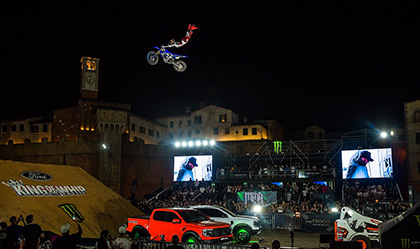
| International stars and South African motocross talent will go head-to-head in an evening of aerial tricks, music and pyrotechnics. |
| |
Some of the world’s top motocross and freestyle motocross riders will be heading to Johannesburg in November 2026 for King of the Whip, where style, control and daring aerial tricks will take centre stage.
The event returns this year, bringing together South African competitors and international riders for the Best Whip and Freestyle Motocross Best Trick contests. This year’s line-up is set to feature 30 riders (18 local and 12 international) competing for a share of a R250,000 prize purse. |
|
|
 |
|
| |
Australia’s Pat Bowden also made an impression at last year’s event, winning both Freestyle Motocross Best Trick categories. South African riders will be looking to challenge the international talent, with freestyle rider Dallan Goldman among those expected to compete, alongside motocross racers Trent Valsecchi, Ryan Adler and Dalton Venter.
The Best Whip competition will test riders on their style, height, execution and variation as they launch their bikes into the air and throw them sideways before bringing them back into position for landing. The Best Trick contests will feature both upright and inverted manoeuvres, pushing riders to show off their technical skills and creativity.
The event has grown into one of the biggest freestyle motocross spectacles on the international calendar and has sold out for the past four years. Beyond the competition, spectators can expect music, DJs, pyrotechnics and activities around the venue.
With a mix of local pride and international rivalry, the question heading into November 2026 is whether Fontenot can hold on to his crown or whether one of the South African riders will take the title.
– Source: www.goodthingsguy.com |
|
| |
|
| |
| PROTEAS RIP AUSTRALIA TO SHREDS TO EYE SERIES-LEVELLING TEST VICTORY IN GQEBERHA |
|
| |
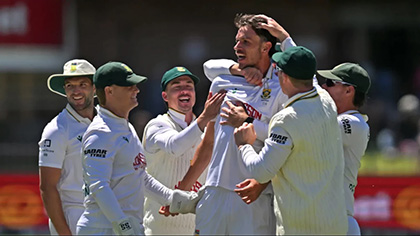 |
|
| Marco Jansen took a five-wicket haul as the Proteas skittled Australia out for just 99 before the tourists found themselves in trouble following-on at 156-4, still trailing by 170 runs. |
|
|
| |
Resuming the morning on 3-1, in reply to the Proteas' total of 425-9 declared, Travis Head struck two fours in the first over of the day off Kagiso Rabada but that proved to be a false dawn.
Jansen started the procession of wickets with the first ball of the second over when the left-arm seamer got rid of nightwatchman Scott Boland for his overnight score of 2.
The lanky allrounder, who struck a quick-fire 85 with the bat, then trapped Head lbw for 14 and then Anrich Nortje had Marnus Labuschagne brilliantly caught at third slip by Simon Harmer.
Harmer was proving his worth in the slip cordon, holding onto another sharp catch to dismiss Matt Renshaw off the bowling of Jansen, who then also had Carey caught behind in the same over.
The first session yielded 66 runs in 29 overs but, importantly for the hosts, five wickets fell as the Australians went into the interval on 69-6 with the experienced Steve Smith still at the crease.
However, it was not long before the collapse continued, with Jansen dismissing Beau Webster (13) and then Wiaan Mulder got the all-important scalp of Smith for 28.
Jansen eventually finished with figures of 5-33 in 11 overs, and home skipper Temba Bavuma had no hesitation in enforcing the follow-on, with Kagiso Rabada once again snaring opener Nic Maddinson early on.
Head and Labuschagne shared a fighting partnership of 92 for the second wicket, but spinner Harmer came into the equation to make the breakthrough for the Proteas.
Rabada rattled the stumps of Renshaw after the left-handed batter decided to leave a relatively straight ball, while Webster was the last to be dismissed for the day, with the allrounder trapped plumb lbw by Harmer.
Head is still on crease on 87, with the tourists' hopes seemingly all resting on the opening batter, and was joined by Boland, who once again came into bat with the light fading as a nightwatchman.
– Source: www.sabcsport.com |
|
| |
|
| |
|
|
|
|
|
|
|
|