| |
| |
|
| |
| PRESIDENT RAMAPHOSA URGES PARTIES TO PUT SERVICE DELIVERY AHEAD OF POLITICAL INTERESTS |
|
| |
| President Cyril Ramaphosa has called on political parties to put the interests of communities ahead of political power and positions as they negotiate the formation of municipal governments following the 2026 Local Government Elections. |
|
|
 |
|
| |
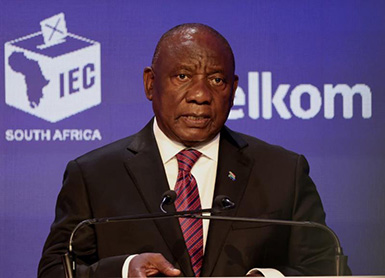
Addressing the announcement of the final election results at the Independent Electoral Commission (IEC) Results Operations Centre in Midrand on Sunday, 8 November 2026, the President cautioned that political disagreements must not undermine municipal stability or delay the delivery of essential services.
“In municipalities where no political party has secured an outright majority, the elected representatives will need to find common ground. This is not a weakness of democracy. It is an expression of the choices that the people have made.
“The voters have given their representatives a responsibility to work together, even where they differ,” he said.
The President said negotiations over the formation of municipal governments must be guided by the public good rather than contests over positions, privileges, or the distribution of power.
“The stability of our municipalities cannot be sacrificed to narrow political interests. The delivery of essential services cannot be held hostage by political disagreements.
“The people did not cast their votes so that their representatives could spend the next five years fighting among themselves. They voted because they expect their lives to improve,” he said.
President Ramaphosa said communities expected functioning councils, capable administrations and responsible leadership, urging political parties to rise above their differences and work together in the interests of residents. He also called for councils to be constituted without delay, with parties negotiating in good faith to elect office-bearers and ensure that municipalities could begin their work.
“Budgets must be passed on time. Those elected must find common ground and work together.
“Together, we must make local government an engine of service delivery, development and opportunity,” he said.
The President congratulated newly elected councillors, reminding them that they would serve in the sphere of government closest to the daily lives of South Africans. He said their responsibility extended beyond occupying positions in council chambers to listening to communities, responding to their needs and addressing concerns with honesty and integrity.
“It is to put the interests of residents above personal ambition and political advantage. And it is to remember, every day, that public office is a privilege that carries a duty of service.
“The election is now over. The work of serving the people must begin,” President Ramaphosa said.
He noted that the elections had taken place against the backdrop of considerable socioeconomic challenges, including the high cost of living, unemployment, particularly among young people, and inadequate municipal services in many communities.
South Africans, he said, wanted communities where they felt safe, public infrastructure was maintained, businesses could flourish, and young people had opportunities.
“They want jobs and opportunities. They want water to come out of the tap and electricity that works.
“They want their refuse collected, their parks maintained and their streets safe,” he said.
The President emphasised that elected public representatives would be judged by their ability to translate their election promises into tangible improvements in people's daily lives. He said the revised White Paper on Local Government, which envisages significant changes to the way municipalities function and are managed, would provide a framework for strengthening the local government system.
The policy outlines measures to strengthen municipalities, improve their finances, direct resources towards infrastructure maintenance and ensure that services are delivered efficiently and reliably.
The President also reflected on the significance of the elections, which took place in a year marking 30 years since the Constitution was signed into law. He said the participation of more than 540 political parties and nearly 137 000 candidates demonstrated the multi-party nature of South Africa's democracy. At a time when democracy was under strain in many parts of the world, South Africans have once again demonstrated the strength and endurance of the country's democratic system.
President Ramaphosa said the authority to govern was entrusted by the people to those they elected and must always be exercised in their interests.
“The people have spoken. Their verdict must be respected. Their concerns must be heard. And their expectations must now be met. Let us work together to make local government work for every South African,” he said.
The 2026 Local Government Elections were held on Wednesday, 4 November 2026, with special voting taking place on 2 and 3 November 2026. The final results were announced by the IEC at the Gallagher Convention Centre in Midrand on Sunday, 8 November 2026.
– Source: SAnews.gov.za |
|
| |
|
| |
| PRESIDENT CYRIL RAMAPHOSA WISHES HINDU COMMUNITY A BLESSED DIWALI |
|
| |
 |
|
| President Ramaphosa wishes South Africa’s Hindu community a blessed and festive Diwali and advent of the Hindu New Year. |
| |
President Ramaphosa said, “The Festival of Lights is a wonderful affirmation of faith and culture for individual adherents and for the Hindu community as a part of our diverse nation.
“May today and the New Year denote the start of renewed commitment to the values, principles and actions that reflect the enlightenment that Hindus celebrate on this day and which enrich the fabric of our entire nation.
“These values hold the promise of a more peaceful, inclusive and just world where we recognise and draw on the humanity, beliefs and traditions of all people.”
– Source: SAnews.gov.za |
|
|
| |
|
| |
| MINISTER LAMOLA DELIVERS KEYNOTE ADDRESS AT SOUTHERN AFRICA–CANADA BUSINESS LEADERSHIP ENGAGEMENT |
|
| |
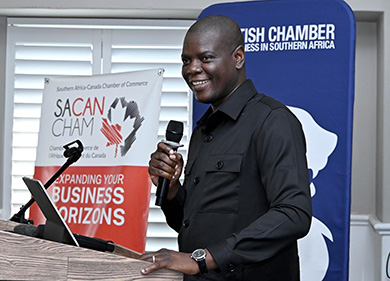
| The Minister of International Relations and Cooperation, Ronald Lamola, delivered the keynote address at the Southern Africa-Canada Chamber of Commerce Business Leadership Engagement on Friday, 6 November 2026, at Bryanston Country Club in Sandton. |
| |
|
|
|
 |
|
| |
The engagement brought together business leaders, members of the diplomatic community and key stakeholders to discuss economic cooperation and the international relationships that shape business opportunities in an evolving global environment.
The engagement provided a platform for dialogue on strengthening economic ties and exploring opportunities for cooperation between Southern Africa and Canada.
– Source: www.dirco.gov.za |
|
| |
|
| |
| SOUTH AFRICA AND INDIA REAFFIRM COMMITMENT TO STRENGTHENING STRATEGIC PARTNERSHIP |
|
| |
 |
|
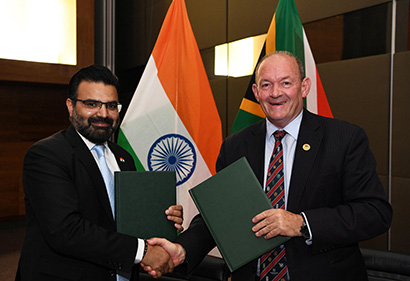
| South Africa and India have reaffirmed their commitment to strengthening their longstanding strategic partnership during the 12th Session of the South Africa-India Foreign Office Consultations (FOC), held in Pretoria on Wednesday, 11 November 2026. |
|
|
| |
The consultations were co-chaired by Ambassador Dave Malcomson, Acting Deputy Director-General: Asia and the Middle East at the Department of International Relations and Cooperation (DIRCO), and Mr Janesh Kain, Joint Secretary for East and Southern Africa at India's Ministry of External Affairs.
The FOC serves as the principal bilateral mechanism for reviewing relations between the two countries, coordinating positions on regional and global developments, and identifying opportunities to deepen cooperation across political, economic and multilateral spheres.
South Africa and India share longstanding ties founded on common values of democracy, human rights, social justice and solidarity. India's support for South Africa's liberation struggle laid an important foundation for relations between the two countries. Their partnership was further strengthened in 1997 through the signing of the Red Fort Declaration on a Strategic Partnership during former President Nelson Mandela's State Visit to India.
Over the past three decades, bilateral cooperation has expanded across several sectors, supported by regular engagements and collaboration through multilateral platforms, including BRICS, IBSA, the Indian Ocean Rim Association (IORA) and the G20.
The 12th FOC provided an opportunity to review progress in bilateral sectoral cooperation, address outstanding matters and prepare for the 11th South Africa-India Joint Ministerial Commission (JMC), which South Africa is expected to host in 2027.
Economic relations remain an important pillar of the strategic partnership. India is South Africa's seventh-largest export destination and second-largest source of imports globally. India is also a significant source of foreign direct investment, with more than 100 Indian companies operating in South Africa across sectors such as pharmaceuticals, information technology, automotive manufacturing, mining and financial services.
The consultations further provided an opportunity to advance South Africa's economic diplomacy objectives by promoting trade, investment and industrial cooperation. Discussions also focused on expanding collaboration in priority areas, including digital technologies, renewable energy, critical minerals, advanced manufacturing, healthcare, defence and aerospace, agro-processing, conservation and the digital economy.
The 12th Session of the South Africa-India Foreign Office Consultations reaffirmed the commitment of both countries to deepening their strategic partnership and advancing shared development priorities as leading voices of the Global South.
– Source: DIRCO Public Diplomacy Platforms |
|
| |
|
| |
| FORESTRY, FISHERIES AND THE ENVIRONMENT HOSTS SADC TRANSFRONTIER CONSERVATION AREAS NETWORK MEETING IN KRUGER NATIONAL PARK |
|
| |
| South Africa hosted the 2026 Southern African Development Community (SADC) Transfrontier Conservation Areas (TFCA) Annual Network Meeting from 10 to 12 November 2026 at the Nombolo Mdhluli Conference Centre in Skukuza Rest Camp, within the Kruger National Park. |
|
|
 |
|
| |
The meeting was held under the theme, Investing in People, Nature and Partnerships: Scaling Impact Across SADC TFCAs and brought together representatives from SADC Member States, TFCA management structures, regional and international conservation partners, civil society organisations and local community representatives to strengthen regional collaboration in the management and sustainable development of Transfrontier conservation areas.
South Africa's hosting of the meeting reflects its continued commitment to advancing regional cooperation in biodiversity conservation and strengthening partnerships that promote ecological connectivity, sustainable livelihoods and inclusive economic opportunities across shared conservation landscapes.
The 2026 meeting comes at an important milestone in the implementation of the revised SADC TFCA Programme (2023–2033) and the SADC Law Enforcement and Anti-Poaching (LEAP) Strategy (2022–2032). Discussions focussed on progress in implementing the regional programme, mobilising sustainable financing models for conservation, strengthening cooperation against wildlife crime, promoting community participation and benefit-sharing, and improving the management of shared ecosystems and natural resources which will lead to positive conservation outcomes.
Hosting the meeting in Skukuza, within the Greater Limpopo Transfrontier Conservation Area, provided an opportunity to showcase practical examples of transboundary conservation and the contribution of protected landscapes to regional development.
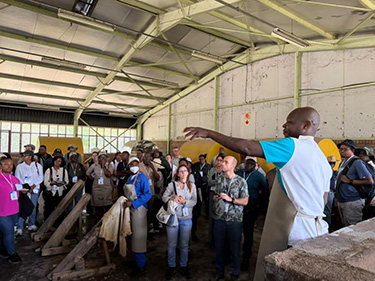
As part of the programme, delegates participated in field visits showcasing initiatives linked to the wildlife-based economy, including the Bushbuck Tannery community enterprise and the SANParks Game Processing Plant. These initiatives demonstrate opportunities to connect biodiversity conservation with enterprise development, skills transfer, community beneficiation and sustainable use of wildlife resources.
The meeting also saw the launch of the Law Enforcement and Anti-Poaching (LEAP) project in the SADC region, supported by the German Government. The initiative seeks to strengthen regional cooperation in addressing wildlife crime, recognising that effective law enforcement requires coordinated responses across national borders.
The outcomes of the meeting are expected to inform regional priorities and strengthen collective action towards the effective implementation of the SADC TFCA Programme, with recommendations and commitments to be presented to the SADC TFCA Steering Committee.
Through its hosting of this regional gathering, South Africa reaffirmed the importance of collaborative approaches to conserving biodiversity, supporting communities and ensuring that transfrontier conservation areas contribute meaningfully to sustainable development across the SADC region, and these will go a long way in strengthening regional cooperation.
– Source: www.gov.za |
|
| |
|
| |
| SOUTH AFRICA WELCOMES UN DECISION TO ADVANCE GLOBAL RESPONSE TO ENVIRONMENTAL CRIME |
|
| |
| South Africa has welcomed a decision to strengthen international law enforcement efforts against facilitators of transnational organised environmental crime, advancing the global response to this growing threat. |
|
| |
The decision was adopted at the Thirteenth Session of the Conference of the Parties (COP13) to the United Nations Convention against Transnational Organized Crime (UNTOC), held in Vienna, Austria, in October 2026.
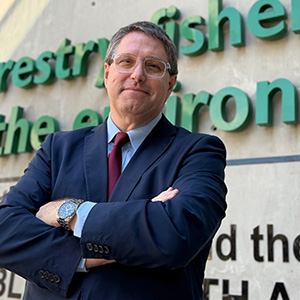
“The resolution, adopted with an overwhelming 87.37% of votes cast in favour and co-sponsored by South Africa, marks a significant milestone in international efforts to combat transnational organised environmental crime. It establishes a process to elaborate an additional Protocol to UNTOC addressing illicit trafficking in wildlife and timber, illegal mining and illicit trafficking in minerals and precious metals, and illicit trafficking in waste,” Minister of Forestry, Fisheries and the Environment David Maynier said in a statement on Thursday, 5 November 2026.
South Africa played an important role in advancing this initiative through a coordinated, whole-of-government approach involving the Department of International Relations and Cooperation, the Department of Forestry, Fisheries and the Environment (DFFE), the National Prosecuting Authority (NPA) and the South African Police Service (SAPS).
The collaboration combined practical environmental enforcement experience with criminal justice and prosecutorial expertise, alongside diplomatic engagement, to advance a stronger international legal response to environmental crime. |
|
|
 |
|
| |
“This is a significant achievement for South Africa and the international community. Environmental crime is organised crime, and we need to tackle the complex international networks facilitating illicit wildlife trafficking in coordination with other countries,” the Minister said.
The decision builds on momentum generated during South Africa’s 2025 Group of Twenty (G20) presidency, when the Cape Town Ministerial Declaration on Crimes that Affect the Environment was adopted for the first time.
The Declaration, subsequently welcomed by G20 Leaders, recognised the serious threat posed by these crimes and the urgent need to strengthen national responses. It also reinforced international recognition of the importance of addressing environmental crime.
Throughout the negotiations, South Africa highlighted the challenges countries face in investigating and prosecuting sophisticated criminal networks. These networks exploit differences in national legislation, weaknesses in cross-border cooperation and legitimate supply chains to facilitate crimes against the environment and conceal the proceeds.
An additional Protocol could help address these legal gaps by strengthening criminalisation and international cooperation while respecting national sovereignty and complementing existing international agreements.
"Our experience has demonstrated that combating transnational environmental crime requires an integrated response, both nationally and internationally. The overwhelming support for this resolution represents an important step towards ensuring that our international legal frameworks keep pace with the increasingly sophisticated criminal networks exploiting our natural resources," Minister Maynier said.
DFFE said the decision builds on extensive international deliberations, including the work of an intergovernmental expert group established under COP12 to examine gaps in existing legal frameworks and identify opportunities to strengthen the international response.
“While negotiations on the additional Protocol are underway, South Africa will continue working closely with its international partners to strengthen cross-border cooperation, intelligence sharing, joint investigations and efforts to disrupt the criminal networks and illicit financial flows associated with environmental crime.
“These practical partnerships remain essential to delivering meaningful enforcement outcomes while the international legal framework is being strengthened,” the Minister said.
He added that the strong support for the resolution marked an important step forward in the global fight against environmental crime.
“South Africa remains committed to playing an active role in shaping the additional Protocol, ensuring that the realities faced by enforcement authorities and prosecutors are reflected in an international legal framework capable of delivering meaningful results,” Minister Maynier said.
– Source: SAnews.gov.za |
|
| |
|
| |
| CORRECTIONAL SERVICES HOSTS UNODC EXECUTIVE DIRECTOR AT NELSON MANDELA RULES ACADEMY |
|
| |
 |
|
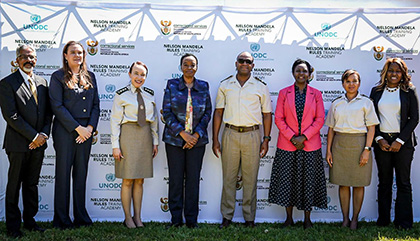
| The National Commissioner of Correctional Services, Makgothi Samuel Thobakgale, on Monday, 9 November 2026, hosted the Under-Secretary-General of the United Nations and Executive Director of the United Nations Office on Drugs and Crime (UNODC), Monica Juma, during an Official Visit to the Nelson Mandela Rules Academy at Drakenstein Correctional Centre. |
|
|
| |
The visit provided Ms Juma with an opportunity to gain first-hand insight of the Nelson Mandela Rules Academy, which was launched earlier this year with technical support from UNODC.
The Academy serves as an important platform for advancing knowledge, promoting best practices and strengthening the implementation of international standards on the treatment of incarcerated persons.
The engagement also provided an opportunity for Correctional Services and UNODC to deliberate on the implementation of the United Nations Standard Minimum Rules for the Treatment of Prisoners, commonly known as the Nelson Mandela Rules.
Furthermore, discussions explored practical opportunities to deepen international and regional cooperation in prison and penal reform, rehabilitation, professional training and institutional capacity-building.
– Source: www.gov.za |
|
| |
|
| |
| MEC IVAN MEYER WELCOMES COMMONWEALTH AGRICULTURAL LEADERS TO CAPE TOWN |
|
| |
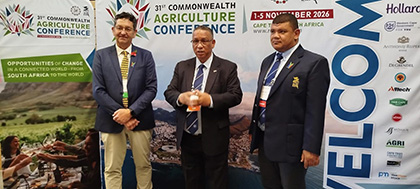
| Western Cape Minister of Agriculture, Economic Development and Tourism, Ivan Meyer, welcomed delegates from across the Commonwealth to Cape Town for the opening of the 31st Conference of the Royal Agricultural Society of the Commonwealth (RASC) held from 1 to 5 November 2026, describing the gathering as an important platform to strengthen global agricultural partnerships and advance innovation, sustainability and food security. |
|
| |
Addressing delegates, including Her Royal Highness The Princess Royal, President of the Royal Agricultural Society of the Commonwealth; Sir Nicholas Bacon, Chairman of the RASC; and representatives from government, academia, agribusiness and farming communities, MEC Meyer highlighted the vital role agriculture plays in connecting people, economies and nations.
“Agriculture has always been one of humanity's greatest connectors. It transcends borders, cultures and generations. It links producers to consumers, rural communities to global markets, and innovation to opportunity,” said Ivan Meyer. |
|
|
 |
|
| |
MEC Meyer said the Western Cape was honoured to host delegates from across the Commonwealth and looked forward to the partnerships, ideas and solutions that would emerge from the conference. He noted that agriculture remains a key driver of economic growth, employment, exports and rural development in the province, with Western Cape producers competing successfully in some of the world's most demanding markets through innovation, sustainability and excellence.
The MEC also acknowledged the significant challenges facing agriculture globally, including climate change, water scarcity, rising input costs and supply chain disruptions. However, he emphasised that advances in technology, precision agriculture and climate-smart farming present unprecedented opportunities for growth and resilience.
“The question before us is not whether agriculture will change. The question is whether we will lead that change,” Meyer told delegates.
A central theme of the Minister's address was the importance of collaboration across borders and sectors. He said the Commonwealth's diverse agricultural community is united by shared aspirations to improve livelihoods, safeguard natural resources and build a better future for generations to come.
Reflecting on growing global divisions, MEC Meyer called on delegates to use agriculture as a force for unity and cooperation.
“In a world searching for common ground, perhaps our greatest task is not simply to make our economies stronger or our industries more competitive, but to make humanity great again. We do so when we choose cooperation over division, partnership over isolation and shared progress over narrow self-interest,” he said.
MEC Meyer also paid tribute to Chris Fourie and Agri-Expo, recognising the organisation's role as a member of the organising committee and its longstanding contribution to agricultural development, innovation and market access in the Western Cape. He noted that for nearly two centuries, Agri-Expo has played a significant role in strengthening the competitiveness and sustainability of the province's agricultural sector.
Reaffirming the Western Cape Government's commitment to agricultural growth, Meyer said the province remains focused on supporting exports, strengthening skills development, advancing climate resilience and fostering an environment conducive to investment and innovation.
“The Western Cape is open for business. We welcome investment. We welcome partnerships. We welcome innovation. And we welcome every opportunity to deepen our relationships with partners across the Commonwealth,” he said.
The conference brings together agricultural leaders, researchers, innovators and policymakers from across the Commonwealth to explore practical solutions to strengthen food systems, improve rural economies and advance sustainable agricultural development.
– Source: www.gov.za |
|
| |
|
| |
| MACAU: A NEW MARKET FOR SOUTH AFRICAN PRODUCTS |
|
| |
 |
|
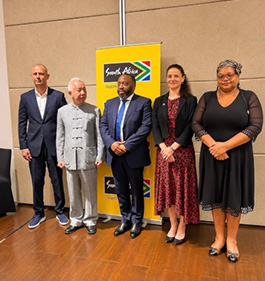
| The South African Consulate accredited to Macau and Hong Kong hosted a productive second Trade and Investment Seminar in Macau on 2 November 2026. The seminar, which was attended by various stakeholders from South Africa, Hong Kong and Macau, sought to explore ways to strengthen bilateral economic relations between Macau and South Africa. |
|
|
| |
China-South Africa economic relations have entered a new phase, with increased emphasis on industrialisation, agricultural modernisation, infrastructure development and investment-led partnerships. This was reinforced in February 2026 through the signing of the Comprehensive Agreement on Economic Partnership for Shared Prosperity (CAEPA), establishing a framework for expanding bilateral trade and investment while strengthening cooperation in agriculture, manufacturing, technology and new energy.
During his speech, Consul General Mojalefa Mogono stated that the seminar was therefore well timed to capitalise on the momentum created by CAEPA while advancing both South Africa’s and Macau’s investment priorities.
Consul: Political and Economic, Stella Sigcau, stated during her welcome remarks that the seminar created a platform to engage, collaborate and forge strategic partnerships, as well as explore opportunities for Macau and South Africa to develop further business relations, including bilateral trade, market access and investment opportunities.
Ms Ruby Swigelaar, Senior Manager: Foreign Direct Investment at Wesgro, the official tourism, trade and investment promotion agency for Cape Town and the Western Cape province in South Africa, established as a public entity under the Western Cape Investment and Trade Promotion Agency Act of 1996, stated during her presentation that this mission was essential in positioning the Western Cape as a preferred destination for Chinese investment.
She highlighted opportunities in food and beverage, primary agriculture (including agro-processing), and the promotion of investment opportunities across the Western Cape’s food and beverage, logistics and tourism infrastructure sectors. These included engaging Macau companies to explore opportunities in manufacturing, assembly, logistics, regional headquarters and tourism infrastructure, as well as promoting the Western Cape as a strategic gateway into African markets through the African Continental Free Trade Area (AfCFTA).
Her presentation also included an overview of the Western Cape’s value proposition, sector-specific investment opportunities, South Africa’s investment environment, incentive framework and market access opportunities, as well as Wesgro’s investor support services and collaboration with InvestSA and other partners. The presentation also served to create awareness of the Western Cape as an investment destination and identified opportunities in manufacturing, logistics, tourism infrastructure and agri-tech.
The session was followed by a panel discussion moderated by former Consul: Political and Economic in Hong Kong, turned businessman, Leon Naidoo.
Chairman of the Association of Macau, Li Jiexing, emphasised in his speech the importance of direct product trade, tourism linkages and cooperation through leveraging the Guangdong-Macao In-Depth Cooperation Zone in Hengqin.
He thanked the Consulate for its tireless efforts to enhance business relations between South Africa and Macau, adding that the association would continue to cooperate with the Macao SAR Government's policies, fully leverage its role as a "super-connector", and continue to promote economic and trade cooperation between China and Portuguese-speaking countries, African countries and other parts of the world.
The outcomes of the seminar included trade missions to South Africa by business delegations from Macau and a trade mission to Macau by a South African business delegation, as well as further trade and investment engagement.
– Source: www.thediplomaticsociety.co.za |
|
| |
|
| |
| THREE SOUTH AFRICAN SITES HAVE JOINED THE WORLD’S GEOLOGICAL HALL OF FAME |
|
| |
| Three South African sites have just been named among the most scientifically important places on Earth. |
|
| |
One is a rock face in Cape Town that Charles Darwin studied. Another is a river gorge holding some of the oldest signs of life. The third is a farm near Makhanda where fossils have rewritten part of the story of how animals first walked on land.
The International Union of Geological Sciences (IUGS) is the body that represents geologists worldwide. It keeps a list of IUGS Geological Heritage Sites. These are places with extraordinary rocks, fossils or natural processes that scientists everywhere use as a reference. Some earned their spot because they helped shape how we understand the Earth’s history.
The list is built in batches of 100. The first 100 were announced in Spain in 2022. The second followed in 2024 at the International Geological Congress in South Korea. The third has now been announced after 156 experts from 49 countries met in Loulé, Portugal.
|
|
|
 |
|
| |
The latest list of 100 spans 47 countries. Mount Fuji in Japan, the fjords of Norway and the San Andreas Fault in the US are among them. Eleven of the 100 are in Africa, and three of the 11 are in South Africa.
Many of these places are already protected in parks and reserves, but many are not. The IUGS says the recognition can bring more attention, more use as teaching sites and, most importantly, better protection.
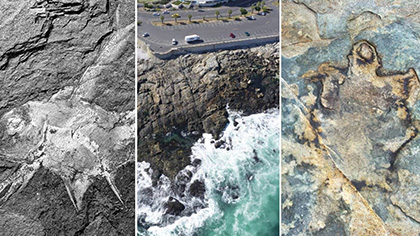
The first listed in the newest batch is in Sea Point in Cape Town.
Along the Atlantic coast, granite and the older layered rock next to it meet. This meeting point is called an “intrusive contact”. It’s where molten rock pushed up into the rock around it and then cooled. The spot is part of science history.
In the early 1800s, geologists argued over where granite came from. Some believed it formed from cooled molten rock (the Plutonist view). The place was first described in 1818 by Clarke Abel. Charles Darwin then visited in 1836 and backed the molten-rock explanation. He also saw that the heat from the granite had changed the rock beside it, and he worked out that for this rock to be exposed at the surface, a very long period of erosion must have worn away what once covered it. That fitted his bigger idea that living things change gradually over vast stretches of time.
Next is the Nhlazatse Section in the Wit Mfolozi River Gorge.
It holds a unique outcrop of fossilised microbial mats. These are thin layers of microscopic life that grew on ancient shorelines, in a time when microbes were the main life on Earth. This one dates to the Mesoarchean, an extremely early chapter in Earth’s history. The fossils are exceptionally well preserved. The shapes of the mats change from one layer to the next and scientists say this shows the coastline was shifting through three different climate zones as time passed. The research behind it has been cited more than 450 times and was highlighted in a Nature news article.
The third site is Waterloo Farm in Makhanda, Eastern Cape. It is the only place in the world that gives a full picture of life near the poles in the Late Devonian period. Every other major site from that time was in the tropics. Scientists had believed the earliest tetrapods, the first four-legged animals, lived only in the tropics, and that the earliest woody trees grew only in tropical or warm regions. Waterloo Farm proved both wrong. The fossils even preserve soft tissue, which is rare. That includes a complete growth series of the oldest known lampreys, a type of jawless fish, which challenged an established idea that these early lampreys had no larval stage.
The new three join three South African sites already on the list. The Kalahari Manganese Field is the world’s largest land-based source of manganese, home to rare and world-renowned minerals. The Vredefort Dome, about 120 km southwest of Johannesburg, is what remains of the largest impact structure on Earth, and it exposes rocks twisted and melted by a massive impact. The Barberton Greenstone Belt in Mpumalanga is a remnant of ancient Earth’s crust, holding some of the oldest and best-preserved volcanic and sedimentary rocks on the planet.
– Source: www.goodthingsguy.com |
|
| |
|
| |
| DR ESTHER MAHLANGU TURNS 91 AND GOOGLE HAS RELEASED SOMETHING EPIC TO CELEBRATE |
|
| |
 |
|
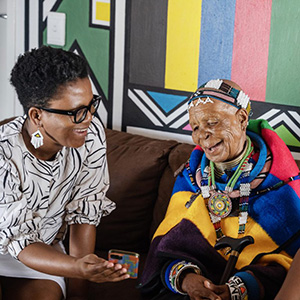
| A South African legend turned 91 on 11 November 2026. In celebration, Google Arts & Culture has released a retrospective that explores Dr Esther Mahlangu’s work, her life and her legacy. |
| |
Her work is widely recognised around the world, and every South African knows who she is. Her geometric paintings that reimagine traditional Ndebele designs are unmistakable. There is no one like Dr Esther Mahlangu, whose work has been celebrated for eight decades now!
She was the first woman and the first African artist commissioned to create a BMW Art Car in 1991, just years after her global career took off with an exhibit at the Centre Pompidou in Paris, where she painted a traditional Ndebele house replica live in front of international audiences. She has created many large-scale public murals and installations across South Africa and the world.
The earliest records of Dr Mahlangu’s work date back to 1980 – until now, much of her life before then has been missing. |
|
|
| |
Dr Nontobeko Ntombela from Wits School of Arts, in collaboration with Art of Contemporary Africa, Iziko Museums of South Africa, the British Museum, the Jean Pigozzi Collection, the National Museum of Women in the Arts and Serpentine has pieced together an incredible in-depth retrospective of Dr Esther Mahlangu’s life, her work, and her legacy.
The collection, made available on the Google Arts & Culture platform, went live on Dr Mahlangu’s 91st birthday. It explores everything – dating back to her earliest memories, never shared before.
“Through my research, I gathered a rich collection of her work, including large-scale murals, intimate pieces, and rare archival materials. But the archives didn’t include anything from her life before 1980, so crucial pieces of her history were missing. This void challenged us to find new ways to tell her full story,” shares Dr Ntombela.
In collaboration with Google Arts & Culture, AI was used to visually recreate Esther’s undocumented memories. Ntombela says the process brought them closer to her work and even sparked further recollections from Esther herself.
“Through a series of workshops and interviews, we were able to document a missing period of Mam’ Esther’s history, from when she started painting at age 10 until her first documented works in 1980,” says Dr Ntombela.
Curated archival work combined with the tech expertise of Google DeepMind and Google Arts & Culture Lab, and research and design studio Domestic Data Streamers’ synthetic memories initiative brought it all together.
“Following the methodology from the synthetic memories initiative and using archival material, the team generated still images based on Esther’s memories. They then used Veo to turn the images into videos that brought Esther’s early days to life,” shares Dr Ntombela.
The stories add to the wider online archive of Esther’s life on Google Arts & Culture. The retrospective features more than 45 digital exhibitions, more than 700 digitised archival records and over 100 high-resolution artworks. It also features 360-degree walkthroughs of her homestead art studio and landmark gallery exhibitions, including her Iziko South African National Gallery retrospective on Street View.
“Thank you to Google Arts & Culture for sharing my story, artwork, and the culture of the Ndebele nation with the world. It has always been my wish to ensure that the art and culture of my nation lives on for those who follow,” says Dr Esther Mahlangu.
– Source: www.goodthingsguy.com |
|
| |
|
| |
| THE SOUTH AFRICAN CITY THAT HAS BEEN CROWNED THE WORLD’S MOST BEAUTIFUL |
|
| |
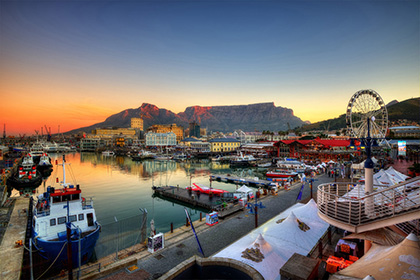
| Cape Town has been named the world’s most beautiful city in 2026, adding to a growing list of international accolades recognising the South African city’s tourism, hospitality and lifestyle attractions. |
|
|
 |
|
| |
According to Newsday, the Mother City has collected several prestigious international awards between 2023 and 2026, distinguishing itself in tourism, culinary arts, lifestyle and environmental achievements.
The latest recognition comes from international publication Time Out, which ranked Cape Town first in its 2026 World’s Most Beautiful Cities list.
The ranking was based on a survey of more than 24 000 people worldwide, with 86% of Capetonians describing their city as beautiful. Cape Town finished ahead of Edinburgh in Scotland, Sydney in Australia and Paris in France.
Time Out’s 2026 World’s Best Cities ranking also placed Cape Town sixth globally, following its first-place finish in 2025.
Natural attractions
The publication praised the city’s beaches, natural landscapes, neighbourhoods and hospitality, with its Travel Editor, Grace Beard, saying, “On Time Out’s list of the world’s most beautiful cities right now, each destination serves up something different.”
Cape Town has also maintained a strong position in the Condé Nast Traveller Readers’ Choice Awards, securing 15th place among the world’s best cities in 2026.
The city was also ranked the 10th friendliest in the world, making it the only African destination to feature on both lists.
The City of Cape Town welcomed the recognition, with Mayoral Committee Member for Economic Growth James Vos attributing the city’s appeal to its people and natural attractions.
‘Yes, the beaches and mountains are beautiful beyond compare, but it’s Capetonians who are so welcoming to visitors. That’s what makes this place unmatched,’ Vos said.
Important contributor
The accolades add to Cape Town’s record at the World Travel Awards, where it was recognised as Africa’s Leading City Destination for four consecutive years from 2021 to 2025, according to Newsday.
The city’s tourism sector also remains an important contributor to the local economy. Vos said Cape Town recorded R24.5 billion in direct tourism spending in 2025, while the industry supported more than 106 000 jobs.
The city aims to increase tourism spending to R35 billion and create 234 041 tourism jobs by 2030.
Vos said the city would continue strengthening its destination marketing campaigns and airline partnerships to attract more international visitors and convert growing interest into bookings and longer stays.
– Source: www.capetownetc.com |
|
| |
|
| |
| FROM THE BUSH TO THE BEACH, SOUTH AFRICA WINS 70 LUXURY AWARDS |
|
| |
| South Africa has won an incredible 70 awards across 32 properties at the 2026 World Luxury Hotel Awards, joining some of the world’s finest hotels and resorts. From safari lodges to coastal retreats, our hospitality industry is shining on the world stage. |
|
| |
From breathtaking safari lodges and beautiful boutique hotels to spectacular coastal retreats, our hospitality industry has earned an incredible 70 accolades at the 20th annual World Luxury Hotel Awards. A total of 32 South African properties were recognised across country, regional, continental and global categories, putting our beautiful country in some seriously impressive international company.
Established in 2006 by South African hotelier Brandon Lourens, the awards have grown into an international hospitality programme celebrating exceptional hotels and guest experiences. This year marks the 20th anniversary, with ceremonies taking place in Romania and Thailand. According to the organisers, more than 300 000 international travellers participate in the voting process annually.
Among South Africa’s standout winners was African Flair Boutique Safari Lodge, which collected three awards, including the Global Luxury Boutique Lodge title. The Royal Madikwe Luxury Safari Lodge was named Global Luxury Safari Lodge, while Tulela Safari Lodge secured the Global Luxury Private Lodge title. Our incredible safari destinations continued to shine, with Kuganha Luxury Tented Camp collecting three awards, including Global Luxury Private Game Reserve, while Pondoro Game Lodge earned the Global Luxury Safari Retreat title. Sabi Sabi Private Game Reserve was also recognised as the Global Luxury Game Lodge winner. |
|
|
 |
|
| |
And it wasn’t only our safari lodges making headlines.
La Petite Ferme received the Global Luxury Small Hotel award, Kievits Kroon Gauteng Wine Estate claimed the Global Luxury Country Hotel title and Walkers Beach was recognised as the Global Luxury Beach Retreat winner. Meanwhile, The Houghton Hotel Spa, Wellness and Golf, The Claremont Boutique Hotel and VIVARI Hotel and Spa each collected three awards.
To appreciate just how impressive these achievements are, take a look at some of the other beautiful destinations recognised at this year’s awards.
The prestigious Global Hotel of the Year title went to Keemala in Phuket, Thailand, a spectacular resort famous for its treehouse-inspired villas and private pools. In Italy, ADLER Alpe received global honours for Luxury Mountain Lodge and Luxury Ski Lodge, while ADLER Sicilia was named the Global Luxury Spa Resort winner. Over in the Maldives, .Here Baa Atoll Maldives received the Global Luxury New Resort award, while AINO Private Island Hotel in Finland claimed the Global Luxury Private Island Resort title. Australia’s ADGE Hotel & Residences also celebrated three continental awards.
These incredible properties span some of the world’s most desirable destinations, and our South African establishments stand alongside them, earning international recognition of their own.
Other local winners included Aquila Private Game Reserve & Spa, Fusion Boutique Hotel, Inverdoorn Private Game Reserve, Monate Game Lodge, Pepperclub Hotel, The Peech Hotel, Rhulani Safari Lodge and Simola Hotel, Country Club & Spa, among many others.
Beyond the beautiful buildings, incredible views and luxurious experiences, these awards celebrate something even more important: the people behind South African hospitality. From the chefs and receptionists to the safari guides, housekeeping teams and countless others who make every guest feel welcome, these achievements are theirs too.
Congratulations to every South African establishment recognised at the 2026 World Luxury Hotel Awards. Our country has always had extraordinary places to visit but it’s our people who make those places unforgettable.
– Source: www.goodthingsguy.com |
|
| |
|
| |
| AFDA REPRESENTS SOUTH AFRICAN CREATIVE EDUCATION AT CILECT 2026 IN DUBLIN |
|
| |
 |
|
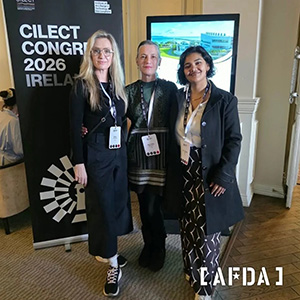
| Hosted by the Institute of Art, Design + Technology (IADT), the annual congress brought together representatives from more than 180 film, television and media schools across over 60 countries. The gathering provided a platform for international collaboration, the exchange of teaching practices and discussions on the challenges and opportunities shaping the future of the screen industries. |
|
|
| |
As a full and active member of the Centre international de liaison des écoles de cinéma et de télévision (CILECT) for the past 20 years, AFDA participates in a global network committed to advancing excellence in film, television and media education. Its presence at the congress reflects the institution's commitment to international engagement, continuous innovation and preparing graduates to contribute meaningfully to a rapidly evolving creative economy.
This year's congress explored the theme Film Education: ReMastered, Examining How Technological Change, New Creative Practices and Evolving Industry Expectations are Reshaping the Way Film and Media are Taught.
Key discussions focused on artificial intelligence and authorship, resilience and sustainability, and the evolving relationship between experienced practitioners and the next generation of creative talent. These conversations speak directly to the challenges facing creative institutions as they balance emerging technologies with the craft, critical thinking and distinctive perspectives that underpin compelling storytelling.
For AFDA CEO Diaan Lawrenson, the opportunity to engage with leading international institutions reinforced the value of being part of a global community of creative educators.
"Engaging in meaningful dialogue with internationally renowned institutions, including the London Film School, Stockholm Film & Television School, Pratt Institute in New York and the Institute of Art, Design and Technology in Ireland, has once again affirmed AFDA's position at the forefront of creative education," says Lawrenson.
"As a proud member of the prestigious CILECT community, AFDA benefits from a truly global, forward-thinking network in which educational excellence, international best practice and the future of the creative industries are shared, explored and shaped."
Lawrenson adds that the congress provided an important opportunity to consider how creative education must evolve alongside the industry it serves.
"It was an enriching and thought-provoking gathering, reaffirming the importance of collaboration, innovation and a shared commitment to the future of creative education. AFDA remains firmly aligned with international best practice, continually evolving and embracing new possibilities as we prepare our students to become confident, innovative and distinctive creative voices on the global stage."
For Henriette de Villiers, AFDA's chief operating officer, CILECT provides an important platform for institutions to share knowledge, address common challenges and build relationships that can benefit both educators and students.
Founded in 1954, CILECT brings together institutions committed to high standards in audiovisual education, facilitating international dialogue and opportunities for collaboration. Its global network connects educators and creative practitioners working across diverse cultural and educational contexts.
"In my capacity as COO, I manage AFDA 's participation in CILECT conferences, including those held in Beijing in 2024 and Guadalajara, Mexico, in 2025," says de Villiers. "With 180 audiovisual educational institutions from across the world, CILECT provides a valuable annual opportunity for members to explore challenges arising from technological developments in our educational landscape, to share proposed solutions and approaches, and to promote worldwide exposure and opportunities for AFDA students and alumni."
The congress also offered a significant opportunity to showcase South African academic research and creative thought on an international platform.
A highlight of the congress was Dr Temara Prem's presentation, Pain Travels, Joy Stays Home: Struggle Narratives and the Idea of Exportable Cinema. Her work explored questions surrounding the representation of struggle in cinema and the ways in which stories rooted in particular cultural and historical contexts travel across international audiences.
The presentation resonated with delegates from different parts of the world, demonstrating the relevance of South African film scholarship to wider international conversations about cinema, identity and storytelling.
For Prem, AFDA's presence at CILECT reflects the institution's place within the global community of film and media education.
"Among many globally recognised film, television and performance schools across the globe, AFDA truly holds a seat at the table, representing African excellence in teaching methods and quality of student productions," says Prem.
AFDA's participation in CILECT 2026 reinforces the value of international collaboration in an industry where technology, audiences and creative practices continue to evolve.
As the creative economy continues to expand and transform, AFDA's involvement in the CILECT community reflects its ambition to develop graduates who can work across disciplines, engage critically with emerging technologies and bring original perspectives to the global stage.
– Source: www.bizcommunity.com |
|
| |
|
| |
| SPRINGBOKS RUN RIOT AGAINST ITALY WITH DEVASTATING FIRST-HALF DISPLAY IN TURIN |
|
| |
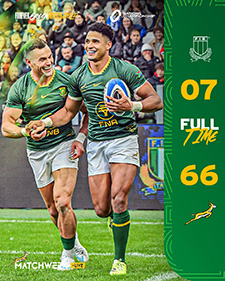
| The Springboks produced a dazzling first-half performance to thrash Italy 66-7 in their Nations Championship clash at Allianz Stadium in Turin on Saturday, 7 November 2026. |
|
| |
The Boks scored seven tries before the break to effectively put the contest to bed, with their forwards dominating the set-piece and collisions and their backs ruling the skies and looking sharp on attack.
Italy had no answer to the visitors' power and precision in the opening 40 minutes, while South Africa's defence was equally impressive, suffocating the hosts whenever they attempted to build momentum.
The Boks took their foot off the pedal somewhat in the second half, allowing Italy to enjoy more possession and score a well-worked try, although they still outscored the hosts three tries to one
The Boks made a bright start and were rewarded with an early penalty, which Feinberg-Mngomezulu converted before adding a spectacular try of his own in the ninth minute, producing a clever dummy in the midfield before breaking through a gap and racing into the corner.
South Africa continued to pile on the pressure, with Morne van den Berg eventually spotting an opportunity to break away from the back and snipe over behind a driving maul for the Boks' second try.
The Springboks were rampant, adding two more tries in quick succession. Marx powered over from behind the rolling maul before Kolisi followed him over three minutes later after another straightforward lineout drive. |
|
|
 |
|
| |
Feinberg-Mngomezulu then produced a superb 50/22 to put the Boks back on the front foot, and the pressure eventually told as South Africa won another lineout and drove towards the line. Marx was once again the beneficiary, claiming his second try of the afternoon.
Italy's afternoon went from bad to worse when Muhamed Hasa was shown a yellow card for cynical play. The Boks immediately capitalised, with Lood de Jager charging down a kick before Jasper Wiese ran through a massive gap and offloaded on his inside for Damian Willemse, as it finished 45-0 at half-time.
The second half was a much scrappier affair, with the Boks struggling to reproduce the fluency of their first-half display, despite an early try for Wilco Louw to push the score past 50.
Italy finally got on the scoreboard in the 62nd minute when Federico Ruzza finished off a well-worked move, much to the delight of their long-suffering fans.
The Springboks responded by reasserting their authority at the set-piece, winning a scrum penalty before returning to their familiar driving maul. Paul de Villiers peeled around the blindside to score in the 73rd minute, with Feinberg-Mngomezulu adding the extras.
And with time running out, the Boks had the final say as Ethan Hooker burst through a tired Italian defence for their 10th and final try to complete a commanding 66-7 victory for the world champions.
– Source: www.sabcsport.com |
|
| |
|
| |
| SOUTH AFRICAN SWIMMER MAKES A SPLASH WITH TWO YOUTH OLYMPIC MEDALS |
|
| |
 |
|
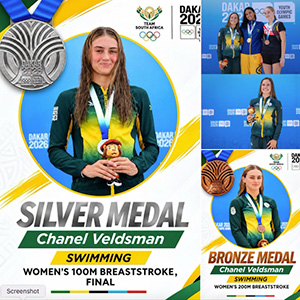
| Chanel Veldsman has enjoyed a remarkable few days at the Youth Olympic Games in Dakar, Senegal, turning a personal-best target into a two-medal haul for South Africa. |
| |
The University of Pretoria (Tuks)-based swimmer first stepped onto the podium in the 200 m breaststroke, claiming bronze in a time of 2:30.87. Even more impressive was that she shaved almost four seconds off her previous personal best.
Japan’s Mana Ishikawa took gold in 2:26.50, with China’s Mohan Chang finishing second in 2:27.21. Veldsman admitted that a medal had not been on her radar before the competition, making the achievement all the more special.
“I didn’t expect to qualify for the final at all. My only goal was to give it my all; that’s my objective every time I race. It is an incredible achievement, and bringing home bronze for my country means the world to me. I’m not looking too far ahead; I’ll take things one step at a time from here, but for now, I’m going to savour this unforgettable moment.” |
|
|
| |
The following day, Veldsman returned to the pool for the 100m breaststroke and added a silver medal to her collection, once again producing a personal best. Her time of 1:09.48 was more than a second quicker than her previous best. Ishikawa claimed another gold in 1:08.81, while Hong Kong’s Wui Kiu Man took bronze in 1:10.33.
“I never thought I would win a medal at the Games, let alone two! The best I had hoped for was to qualify for a final. My main goal was to improve my personal best times. In the 100 m breaststroke, I stayed completely focused on my race plan. It worked.”
She credited Tuks head swimming coach, Rocco Meiring, for helping her along the way, saying.
“I trust him completely, knowing that he has produced Olympians and is deeply committed to his swimmers. It’s an amazing journey to be coached by him.”
Her results have also added to an encouraging showing by the Tuks swimming contingent in Dakar, with fellow swimmer Leah Markgraaff having claimed silver in the 400 m freestyle.
Veldsman will now turn her attention to the 50 m breaststroke as she looks to build on an unforgettable Youth Olympic campaign.
– Source: www.goodthingsguy.com |
|
| |
|
| |
| SOUTH AFRICA’S MATAO LE ROUX LEAPS AND DANCES TO HIGH JUMP TITLE IN DAKAR |
|
| |
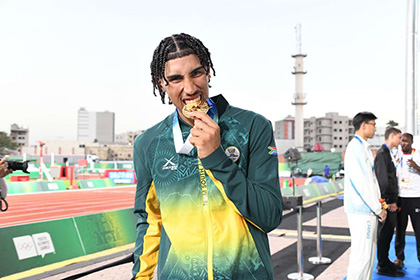
| Matao le Roux leaped into the record books at the Dakar 2026 Youth Olympic Games, claiming South Africa’s first-ever high jump gold medal in the history of the event. |
| |
|
|
|
 |
|
| |
The 17-year-old’s 2.16 m masterclass headlined a three-medal track-and-field harvest that lifted Team SA’s overall tally to nine – matching the nation's best haul set in Singapore in 2010.
Locked in a tense head-to-head battle with China’s Sen Liu at the Iba Mar Diop Stadium, the Caledon native held his nerve under extreme pressure, dancing cleanly over the bar on his first attempt at 2.16 m to seal the title. With the SA flag draped around his shoulders after his win, Le Roux did a joyous, spontaneous celebratory dance on track that brought the Senegalese crowd roaring to their feet.
“I was really struggling with my first three jumps, and I was being put under immense pressure,” Le Roux said.
“On the fourth jump I decided enough was enough, and I went to put the pressure on him. I got into the groove and it flowed from there. Thank you to everyone who has supported me, especially my mother. The two of us have been struggling for a long time, and I hope this medal brings us opportunities we never had before.”
Le Roux becomes South Africa’s second gold medallist in Dakar, joining rower Callum Dreyer on the top step of the podium.
The medals kept coming on the track and in the field.
Despite an early starting block malfunction, Enrique Bosch showed remarkable grit in the 110m hurdles final, clocking 13.45 seconds to secure bronze. Meanwhile, Darius Botha landed bronze in the shot put with a 19.23 m effort, proudly marking his podium finish in the first Olympic event staged on African soil.
Looking ahead, South Africa’s momentum shows little sign of slowing. In the 400 m semi-finals, 17-year-old Megan Nieman cruised through in 1:00.56.
– Source: www.iol.co.za |
|
| |
|
| |
| BANYANA BANYANA LANDS THREE NOMINATIONS AT 2026 CAF AWARDS |
|
| |
 |
|
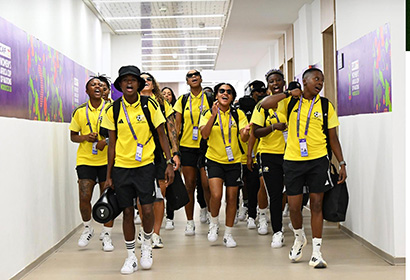
| The national team, goalkeeper Kaylin Swart and forward Thembi Kgatlana have all been recognised, with the trio featuring on the shortlist for the December 2026 ceremony. |
| |
South African women’s football celebrates the country’s biggest stars earning recognition in three categories at the upcoming 2026 Confederation of Football (CAF) Awards.
Thembi Kgatlana, Kaylin Swart and the national team have all made the shortlist for the ceremony, which is scheduled to take place in Nigeria on Monday, 7 December 2026.
Banyana Banyana is nominated for Women’s National Team of the Year, where they will face competition from the likes of Nigeria, Morocco, Ghana, Malawi and Cameroon, among others. |
|
|
| |
It is a category South Africa knows well, having previously claimed the honour in 2019 and 2022.
Goalkeeper Kaylin Swart will also be hoping to bring home some individual recognition after earning a nomination for Women’s Goalkeeper of the Year. She is up against a strong group of contenders, including Algeria’s Chloe N’Gazi, Malawi’s Mercy Sikelo and Zambia’s Hazel Nali.
There is further South African interest in the headline individual award, with forward Thembi Kgatlana shortlisted for Women’s Player of the Year.
The Mexico-based attacker previously won the award in 2019 and will be looking to add another continental honour to her collection. However, she faces stiff competition, including Malawi’s influential Chawinga sisters, Tabitha and Temwa, as well as Zambia’s Barbra Banda and Ghana’s Portia Boakye.
The nominations provide a welcome boost for South African football as Banyana prepare for another important assignment.
Before the awards ceremony, Desiree Ellis’ side will turn their attention to the FIFA Women’s World Cup Play-offs in Rabat, Morocco, which run from 28 November to 6 December 2026. South Africa are among six nations competing in the mini-tournament and are set to face Chinese Taipei, Ecuador and Uzbekistan.
The top two teams will progress to the final qualifying phase in February 2027, where three places at the 2027 FIFA Women’s World Cup in Brazil will be up for grabs.
South Africa has three reasons to celebrate as Banyana and two of their standout players look to make their mark at the CAF Awards.
– Source: www.goodthingsguy.com |
|
| |
|
| |
| DALLAN GOLDMAN MAKES HIS MARK AT KING OF THE WHIP |
|
| |
 |
|
| The South African rider claimed two second-place finishes in the Best Trick competitions and also received the prestigious Ricky Raaff Award. |
| |
|
|
|
| |
South African motocross rider Dallan Goldman gave local fans plenty to celebrate at this year’s King of the Whip, delivering an impressive performance against some of the world’s leading freestyle motocross athletes in Johannesburg.
The 23-year-old was among more than 20 international and local riders who took to the ramps at Montecasino on Saturday, 7 November 2026, for one of Africa’s biggest freestyle motocross competitions.
Goldman secured two podium finishes in the Best Trick events, placing second in the Right Side Up category and third in the Upside Down competition.
His performance in the Right Side Up contest saw him finish behind Japan’s Genki “Wanky” Watanabe, while Spain’s Edgar Torronteras took third place.
In the Upside Down competition, Japan’s Takayuki “Taka” Higashino claimed top honours, with Belgian Julien Vanstippen finishing second and Goldman rounding out the podium.
Goldman’s achievements were not limited to the competition results. He also received the Ricky Raaff award, which recognises a rider who displays exceptional heart, resilience, determination and a never-give-up attitude throughout the event.
The award honours the late South African motocross champion Ricky Raaff, who tragically lost his life during a regional championship race in July 2025.
Reflecting on the evening, Goldman said he was overwhelmed by the opportunity and the result.
“Honestly, I’m on top of the world right now. I’ve been having some of the roughest times of my life lately, and the way I’m feeling right now, I can’t describe it. I’m just so happy and grateful that I got to be here and have this opportunity, and wow, I’m speechless.”
The night’s main attraction was the Best Whip final, where riders competed for the coveted King of the Whip title.
Belgium’s Vanstippen ultimately reclaimed the crown for a fourth time, having previously won the competition from 2022 to 2024. American Tom Parsons finished second, while Watanabe claimed third.
The event also produced a memorable moment when Spanish rider Marc Pinyol performed a front flip jump for the first time on African soil, leaving the sold-out crowd at Montecasino in awe.
– Source: www.goodthingsguy.com |
|
| |
|
| |
|
|
|
|
|
|
|
|