| |
| |
|
| |
| WORKING VISIT: PRESIDENT RAMAPHOSA ARRIVES IN CALIFORNIA |
|
| |
 |
|
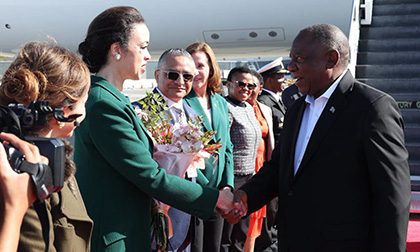
| President Cyril Ramaphosa arrived in California in the United States for a high-level Working Visit to Silicon Valley, where he led a multi-stakeholder South African delegation in engagements aimed at strengthening the country’s artificial intelligence (AI) capabilities and attracting investment. |
|
|
| |
The President arrived on Saturday, 14 November 2026, accompanied by a delegation comprising representatives from government, academia, business, research institutions, technical experts and university students.
The visit seeks to provide South Africa with insights into the global AI ecosystem and inform the country’s approach to the development, adoption and application of the technology.
The programme includes engagements with leading technology companies, investors, researchers, academics and AI experts, alongside technology demonstrations and knowledge exchanges covering frontier AI, robotics, data infrastructure, cloud computing and digital innovation.
A key feature of the visit will be the South Africa AI Opportunity gathering, under the theme: Building the African AI Economy: Infrastructure, Investment and Innovation.
The gathering will bring together South African and international stakeholders to explore opportunities to position South Africa as a competitive AI hub on the African continent.
Discussions will focus on the infrastructure required to support AI development, including data centres, computing capacity and energy requirements, as well as investment opportunities and the growth of a competitive start-up ecosystem.
The delegation will also engage with leading academic institutions to explore the implications of AI for technology, security, the economy, business and the labour market, as well as developments in robotics and technological research.
Other areas of focus include the application of AI in government and industry, law enforcement and public safety, AI safety and security, governance, skills development and the future of work. The engagements are expected to identify opportunities for investment, knowledge exchange and skills development, while strengthening South Africa’s technological capabilities.
AI presents opportunities to improve productivity, strengthen public service delivery, stimulate economic growth and support the development of new industries and employment opportunities. In South Africa, potential applications include health, education, criminal justice, public administration and public procurement.
“The visit provides an opportunity to learn from countries and institutions at the forefront of AI development, understand the associated risks and challenges, and consider how South Africa can develop an enabling policy, regulatory and skills environment to support responsible AI adoption,” the Presidency said.
Investment destination
South Africa will further use the visit to promote itself as an investment destination, showcase progress in economic reforms, including through Operation Vulindlela, and highlight opportunities in its digital economy, research capacity and innovation ecosystem.
As the country explores the opportunities presented by AI, it will also seek to safeguard its digital sovereignty, policy autonomy, data protection and responsible AI governance, ensuring that technological advancement contributes to inclusive economic growth and development.
The President is accompanied by the Ministers of Finance; International Relations and Cooperation; Science, Technology and Innovation; Trade, Industry and Competition; Communications and Digital Technologies; Electricity and Energy; Small Business Development; and The Presidency, as well as South Africa’s Ambassador to the United States.
– Source: SAnews.gov.za |
|
| |
|
| |
| SOUTH AFRICA REAFFIRMS ITS STANCE ON CHAMPIONING DIALOGUE IN THE WORLD |
|
| |
| South Africa will continue to champion dialogue, the peaceful resolution of disputes, the protection of civilians and respect for human rights, President Cyril Ramaphosa said on Friday, 13 November 2026. |
|
|
 |
|
| |
“International law must apply consistently, without exception or favour. The principles of the United Nations Charter must be respected by all nations, whatever their economic or military power. We cannot build a stable international order on selective justice, unilateralism or the idea that might makes right.
“We will continue to champion dialogue, the peaceful resolution of disputes, the protection of civilians and respect for human rights,” the President said.
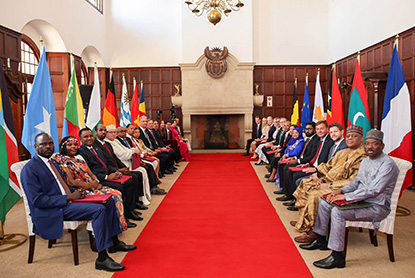
This, as President Ramaphosa received letters of credence from newly accredited heads of mission to South Africa at the Sefako Makgatho Presidential Guest House in Pretoria.
The President welcomed the new heads of mission, saying their presence affirms the value that their governments place on their relations with South Africa.
He said South Africa stands ready to deepen its bilateral relations and to build new partnerships of mutual benefit. President Ramaphosa said the ambassadors assume their responsibilities at a particularly consequential moment in international affairs.
“The world is marked by heightened geopolitical competition, shifting alliances and growing uncertainty about the future of the international order. Conflicts in different parts of the world continue to exact an enormous human toll.
“The situations in the Middle East, Ukraine, Sudan and elsewhere remind us of the devastating cost of war and the failure of diplomacy. These conflicts disrupt global trade, undermine food and energy security, and place a heavy burden on countries like ours.
“At the same time, the multilateral system, particularly the United Nations, is under considerable strain,” he explained.
President Ramaphosa said the answer to the crisis facing multilateralism is not "less multilateralism", but better, more representative and more effective multilateralism.
“Our foreign policy is anchored in the values of our Constitution, which marks its 30th anniversary this year. These values — human dignity, equality, non-racialism, non-sexism, freedom and justice — shape how we engage with the world.”
He said South Africa seeks constructive relations with all countries, whatever their political systems or economic models. These relations are guided by mutual respect, equality and the pursuit of shared interests.
“The challenges facing humanity require us to engage across political, ideological and geographical divides.”
Africa, the President said, remains at the centre of South Africa’s foreign policy.
In August 2026, South Africa assumed the Chairpersonship of the Southern African Development Community for 2026 and 2027.
“Our focus is on regional industrialisation, infrastructure development, agricultural transformation and food security. We are determined to expand the beneficiation of our critical minerals.
“Africa must move beyond being a supplier of raw materials to become a centre of production, innovation and value addition.”
He invited the heads of mission to work with South Africa through investment, technology transfer, skills development, infrastructure financing and trade.
“Our vision is of an Africa that is peaceful, integrated and prosperous. As the first African country to hold the G20 Presidency, we will continue to champion inclusive growth, debt sustainability, climate justice and food security.”
“As you take up your assignments, I assure you of the full support and cooperation of the South African Government. South Africa is a country of remarkable diversity, rich heritage and immense potential,” President Ramaphosa said.
– Source: SAnews.gov.za |
|
| |
|
| |
| MINISTER LAMOLA LEADS SOUTH AFRICAN DELEGATION TO AU SESSION ON FINANCING OF THE UNION |
|
| |
 |
|
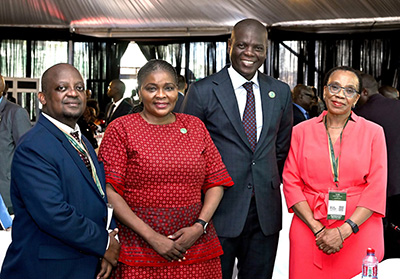
| The Minister of International Relations and Cooperation, Ronald Lamola, led the South African delegation to the 27th Extraordinary Session of the African Union (AU) Executive Council on the Financing of the Union, held in Accra, Ghana, on 13 November 2026. |
| |
|
|
|
| |
The joint session brought together ministers responsible for foreign affairs and finance to consider the Report of the High Representative on Financing the Union and the Peace Fund. Discussions focused on strengthening the AU's financial sustainability, mobilising domestic resources and reducing the organisation's dependence on external funding.
The session took place against the backdrop of growing concerns among AU Member States about the implications of reliance on external funding, including funding uncertainties and the potential influence of external partners on the continent's priorities. Member States also considered the importance of strengthening financial accountability and ensuring that they meet their financial obligations to the continental organisation.
Addressing the session, Minister Lamola emphasised the urgency of securing sustainable financing for the AU, particularly in an increasingly complex geopolitical environment characterised by shrinking external funding.
“The financing of the AU is a discussion that is as urgent as it is timely, given the shrinking pool of external funding. In this fractured geopolitical context, partners we have relied on are redirecting their resources to other priorities. Unless we match political ownership with financial ownership, our aspirations for development, integration and silencing the guns will be at risk at a time when their realisation is most needed,” said Minister Lamola.
The session also considered a proposal on the strategic partnership between the AU and African multilateral financial institutions, aimed at exploring opportunities to strengthen the continent's financial capacity and support the Union's long-term objectives.
On the margins of the session, Minister Lamola held bilateral engagements with his counterparts to discuss matters of mutual interest and concern.
The meeting reaffirmed the importance of collective commitment by AU Member States to strengthening the financial independence and institutional capacity of the continental organisation.
– Source: www.gov.za |
|
| |
|
| |
| DEPUTY MINISTER BOTES UNDERTAKES POLITICAL ENGAGEMENTS IN NORWAY |
|
| |
| The Deputy Minister of International Relations and Cooperation, Alvin Botes, is undertaking a series of diplomatic engagements in Oslo, Norway, aimed at strengthening bilateral relations between South Africa and the Kingdom of Norway and advancing cooperation between Africa and the Nordic countries. |
| |
|
|
|
 |
|
| |
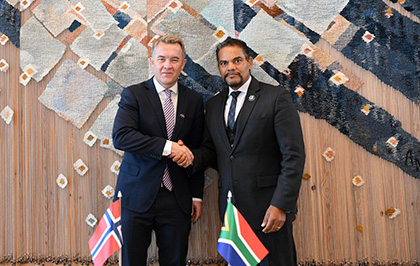
On 17 November 2026, Deputy Minister Botes held Political Consultations with the Norwegian State Secretary for Foreign Affairs, Andreas Motzfeldt Kravik. The consultations focused on strengthening bilateral relations between South Africa and Norway, as well as preparations for high-level consultations scheduled for 2027.
During his visit, Deputy Minister Botes will also participate in the 23rd Nordic–Africa Foreign Ministers' Meeting, hosted by Norway's Minister of Foreign Affairs, Espen Barth Eide, on 19 and 20 November 2026.
Held under the theme Dialogue in an Era of Uncertainty: United for a Prosperous Future, the meeting will provide a platform for African and Nordic countries to engage on shared priorities, strengthen partnerships and explore opportunities for enhanced cooperation.
The two-day programme will include a Business Seminar focusing on ways to advance Africa–Nordic trade and investment relations. Discussions will cover key areas such as renewable energy, critical mineral value chains, digital transformation, capital mobilisation and job creation.
South Africa's Ambassador to the Kingdom of Norway, Delores Kotze, spoke to Ubuntu Radio as she concludes her tour of duty. During the interview, Ambassador Kotze reflected on the state of bilateral relations between South Africa and Norway and the diplomatic engagement between the two countries.
Deputy Minister Botes's engagements reaffirm South Africa's commitment to strengthening its bilateral partnerships and deepening cooperation with Nordic countries, while advancing mutually beneficial trade, investment and development opportunities between Africa and the Nordic region.
– Source: DIRCO Public Diplomacy Platforms
|
|
| |
|
| |
| SOUTH AFRICA COMMEMORATES 80 YEARS OF THE INTERNATIONAL COURT OF JUSTICE |
|
| |
 |
|
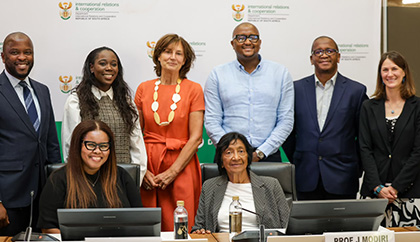
| The Department of International Relations and Cooperation (DIRCO), the Embassy of the Kingdom of the Netherlands and the University of Pretoria’s Centre for Human Rights jointly hosted a commemorative event in Pretoria on Friday, 13 November 2026, marking 80 years since the International Court of Justice (ICJ) commenced its work. |
| |
|
|
|
| |
The event formed part of a series of global activities aimed at taking stock of the Court’s contribution to international justice and reflecting on its future role in an evolving international landscape.
The commemoration provided an opportunity to reflect on the achievements and limitations of international justice in Africa, as well as the continent’s contribution to the development of the Court. Discussions also looked towards the future, with a particular focus on engaging the next generation of African international lawyers and international relations students in shaping perspectives on the future of international justice.
The event underscored the importance of continued dialogue, academic engagement and international cooperation in strengthening the role of international justice and the rule of law.
– Source: DIRCO Public Diplomacy Platform |
|
| |
|
| |
| MINISTER CHIKUNGA REPRESENTS SOUTH AFRICA AT THE COPENHAGEN SUMMIT |
|
| |
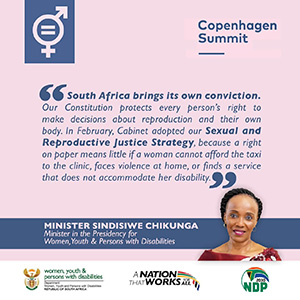
| The Minister in the Presidency for Women, Youth and Persons with Disabilities, Sindisiwe Chikunga, represented South Africa at the Copenhagen Summit on Gender Equality and Women’s and Girls’ Rights, taking place in Copenhagen, Denmark, from 16 to 17 November 2026. |
| |
“South Africa’s participation reaffirms the country’s commitment to gender equality, human rights, dignity and non-discrimination, as enshrined in the Constitution of the Republic of South Africa.
“It also provides an opportunity to strengthen international partnerships, exchange policy expertise and mobilise collective action towards addressing persistent structural inequalities affecting women and girls,” the Department of Women, Youth and Persons with Disabilities (DWYPD) said in a statement.
The summit brought together political leaders, governments, civil society organisations, international institutions and development partners to strengthen global cooperation and accelerate progress towards gender equality and the realisation of women’s and girls’ rights.
|
|
|
 |
|
| |
South Africa’s gender equality agenda is anchored in a whole-of-government and whole-of society approach, recognising that meaningful transformation requires coordinated interventions across government departments, civil society, the private sector, organised labour, communities and international development partners.
Key national priorities include accelerating efforts to end gender-based violence and femicide (GBVF); advancing women’s economic empowerment and financial inclusion; strengthening access to sexual and reproductive health and rights; increasing women’s representation in leadership and decision-making; promoting gender-responsive budgeting; and protecting and advancing the rights of all women and girls, particularly those experiencing multiple and intersecting forms of discrimination
"The Government continues to prioritise the implementation of policies, legislation and institutional mechanisms that advance substantive gender equality. These include the National Strategic Plan on Gender-Based Violence and Femicide, the National Policy Framework on Women’s Economic Empowerment and Gender Equality, and the broader national development agenda aimed at building an inclusive society in which women and girls can participate meaningfully in all spheres of life," the department said.
The Minister said gender equality cannot remain an aspiration expressed in international declarations; it must translate into tangible improvements in the everyday lives of women and girls.
"This requires political leadership, sustained investment, effective legislation and accountability across all sectors of society," said Minister Chikunga.
According to the department, the Copenhagen Summit presents an important opportunity to strengthen global solidarity, share experiences and build partnerships that can accelerate progress. It added that South Africa remains committed to working with international partners to advance the rights, empowerment and leadership of all women and girls, leaving no one behind.
The DWYPD continues to provide strategic leadership and coordination in advancing the national gender equality agenda, working with relevant government institutions and social partners to strengthen implementation, accountability and monitoring of commitments.
Minister Chikunga’s participation in the summit underscores South Africa’s continued engagement in international efforts to advance gender equality and its commitment to translating global commitments into meaningful national action.
– Source: SAnews.gov.za |
|
| |
|
| |
| SADC COUNTRIES URGED TO STRENGTHEN DISASTER READINESS |
|
| |
 |
|
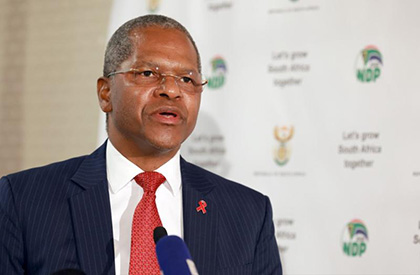
| Cooperative Governance and Traditional Affairs (CoGTA) Minister Velenkosini Hlabisa has called on Southern African Development Community (SADC) Member States to urgently strengthen disaster preparedness and secure funding ahead of the 2026/27 rainfall season. |
|
|
| |
Speaking at the virtual 7th SADC Committee of Ministers Meeting Responsible for Disaster Risk Management on Thursday, 12 November 2026, Minister Hlabisa said the state of preparedness for the coming season demands equally serious attention, warning that a regional snapshot indicates that around 41 million people may be at risk.
In his address, Minister Hlabisa, who chaired the meeting, said preparedness and response requirements are estimated at US$1.85 billion, against about US$241 million currently available. The Minister said the severe financing gap requires Member States to move beyond "expressions of concern".
“Contingency plans that are not approved, financed, tested and understood by those responsible for implementation cannot protect communities.
“This severe financing gap requires us to move beyond expressions of concern and towards costed plans, assigned responsibilities, pre-arranged financing and measurable implementation,” he said.
The Minister urged Member States to finalise and validate El Niño-informed contingency plans, identify triggers and early actions, secure resources, pre-position essential supplies and strengthen coordination across sectors and across borders.
The Minister said the outlook for the 2026/27 rainfall season requires urgent and differentiated interventions, with strong El Niño conditions, elevated temperatures and below-normal rainfall expected across much of central and southern SADC.
Northern, coastal and island areas, however, may remain exposed to flooding and other high-rainfall hazards.
He said the region must prepare for multiple threats, including drought, heat stress, water shortages, floods, severe storms, wildfires and disease outbreaks, and cascading impacts on agriculture, energy, health, infrastructure, and regional markets.
“Preparedness cannot be uniform when risk is not uniform. Regional assessments must be translated into downscaled national and subnational forecasts, practical advisories and early decisions that reach institutions, farmers, and communities in time to act,” the Minister said.
Minister Hlabisa said the improved agricultural production, pasture conditions, water availability, and regional food supply recorded during the 2025/26 rainfall season must not create a false sense of security. Although the season supported a broad recovery, floods, tropical cyclones, localised dry spells and disease outbreaks continued to cause loss of life, displacement, infrastructure damage and livelihood disruptions.
“The message is clear: an improved regional outlook does not mean that vulnerability has been overcome. It means that we have a narrow opportunity to protect recent gains before the next shock reverses them.”
The Minister also raised concerns about food insecurity, noting that approximately 53 million people in reporting Member States are projected to face food insecurity during the 2026/27 consumption period. He noted that food insecurity is driven not only by agricultural production, but also by poverty, conflict, displacement, rising food prices, limited market access, household income and the affordability of nutritious food.
He called for a comprehensive response combining resilient agriculture, functioning regional trade, nutrition interventions, livelihood protection and social protection measures that could respond to climate-related shocks.
The Minister emphasised that early-warning systems must translate into practical interventions before communities experience the full impact of disasters.
He also highlighted the SADC Multi-Hazard Regional Anticipatory Action Framework 2026–2030 as an important mechanism for linking weather forecasts and agreed triggers to pre-arranged interventions. He said measures to protect agricultural planting, water access, livestock, household income and essential services need to be activated before the impacts of climate hazards become fully visible.
“Early warning is valuable only when it leads to early decisions, early financing and early action,” Minister Hlabisa said.
The Minister also highlighted the importance of strengthening regional humanitarian logistics through the SADC Regional Prepositioning Strategy, which aims to improve the availability, location and movement of emergency relief supplies.
He said administrative and logistical delays should not prevent humanitarian assistance from reaching communities when disasters strike, calling for clear procedures, interoperable systems and efficient cross-border support arrangements.
– Source: SAnews.gov.za |
|
| |
|
| |
| TRADE AND INDUSTRY DEPARTMENT TO LEAD OUTWARD SELLING MISSION TO UGANDA |
|
| |
 |
|
| The Department of Trade, Industry and Competition (the dtic) will lead an Outward Selling Mission to Uganda next week, in a bid to expand trade opportunities for South African companies in the East African country. |
| |
Seventeen companies operating in agriculture, agro-processing and iron and steel machinery will participate in the mission.
The mission will comprise a trade and investment seminar, business-to-business meetings and site visits.
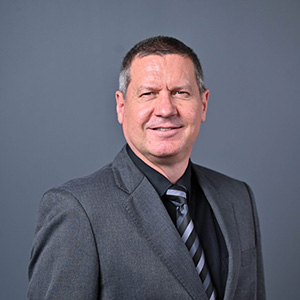
Deputy Director-General of Exports at the dtic, Willem van der Spuy, said the mission aims to facilitate market access and create sustainable trade opportunities for South African companies in Uganda.
“The Outward Selling Mission to Uganda is aimed at strengthening South Africa's economic engagement with East Africa and expanding trade and investment opportunities for South African exporters and investors in this strategically important market,” said Van der Spuy. |
|
|
| |
He described Uganda as an important economy within the East African region which provides South African companies with opportunities to expand their presence in markets characterised by growing consumer demand, infrastructure development, industrialisation, urbanisation and an increasing demand for value-added goods and services.
“Uganda provides access to a growing consumer market and serves as an important gateway to the Great Lakes region and neighbouring markets.
“The mission is intended to support South Africa's export diversification objectives by facilitating direct engagement between South African companies and prospective buyers, distributors, investors, government institutions and business associations in Uganda,” Van der Spuy said.
He emphasised that the mission will also contribute to strengthening South Africa's economic footprint in East Africa by identifying opportunities for value-added exports, investment partnerships, joint ventures, technology transfer and regional value-chain development.
“The success of the mission will stimulate and increase demand for South African value-added goods and services, which in turn will result in increased production and employment growth in South Africa,” said Van der Spuy.
Trade between South Africa and Uganda remains relatively modest, although there is identifiable export potential under the African Continental Free Trade Agreement, particularly in value-added manufacturing, agro-processing, and industrial inputs.
Bilateral trade between the two countries amounted to just over R2 billion in 2025, with R1.8 billion worth of South African goods and services exported to the East African country.
South Africa’s main exports to Uganda in 2025 included chemicals, fertilisers, fresh apples, trucks, aircrafts, essential oils, pharmaceutical products, barley seed, animal feed, wine and printed materials.
– Source: SAnews.gov.za |
|
| |
|
| |
| SOUTH AFRICA RE-ELECTED TO THE INTERNATIONAL TELECOMMUNICATION UNION COUNCIL |
|
| |
| South Africa has been re-elected to the Council of the International Telecommunication Union (ITU) for the 2027–2030 term. The election took place on 16 November 2026 during the 22nd ITU Plenipotentiary Conference (PP-26) in Doha, Qatar. |
| |
This outcome reflects the confidence and trust placed in South Africa by the ITU membership and recognises the country’s longstanding commitment to multilateral cooperation and inclusive digital development.
During its tenure, South Africa will champion an inclusive and development-orientated ITU that advances global connectivity, bridges the digital divide, promotes affordable access to telecommunications and digital technologies, and supports digital skills development across all developing countries, and especially on the African continent.
South Africa’s re-election comes at a time of rapid technological transformation, characterised by advances in artificial intelligence, emerging digital technologies, next-generation telecommunications infrastructure and evolving data governance frameworks. |
|
|
 |
|
| |
South Africa will advocate for international cooperation to ensure that these developments contribute to sustainable development, economic growth and social inclusion, while addressing inequalities within and between countries.
South Africa will also support efforts to strengthen cybersecurity capacity, enhance digital resilience and build the institutional and technical capabilities required for countries to participate meaningfully in the digital economy.
In keeping with its foreign policy priorities and commitment to an effective, rules-based multilateral system, South Africa will advocate for the equitable participation of developing countries in global digital governance, fair access to emerging technologies and strengthened international cooperation.
South Africa extends its sincere appreciation to all ITU Member States that supported its candidature and reaffirms its commitment to serving the interests of the entire ITU membership. It looks forward to working with Member States, Sector Members and other stakeholders to advance the ITU’s mandate of connecting the world and ensuring that no one is left behind in the digital age.
– Source: www.dirco.gov.za |
|
| |
|
| |
| SOUTH AFRICA HOSTS 25TH REGIONAL SEMINAR ON THE IMPLEMENTATION OF INTERNATIONAL HUMANITARIAN LAW |
|
| |
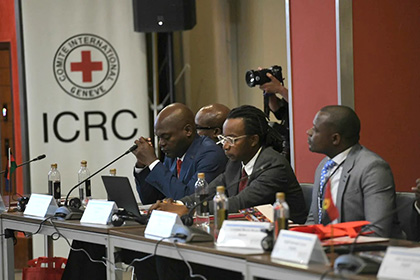
| The Department of International Relations and Cooperation (DIRCO), in collaboration with the International Committee of the Red Cross (ICRC) and regional partners, is hosting the 25th Regional Seminar on the Implementation of International Humanitarian Law (IHL) in Southern Africa and the Indian Ocean Island States from 17 to 20 November 2026. |
|
|
 |
|
| |
Held under the theme, Contemporary Challenges to IHL: Reflections on Building and Strengthening Compliance, the seminar brings together regional experts and stakeholders to reflect on progress in implementing international humanitarian law, discuss contemporary challenges and strengthen efforts to ensure respect for the rules governing armed conflict.
Delivering the keynote address at the opening of the seminar on 17 November, the Deputy Director-General for Global Governance and Continental Agenda at DIRCO, Ambassador Xolisa Mabhongo, emphasised the continued importance of upholding and strengthening respect for international humanitarian law.
Ambassador Mabhongo noted that, despite the establishment of this regional platform 25 years ago, armed conflicts continue to exact an intolerable toll on civilian populations. He highlighted the ongoing vulnerability of essential civilian infrastructure, including hospitals, schools, places of worship and water facilities, to the effects of hostilities.
He underscored the need for sustained collective commitment to protecting civilians and ensuring respect for the principles and rules of international humanitarian law.
Also addressing the seminar, the Permanent Secretary for the Human Rights Division at the Ministry of Foreign Affairs, Regional Integration and International Trade of Mauritius, Indira Rugjee, highlighted the importance of regional experts meeting regularly to assess progress in the implementation of international humanitarian law.
She described IHL as a fundamental expression of shared humanity and a collective commitment to preserving human dignity, particularly during armed conflict. She further emphasised the devastating consequences of conflict, including displacement and human suffering, and reiterated that the protection of human dignity must remain a priority.
The Head of the ICRC Regional Delegation in Pretoria, Jean-Nicolas Paquet-Rouleau, highlighted that the preservation and implementation of international humanitarian law is a collective global responsibility. He emphasised that the rules of war were established precisely because armed conflict exists and that limits on the conduct of hostilities remain essential to protecting human life.
He further stressed that violations of international humanitarian law do not diminish the relevance or importance of the law. Rather, they reinforce the need for its continued respect, implementation and enforcement.
The 25th Regional Seminar provides an important platform for dialogue, knowledge-sharing and cooperation among regional stakeholders. It reaffirms the collective responsibility of States and other relevant actors to strengthen compliance with international humanitarian law and uphold the principles of humanity and human dignity, even in times of armed conflict.
– Source: DIRCO Public Diplomacy Platforms |
|
| |
|
| |
| SERBIA AND SOUTH AFRICA MARK 30 YEARS OF DIPLOMATIC RELATIONS THROUGH MUSIC |
|
| |
 |
|
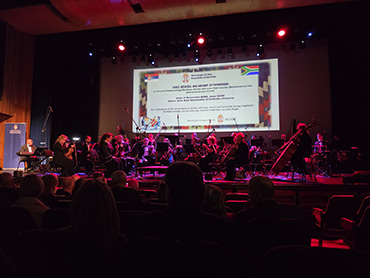
| Serbia and South Africa marked 30 years of embassy-level diplomatic relations with a gala concert at the Aula of the University of Pretoria on 9 November 2026, bringing together music, history and a shared commitment to strengthening relations between the two countries. |
|
|
| |
The concert celebrated a relationship that has its roots in the solidarity shown by the former Yugoslavia towards South Africa during the struggle against apartheid. The occasion also provided an opportunity to reflect on the progress made since the establishment of diplomatic relations and the potential for deeper cooperation in the years ahead.
Addressing guests, the Ambassador of the Republic of Serbia to South Africa, Saša Mart, traced the diplomatic relationship to 2 April 1992, when relations were established at the level of Offices of Interest. These were upgraded to embassy level in April 1996 and to full ambassadorial level in December 1998.
However, he emphasised that the friendship between the two countries preceded formal diplomatic engagement.
"During the darkest decades of apartheid, Yugoslavia stood firmly with the people of South Africa. As a founder of the Non-Aligned Movement, Yugoslavia treated the struggle against apartheid as a struggle for the dignity of all humanity," he said.
Yugoslavia supported international efforts to end apartheid, including United Nations resolutions and sanctions against the regime. It also provided political, humanitarian and educational support to the African National Congress (ANC) and other liberation movements in Southern Africa.
Among the historical figures who helped strengthen these ties was former ANC President Oliver Tambo, who visited Belgrade four times between the 1960s and 1980s. The Ambassador recalled that Yugoslavia had offered friendship and support to South Africans during their struggle for freedom.
He described the establishment of formal diplomatic relations following South Africa's democratic transition as the recognition of an existing friendship rather than the beginning of a new one.
The Ambassador also highlighted the shared commitment of both countries to sovereignty, democracy and the principles of international law. He referred to South Africa's democratic transition in 1994 and its constitutional development, noting that democratic processes remain central to the relationship between the two nations.
Looking ahead, Ambassador Mart called for stronger practical cooperation to complement the longstanding political relationship.
"Our task now is to match the depth of our political friendship with the breadth of our practical cooperation," he said, identifying trade and investment, agriculture, mining, energy, education, science, culture and tourism as areas with potential for growth.
He also encouraged greater academic engagement, including student mobility, joint research and partnerships between South African and Serbian universities.
The evening's musical programme brought together 50 performers from the Gauteng Chamber Orchestra and the Azanian Pulse Ensemble. The repertoire included compositions from different musical genres, with particular attention to Serbia's musical heritage. A highlight was the South African premiere of a work by contemporary Serbian composer Miloš Raičković.
The concert was made possible with the support of Serbia's Ministry of Culture and the University of Pretoria, which hosted the event. Music scores were provided by the Art Ensemble of the Serbian Ministry of Defence, named after Stanislav Binički.
The Ambassador acknowledged the contribution of conductor Carel Henn, concertmaster Camelia Onea, tenor soloist Kgaugelo Mpyane and the participating musicians and choir.
Special recognition was given to Violeta Miljković, a Serbian-born viola player who has lived in South Africa for 30 years. As the initiator of the concert, she played a central role in bringing the musicians together and coordinating the production.
The anniversary celebration served as a reminder of the historical foundations of Serbia-South Africa relations while looking towards a new phase of cooperation. Through music, the two countries honoured a friendship shaped by solidarity, mutual respect and shared experiences, with an opportunity to build stronger connections across diplomatic, economic, academic and cultural spheres.
– Source: www.thediplomaticsociety.co.za |
|
| |
|
| |
| MINISTER KUBAYI CONGRATULATES PROF. MADLINGOZI ON UN APPOINTMENT |
|
| |
 |
|
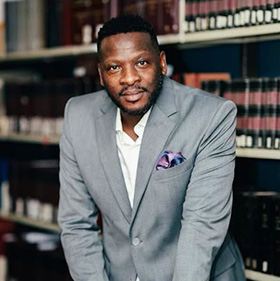
| Justice and Constitutional Development Minister Mmamoloko Kubayi has congratulated Professor Tshepo Madlingozi on his appointment as Chair of the United Nations Human Rights Council's International Independent Expert Mechanism to Advance Racial Justice and Equality in Law Enforcement. |
|
|
| |
"Professor Madlingozi's appointment is a proud moment for South Africa, especially as we mark 30 years since the adoption of our Constitution. His work on human rights and social justice has prepared him well for this role. I congratulate him and wish him every success," Minister Kubayi said on Friday, 13 November 2026.
The Mechanism recommends ways to strengthen accountability and improve access to justice and redress for Africans and people of African descent whose human rights have been violated by law enforcement officials.
Professor Madlingozi is a Commissioner of the South African Human Rights Commission (SAHRC) and will serve on the Mechanism in his personal and independent capacity. The SAHRC is a Chapter 9 institution established to support constitutional democracy. It is committed to promoting respect for, observance of, and protection of human rights for everyone, without fear or favour.
He succeeds Akua Kuenyehia of Ghana, who was appointed as a member and Chair on 15 March 2024 and stepped down from both roles on 9 February 2026.
At the University of Witwatersrand (Wits), Professor Madlingozi directed the Centre for Applied Legal Studies and taught human rights and social justice.
“He has advocated for reparations for survivors of apartheid-era human rights violations and consulted for the Pan-African Parliament and the UN Human Rights Office,” said the Ministry of Justice and Constitutional Development.
The SAHRC said the United Nations Human Rights Council's International Independent Expert Mechanism to Advance Racial Justice and Equality in Law Enforcement (EMLER) was established by the United Nations Human Rights Council in July 2021 with a mandate to advance racial justice and equality in law enforcement globally.
“Commissioner Madlingozi's appointment is a recognition of his contributions to human rights, social justice, constitutionalism and reparative justice, both within South Africa and internationally. Commissioner Madlingozi's appointment to this position reflects not only his personal achievements but also the broader contribution of the Commission and South Africa to the advancement of human rights globally,” said the Commission in a statement.
It further added that the appointment should serve as a source of immense pride for South Africa and the African continent.
“It demonstrates the continued relevance of South African human rights leadership in shaping global conversations on racial justice, accountability and equality,” said the SAHRC.
– Source: SAnews.gov.za |
|
| |
|
| |
| SOUTH AFRICA COMES ON TOP IN ANOTHER GLOBAL AWARD |
|
| |
| South Africa earned several accolades in “Wanderlust’s” recently published Reader Travel Awards, including gold in one category. The annual awards are decided by votes from readers of “Wanderlust”, the United Kingdom (UK)’s longest-running travel magazine, and feature several categories related to travel and international vacations. |
| |
In its ranking of the most desirable countries in the world, South Africa placed third, behind Japan in second and Costa Rica in the top spot. South Africa also received gold in the awards in the Most Desirable Destination for Nature & Wildlife category.
Wanderlust noted that this award was fitting for South Africa due to its variety of natural landmarks and tourist attractions.
“In the year Kruger National Park marked its 100th anniversary, it’s perhaps fitting that one of Africa’s great pioneers of conservation takes the top spot in this category,” the magazine said. |
|
|
 |
|
| |
| “South Africa remains a benchmark for wildlife travel, due in part to the sheer variety on offer, from the red dunes and black-maned lions of the Kalahari to tracking rhinos on foot in the bushveld and cruising the wetlands of iSimangaliso.”
Other countries in this category included Brazil and Australia in second and third place, respectively, while Kenya placed fourth. The global recognition was decided by votes from over 250,000 Wanderlust readers, with more than 8.2 million votes cast.
The awards are intended to “celebrate the best destinations, tour operators and travel brands, including the most sought-after countries, cities, islands and regions in Europe and around the world,” Wanderlust said.
Along with South Africa itself being named in two categories, Cape Town was listed as the third most desirable city in the world. The Western Cape capital placed behind Argentina’s Buenos Aires in second place and Tokyo, Japan, in first place.
In last year’s edition of the Reader Travel Awards, Cape Town placed fourth in the same category, representing a one-place climb.
A meaningful award
Cape Town Tourism noted that the recognition from Wanderlust is particularly meaningful due to the awards’ methodology and the magazine’s stature.
“The Wanderlust Reader Travel Awards are decided entirely by public vote, with no expert panel behind closed doors,” Cape Town Tourism noted.
“That makes them the UK’s largest consumer-voted travel awards, celebrating the most desirable countries, cities, islands, regions, tour operators and travel brands.”
The tourism group added that recognition from UK travellers was particularly meaningful for the city, with residents of the country accounting for a large share of its tourism.
“For Cape Town, the UK remains its largest international source market, making recognition from the readership of a leading UK travel publication especially meaningful,” Cape Town Tourism said.
In 2025, Cape Town had approximately 211 000 international visitors from the UK, a 17% jump from the prior year. International visitors have also become a major part of Cape Town’s tourism economy in recent years, with over 1.5 million travellers from around the world arriving in the city in 2025.
Tourism plays a large part in supporting the city’s economy, with an estimated 106 000 people employed in the sector, representing 6.2% of Cape Town’s total employed population. The industry also adds roughly R23 billion in gross value to the city’s economy.
City of Cape Town spokesperson Luthando Tyhalibongo said the award helped boost the city’s profile on the international stage.
“Recognition like this helps keep Cape Town front of mind for international travellers, creating opportunities for more bookings, more visitor spend and more jobs for Capetonians,” he said.
He added that the city would be working towards improving its ranking, saying, “Bronze looks good on us, but gold would look even better.”
– Source: www.businesstech.co.za |
|
| |
|
| |
| MUIZENBERG THEATRE DUO EARNS MAJOR INTERNATIONAL NOD FOR ACCLAIMED PRODUCTION |
|
| |
 |
|
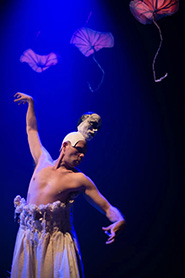
| Two Muizenberg theatre-makers have earned international recognition in Italy. Fred Abrahamse and Marcel Meyer, the duo behind Cape Town independent company Abrahamse & Meyer Productions, received a Jury Special Mention at the prestigious XVII International ‘Il Teatro Nudo’ Awards in Milan on Thursday, 5 November 2026. |
| |
The honour went to their staging of Lady Aoi, a play by Japanese playwright Yukio Mishima that explores desire and unrequited love.
A collective effort
Abrahamse directs the production, which Meyer performs alongside puppets and masks. The pair first staged it in 2014 at the Provincetown Tennessee Williams Theatre Festival in the United States.
The company credited the many people behind the work. “International recognition is never the achievement of one or two people,” Abrahamse & Meyer Productions said in a press statement.
The duo added that they are proud to see South African theatre recognised in Milan and thanked everyone who has been part of the production’s journey. |
|
|
| |
A growing list of accolades
The jury commended the production for staying true to a classic while giving it a contemporary edge. Lady Aoi also won Best Set Design and Best Costume Design at the 2022 Fleur du Cap Theatre Awards, along with five further nominations.
The awards honour the legacy of Italian theatre-maker Teresa Pomodoro and celebrate theatre that crosses cultural and linguistic boundaries.
– Source: www.capetownetc.com |
|
| |
|
| |
| TWO CAPE TOWN-BORN ARTISTS ARE TAKING THEIR CREATIVE PARTNERSHIP ACROSS THE WORLD |
|
| |
| Nearly a decade after making headlines as one of South Africa’s youngest piano prodigies, Cape Town-born musician Qden Blaauw is taking a new step as a composer. |
|
|
 |
|
| |
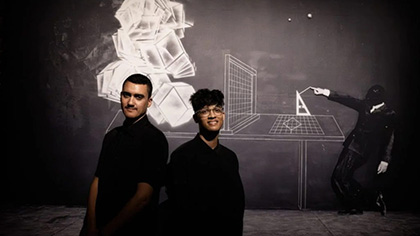
He joins internationally acclaimed visual artist Robin Rhode for a presentation at NOMAD Abu Dhabi 2026 — the first time the pair take their creative partnership to an international stage.
Rhode and Blaauw will present a site-specific artwork and live performance at the fair, which runs from 18 to 22 November at the historic Terminal 1 of the former Abu Dhabi International Airport.
The commission forms part of the Public Art Abu Dhabi programme. It features an evolving wall drawing and performance by Rhode, accompanied by original music that Blaauw composed and plays. Dance joins as a third component for the first time in their collaboration, bringing visual art, music and dance together in an unconventional setting.
For Blaauw, the commission means creating original music in response to another artist’s ideas and visual work.
A partnership that began in 2024
The pair first drew attention in 2024 with Pictures Reframed, which paired Blaauw’s performance of Mussorgsky’s Pictures at an Exhibition with Rhode’s visual work.
Their collaboration developed through Rhode’s 2024 exhibition Joburg Hymn, which explored the deterioration of Johannesburg’s buildings, infrastructure and public spaces. Blaauw composed the original soundtrack for Portrait with Keys, a musical response to Rhode’s visual exploration of the city.
They also worked together on Eulogy for the Non-People, a five-minute poetry documentary centred on the words of the late Dr Don Mattera. The celebrated South African poet and cultural activist was known as the Bard of Liberation.
In their words
“Robin is a wonderful collaborator and mentor, and working with him has challenged me, allowing me to showcase my composing skills to a wider audience,” says Blaauw.
Rhode describes Blaauw’s soundtrack as “absolutely exceptional” and says it adds emotional depth.
About the artists
Blaauw discovered classical music through a piano app on an iPad at the age of eight. He first attracted public attention as a young classical pianist, including when he took first place in the Yamaha Scholarship programme for 2020/21.
He is completing his studies at London’s Royal Academy of Music on a full scholarship. He is also establishing himself as a composer, creating original music for exhibitions, installations and film.
Rhode was born in Cape Town and is now based in Berlin. He has built an international reputation through drawing, photography, performance and moving images.
The partnership highlights the value of collaboration between established artists and emerging creative voices.
Rhode and Blaauw will present a site-specific artwork and live performance at the fair, which runs from 18 to 22 November 2026 at Terminal 1 of the former Abu Dhabi International Airport in Abu Dhabi. More information is available at paad.ae.
– Source: www.capetownetc.com |
|
| |
|
| |
| MOFOKENG'S BRACE FIRES BAFANA BAFANA PAST KENYA TO RECLAIM TOP SPOT IN GROUP D |
|
| |
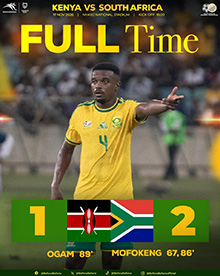
| Relebohile Mofokeng was again the hero for Bafana Bafana, scoring a brace that saw the team beat Kenya 2-1 in the return leg of their Afcon qualifier at Nyayo National Stadium in Nairobi on Tuesday night, 17 November 2026. |
| |
Mofokeng’s goals meant that Bafana returned to the top of the standings with 10 points, one ahead of Guinea, who had temporarily risen to the summit of Group D after beating Eritrea 3-1 on Monday night.
This win also took some pressure off Pitso Mosimane, who was heavily criticised after the 2-2 draw with Kenya in the first leg at Orlando Amstel Arena on Friday night. Mosimane, though, stuck to his guns, showing bravery by not succumbing to the heavy criticism that he should start Mbekezeli Mbokazi in defence, keeping the partnership between Ime Okon and Olwethu Makhanya at centre-back instead.
The duo was not tested in the first half as Mosimane’s approach of starting with three midfielders – Thalente Mbatha, Teboho Mokoena and Sphephelo Sithole – seemed to bring balance all round. While it may be argued that Mosimane opted for a solid set-up, which included Samukele Kabini starting ahead of Aubrey Modiba at left-back, the team still showed vigour going forward. |
|
|
 |
|
| |
Mokoena was unlucky not to find the opener, as his trademark set piece was comfortably saved by Omondi Odhiambo in goal. Bafana continued to make inroads into the final third; however, Kabini put a close-range effort wide of the target following a pass from Oswin Appollis earlier on.
Bafana continued to put more pressure on Kenya, but Odhiambo was the difference between the visitors finding the lead. He saved Mokoena’s shot from close range before blocking Mofokeng from scoring his fourth Bafana goal in four Afcon qualifiers. Despite creating chances, Bafana went into the break still goalless.
The goalless first half must have certainly aged Mosimane, as he spent a large chunk of the opening period frustrated on the touchline with every missed opportunity, hoping they wouldn't suffer Friday’s fate of creating ample chances without being clinical.
Mosimane cut a confident figure after returning from the dressing room, smiling and even saluting a ball boy. While his team continued to dominate possession in the opening stages, they still lacked a killer instinct, though Mbatha forced a save from Odhiambo after unleashing a thunderbolt from close range.
Mosimane made two tactical changes, with Lyle Foster and debutant Siyanda Ndlovu coming on for Iqraam Rayners and Mokoena. Ndlovu proved himself, running at the Kenyan defence with trickery and quick feet.
Ndlovu repaid the faith shown in him by Mosimane, weaving his way into the box before his cutback bounced off a Kenyan defender. Just as Sylvester Ahono was about to make a clearance, Mofokeng stole possession right under his nose, slotting past a helpless Odhiambo to give the visitors a well-deserved lead.
Bafana worked tirelessly to double the lead, while Mosimane was also wary of conceding, bringing on Mbokazi to consolidate things at the back. Mofokeng then completed his brace, slotting into the bottom corner after an assist from Ndlovu.
The Harambee Stars made the contest interesting late on, with Ryan Ogam halving the deficit just before stoppage time. The goal looked offside, but it stood despite unsuccessful protests from Ronwen Williams.
Bafana hung on for the win, maintaining their lead at the top. They’ll face Guinea and Eritrea in must-win qualifiers in March if they are to book their spot in the finals in the Pamoja region.
– Source: www.iol.co.za |
|
| |
|
| |
| SOUTH AFRICA U23S ADVANCE TO THIRD ROUND OF OLYMPIC QUALIFIERS |
|
| |
 |
|
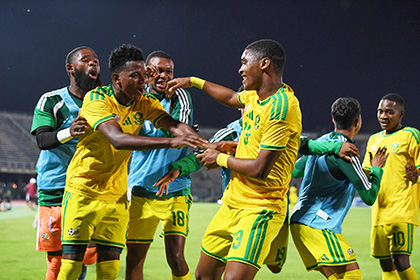
| South Africa’s U23 Men’s National Team advanced to the third round of the CAF U23 Africa Cup of Nations and 2028 Los Angeles Olympic Games qualifiers after beating Madagascar 3–2 at the Lucas Moripe Stadium in Atteridgeville on Tuesday night, 17 November 2026. |
|
|
| |
The victory secured a 4-2 aggregate win for Raymond Mdaka’s side, following their 1–0 first-leg triumph at the same venue on Saturday, 14 November 2026.
Quwan Plaatjies made an immediate impact after coming into the starting XI, scoring twice as South Africa built a comfortable advantage. Second-half substitute Mpho Padime added a third with a superb strike to put the hosts firmly in control.
Madagascar scored twice to give South Africa some nervous moments, but Mdaka’s side held on to book their place in the third round, where Cameroon awaits in February next year. Mdaka admitted there were concerns about the goals conceded, but praised his players for their commitment and ability to get the job done.
“We are not happy at all. Professionally, you don’t have to concede,” Mdaka said. “Those are the areas that I think we have observed as a technical team, and we’ll make sure that we work on that.”
The coach also believes facing a competitive Madagascar side was beneficial to his team’s development, particularly after many expected South Africa to progress comfortably against the island nation. Mdaka said Madagascar provided a valuable test because of their ability to keep possession, play through the lines and counter-press.
“If you get somebody who competes with you in terms of putting the ball down, that’s another thing. Counter-pressing, you could see how good they were. Keeping possession, you could see how good they were. So this is a good exercise and a good challenge for us.”
The progression also gives Mdaka more time to continue integrating players from the current U20 group with emerging talent and players already featuring at senior club level. He highlighted the importance of developing relationships between the players, saying the technical team is still working to find the right balance within the squad.
Another challenge is ensuring that players who are part of senior squads at clubs such as Orlando Pirates and Mamelodi Sundowns get sufficient playing time. Mdaka said the technical team is monitoring the players closely and communicating with their clubs, although he acknowledged that the decision to select and play them ultimately rests with the clubs.
The U23 coach also pointed to the importance of the DStv Diski Challenge in developing the next generation of players, with many members of the current squad having come through the competition.
With the next round scheduled for February, Mdaka and his technical team will now focus on improving the defensive aspects of the team while continuing to integrate players ahead of the crucial clash against Cameroon.
– Source: www.ewn.co.za |
|
| |
|
| |
| GOLD, SILVER AND BRONZE: TEAM SA MAKES ITS MARK IN SENEGAL |
|
| |
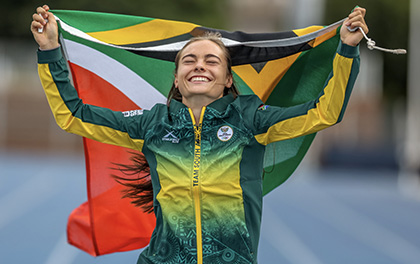
| South Africa’s young sporting stars have given the country plenty to celebrate at the 2026 Youth Olympic Games in Dakar, Senegal, with Megan Nieman leading the charge after storming to gold in the women’s 400 m hurdles. |
|
|
 |
|
| |
Nieman produced a brilliant performance in the final, crossing the line in 57.75 seconds to edge Switzerland’s Mina Hirsbrunner, who finished just behind her in 57.84 seconds.
Her victory was a historic one, making her the first South African woman to win gold at the Dakar Games. It also took Team SA’s medal tally into double figures, with the country eventually finishing the competition with a record-breaking 11 medals.
Seventeen-year-old Matao le Roux delivered a golden performance of his own in the men’s high jump. The athlete from Caledon in the Western Cape cleared 2.16 m to claim the title, overcoming China’s Sen Liu and Egypt’s Ahmed Mohammed in the final.
Enrique Bosch also made his way onto the podium, securing bronze in the men’s 110 m hurdles after clocking 13.45 seconds in the final.
There was more reason to celebrate in the women’s high jump, where Milan Blignaut cleared 1.74 m to take silver, adding another medal to South Africa’s impressive campaign.
South Africa also had reason to celebrate in the equestrian competition, with Bo Reed representing the country alongside her horse, Carrera De Groom. Reed finished eighth in the individual event and was part of the Team Africa side that secured bronze in the team competition. Her journey was supported by Alex Nell, who accompanied her throughout the experience.
The achievements in Dakar are particularly special, with South Africa’s final tally of 11 medals surpassing the previous national record of nine, set at the 2010 Youth Olympic Games in Singapore.
From gold-medal moments to podium finishes, South Africa’s young athletes have made their presence felt in Dakar. The next generation is certainly making its mark.
– Source: www.goodthingsguy.com |
|
| |
|
| |
| FROM LANSDOWNE TO GLASGOW: DANICA VAN BOOM MAKES HER MARK ON COMMONWEALTH STAGE |
|
| |
 |
|
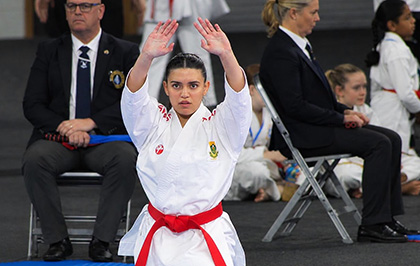
| The UWC karate athlete reflects on spending more than two decades on the mat, with her latest achievement seeing her represent South Africa at the Commonwealth Karate Championships. |
|
|
| |
What started as a childhood activity at just three years old has taken Danica Van Boom all the way to the international stage, with the University of the Western Cape (UWC) karate star recently representing South Africa at the 12th Commonwealth Karate Championships in Glasgow, Scotland.
The 26-year-old, who hails from Lansdowne in Cape Town, competed against a predominantly European field from 5 to 8 November 2026, finishing fifth out of 42 athletes in the Commonwealth Club Championships and 10th in the Elite Commonwealth Championships.
Her journey in karate began long before she could have imagined wearing the Protea badge. By the age of six, she was already competing, setting the foundation for a sporting journey shaped by years of discipline, dedication and a desire to keep improving.
Glasgow provided another important learning experience, exposing Van Boom to different styles of competition and challenging her both physically and mentally.
She believes one of her biggest lessons was learning to manage self-doubt and expectations, while recognising that success in sport requires more than technical ability.
For Van Boom, representing South Africa is about more than personal achievement. She hopes her journey can encourage young athletes, particularly girls from humble backgrounds, to believe that they too can reach the highest levels of their sport.
“Even though competing on an international stage is daunting, to be a young female student-athlete from humble roots and to have doors like this open is just unreal. Representation has always mattered, so I hope this shows a young karate athlete out there that we too can do hard things,” she said.
Away from the karate mat, Van Boom is also committed to her academic journey. She is currently in her second year of a Bachelor of Education Honours degree in Mathematics Education at UWC, balancing her studies with the demands of competitive sport.
With her international season now complete, she is looking forward to a short break before turning her attention to provincial trials and the next chapter of her karate career.
– Source: www.goodthingsguy.com |
|
| |
|
| |
| SOUTH AFRICAN GYMNASTS BOUNCE INTO WORLD TOP SIX IN NANJING |
|
| |
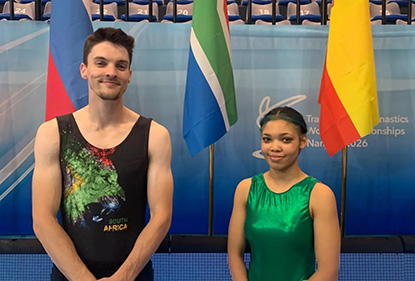
| Leolin Petersen finished sixth in the women’s Double Mini-Trampoline, while Matthew Bosch recorded a personal best and reached the semi-finals. |
| |
South Africa’s Leolin Petersen has secured an impressive sixth-place finish at the 39th FIG Trampoline and Tumbling World Championships in Nanjing, China. Petersen was among the standout performers for the South African team at the competition, held from 4 to 8 November 2026, where she produced a series of strong routines in the women’s Double Mini-Trampoline (DMT).
She began her campaign with a score of 51.300 in the preliminary round, finishing seventh to book her place in the semi-finals. |
|
|
 |
|
| |
The South African then stepped things up, recording a personal best of 26.800 to finish third in the semi-final and qualify for the World Championship final. She ultimately claimed sixth place in the world, a significant achievement on one of gymnastics’ biggest international stages.
Teammate Matthew Bosch also enjoyed an encouraging outing in the men’s DMT, producing a personal best of 58.100 in the preliminary round. His score placed him fifth overall and secured his passage to the semi-finals. However, a mistake during his next routine saw his campaign come to an end, with Bosch finishing 19th overall.
Despite missing out on the final, his preliminary performance was a major milestone and demonstrated his ability to compete among the world’s best.
The South African duo were guided by national trampoline coach Lee Budler in Nanjing, while international judge Kasper Janse van Vuuren was also part of the delegation.
Budler praised both athletes for their performances, highlighting the significance of competing at a World Championships and the progress they have made.
“Competing at a World Championships is an achievement in itself,” says Lee Budler, National Trampoline Coach for Gymnastics South Africa. “To see Leolin reach a World Championship final and finish among the top six gymnasts in the world, alongside Matthew achieving a personal best and qualifying strongly for the semi-finals, is something to be immensely proud of.”
He added that the experience would provide valuable motivation as both gymnasts continue to develop and take on future international challenges.
Petersen’s sixth-place finish gives her a strong result to build on, while Bosch will also take confidence from his personal best as the pair return from Nanjing with valuable experience at the highest level.
– Source: www.goodthingsguy.com |
|
| |
|
| |
| KJ MONONYANE MAKES HISTORY WITH MOTO3 WORLD CHAMPIONSHIP DEBUT |
|
| |
 |
|
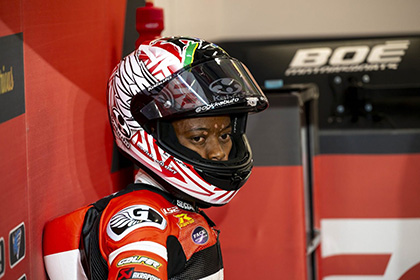
| The 19-year-old became the first black African rider to compete in a MotoGP race weekend after making his Moto3 debut in Qatar. |
| |
The Johannesburg-born youngster recently made his debut in the Moto3 World Championship in Qatar, taking an important step towards fulfilling a dream he has been chasing for more than a decade.
Mononyane’s passion for motorcycle racing started when he was just five years old. By the age of 10, he was competing on South African circuits and, within six years, had claimed four national championship titles. His talent eventually earned him opportunities in Europe, where he competed in the Moto3 Junior GP World Championship, the Red Bull Rookies Cup and the FIM MotoJunior World Championship. |
|
|
| |
His big break came when Spanish outfit CODE Motorsport called him up to replace an injured rider for the Qatar round. He also lined up alongside fellow South African Ruche Moodley, marking a special moment for both riders.
“It was like a dream come true,” enthused the youngster, “opportunities like this don’t come up very often, so you have to grab them with both hands. I know that the level of competition in Moto3 is so high, but I had to dive in to see if I could race against the best.”
The Lusail International Circuit provided a tough introduction, with its high-speed sections and demanding night-time conditions. However, Mononyane focused on learning with every session and gradually improving his pace.
“Moto3 riders are so quick, much faster than you realise when you watch them on TV. And the guys race really hard. I chipped away at my lap times, getting a little quicker with each session.”
Despite the pressure of his first World Championship race, he kept his composure and successfully crossed the finish line.
“I was relieved and excited when I saw the chequered flag. I had done it. I had successfully completed my first Moto3 race. It was a small step, but it felt really big to me.”
CODE Motorsport team principal Jose Angel Gutierrez Boe praised the youngster’s determination and willingness to learn, saying he had made a positive impression on the team.
This is only the beginning. He is now exploring opportunities for 2027 and hopes to attract sponsors to help him continue his journey in Moto3.
“I know I can compete at this level. My debut race was just the start. We are now looking at options for 2027 and hoping that we can attract some sponsors to join me on this journey. I cannot wait to get back to Moto3.”
– Source: www.goodthingsguy.com |
|
| |
|
| |
|
|
|
|
|
|
|
|